Updated June 30, 2026 · 9 min read
By Boise Bath — bathroom & shower remodeling in Boise & the Treasure Valley
The short answer
Bathroom vanity ideas fall into a few choices: configuration (single, double, or compact), mounting (floating/wall-mounted versus floor-standing), and style (modern, furniture-style, farmhouse, or transitional), plus sink type and height. Floating vanities make small rooms feel larger; double vanities suit shared master baths; furniture-style pieces add character to older Boise homes.
Key takeaways
- Start with configuration: single, double, or compact decides everything downstream.
- Floating/wall-mounted vanities make small bathrooms feel larger and are easier to clean under.
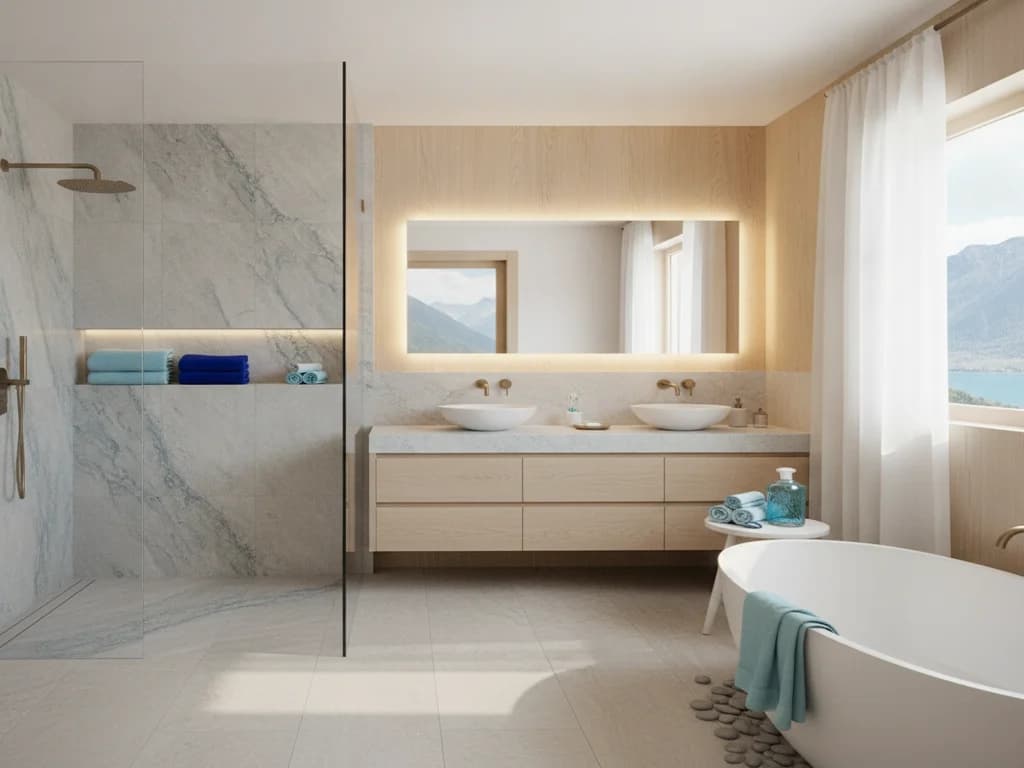
- Double vanities suit shared master baths but need adequate wall width and plumbing for two.
- Vanity height and sink type (vessel, undermount, integrated) change both look and daily use.
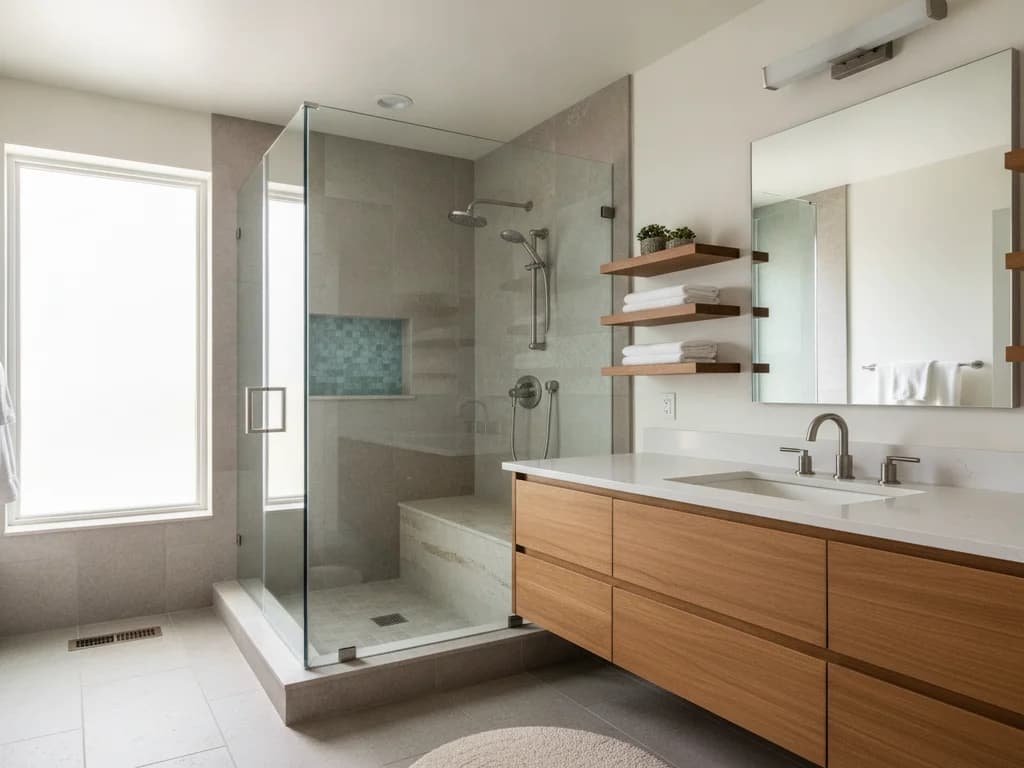
- Match the vanity style to the home — furniture-style pieces fit older Boise homes well.
How do you choose a bathroom vanity?
A vanity is the anchor of a bathroom — it sets the storage, the sink, the counter, and much of the room’s style in one piece — so it pays to choose it in a deliberate order rather than falling for the first photo you like. The framework that keeps the decision simple is configuration first, then mounting, then style. Settle how many sinks and how big (configuration), then how it meets the floor (mounting), then how it looks (style).
Working in that order matters because each choice constrains the next. Configuration is driven by your room size and plumbing; mounting is driven by configuration and the look you want; style is the fun part you layer on last. The 20 ideas below follow that path, with a “best for…” verdict on each so you can match a vanity to your actual bathroom rather than an idealized one.
The vanity decision path
Configuration → mounting → style. Decide how many sinks and how wide first, then floating vs floor-standing, then the aesthetic. Working in that order keeps your choices from fighting your room size and plumbing.
What vanity configurations exist?
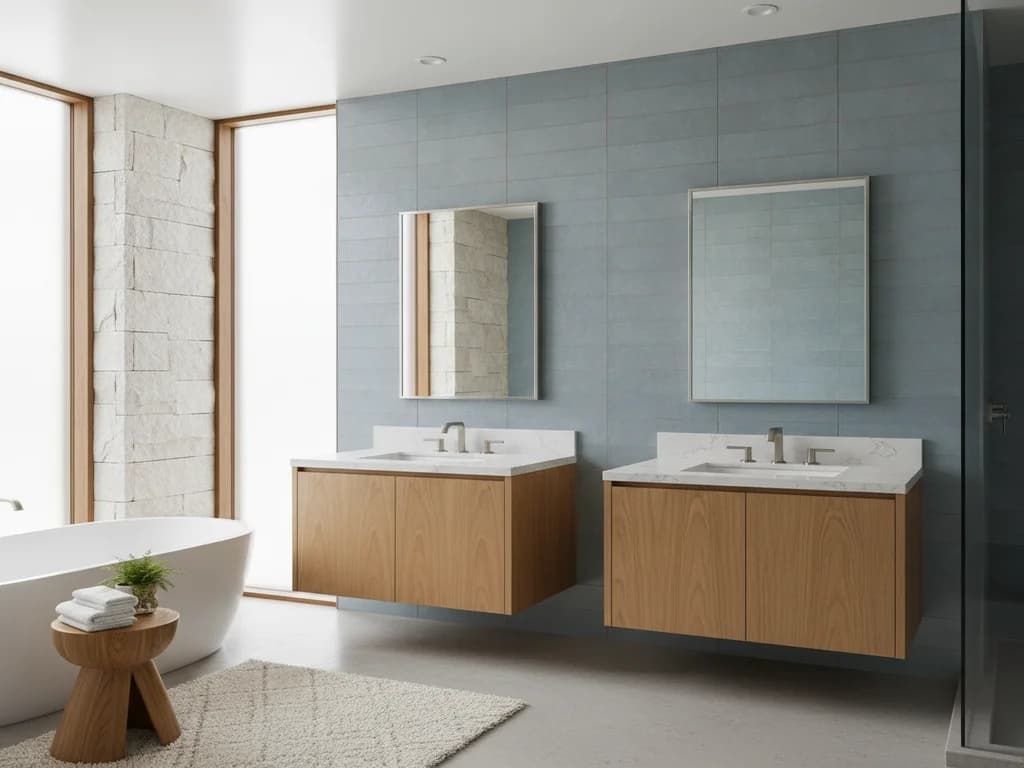
Configuration is the number and arrangement of sinks and storage. 1. A single vanity has one sink and is the default for most bathrooms. 2. A double vanity has two sinks side by side for shared use. 3. A his-and-hers split places two separate single vanities apart with storage or a seated makeup area between them. 4. A compact or corner vanity tucks into tight footprints. 5. A trough-style vanity uses one long basin (or two faucets over a single trough) for a clean, modern shared look.
Configuration is where room size and plumbing do the talking. A second sink means a second drain and supply lines, and a double vanity needs real wall width — so this choice is less about taste than about what the space and the rough-in will allow.
When is a single vanity the right call?
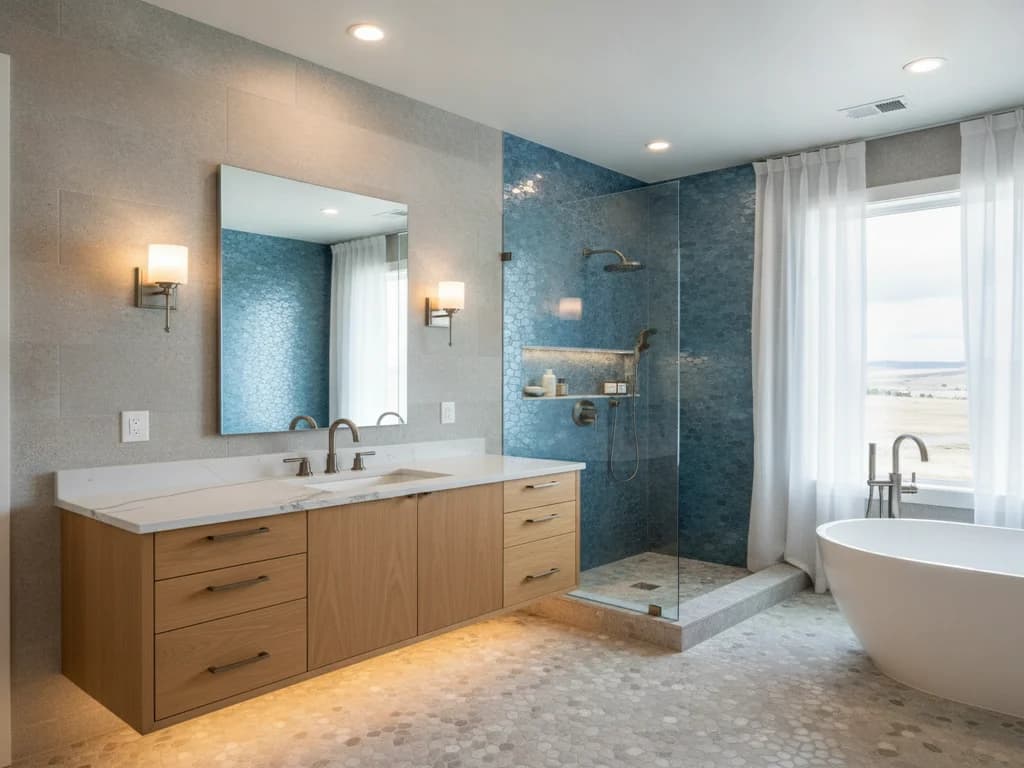
6. A single vanity is the right answer more often than people expect. In a small or secondary bathroom, one well-chosen single vanity gives you more usable counter and storage than cramming in two cramped sinks ever would. It is also the budget-friendly and simplest-to-plumb choice, with the widest selection of sizes and styles.
Best for: small baths, guest and hall bathrooms, single users, tighter budgets, and any room where a double would leave each sink feeling pinched. A generous single beats a crowded double almost every time.
Do you have room for a double vanity?
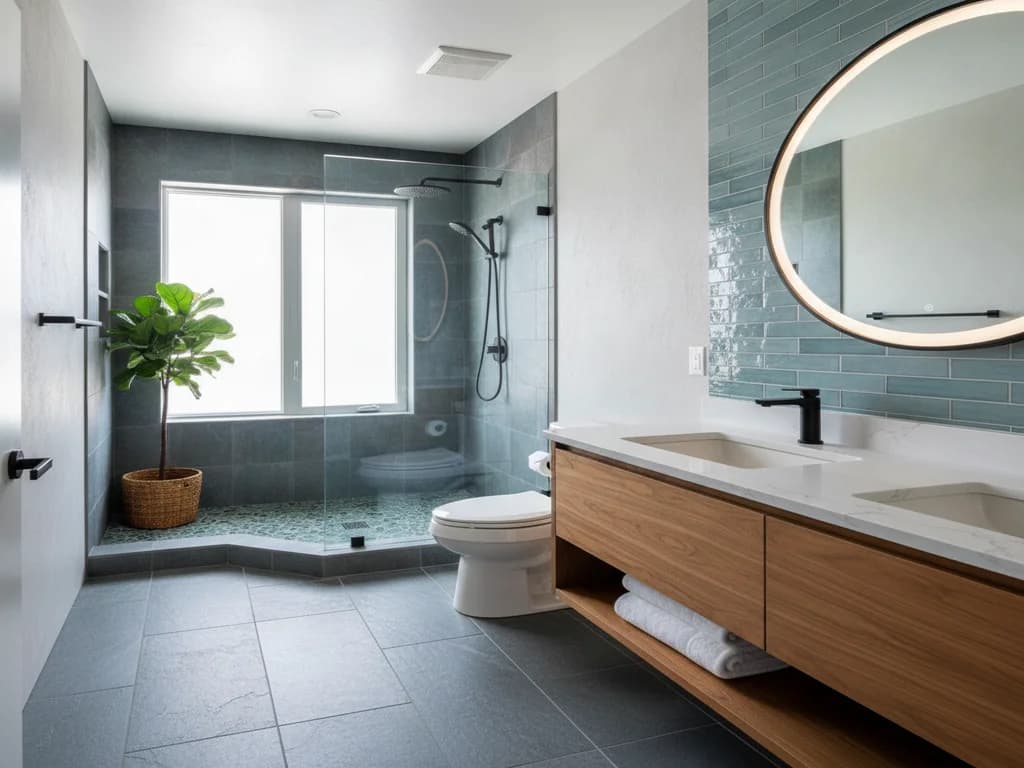
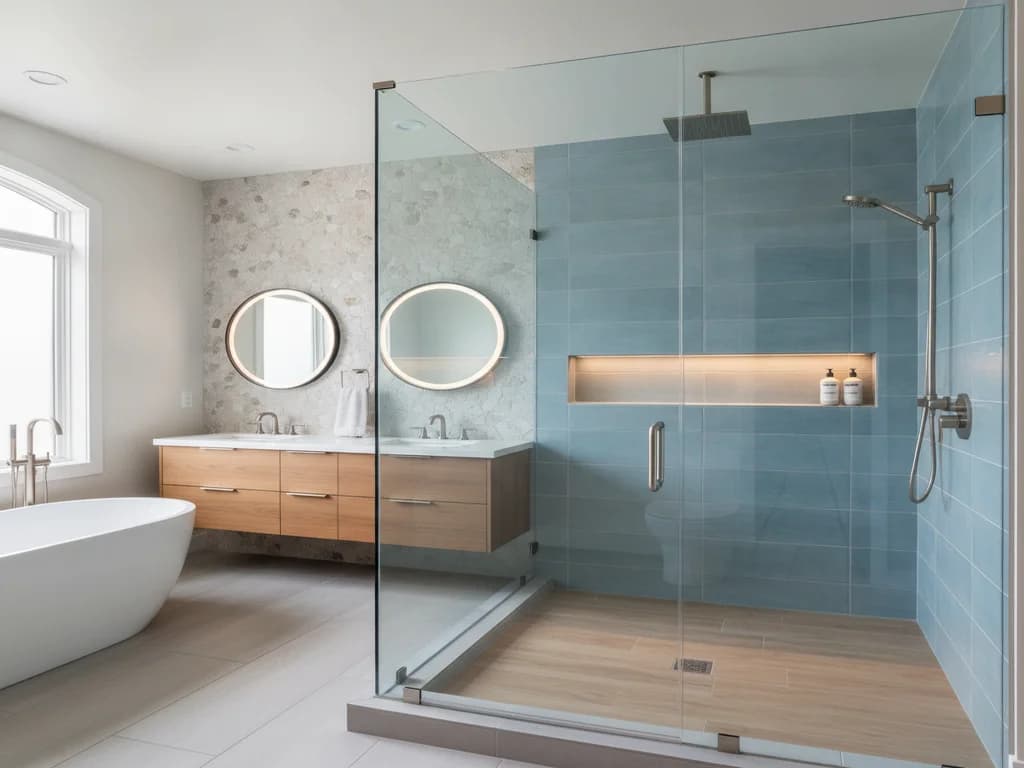
7. A double vanity is wonderful in a shared master bath — two people get ready at once with no turn-taking — but it has real space requirements. As a rule of thumb, you want enough wall to give each sink breathing room and counter on the outside of each basin; squeezing two sinks into a narrow run leaves no landing space and feels worse than a single. The National Kitchen & Bath Association publishes clearance and spacing guidelines worth following so two sinks actually work.
8. Remember the plumbing, too: a double vanity needs two sets of supply and drain lines, which is straightforward in new construction but can add work in an older home. Best for: shared master baths with adequate wall width and a plumbing plan that supports two basins.
What is a floating vanity and who is it for?
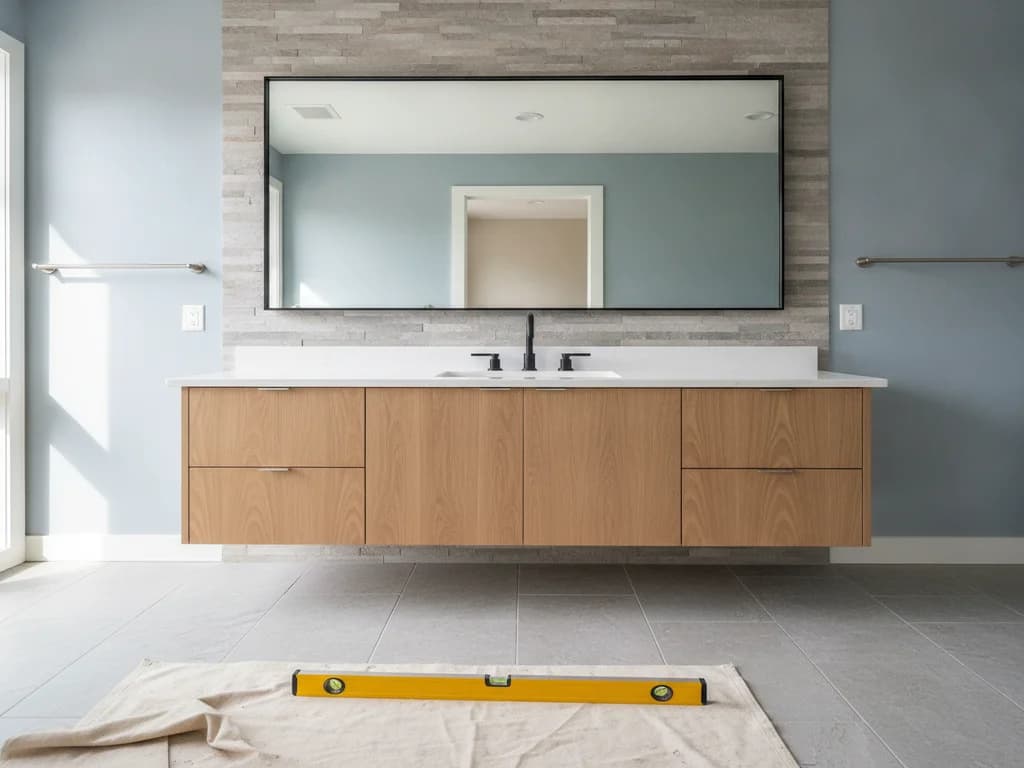
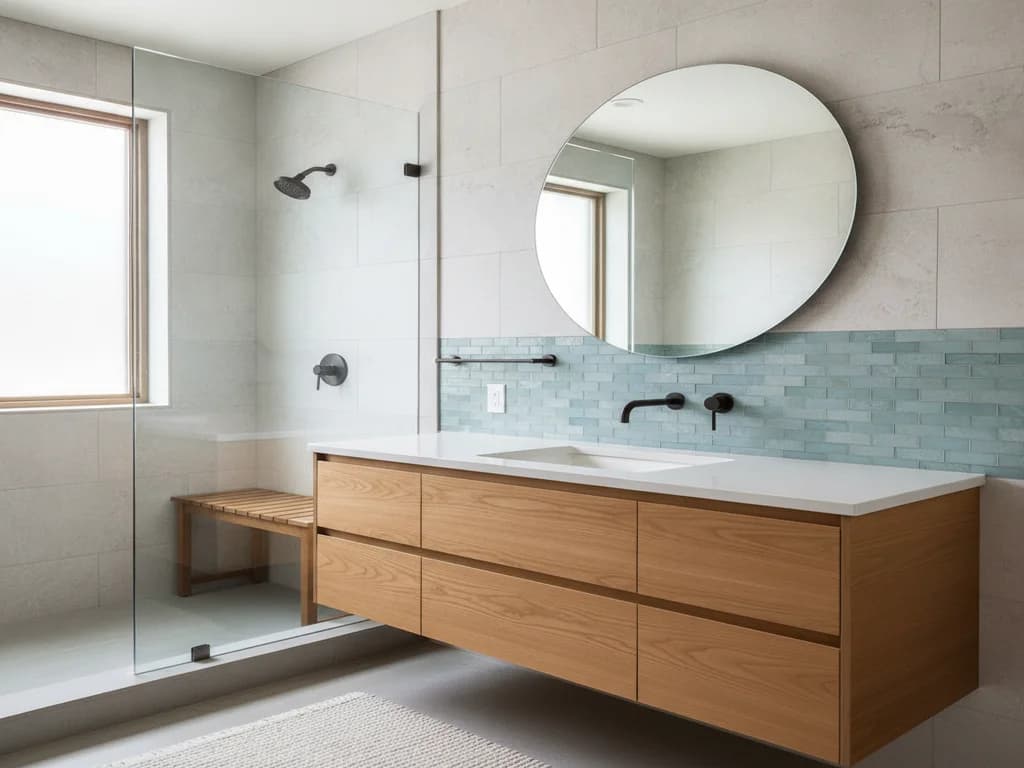
9. A floating (wall-mounted) vanity hangs on the wall with open floor beneath it, which is its superpower in a small room: seeing the floor run unbroken under the cabinet makes the bathroom read larger and airier. 10. It is also easier to clean under and lets you set the height precisely, since it is not tied to a standard toe-kick base.
The trade-offs are structural and plumbing-related. A floating vanity needs solid blocking in the wall to carry its weight, and because the cabinet bottom is open, the plumbing is often routed to keep it tidy or hidden. Best for: small and contemporary bathrooms, easier-cleaning priorities, and anyone wanting a custom counter height. For the storage side of floating cabinets, see our roundup of smart vanity storage.
What is a furniture-style vanity?
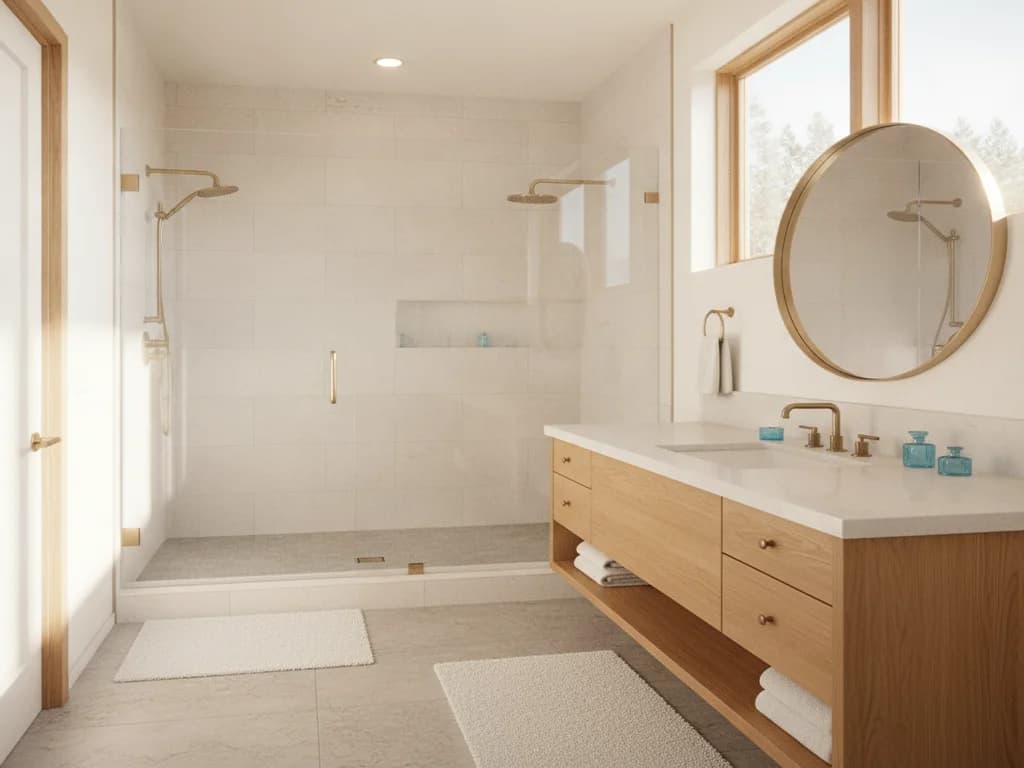
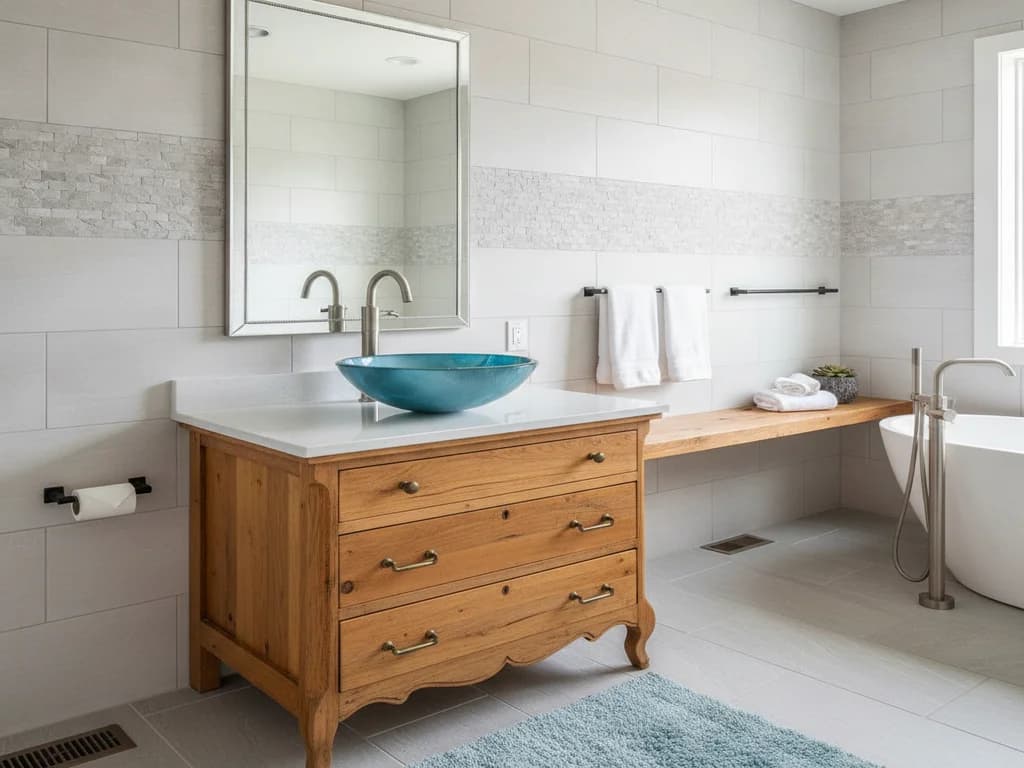
11. A furniture-style vanity looks like a freestanding piece of furniture — a repurposed dresser, a console, or a cabinet on legs — rather than a built-in box. It brings warmth, character, and a sense of history to a bathroom, which is why it suits older homes so well. 12. A genuine antique or vintage piece can be adapted with a sink and plumbing for a true one-of-a-kind vanity, while many manufacturers make new vanities in the furniture-style look.
Best for: older and character homes, transitional and traditional baths, and anyone who wants the vanity to feel collected rather than installed. Across the Treasure Valley, a furniture-style piece is a natural fit for the small original bathrooms of North End bungalows and Bench-era homes.
Which vanity styles match which design looks?
Style is the aesthetic layer you apply last. 13. Modern/minimalist vanities favor flat slab fronts, handleless or integrated pulls, and floating mounts — clean and contemporary. 14. Farmhouse vanities use shaker doors, apron details, and warm or painted finishes for a cozy, lived-in feel. 15. Transitional vanities split the difference with simple shaker doors and understated hardware, which is why they age so gracefully. 16. Traditional vanities lean into raised panels, furniture details, and richer finishes.
The key is to match the vanity style to the rest of the home so the bathroom feels of a piece. A sleek slab vanity in a craftsman bungalow can look out of place, while a transitional shaker style works almost everywhere — one reason it is the safest long-term pick.
How do sink choices affect the vanity?
The sink type changes both the look and the daily upkeep of a vanity. 17. A vessel sink sits on top of the counter like a bowl — a striking, sculptural look that pairs beautifully with furniture-style pieces, though the raised rim needs wiping and the higher basin affects comfortable height. 18. An undermount sink mounts below the counter for a seamless, easy-to-wipe surface with no rim to catch grime — the practical, low-maintenance default. An integrated sink, molded as one piece with the countertop, is the easiest of all to clean since there is no seam at all.
Match the sink to how you use the room: undermount and integrated for fuss-free family bathrooms, vessel where a statement matters more than effortless cleaning. Note that the countertop material itself — quartz, granite, marble, and their care and durability — is a separate decision covered in our guide to vanity countertop materials.
What vanity height should you choose?
19. Vanity height is a comfort decision that quietly shapes daily use. Standard vanity height runs around 30–32 inches, the long-familiar bathroom height. Comfort or “counter” height runs around 34–36 inches — the same as a kitchen counter — and saves taller adults from stooping. The NKBA’s guidelines treat both as acceptable ranges, so the right number is the one that fits the people using the room.
Comfort height suits adults and shared master baths; standard height is friendlier for children and for vessel sinks (whose raised basin adds to the effective height). Because a floating vanity can be hung at any height, it is the easiest way to dial in a custom comfort height.
How do you size a vanity to a small bathroom?
20. In a tight bathroom, the vanity has to earn its footprint. Look at depth as well as width — a standard 21-inch-deep vanity can be swapped for a shallower 18-inch or even narrower model that frees up several inches of walking room. A corner vanity uses an otherwise-dead corner, and a floating mount keeps the floor visible to stretch the sense of space.
The common mistake is choosing a vanity that is too big for the room because storage feels scarce — but an oversized vanity that blocks the door swing or crowds the toilet makes a small bathroom worse, not better. For broader space-making tactics beyond the vanity, see our small-bathroom design tricks.
How should vanity storage be configured?
Two cabinets of the same size can hold wildly different amounts depending on whether they use drawers or doors. Drawers pull out so you see everything; doors hide items at the back behind the plumbing. Drawers built around the P-trap (U-shaped or notched) recover the space directly under the sink that would otherwise be lost.
For most households, a drawer-forward vanity is the more usable choice, with a single door cabinet reserved for tall items like cleaning supplies. We keep the deep dive here brief on purpose — for organizers, dividers, and in-wall options, our smart vanity storage listicle covers it fully.
What about faucet placement?
Faucet placement is easy to overlook and affects both the counter and the plumbing. A deck-mount faucet sits on the vanity top (or on the sink), the most common and flexible arrangement. A wall-mount faucet comes out of the wall above the basin, which frees up counter space and pairs strikingly with vessel sinks — but it has to be roughed into the wall, so it is a decision made early, not late.
Wall-mount faucets read clean and modern and are easier to wipe around, but they commit you to a specific basin position and height. If a wall-mount faucet is the look you want, plan it during design so the plumbing rough-in lands in the right spot.
Which vanity works best in an older Boise home?
Older Treasure Valley homes — North End bungalows, Bench ranches, mid-century baths — usually have small original bathrooms with tight footprints and character worth honoring. A furniture-style vanity or a well-proportioned compact single is the natural fit: it respects the era, fills the space without overwhelming it, and adds the warmth these rooms were built with.
Watch the rough-in, too. Original plumbing in older homes sometimes sits in spots that limit where a vanity can go or how wide it can be, which is one more reason to confirm the plumbing reality before falling for a specific piece. Vanity selection is part of a full bathroom remodel, where the cabinet, plumbing, and counter are planned together.
What vanity mistakes should you avoid?
The big three: choosing the wrong scale (a vanity too large for the room or two sinks crammed into too little wall), blocking drawers with the sink plumbing (instead of specifying notched drawers), and picking a style that clashes with the rest of the home. Each is avoidable with a little planning and each is expensive to undo once the vanity is installed and plumbed.
A subtler mistake is buying for looks alone and discovering the storage or height does not fit how you live. Decide function and fit first, then choose the finish you love within those constraints.
What should you decide before you buy?
Before you commit, nail down three things: the plumbing rough-in (where the supply and drain lines actually are, and whether you can move them), the room size (including door swings and clearances), and whether this is a look-first or function-first room. Those three settle configuration and mounting, leaving style as the enjoyable final layer.
Get the order right — configuration, mounting, then style, all checked against your plumbing and space — and the vanity will fit the room instead of fighting it. When you are ready to picture the result, see finished Boise bathrooms for how these choices come together.
Ready to plan your Boise bathroom?
Licensed & insured · 3-year workmanship warranty
Frequently asked questions
- What is a floating vanity and is it good for small bathrooms?
- A floating (wall-mounted) vanity hangs on the wall with open floor beneath it. That visible floor makes a small bathroom feel larger and airier, and it is easier to clean under. It needs solid wall blocking to carry its weight and tidy plumbing routing, but it is an excellent small-bath choice.
- Single vs double vanity — which should I choose?
- Choose a double vanity for a shared master bath only if you have the wall width to give each sink real counter space, plus plumbing for two basins. In smaller or secondary bathrooms, a generous single vanity offers more usable counter and storage than two cramped sinks.
- What is a furniture-style vanity?
- A furniture-style vanity looks like a freestanding piece of furniture — a repurposed dresser, console, or cabinet on legs — rather than a built-in box. It adds warmth and character, which is why it suits older and traditional homes, including the small original bathrooms common in older Boise houses.
- What is the standard bathroom vanity height?
- Standard vanity height runs about 30–32 inches, while comfort or “counter” height runs about 34–36 inches (kitchen-counter height). Comfort height suits taller adults and shared master baths; standard height is friendlier for children and vessel sinks, whose raised basin adds effective height.
- Vessel vs undermount sink — what’s the difference for a vanity?
- A vessel sink sits on top of the counter like a bowl for a sculptural look, but its rim needs wiping and it raises the effective height. An undermount sink mounts below the counter for a seamless, easy-to-clean surface with no rim — the lower-maintenance default for family bathrooms.
- How wide does a wall need to be for a double vanity?
- Enough that each sink has comfortable counter space on its outside edge and the two basins are not crowded — squeezing two sinks into a narrow run feels worse than one good single. Follow NKBA spacing guidelines and confirm there is plumbing for two basins before committing.
Sources
- National Kitchen & Bath Association — vanity height & clearance guidelines
- National Association of Home Builders — bathroom design trends
- ADA.gov — accessible lavatory & vanity clearances
Claims and figures are drawn from the sources above and provided for general guidance; your project may vary. Photography is illustrative of design concepts. For a fixed price on your specific bathroom, request a free estimate.