Updated June 30, 2026 · 9 min read
By Boise Bath — bathroom & shower remodeling in Boise & the Treasure Valley
The short answer
Great bathroom lighting layers three sources: task light beside the mirror (not just overhead), ambient fill for the room, and accent light for niches and coves. Choose warm-to-neutral color temperature (around 2700–3500K) with high CRI, use IC-rated recessed cans and wet- or damp-rated fixtures in shower zones, and put everything on dimmers.
Key takeaways
- Layer task, ambient, and accent light — one ceiling fixture alone leaves shadows.
- Light faces from the sides of the mirror to eliminate under-eye shadows.
- Color temperature matters: warm-to-neutral (about 2700–3500K) with high CRI flatters skin.
- Match fixtures to location: IC-rated cans in insulated ceilings, wet/damp-rated fixtures near water.
- Dimmers and separate zones let one bathroom shift from bright grooming to relaxed soaking.
Why does bathroom lighting feel wrong so often?
Most bathrooms are lit by a single fixture in the middle of the ceiling — and that one choice is responsible for nearly every lighting complaint. A lone overhead light casts everything downward, which throws hard shadows under the eyes, nose, and chin exactly where you need to see your face clearly. The result is a room that is technically bright but unflattering and oddly flat.
The fix is not a bigger bulb; it is more layers of light placed where they do specific jobs. Good bathroom lighting borrows the same logic designers use everywhere: combine several light sources at different heights and intensities so the room is evenly filled and faces are lit from the right angles. Get the layering and two key specs right, and even a small Treasure Valley bathroom can feel both bright and warm.
What are the three layers of bathroom lighting?
Every well-lit bathroom combines three layers, and naming them makes planning easy. 1. Task lighting illuminates a specific activity — grooming at the mirror above all. 2. Ambient lighting is the soft overall fill that lets you see the whole room safely. 3. Accent lighting adds depth and drama by highlighting features like a niche, a cove, or artwork.
The mistake almost everyone makes is using one fixture to do all three jobs. A single ceiling light is at best decent ambient light and a poor task light, with no accent at all. Layering means each job gets its own source, and the layers add up to a room that reads professionally designed.
What counts as task lighting?
4. Task lighting in a bathroom means the light at the mirror, where you shave, apply makeup, and check your appearance. It needs to fall evenly on the face from the front and sides, not from a single point overhead. This is the layer that most directly determines whether the bathroom feels good to use every morning.
Because grooming demands accurate, shadow-free light, task lighting is where color quality and fixture placement matter most — the two topics covered just below.
What is ambient lighting in a bathroom?
5. Ambient lighting is the general fill that lets you move around the room and see into corners. In most bathrooms it comes from recessed ceiling cans or a flush-mount fixture spread across the ceiling. 6. A central decorative flush mount can supply ambient light while also serving as a design element, especially in a powder room.
The goal with ambient light is even coverage without hot spots or dark corners. In a larger or master bathroom retreat, several recessed cans usually do this better than one big fixture, because the light is distributed rather than concentrated in the middle of the room.
What is accent lighting for?
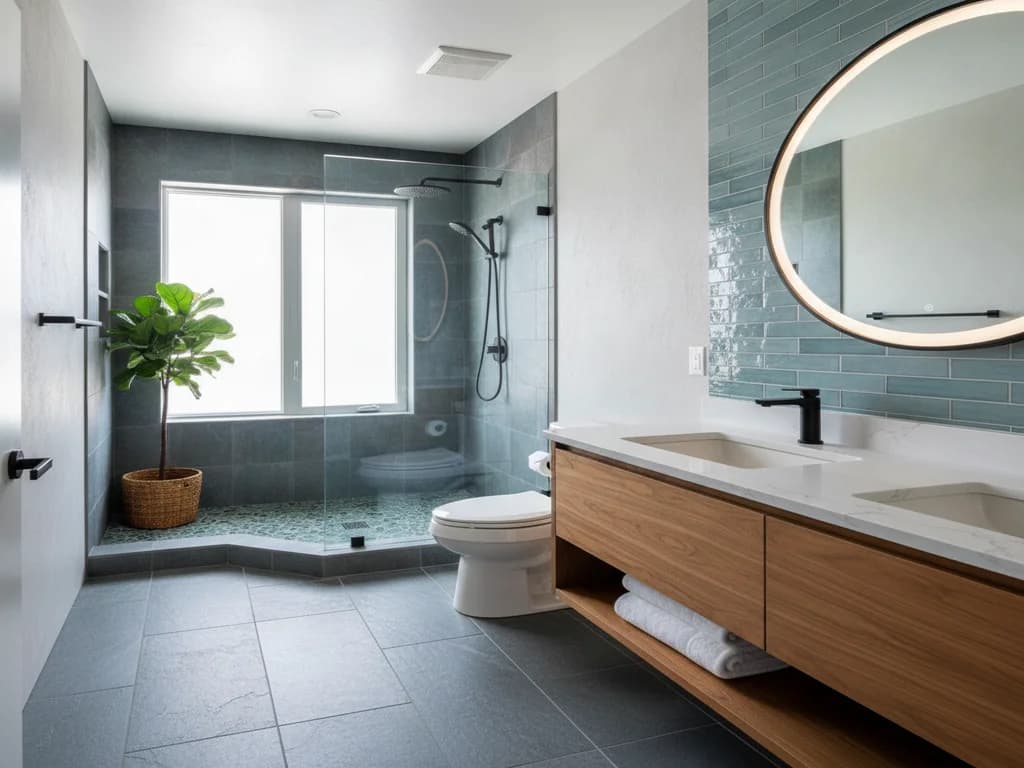
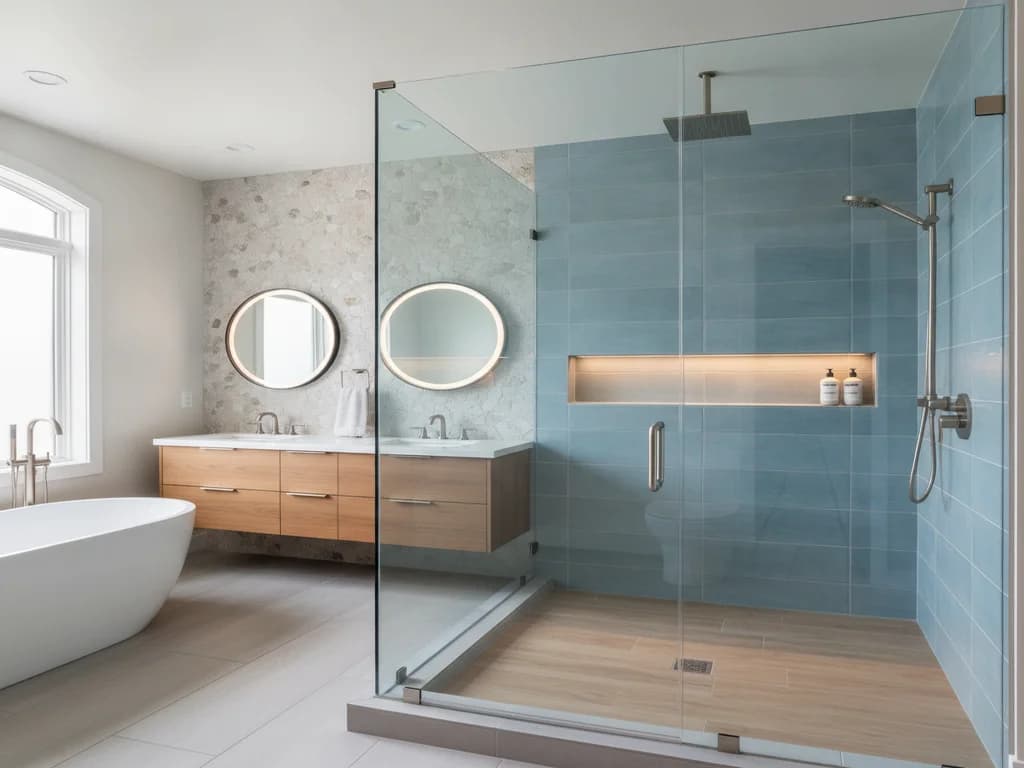
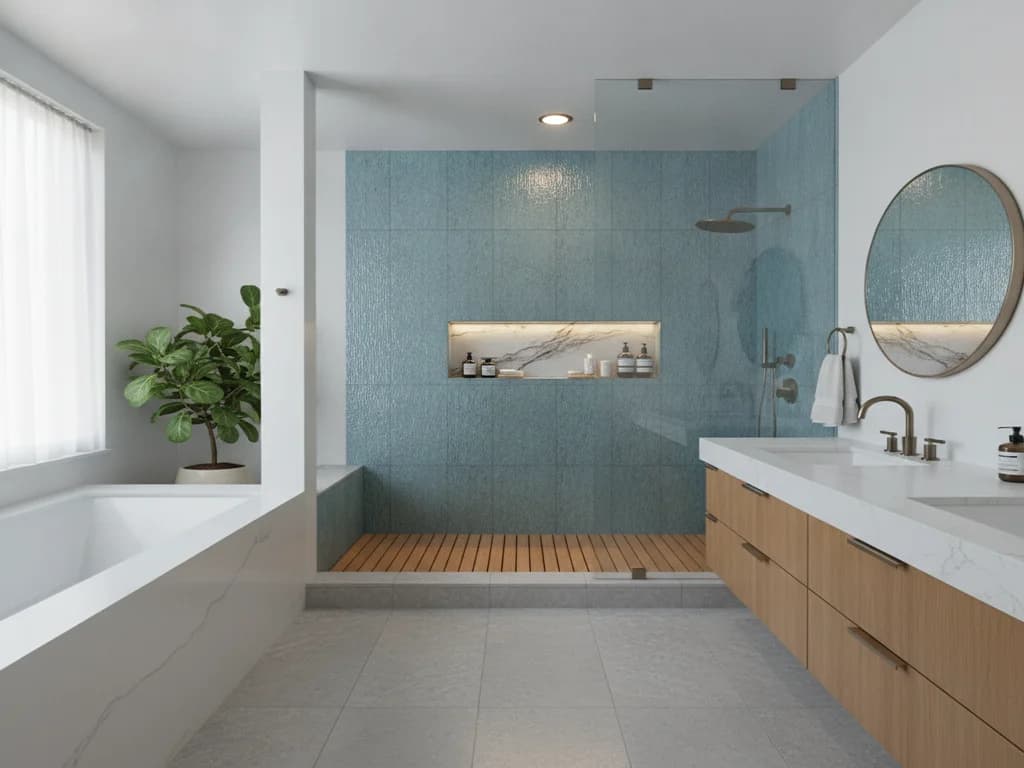
7. Accent lighting is the layer that turns a functional bathroom into a designed one. It highlights specific features — a lit shower niche, a cove above the vanity, an LED strip under a floating vanity, or a small picture light over art. 8. Accent light also doubles as gentle nighttime lighting: a soft toe-kick or under-vanity glow lets you use the bathroom at 2 a.m. without the harsh jolt of full overhead light.
Accent lighting is optional in the strictest sense, but it is the layer that most separates an ordinary bathroom from a spa-like one. A little goes a long way — one or two well-placed accents read luxurious, while too many compete with each other.
Where should vanity lighting actually go?
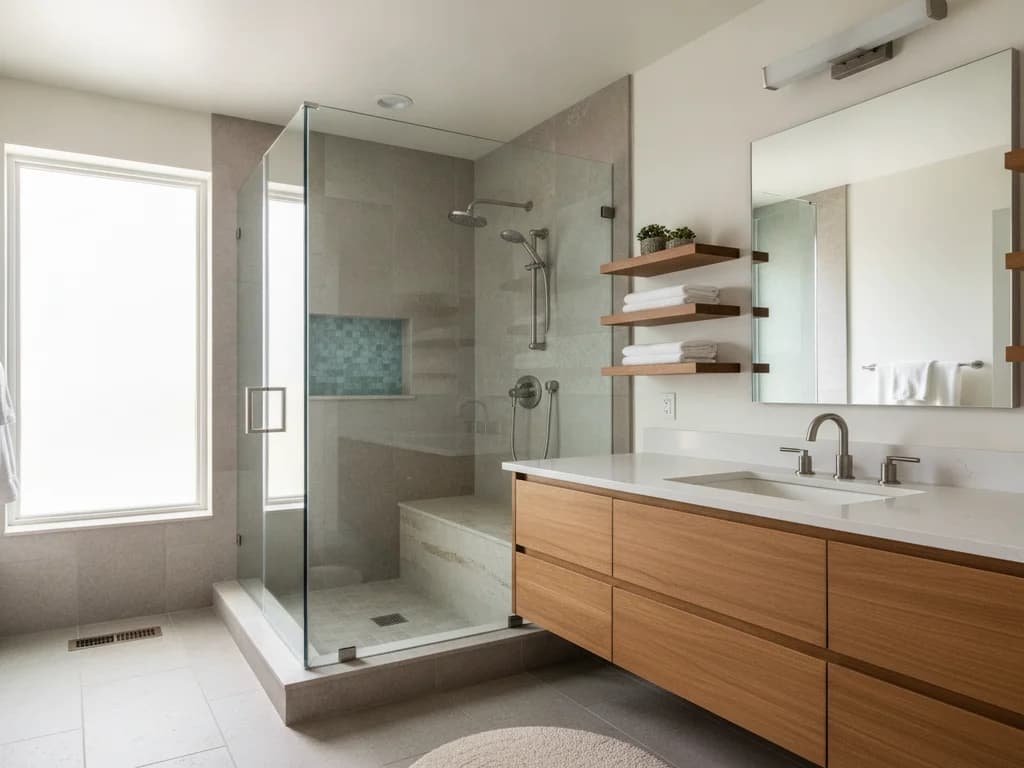
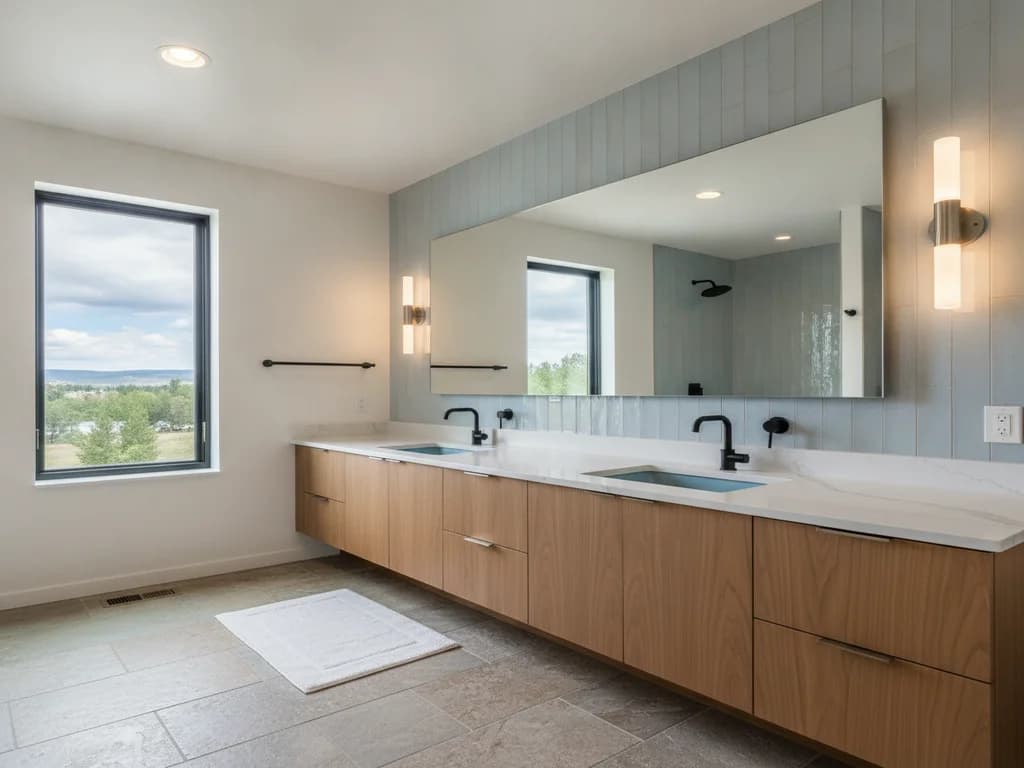
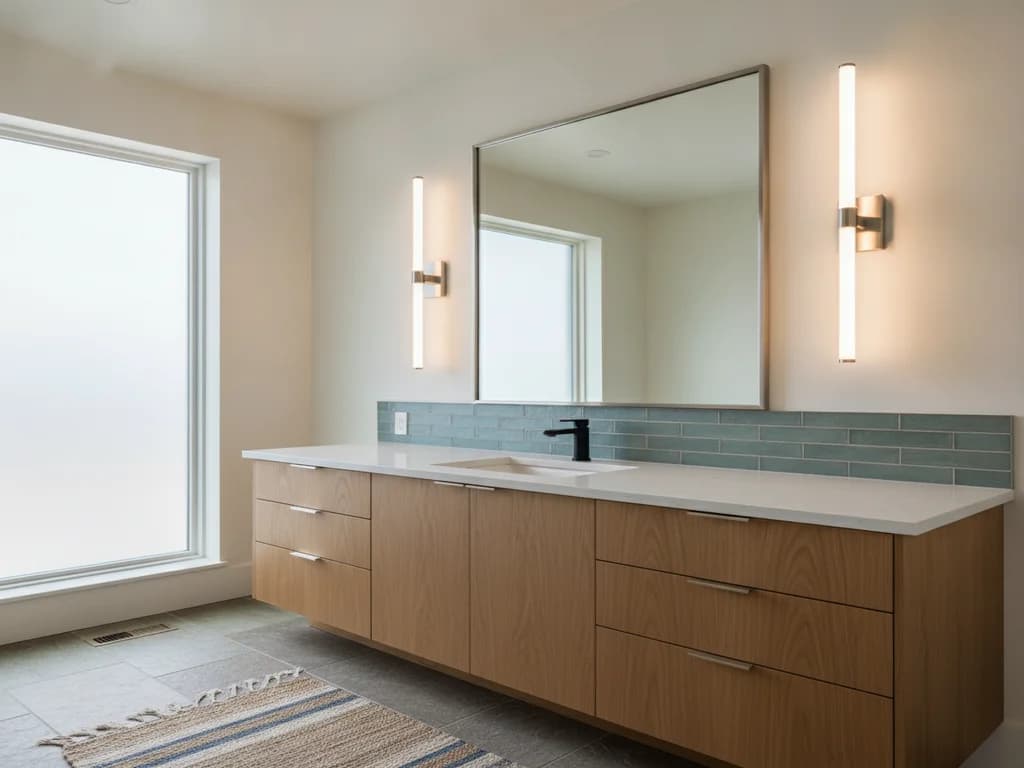
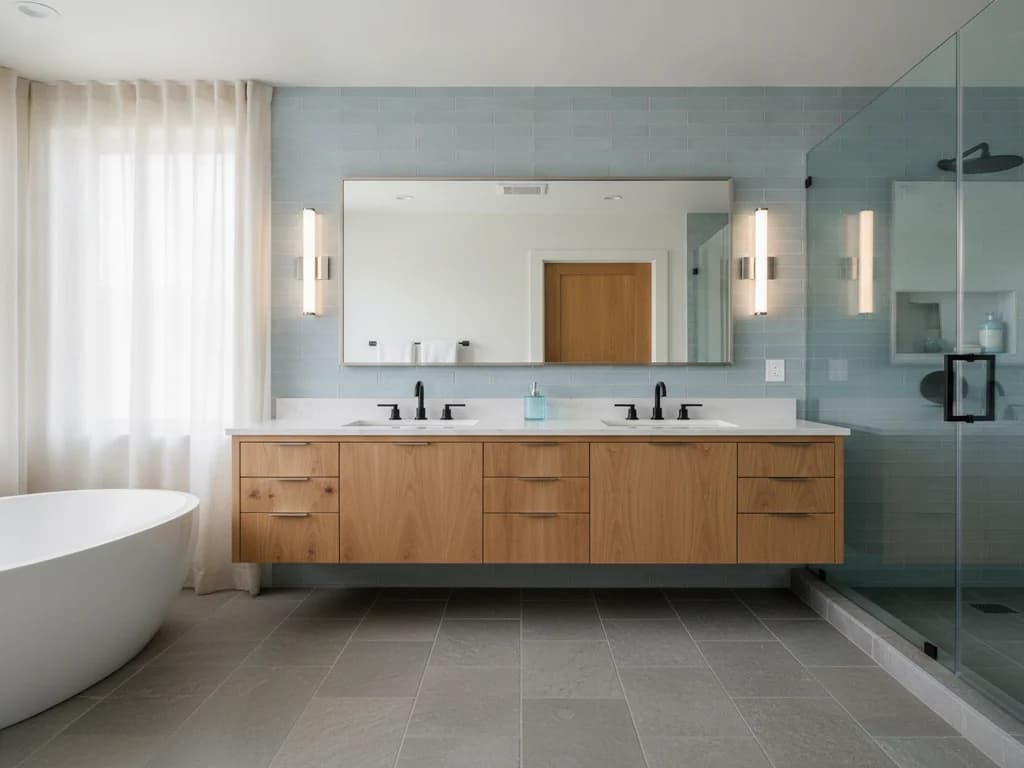
This is the most important placement decision in the room. 9. Sconces or vertical fixtures mounted on either side of the mirror light the face evenly from both sides, eliminating the under-eye and under-chin shadows that a single overhead light creates. Designers consistently recommend side-mounted task light over the bathroom for exactly this reason.
10. When flanking sconces are not possible — a mirror that spans the whole wall, for instance — a horizontal fixture mounted above the mirror is the next-best option, ideally paired with another light source to soften shadows. 11. Mount side sconces at roughly eye level (commonly around 60–66 inches to center) and space them wide enough to frame the face. The National Kitchen & Bath Association’s lighting recommendations reinforce flanking the mirror as the gold standard for grooming light.
What color temperature is best for a bathroom?
12. Color temperature, measured in Kelvin, sets the mood of the light. Warm light (around 2700K) feels cozy and relaxing; neutral light (around 3000–3500K) reads clean and natural; cool light (4000K and up) feels clinical. For most bathrooms, a warm-to-neutral range of roughly 2700–3500K is the sweet spot — flattering at the mirror without feeling dim or yellow.
13. Consistency matters as much as the number: mixing a warm flush mount with cool vanity bulbs makes a room look mismatched. Pick one color temperature across the bathroom, or use tunable bulbs that shift warm for soaking and neutral for grooming. ENERGY STAR’s residential lighting guidance is a good reference for choosing quality LED bulbs that hold their stated color over time.
Why does CRI matter at the mirror?
14. Color Rendering Index (CRI) measures how accurately a light source shows colors compared to natural daylight, on a scale to 100. At the vanity, high CRI is what lets you see true skin tone — essential for makeup that looks right outdoors and for spotting a missed patch while shaving. Look for bulbs rated CRI 90 or higher for mirror lighting.
A bulb can have a pleasant color temperature and still render skin poorly if its CRI is low, which is why the two specs go together. For grooming light specifically, prioritize high-CRI lamps even if they cost a little more.
What does IC-rated mean for recessed lights?
15. IC stands for “Insulation Contact.” An IC-rated recessed can is built to sit safely in direct contact with ceiling insulation without overheating — which is exactly the situation in any insulated ceiling, including the top-floor and single-story bathrooms common across the Treasure Valley. Using a non-IC can where it touches insulation is a fire risk, so IC-rated is the right default for recessed lighting in an insulated ceiling.
Modern LED recessed fixtures are commonly both IC-rated and air-tight, which also reduces drafts and energy loss. This is the kind of detail best confirmed with a licensed electrician rather than guessed at — the safe choice is straightforward once you know the term.
Which fixtures are safe in the shower or over the tub?
16. Fixtures near water carry a moisture rating, and using the wrong one is both a code and a safety issue. A wet-rated fixture is built to handle direct water contact — the correct choice for inside a shower or directly over a tub. A damp-rated fixture handles humidity and condensation but not direct spray, which suits the general bathroom area away from the shower.
17. In practice, that means the recessed light over your shower should be wet-rated, while the vanity and ambient fixtures can be damp-rated. Manufacturer install guides specify each fixture’s rating, and an electrician will match the fixture to its zone. This is a non-negotiable safety detail, not a style preference.
Where lighting meets the electrician
Fixture ratings (IC, wet, damp) and circuit work are safety items, not DIY styling. Choose the look and the layers yourself, then have a licensed electrician confirm the right fixture for each zone and handle the wiring to code.
Should bathroom lights be on dimmers?
18. Yes — dimmers are one of the cheapest upgrades with the biggest payoff. They let a single bathroom serve two opposite moods: bright, full output for grooming and cleaning, and a low, warm glow for a relaxing soak. 19. Better still is zoning: put the vanity task lights, the ambient cans, and any accent lighting on separate switches so you can dial in scenes rather than running everything at once.
Make sure the dimmer is rated for the LED bulbs you choose, since not every LED is fully dimmable and a mismatch causes flicker or buzz. Dimmable, zoned lighting is what turns a standard bathroom into one that adapts to the time of day.
What are the best mirror lighting options?
20. Beyond flanking sconces, three mirror options stand out. A backlit LED mirror provides a soft halo of even light and a modern look in one piece. A lighted medicine cabinet combines storage with built-in vanity light. And a traditional pair of sconces flanking a framed mirror gives the most flattering, three-dimensional face light of all.
Each has a place: backlit mirrors suit clean, contemporary baths; lighted cabinets win where storage is tight; flanking sconces are the designer default for the best grooming light. Whatever you choose, pair it with high-CRI, warm-to-neutral light so faces look right.
How do you add accent lighting?
21. Accent lighting is where a bathroom gets its character. A lit shower or wall niche turns storage into a glowing feature. Cove lighting tucked above the vanity or along a soffit washes the wall with soft light. Toe-kick lighting under the vanity and LED strips under a floating vanity create a high-end nighttime glow.
Keep accents subtle and purposeful — one or two focal points, not a light show. Used well, accent lighting is the difference between a bathroom that merely works and one that feels like a retreat.
How do you work with natural light?
Daylight is the best light there is, and a bathroom that has it should use it. A window or skylight floods the room with high-CRI natural light that makes tile, stone, and skin look their best, and it cuts the need for daytime fixtures. Where privacy is a concern, frosted or top-band glazing lets light in without sightlines.
The catch is balance: natural light is warm and bright at midday and gone at night, so your fixture layers have to stand in after dark and on Boise’s gray winter days. Plan the artificial layers to match the daytime feel as closely as possible so the room is consistent around the clock.
How many fixtures does a small bathroom need?
Even a small bathroom benefits from all three layers — it just needs them scaled down. A compact bath might use a single pair of vanity sconces (task), one or two recessed cans or a flush mount (ambient), and one small accent like a lit niche. The principle does not change with size; the quantity does.
The common error in a small room is to rely on one ceiling fixture because the space feels too small for more. In reality, side-of-mirror task light plus a little ambient fill makes a small bathroom feel far larger and more finished. For more space-making tactics, our small-bathroom layout tricks cover mirrors, scale, and reflectivity that amplify light.
What lighting mistakes should you avoid?
The big four: relying on a single overhead fixture, lighting the face from above instead of the sides, mixing color temperatures across the room, and putting the wrong moisture rating in a wet zone. Each is easy to avoid once you know it, and together they account for most bad bathroom lighting.
A couple of others worth naming: forgetting dimmers (which lock you into one harsh setting) and choosing low-CRI bulbs that distort color at the mirror. Plan the layers, match fixtures to their zones, keep the color temperature consistent, and dim everything — that is the whole recipe. For deeper context on older Boise homes, north-facing and windowless baths rely even more on well-layered fixtures, and we keep dollar figures in our guide on what a Boise remodel costs. When you are ready, request a free design consultation.
Ready to plan your Boise bathroom?
Licensed & insured · 3-year workmanship warranty
Frequently asked questions
- What is the best color temperature for bathroom lighting?
- A warm-to-neutral range of roughly 2700–3500K suits most bathrooms — flattering at the mirror without feeling dim or clinical. Keep the color temperature consistent across all fixtures, and pair it with high-CRI bulbs (90+) so skin tone looks accurate for grooming and makeup.
- Should vanity lights go above or beside the mirror?
- Beside the mirror is best. Sconces or vertical fixtures on either side of the mirror light the face evenly from both sides and eliminate the under-eye and under-chin shadows a single overhead fixture creates. A horizontal fixture above the mirror is the fallback when side mounting is not possible.
- What are the three layers of bathroom lighting?
- Task lighting (grooming light at the mirror), ambient lighting (overall fill from recessed cans or a flush mount), and accent lighting (drama from lit niches, coves, or under-vanity strips). Using all three — rather than one ceiling fixture — is what makes a bathroom feel professionally lit.
- What does wet-rated vs damp-rated mean for shower lights?
- A wet-rated fixture can handle direct water and is required inside a shower or over a tub. A damp-rated fixture handles humidity and condensation but not direct spray, which suits the general bathroom area. Match each fixture to its zone, and confirm ratings with a licensed electrician.
- What is an IC-rated recessed light and when do I need one?
- IC (Insulation Contact) rated recessed cans can sit safely against ceiling insulation without overheating. You need them in any insulated ceiling — common in single-story and top-floor Treasure Valley bathrooms. Using a non-IC can in contact with insulation is a fire risk.
- Do bathroom lights need to be on dimmers?
- They should be. Dimmers let one bathroom shift from bright grooming light to a low, warm glow for soaking, and zoning the vanity, ambient, and accent layers on separate controls adds flexibility. Make sure the dimmer is rated for your specific LED bulbs to avoid flicker.
Sources
- ENERGY STAR — residential lighting and LED guidance
- National Kitchen & Bath Association — bathroom lighting recommendations
- Progress Lighting — fixture damp/wet/IC rating guidance
Claims and figures are drawn from the sources above and provided for general guidance; your project may vary. Photography is illustrative of design concepts. For a fixed price on your specific bathroom, request a free estimate.