Updated July 16, 2026 · 7 min read
By Boise Bath — bathroom & shower remodeling in Boise & the Treasure Valley
The short answer
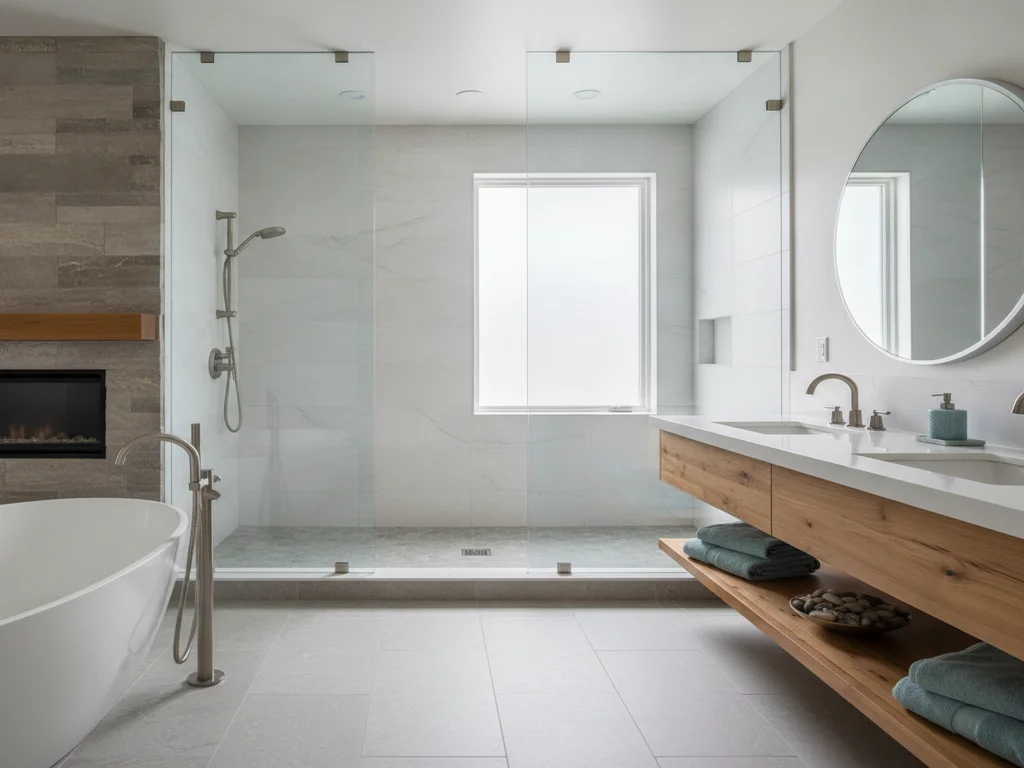
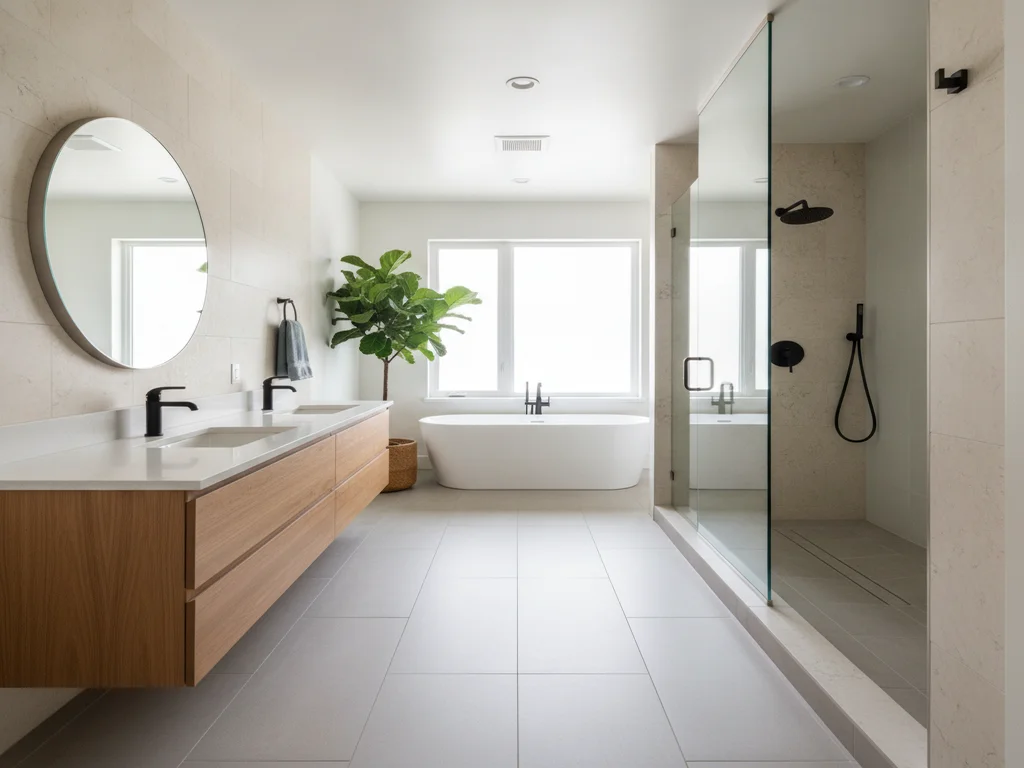
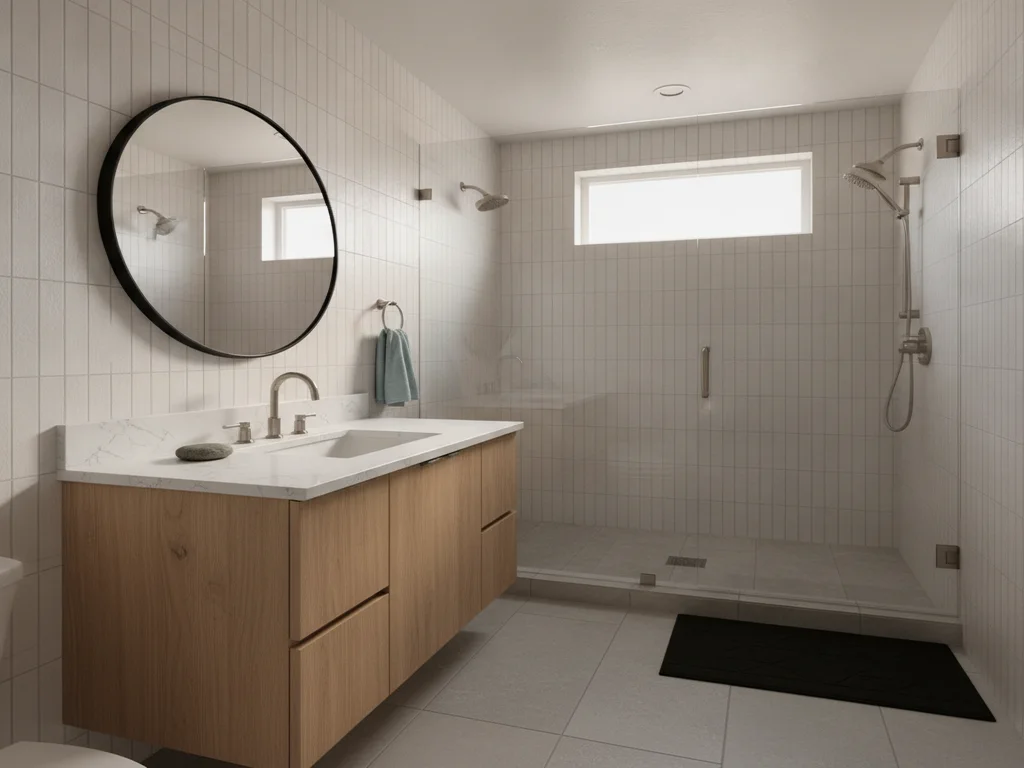
Large-format tile — 12×24 inches — in a light matte tone is the best tile for small bathrooms. Fewer grout lines read as continuous surface, which makes the room feel bigger; small tile does the opposite. Match the grout color to the tile, run one floor tile wall-to-wall, and let glossy wall tile bounce the light around.
Key takeaways
- Bigger tile makes a small room feel bigger: fewer grout lines read as more continuous surface, so 12×24-inch tile is the small-bathroom default, not a big-room luxury.
- Grout color is a free space trick — matching grout to tile erases the grid, while contrasting grout draws it and visually shrinks the room.
- Light, matte floors and light walls carry the space; save dark and bold tile for a single accent wall, not the whole envelope.
- One floor tile run wall-to-wall — including through a curbless shower line — reads as one uninterrupted plane, the strongest enlarging move available.
- Glossy wall tile earns its keep in small bathrooms, bouncing limited light around; the floor still needs matte with a wet DCOF of 0.42 or higher.
- Vertical moves count: tiling walls to the ceiling and stacking rectangles vertically pulls the eye up and makes low, tight rooms feel taller.
The short answer: go bigger and lighter than instinct says
Small bathrooms punish intuitive tile choices. Instinct says a small room needs small tile; the opposite is true. Instinct says bold tile adds character; wall-to-wall, it closes the room in. The reliable formula is large-format tile in light tones, grout matched to the tile, one floor run wall-to-wall, and shine placed on the walls where it bounces light.
Every pick below is a category — size, color, finish, grout, layout — because a mid-range porcelain with the right specs outperforms a designer tile with the wrong ones in a room this size. And porcelain is the assumed material throughout: the reasons live in porcelain vs. ceramic tile, and they do not change because the room shrank.
Tile is also just one lever on a small bathroom. If you are rethinking the whole room — layout, fixtures, storage — the wider playbook is small bathroom remodel ideas; this article stays on the surfaces.
Best tile size: large format, and the grout-line math behind it
The space illusion is really grout-line math. Every grout line is a visual interruption, and a small floor covered in 4-inch squares becomes a dense grid the eye reads as busy and bounded. The same floor in 12×24-inch tile has a fraction of the interruptions, so the eye reads surface instead of grid — and surface reads as space.
That makes 12×24 the small-bathroom default. Going even larger (24×24, 24×48) pushes the effect further but demands a dead-flat substrate and produces more cut waste in a room that is mostly cuts — in genuinely tiny rooms, oversized tile can tip into looking forced, with slivers at every wall. The deeper size trade-offs are covered in large-format vs. small tile.
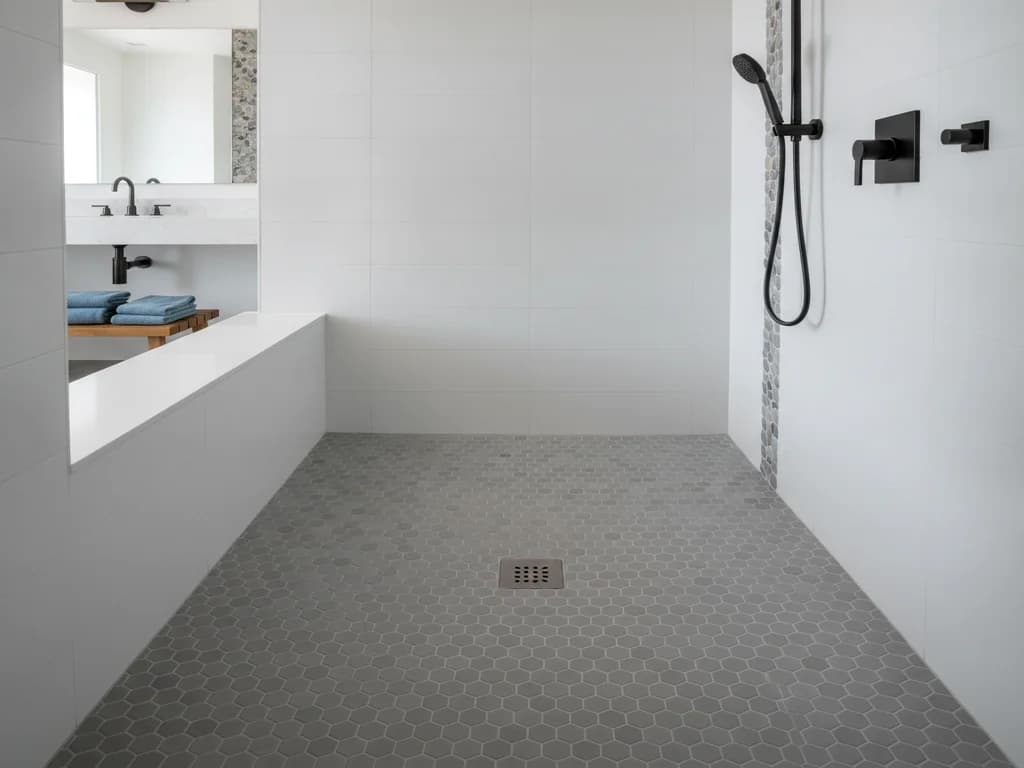
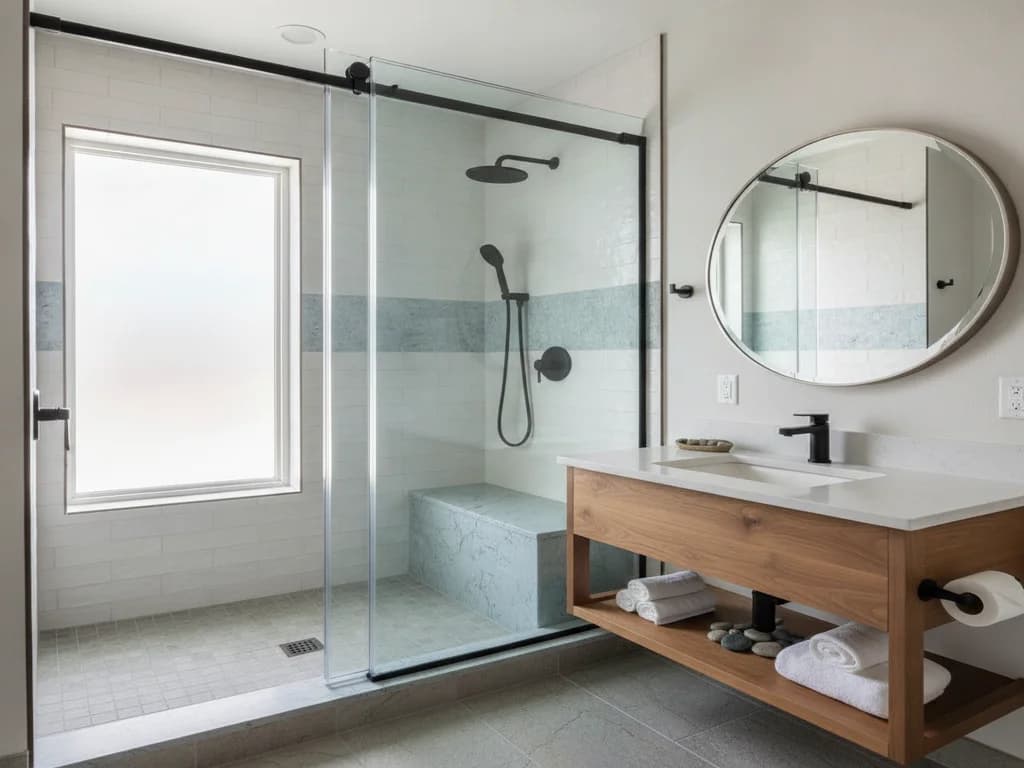
Small tile still has one honest job in a small bathroom: the shower floor, where 2-inch mosaic remains a slope-and-grip requirement no matter the room size. Keep the mosaic inside the shower line and in the same color family as the main floor, and it reads as texture, not clutter.
Best colors and finishes: light, warm, and shiny in the right places
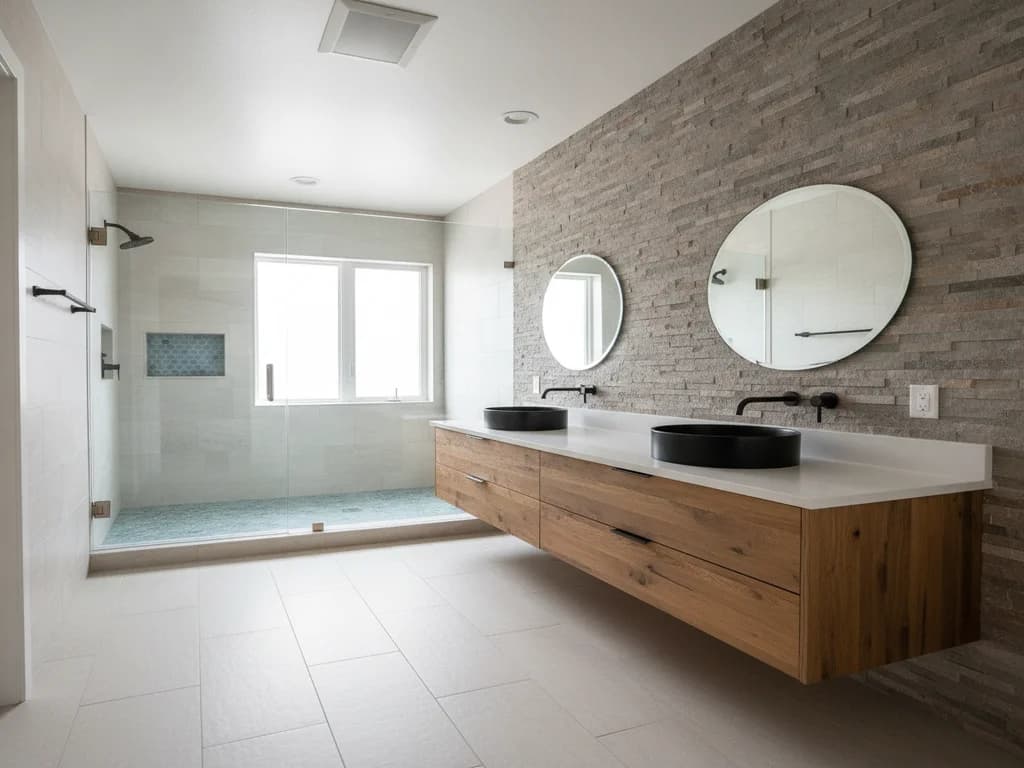
Light tones enlarge — whites, warm off-whites, pale greige — because they keep light moving instead of absorbing it. That does not mandate a sterile white box: warm light tones with subtle texture or veining add character without shrinking anything. Dark tile has a place, but as a single accent wall or a vanity backsplash moment, not the full envelope.
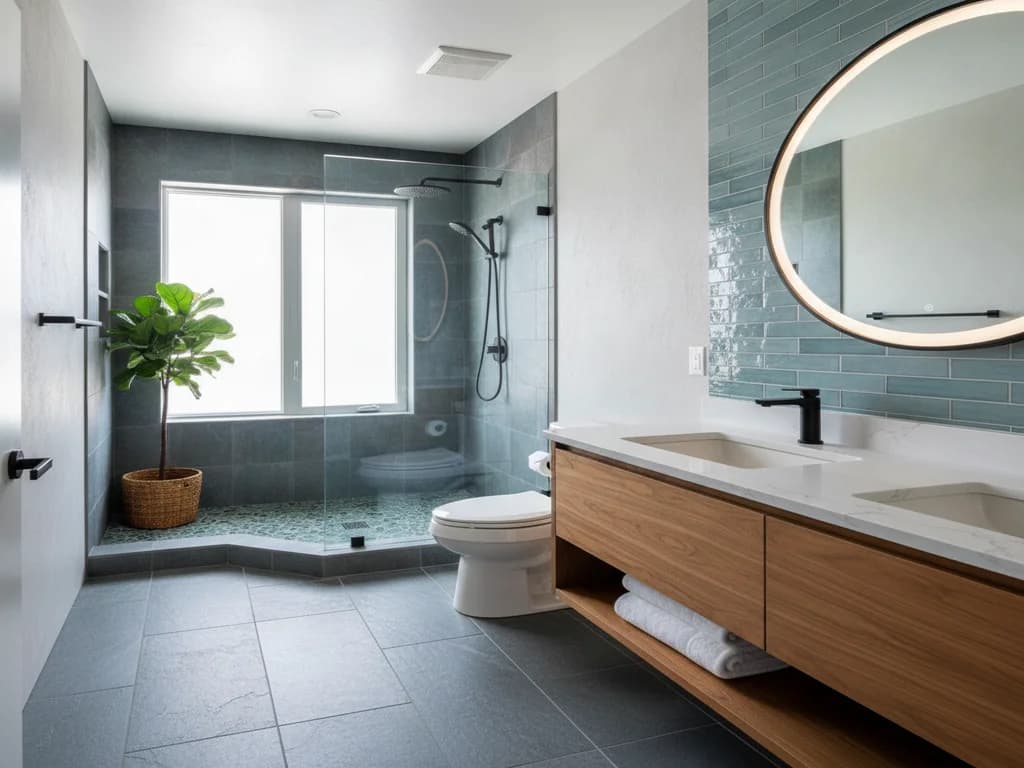
Finish placement is zone work. On walls, glossy and satin tile is the small bathroom’s friend — most small baths have one window or none, and reflective walls multiply whatever light exists. On the floor, the rules do not bend for square footage: matte, with a wet DCOF of 0.42 or higher per the ANSI standard TCNA references, because a small wet floor is exactly as slippery as a big one.
One caveat for this region: glossy surfaces show hard-water spotting, and Treasure Valley water is hard. In a small bathroom the affected square footage is small enough that a weekly wipe handles it — but if zero-maintenance matters more than sparkle, satin and matte walls in light tones give up only a little of the light bounce.
The grout trick: match it, shrink it, seal it
Grout color is the cheapest space upgrade in the tile aisle. Grout matched closely to the tile color makes joints disappear, and the whole surface reads as one plane — the large-format effect, amplified for free. High-contrast grout does the opposite: it draws the grid, turns every joint into a line, and visually dices the room. Contrast grout is a deliberate graphic look; in a small room it is usually the wrong one.
Joint width matters the same way. Modern rectified porcelain — tile ground to precise dimensions after firing — allows grout joints thinner than traditional tile, and thinner joints mean less grid. Ask for rectified tile when the goal is the most continuous surface possible; the tighter joints are most of what makes high-end tile floors read so seamless.
Whatever the color, small-bathroom grout works harder per square foot — one shower, one splash zone, one traffic lane, all compressed. Epoxy grout or a quality sealed cement grout keeps the lines from yellowing, which matters double when the lines match the tile: stained matching grout reads as a dirty floor, not dirty grout.
The single strongest move: one floor, no seams
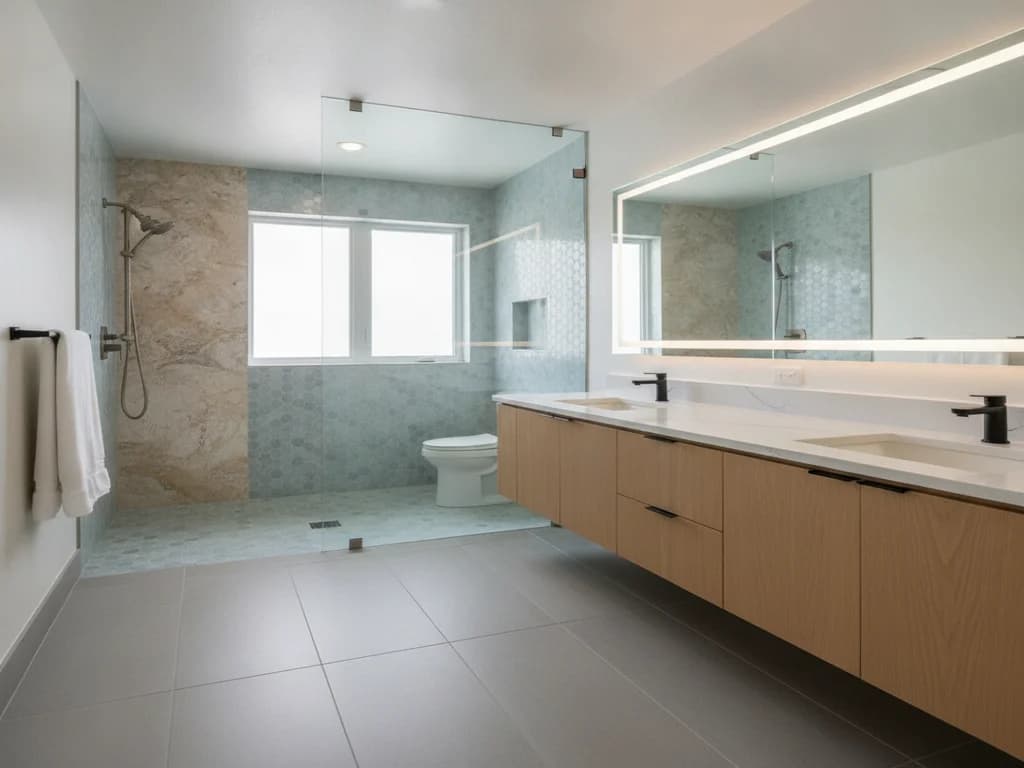
Run one floor tile wall-to-wall through the entire room — including through the shower entry if the design allows a curbless or low-profile transition. Every flooring change is a visual fence that chops square footage into zones; removing them makes the full footprint read as one room. In small bathrooms this one decision does more than any color or pattern choice.
The picks by category
Every recommendation above, in one table:
| Category | Best pick | Why | Skip |
|---|---|---|---|
| Floor size | 12×24-inch porcelain | Fewest grout lines; reads as continuous surface | 4-inch squares and busy small formats |
| Floor color/finish | Light tone, matte, wet DCOF ≥ 0.42 | Enlarges the room; safe when wet | Dark floors (shrink); polished (slip) |
| Wall tile | Glossy or satin light tile, floor to ceiling | Bounces limited light; height pulls the eye up | Stopping tile at half-wall in the shower zone |
| Grout | Color-matched, narrow joints (rectified tile), sealed or epoxy | Erases the grid; resists staining | High-contrast grout across the whole room |
| Layout | One tile wall-to-wall; vertical stack on walls | One plane reads as one bigger room | Multiple flooring changes; heavy borders |
| Accent | One wall or niche of bold/pattern tile | Character without closing the room in | Bold pattern on every surface |
DCOF baseline per the ANSI slip standard referenced by TCNA. Confirm the rating on the manufacturer spec sheet for the exact floor tile.
Layout tricks that cost nothing at install time
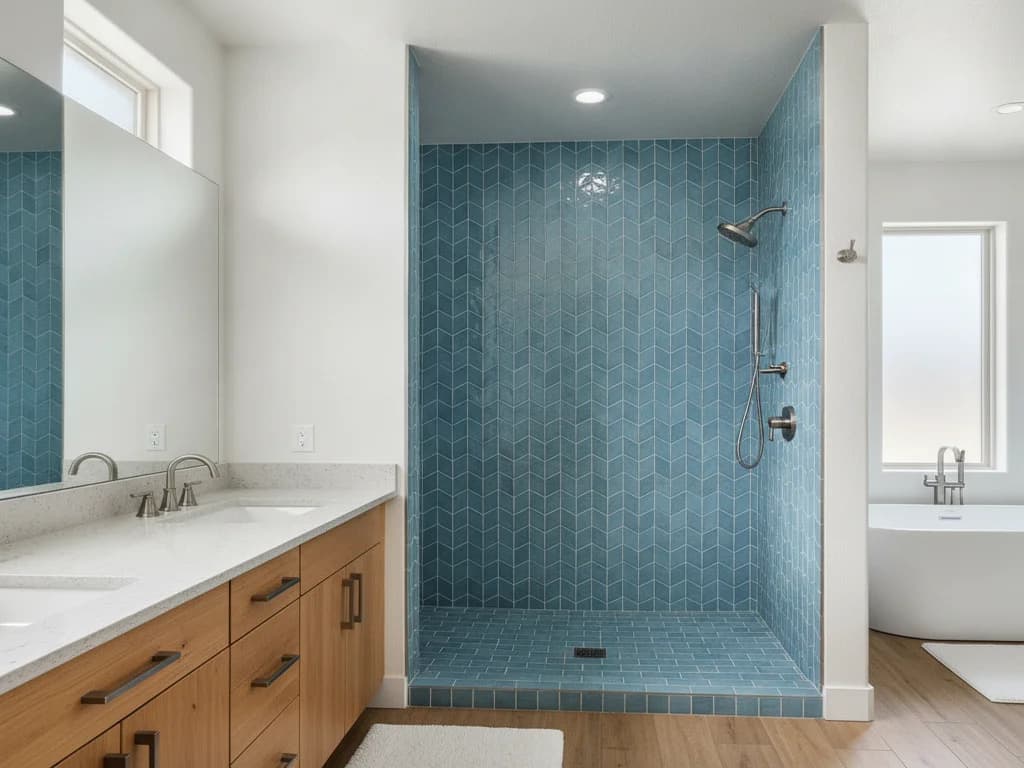
Direction and orientation are free at install and permanent afterward. Laying rectangular floor tile with its long dimension running toward the far wall stretches the room along that axis; on walls, stacking rectangles vertically pulls the eye upward and adds perceived height that small bathrooms almost always lack. Tiling shower walls to the ceiling — instead of stopping a foot short — finishes the same job.
Diagonal and herringbone layouts read as motion and can genuinely stretch a floor, at the cost of more cuts and a busier surface — in a very small room, a quiet straight-set or vertical stack usually wins. The full pattern menu, with where each earns its keep, is in bathroom tile pattern ideas.
And place the drama deliberately. One accent — a bold niche, a veined slab-look wall behind the vanity, a striking floor in a powder room where no one lingers — delivers character at small square footage. The mistake that shrinks small bathrooms is not bold tile; it is bold tile everywhere.
Matching the pick to your small bathroom
The category picks, applied to real situations:
- Standard small full bath: 12×24 light matte porcelain floor run wall-to-wall, glossy white vertical-stack shower walls to the ceiling, matched grout — the reference spec.
- Windowless bathroom: push reflectivity — satin or glossy light walls everywhere, light floor, and let the mirror and lighting multiply what the tile bounces.
- Low ceiling: vertical stack or vertical herringbone on the walls, tile to the ceiling, and long floor tile running toward the far wall.
- Powder room (no shower): the one small room where drama wins — a bold floor or wall works precisely because no one is in it long enough to feel enclosed.
- Small bath with a shower: keep the mosaic inside the shower line in the same palette as the floor; the shower-floor specifics live in best tile for shower floors.
- Renovating the whole room: pair this article with small bathroom remodel ideas — layout and storage moves multiply what the tile starts.
Ready to plan your Boise bathroom?
Licensed & insured · 3-year workmanship warranty
Frequently asked questions
- Is large tile OK in a small bathroom?
- Not just OK — it is the best pick. Fewer grout lines read as more continuous surface, which makes a small floor feel larger; small tile builds a dense grid that visually shrinks the room. The practical sweet spot is 12×24 inches: strong enlarging effect without the dead-flat substrate demands and cut waste that oversized formats bring to a room that is mostly cuts.
- What color tile makes a small bathroom look bigger?
- Light tones — white, warm off-white, pale greige — because they reflect light instead of absorbing it, and light is what small bathrooms are shortest on. Pair a light floor with light walls and match the grout color to the tile so the joints disappear. Dark tile still has a place as a single accent wall; it shrinks the room only when it wraps the whole envelope.
- Should a small bathroom have glossy or matte tile?
- Both, zoned. Glossy or satin tile on the walls bounces limited light around the room — a real advantage in small baths with one window or none. The floor stays matte regardless of room size, with a wet DCOF of 0.42 or higher, because polished tile underfoot is a slip hazard. One local note: glossy shows hard-water spots, so expect a regular wipe-down with Treasure Valley water.
- What grout color is best for a small bathroom?
- Matched to the tile, as closely as the grout line allows. Matching grout erases the grid so the surface reads as one plane — the same effect large-format tile buys, for free. Contrasting grout turns every joint into a drawn line and visually dices the room. Whichever color, use epoxy or well-sealed grout: stained grout that was meant to match reads as a dirty floor.
- Should I tile a small bathroom floor and shower with the same tile?
- Same palette, different format. Run the main floor tile wall-to-wall — through a curbless entry if you have one — for the most continuous plane possible, but switch to 2-inch mosaic inside the shower floor itself, where slope and slip rules apply at any room size. Keeping one color family across both makes the format change read as intentional texture rather than a seam.
Sources
- Tile Council of North America (TCNA)
- National Kitchen & Bath Association (NKBA)
- This Old House — Bathrooms
Claims and figures are drawn from the sources above and provided for general guidance; your project may vary. Photography is illustrative of design concepts. For a fixed price on your specific bathroom, request a free estimate.