Updated July 16, 2026 · 7 min read
By Boise Bath — bathroom & shower remodeling in Boise & the Treasure Valley
The short answer
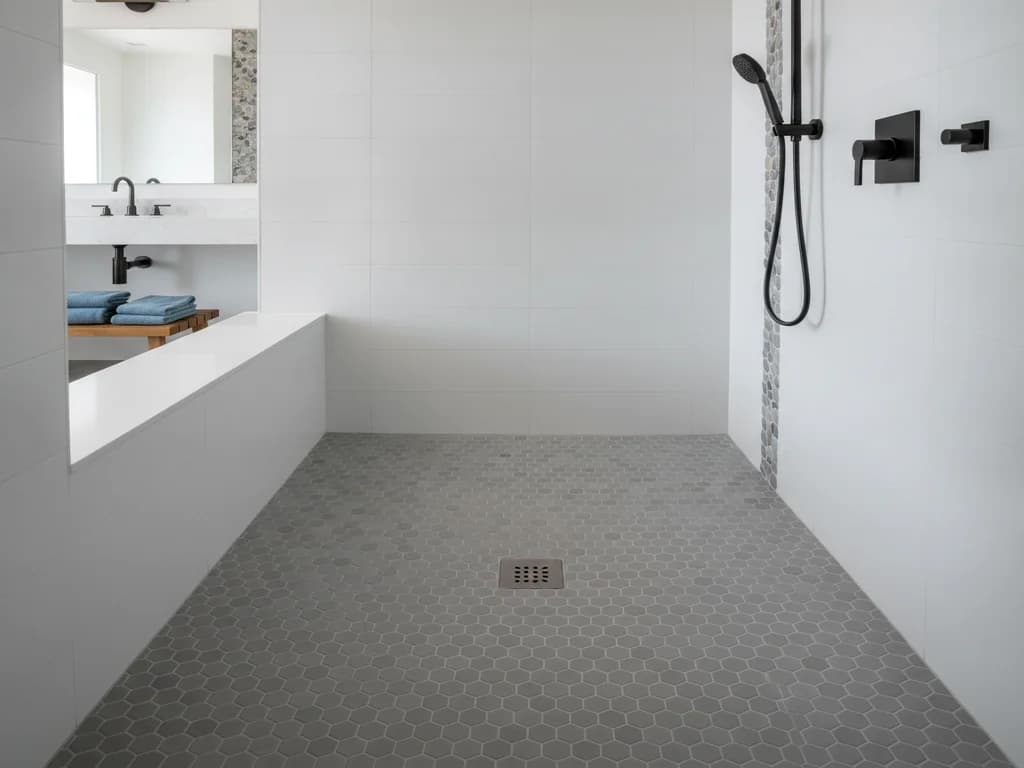
Matte porcelain mosaic — 2-inch squares, hexagons, or penny rounds — is the best tile for shower floors. Small tile conforms to the slope every shower floor needs to drain, and its dense grout joints add grip. Verify a wet DCOF rating of 0.42 or higher, the ANSI baseline TCNA references for wet floors.
Key takeaways
- Small tile is a drainage requirement, not a style choice: shower floors slope to the drain, and only tile roughly 2 inches or smaller follows that slope without lipping.
- The slip spec is DCOF: 0.42 or higher measured wet, per the ANSI standard TCNA references, is the floor — and a shower floor deserves margin above it.
- Matte porcelain mosaic is the reference pick: under 0.5% absorption, no sealing, and grip from both finish and grout joints.
- Pebble floors look spa-like but trade poorly: huge grout exposure to stain and seal, uneven underfoot, and often the first surface in the shower to look tired.
- Polished stone and glossy tile do not belong on a shower floor at any price point — they fail the one spec that is a safety issue.
- The floor tile sits on a sloped, waterproofed assembly; the best tile over a bad pan still fails.
The short answer: 2-inch matte porcelain mosaic, DCOF 0.42+
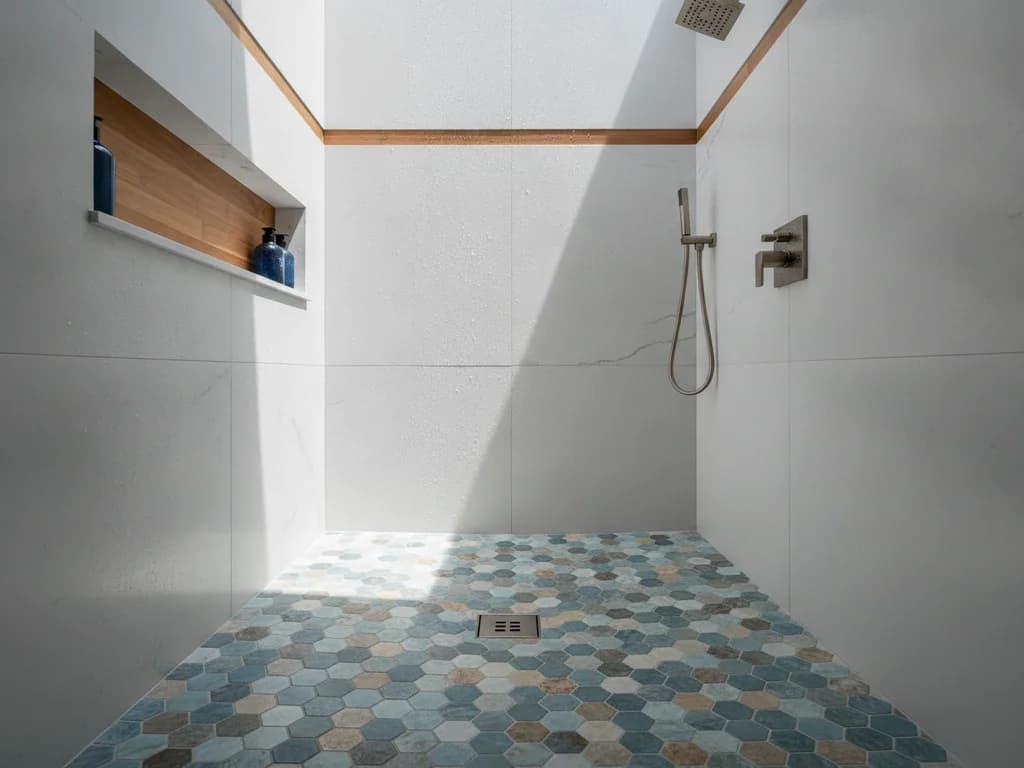
The reference spec for a shower floor is compact: porcelain mosaic at 2 inches or smaller, matte or textured finish, wet DCOF of 0.42 or better, sheet-mounted for even installation. That is the pick most professional shower floors in this market are built from, and every alternative below is measured against it.
The reason the spec is so narrow is that a shower floor does two jobs no other tile surface does. It must drain — meaning the whole plane slopes toward the drain, and the tile has to follow that compound curve without individual tiles tilting or lipping. And it must grip — because it is walked on barefoot, wet, and soapy every single day. Size solves the first job; finish and grout density solve the second.
If you are choosing tile for the whole shower — walls included — the broader picture lives in best tile for showers. This article stays on the floor, where the specs are strictest.
Why size is the first spec: slope conformity
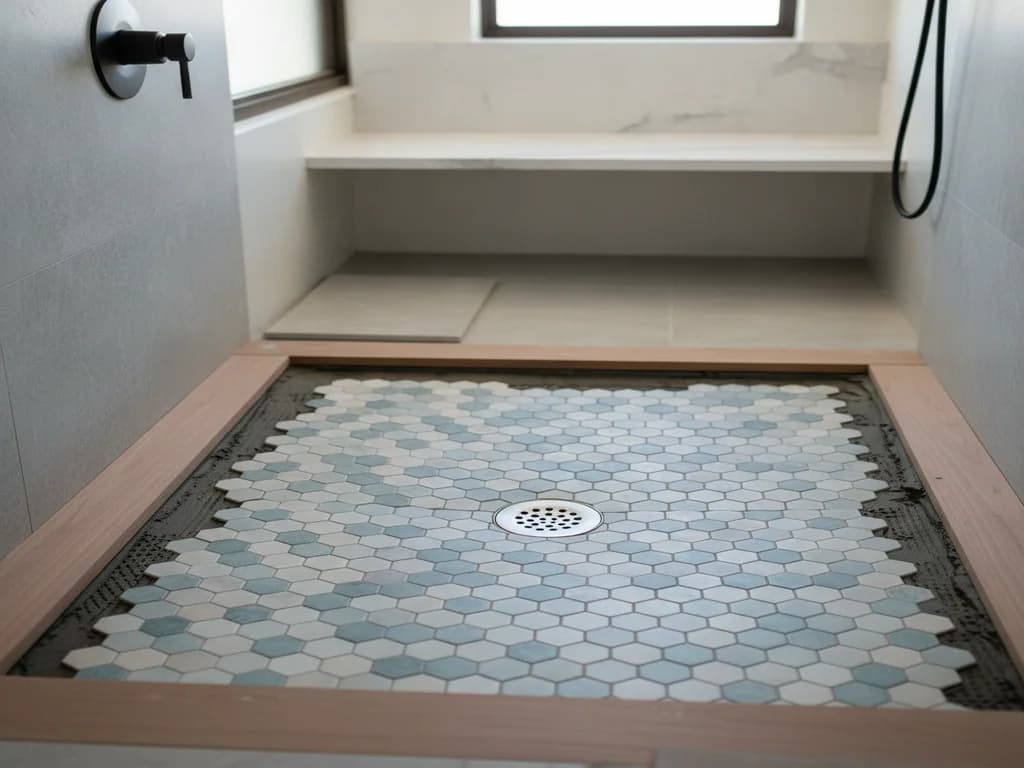
Every shower floor is built with a slope to the drain — the TCNA Handbook methods that govern shower construction call for roughly a quarter inch of fall per foot. On a standard center-drain shower, that slope runs in from four directions, forming a shallow, compound-curved bowl. Small tile follows that bowl naturally, hinging at every grout joint. Large tile cannot: it is flat, the floor is not, and something has to give — either the corners lip up, or the slope gets flattened out of spec.
The practical cutoff sits around 2 inches. Squares, hexagons, and penny rounds at or under that size, mounted on mesh sheets, conform to a center-drain slope cleanly. Larger formats only become workable when the drain changes: a linear drain along one wall lets the floor slope in a single flat plane, which large tile can handle. That design decision — and when each drain style earns its cost — is the subject of mosaic vs. large tile for shower floors.
Size also buys grip as a side effect. More tiles per square foot means more grout joints, and every joint is a change of texture underfoot. A 2-inch mosaic floor can carry more real-world traction than its DCOF number alone suggests — the joints are doing quiet work.
The slip number: what DCOF 0.42 actually means
Slip resistance is a published, measurable spec — not marketing language. DCOF (dynamic coefficient of friction) measures traction on a wet surface, and the ANSI standard that TCNA references sets 0.42 as the minimum for level interior floors expected to be walked on wet. A shower floor is the defining case: always wet, always barefoot, usually soapy.
Treat 0.42 as the floor of acceptability, not the target. Soap film lowers effective traction below what the test measures, so tile with headroom above the minimum — textured mosaics often publish well higher — is the better pick for households with kids or anyone thinking about aging in place. The CDC identifies bathrooms as a leading site of home falls among older adults, and the shower floor is the square footage where that risk concentrates.
Finding the number takes a minute: it is on the manufacturer spec sheet, and any tile shop can pull it. What fails the test is predictable — polished stone, glossy glazes, and lappato (semi-polished) finishes generally sit below the line. If a tile you love has no published DCOF at all, that silence is the answer.
The floor tile is only as good as the pan under it
A shower floor is a system: a sloped, waterproofed pan assembly with tile as the wear surface. The best mosaic in the catalog will not save a flat pan, a failed liner, or a skipped pre-slope — and when a pan fails, the fix is demolition, not regrouting. If your floor tile is cracking or the grout keeps failing, read replacing shower floor tile before shopping for new tile, because the symptom usually points below the surface.
Best material: porcelain mosaic, with honest runners-up
Porcelain wins the shower floor for the same reason it wins every wet-room surface: fired dense enough to absorb under 0.5% of its weight in water by the industry definition, hard-wearing, and never in need of sealing. On a surface that is soaked daily and scrubbed monthly, that zero-maintenance chemistry compounds. Glazed ceramic mosaic is the budget understudy — acceptable in a light-use shower, softer and more absorbent over the long run.
Natural stone mosaic — tumbled marble, honed travertine — brings texture and a spa look, and honed finishes can grip well. The trade is maintenance: stone is porous, wants sealing on a schedule, and sits in the single harshest spot in the house for hard-water spotting and etching, a daily chemistry problem across the Treasure Valley. Choose it with eyes open or choose stone-look porcelain instead.
Pebble floors deserve their own honest paragraph, because they are the most-requested and most-regretted pick. The look is genuinely spa-like, and the texture grips. But a pebble floor is mostly grout — far more exposed grout than any mosaic — and that grout stains, hosts mildew, and needs sealing repeatedly. The stones’ uneven surface also divides opinion underfoot: massage to some, discomfort to others. It is the pick that looks best on day one and ages fastest.
The picks by category
Every recommendation above, in one table:
| Category | Best pick | Why | Skip |
|---|---|---|---|
| Material | Porcelain mosaic | Under 0.5% absorption; no sealing; hardest wearing | Unsealed stone; soft ceramic in daily-use showers |
| Size | 2-inch or smaller (squares, hex, penny rounds) | Conforms to center-drain slope; grout joints add grip | Large format over a center drain |
| Finish | Matte or textured | Carries wet traction; hides hard-water film | Polished, glossy, or lappato underfoot |
| Slip rating | Wet DCOF ≥ 0.42, with headroom preferred | ANSI baseline (via TCNA) for wet floors | Any tile with no published DCOF |
| Large-format option | Only with a linear drain (single-plane slope) | Flat plane lets big tile sit true | Forcing big tile onto a four-way slope |
| Grout | Epoxy or high-performance sealed cement grout | The floor’s most stained, scrubbed surface | Bargain grout left unsealed |
Slope and assembly methods per TCNA Handbook practice; DCOF baseline per the ANSI standard TCNA references. Confirm the DCOF for the exact tile on the manufacturer spec sheet.
What to skip on a shower floor
Skip anything polished or glossy — this is the one surface where finish is a safety spec, not a style call. Skip large-format tile over a standard center drain; no installer skill makes a flat plane follow a compound slope. Skip tile with no published DCOF, and think hard before committing to pebbles for the grout-maintenance reasons above.
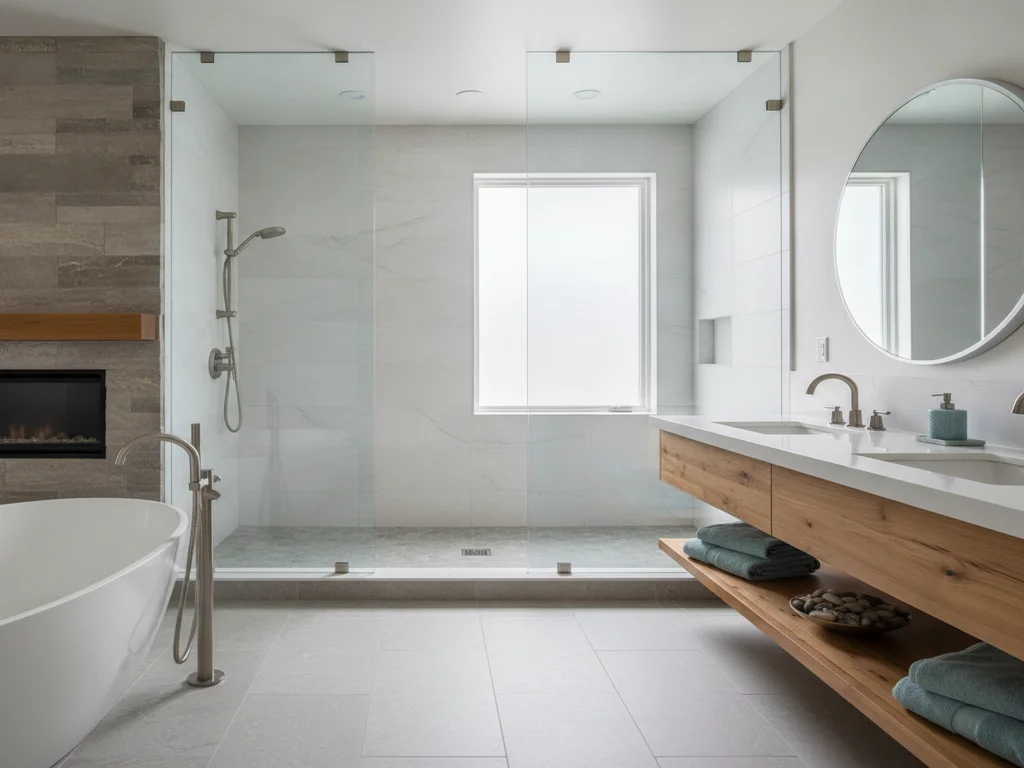
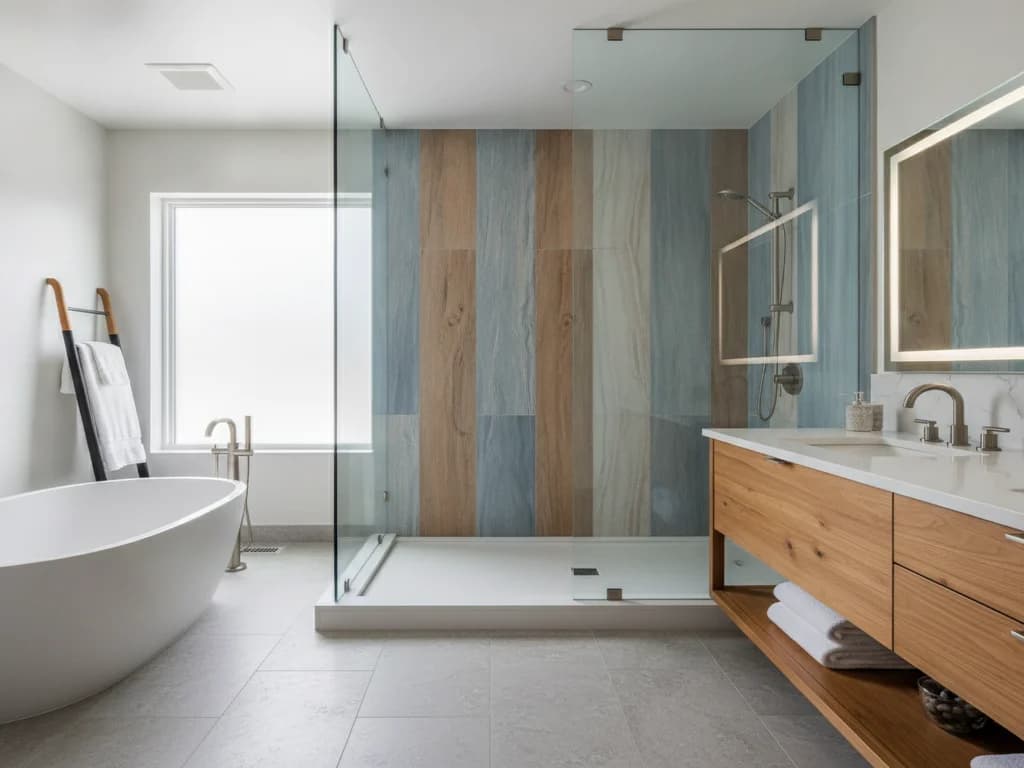
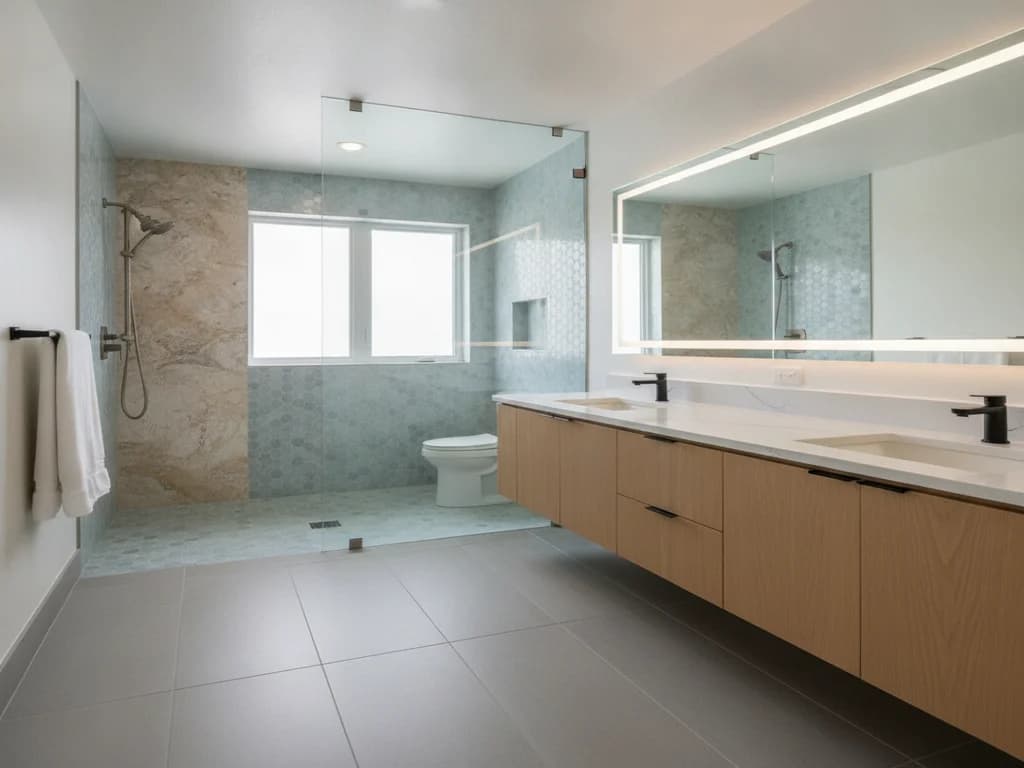
Skip mismatched thinking, too: the shower floor does not need to match the bathroom floor, and usually should not. The winning pattern in most remodels keeps one palette and switches format at the shower line — 12×24 on the dry floor, the same color family in 2-inch mosaic inside the shower. It reads intentional, and each zone gets the spec it needs. The dry-floor half of that equation is covered in best floor tile for bathrooms.
Finally, skip the assumption that tile choice is the decision that makes the shower safe. Slope, pan construction, and waterproofing set the ceiling on everything; if the project includes reworking the pan, a curbless entry is worth pricing at the same time, since the floor assembly is already open.
Matching the pick to your shower
The category picks, applied to real situations:
- Standard remodel, center drain: 2-inch matte porcelain squares or hex, DCOF ≥ 0.42, epoxy grout — the reference spec.
- Modern large-format look: linear drain against the back wall, single-plane slope, large textured porcelain — budget for the drain upgrade.
- Maximum slip resistance (kids, aging in place): textured micro-mosaic with published DCOF headroom above 0.42, in a mid-tone that hides wear.
- Spa aesthetic without pebble regret: hex or penny-round stone-look porcelain — the organic geometry without the grout acreage.
- Budget refresh where the pan is sound: glazed ceramic mosaic with a passing DCOF, sealed cement grout — spend the savings on waterproofing inspection.
- Whole-shower project: start at best tile for showers for the wall specs, then apply this article to the floor.
Ready to plan your Boise bathroom?
Licensed & insured · 3-year workmanship warranty
Frequently asked questions
- What is the best size tile for a shower floor?
- Two inches or smaller — squares, hexagons, or penny rounds on mesh sheets. Shower floors slope to the drain from all sides, and only small tile follows that compound slope without corners lipping up. Larger tile becomes workable only with a linear drain, where the floor slopes in a single flat plane. Small tile also adds grip through its dense grout joints.
- What DCOF rating do I need for a shower floor?
- A wet DCOF of 0.42 or higher — the minimum in the ANSI standard TCNA references for interior floors walked on wet. Treat it as the floor, not the target: soap film reduces real-world traction below test conditions, so tile with headroom above 0.42 is the better pick, especially for households with kids or aging-in-place plans. The value is on the manufacturer spec sheet.
- Are pebble tiles good for shower floors?
- They grip well and look spa-like, but they age poorly. A pebble floor is mostly grout — far more exposed grout than any mosaic — and that grout stains, harbors mildew, and needs repeated sealing. The uneven surface also bothers some feet. If you love the organic look, pebble-look or penny-round porcelain delivers most of the aesthetic with a fraction of the maintenance.
- Can you use large format tile on a shower floor?
- Only with a linear drain. A wall-side linear drain lets the whole floor slope in one flat plane, which large tile can sit on true. Over a standard center drain, the floor slopes in from four directions and flat large tile physically cannot conform — corners lip or the slope goes flat. The full decision, including drain costs, is covered in our mosaic vs. large tile comparison.
- Should the shower floor tile match the bathroom floor?
- Match the palette, not the format. The dry floor wants large tile (typically 12×24) for fewer grout lines; the shower floor needs small mosaic for slope and grip. Keeping one color family and switching size at the shower line reads deliberate and gives each zone the right spec. An exact-match single tile across both zones usually means one zone got the wrong tile.
- Why does shower floor tile keep cracking or losing grout?
- Usually the problem is under the tile, not in it. A pan that flexes, a failed liner, or a missing pre-slope moves and soaks the assembly until grout releases and tile cracks — and no replacement tile fixes that. Recurring failure in a shower floor is a signal to open the pan, not regrout. Our replacing-shower-floor-tile guide covers what a proper diagnosis looks like.
Sources
- Tile Council of North America (TCNA)
- National Tile Contractors Association
- CDC — Older Adult Fall Prevention
- USGS Water Science School — Hardness of Water
Claims and figures are drawn from the sources above and provided for general guidance; your project may vary. Photography is illustrative of design concepts. For a fixed price on your specific bathroom, request a free estimate.