Updated September 10, 2026 · 7 min read
By Boise Bath — bathroom & shower remodeling in Boise & the Treasure Valley
The short answer
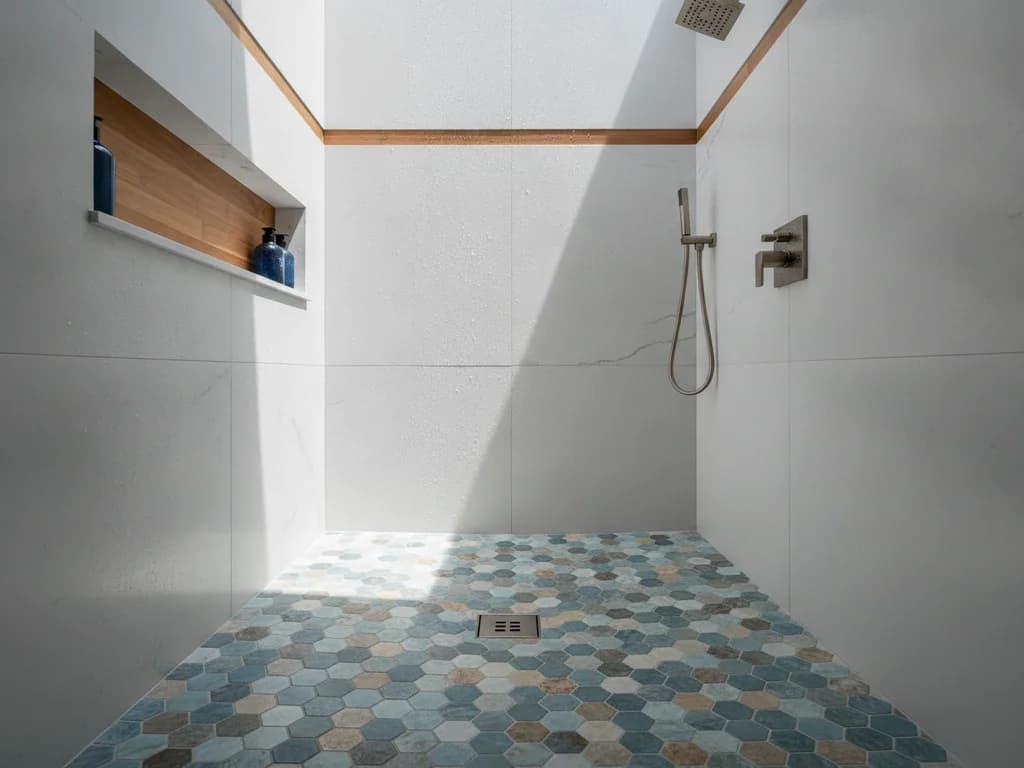
Mosaic is the right shower floor in most cases: small tiles conform to the four-way slope a center drain requires, and their dense grout joints add grip underfoot. Large tile only works over a single-plane slope to a linear drain — a design decision, not a substitution. Either size must meet the 0.42 wet-area DCOF threshold.
Key takeaways
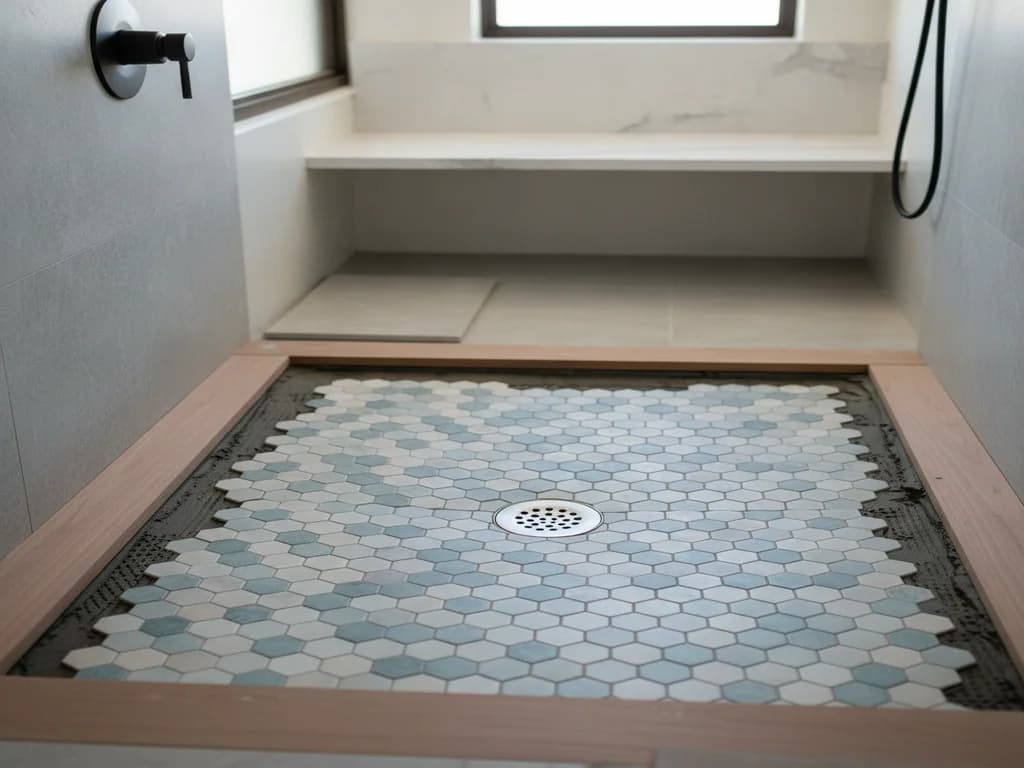
- A conventional center-drain shower floor slopes from four directions at roughly 1/4 inch per foot — rigid large tiles cannot fold to follow that geometry, so small tile is a requirement, not a preference.
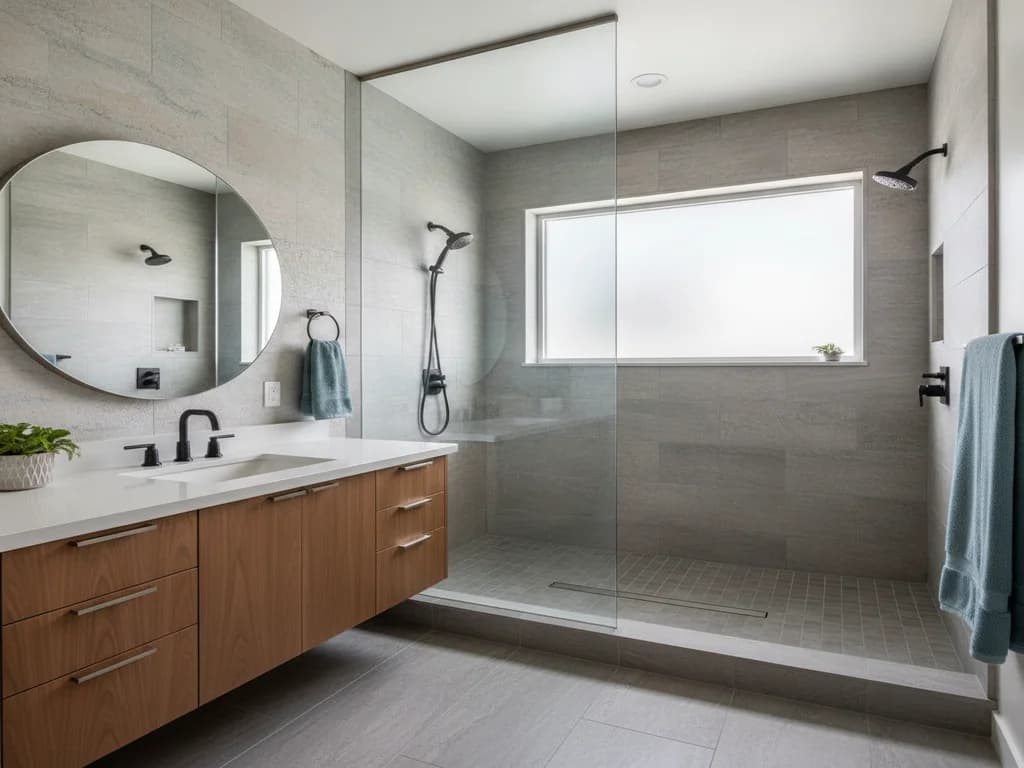
- Large tile becomes viable only with a linear drain and a single-plane slope, which is a plumbing and waterproofing design decision made before tile selection.
- Grout joints are traction: a mosaic floor is a grid of tiny edges that grip wet feet, which is why it feels more secure than any large smooth tile.
- Whatever the size, wet-area floor tile should carry a DCOF rating of 0.42 or higher under ANSI A326.3 — the standard TCNA points to for level interior wet spaces.
- The mosaic trade-off is grout volume: more joints mean more cleaning and sealing in the wettest square footage of the house.
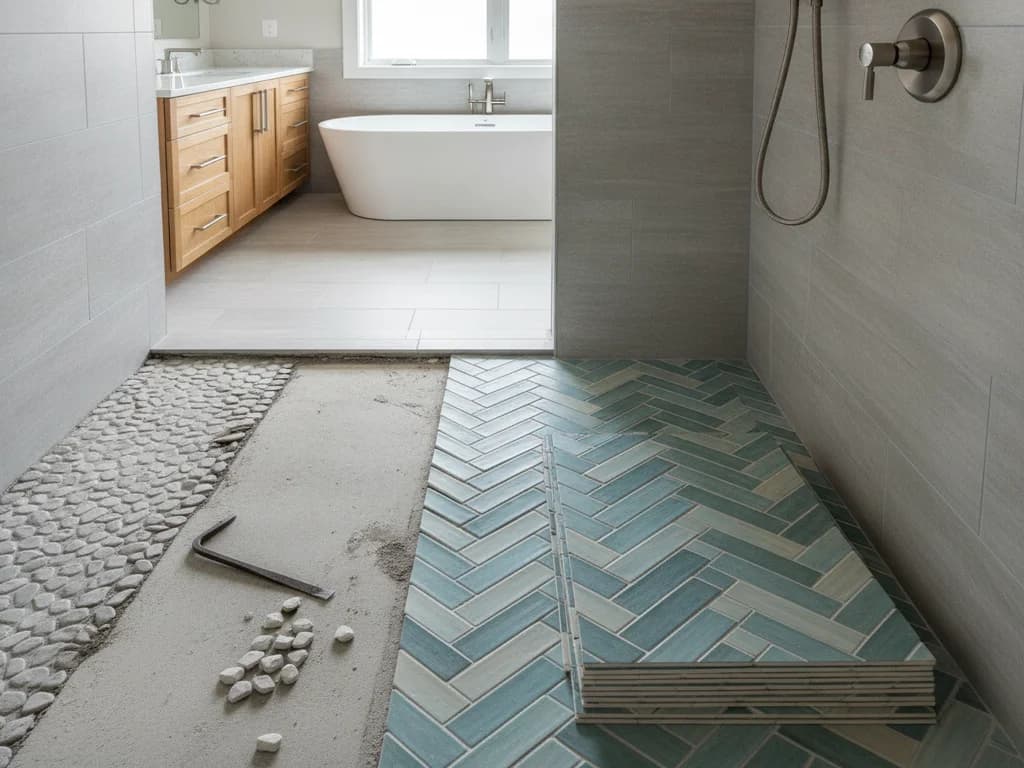
- Pebble floors are the cautionary extreme of the mosaic idea — maximum grout, uneven coverage, and the shortest service life of any shower floor.
The verdict: mosaic for center drains, large tile only with a linear drain
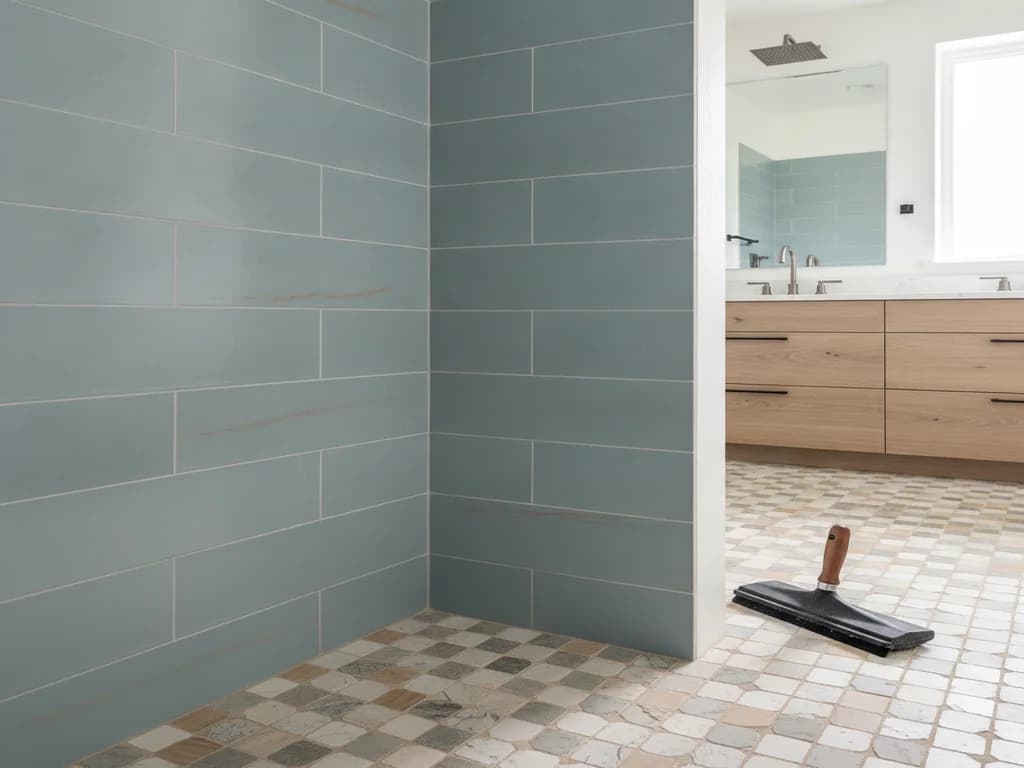
Everywhere else in the bathroom, tile size is mostly a style and budget call. On the shower floor it is a geometry problem. The floor has to slope to the drain — building codes based on the International Residential Code require pitch toward the drain, typically about 1/4 inch per foot — and with a conventional center drain, that slope comes at the floor from four directions at once. Small tiles follow that compound pitch naturally, hinging at every grout joint. A rigid 12x24 cannot; set it on a four-way slope and corners lift, edges rock, and you get lippage in the one room where a raised edge meets a bare wet foot.
So the honest answer is short: if your shower has (or will have) a center drain, the floor should be mosaic or another small tile, full stop. If you want large tile underfoot, the whole floor must be designed around it — a single-plane slope running to a linear drain at one edge, decided at the waterproofing stage, not at the tile store.
The rest of this comparison covers grip, grout, maintenance, and cost — plus the pebble-floor cautionary tale — so you can pick the right small tile or commit to the linear-drain design deliberately.
Mosaic vs. large tile on the shower floor: the side-by-side
One table, whole decision. Note how many rows come down to the drain.
| Factor | Mosaic (roughly 2" and smaller) | Large format tile |
|---|---|---|
| Slope conformity | Follows a four-way center-drain slope naturally — joints act as hinges | Requires a single-plane slope to a linear drain; cannot follow compound slopes |
| Drain compatibility | Center or linear — works with everything | Linear drain only, planned before waterproofing |
| Slip resistance | High — dense grout joints add grip beyond the tile rating | Depends entirely on the tile surface; smooth polished faces are risky underfoot |
| Grout maintenance | Most grout per square foot in the house — regular cleaning and sealing | Minimal joints; the easiest shower floor to keep clean |
| Comfort underfoot | Textured, massaging; very small formats can feel bumpy | Smooth and seamless |
| Look | Pattern and detail; classic hex, penny, and square formats | Continuous, modern, can run wall-to-wall in a curbless design |
| Install labor | Sheet alignment and heavy grouting, but forgiving of the pan | Precision slope work plus the linear-drain assembly — a premium install |
Slip-resistance guidance follows ANSI A326.3 (DCOF ≥ 0.42 for level interior wet areas), the standard referenced by TCNA.
Why slope decides this before style does
A shower pan is not flat — it is a shallow funnel. With a center drain, a professional builds the mortar bed or foam pan so every point pitches toward the middle, and the floor tile has to bend around that funnel. Mosaic sheets do it effortlessly: hundreds of small faces, each one flat, each grout joint absorbing a fraction of a degree of change. That is why virtually every center-drain shower you have ever stood in has small tile underfoot.
A linear drain changes the geometry entirely. The floor becomes one flat plane tilted toward a slot drain at the wall or the entry, and suddenly tile size is unconstrained — a single large tile, or two or three, can cover the whole floor with the fall running in one direction. This is how the seamless curbless showers in design magazines are built, and it is genuinely the better route if large tile underfoot is the goal. The catch: the drain choice ripples through the plumbing rough-in, the pan construction, and the waterproofing details, so it has to be locked in early. We compare the two drain designs directly in linear drain vs. center drain showers.
What does not work is the shortcut: cutting a large tile into quarters to “fold” it around a center drain, or accepting a mostly-flat floor that drains slowly. Standing water in a shower is how grout fails, mold starts, and pans get replaced years early — the EPA is blunt that persistent moisture is the root condition for mold growth.
Slip resistance: what DCOF actually tells you
Wet tile is the slip hazard in a bathroom, and the industry measures it with DCOF — dynamic coefficient of friction. The current standard, ANSI A326.3 (the one TCNA points specifiers to), sets a minimum wet DCOF of 0.42 for tile on level interior floors that get wet. Any tile you consider for a shower floor should meet or beat that number, and every reputable manufacturer prints it in the spec sheet. If a tile has no published DCOF, treat it as a wall tile.
Size then adds a second layer. A mosaic floor is a grid of grout joints, and every joint is a tiny edge interrupting the smooth wet surface — functional traction on top of whatever the tile face provides. A large tile floor has almost no joints, so the tile surface carries the entire job; a honed or textured face at 0.42+ can do it, while a polished face, whatever its rating, is the wrong call underfoot in a shower.
Traction matters most for the people most likely to be hurt by losing it. The CDC identifies falls as the leading cause of injury for older adults, and bathrooms are a known hot spot. If aging-in-place is part of your remodel brief, a high-DCOF mosaic floor is one of the cheapest safety upgrades available — far cheaper than the grab bars it complements.
The grout trade-off — and the pebble floor warning
Mosaic's honesty problem is grout volume. The shower floor is the wettest, most soap-laden square footage in the house, and a 2-inch hex floor puts more grout there than any other choice. Expect to clean it more often, seal it on a schedule (unless you spring for epoxy-class grout, which resists staining far better), and refresh it eventually. On this one axis, large tile over a linear drain is the low-maintenance winner — a handful of joints in the whole floor. Grout selection itself matters here more than anywhere else in the bathroom; joint width dictates the type, which we cover in sanded vs. unsanded grout.
Pebble floors are what happens when the mosaic idea is pushed past its limit. Rounded stones on mesh sheets promise a spa underfoot, but they carry the worst grout ratio of any floor — often close to half the surface — over irregular stones that are hard to seat fully in mortar. The result, again and again: stained grout within a couple of years, loose stones, sealing that never ends, and a floor that gets replaced decades before the shower around it. If you have one now, or you are tempted by one, read replacing a pebble shower floor first — it is the most common floor-specific tear-out we see requested.
The floor fails before the shower does
A shower floor takes water, soap, and foot traffic that walls never see, and it is almost always the first surface to show trouble — stained grout, a hollow-sounding tile, slow draining. Small symptoms there are worth investigating early, because the fix for a floor problem ranges from a regrout to a full pan rebuild depending on what is under it. See what is involved in replacing shower floor tile before a small symptom becomes a subfloor project.
Cost direction: where each floor spends the money
The two floors spend money in different places. A mosaic floor over a conventional center-drain pan is the standard build — the pan construction is routine, the sheets go down fast, and the cost concentration is in grouting labor. A large-tile floor means a linear drain assembly (a real hardware line item), precision single-plane slope work in the pan, and premium waterproofing detailing at the drain edge — more skilled hours before any tile is set.
Neither is exotic. Shower remodels nationally run a wide range — HomeAdvisor puts them broadly in the $2,000–$9,000 territory with custom work above it — and the floor system is one slice of that. The honest framing: a linear-drain large-tile floor is a modest premium inside a custom shower budget, and a meaningless one if the design was already curbless. What it should never be is an afterthought bolted onto a center-drain plan.
Since the floor is built on top of the waterproofing, this is also where the system behind the tile matters most — the membrane, not the grout, is what keeps water out of the framing. If you are comparing builds, the Schluter vs. RedGard waterproofing comparison explains the two dominant approaches.
Which should you choose?
Let the drain and the users decide:
- Standard shower remodel, center drain staying put: mosaic — 2-inch hex, penny round, or small square, in a tile rated DCOF 0.42+. This is the default for a reason.
- Curbless or design-forward shower, walls coming open anyway: large tile over a single-plane slope to a linear drain — the seamless look done the only correct way.
- Household with older adults or mobility concerns: high-DCOF mosaic — the grout-joint traction is free safety margin, and it pairs with the accessibility upgrades that matter.
- Low-maintenance priority above all: large tile with a linear drain, or a mid-size (3–4 inch) mosaic with epoxy-class grout as the compromise — fewer joints than penny rounds, still slope-friendly.
- Tempted by pebbles: choose a flat-faced stone-look porcelain mosaic instead — the spa aesthetic without the grout ratio and short service life.
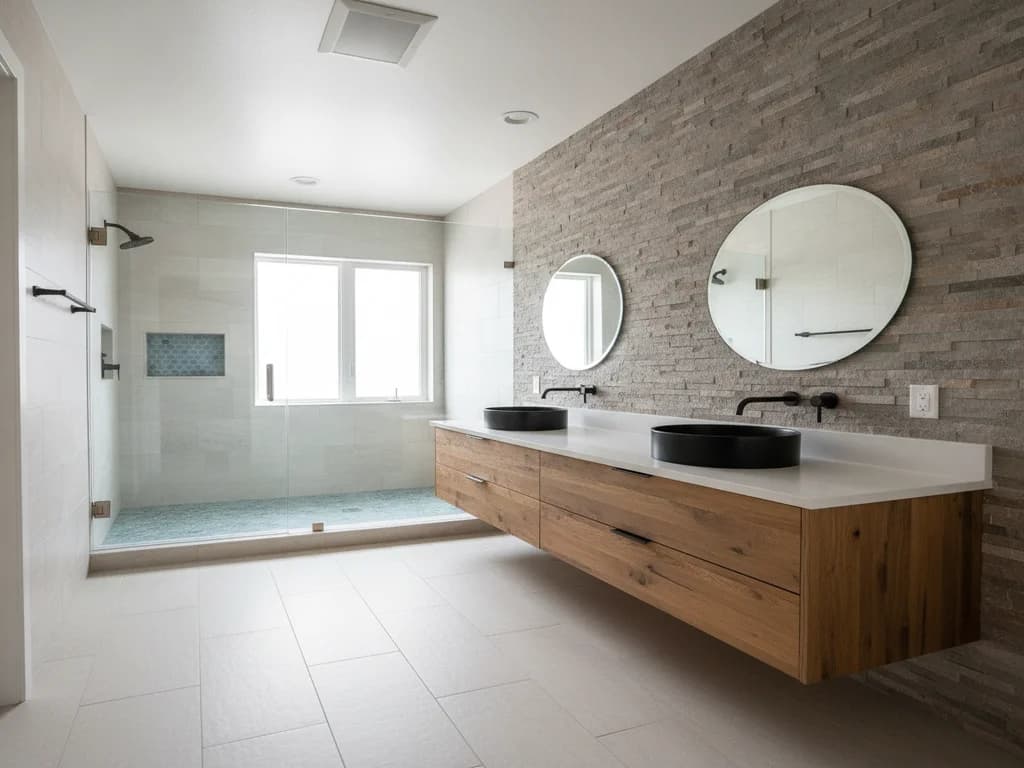
- Matching a large-format main floor: run the same tile into the shower only if the drain design supports it; otherwise pick a mosaic in the same colorway — scale contrast underfoot reads intentional, not mismatched.
Ready to plan your Boise bathroom?
Licensed & insured · 3-year workmanship warranty
Frequently asked questions
- Can you use large tile on a shower floor?
- Only with a linear drain and a single-plane slope. A center drain requires the floor to pitch from four directions, and rigid large tiles cannot follow that compound geometry — corners lift and edges rock. With a linear drain at one edge, the floor becomes one tilted plane and large tile works beautifully. The drain decision has to come first, at the plumbing and waterproofing stage.
- What is the best tile size for a shower floor?
- For a center-drain shower, roughly 2-inch mosaics are the sweet spot — small enough to follow the slope smoothly, large enough to keep the grout ratio reasonable. Penny rounds and 1-inch formats work but add grout; 3–4 inch tiles can work on gentler pans. Whatever the size, the tile should carry a wet DCOF rating of 0.42 or higher under ANSI A326.3.
- Are mosaic shower floors slippery?
- They are among the least slippery floors you can install. Every grout joint interrupts the wet surface and adds grip, on top of the tile's own traction rating. That is why mosaic remains the safety default for shower floors — and why households planning for aging-in-place should lean into it. Still check the DCOF spec: a polished glass mosaic can undermine the size advantage.
- What DCOF rating do I need for shower floor tile?
- A wet DCOF of at least 0.42, measured under ANSI A326.3 — the standard the Tile Council of North America references for level interior spaces expected to get wet. Manufacturers publish the number on spec sheets. Treat it as a floor, not a target: texture, honed finishes, and smaller formats all add real-world margin above the rating.
- Are pebble shower floors a bad idea?
- Usually, yes. Pebbles carry the highest grout-to-tile ratio of any floor — often close to half the surface — over rounded stones that are difficult to fully seat in mortar. Owners report endless sealing, stained grout within a few years, and loose stones, and pebble floors are among the most common early tear-outs. A flat stone-look porcelain mosaic delivers the aesthetic without the liabilities.
- Do mosaic shower floors need more maintenance?
- More than a large-tile floor, honestly. The shower floor sees the most water and soap in the house, and mosaic puts the most grout there, so expect routine cleaning and periodic sealing — or specify epoxy-class grout up front to cut the sealing cycle dramatically. The trade buys you slope conformity and grip, which is why most showers accept it.
Sources
- Tile Council of North America (TCNA)
- International Code Council (IRC/IBC)
- CDC — Older Adult Fall Prevention
- EPA — Mold
- HomeAdvisor — True Cost Guide
Claims and figures are drawn from the sources above and provided for general guidance; your project may vary. Photography is illustrative of design concepts. For a fixed price on your specific bathroom, request a free estimate.