Updated July 16, 2026 · 7 min read
By Boise Bath — bathroom & shower remodeling in Boise & the Treasure Valley
The short answer
Ceramic (and porcelain) is the better field tile for bathroom walls and floors — durable, affordable, and forgiving to install. Glass earns its premium as an accent: niches, bands, and backsplashes where its depth and light play justify the higher material cost and fussier installation. Keep glass off floors and use ceramic for the big surfaces.
Key takeaways
- Glass and ceramic are not rivals for the same job: ceramic is a field material for whole surfaces, glass is an accent material for focal points.
- Glass tile is translucent, so the installation shows through it — trowel ridges, coverage voids, and the wrong mortar color all telegraph permanently.
- Glass demands specific materials and technique — bright-white polymer-modified mortar and full, flat coverage — which is why installers charge more per square foot to set it.
- Most glass tile is too smooth and scratch-prone for floors; keep it on walls and use ceramic or porcelain rated for traffic underfoot.
- Cost direction is consistent: glass runs several times the material price of comparable ceramic, plus a labor premium — affordable as a band or niche, expensive as a wall.
- The classic combination — ceramic or porcelain field with a deliberate glass accent — delivers the glass look at a fraction of the all-glass cost.
The verdict: ceramic for the field, glass for the moment
This comparison is less "which is better" and more "which job is each one for." Ceramic — and its denser sibling porcelain — is the workhorse of bathroom surfaces: affordable, hard-wearing, easy to source in every size, and forgiving enough that any competent tile setter installs it well. Glass is a jewelry material: it holds color with a depth and luminosity nothing fired from clay can match, because light passes into it and reflects back rather than stopping at a glaze.
Those physics cut both ways. The translucence that makes glass glow also makes it show every flaw in the mortar behind it, and its smooth, brittle surface rules it out for most floors. So the honest verdict is a division of labor: ceramic or porcelain for the walls and floors that do the daily work, glass where you want the eye to land — a niche back, an accent band, a backsplash behind the vanity.
If you are earlier in the decision — still choosing between clay-based options — read porcelain vs. ceramic tile first; the distinctions there matter more for floors than anything in this article.
Glass vs. ceramic: the side-by-side
The table below compares them head to head. Watch how often the answer changes depending on whether the tile is on a wall or a floor.
| Factor | Glass tile | Ceramic tile |
|---|---|---|
| Look | Luminous, translucent, jewel-like color depth; reflects light around the room | Opaque glazed surface; enormous range of colors and looks, including convincing stone and wood |
| Best use | Accents — niches, bands, backsplashes, feature strips | Field tile — full walls, wainscots, floors (porcelain preferred underfoot) |
| Water absorption | Zero — impervious to water | Low; glazed surface sheds water, body absorbs slightly more than porcelain |
| Floors | Generally no — smooth, slippery, and shows scratches | Yes, with an appropriate traffic and slip rating |
| Install difficulty | High — translucence shows trowel marks and voids; needs bright-white modified mortar and careful technique | Standard — forgiving of ordinary good practice |
| Durability | Hard surface but brittle; chips show clear or dark against the color | Glaze wears well; chips show the clay body but tolerate impact better |
| Cost direction | Several times ceramic per square foot, plus a labor premium | The most affordable tile category — HomeAdvisor puts ceramic among the lowest-cost installed options |
| Cleaning | Wipes spotless; shows water spots and fingerprints between cleanings | Easy; glaze hides spotting better |
Cost characterizations reflect national cost-guide direction (HomeAdvisor/Angi); exact figures vary widely by tile line and market.
Why glass tile is harder to install (and why it matters more than the price tag)
Glass tile is the rare material where the installation is visible through the finished surface. Because most glass tile is translucent to some degree, whatever is behind it becomes part of the color: the mortar, its coverage pattern, and any voids. Comb trowel ridges behind ceramic and the glaze hides them forever; comb them behind glass and you will read faint stripes through the tile in every side light, permanently.
Doing it right takes specific choices. The industry-standard practice — reflected in TCNA guidance and every major glass manufacturer's instructions — is a bright-white, polymer-modified mortar, flattened after combing so no ridge pattern survives, with essentially full coverage behind each tile. Glass also expands and contracts with temperature more than clay tile does, which is why manufacturers specify flexible modified mortars, and why big sheets of it in a hot shower are less forgiving of shortcuts. Movement joints and careful grouting round out the list — many glass mosaics scratch, so installers grout them more gently than they would porcelain.
None of this is exotic for a tile professional who sets glass regularly, but it is exactly the kind of work where hiring on price backfires. A cut-rate glass install fails visibly — cloudy patches, telegraphed trowel lines, cracked tiles at corners — and the fix is tear-out. It earns its place on our list of bathroom tile mistakes: the accent that was supposed to elevate the room becomes the thing your eye snags on.
Ask your installer what mortar they use behind glass
The answer should come back fast and specific: a bright-white polymer-modified thinset, ridges flattened for full coverage, per the tile manufacturer's instructions. Hesitation, or "same as everything else," is a sign your glass accent is about to be set like ceramic — and glass shows what ceramic hides.
Accent vs. field: where each material actually belongs
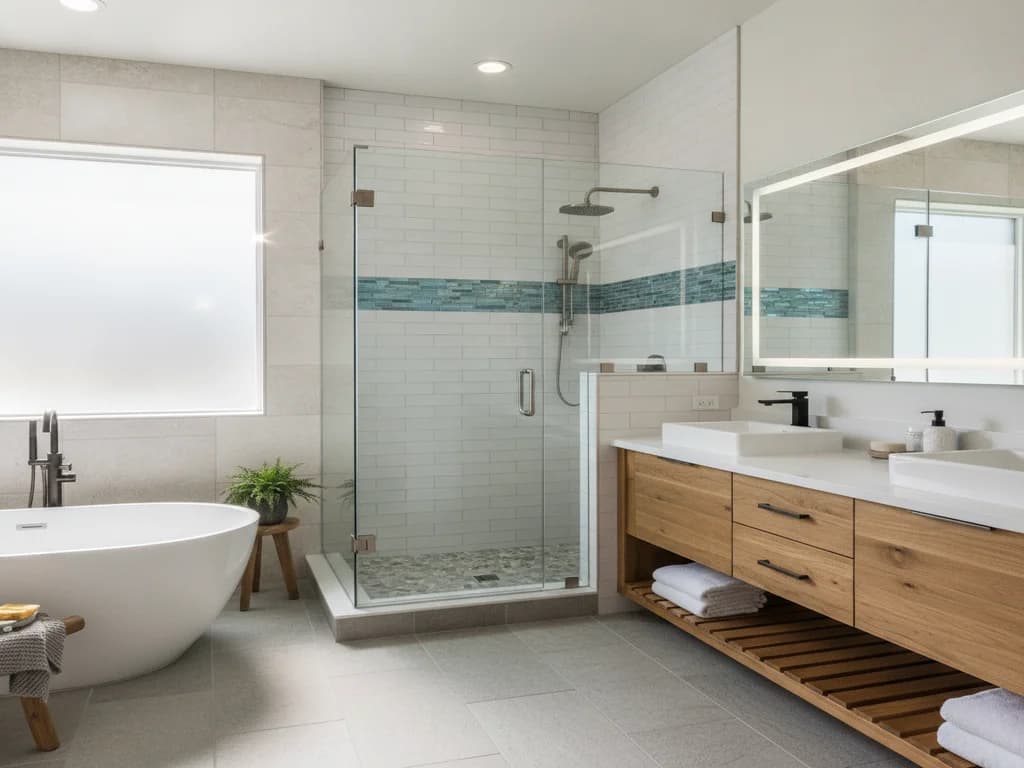
Glass does its best work in small, deliberate doses. A glass mosaic band running through a ceramic subway wall, a niche back in glass that glows under the shower light, a vanity backsplash that picks up the room's accent color — these placements use the material's one superpower, light, exactly where you want attention. Small doses also keep the install premium contained: a few square feet of fussy setting instead of a hundred.
Full glass walls exist and can be spectacular, but they are a luxury commitment on three fronts at once — material cost, installation cost, and installer selection. They also show water spotting more than glazed ceramic, which matters in a daily-driver shower with hard water like ours in the Treasure Valley; expect to squeegee if you want the glass to look like glass.
Ceramic, meanwhile, is what the big surfaces want. It covers walls affordably in every format from 3x6 subway to large panels, its glaze shrugs off scrubbing, and on floors its porcelain variant carries the traffic and slip ratings glass cannot. The scale question — big tile or small — is its own decision, covered in large format vs. small tile. And if the finish is what you are weighing, matte vs. polished tile breaks down the sheen trade-offs that apply to glazes and glass alike.
Floors: this one is not close
Keep glass off bathroom floors, with narrow exceptions. Most glass tile is smooth enough to be genuinely slippery wet, and the wet-area bar — a DCOF of 0.42 or higher under the ANSI A326.3 standard TCNA references — is one most glass products are not rated to meet. Glass also scratches more visibly than porcelain glaze, and floor grit is sandpaper; a glass floor dulls in traffic lanes in a way a porcelain floor never will.
The exceptions are engineered for the job: a handful of textured, floor-rated glass mosaics exist, and glass sometimes appears as a small inset detail surrounded by stone or porcelain. Treat those as designer moves with a spec sheet to back them, not a default. For everything you actually walk on, glazed porcelain is the answer — and if the floor in question is inside the shower, size matters as much as material, which is the subject of mosaic vs. large tile shower floors.
Cost direction: what the premium buys
Ceramic is the budget anchor of the tile world — national cost guides like HomeAdvisor consistently place it among the least expensive tile options installed, which is why it covers more bathroom walls than every other material combined. Glass runs several times ceramic's material price for comparable coverage, and the setting premium stacks on top: more careful mortar work, slower handling, more expensive blades and bits for cutting.
The way to think about it is cost per square foot of attention. As a field material, glass multiplies its premium across every square foot, most of which nobody looks at directly. As an accent, you pay the premium only on the few square feet doing the visual work — a niche back or a 4-inch band through a shower wall adds a modest line item to a tile budget while changing how the whole room reads. That is the honest math behind the designer default of ceramic field, glass accent.
Where the total lands depends on your layout, tile lines, and labor market; the mechanics are covered in bathroom tile installation cost factors.
Which should you choose?
Match the material to the placement:
- Shower walls, full bathroom walls, wainscots: ceramic or porcelain — affordable coverage, durable glaze, and every look from subway to slab.
- Any floor, including the shower floor: porcelain rated for traffic and wet-area slip resistance — glass stays off the floor.
- Niche backs, accent bands, feature strips: glass — maximum effect per square foot, and the premium stays small because the area does.
- Vanity backsplash: either — glass for glow and color depth, ceramic for budget and easier spot-hiding; this is the lowest-stakes place to try glass.
- Steam shower or full glass feature wall: glass can be stunning, but only with an installer who sets glass routinely and follows the manufacturer's mortar spec — this is a hire-for-skill project, not a hire-for-price one.
- Hard-water household that hates squeegeeing: lean ceramic everywhere the spray hits — glazed surfaces hide mineral spotting far better than glass does.
Ready to plan your Boise bathroom?
Licensed & insured · 3-year workmanship warranty
Frequently asked questions
- Is glass tile good for showers?
- On shower walls, yes — glass is impervious to water and its color depth looks best exactly where light and water interact. The caveats are installation and upkeep: it must be set in bright-white modified mortar with full, flat coverage or flaws show through, and it water-spots more visibly than glazed ceramic, especially with hard water. Keep it off the shower floor unless the specific product is floor-rated.
- Why is glass tile so much harder to install than ceramic?
- Because you can see through it. Trowel ridges, coverage voids, and mortar color all telegraph through translucent glass permanently, so installers must use bright-white polymer-modified mortar, flatten the ridges, and achieve near-full coverage — slower, fussier work than setting opaque ceramic. Glass also cuts harder, chips easier, and moves more with temperature, which the mortar spec has to accommodate.
- Is glass tile more expensive than ceramic?
- Yes, consistently — several times the material cost of comparable ceramic per square foot, plus a labor premium for the more demanding installation. Cost guides like HomeAdvisor place ceramic among the cheapest installed tile options and glass toward the premium end. That is why glass is usually bought by the accent band or niche rather than by the wall.
- Can you mix glass tile with ceramic tile?
- That is the classic combination: a ceramic or porcelain field with a glass mosaic accent band, niche back, or feature strip. Two practical notes — check thickness, since glass mosaics often sit thinner or thicker than the field tile and need mortar buildup to finish flush, and plan grout carefully, as many glass mosaics want unsanded or non-scratching grout while the field may take sanded.
- Can glass tile be used on a bathroom floor?
- Generally no. Most glass tile is too smooth to meet the 0.42 wet DCOF benchmark of ANSI A326.3 for wet interior floors, and glass shows scratches from foot-borne grit far more than porcelain glaze does. A few textured, specifically floor-rated glass mosaics exist as exceptions. For everything you walk on, glazed porcelain is the safer and longer-wearing choice.
- Does glass tile fade or discolor over time?
- The color in quality glass tile is in or fused to the glass itself, so it does not fade the way some pigments do — it is among the most colorfast tile options made. What ages a glass installation is everything around the glass: grout discoloring, mortar shadows from a poor install, hard-water film, and surface scratches. Keep those in check and the glass looks new for decades.
Sources
- Tile Council of North America (TCNA)
- National Tile Contractors Association
- HomeAdvisor — True Cost Guide
- This Old House — Bathrooms
Claims and figures are drawn from the sources above and provided for general guidance; your project may vary. Photography is illustrative of design concepts. For a fixed price on your specific bathroom, request a free estimate.