Updated September 12, 2026 · 7 min read
By Boise Bath — bathroom & shower remodeling in Boise & the Treasure Valley
The short answer
Replacing shower floor tile almost always disturbs the waterproof pan the tile is bonded to — so the honest scope question is whether the pan is sound. Over a healthy mortar bed, a careful floor-only retile is possible; over a modern bonded membrane or a failing pan, the floor and pan are rebuilt together, usually in two to four days.
Key takeaways
- Shower floor tile is the wear layer; the pan beneath it is the actual waterproofing — and demo of one disturbs the other.
- Floor-only retiles are honest over a thick, sound mortar bed; over bonded-membrane pans, removing the tile takes the waterproofing with it.
- The bottom row of wall tile usually comes out too, because the floor’s waterproofing has to tie into the walls correctly.
- Cracked or loose floor tile with any history of leaks below is a pan problem wearing a tile costume — scope the pan first.
- Small mosaic tile remains the standard for shower floors: the tight grout grid follows the slope and adds underfoot grip.
Can you replace just the shower floor tile?
Sometimes — and a contractor who answers without looking under your floor is guessing. The tile you stand on is not the waterproofing; it is a wear surface bonded to a sloped, sealed pan below. Whether a floor-only retile is honest depends entirely on what kind of pan that is and what condition it is in.
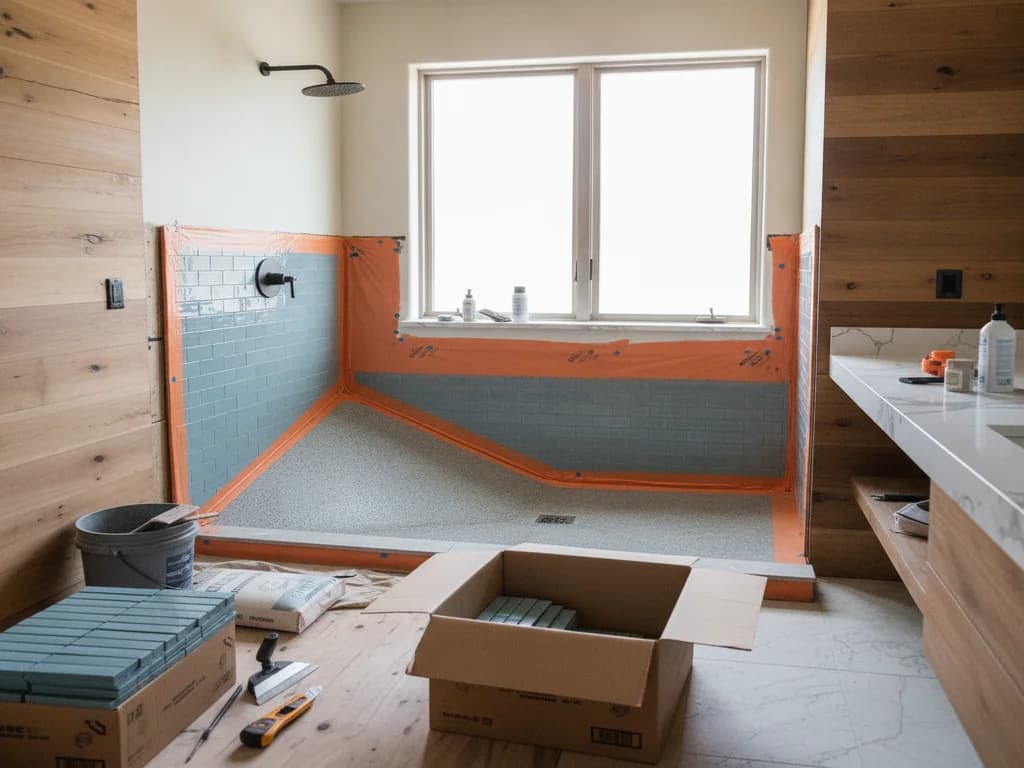
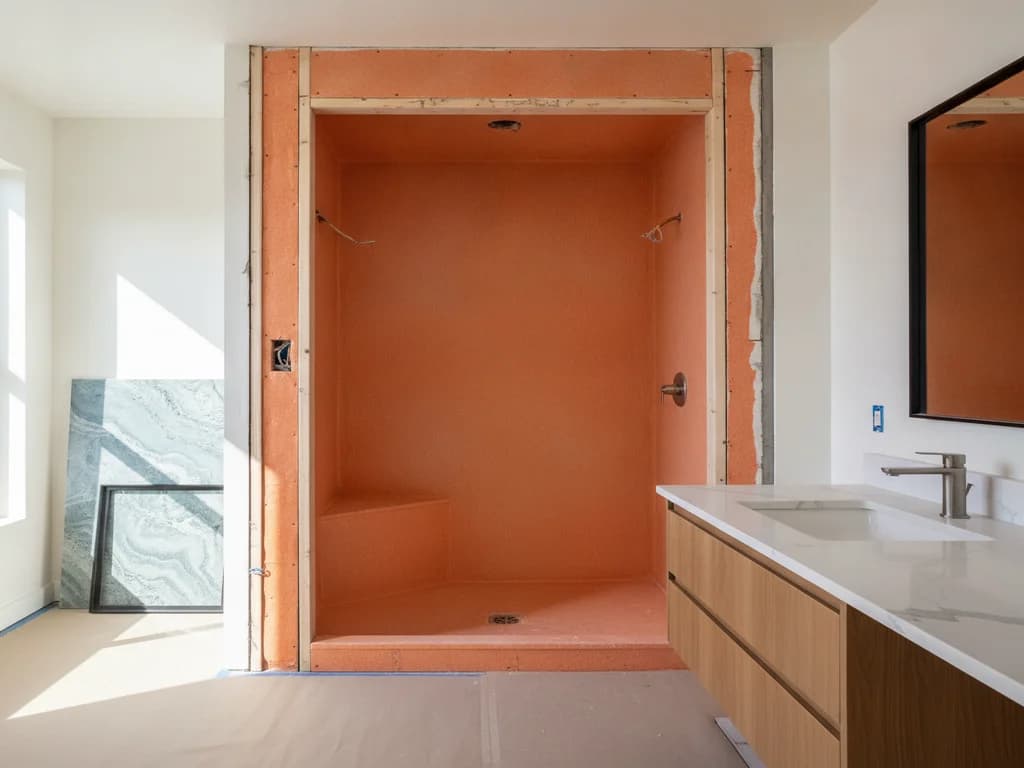
Older Boise-area showers were commonly built on a thick mortar bed over a buried liner. The tile bonds to the top of that mortar, and a patient installer can often remove it without destroying the bed beneath — a genuine floor-only job. Modern showers instead bond a thin waterproof membrane directly under the tile; chip that tile off and the membrane comes with it, so the "floor-only" job is a pan rebuild by definition.
That is why the first step is diagnostic, not demolition. The full pan story — liner types, lifespans, failure modes — lives in replacing a shower pan; this article covers the tile side and where the two scopes meet.
Why the pan decides the scope
Everything wrong with a shower floor eventually routes through the pan. Cracked or drummy tile can come from an impact, but across a wider area it usually means movement or a voided mortar bed below. Grout that keeps failing along the same lines is the floor flexing. And any water stain on a ceiling below the shower is a pan failure until proven otherwise — the tile above it is irrelevant.
Tile-industry guidance from the Tile Council of North America treats the floor as one assembly: slope, waterproofing, and finish designed together. Replacing the finish while trusting a decades-old hidden layer puts your newest material over your oldest, in the spot that stays wet longest.
The drain sits at the center of all of it — literally. The clamping or bonding connection between pan and drain is remade whenever the pan is touched, and an aging drain is replaced while everything is open. Replacing a shower drain covers that piece.
Leaks below end the floor-only conversation
If water has ever shown up on a ceiling or in a room below the shower, the pan has failed and a cosmetic retile over it would bury the problem under fresh grout. That job is a pan-and-floor rebuild — no reputable installer will warranty anything less.
The wall-floor joint: why the bottom row comes out
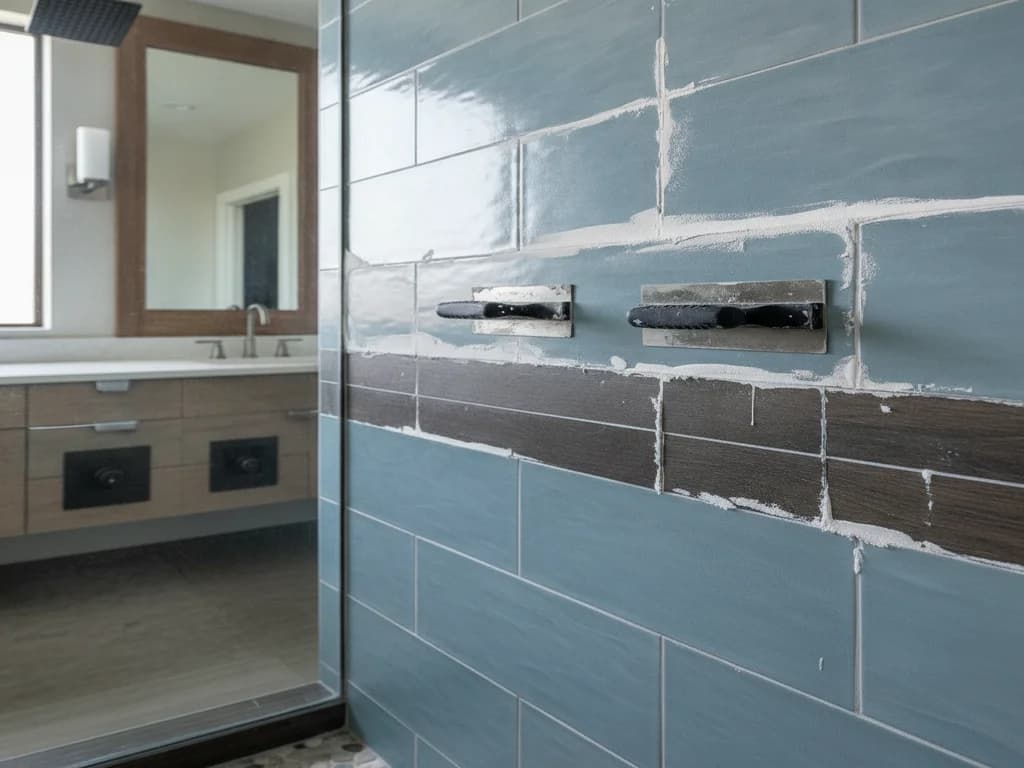
Here is the part most homeowners do not expect in a "floor" quote: the lowest course of wall tile usually comes off too. The floor’s waterproofing has to turn up the wall a few inches and tie into the wall assembly so water sheeting down the walls lands inside the pan, not behind it. Rebuilding that tie-in from below, with the wall tile left in place, cannot be done to spec.
That has a cosmetic consequence worth deciding upfront: the replaced bottom row will be new tile. If your wall tile is discontinued — likely in any shower old enough for floor failure — the honest options are a deliberately contrasting border row, or widening the project into a full retile. Replacing shower tile covers what the whole-enclosure version involves, and replacing shower waterproofing explains the layer this joint belongs to.
When floor-only work is honest — and when it is not
A fair way to think about it: floor-only is a repair on a healthy shower; anything more is a rebuild wearing a smaller name. A single cracked tile from a dropped shampoo bottle on an otherwise sound, dry floor is a tile repair. Grout failure alone, with tile solid and the floor dry below, can be a regrout.
Widespread hollow tile, recurring cracks, standing water from lost slope, or any leak evidence below moves the job into pan territory — and if the shower is at that age, the walls deserve a hard look before you pay for demo twice.
| Symptom | Likely cause | Honest scope |
|---|---|---|
| One cracked tile, floor otherwise solid and dry | Impact | Single-tile repair |
| Grout crumbling, tile bonded, no leaks | Grout age | Regrout and reseal |
| Hollow or loose tile across areas, over mortar bed | Bond failure over sound bed | Floor-only retile with wall tie-in |
| Same, over a bonded-membrane pan | Membrane comes off with tile | Pan + floor rebuild |
| Standing water, or stains below the shower | Slope loss or pan failure | Pan + floor rebuild, walls evaluated |
Choosing the new floor tile
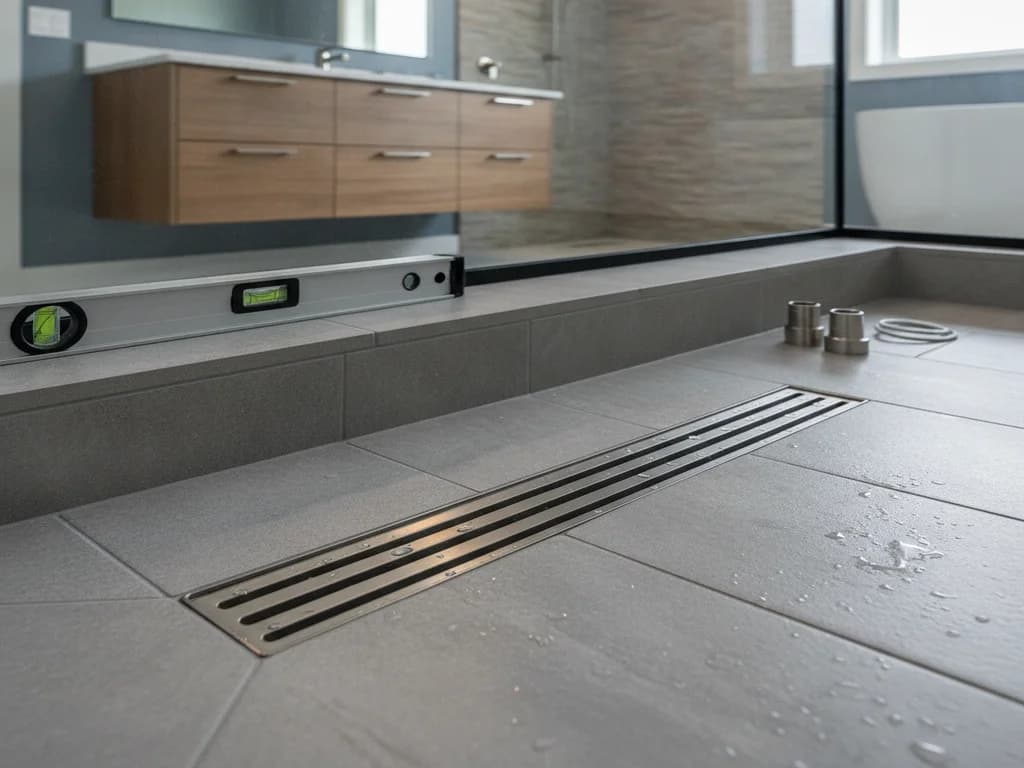
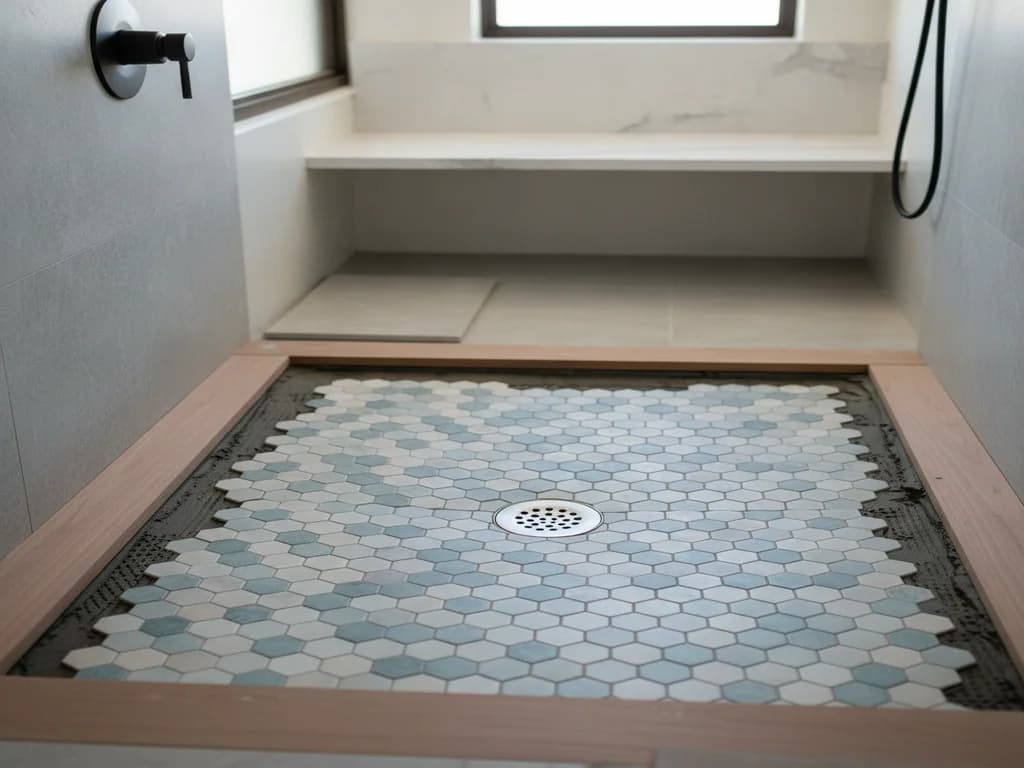
Shower floors have their own rules. Small tile — 2-inch squares, penny rounds, hexagon mosaics — remains the standard because a floor must slope to the drain from every direction, and small formats follow that curvature without lippage. The dense grout grid also adds real traction underfoot.
Grip is a specification, not a vibe: floor tile carries a slip-resistance rating (DCOF), and wet-area tile should meet the threshold for standing water underfoot — matte and textured finishes over polished ones, always. Our best tile for shower floors guide ranks materials and finishes on exactly this; the short version is small, matte, porcelain-first.
Grout choice matters more on the floor than anywhere else in the bathroom, since it lives underwater daily — epoxy vs. cement grout covers the trade-off, and epoxy earns its cost here more than on any wall.
Cost, timeline, and what rides along
For the floor of a standard shower, national cost guides put tile-floor replacement roughly in the several-hundred-to-few-thousand-dollar range, per HomeAdvisor and Angi — the low end for a true floor-only retile over a sound bed, climbing as the pan, drain, and bottom wall course join the scope. Small-format mosaic labor is slower per square foot than wall tile, which surprises people on small floors.
Timeline runs two to four days: demo and assessment, any pan or membrane work with its cure time, then setting, grouting, and sealing. Plumbing work at the drain brings a permit through City of Boise Planning & Development Services or your local jurisdiction.
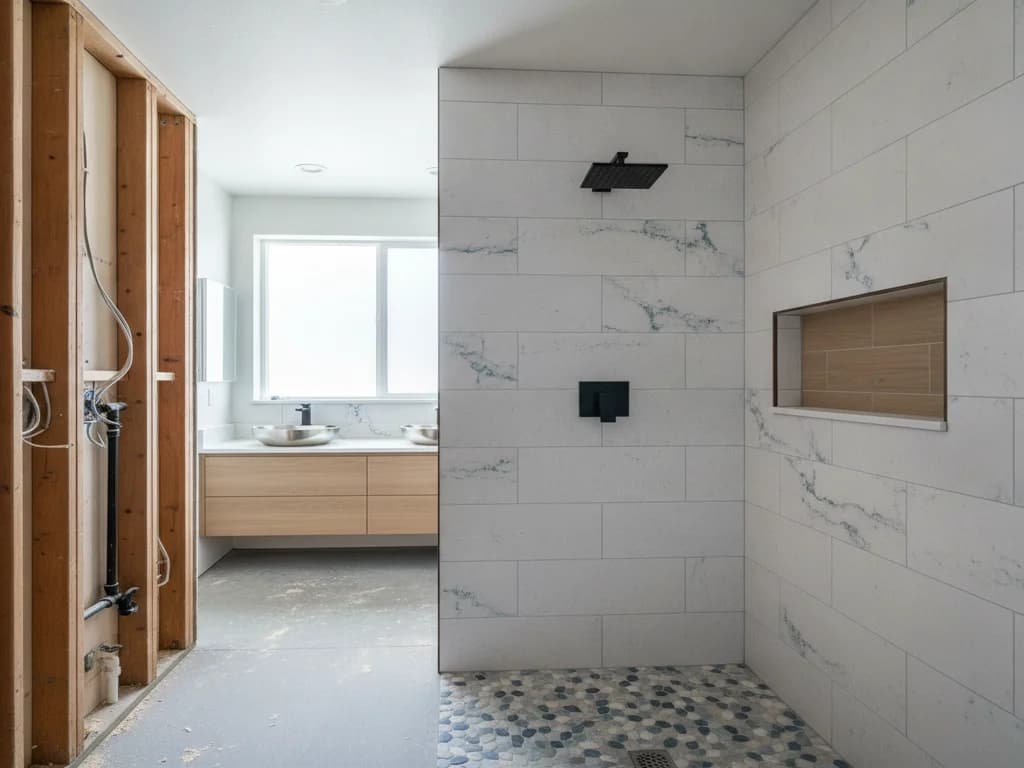
One upgrade worth pricing while the floor is open: if the shower has a curb you would rather lose, curb decisions are made at pan-rebuild time — see converting to a curbless shower before the new floor locks the layout in for another few decades.
What the process looks like
- 1
Diagnose the pan before quoting the floor
The contractor taps the floor for hollow bond, checks slope and drain condition, identifies the pan construction era, and looks below the shower where access allows — this is what separates a floor-only quote from a rebuild quote.
- 2
Protect the enclosure and remove the floor tile
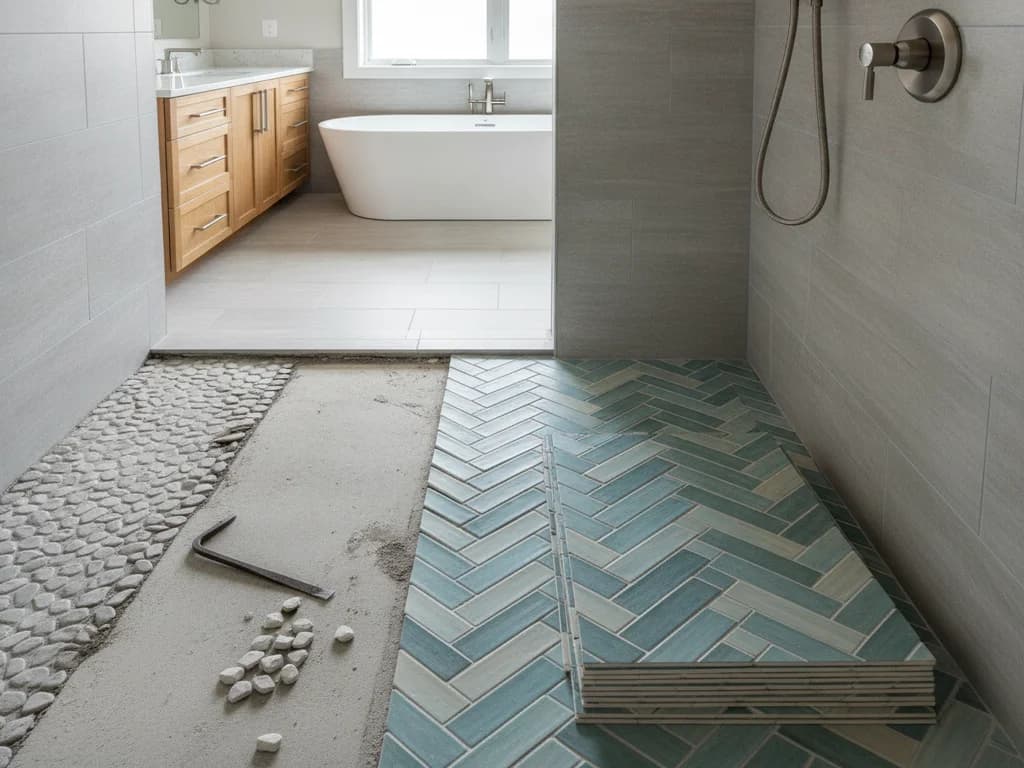
Walls and glass are masked, then floor tile is removed — carefully over a mortar bed to preserve it, or together with the bonded membrane where the pan is being replaced anyway.
- 3
Remove the bottom wall course
The lowest row of wall tile comes off so the new floor waterproofing can turn up the wall and tie into the assembly correctly.
- 4
Rebuild or verify the pan and slope
A sound mortar bed is cleaned, patched, and slope-checked; a failed or membrane-bonded pan is rebuilt with a new drain connection. Membrane work is flood-tested or cure-verified before tile.
- 5
Set the new floor tile
Mosaic sheets are laid out from the drain, back-buttered for full coverage, and set to follow the slope without lippage — full support under every piece is what keeps a floor from cracking.
- 6
Grout, seal, and rebuild the perimeter
The floor is grouted — epoxy where specified — the replaced wall course is set and grouted, and every change of plane gets silicone rather than grout.
- 7
Water-test and close out
Drainage is verified with running water, slope is confirmed with no ponding, and any permitted drain work gets its final inspection.
Ready to plan your Boise bathroom?
Licensed & insured · 3-year workmanship warranty
Frequently asked questions
- Can you replace shower floor tile without replacing the pan?
- Only when the pan is genuinely sound and the construction allows it — typically an older thick mortar bed the tile can be removed from without destroying it. Modern bonded-membrane floors lose their waterproofing with the tile, and any pan with leak history is replaced, not tiled over. The pan assessment comes before the quote.
- Why does replacing a shower floor involve the wall tile?
- The floor’s waterproofing must turn up the walls and tie into the wall assembly so water lands inside the pan. Rebuilding that joint requires removing the bottom course of wall tile. If your wall tile is discontinued, plan for a contrasting border row — or use the moment to evaluate whether the walls are near the end of their own life.
- How much does it cost to retile a shower floor?
- National guides such as HomeAdvisor and Angi put shower floor work roughly between several hundred dollars for a straightforward retile over a sound bed and a few thousand when the pan, drain, and bottom wall course join the scope. The pan condition — not the tile you pick — is the biggest cost variable.
- What is the best tile for a shower floor?
- Small-format matte porcelain leads: 2-inch squares, hexagons, or penny rounds follow the drain slope cleanly, and the dense grout grid adds traction. Wet-area floors should meet the slip-resistance (DCOF) threshold for standing water, which rules out polished finishes. Material-by-material rankings deserve their own guide — one is on the way.
- Why do shower floor tiles crack or come loose?
- Isolated cracks are usually impact. Cracking or hollow tile across areas means movement underneath — a voided mortar bed, a flexing pan, or thinset that never achieved full coverage under each mosaic piece. Because the cause sits below the tile, gluing or regrouting the symptom does not hold; the fix addresses the layer that moved.
- How long does a shower floor retile take?
- Two to four days in most cases: a day for demo, assessment, and the wall-course removal, then pan or membrane work with required cure time, then setting, grouting, and sealing. Epoxy grout and flood-testing add hours, not days, and both are worth it on the surface of the shower that works the hardest.
Sources
- Tile Council of North America (TCNA)
- National Tile Contractors Association
- HomeAdvisor — True Cost Guide
- Angi — Cost Guides
- City of Boise — Planning & Development Services
Claims and figures are drawn from the sources above and provided for general guidance; your project may vary. Photography is illustrative of design concepts. For a fixed price on your specific bathroom, request a free estimate.