Updated July 16, 2026 · 6 min read
By Boise Bath — bathroom & shower remodeling in Boise & the Treasure Valley
The short answer
Replacing a shower drain means disconnecting the drain assembly from the trap below the pan — so access decides the scope. With a crawl space or open ceiling below, it is a short plumbing visit. On a slab or over a finished ceiling, the pan usually has to come up, which is why most drain swaps happen during a shower remodel.
Key takeaways
- The visible grate is only the trim — the drain assembly clamps to the pan and connects to the trap below the floor, and that connection is where the real work happens.
- With crawl-space or basement access below, a drain swap is typically a few hours of licensed plumbing work.
- On a slab foundation or over a finished ceiling, reaching the connection usually means removing the pan — the drain swap becomes a shower project.
- A "drain leak" under a tiled shower is often actually a failed pan membrane, which no new drain will fix.
- The replacement drain has to match the pan type — and upgrading to a different style, like a linear drain, means rebuilding the shower floor, not swapping a part.
Why is a shower drain swap all about access?
The part of a shower drain you can see — the grate or strainer — is just trim. The working part is the drain assembly below it: a body that clamps or bonds to the shower pan, seals against it with a gasket or flange, and connects to the P-trap under the floor.
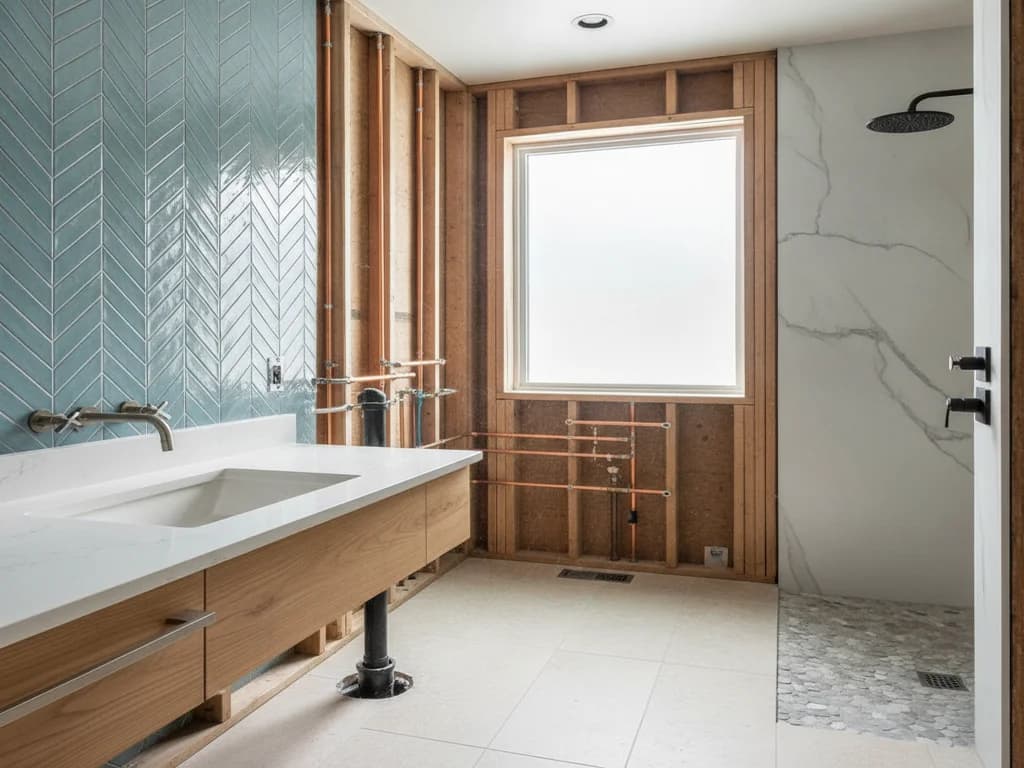
That connection is the whole job. The trap joint cannot be reached from inside the shower on most assemblies, so a plumber has to get at it from underneath — or unseal the drain from the pan and work from above. Which of those is possible in your house determines whether this is an afternoon of work or a remodel.
When does a shower drain actually need replacing?
The classic sign is water where it should not be: a stain on the ceiling below the bathroom, or damp framing a home inspector flags in the crawl space. Other triggers are a cracked drain body — common in flexing fiberglass pans — a corroded assembly that no longer seals, or a strainer so pitted by hard Treasure Valley water that cleaning does not help.
It is worth separating drain failure from drain clogs. Slow drainage is almost always a blockage in the trap or branch line, not a bad drain — that is a service call, not a replacement. Replacement is about the seal and the connection, not the flow.
The other common reason is simply a remodel: a new pan nearly always gets a new drain assembly, because the old one is sized and sealed to the old pan.
The easy version: access from below
Many Treasure Valley homes sit over a crawl space, and that is the best-case scenario. A licensed plumber gets under the bathroom, cuts or unthreads the trap connection, releases the old assembly, sets the new drain sealed to the pan, and reconnects the trap. Publications like This Old House describe the same sequence — the job is measured in hours.
An unfinished basement ceiling below the bathroom works the same way. A finished ceiling can too, but it means opening a section of drywall below and patching it afterward — still far cheaper than disturbing the shower itself.
The harder version: access from above
On a slab-on-grade foundation, or where the ceiling below cannot be opened, the only way to the connection is down through the shower. With a drop-in acrylic or fiberglass pan, that means unsetting the pan — and a pan that has been sealed in place for years rarely comes out reusable.
A tiled shower floor is more involved again. The drain body in a traditional or bonded-membrane pan is integrated into the waterproofing itself, so the assembly cannot be separated from the floor without breaking the floor. At that point you are rebuilding the shower base, which is why pros will tell you honestly: on a slab, a failed drain usually becomes a pan project. Our shower pan replacement article covers what that looks like.
A “drain leak” is often a pan leak
Under a tiled shower, water on the ceiling below frequently traces back to a failed pan membrane, not the drain — the drain is just where the symptoms concentrate. A new drain will not fix that. Insist on a proper diagnosis before anyone quotes a part swap; our shower waterproofing guide explains how the assembly is supposed to keep water in.
Matching the new drain to the pan
Shower drains are not interchangeable. The assembly has to match how the pan is built — a compression-style drain for an acrylic pan, a clamping-ring drain for a traditional membrane, a bonding-flange drain for modern foam-and-membrane systems. The full landscape, including point versus linear styles, is covered in our shower drain types comparison — that is the place to shop styles.
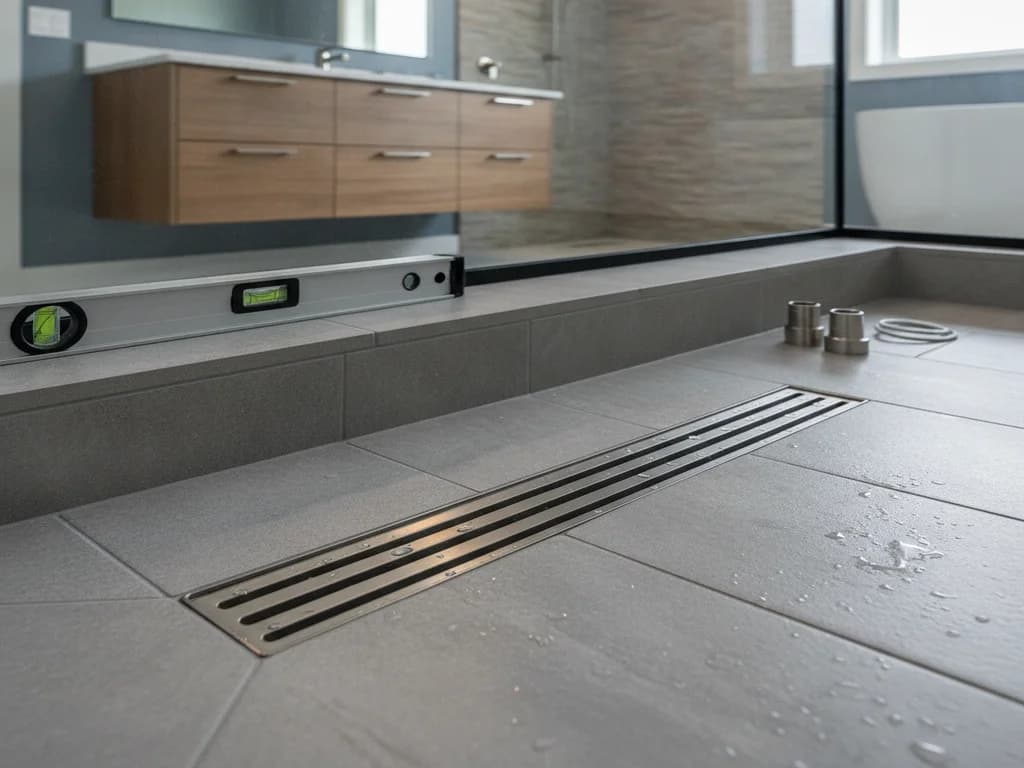
One expectation to set early: upgrading the style is not a swap. Moving from a center point drain to a linear drain at the entry changes the slope geometry of the entire floor, so it only happens when the floor is being rebuilt — usually as part of a walk-in conversion or a curbless shower project.
Cost, permits, and when to fold it into a remodel
With good access from below, national cost guides such as HomeAdvisor and Angi put drain replacement roughly in the low hundreds of dollars — a standard plumbing service call plus the part. When the pan has to come out, you are pricing a shower base rebuild instead, which lands in the thousands and varies with the floor finish going back in.
Drain and trap work is regulated plumbing, so the City of Boise Planning & Development Services requires a plumbing permit when the drain connection is replaced, as do neighboring Treasure Valley cities — a licensed contractor pulls it and schedules the inspection.
If your drain problem lives under a shower that is dated anyway, the math usually favors doing it once: a remodel replaces the drain, the pan, and the waterproofing as one assembly under one permit, instead of paying for access twice.
What the process looks like
- 1
Confirm what is actually failing
The contractor traces the moisture to its source — drain gasket, drain body, or the pan membrane around it — often from the crawl space with the shower running. This step decides whether you need a part or a project.
- 2
Plan the access route
Crawl space, basement ceiling, or down through the pan: the crew confirms which path reaches the trap connection with the least demolition, and quotes the job around it.
- 3
Disconnect the trap
With water off and the area protected, the plumber releases the old assembly from the trap — unthreading it or cutting the connection, depending on age and material.
- 4
Remove the old assembly and set the new drain
The old body comes out and the new assembly — matched to the pan type — is set and sealed to the pan with the correct gasket, clamping ring, or bonding flange.
- 5
Reconnect and water-test
The trap is reconnected, then the drain is tested with the shower running while the connection is checked from below for any weeping at the joint.
- 6
Close up and inspect
Any opened ceiling or access point is repaired, and where a permit applies, the work gets its inspection before the job is closed out.
Ready to plan your Boise bathroom?
Licensed & insured · 3-year workmanship warranty
Frequently asked questions
- Can you replace a shower drain without removing the shower pan?
- Yes — if there is access to the trap connection from below, through a crawl space, basement, or an opened ceiling. A plumber disconnects the trap, swaps the assembly, and reseals it to the pan from underneath. Without access below, the pan usually has to come out, and on tiled floors the drain is built into the waterproofing itself.
- How much does it cost to replace a shower drain?
- With access from below, national guides like HomeAdvisor and Angi put the job roughly in the low hundreds of dollars — a plumbing service call plus the assembly. If the pan has to come up to reach the connection, you are pricing a shower base rebuild instead, which runs into the thousands depending on the finish going back in.
- Why is my shower leaking at the drain?
- Three usual suspects: a failed gasket or seal between the drain and the pan, a cracked drain body — common in flexing fiberglass pans — or a failed pan membrane around the drain that only looks like a drain leak. The fix is completely different for each, so a proper diagnosis before repair matters more than speed.
- Can I switch to a linear drain when replacing my shower drain?
- Not as a swap. A linear drain sits at the edge of the shower and needs the entire floor sloped one direction toward it, where a point drain slopes from all four sides. Changing styles means rebuilding the shower floor and its waterproofing — it is a remodel decision, and usually paired with a curbless entry.
- Do I need a permit to replace a shower drain in Boise?
- Replacing the drain connection is regulated plumbing work, and the City of Boise Planning & Development Services requires a plumbing permit for it, as do neighboring Treasure Valley cities. A licensed contractor pulls the permit and schedules the inspection — it is a routine part of the job, not an obstacle.
Sources
- This Old House — Bathrooms
- HomeAdvisor — True Cost Guide
- International Code Council (IRC/IBC)
- City of Boise — Planning & Development Services
Claims and figures are drawn from the sources above and provided for general guidance; your project may vary. Photography is illustrative of design concepts. For a fixed price on your specific bathroom, request a free estimate.