Updated July 16, 2026 · 7 min read
By Boise Bath — bathroom & shower remodeling in Boise & the Treasure Valley
The short answer
Replacing shower plumbing means renewing everything that serves the shower — supply lines, the valve and riser, and the drain and trap — and it almost always happens during a remodel, while the walls and pan are already open. Done then, the plumbing adds days, not weeks, and the shower restarts with modern PEX and a code-compliant valve.
Key takeaways
- Shower plumbing is five things: hot and cold supplies, the valve, the riser to the shower arm, and the drain with its trap and vent.
- The plumbing is only reachable with the walls and pan open — which is why a remodel is when it gets replaced, at a fraction of the standalone cost.
- Pipe material is the scope decision: modern copper or PEX usually stays, while aging galvanized steel or gray polybutylene is the argument for a full renewal.
- Keeping fixtures in their existing locations keeps plumbing costs predictable — moving the shower is a different, bigger project.
- All of it is permitted work in Boise, inspected at rough-in before the walls close.
What counts as “shower plumbing”?
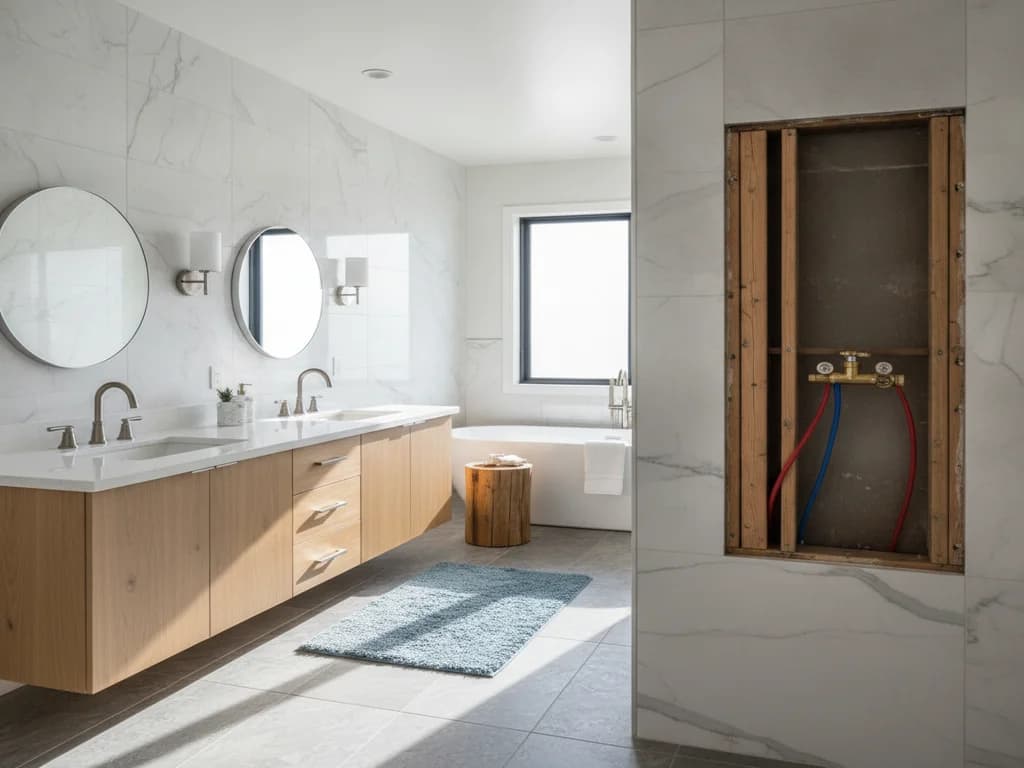
More than the valve. A shower is served by hot and cold supply lines running through the wall, the mixing valve they feed, a riser carrying tempered water up to the shower arm, and — on the waste side — the drain assembly, the P-trap below it, and the vent that lets the trap do its job.
When contractors talk about replacing shower plumbing, they mean renewing that whole rough-in, not swapping a part. The individual pieces have their own articles — replacing the valve and replacing the drain — but during a remodel they are one scope, done together while everything is exposed.
Why does this happen during a remodel?
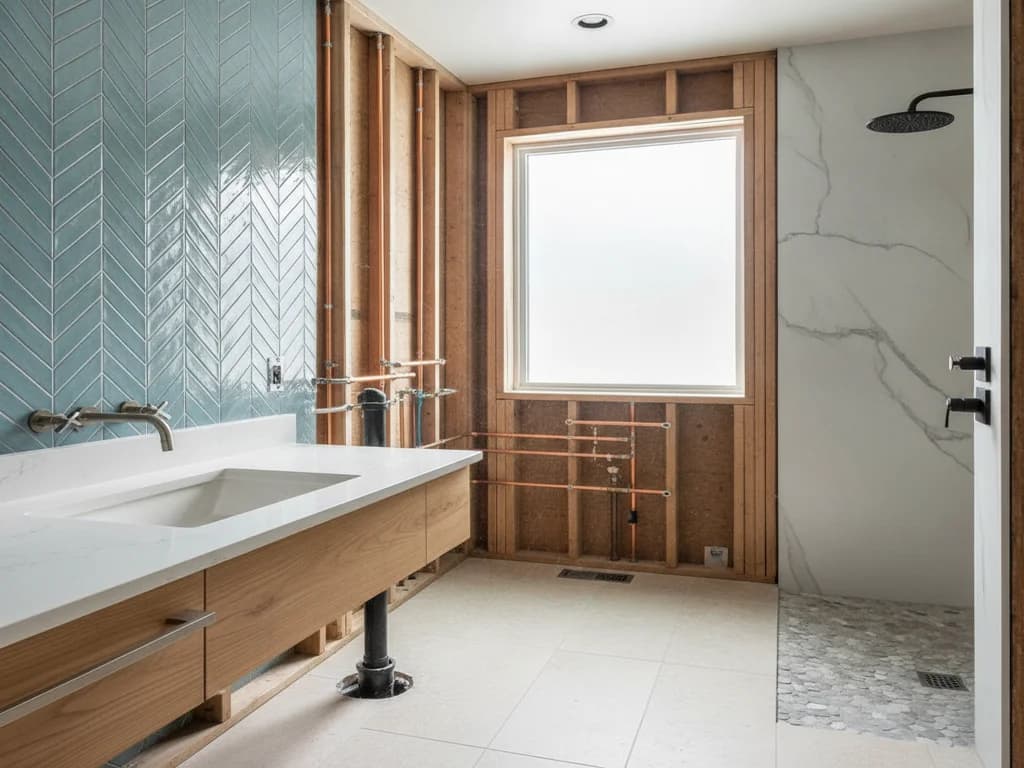
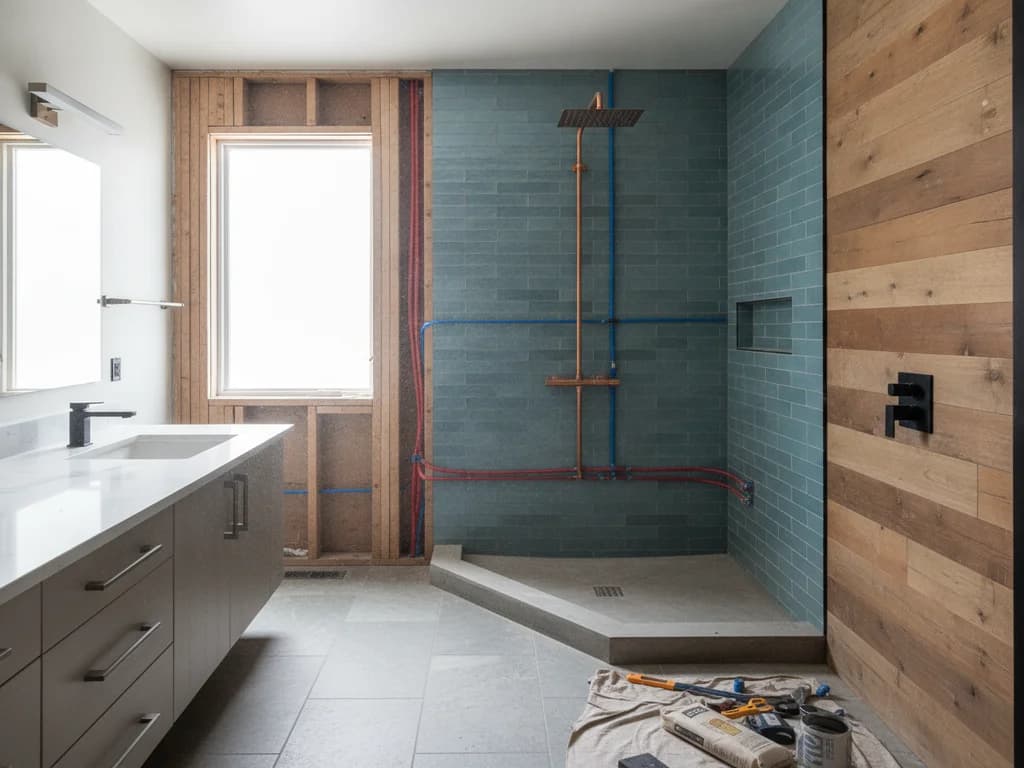
Because access is the entire cost. Every component listed above lives inside a wall or under a floor, and reaching any of them through finished surfaces means demolition and repair that dwarf the plumbing itself. During a shower remodel, the surround is off and the pan is out anyway — the plumbing is sitting there exposed.
That flips the economics. Replacing a valve through finished tile is a wall-repair project with some plumbing in the middle; replacing it during a remodel is an hour of a plumber’s time plus the part. The same is true of the supplies, riser, drain, and trap — which is why an experienced contractor treats decades-old rough-in as automatic scope, not an upsell. Nobody wants to open a brand-new shower wall because a sixty-year-old fitting let go a year after the remodel.
What pipe is in your walls? The material question
The age of the house largely predicts what the demo will reveal. Homes from the last twenty-five years typically have copper or PEX supplies in good order — those usually stay, with only the valve connections reworked. Mid-century homes may still carry galvanized steel supplies, which corrode shut from the inside over decades; publications like This Old House treat aging galvanized as a replace-on-sight material, and we will cover what that means for a whole house in a dedicated article.
A slice of 1980s–mid-90s construction used polybutylene — gray plastic supply pipe with a known failure history. Finding either material behind a shower usually turns the conversation from “reconnect” to “renew,” at least for the runs the remodel exposes.
On the waste side, older homes may have cast iron or undersized traps; modern ABS or PVC with a properly vented two-inch trap is the standard the new shower gets.
| Material | Era (typical) | Condition outlook | Usual call during remodel |
|---|---|---|---|
| Copper | 1960s–today | Long-lived; check joints | Keep, rework connections |
| PEX | Late 1990s–today | Modern standard | Keep |
| Galvanized steel | Pre-1970s | Corrodes internally, restricts flow | Replace exposed runs |
| Polybutylene (gray) | ~1980–1995 | Known failure history | Replace exposed runs |
The drain side: trap, vent, and slope
The waste rough-in gets the same once-over. The trap has to be the right size and depth for the new drain location, the branch line needs proper slope, and the vent has to be present and correct — model plumbing codes from the International Code Council set those requirements, and the rough-in inspection checks them.
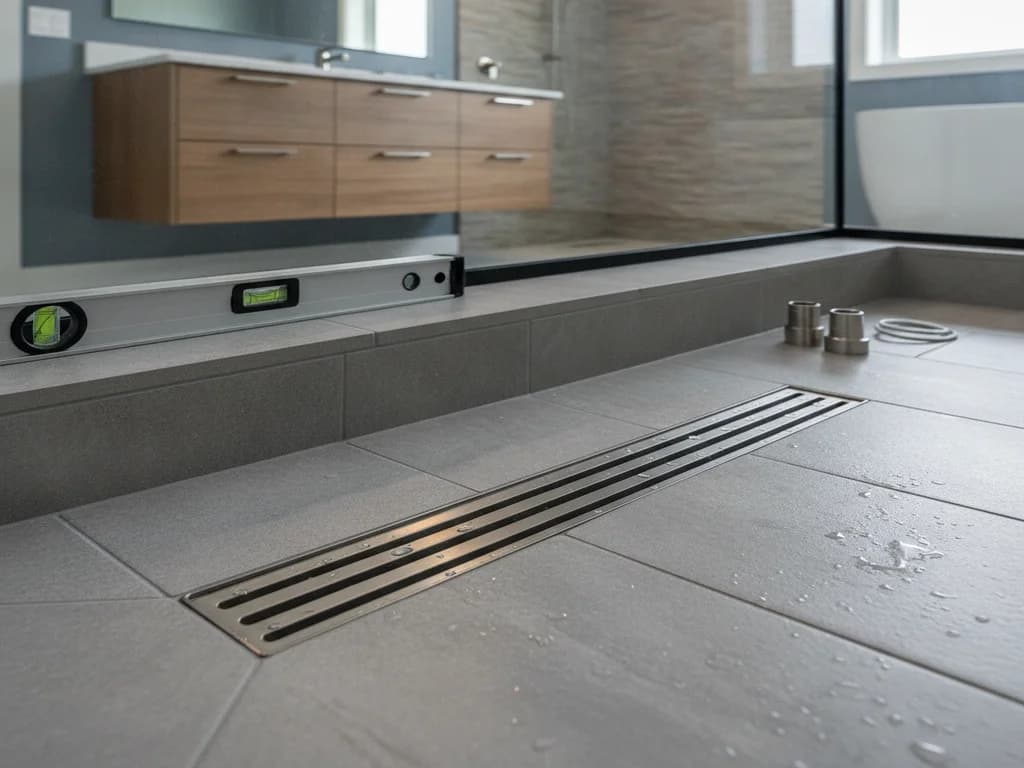
This is also the moment layout changes are possible. A new pan with a different drain position, or a linear drain at the entry, means cutting the subfloor and re-routing the trap arm — trivial while the floor is open, impossible after. If the shower itself is moving across the room, that is relocation, and bathroom plumbing relocation cost covers what that bigger scope runs.
Is the hot water supply part of the conversation?
It should be. New shower plumbing does not make more hot water — if the remodel adds a rain head, body sprays, or a soaking-depth tub, the water heater has to keep up, and remodel time is when to check. Our guide to water heater sizing for luxury showers covers the math.
Boise’s hard water also earns a mention: mineral scale accumulates in valves and at fixture orifices over the years, which is part of why decades-old shower plumbing underperforms even when nothing is leaking. New rough-in plus new trim resets that clock.
Open walls are a one-time window
Anything you might ever want in that wall — a second valve for a body spray, blocking for grab bars, a deeper niche — costs the least it will ever cost while the studs are exposed. Decide before the waterproofing goes on, because after that the window closes for a decade or more.
Permits, inspections, and what it adds to the project
Shower rough-in work is permitted plumbing in Boise — the City of Boise Planning & Development Services issues the permit, and the work is inspected at rough-in, before waterproofing and wall finishes close it up. Neighboring Treasure Valley cities run the same sequence. Our Boise remodel permits guide covers the process end to end.
Cost-wise, national guides such as HomeAdvisor and Angi put in-place shower plumbing renewal — valve, connections, drain, and trap, with walls already open — roughly in the several-hundred-to-low-thousands range inside a remodel, with the top of the range driven by material replacement and layout changes. As a standalone project through finished walls, the same work multiplies, which is the whole argument for doing it during the remodel.
On the schedule, plumbing rough-in plus its inspection typically occupies a day or two inside a one-to-three-week shower remodel — it is rarely the critical path.
What the process looks like
- 1
Scope the plumbing with the remodel design
The contractor maps the existing rough-in against the new shower plan — valve height, head position, drain location — and flags the age and material of what is likely in the walls.
- 2
Demo and expose
The surround and pan come out, opening the wet wall and subfloor. Now the actual pipe materials and their condition are visible, and the scope is confirmed or adjusted.
- 3
Assess and decide what stays
Sound copper or PEX supplies typically stay with reworked connections. Galvanized, polybutylene, or damaged runs get cut back to sound material and replaced through the exposed section.
- 4
Rough in the supply side
New supply runs are brought to the valve location, a pressure-balancing or thermostatic valve is set at the correct depth, and the riser is run to the planned head height, all anchored to blocking.
- 5
Rework the drain and trap
The trap and trap arm are set for the new drain location with correct slope and venting, and the drain assembly matched to the new pan is installed.
- 6
Pressure-test and pass rough-in inspection
Supplies are pressure-tested and the waste side is checked, then the city inspector signs off on the rough-in while everything is still visible.
- 7
Close walls and finish
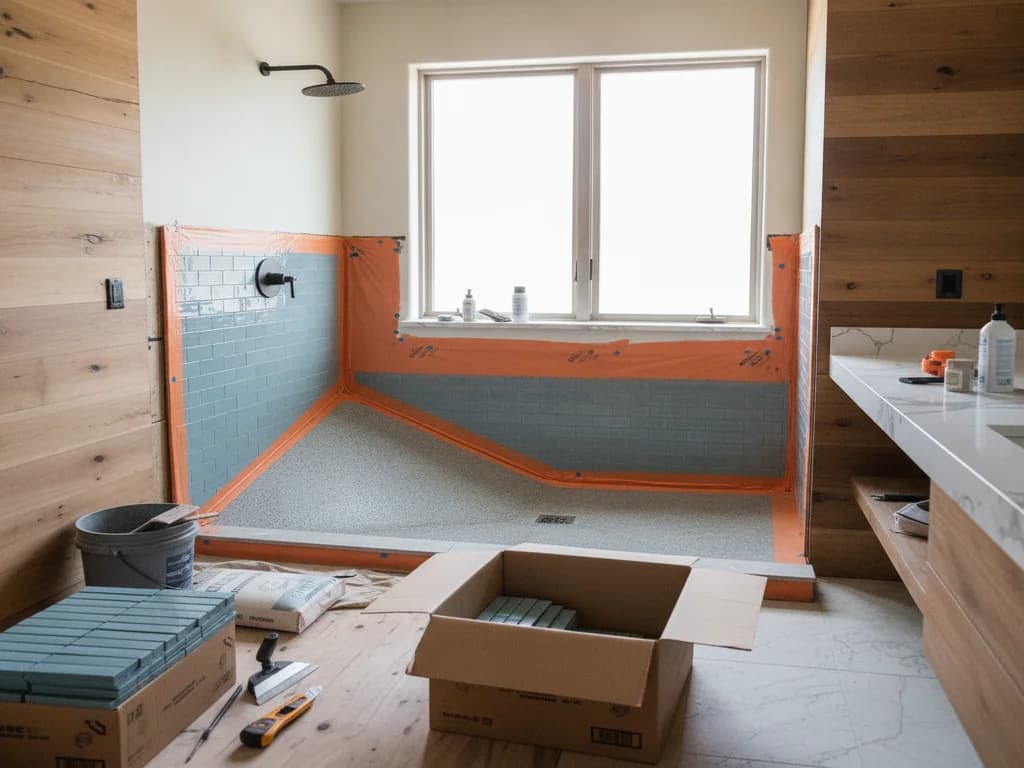
Only after inspection do substrate and waterproofing go on, followed by the finished surfaces and trim — with a final running-water test at the end.
Ready to plan your Boise bathroom?
Licensed & insured · 3-year workmanship warranty
Frequently asked questions
- Should shower plumbing be replaced during a remodel?
- If it is decades old — almost always yes. The walls and floor are already open, so renewal costs a fraction of what the same work costs later through finished tile. Modern copper or PEX in good condition can stay, but old valves, galvanized steel, or gray polybutylene supplies are replaced while access is free.
- How much does replacing shower plumbing cost?
- Inside a remodel with walls open, national guides like HomeAdvisor and Angi put in-place renewal — valve, connections, drain, and trap — roughly in the several-hundred-to-low-thousands range, rising with material replacement or layout changes. The same scope as a standalone job through finished walls costs several times more because of demolition and repair.
- What kind of pipes are in a 1990s Treasure Valley home?
- Most often copper supplies, with PEX appearing in the later 90s — both generally sound. The caution flag for that era is polybutylene, a gray plastic supply pipe used into the mid-90s with a known failure history. A shower demo reveals which you have, and exposed polybutylene runs are normally replaced on the spot.
- Can you replace shower plumbing without removing tile?
- Only in pieces, and only with luck on access — a valve can sometimes be swapped from a wall behind the shower, and a drain from a crawl space below. Renewing the full rough-in — supplies, riser, drain, and trap — requires the walls and pan open, which is why it is fundamentally a remodel-time scope.
- Does replacing shower plumbing require a permit in Boise?
- Yes. Supply, valve, drain, and trap work is regulated plumbing, and the City of Boise Planning & Development Services requires a permit with a rough-in inspection before the walls close. In a full shower remodel it is part of the project permit your licensed contractor pulls — not a separate errand for you.
- How long does the plumbing portion of a shower remodel take?
- Typically a day or two of work plus the rough-in inspection, inside a shower remodel that runs one to three weeks overall. The plumbing is rarely what stretches the schedule — waterproofing cure times and tile are the long poles. Material surprises like galvanized supplies can add a day.
Sources
- This Old House — Bathrooms
- HomeAdvisor — True Cost Guide
- International Code Council (IRC/IBC)
- City of Boise — Planning & Development Services
Claims and figures are drawn from the sources above and provided for general guidance; your project may vary. Photography is illustrative of design concepts. For a fixed price on your specific bathroom, request a free estimate.