Updated July 6, 2026 · 8 min read
By Boise Bath — bathroom & shower remodeling in Boise & the Treasure Valley
The short answer
Relocating bathroom plumbing costs more the farther a fixture moves from the existing stack, and the type of foundation matters — Fixr (2026) prices moving plumbing set in a concrete slab at $500–$1,000 in labor alone, since the concrete has to be broken up to reach it. Toilets are the most expensive fixture to relocate; sinks are typically the cheapest.
Key takeaways
- Fixr (2026) prices total bathroom plumbing work at $2,000–$10,000, averaging $5,302 — with relocation adding real cost on top of a same-footprint remodel.
- Moving a toilet costs $200–$400 in relocation labor alone (installed total $550–$3,900) per Fixr, more than moving a sink ($240–$600 relocation, $540–$6,100 installed) because of the larger drain line and vent stack involved.
- Plumbing set in a concrete slab is the most expensive foundation type to relocate — Fixr prices it at $500–$1,000 in labor because the concrete must be broken up to reach the pipe before any rerouting can start.
- This Old House (2026) prices average plumbing work at $5,545 for a full bathroom remodel, and notes that permits are typically required whenever plumbing, electrical, or structural changes are involved.
- Today's Homeowner (2026) prices plumber labor at $60–$200 per hour, and notes labor typically makes up 35–65% of total bathroom remodel cost.
Why does moving plumbing cost so much more than keeping it in place?
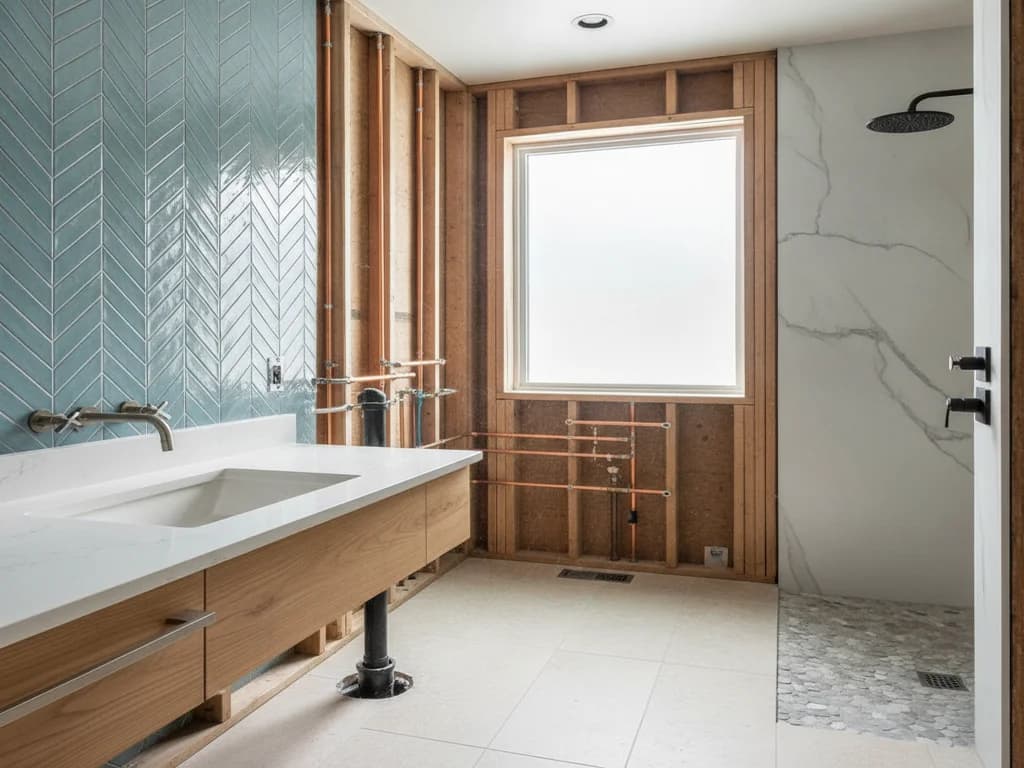
A remodel that keeps every fixture in its existing footprint is almost always cheaper than one that reconfigures the layout, and plumbing is the reason why. Fixr (2026) prices total bathroom plumbing work at $2,000–$10,000, averaging $5,302 — and relocation is one of the biggest swings inside that range, because moving a fixture means extending or rerouting supply lines, drain lines, and often venting, not just reinstalling the same fixture a few feet away.
This is easy to underestimate at the design stage, because a floor plan sketch treats moving a toilet across the room the same way it treats moving it six inches — both are just a box in a new spot on paper. The plumbing underneath does not see it that way, which is why a layout change that looks minor on a drawing can be the single biggest driver of a remodel's final plumbing bill.
Below are the factors that actually drive relocation cost: how far a fixture moves, which fixture it is, what kind of foundation the bathroom sits on, and what the plumbing code requires once a line moves.
The core idea
Every foot a fixture moves from its existing drain and vent connection is a foot of new pipe, new framing access, and — depending on the fixture — new venting to plan for. Distance and access, not the fixture itself, are what set the price.
1. Distance from the existing plumbing stack
Every plumbing line run has a real cost per foot, not just a flat relocation fee. Fixr prices moving an individual plumbing line at roughly $80–$200, and notes that most fixtures need more than one: a toilet needs both a water supply line and a waste line, while a shower typically needs three lines connected. A fixture that moves a short distance within the same wall costs meaningfully less than one that moves across the room to a new wall entirely, because every additional foot of run adds pipe, fittings, and labor time.
This is also why a "move the toilet six inches to fit a bigger vanity" change and a "move the toilet to the opposite wall" change are not the same request, even though both are technically a relocation. The first barely touches the existing drain line; the second may require an entirely new run back to the stack, new framing access along the way, and possibly a change in slope to keep the drain within code — all before the fixture itself is reinstalled.
2. Which fixture is moving
Not all fixtures cost the same to relocate. Fixr's 2026 data breaks this out clearly: a toilet costs $200–$400 to relocate (installed total $550–$3,900), a bathroom sink costs $240–$600 to relocate (installed total $540–$6,100), and shower plumbing costs $240–$600 to relocate (installed total $1,740–$4,100). Toilets and showers cost more to move than sinks primarily because of their larger drain lines and, for toilets, the vent stack connection — a sink's smaller supply and drain lines are comparatively simple to reroute within a wall or through cabinetry.
| Fixture | Relocation labor | Installed total |
|---|---|---|
| Bathroom sink | $240–$600 | $540–$6,100 |
| Toilet | $200–$400 | $550–$3,900 |
| Shower plumbing | $240–$600 | $1,740–$4,100 |
| Plumbing in a concrete slab | $500–$1,000 | $550–$1,500 |
Source: Fixr (2026). Installed total includes the relocation labor plus reconnecting and setting the fixture itself.
3. Slab foundation vs. crawlspace or basement access
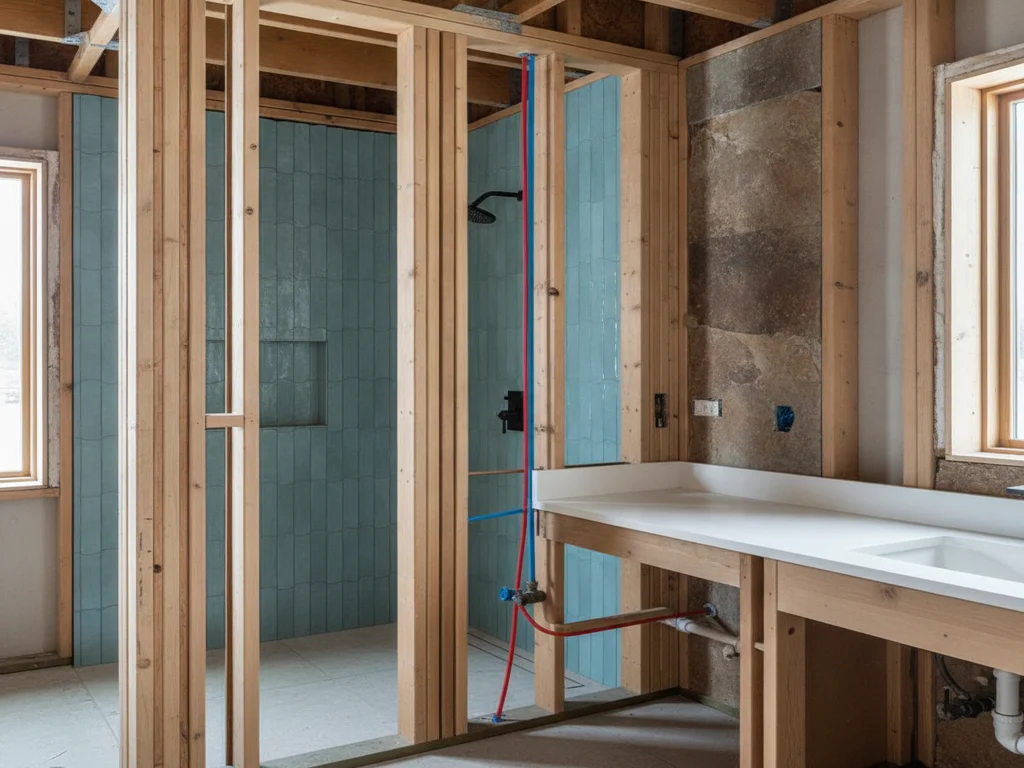
Where the plumbing physically sits matters as much as how far it moves. Fixr prices relocating plumbing set in a concrete slab at $500–$1,000 in labor — the highest per-line range in its data — because, as Fixr puts it, "the concrete needs to be broken up to reach the plumbing" before any rerouting work can even start. A bathroom with plumbing accessible from below, through a basement or crawlspace, avoids that demolition-and-repour step entirely, which is why the same fixture move can price very differently depending on what is underneath the floor.
Why this matters for older Treasure Valley homes
Slab-on-grade construction is common in newer Treasure Valley builds, while older homes more often have basement or crawlspace access to plumbing. Knowing which one your home has — before you fall in love with a layout that moves the toilet across the room — is a useful early question for your contractor.
4. Venting requirements
Every drain needs a vent to work correctly — it is what allows water to flow out without creating suction that pulls water out of the trap and lets sewer gas into the bathroom. When a fixture stays close to its existing drain and vent connection, it can often tie into the same venting already in place. Move it far enough away, though, and the project may need new venting run to the fixture's new location, which adds both material and the labor to route it through framing — on top of the drain and supply work already covered above.
This is one of the least visible factors on this list because it rarely shows up as its own quote line — it is usually folded into the relocation labor figures in the table above. But it is a real reason two relocations of the same fixture, over similar distances, can still price differently: one may reuse existing venting, and the other may not.
5. Permits
This Old House notes that bathroom remodeling projects "involving plumbing, electrical work, window installation, or structural changes often require permits" — and a layout change that relocates fixtures typically checks that box. Permit costs are not consistently quantified across sources, but the inspection they require is part of why a licensed plumber, not a general contractor working alone, needs to be involved whenever supply or drain lines move.
The inspection tied to the permit is also a genuine safeguard, not just paperwork — it confirms the new drain slope, vent tie-in, and supply connections were done to code before the wall closes back up. Skipping it to save time is one of the more expensive mistakes to make in a remodel, since correcting a failed inspection after tile and drywall are in means opening the wall again.

6. The baseline: what plumbing costs even without a move
It helps to know the floor before estimating the added cost of relocation. This Old House prices average plumbing work at $5,545 for a full bathroom remodel that keeps its existing layout, and Today's Homeowner notes labor typically makes up 35–65% of total remodel cost, pricing plumber labor specifically at $60–$200 per hour. Relocation cost stacks on top of this baseline — it does not replace it — which is why a layout change is one of the most reliable ways to push a remodel toward the higher end of its budget range.
How to think about this when planning your layout
If a new layout is worth it to you — a wider walk-in shower, a better-placed vanity, more usable floor space — relocation cost is simply part of that decision, and the numbers above should be part of the conversation with your contractor before the design is finalized, not after. If budget is the driving factor, keeping fixtures at or near their existing plumbing connections is the single most effective lever you have, more so than most material choices.
A useful middle ground worth asking about: sometimes a layout can be redrawn to move a fixture a shorter distance than the original sketch called for, landing close enough to the existing stack to avoid the more expensive slab-breaking or new-venting scenarios above while still solving the space problem that prompted the redesign in the first place.
For the fuller list of where remodel budgets get surprised, see our bathroom remodel hidden costs guide, and for how a relocation decision fits into the broader project sequence, our bathroom remodel order of operations. When you are ready to price your specific layout, a full bathroom remodel quote will scope the plumbing against your actual floor plan.
Ready to plan your Boise bathroom?
Licensed & insured · 3-year workmanship warranty
Frequently asked questions
- How much does it cost to move plumbing during a bathroom remodel?
- It depends on the fixture and the foundation. Fixr (2026) prices moving a bathroom sink at $240–$600, a toilet at $200–$400, and shower plumbing at $240–$600 in relocation labor alone — with plumbing set in a concrete slab running highest, at $500–$1,000, because the slab must be broken up first.
- Why does moving a toilet cost more than moving a sink?
- A toilet's drain line and vent stack connection are larger and more involved to reroute than a sink's smaller supply and drain lines. Fixr prices toilet relocation at $200–$400 versus $240–$600 for a sink in raw relocation labor, but the toilet's larger installed-total range ($550–$3,900) reflects how much more can be involved depending on how far it moves.
- Is it cheaper to relocate plumbing on a slab foundation or with crawlspace access?
- Crawlspace or basement access is typically cheaper because the plumber can reach the pipe without breaking up flooring. Fixr (2026) prices relocating plumbing set in a concrete slab at $500–$1,000 in labor specifically because "the concrete needs to be broken up to reach the plumbing" before rerouting can begin.
Sources
- Fixr — Plumbing Cost for Bathroom Remodel (2026)
- Today's Homeowner — Bathroom Remodel Cost (2026)
- This Old House — Bathroom Remodel Cost (2026)
- ICC — 2021 International Plumbing Code
- Idaho DOPL — Plan Review and Permits
Claims and figures are drawn from the sources above and provided for general guidance; your project may vary. Photography is illustrative of design concepts. For a fixed price on your specific bathroom, request a free estimate.