Updated July 16, 2026 · 7 min read
By Boise Bath — bathroom & shower remodeling in Boise & the Treasure Valley
The short answer
Glazed porcelain is the best tile for showers — it absorbs under 0.5% water by industry definition and never needs sealing. Use large-format tile (12×24 or bigger) on the walls, where glossy finishes are fine, and 2-inch or smaller matte mosaics on the floor, where a wet DCOF of 0.42+ is the safety spec.
Key takeaways
- Porcelain is the shower default: under 0.5% water absorption by the industry definition TCNA references, no sealing ever, and harder-wearing than ceramic or stone.
- Walls and floors want different tile: big and glossy is fine vertical, but the floor demands small matte tile with a wet DCOF of 0.42 or higher.
- On shower walls, 12×24-inch and larger tile means fewer grout lines — less scrubbing and a cleaner, more current look.
- Natural stone in a shower is a maintenance contract, not just a purchase: it needs sealing on a schedule and hates Treasure Valley hard water.
- The tile is not the waterproofing — the membrane system behind it is, and no tile choice compensates for a bad one.
- Matte and textured finishes hide hard-water spotting; polished tile broadcasts it, which matters daily with hard Idaho water.
The short answer: porcelain everywhere, sized to the surface
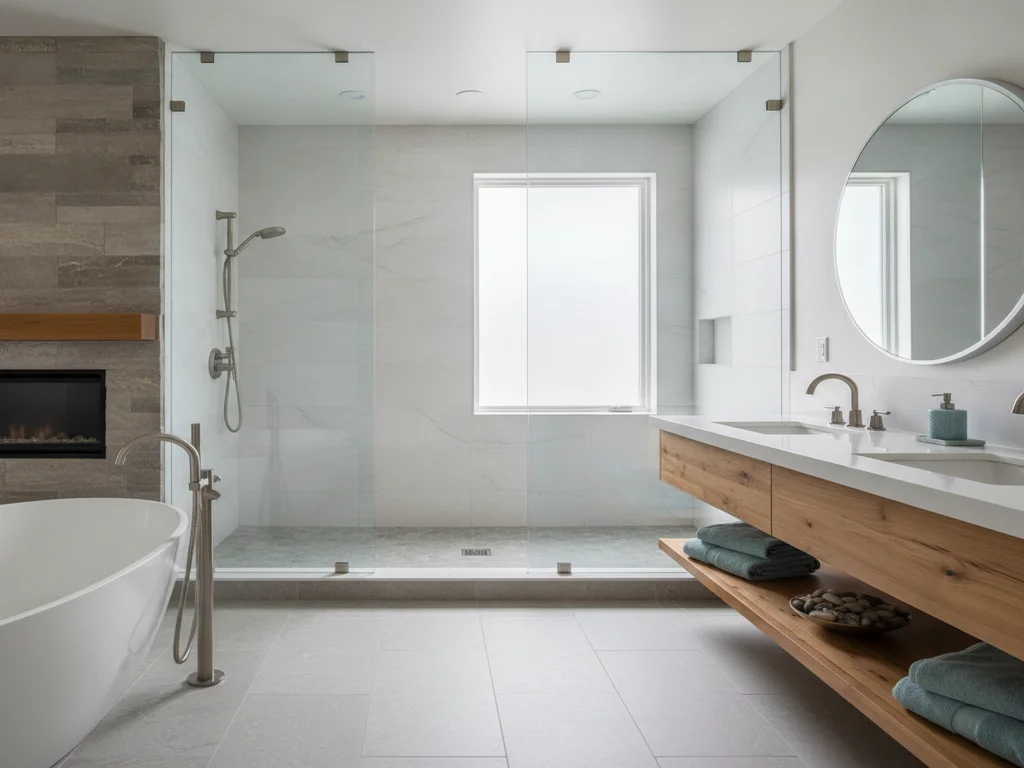
If you want the one-line spec to take shopping: glazed porcelain throughout, 12×24 or larger on the walls, 2-inch or smaller matte mosaic on the floor. That combination is what most professionally built showers in this market come down to, and the rest of this article explains why each piece earns its spot.
This is a tile-only ranking. If you are still weighing tile against acrylic, cultured marble, or solid-surface panels, that whole-market decision lives in best shower wall materials — here, we assume tile has won and rank the choices inside it.
And a scope note: the shower floor is its own discipline, with slope and slip rules the walls never face. This article covers the floor pick at spec level; the full floor-tile breakdown is in best tile for shower floors.
Best material: porcelain, for one number — absorption
A shower is the wettest environment in the house, so the spec that matters most is water absorption. Porcelain is defined by it: fired dense enough to absorb less than 0.5% of its weight in water, per the industry standard TCNA references. That near-zero absorption is why porcelain shrugs off decades of daily soakings without sealing, fading, or degrading.
Standard ceramic runs more absorbent and softer. On shower walls — a vertical, lower-abuse surface — good glazed ceramic is a legitimate budget pick, and the full trade-off lives in porcelain vs. ceramic tile. But porcelain’s premium is modest, and in a full-wet environment it buys a meaningful durability margin.
Natural stone — marble, travertine, slate — is the premium wildcard, and in a shower it is a maintenance contract. Stone is porous, needs sealing on a recurring schedule, and etches under the mineral load of hard water, which the USGS classifies across most of the Treasure Valley. Beautiful, yes; low-maintenance, no. Glass and specialty tile work best as accents rather than full fields: striking in a niche or band, fussy and costly wall-to-wall.
Best wall tile: large-format, and glossy is allowed up here
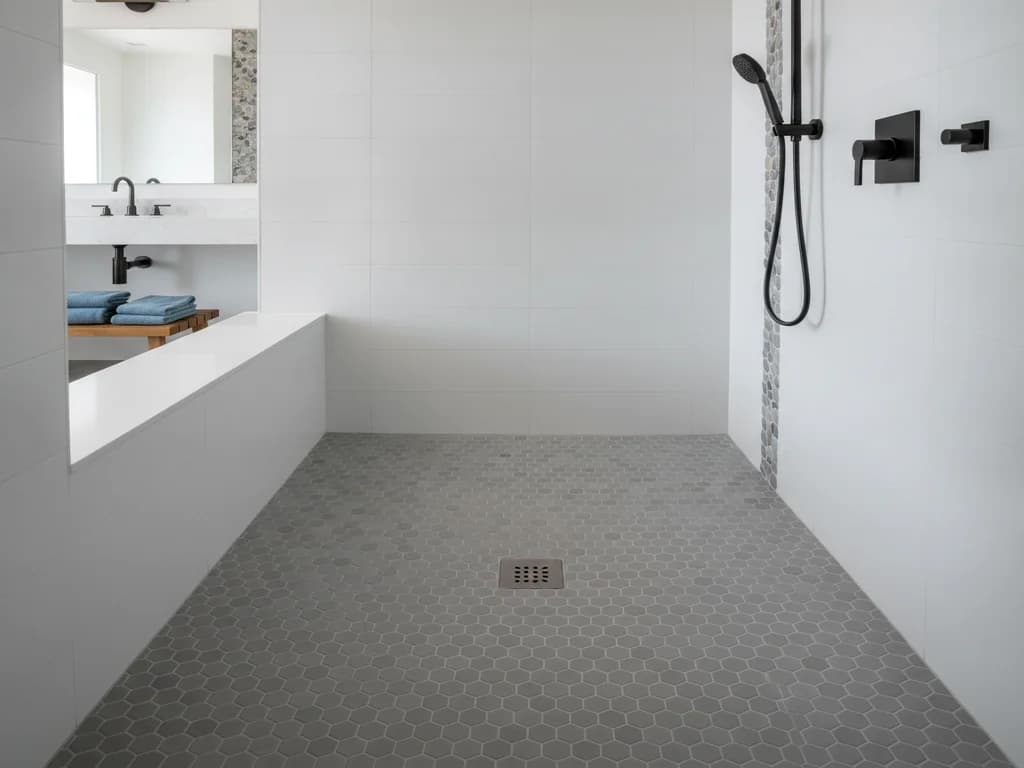
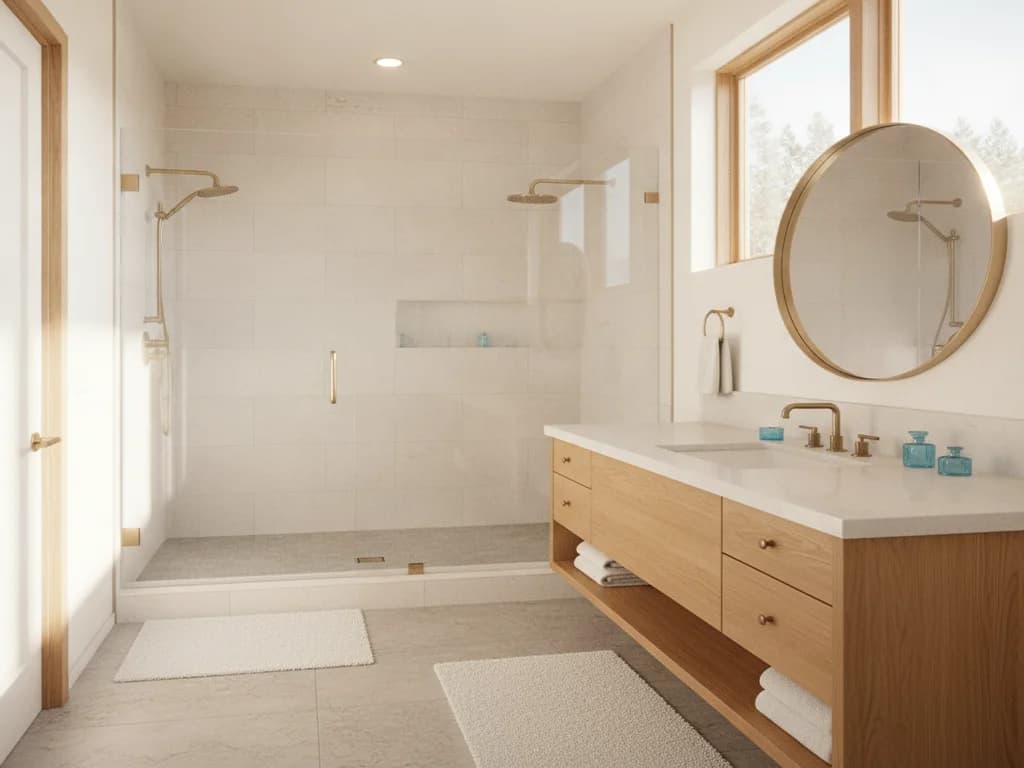
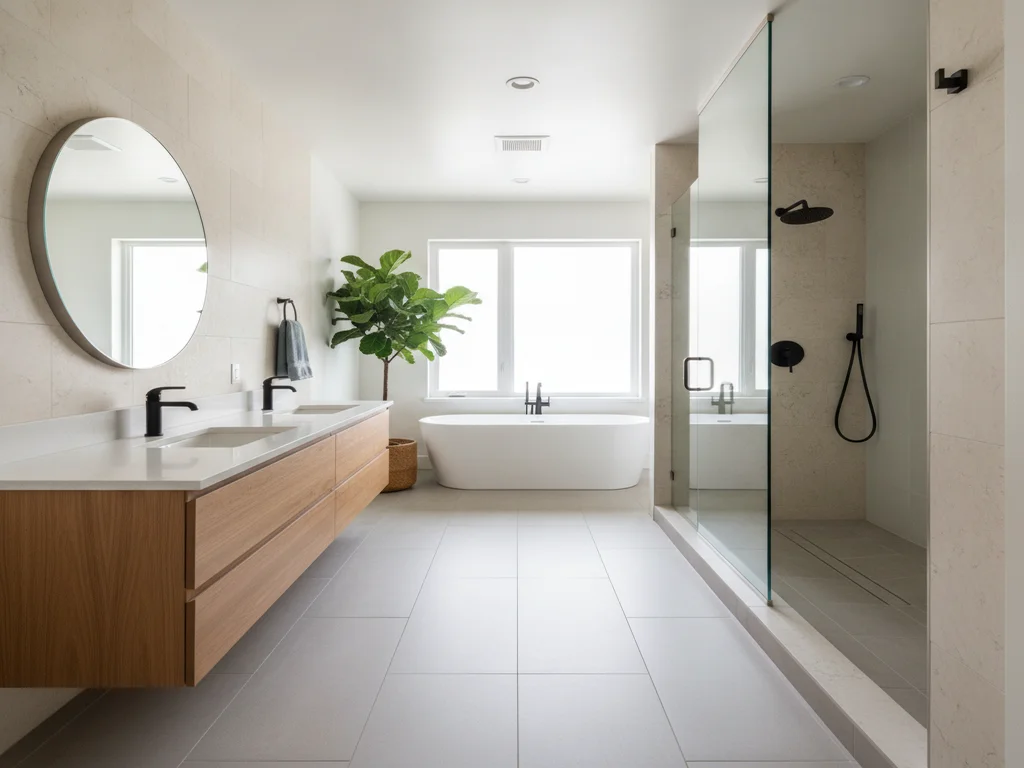
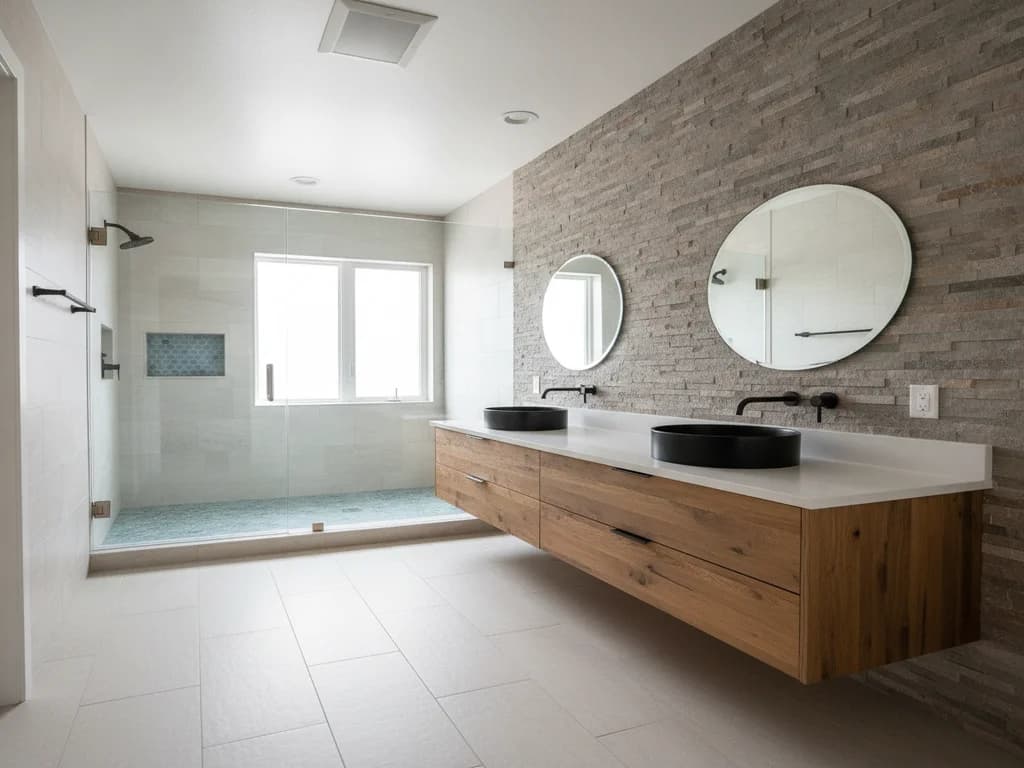
Shower walls are where large-format tile earns its keep. A 12×24-inch tile — or bigger — means dramatically fewer grout lines, and grout is the part of a shower that stains, harbors mildew, and demands scrubbing. Fewer joints is less maintenance forever, and the large rectangular format reads current in a way 4×4 squares no longer do.
Finish rules relax on the vertical. Glossy and polished tile that would be a slip hazard underfoot is perfectly at home on a wall, where it bounces light around and makes enclosed showers feel less like a cave. The honest caveat: glossy surfaces show hard-water spotting after every shower, and with Treasure Valley water that is a squeegee-a-day commitment. Matte walls forgive; glossy walls perform but demand upkeep.
The ceiling on size is your walls, not the tile. Very large formats (24×48 and up) look spectacular but demand dead-flat framing and substrate, cost more to set, and put more cut waste in the dumpster. The full size logic — including where big tile fights the room — is covered in large-format vs. small tile. If your existing tile is failing rather than just dated, start instead at replacing shower tile, because failed tile usually means a failed system behind it.
Best floor tile: small, matte, and DCOF-rated — no exceptions
The shower floor inverts every wall rule. It slopes to a drain, so tile must be small enough — 2-inch squares, hexagons, or penny rounds — to follow that slope without lipping, which large tile physically cannot do around a standard center drain. Small tile also means more grout joints per square foot underfoot, and every joint is grip.
Slip resistance has a real measurement here: DCOF, the dynamic coefficient of friction. The ANSI standard TCNA references sets 0.42 wet as the baseline for floors walked on wet — and no floor is wetter than a shower floor. Matte and textured mosaic finishes clear it; polished stone and glossy tile generally do not. The number is on every manufacturer spec sheet.
That is the spec-level summary. Sizing options, DCOF details, and the mosaic-versus-large-format decision get full treatment in best tile for shower floors — if the floor is the part of your shower you are rethinking, start there.
The tile is not the waterproofing
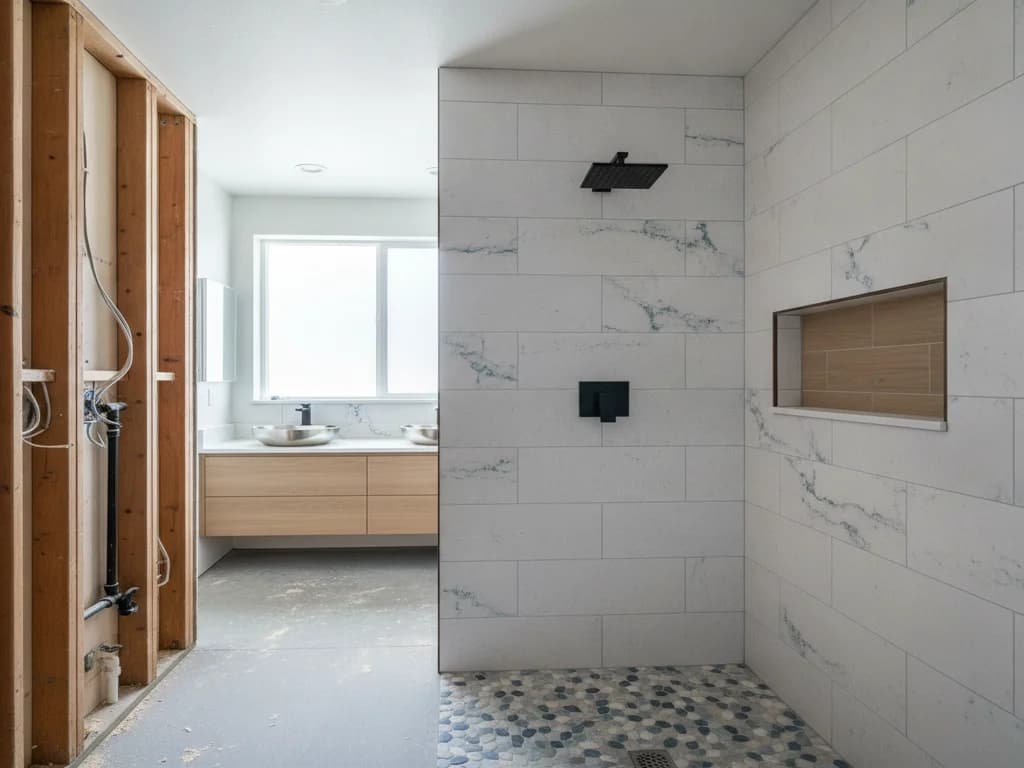
No tile — porcelain included — waterproofs a shower. Water passes through grout lines as a matter of course, and the membrane system behind the tile (sheet membranes, liquid-applied coatings, or foam board systems from manufacturers like Schluter) is what actually keeps it out of the framing. A perfect tile selection over a skipped or botched membrane fails the same way a bad one does — it just costs more to demolish.
The picks by category
Every recommendation above, in one table:
| Category | Best pick | Why | Skip |
|---|---|---|---|
| Material | Glazed porcelain | Under 0.5% absorption; never needs sealing; hardest wearing | Unsealed natural stone; soft ceramic on floors |
| Wall size | 12×24 inch or larger | Fewer grout lines to scrub; current look | 4×4 squares (dated, maximum grout) |
| Wall finish | Matte for low upkeep; glossy if you accept squeegee duty | Matte hides hard-water spots; glossy bounces light | Nothing — walls are finish-flexible |
| Floor size | 2-inch or smaller mosaics | Conforms to drain slope; grout joints add grip | Large format around a center drain |
| Floor finish | Matte/textured, wet DCOF ≥ 0.42 | The published slip baseline for wet floors | Polished anything underfoot |
| Accents | Glass or specialty tile in niches and bands | High impact at low square footage | Full glass-tile walls (cost, fuss) |
Absorption threshold per the industry definition of porcelain; DCOF baseline per the ANSI standard referenced by TCNA. Confirm both on the manufacturer spec sheet for the exact tile.
What to skip in a shower — and why
Skip unsealed or soft natural stone unless you want a sealing schedule for life — marble and travertine etch and stain in a hard-water shower faster than anywhere else in the house. Skip glossy or polished tile on the floor entirely; it is a wall finish wearing floor packaging. Skip any floor tile without a published DCOF, and be honest about very trendy tile: a bold pattern you love today is a full demolition to change later, because shower tile comes off only one way.
Skip cheap tile with a bright-white body, too. When a glazed tile with a white core chips — and in a shower, a dropped shampoo bottle will eventually find it — the chip flashes white against the glaze. Color-body porcelain runs the surface color through the tile so damage stays camouflaged. It is a spec question, not a brand question, and any tile shop can answer it in a minute.
Matching the pick to your shower
The category picks, applied to real situations:
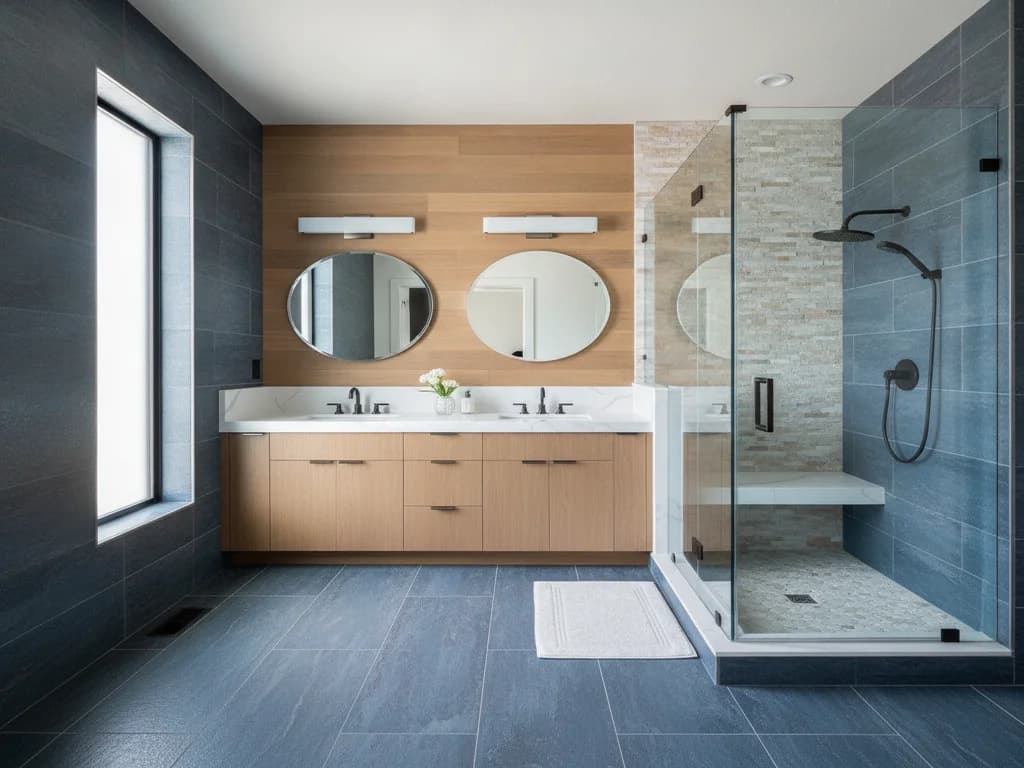
- Standard shower remodel: 12×24 glazed porcelain walls, 2-inch matte porcelain mosaic floor, DCOF ≥ 0.42 — the reference spec most quotes should resemble.
- Low-maintenance priority: matte porcelain everywhere, mid-tone grout, and skip glossy finishes — hard water leaves nothing to spot on a matte wall.
- Bright, spa-like feel: glossy or satin large-format walls in a light tone with a squeegee on a hook — accept the upkeep trade knowingly.
- Stone look without the stone contract: marble-look and travertine-look porcelain deliver the veining with porcelain specs — no sealing, no etching.
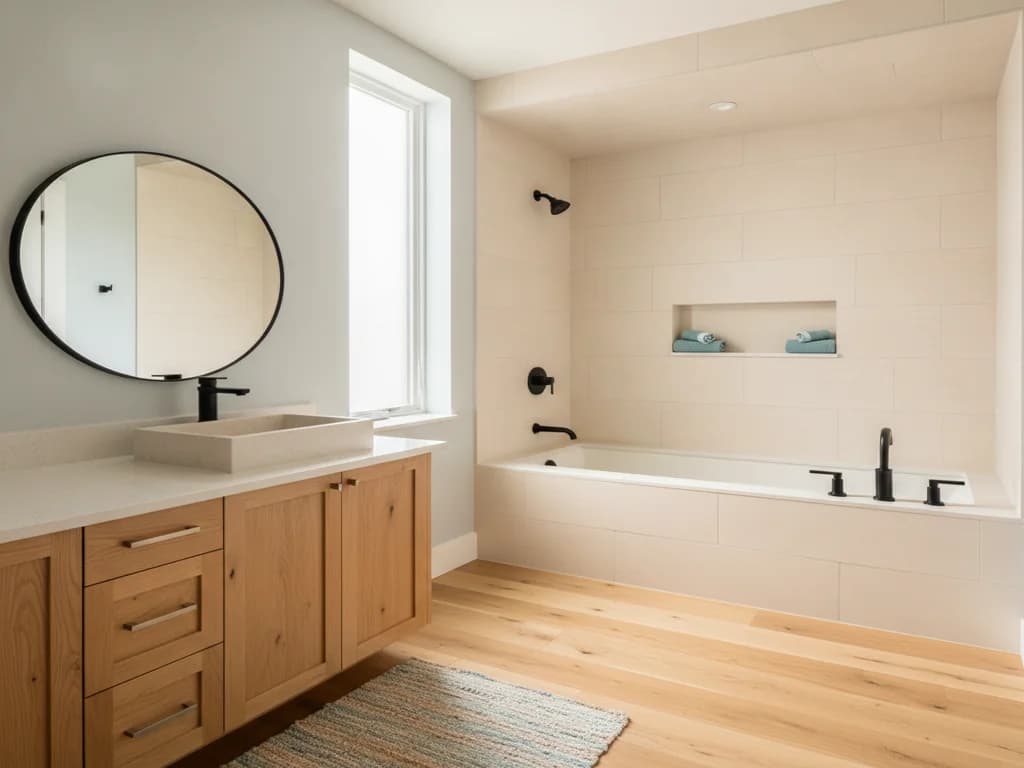
- Tub-and-shower combo walls: the same wall logic applies, with a few surround-specific wrinkles covered in best tile for tub surrounds.
- Still weighing tile against panels or acrylic: start at best shower wall materials — this article assumes tile already won.
Ready to plan your Boise bathroom?
Licensed & insured · 3-year workmanship warranty
Frequently asked questions
- Is porcelain or ceramic tile better for showers?
- Porcelain, by the numbers. It absorbs under 0.5% of its weight in water per the industry definition — effectively waterproof at the tile level — where standard ceramic is softer and more absorbent. Glazed ceramic remains a fair budget pick on shower walls, but porcelain’s modest premium buys real durability margin in a full-wet environment, and it never needs sealing.
- Can you use large tiles in a shower?
- On the walls, yes — 12×24-inch and larger tile is the modern default there, and fewer grout lines mean less scrubbing. On the shower floor, no: large tile cannot follow the slope to a standard center drain without lipping, which is why floors get 2-inch or smaller mosaics. Most designs run large tile on the walls and switch format at the floor.
- Should shower tile be glossy or matte?
- Depends on the surface. Walls take either — glossy bounces light and brightens enclosed showers, though it shows hard-water spotting after every use, a daily reality with Treasure Valley water. Matte walls hide spots and scrub less. The floor is not a choice: matte or textured only, with a wet DCOF of 0.42 or higher, because polished tile underfoot in a shower is a slip hazard.
- Is natural stone tile good for showers?
- It can be beautiful, but it is the highest-maintenance option in the wettest room. Stone is porous, needs sealing on a recurring schedule, and hard water etches and spots it faster than anything else in the house. If you want the look without the contract, stone-look porcelain delivers the veining with under-0.5% absorption and zero sealing — which is why it wins most head-to-heads now.
- Does shower tile waterproof the shower?
- No — and this is the most expensive misconception in shower building. Water passes through grout lines routinely; the waterproofing is the membrane system behind the tile, whether sheet-applied, liquid-applied, or a foam board system. The tile is the wear surface and the finish. A shower fails from the membrane out, which is why failing tile usually signals a system problem, not a tile problem.
- What is the easiest shower tile to keep clean?
- Matte glazed porcelain in a large format, paired with a mid-tone grout. Porcelain’s near-zero absorption gives soap scum and mildew little to grab; large format minimizes the grout footage that does the staining; and matte finishes hide the hard-water spotting that makes glossy tile look dirty a day after cleaning. Epoxy grout is the upgrade that pushes maintenance lower still.
Sources
- Tile Council of North America (TCNA)
- National Tile Contractors Association
- Schluter Systems
- USGS Water Science School — Hardness of Water
Claims and figures are drawn from the sources above and provided for general guidance; your project may vary. Photography is illustrative of design concepts. For a fixed price on your specific bathroom, request a free estimate.