Updated July 16, 2026 · 7 min read
By Boise Bath — bathroom & shower remodeling in Boise & the Treasure Valley
The short answer
Glazed porcelain in a large format — 12×24 inches or bigger — is the best tile for tub surrounds. It absorbs under 0.5% water by industry definition and never needs sealing, and fewer grout lines mean less scrubbing at splash height. In a tub-shower combo, waterproof and tile the walls to shower spec, ceiling-high.
Key takeaways
- Glazed porcelain is the surround default: under 0.5% water absorption by the industry definition, no sealing, and a modest premium over ceramic in a small square footage.
- The first question is not tile — it is whether the tub is a soaker (splash zone) or a tub-shower combo (full wet wall), because the waterproofing behind the tile differs.
- Large-format tile wins the surround: fewer grout lines at exactly the height where soap and splash live.
- Glossy tile is legitimate on surround walls — no one walks on them — but hard water will spot it after every use.
- Tile height is a design and function spec: combos want tile to the ceiling; soaker splash zones typically run a set height above the rim.
- The tub-to-tile joint is the surround’s failure point — it must be a flexible sealant joint, never grouted rigid.
The short answer: large-format porcelain, built to the right wet spec
The shopping-trip version: glazed porcelain, 12×24 or larger, matte if you want low upkeep or glossy if you want light bounce, grout joints kept few, and the whole assembly waterproofed to match how the tub is actually used. That last clause is the one surrounds get wrong most often, and it is where this article starts.
This is a tile article. If your project is really about the surround failing — soft walls, cracked grout, tile releasing around the rim — the diagnosis-and-rebuild path is replacing a tub surround, and tile selection is the last step of that job, not the first. And if you have not settled on tile at all, the tile-versus-panel decision is covered in best shower wall materials — the same wall-material logic applies over a tub.
What makes a surround different from a shower is the range of duty it might see, and the picks below flag where a soaking tub and a tub-shower combo part ways.
First decide: splash zone or full-wet wall?
A tub surround lives one of two lives. Around a soaking tub with no shower head, the walls are a splash zone — they catch bathwater splashes and humidity, but they are never sprayed directly for ten minutes a day. Around a tub-shower combo, the walls are a shower, full stop: direct spray, daily saturation, and the same waterproofing demands as any shower enclosure.
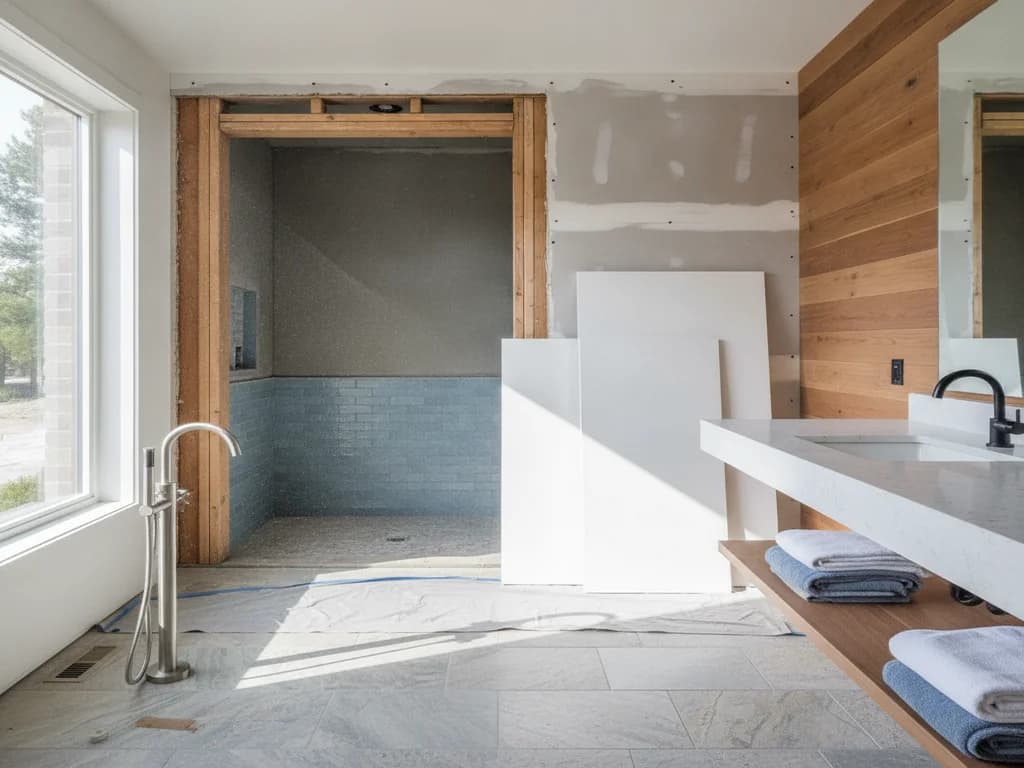
The tile itself barely cares — porcelain performs in both. The assembly behind it cares enormously. A combo needs a full waterproofing membrane system over appropriate backer, exactly as a shower does; industry methods documented by TCNA and membrane manufacturers like Schluter treat tub-shower walls as wet-area assemblies. A soaker splash zone is more forgiving, but moisture-rated backer and honest sealing at the rim are still the floor.
This distinction also sets tile height. A combo wants tile to the ceiling — spray and steam reach all the way up, and stopping short leaves painted drywall in a wet zone while looking unfinished besides. A soaker splash zone typically runs tile a consistent height above the rim, high enough to catch real-world splashing, with the top edge finished in a trim profile rather than raw tile.
Best material: porcelain, with the same honest runners-up
Porcelain wins the surround for the reason it wins every wet surface: fired dense enough to absorb less than 0.5% of its weight in water by the industry definition TCNA references, which means decades of splash and steam without sealing or degradation. On a surface a few feet from a daily water source, that zero-maintenance chemistry is the whole argument.
Glazed ceramic is the credible budget alternative here — more credible than in a shower. Surround walls are vertical, low-abuse, and (around a soaker) only intermittently wet, which is ceramic’s comfort zone; the full trade-off lives in porcelain vs. ceramic. In a tub-shower combo, porcelain’s durability margin is worth its modest premium.
Natural stone reads luxurious wrapped around a tub, and the honest costs follow it here too: porosity, a recurring sealing schedule, and hard-water spotting — a daily-chemistry reality across the Treasure Valley — concentrated at splash height. Stone-look porcelain has become the default answer to that trade: marble veining on the wall, porcelain specs behind it.
Best size and finish: large format, and the glossy question
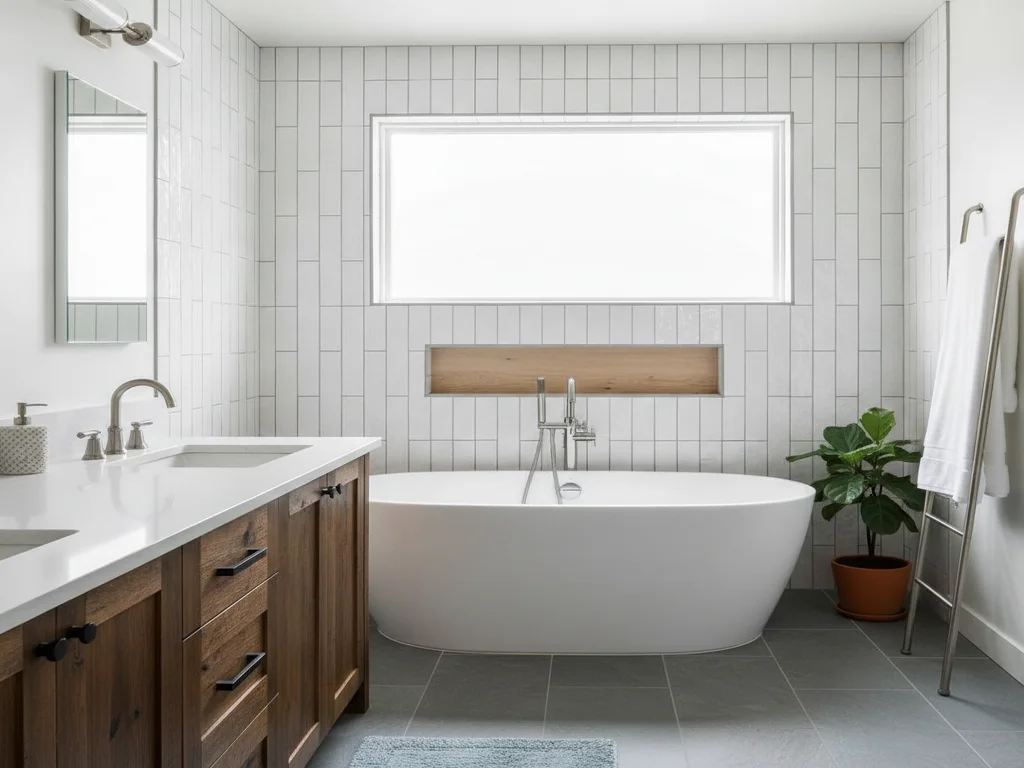
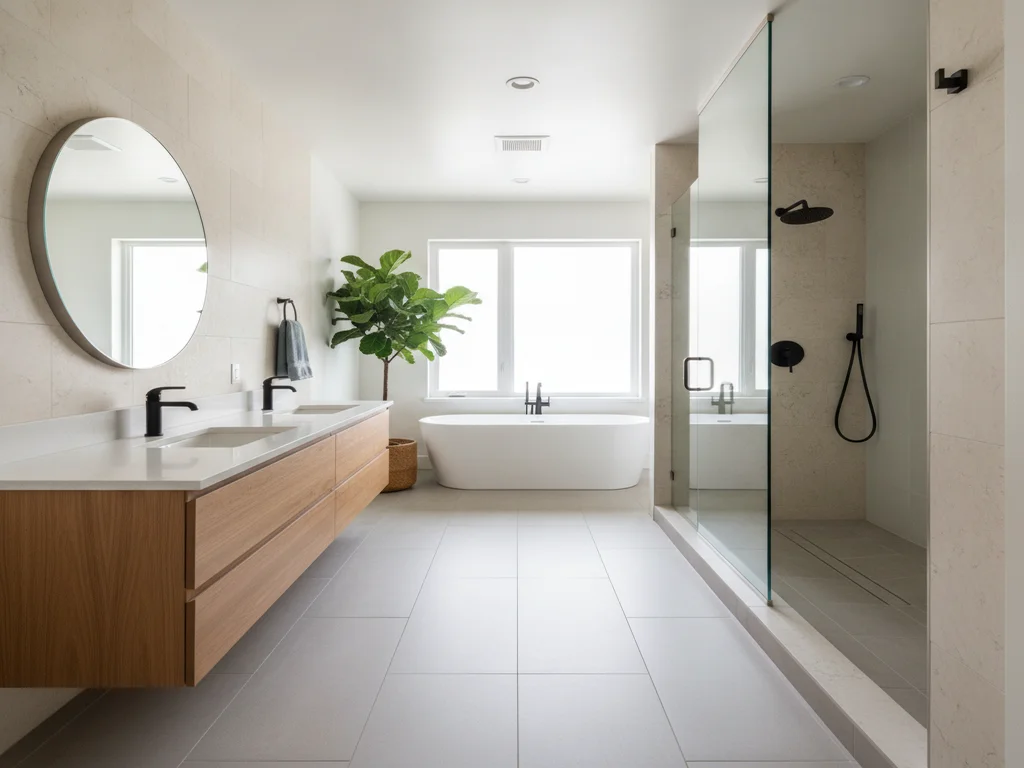
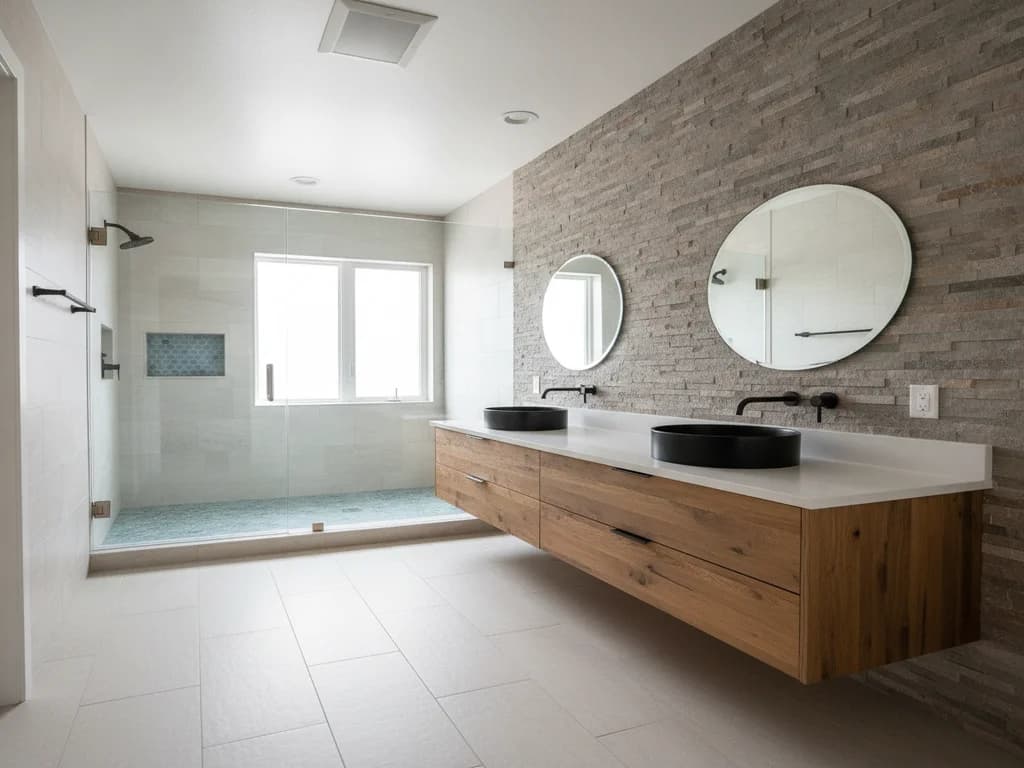
Large-format tile earns the surround even more clearly than it earns shower walls, because surround grout lives at splash height — the band of wall that catches soap, shampoo, and mineral spray daily. Fewer joints in that band means less of the scrubbing and staining that makes surrounds look tired. A 12×24 field with matched grout reads clean and current; 4×4 squares maximize exactly the maintenance you want to minimize.
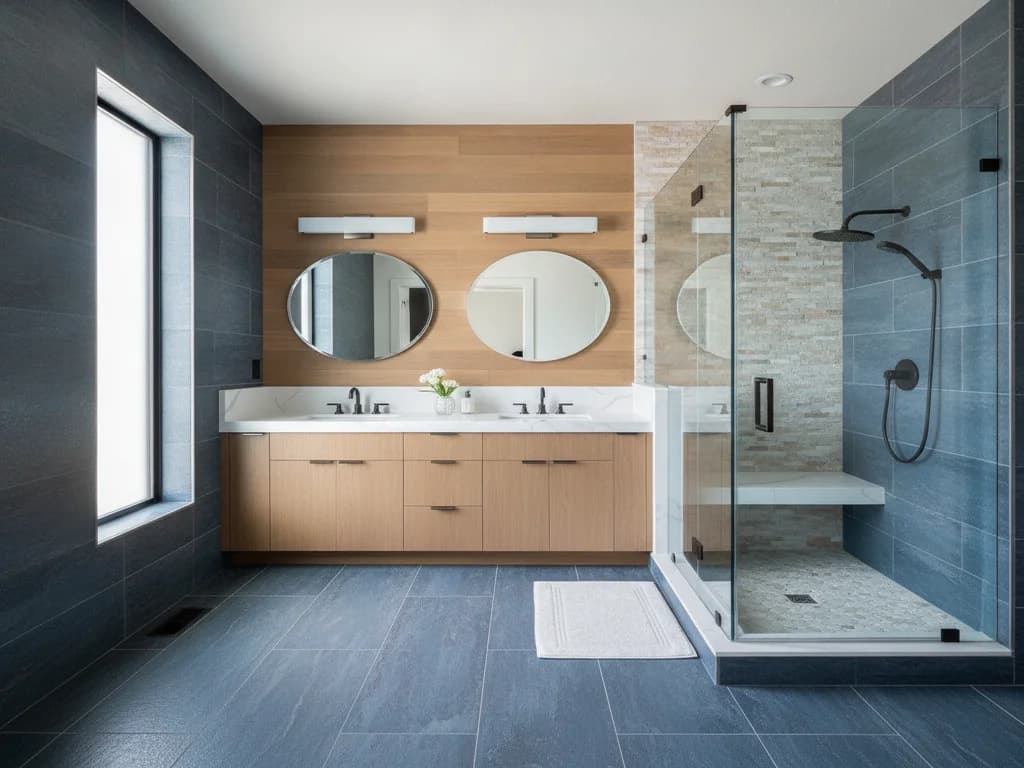
Finish is a genuine choice on a surround, because nobody walks on the walls. Glossy tile bounces light and brightens the alcove — most tubs sit in the darkest corner of the bathroom — but it broadcasts hard-water spotting after every shower or bath. Matte hides the spots and asks less. Households that squeegee choose glossy and enjoy it; households that will not, should not.
One layout note worth stealing from showers: stack rectangular tile vertically in an alcove. Tub alcoves are wide and low; vertical orientation pulls the eye up, and running the tile to the ceiling in a combo finishes the effect. The wider size logic is in large-format vs. small tile.
The tub-to-tile joint is where surrounds fail
The joint where tile meets the tub rim moves — the tub flexes when it fills with water and a bather, the wall does not. That joint must be a flexible sealant (silicone) joint, never rigid grout, which cracks under the movement and quietly channels water into the wall. If your existing surround shows cracked caulk that keeps failing, or grout at the rim, that is a symptom worth diagnosing — the path is our replacing-tub-surround guide, not another tube of caulk.
The picks by category
Every recommendation above, in one table:
| Category | Best pick | Why | Skip |
|---|---|---|---|
| Material | Glazed porcelain (stone-look for luxury) | Under 0.5% absorption; never needs sealing | Natural stone unless you accept a sealing schedule |
| Size | 12×24 inch or larger, stacked vertical in alcoves | Fewest grout joints at splash height; adds height | 4×4 squares (dated, maximum grout) |
| Finish | Matte for low upkeep; glossy for light with squeegee duty | Walls are finish-flexible — pick the maintenance you will do | Nothing structurally — this one is honest preference |
| Height (combo) | Tile to the ceiling over full waterproofing | Spray and steam reach the top; unfinished look avoided | Stopping at the old 6-foot line |
| Height (soaker) | Consistent height above rim, trimmed edge | Catches real splashing; finished top edge | Raw tile edges; tile so low it strands the faucet |
| Rim joint | Flexible silicone sealant | Absorbs tub movement without cracking | Grout in the tub-to-tile joint |
Absorption threshold per the industry definition of porcelain referenced by TCNA; wet-area assembly methods per TCNA Handbook practice and membrane-manufacturer specifications.
What to skip on a tub surround
Skip grouting the tub-to-tile joint — the callout above is the surround’s most common failure, and it is entirely avoidable. Skip stopping combo tile at shoulder height over bare drywall; the wet zone does not stop where the old builder tile did. Skip unsealed stone at splash height unless the maintenance schedule is genuinely welcome, and skip bargain white-body tile in a combo, where a dropped bottle will eventually flash a white chip through the glaze — color-body porcelain hides the same accident.
Skip over-tiling a soaker, too. A freestanding or drop-in soaking tub with no shower does not need floor-to-ceiling tile on three walls; a proportioned splash zone with a trimmed edge often looks more deliberate and saves real money. Match the assembly to the duty — that is the surround rule in one line.
Finally, skip treating tile as the fix for a failing surround. Tile over a compromised wall rebuilds the failure with nicer materials. If the walls flex, stain, or sound hollow, start at replacing a tub surround — and if you are weighing whether the tub itself should stay at all, best shower wall materials pairs well with that bigger decision.
Matching the pick to your tub
The category picks, applied to real situations:
- Tub-shower combo (the common case): 12×24 glazed porcelain to the ceiling over full membrane waterproofing, matched grout, silicone at the rim — the reference spec.
- Kids’ bathroom combo: matte color-body porcelain in a mid-tone, epoxy grout — the surface that forgives the most abuse and shows the least of it.
- Soaking tub, no shower: a trimmed splash zone in stone-look porcelain — luxury height and veining without three walls of cost.
- Dark alcove that needs light: glossy light-tone tile stacked vertically, ceiling-high — accept the squeegee in exchange for the brightness.
- Alcove that feels low and boxed in: vertical stack, ceiling height, and a single long niche instead of shelf clutter.
- Whole-bathroom tile plan: the surround should share a palette with the room’s other tile — the coordination logic lives in how to choose bathroom tile.
Ready to plan your Boise bathroom?
Licensed & insured · 3-year workmanship warranty
Frequently asked questions
- What is the best tile for around a bathtub?
- Glazed porcelain in a large format — 12×24 inches or bigger. Porcelain absorbs under 0.5% water by the industry definition, never needs sealing, and shrugs off decades of splash and steam; large format minimizes grout lines at exactly the splash height where soap and minerals collect. Stone-look porcelain is the answer when you want marble veining without a sealing schedule.
- How high should tile go on a tub surround?
- It depends on the tub’s job. A tub-shower combo wants tile to the ceiling over full waterproofing — direct spray and steam reach the top, and stopping short leaves painted drywall in a wet zone. A soaking tub with no shower typically takes a splash zone a consistent height above the rim with a trimmed top edge, which looks deliberate and saves the cost of three full walls.
- Is glossy or matte tile better for a tub surround?
- Both are legitimate on a surround — nobody walks on the walls, so slip specs do not apply. Glossy bounces light and brightens the alcove, which most tubs need, but it shows hard-water spotting after every use, a daily reality with Treasure Valley water. Matte hides spots and demands less. Choose the maintenance you will actually do, not the finish that photographs best.
- Do you grout or caulk where tile meets the tub?
- Flexible sealant — silicone — always, never grout. The tub moves relative to the wall every time it fills with water and a bather, and rigid grout in that joint cracks under the movement, then channels water into the wall assembly behind the tile. If the caulk at your tub rim keeps cracking and failing no matter how often it is redone, that repetition is itself a symptom worth having diagnosed.
- Is a tub surround waterproofed like a shower?
- A tub-shower combo is a shower as far as the walls are concerned: it needs a full waterproofing membrane system over appropriate backer, per the wet-area methods TCNA documents and membrane manufacturers specify. A soaker-only splash zone is more forgiving but still wants moisture-rated backer, never bare drywall behind tile. The tile is the wear surface; the membrane is the waterproofing.
- Can you tile over an existing fiberglass tub surround?
- No — tile needs a rigid, bonded, waterproofed substrate, and a flexing fiberglass shell is none of those. The honest path is removing the old unit and building the wall assembly properly: backer, membrane, then tile. It costs more than the shortcut, but tile over fiberglass fails quickly and takes the wall with it. Our replacing-tub-surround guide walks through what that rebuild involves.
Sources
- Tile Council of North America (TCNA)
- National Tile Contractors Association
- Schluter Systems
- USGS Water Science School — Hardness of Water
Claims and figures are drawn from the sources above and provided for general guidance; your project may vary. Photography is illustrative of design concepts. For a fixed price on your specific bathroom, request a free estimate.