Updated September 12, 2026 · 7 min read
By Boise Bath — bathroom & shower remodeling in Boise & the Treasure Valley
The short answer
Replacing a tub surround means stripping the old tile or panels down to the studs, repairing any water-damaged framing, installing new backer board and waterproofing from the tub flange up, then finishing with a panel system or tile. Panels rebuild in a day or two; tile takes most of a week. A sound tub can usually stay in place.
Key takeaways
- A surround is a waterproofing system wearing a finish — the layer behind the tile or panels is what actually keeps water out of your walls.
- Surrounds fail from behind: cracked grout and yellowed panels are symptoms, and the real question is how much water already got past them.
- Panel systems rebuild the surround in a day or two with zero grout; tile takes most of a week and buys custom looks and top resale polish.
- Half-measures fail — new panels glued over old tile or tile over unwaterproofed drywall are the two shortcuts behind most repeat failures.
- A structurally sound tub can stay in place, protected during the rebuild; a flexing or leaking tub means replacing both at once.
When does a tub surround actually need replacing?
Surrounds announce their failure quietly. Grout lines crack and darken, caulk joints peel at the tub, a fiberglass panel yellows or spider-cracks, or a wall section flexes when you press it. Any one of those means water has a path behind the finish — and once it is behind the finish, no amount of regrouting or recaulking fixes what is happening in the wall cavity.
The flex test is the one to take seriously. A tiled wall that gives under hand pressure means the backer behind it is saturated or the framing is compromised, and the EPA’s guidance on moisture and mold is blunt: wet building materials that stay wet grow mold. A soft surround is a replacement, not a repair.
What is behind the surround matters more than what is on it
Every durable surround is a stack: studs, then a cement or foam backer board, then a waterproofing layer, then the finish you actually see. Industry standards from the Tile Council of North America (TCNA) define how those layers assemble in wet areas, and membrane systems from manufacturers like Schluter and Custom Building Products (RedGard) are how modern installers meet them.
This is why replacement means stripping to the studs. Many older Treasure Valley bathrooms have tile set directly over drywall or greenboard with nothing waterproof behind it — a construction that worked only until the grout aged. Rebuilding over the old layers preserves the original mistake; tearing to the framing is the only way to renew the layer that does the real work.
The two shortcuts that guarantee a do-over
Gluing new panels over old tile traps moisture behind the sandwich and telegraphs every wave in the old wall. Setting new tile on bare drywall skips the waterproofing entirely. Both look fine on day one and fail from behind — insist on a strip-to-studs rebuild with a real waterproofing layer.
Option 1: a panel surround
Modern wall panels — acrylic, solid surface, PVC composite, and laminate systems — cover each wall in one or two large grout-free sheets, sealed at the seams and corners. Installation is fast: once the alcove is stripped, repaired, and prepped, panels typically go up in a day, and there are no grout lines to scrub or reseal for the life of the surround.
The look has grown up too — current panels convincingly mimic marble, concrete, and large-format tile. The full tour of materials, brands, and price tiers is in our guide to shower wall panel systems; everything there applies equally above a bathtub.
Option 2: a tile surround
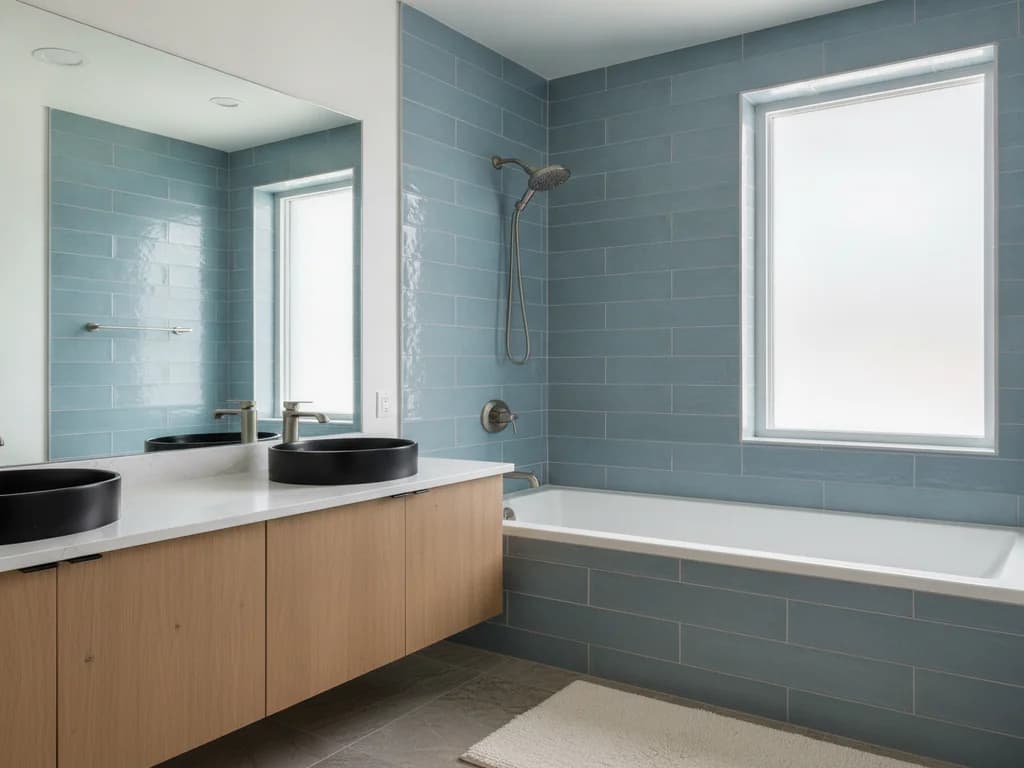
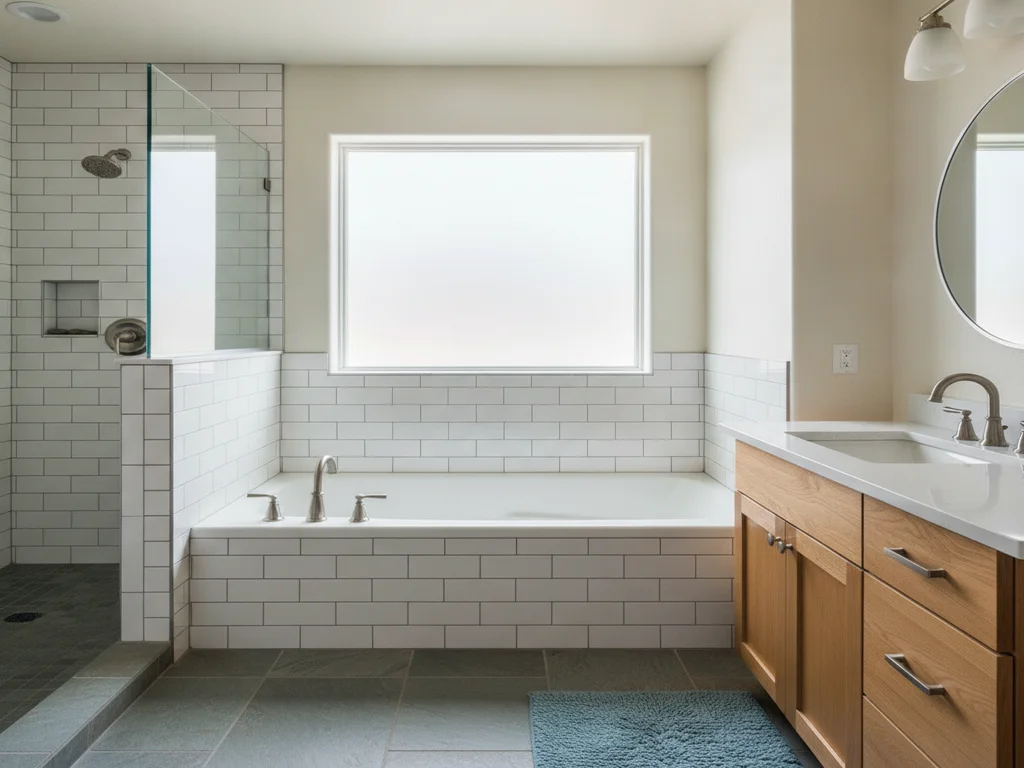
Tile remains the custom option: any size, pattern, and accent you can imagine, a recessed niche exactly where you want it, and the finish buyers read as permanent quality. Built correctly — waterproofed backer, quality thinset, sealed grout — a tile surround outlasts every panel system.
The cost of that permanence is time and process. Waterproofing, tile setting, and grout each need cure time, so a tiled surround runs most of a week where panels take a day or two. It also demands maintenance honesty: grout wants periodic sealing, and the Treasure Valley’s hard water will spot dark tile faster than light.
| Factor | Panel system | Tile |
|---|---|---|
| Rebuild time after demo | About a day | Three to five days with cure times |
| Grout to maintain | None | Yes — periodic sealing |
| Design range | Good and improving | Unlimited, incl. niches and accents |
| Typical relative cost | Lower | Higher, rising with tile choice |
| Resale read | Clean and practical | Custom, premium |
Either option performs long-term only over proper waterproofing — the layer behind the finish is the real purchase.
Can the tub stay while the surround is replaced?
Usually, yes — and it is the main reason this project costs a fraction of a full tub replacement. A structurally sound tub gets protected with padding and board while the walls above it are demolished and rebuilt, and the new surround laps over its flange exactly as the original did.
The honest exception: if the tub flexes underfoot, has cracks or chips through the finish, or its drain leaks, replacing the surround around a failing tub buys you a second demolition in a few years. In that case the projects merge — see our bathtub replacement overview for what the combined scope looks like. A tired-but-sound finish is the middle case, covered in bathtub refinishing vs. replacement.
What else opens up with the walls?
A stripped surround exposes the wet wall, which makes this the cheap moment for two upgrades. If the valve behind the wall is a worn two-handle or builder-grade unit, replacing it with a modern pressure-balanced valve now avoids opening a finished wall later. And a recessed niche — the storage upgrade every combo bathroom wants — can only be framed while the studs are visible.
If your existing setup is a one-piece tub-and-wall shell rather than a separate tub with a surround, the project is different from the start; that version is covered in replacing a tub-shower combo.
Timeline and what drives the budget
Door to door, a panel surround replacement typically runs two to three days: strip, repair, waterproof, panel, seal. A tile rebuild runs about a week. Hidden damage is the schedule variable — leak-softened studs or a saturated section of subfloor found during demo add repair days before anything goes back up.
On budget, national cost guides like HomeAdvisor and Angi place surround replacement broadly from several hundred dollars for basic panel kits into the several-thousands for custom tile — driven mostly by the finish choice and how much hidden repair the demo uncovers. The full breakdown is in our tub surround replacement cost guide.
What the process looks like
- 1
Diagnose the failure and check the tub
The contractor probes for soft spots, checks the tub for structural soundness, and confirms whether the project is surround-only or a combined tub-and-surround replacement.
- 2
Protect the tub and strip to the studs
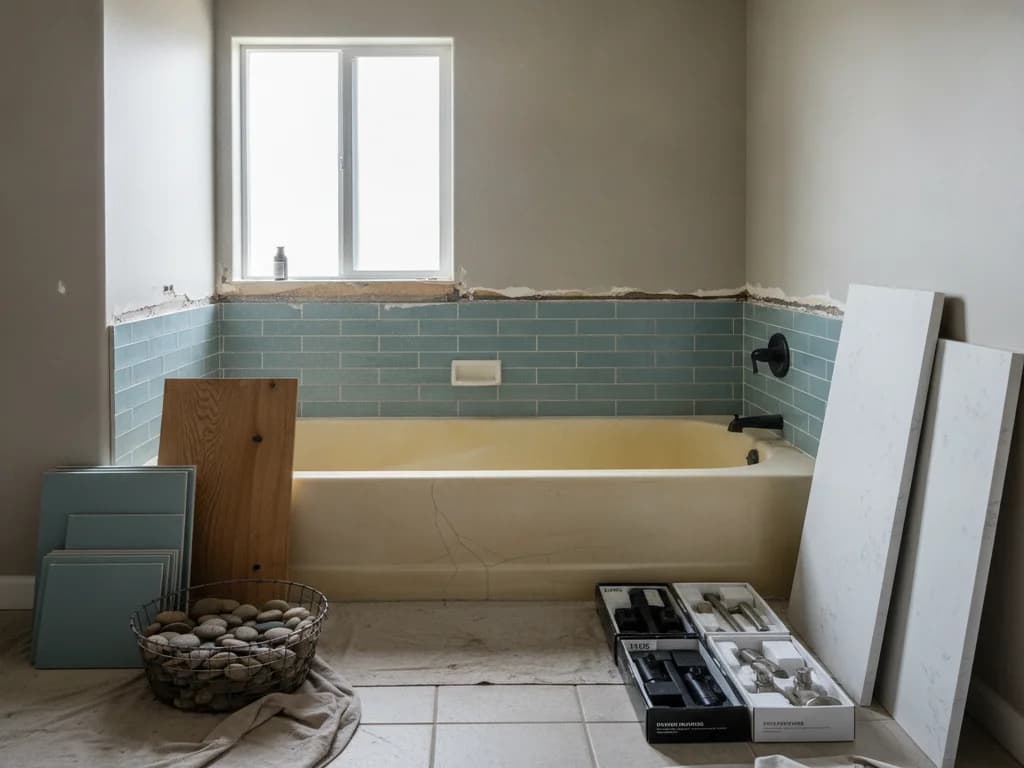
The tub is padded and boarded, fixtures and trim come off, and the old tile or panels — plus the backer or drywall behind them — are demolished down to the framing.
- 3
Repair framing and assess the wet wall
Leak-damaged studs and any affected subfloor edge are replaced, insulation is renewed where needed, and the exposed valve is evaluated — this is the cheap moment to upgrade it.
- 4
Install backer board and waterproofing
Cement or foam backer goes up from the tub flange, joints are treated, and a waterproofing membrane is applied or integrated per the system spec — the layer the whole rebuild exists to renew.
- 5
Set the finish: panels or tile
Panels are cut, bonded, and seam-sealed in about a day; tile is set, cured, and grouted over several days, with any niche or accent work built in.
- 6
Seal, trim, and test
The tub-to-wall joint and all penetrations are sealed, valve trim and fixtures are reinstalled, and the surround gets a full shower test before the protection comes off the tub.
Ready to plan your Boise bathroom?
Licensed & insured · 3-year workmanship warranty
Frequently asked questions
- Can you replace a tub surround without replacing the tub?
- Yes, when the tub is structurally sound — it gets protected in place while the walls are stripped and rebuilt, and the new surround laps its flange like the original did. If the tub flexes, has cracks through the finish, or leaks at the drain, replace both at once; a new surround around a failing tub just schedules a second demolition.
- Is a panel surround or tile surround better?
- Panels win on speed, price, and zero-grout maintenance — the rebuild takes about a day. Tile wins on design freedom, longevity, and resale impression, at the cost of most of a week and periodic grout sealing. Both depend entirely on the waterproofing behind them, so the build quality matters more than the finish you pick.
- Can you install a new surround over existing tile?
- It is offered, and it is a shortcut worth refusing. Overlay panels trap any existing moisture behind the old tile, hide damage instead of fixing it, and follow every wave in the old wall. A proper replacement strips to the studs so the framing can be inspected and the waterproofing renewed — that layer is the actual point of the project.
- How long does replacing a tub surround take?
- Two to three days for a panel system — strip, repair, waterproof, panel, seal. About a week for tile, because waterproofing, thinset, and grout each need cure time. The wildcard is hidden damage: leak-softened framing found during demo adds repair days before the rebuild starts, which is why demo-stage photos are worth asking for.
- What is behind a tub surround?
- In a correct build: studs, cement or foam backer board, and a waterproofing membrane, per industry standards like the TCNA Handbook. In many older homes: plain drywall or greenboard with nothing waterproof at all, which is why aging grout eventually lets water straight into the wall cavity — and why replacement means rebuilding the stack, not just the finish.
Sources
- Tile Council of North America (TCNA)
- Schluter Systems
- Custom Building Products (RedGard)
- EPA — Mold
- HomeAdvisor — True Cost Guide
Claims and figures are drawn from the sources above and provided for general guidance; your project may vary. Photography is illustrative of design concepts. For a fixed price on your specific bathroom, request a free estimate.