Updated September 12, 2026 · 9 min read
By Boise Bath — bathroom & shower remodeling in Boise & the Treasure Valley
The short answer
Solid surface, laminate wall systems, and porcelain slabs are large-format panels that install in hours instead of days, with few or no seams compared to tile's many grout lines. Tile still wins on ultimate design range and long-run customization. Panels win on speed and low-maintenance looks; the right pick depends on how much design control you actually need.
Key takeaways
- Wilsonart says its Wetwall laminate system installs "in as little as 2.5 hours without specialized or dedicated tools," against the three to five days JSB Home Solutions gives for a tile shower.
- MSI's Stile porcelain slabs run up to 63" x 126" per slab — large enough to cover most shower walls in one or two pieces instead of dozens of tiles and grout joints.
- Swanstone solid surface is installed with foam tape for a "direct-to-stud or glue-up installation... without bracing," and backs its shower walls with a lifetime limited residential warranty.
- Today’s Homeowner says shower wall panels generally last up to 15 years, with granite, marble and PVC reaching 25 years or more, and that ceramic tile can last the life of the bathroom when the waterproofing behind it holds up.
- None of these panel systems match tile's design range — pattern, format, and material are far more limited — which is the real trade for the speed and seam-count win.
This is a different comparison than acrylic vs. tile
Our acrylic vs. tile shower comparison covers prefabricated acrylic surrounds — the budget-friendly, one-piece-molded category. This article is about a different tier entirely: large-format panel systems built from solid surface, engineered laminate wall systems, and porcelain slabs. These are premium products marketed as tile alternatives, not budget acrylic, and they compare against tile very differently than a molded acrylic shower kit does.
For the full six-material survey — including fiberglass, cultured marble, and PVC — see our best shower wall materials guide. This piece narrows in on three things that actually separate large-format panels from tile in day-to-day reality: how many seams each one has, how fast each installs, and how each one actually looks in the room.
What counts as a "large-format panel system" here
Solid surface (Swanstone, Corian-type materials), engineered laminate wall systems built specifically for wet areas (Wilsonart's Wetwall being the leading example), and large porcelain slabs (like MSI's Stile line) — all three ship as a handful of oversized pieces rather than dozens of individual tiles.
Seams: how many does each system actually have?
This is the single biggest functional difference. Tile is set piece by piece, with a grout joint between every single unit — a standard shower wall can easily have dozens of linear feet of grout, each one a place moisture, soap scum, and eventually mildew can collect.
Wilsonart's Wetwall panels use a patented tongue-and-groove locking system between panels, with sealant only at the corners, seams, and gaps — a handful of joints total for an entire shower surround, not a joint between every few square inches. MSI's Stile porcelain slabs go even further: at up to 63" x 126" per slab, a single piece can cover most of a shower wall outright, leaving only the corners where two slabs meet. Swanstone's solid surface panels are seamless within each wall section, joined with adhesive rather than grout between panels.
The trade-off worth naming honestly: fewer seams also means fewer places to hide an imperfect cut or a slightly-off wall. Tile's many small pieces are actually an advantage when a wall is out of square, since small tiles and grout lines absorb minor irregularities that a single oversized panel cannot.
Install speed: hours vs. days
Wilsonart says a Wetwall surround can be installed "in as little as 2.5 hours without specialized or dedicated tools." Swanstone describes its solid-surface panels as "easy to install for most plumbers, DIYers, and homeowners," installed with foam tape "without bracing." JSB Home Solutions puts solid surface and acrylic wall installs at one to two days.
Tile is a different timeline entirely. JSB Home Solutions gives three to five days for a tile shower wall install, and the work involves substrate prep, waterproofing membrane, tile-setting, grout, and cure time. Fixr prices tiling a 3-by-4-foot shower at $1,800–$5,000, with tile labor alone at $4–$15 per square foot, while Bob Vila prices installing a prefabricated shower unit at $400–$1,000. Most of the gap between them is labor.
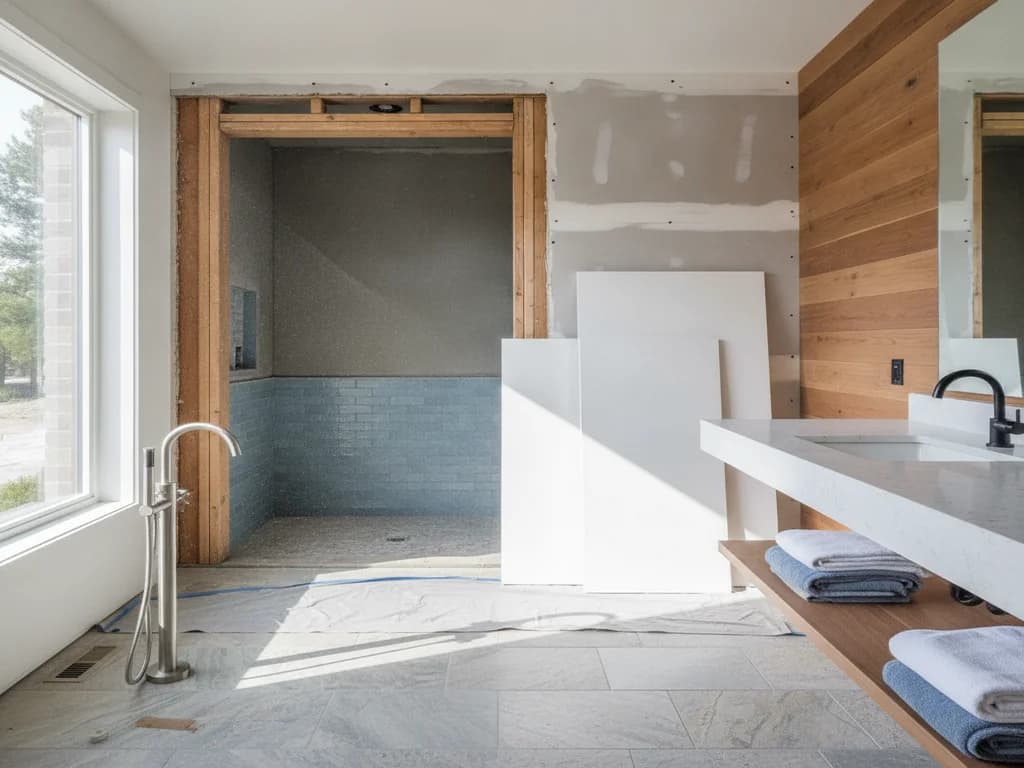
Porcelain slabs sit in between. The slabs themselves go up fast because there are so few of them, but their size and weight — MSI notes 6mm, 12mm, and 20mm thickness options — mean the installation crew needs slab-handling experience and the right equipment, which is a different skill set than either a Wetwall glue-up or a standard tile job.
| Dimension | Solid surface | Laminate wall system (Wetwall) | Porcelain slab | Tile |
|---|---|---|---|---|
| Seam count | Low — adhesive joints between large panels | Low — tongue-and-groove joints, sealed corners | Lowest — up to 63"×126" per slab | Highest — a grout joint at every tile |
| Install speed | 1–2 days (JSB Home Solutions); no bracing needed (Swanstone) | "As little as 2.5 hours" (Wilsonart) | Fast per slab, but needs slab-handling expertise | 3–5 days (JSB Home Solutions) |
| Look | Seamless, stone-like; EverGrout option mimics tiled grout lines | Photorealistic wood/stone/marble prints | Genuine stone-look, book-match patterns available | Unlimited pattern, format, color, and material range |
| Typical lifespan | 30+ years (JSB Home Solutions); lifetime limited residential warranty (Swanstone) | Panels generally up to 15 years (Today’s Homeowner) | Water-, stain- and fade-proof; heat and frost resistant (MSI) | The tile itself 50+ years (Bob Vila), if the waterproofing behind it holds |
Looks: what does each system actually buy you design-wise?
Laminate wall systems have come the furthest from their budget-panel reputation. Wilsonart's Wetwall line uses its AEON surface technology on a photorealistic decorative laminate layer, so a panel can convincingly read as marble, concrete, or wood — a look that would take real tile setters real time (and real stone cost) to replicate. It is a genuinely convincing finish, not the same category as an old builder-grade fiberglass surround.
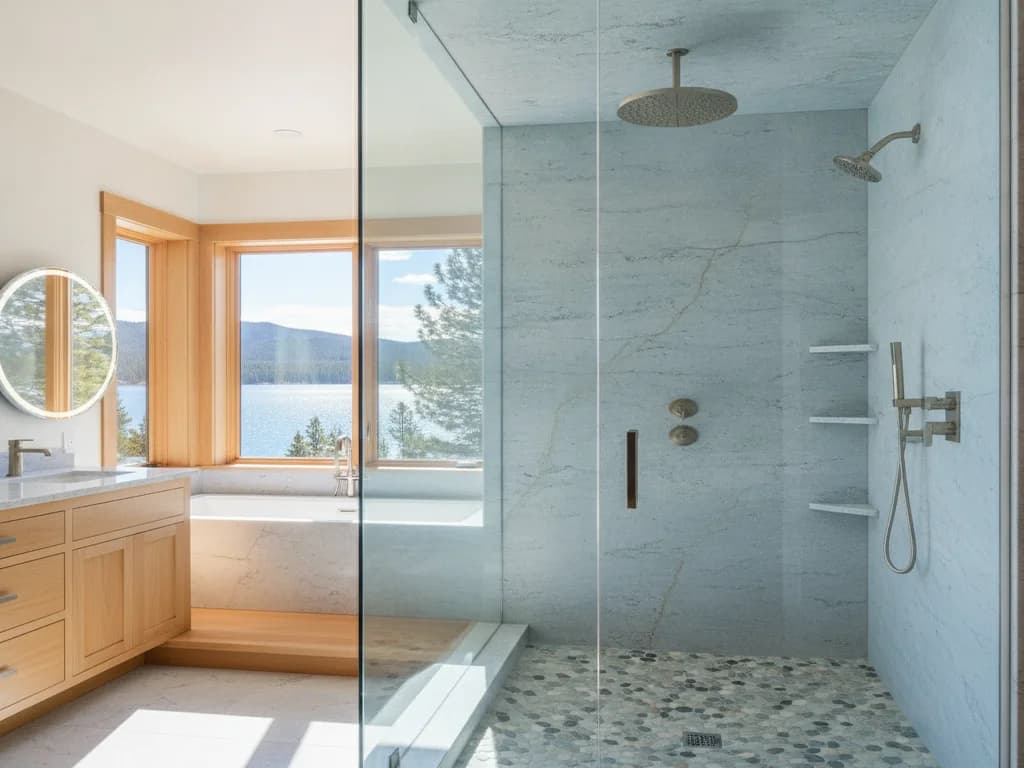
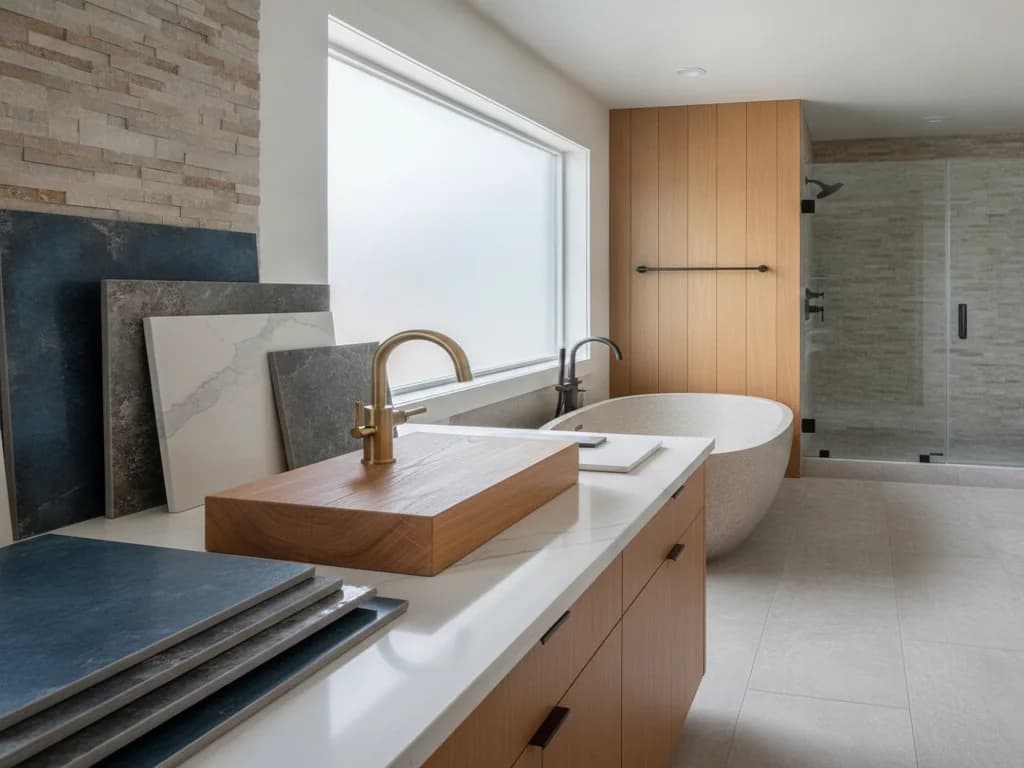
Porcelain slabs deliver the most authentic large-scale stone look of the three, since MSI's Stile line is manufactured with book-match finishes that mirror natural stone's veining across a seam — something tile, cut into small individual pieces, cannot replicate as convincingly. Solid surface sits in a different lane: it reads as a clean, seamless stone-adjacent surface, and Swanstone's EverGrout option adds "engineered textured grout lines" to select products specifically so a solid-surface wall can visually reference tile without actually needing any.
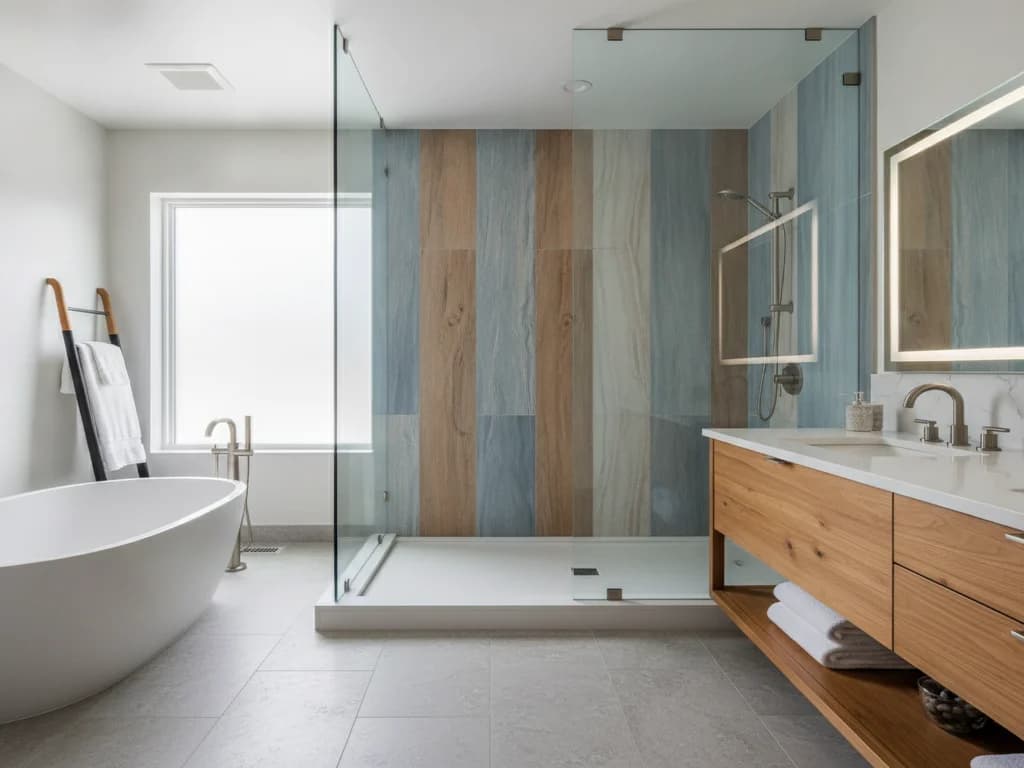
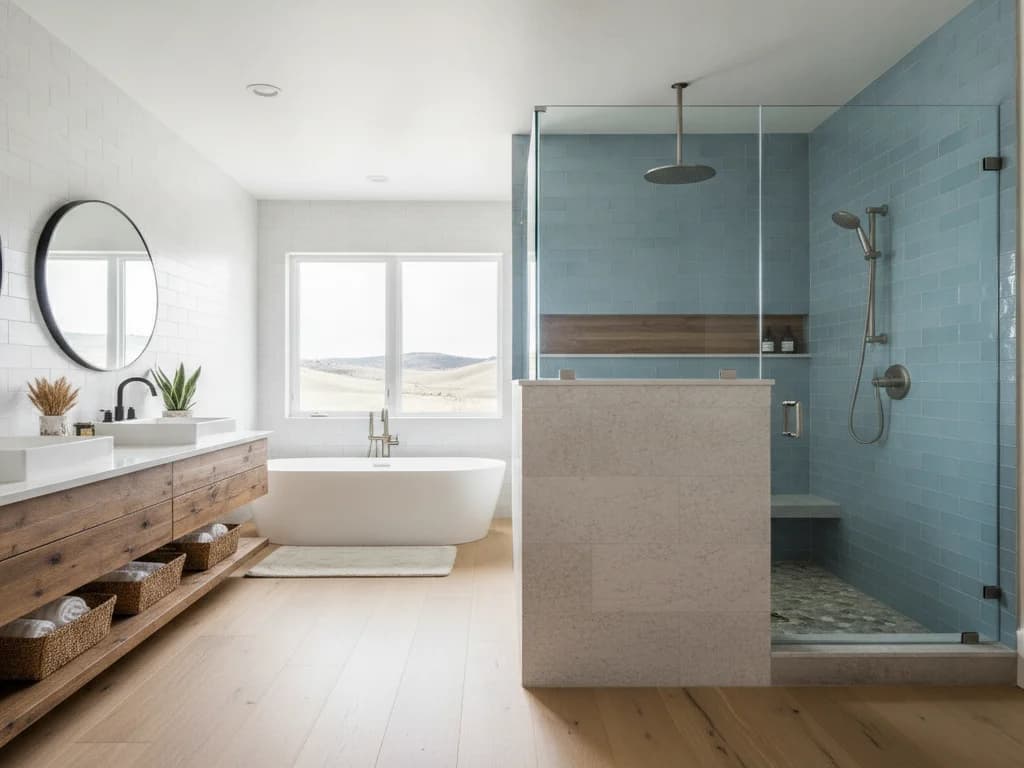
Tile still wins outright on total design range. Format, color, pattern, and material are all open — a herringbone accent, a mixed mosaic niche, a full stone-and-porcelain blend — and none of the three panel systems above can match that level of custom composition. If a specific, highly custom look is the priority, custom tile and stonework remains the only real path to it.
Durability and maintenance: what does each one ask of you?
Swanstone rates its solid surface as heat-resistant to 450°F and backs it with a lifetime limited residential warranty — one of the stronger durability claims among the panel options, and its non-porous surface needs nothing more than a wipe-down. Wilsonart's Wetwall is engineered specifically for wet areas with built-in antimicrobial protection against mold and mildew, which is a meaningful distinction: a generic decorative laminate panel bought for a dry accent wall is not built to the same wet-area standard, and Today's Homeowner cautions that laminate generally handles moisture less well than other panel materials — Wetwall's wet-rated engineering is the exception that makes it viable in a shower at all.
MSI describes its Stile porcelain slabs as "100% water, stain, and fade-proof," with complete heat and frost resistance and a non-porous surface that resists bacterial growth — properties that track closely with how porcelain tile itself performs, just delivered in far larger pieces with far fewer joints to maintain.
Whichever system you choose, the same underlying rule from our shower wall materials guide still applies to tile specifically: tile and grout are water-permeable, not waterproof — a waterproofing membrane behind the tile is what actually keeps a tiled shower dry. Panel systems sidestep this concern almost entirely, since the panel itself is the water barrier and there is no porous grout joint for water to travel through.
Can you install these yourself?
This is a real point of difference, not just marketing language. Swanstone describes its solid-surface panels as "easy to install for most plumbers, DIYers, and homeowners," and Wilsonart's Wetwall installation guidance is written for a glue-up job a confident homeowner can complete in an afternoon with panel adhesive and a caulk gun — no tile-setting skill, no grout mixing, no waiting days between coats of thinset and membrane.
Porcelain slabs are the exception among the three. Their size and weight — MSI notes options up to 20mm thick at 63"×126" — genuinely require a crew experienced in slab handling, dedicated suction-cup lifting equipment, and precise leveling; this is not a homeowner weekend project the way a laminate or solid-surface glue-up can be. Tile sits at professional-only for anything beyond a small patch repair, given the waterproofing, layout, and cutting skill a full shower actually requires.
For a rental unit, a guest bath refresh, or any project where labor cost is the main constraint, that DIY-feasibility gap between panel systems and tile is often as significant as the seam count or install-speed numbers above.
Which one actually fits your bathroom?
Choose a laminate wall system like Wetwall when a fast turnaround matters — a rental refresh, a household that can't be without its only bathroom for weeks, or a budget that needs the labor savings a 2.5-hour install delivers. Choose solid surface when you want a seamless, long-warrantied surface with genuinely low maintenance and don't need a highly specific pattern. Choose porcelain slabs when you want the most authentic large-scale stone look available and are willing to pay for slab-handling expertise during install. Choose tile — still — when a fully custom design, mixed materials, or a pattern that doesn't exist in panel form is the actual goal.
None of these is the objectively "better" choice. They are different tools for different priorities, and the honest answer depends on how much of your decision is about speed and low maintenance versus how much is about total creative control.
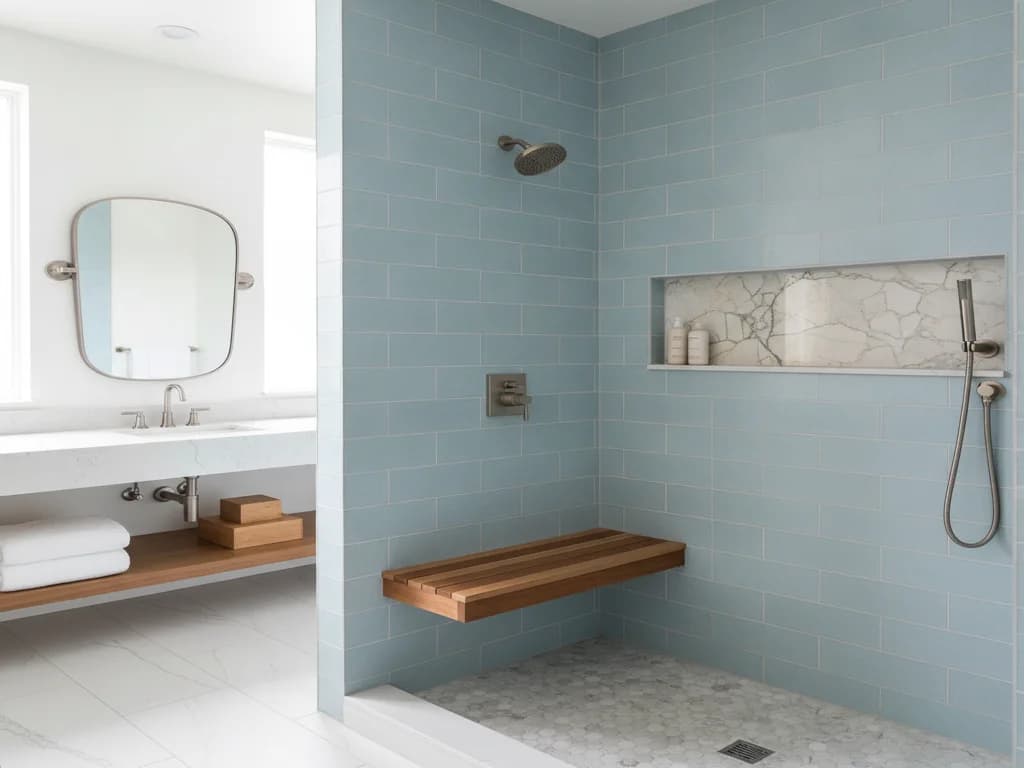
They also don't have to be an all-or-nothing choice. A common middle path is mixing categories within the same shower — large-format panels or slabs on the three main walls for speed and a clean field, paired with a tiled niche, a tiled accent band, or a tiled floor where pattern and slip-resistant texture matter more than seam count. That approach captures most of a panel system's speed and maintenance advantage while still leaving room for the one or two spots where tile's design range earns its keep.
The bottom line
Large-format panel systems have earned their place as a real tile alternative — not a downgrade, a different trade-off. Fewer seams, dramatically faster installs, and genuinely convincing finishes make solid surface, engineered laminate systems, and porcelain slabs worth serious consideration for most showers. But tile's unmatched design range means it still wins when the goal is a fully custom look. Whichever direction fits your bathroom, see how we build custom tile and stonework showers, or get a fixed, itemized quote before deciding — panel brand, slab thickness, and tile format all move the real number more than the material category alone.
Ready to plan your Boise bathroom?
Licensed & insured · 3-year workmanship warranty
Frequently asked questions
- What is the difference between shower wall panels and tile?
- Panel systems — solid surface, engineered laminate systems like Wilsonart's Wetwall, and porcelain slabs — ship as a handful of large, factory-finished pieces with few or no grout joints, and install far faster than tile. Tile is set piece by piece with a grout joint at every unit, taking three to five days per JSB Home Solutions, but offers far more design range in pattern, format, and material.
- Are large-format shower panels waterproof, or do they still need a membrane like tile?
- It depends on the system. Wilsonart's Wetwall and Swanstone's solid surface panels are engineered as the water barrier themselves, so they don't rely on a separate membrane the way tile does. Standard tile and grout are water-permeable, not waterproof — a waterproofing membrane behind the tile is what actually keeps a tiled shower dry, which is one reason panel systems have a maintenance edge in that specific respect.
- How much faster is a panel system to install than tile?
- Considerably faster. Wilsonart says its Wetwall system installs "in as little as 2.5 hours without specialized or dedicated tools," Swanstone describes its solid-surface panels as installable "without bracing," and JSB Home Solutions puts solid surface at one to two days. A comparable tile shower involves substrate prep, waterproofing, tile-setting, grouting, and cure time, which JSB puts at three to five days.
Sources
- Wilsonart — Wetwall Waterproof Wall Panels (manufacturer)
- MSI Surfaces — Stile Porcelain Slabs (manufacturer)
- Swanstone — Bathtub & Shower Walls (manufacturer)
- Today's Homeowner — Shower Wall Panels: A Complete Guide
- Fixr — Shower Tiling Cost
- Bob Vila — Shower Remodel Cost Guide
- Bob Vila — Tile Installation Cost (tile lifespan)
- JSB Home Solutions — Shower Walls: Tile vs. Solid Surface vs. Acrylic
- TCNA — Handbook for Ceramic, Glass & Stone Tile Installation
- EPA — A Brief Guide to Mold, Moisture and Your Home
Claims and figures are drawn from the sources above and provided for general guidance; your project may vary. Photography is illustrative of design concepts. For a fixed price on your specific bathroom, request a free estimate.