Updated July 16, 2026 · 7 min read
By Boise Bath — bathroom & shower remodeling in Boise & the Treasure Valley
The short answer
Often, yes. If the wall behind the shower backs onto a closet, hallway, or accessible cavity, a plumber can cut a rear access opening and replace the valve without touching tile. Cartridge swaps and oversized remodel cover plates handle many other cases. Tile only opens when there is no rear access and the change exceeds what a remodel plate covers.
Key takeaways
- The wall behind your shower decides the job: a closet or hallway on the other side means the valve is reachable without touching tile.
- Many "valve" problems are actually cartridge problems — a cartridge swaps through the existing trim hole with zero wall work.
- Remodel (renovation) cover plates hide an enlarged front opening, letting a new valve go in through the tile side without retiling.
- An exterior wall, a back-to-back shower, or major re-piping are the cases where tile realistically has to open.
- If tile must open anyway, that is the moment to weigh a shower update — valve access holes rarely patch invisibly in existing tile.
First, confirm it is actually the valve
A surprising share of "I need a new shower valve" calls end as cartridge replacements. The cartridge — the moving part inside the valve body that mixes hot and cold — is what wears out: drips, stiff handles, temperature drift, and sudden temperature swings are usually cartridge symptoms. Manufacturers like Moen and Delta design cartridges to pull out through the trim opening in the tile, so the fix involves no wall work at all.
The valve body itself — the brass fitting soldered or crimped into the wall plumbing — needs replacement when it is leaking from the body or connections, when it is an obsolete type with no available parts, or when you are changing function: adding pressure balancing, thermostatic control, or a diverter for a second head. Fixture-side decisions are covered in how to choose shower fixtures.
The distinction matters because it is the difference between a service call and a wall-access project. A plumber confirms it in minutes by pulling the trim and reading the valve model.
Yes, option one: through the wall behind the shower
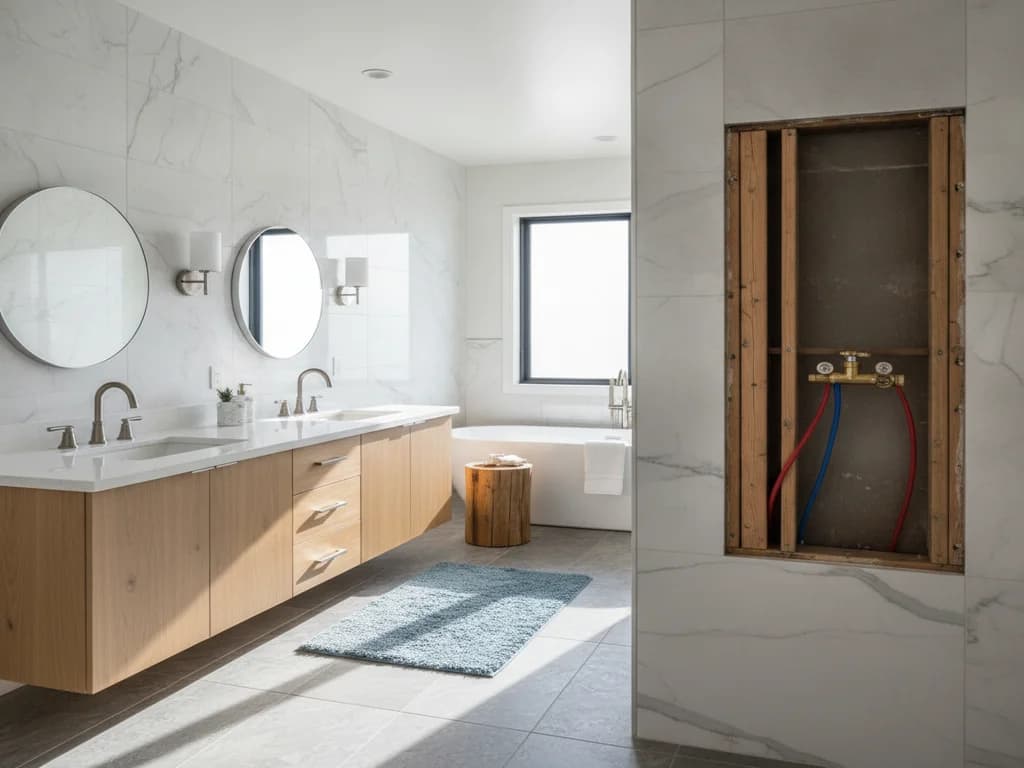
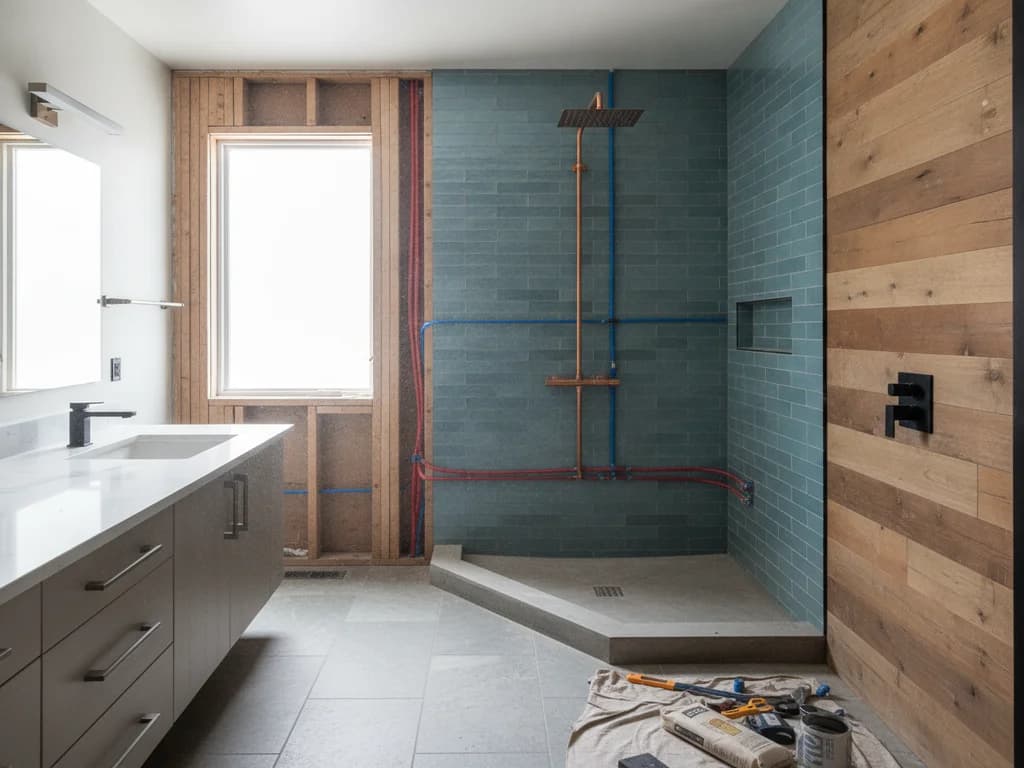
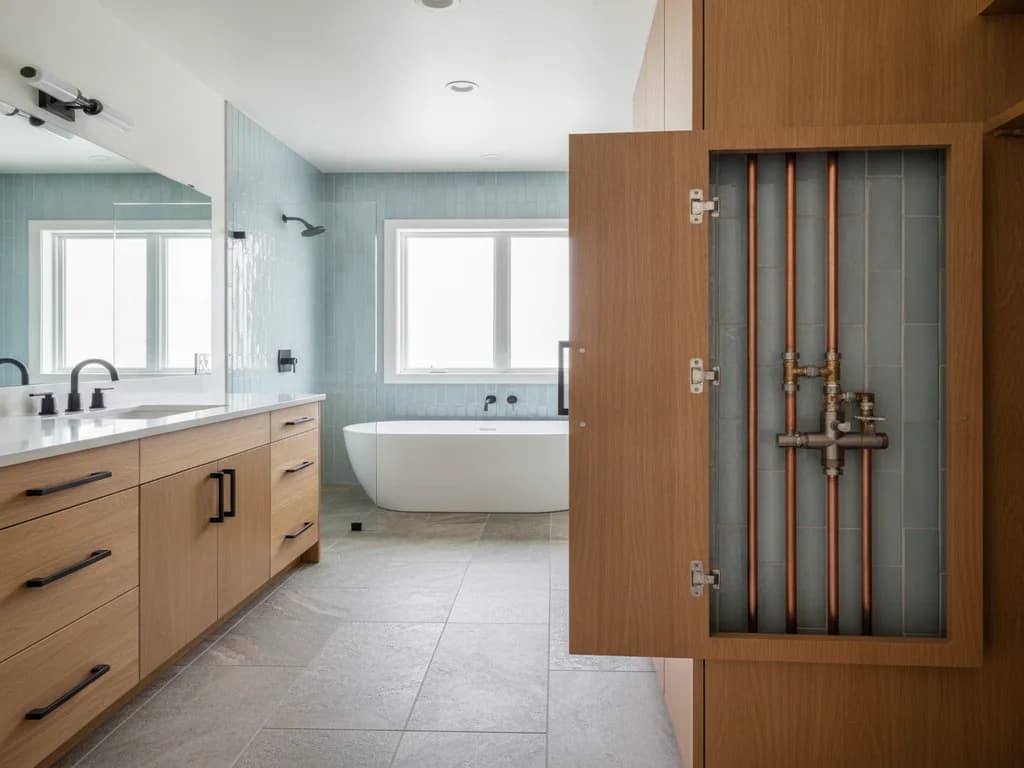
The cleanest valve replacement never touches the shower at all. If the plumbing wall backs onto a closet, hallway, bedroom, or garage, the plumber cuts a rectangular opening in the drywall on that side, works on the valve from behind, and the opening is patched or fitted with a paintable access panel afterward.
This is the route worth actively looking for. Drywall patching in a closet costs a fraction of tile work, and a purpose-made access panel leaves future service one screwdriver away — worth considering even when it is not strictly needed this time.
Many Treasure Valley homes cooperate here: common floor plans put the shower plumbing wall against a walk-in closet or hallway. Homes where the shower sits on an exterior wall — more common in older Boise bungalows — take this option off the table, since the other side of the wall is siding and insulation.
Yes, option two: through the front with a remodel plate
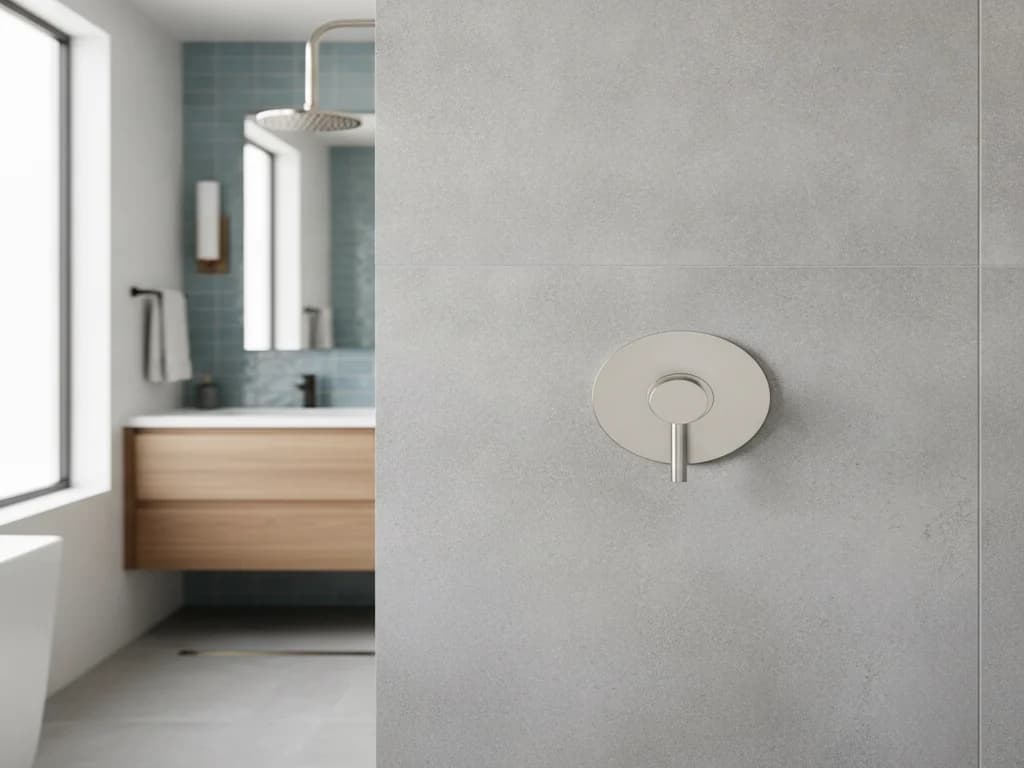
When there is no rear access, plumbers work through the tile side using the opening that already exists behind the trim. The existing hole around the valve is enlarged just enough to cut out the old body and set the new one — and an oversized "remodel plate" or renovation cover plate then hides the enlarged opening behind the new trim.
Manufacturers make these plates specifically for tile-in-place valve swaps, in finishes matching their trim lines. The constraint is geometry: the plate has to cover the full cutout, and the new valve has to line up with the old one closely enough that the handle lands where the plate sits. A valve moving up, down, or sideways — or a new diverter needing a second hole — exceeds what a plate can hide.
Done well, this reads as a deliberate design choice rather than a patch. It pairs naturally with a trim refresh, which we cover in replacing shower fixtures and trim.
| Route | Tile impact | Best when | Watch out for |
|---|---|---|---|
| Cartridge swap | None | Drips, stiff handle, temp drift on a supported valve | Obsolete valves with no parts |
| Rear access panel | None | Closet, hallway, or garage behind the plumbing wall | Exterior walls rule it out |
| Remodel cover plate | None removed; hole enlarged | No rear access; same valve location | Plate must cover the full cutout |
| Open the tile | Tile removed and patched | Relocations, added diverters, re-piping, back-to-back showers | Patched tile rarely matches invisibly |
When the tile has to open
Three situations realistically force the tile side open. First, no rear access and a change the remodel plate cannot cover — relocating the valve height, adding a diverter or volume control, or converting one hole to two. Second, corroded or failing supply pipes that need replacement beyond the valve itself, which turns a valve swap into a re-pipe with a bigger working window; that scope lives in replacing shower plumbing. Third, back-to-back bathroom layouts where the "rear access" wall is another tiled shower.
When tile does open, honesty about the patch matters. Even with spare tiles from the original install, grout ages and dye lots shift, so a patched section reads as a patch more often than homeowners hope. Pros mitigate with deliberate moves — patching to a grout line, introducing a contrast band — but the invisible repair is rare. The realistic options are laid out in replacing shower tile.
Scald protection is not optional on new valves
Modern plumbing codes under the International Code Council family require shower valves to be pressure-balancing or thermostatic, which protects against scald injuries when a toilet flush or washing machine steals cold water. If your valve predates this, the replacement is a safety upgrade, not just a repair — one reason not to keep rebuilding an obsolete valve with salvaged parts.
What a professional checks before choosing a route
The assessment runs in a set order. What is behind the wall — closet, exterior, or another wet wall? What valve is in there now, and are cartridges still made for it? What are the pipes — copper, galvanized, PEX — and what condition are the connections in? And what does the homeowner actually want: a like-for-like fix, or the rain head and handheld that need a different valve entirely?
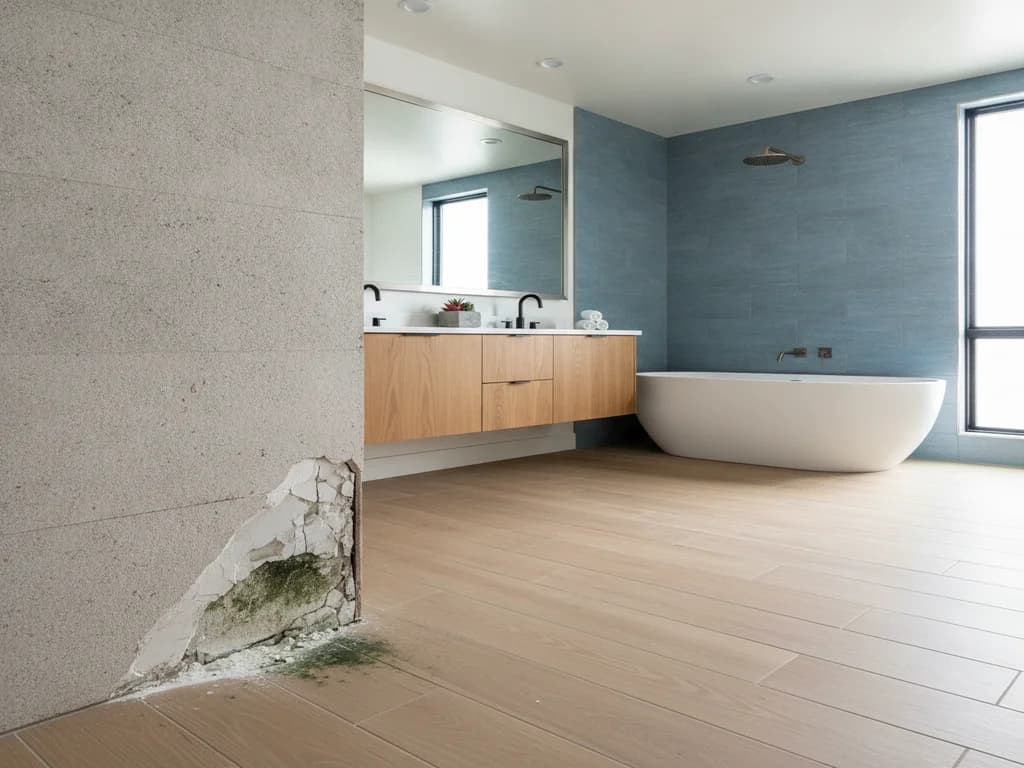
Water damage evidence gets checked too. A valve that has been seeping inside the wall leaves staining, swollen baseboard, or a musty cavity — signs covered in signs of bathroom water damage — and discovering saturated framing changes the project from access-hole to opened-wall regardless of the valve plan.
On cost, national guides like HomeAdvisor and Angi generally put professional shower valve replacement in the several-hundred-dollar range when access is simple, climbing toward four figures when walls must open or piping needs work. Access is the whole cost story — which is exactly why the rear-panel and remodel-plate routes exist.
The remodel angle: when a valve problem is an opportunity
A failed valve in a shower you love is a repair — take the least-invasive route and move on. A failed valve in a shower you have been tolerating is a decision point, because valve access is one of the costs a future remodel would pay anyway.
If the tile is dated, the pan has its own issues, or you want the shower reconfigured, putting several hundred dollars into precision access work on a shower with two years left is money the remodel quietly absorbs. A custom walk-in shower replaces the valve as a standard line item — with the valve chosen for the fixture set you actually want, not the hole that already exists.
Ready to plan your Boise bathroom?
Licensed & insured · 3-year workmanship warranty
Frequently asked questions
- Can a plumber replace a shower valve from the other side of the wall?
- Yes, when the other side is accessible drywall — a closet, hallway, bedroom, or garage. The plumber cuts a rectangular opening opposite the valve, replaces it from behind, and the opening gets patched or fitted with an access panel. It is the preferred route because drywall repair costs far less than tile work and leaves the shower untouched.
- What is a remodel plate for a shower valve?
- An oversized trim plate — also sold as a renovation or repair cover plate — designed to hide the enlarged opening left when a valve is replaced through the tile side. Manufacturers offer them in standard finishes so the result reads as intentional. The limit is coverage: the new valve must sit in essentially the same spot, and the cutout must stay within the plate footprint.
- Do I need to replace the valve or just the cartridge?
- Dripping, stiff or loose handles, and temperature drift usually mean the cartridge — the serviceable insert that pulls out through the trim hole with no wall work. The valve body itself needs replacing when it leaks from the body, when parts are no longer made, or when you want new function like a thermostatic mixer or an added diverter. A plumber can tell from the valve model.
- How much does shower valve replacement cost?
- Access drives the price more than the part. National guides like HomeAdvisor and Angi generally put professional replacement in the several-hundred-dollar range with straightforward access — a rear panel or remodel-plate swap — and toward four figures when tile must open or supply piping needs replacement alongside the valve.
- Does replacing a shower valve require a permit in Boise?
- A like-for-like valve replacement is generally treated as a repair, but altering supply plumbing or relocating fixtures can bring the work under a plumbing permit — administered through City of Boise Planning & Development Services or your city’s building department, with Idaho plumbing licensure through DOPL. A licensed contractor makes the call before work starts.
- Why does my shower suddenly go hot when someone flushes a toilet?
- That is the signature of a valve without pressure balancing. Older two-handle and basic mixing valves pass pressure changes straight to the showerhead, so a flush steals cold water and the spray spikes hot. Modern codes require pressure-balancing or thermostatic valves in showers specifically to prevent scalds — replacing the valve fixes it permanently.
Sources
- International Code Council (IRC/IBC)
- Moen
- Delta Faucet
- HomeAdvisor — True Cost Guide
- City of Boise — Planning & Development Services
Claims and figures are drawn from the sources above and provided for general guidance; your project may vary. Photography is illustrative of design concepts. For a fixed price on your specific bathroom, request a free estimate.