Updated July 16, 2026 · 6 min read
By Boise Bath — bathroom & shower remodeling in Boise & the Treasure Valley
The short answer
Yes — you can replace shower tile without touching the tub, pan, or plumbing, and it is a common scope. But tile cannot be peeled off a wall intact: demolition destroys the backer and waterproofing behind it, so a real retile rebuilds those layers too. What you skip is the pan, valve, and layout — not the wall system.
Key takeaways
- Shower tile is the visible face of a wall system — tile, mortar, backer board, and waterproofing come off together during demolition, whether you planned on it or not.
- A "tile-only" shower job in honest terms means: keep the pan or tub, valve, and layout; rebuild the walls from the studs out with new backer, waterproofing, and tile.
- Patching a few cracked tiles is only a cosmetic repair when the substrate behind them is dry and sound — and matching discontinued tile is usually the harder problem.
- If the tile failed because of movement or water in the wall, new tile over the same conditions fails the same way.
- Industry standards from the TCNA treat waterproofing as part of the tile assembly, not an optional extra — a retile that skips it is a rebuild of the original failure.
- The economics tip quickly: once walls are open, upgrading the valve or fixing the pan costs a fraction of what a second demolition would.
The short answer, without the sales pitch
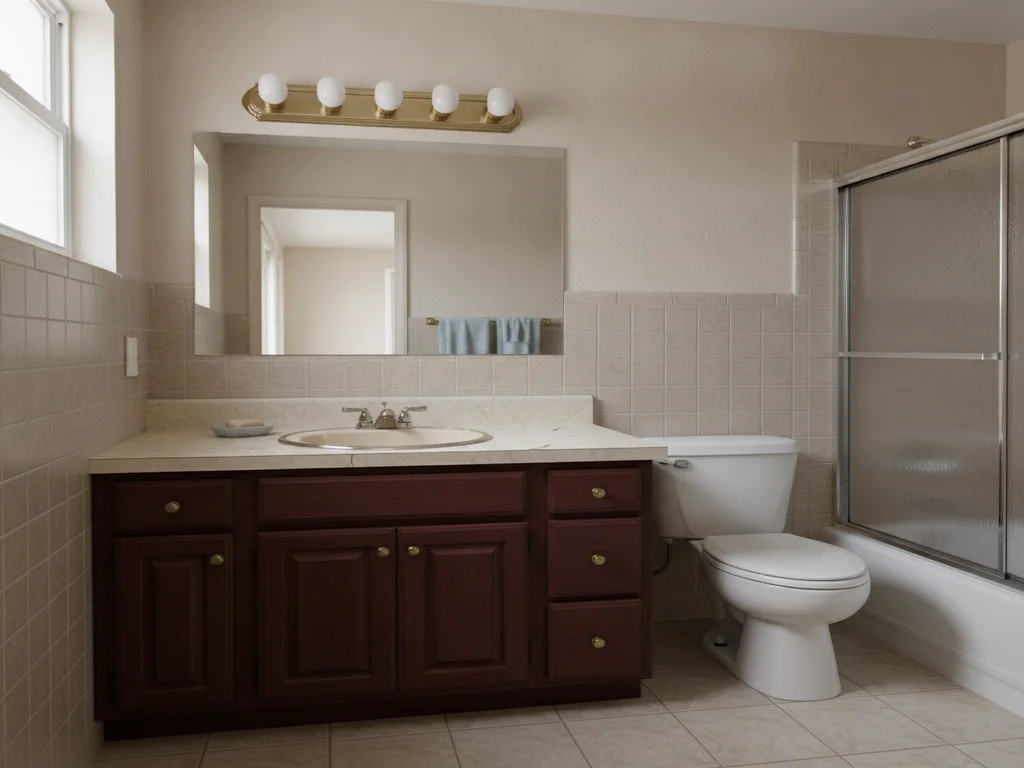
You can absolutely replace shower tile without a full bathroom remodel. Keeping the existing tub or pan, the valve, and the footprint while renewing the tiled walls is a legitimate, well-defined project — and often the right one when the enclosure looks dated but everything behind and below it works.
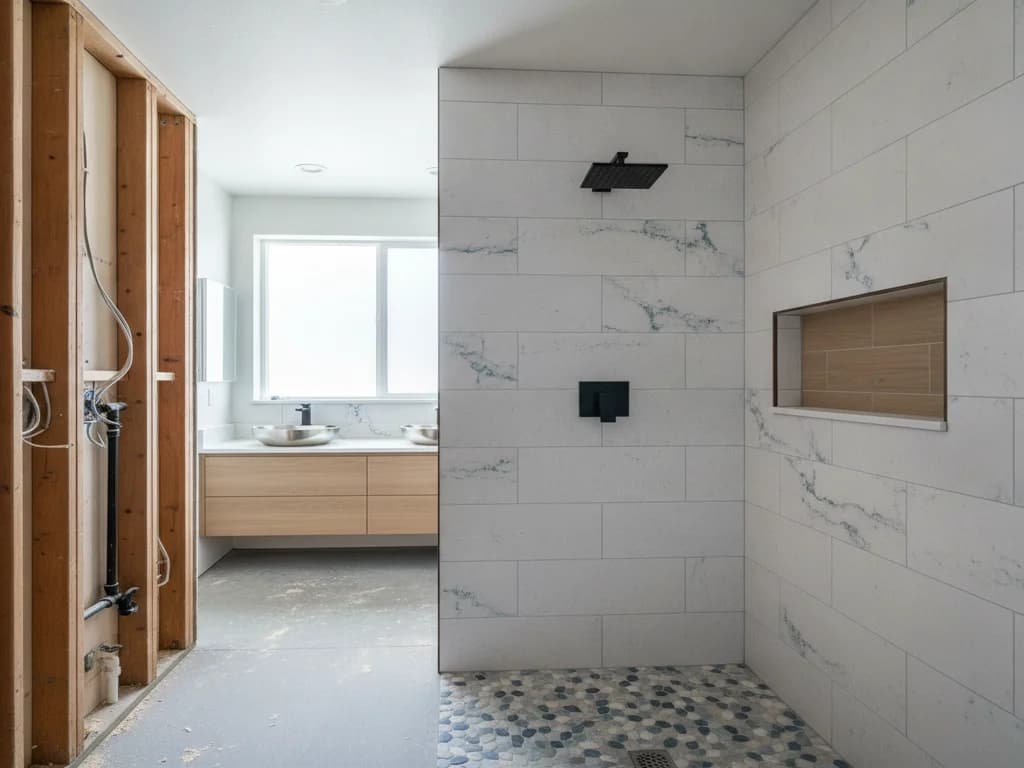
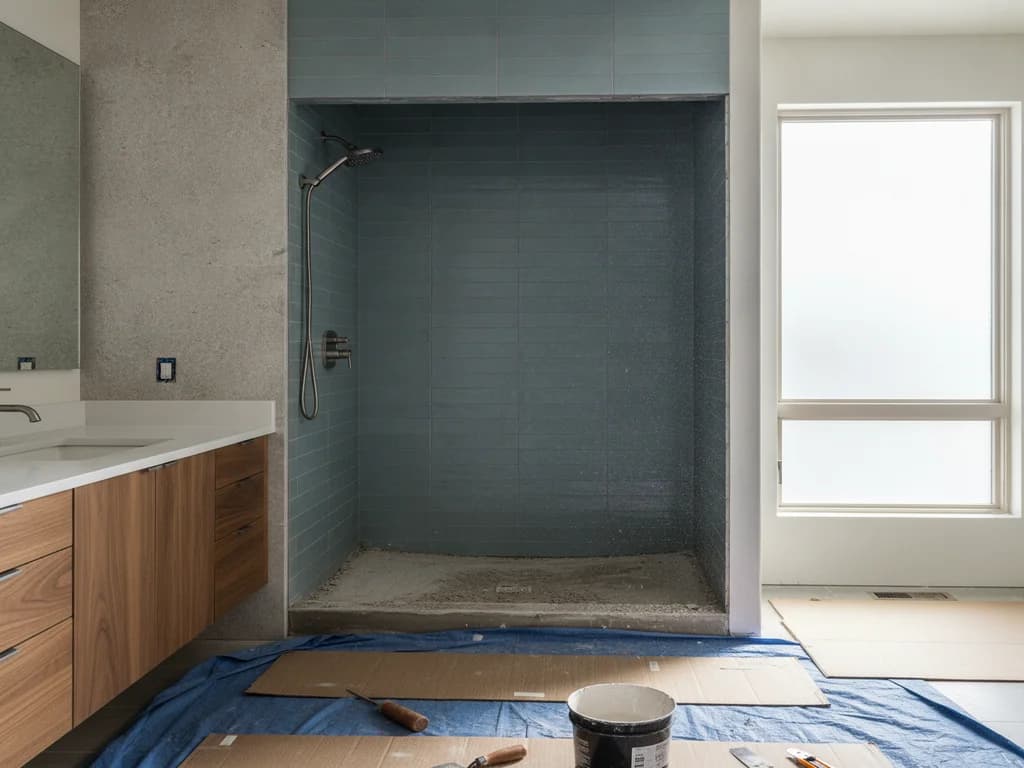
What you cannot do is replace only the tile layer. Tile is bonded to its backer with mortar; removing it destroys the backer board and whatever waterproofing is behind it. There is no careful technique that peels tile off and leaves a reusable wall — demolition takes the system down to the studs.
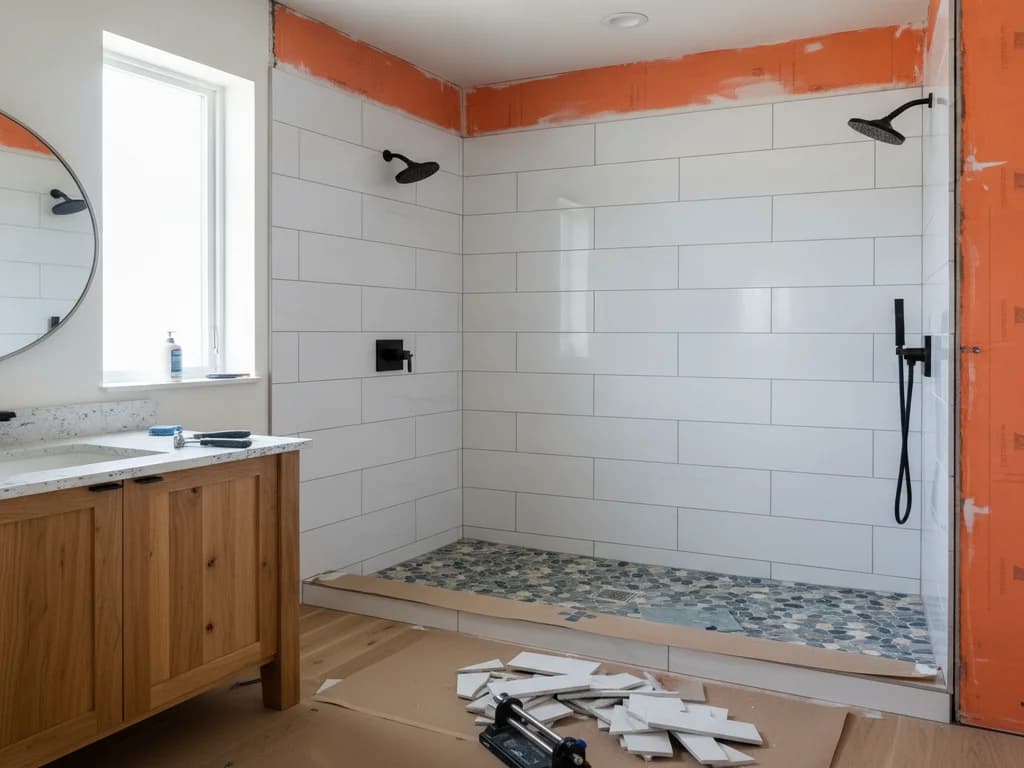
So the honest framing of "just the tile" is really "just the walls": new backer, new waterproofing, new tile, everything else untouched. That distinction is not pedantry — it is where budgets and bad bids diverge. A bid that prices new tile stuck over old walls, or over hastily patched backer, is pricing a different and worse project. The full scope of a proper wall rebuild is covered in replacing shower tile.
Why the waterproofing behind the tile decides everything
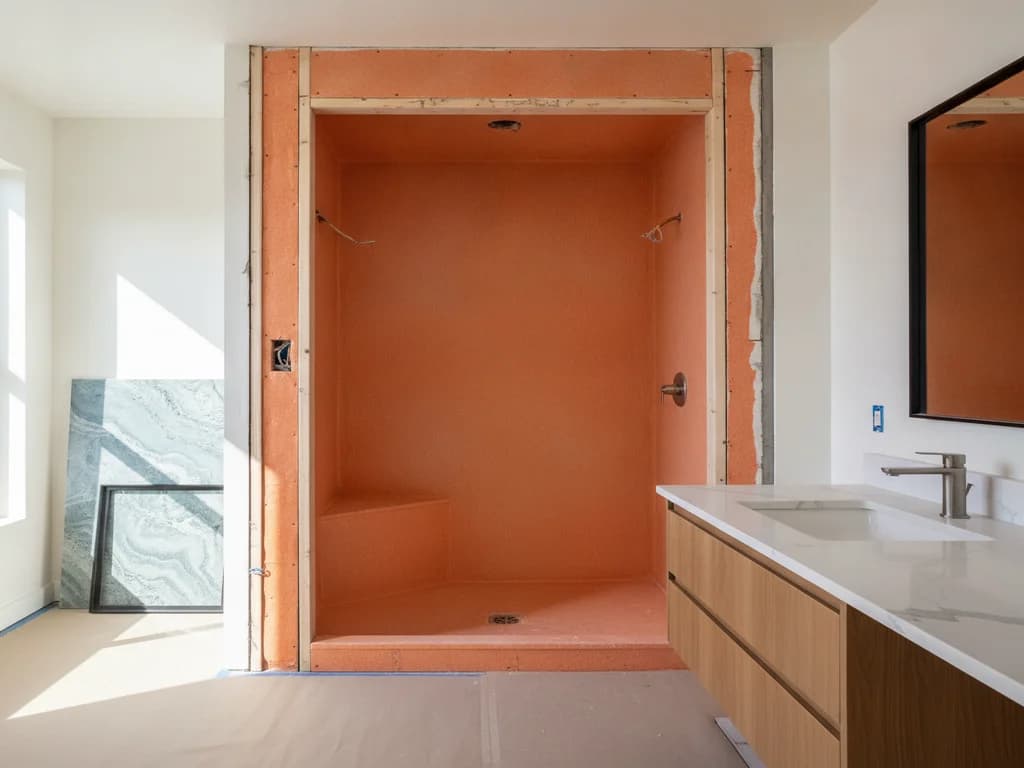
Tile and grout are not waterproof — they shed most water, and the assembly behind them handles the rest. That is the position of the Tile Council of North America, whose handbook methods pair every wet-area tile installation with a waterproofing layer: membrane sheets, liquid-applied coatings, or foam board systems from manufacturers like Schluter or wedi.
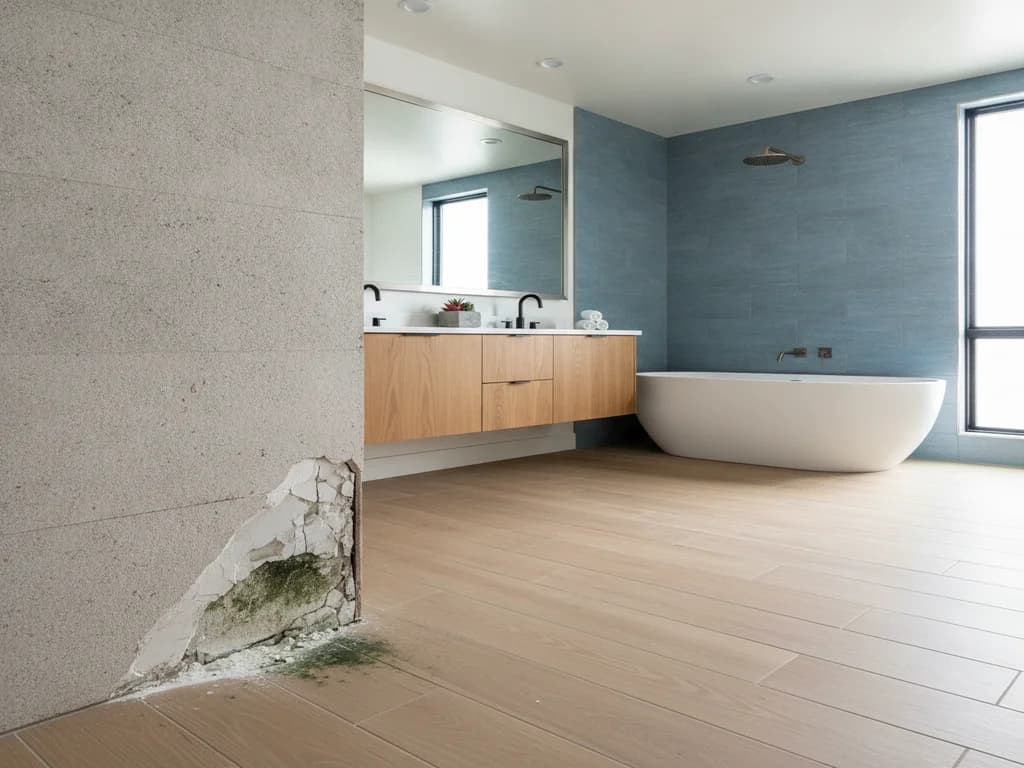
This is why the state of the hidden layers, not the tile, decides your real scope. If the old waterproofing was intact and the walls are dry, the retile is straightforward: demo to studs, rebuild the assembly, tile. If demolition reveals wet insulation, dark framing, or a moldy cavity, the project grows for a reason — and catching it now, with the walls already open, is the cheap version of that discovery.
Older Treasure Valley showers raise the odds of the second scenario. Plenty of 1990s and early-2000s builder-grade enclosures put tile over bare drywall or unsealed backer with no membrane at all. If that is what is behind your tile, the "extra" waterproofing work is not scope creep — it is the reason the new shower will outlive the old one. How those layers work, and what modern systems look like, is covered in replacing shower waterproofing and the broader shower waterproofing guide.
The one-direction rule of shower demo
Nobody can tell you what is behind your tile until it is off — and once it is off, there is no putting it back. Plan the budget with a contingency for what the open wall reveals, and treat any bid that promises no surprises with suspicion. The wall decides; the bid should say so.
What about replacing just a few cracked or damaged tiles?
Spot-repairing a handful of tiles is a different question, and sometimes the answer is yes. The conditions: the surrounding tile is well bonded (it doesn’t sound hollow when tapped), the substrate behind the damaged area is dry and solid, and — the sleeper problem — you can actually get matching tile.
That last one kills more spot repairs than anything technical. Tile lines are discontinued constantly, and even the same product in a newer dye lot can read visibly different on the wall. Saved spare boxes from the original install are gold; without them, the "small patch" often becomes an accent stripe, a deliberate contrast section, or a decision to live with it until a retile.
The condition that should stop a spot repair cold: cracked tiles along a line, hollow-sounding fields, or cracks that return after repair. Those are symptoms of movement or moisture in the substrate, and new tiles over a moving or wet wall fail on the same schedule the old ones did. Persistent stains or a musty smell push the same direction — check signs of bathroom water damage before spending on cosmetics.
Keep the pan? Keep the tub? Where the lines actually are
The wall-tile scope pairs naturally with keeping whatever is below it — if that thing is healthy. An acrylic or fiberglass pan in good condition, or a sound tub, stays in place while the walls above are rebuilt; the critical detail is how the new wall waterproofing laps and seals to the old fixture flange, which is exactly the kind of junction a careful installer sweats and a rushed one caulks.
A tiled shower floor complicates it. The wall tile and the floor pan share a waterproofing boundary at the curb and the bottom course, and a failing mortar-bed pan cannot be fixed from above. If the floor is the problem, that is its own scope — see can you replace a shower pan without retiling for how that boundary works from the other side.
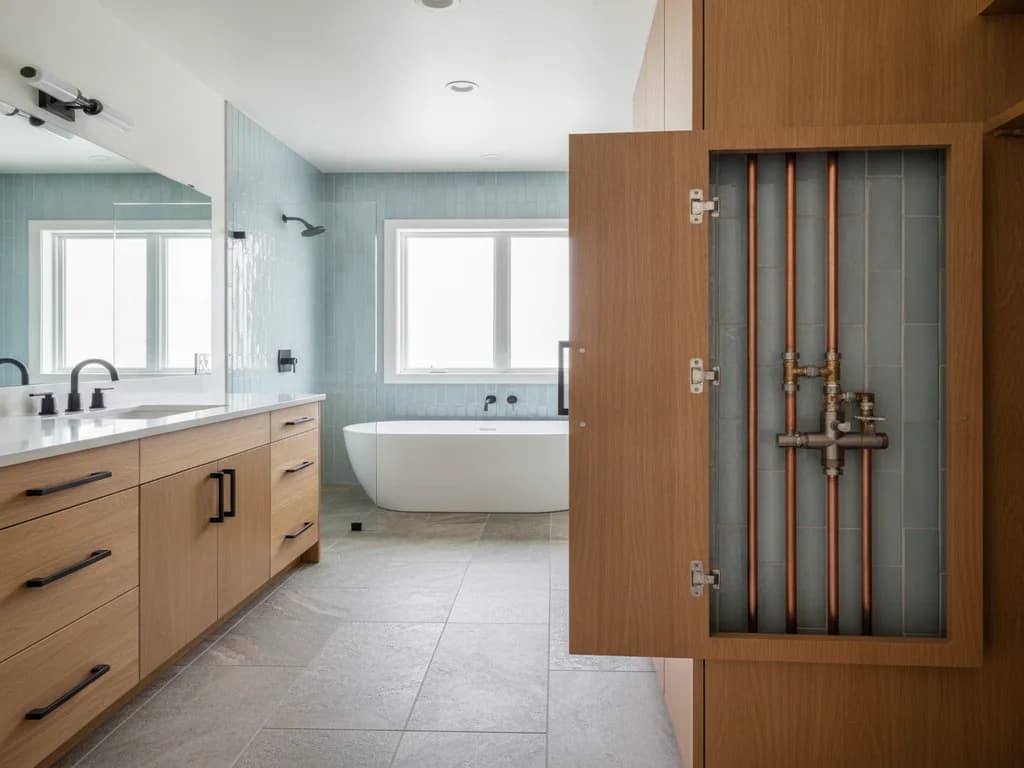
The valve is the other line worth drawing deliberately. The mixing valve lives inside the wall you are about to close. If it is decades old, replacing it while the wall is open is a modest add; replacing it a year later means opening your brand-new tile. The access question is covered in can you replace a shower valve without removing tile — the short version is that a retile is the cheapest valve access you will ever have.
| Component | Typically keep | Rebuild or strongly consider |
|---|---|---|
| Wall tile, backer, waterproofing | — | Always rebuilt together |
| Tub or acrylic pan | If sound and staying put | If cracked, flexing, or being converted |
| Tiled shower floor | If pan and slope are sound | If leaking — a separate scope |
| Mixing valve | If modern and serviceable | If old — cheapest to swap while walls are open |
| Layout and footprint | Unchanged by definition | Changing it = remodel territory |
| Glass and door | Often reusable if standard size | If frame style or opening changes |
When "just the tile" is a false economy
A walls-only retile makes sense when the enclosure is cosmetically dated but structurally boring: dry walls, sound pan, decent valve, layout you like. It stops making sense when it preserves problems at full labor cost.
The clearest cases: a pan or tub you already dislike (it will not get easier to replace after new wall tile laps onto it), an undersized enclosure you are hoping to expand within a few years, active leaks that have not been diagnosed, or a 30-year-old valve behind the wall. In each, the retile spends most of a renovation’s labor while locking in the thing you actually wanted changed.
The arithmetic to run is second-demolition cost. Demo, backer, waterproofing, and tile labor get paid once in a combined project and twice in a staged one. If there is a realistic chance the tub becomes a walk-in shower or the footprint changes, pricing a full bathroom remodel alongside the retile quote is the ten-minute exercise that prevents the expensive version of changing your mind.
What a walls-only retile looks like when it is done right
The professional sequence is short to describe: protect the fixture below, demo the walls to studs, correct any framing or moisture issues found, install new backer and a continuous waterproofing system with sealed seams and penetrations, flood-test or verify per the system, then tile, grout, and seal the movement joints with the right materials rather than rigid grout in the corners.
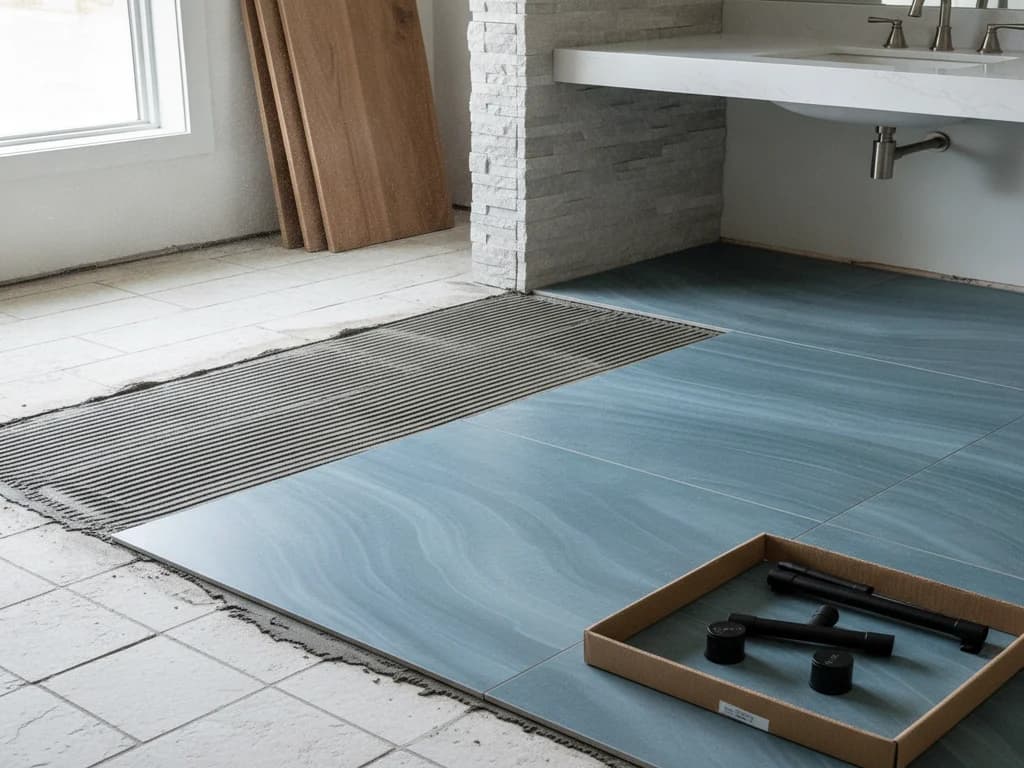
Timeline-wise, this is typically a several-day project, not an afternoon — mortar and membranes have cure schedules that no crew can honestly compress. The detailed step-by-step, including material choices and where the industry standards come from, lives in replacing shower tile.
What you should expect from any bid: an explicit line for the waterproofing system by name, language about what happens if demo reveals damage, and no promise to lay new tile over existing tile or painted drywall. Whether tiling over old tile is ever legitimate has its own answer — see can you tile over existing tile — but inside a shower, the honest default is down to studs.
Ready to plan your Boise bathroom?
Licensed & insured · 3-year workmanship warranty
Frequently asked questions
- Can you replace shower tile without replacing the shower?
- Yes — keeping the tub or pan, valve, and layout while rebuilding the tiled walls is a standard, well-defined scope. The catch is that "the walls" means the whole assembly: demolition destroys the backer and waterproofing along with the tile, so all three are rebuilt together. What you save by keeping the fixture and plumbing is real; what you cannot save is the wall behind the tile.
- Can you put new tile over old shower tile?
- Inside a shower, it is a shortcut with the wrong failure mode. Tiling over tile adds weight and thickness, buries the old waterproofing (and its problems) another layer deep, and creates edge and plumbing-trim conflicts. Industry practice for wet areas is a proper substrate and waterproofing layer, per the TCNA. The scenarios where over-tiling is defensible are covered in our tile-over-tile guide — showers are rarely one of them.
- Can I replace just a few cracked tiles in my shower?
- Sometimes. If surrounding tile is solidly bonded, the wall behind the damage is dry, and you have matching spares, a spot repair is legitimate. But cracks along a line, hollow-sounding areas, or cracks that come back point to movement or moisture behind the wall — and new tile over that fails the same way. Discontinued tile is the other common blocker; without saved spares, matching is often impossible.
- How do I know if the waterproofing behind my tile has failed?
- From outside the wall: stains or soft drywall on the opposite side of the shower wall, a musty smell, grout lines that darken and stay dark, tiles that sound hollow or move, and recurring mildew in the same spots. None are proof by themselves — the wall only testifies once it is open. Any of these before a planned retile means budgeting for substrate repair rather than being surprised by it.
- Should I replace the shower valve while the tile is off?
- If the valve is old, almost certainly. The mixing valve lives inside the wall a retile opens anyway, so swapping it adds modest plumbing cost now versus opening finished tile later — the single most common regret in walls-only projects. A modern pressure-balanced or thermostatic valve also addresses scald protection that decades-old valves lack. If the valve is recent and serviceable, keeping it is fine.
- How long does a shower retile take?
- Typically the better part of a week for a standard enclosure — demolition and any repairs, then backer and waterproofing with their cure times, then tile, grout, and sealant, each with its own schedule. National cost guides such as Angi describe similar multi-day timelines. Quotes promising a one-day full retile are compressing cure schedules that manufacturers publish for a reason.
Sources
Claims and figures are drawn from the sources above and provided for general guidance; your project may vary. Photography is illustrative of design concepts. For a fixed price on your specific bathroom, request a free estimate.