Updated July 16, 2026 · 7 min read
By Boise Bath — bathroom & shower remodeling in Boise & the Treasure Valley
The short answer
Yes — grout can be replaced without removing tile; it is a standard repair when the tile is soundly bonded. The condition is depth: at least half to two-thirds of the old joint must be ground out so new grout can lock in. If tiles are cracked, hollow, or the wall behind is wet, regrouting only hides the failure.
Key takeaways
- Regrouting without retiling is a legitimate, routine repair — the tile stays, the joints are ground out, and fresh grout is packed in.
- New grout smeared over old grout fails fast; the joint has to be mechanically cleared to roughly half to two-thirds of its depth so the new material can key in.
- Grout is not waterproofing — a shower stays dry because of the membrane behind the tile, so regrouting cannot fix water that is already getting behind the wall.
- Cracked grout that keeps returning in the same line, hollow-sounding tiles, or movement at corners point to substrate problems that regrouting will not solve.
- Change-of-plane joints — corners, tub-to-tile, floor-to-wall — should be finished in flexible sealant, not grout, per tile-industry movement-joint guidance.
- Round two is the moment to upgrade the material: epoxy and modern high-performance grouts resist the staining and crumbling that killed the first install.
The verdict: yes, if the tile is sound and the old grout actually comes out
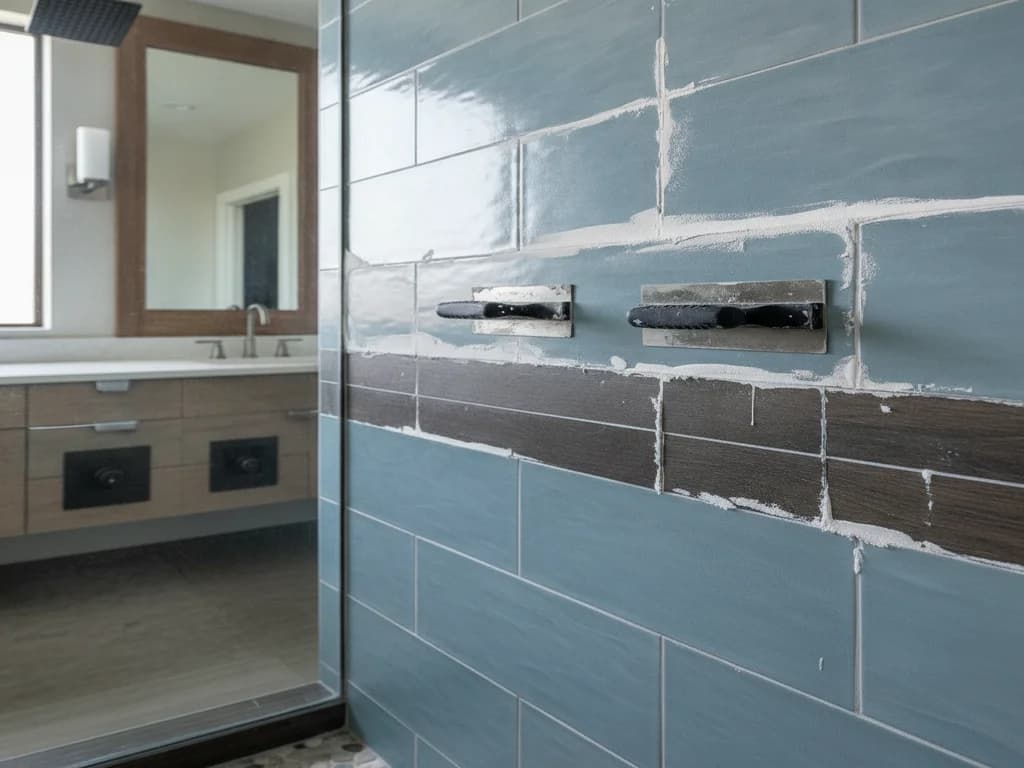
Regrouting is not a hack — it is a recognized repair with a real trade name and real technique. Tile setters do it constantly: the tile stays bonded to the wall or floor, the failed grout is mechanically removed from the joints, and new grout is packed and cured in its place. Done properly, the result is indistinguishable from a fresh install.
Both halves of the condition matter. "Tile is sound" means every tile is solidly bonded, uncracked, and the assembly behind it is dry. "Old grout actually comes out" means ground or raked out to real depth — not scratched at the surface so new grout can be smeared over the top. Skip either half and the repair fails within months.
This article is the decision: when regrouting is the right call, when it is a bandage on something worse, and what a pro checks before quoting it. The step-by-step process itself lives in our guide to replacing bathroom grout.
How deep does the old grout have to come out?
This is where DIY regrouts die. New grout bonded to a skim of old grout is only as strong as that old, failing surface — so it cracks and powders out along the same lines, often within a season. The new material needs clean joint walls and enough depth to form a solid, keyed-in mass.
Trade practice, echoed by tile-industry bodies like the National Tile Contractors Association, is to clear at least half to two-thirds of the joint depth — and to full depth wherever the old grout is loose or contaminated. In a typical wall joint that means removing an eighth of an inch or more of hard cementitious material from a channel narrower than a pencil, without chipping the glazed edges on either side.
That is the actual labor of a regrout: careful, tedious removal with carbide rakes or an oscillating tool, joint by joint. The grouting itself is the quick part. It is also why regrout pricing is driven almost entirely by joint length and access, not by the cost of the grout.
When regrouting is the right repair
The clean cases are cosmetic and surface-level. Grout that is permanently stained or discolored beyond what cleaning recovers. Grout that is powdering or crumbling from age or a weak original mix. Small, scattered cracks or pinholes in otherwise solid joints. Mildew staining that returns no matter the scrubbing — often a sign the grout surface has eroded enough to hold moisture.
In all of those, the failure lives in the grout itself while the tile and the substrate behind it are healthy. Replace the failed material and the assembly is genuinely repaired — not just refreshed. On a floor, the same logic applies with one extra check: grout failing along traffic lines can signal deflection underneath, which is a structure question first.
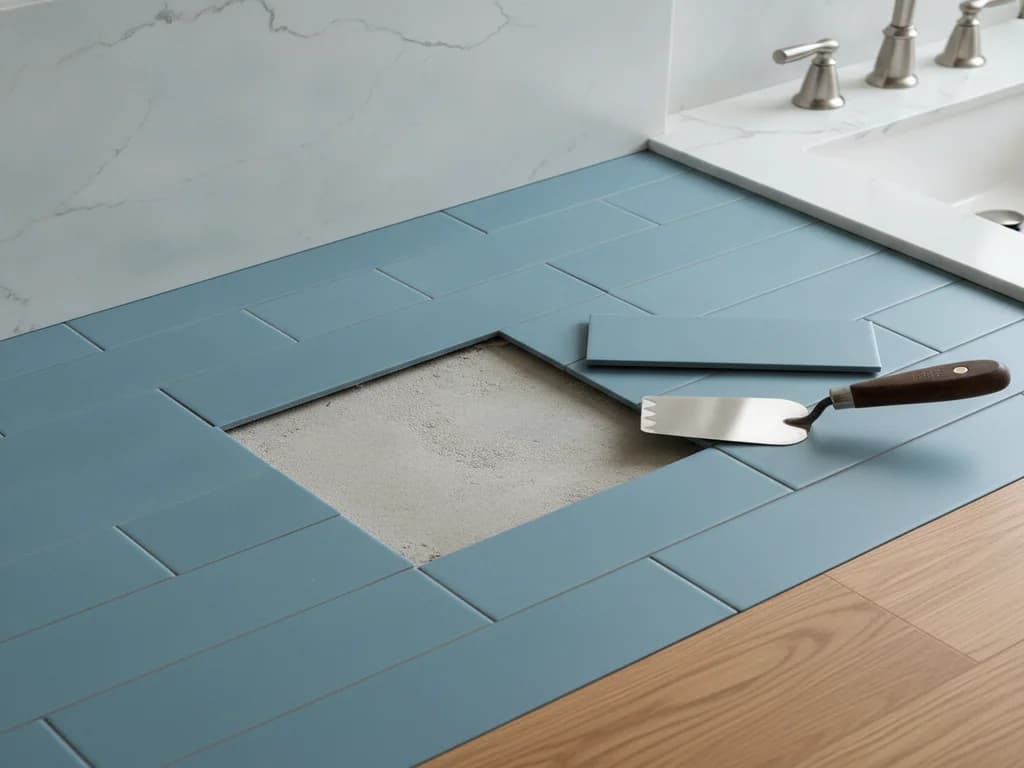
One adjacent case worth naming: if a handful of tiles are also cracked, the jobs combine well. Individual tiles can be cut out and replaced during the same visit — how that works is covered in replacing cracked bathroom tile — and the whole surface gets regrouted as one uniform pass at the end.
| Symptom | Usually regrout | Usually a bigger repair |
|---|---|---|
| Stained or dingy grout, tile solid | Yes | — |
| Crumbling, powdery joints | Yes, cleared to depth | — |
| Hairline cracks scattered randomly | Yes | — |
| Crack that returns on the same line | — | Movement in the substrate below |
| Tiles sound hollow when tapped | — | Bond failure — tiles are letting go |
| Grout missing at corners or tub edge | Sealant joint, not grout | Check for water damage behind first |
| Wall flexes, or tiles feel loose | — | Substrate failure — regrouting hides it |
When regrouting is just hiding the real problem
Grout is the messenger, and some grout failures are messages about the structure behind. A crack that keeps reopening along the same joint is movement — a flexing floor, a settling wall, a missing expansion joint — and new grout in a moving joint cracks on the same schedule the old grout did.
Hollow-sounding tiles are the more serious flag. Tap across the surface: a sharp click is bonded tile, a dull thud is tile that has released from its setting bed. Regrouting a hollow field locks a pretty surface over a failing bond, and the tiles keep letting go underneath. The same is true of any wall that flexes under hand pressure — the problem is the board behind the tile, not the lines between them.
And in showers, the biggest misconception of all: grout does not waterproof anything. Cementitious grout is porous, and a correctly built shower stays dry because of the waterproofing membrane behind or under the tile. If water has been getting behind the wall — stains below, a musty smell, soft drywall on the far side — new grout is cosmetics on a failing assembly, and the honest conversation is about opening the wall. That is the domain of shower tile and waterproofing work, not a regrout.
Grout is not waterproofing
Cement grout is porous by nature — showers stay dry because of the membrane behind the tile, not the grout in front of it. If there is any sign of moisture behind the wall (staining on the other side, musty odor, soft board), regrouting will make the surface look fixed while the assembly keeps failing underneath.
Edges and corners: where grout was the wrong material all along
Look at where your grout failed. If it is cracked or missing where planes meet — the tub-to-tile joint, inside corners, floor-to-wall transitions — the original installer likely grouted joints that industry standards say should be flexible. Tile Council of North America guidance treats changes of plane as movement joints, to be filled with a flexible sealant rather than rigid grout, precisely because the two surfaces move independently.
A quality regrout fixes this permanently: the field joints get new grout, and every change of plane gets raked clean and finished with color-matched silicone or hybrid sealant instead. The visual match is close enough that most homeowners never notice — but the corner joints stop cracking.
This one detail separates a regrout that lasts from one that repeats itself in eighteen months, and it costs almost nothing extra when the joints are already open.
Round two is your chance to pick better grout
If the first grout stained, crumbled, or grew mildew, refilling the joints with the same builder-grade cement mix invites the same outcome. The regrout is the natural moment to upgrade the material — and the options have improved a lot since most Treasure Valley bathrooms were built.
The short version: epoxy grout is essentially stain-proof and waterproof at the joint surface but demands skilled installation, while modern high-performance cement grouts split the difference on cost and workability. The full comparison — chemistry, cost, where each wins — is in our guide to epoxy vs. cement grout.
Whichever way that choice goes, sealing and upkeep determine how long round two lasts; the maintenance side lives in tile and grout care.
What a pro checks before quoting a regrout
A real assessment starts with the tap test across the whole field, listening for hollow spots, and hand pressure on wall tile to feel for flex. Then the grout itself: is the failure surface staining, or is material genuinely missing and loose? Scattered wear points to a regrout; failure concentrated in one zone points to something behind that zone.
In wet areas the moisture questions come next. Is there any evidence on the far side of the wall? How old is the shower, and was it built with a proper membrane? A pre-2000s shower with failing grout and no known waterproofing history gets a more skeptical eye — sometimes a borescope look or a small exploratory opening — before anyone promises that new grout solves it.
The honest quote that comes out of this is one of three: a straightforward regrout with sealant at the changes of plane; a regrout plus a handful of tile replacements; or the news that the assembly is failing and the money is better spent on the real repair. A contractor who quotes a shower regrout without tapping a single tile is quoting the easy answer, not the right one.
Ready to plan your Boise bathroom?
Licensed & insured · 3-year workmanship warranty
Frequently asked questions
- Can you put new grout over old grout?
- Not successfully. New grout bonded to a thin layer of old, failing grout inherits that weak bond and typically cracks or powders out along the same lines within months. The old material has to be mechanically removed — trade guidance says at least half to two-thirds of the joint depth, and to full depth wherever it is loose — so the new grout forms a solid keyed-in mass.
- How do I know if my tile is sound enough to regrout?
- Tap it. Firmly bonded tile answers with a sharp click; tile that has released from its setting bed sounds dull and hollow. Also press on wall tile — any flex means the board behind it is the problem. Scattered solid tiles with tired grout is a regrout; hollow zones, repeating cracks along one line, or loose tiles mean the failure is under the surface.
- Will regrouting stop a shower from leaking?
- Only if the "leak" was surface water wicking through failed joints — and even then, grout is not the waterproofing layer. Showers stay dry because of the membrane behind the tile. If water is showing up on the other side of the wall or the floor below, the membrane or pan has failed, and new grout will only make the surface look repaired while the leak continues.
- Should shower corners be grouted or caulked?
- Caulked — with a flexible, mold-resistant sealant, not rigid grout. Tile-industry standards from the Tile Council of North America treat every change of plane (inside corners, tub-to-tile, floor-to-wall) as a movement joint, because the two surfaces move independently and rigid grout there cracks. A good regrout finishes all of those joints in color-matched sealant.
- Is regrouting worth it, or should I just retile?
- If the tile is bonded, uncracked, and you like how it looks, regrouting delivers most of the visual refresh at a fraction of retiling cost — the labor is joint clearing, not demolition and reinstallation. Retiling wins when tiles are failing, the waterproofing is suspect, or the room is heading for a redesign anyway, where a regrout would be money spent twice.
- What grout should I use the second time around?
- Something better than what failed. Epoxy grout is nearly stain-proof and does not need sealing, at a premium in cost and installation skill; modern high-performance cement grouts improve substantially on builder-grade mixes for less. The right pick depends on the room and budget — our epoxy vs. cement grout guide walks through the chemistry and where each one wins.
Sources
- Tile Council of North America (TCNA)
- National Tile Contractors Association
- Custom Building Products (RedGard)
- LATICRETE
Claims and figures are drawn from the sources above and provided for general guidance; your project may vary. Photography is illustrative of design concepts. For a fixed price on your specific bathroom, request a free estimate.