Updated July 16, 2026 · 8 min read
By Boise Bath — bathroom & shower remodeling in Boise & the Treasure Valley
The short answer
Yes, with conditions. The TCNA Handbook recognizes tile-over-tile renovation methods when the existing tile is soundly bonded, flat, and structurally dry — installers verify this with tap tests and a straightedge before committing. It fails when hollow-bonded tile, added floor height at doors and the toilet flange, or hidden moisture in a shower turn a shortcut into a double demolition.
Key takeaways
- Tile-over-tile is a legitimate, industry-recognized renovation method — the Tile Council of North America publishes methods for it — not a contractor shortcut.
- The entire decision rides on three tests: bond (no hollow tiles), flatness (within setting-material tolerance), and height (what the extra layer does at doors, transitions, and the toilet flange).
- The old surface must be mechanically abraded and properly primed or set with a bonding mortar rated for tile-over-tile — glaze is engineered to resist adhesion.
- In showers, tiling over existing tile is usually a mistake: it entombs the old waterproofing question, and any hidden moisture failure keeps failing behind two layers of tile.
- Tiling over sheet vinyl is only viable when the vinyl is a single layer, fully adhered over a sound substrate — cushioned or perimeter-glued vinyl disqualifies the whole approach.
- When tile-over-tile goes wrong, the fix is removing two bonded layers instead of one — the failure case costs more than the demolition it avoided.
Yes — the tile industry itself says so, with conditions
Tiling over existing tile sounds like the kind of corner-cutting an inspector would flag, but it is the opposite: the TCNA Handbook — the reference standard the tile trade installs by — includes renovation methods for setting new tile directly over existing ceramic tile, when the existing installation qualifies. Manufacturers like LATICRETE and Custom Building Products make bonding mortars rated specifically for this use.
The key phrase is "when the existing installation qualifies." Tile-over-tile borrows the old floor as its new substrate, which means every weakness in the old installation is inherited by the new one. Sound, flat, well-bonded old tile makes a legitimate substrate. Hollow, cracked, or damp old tile makes a time bomb with a fresh face on it.
So the professional version of this question is never "can we" — it is a short battery of tests, run before anyone opens a bag of mortar. Fail any of them and demolition is the cheaper path, however it feels on estimate day.
Test one: is the old tile actually bonded?
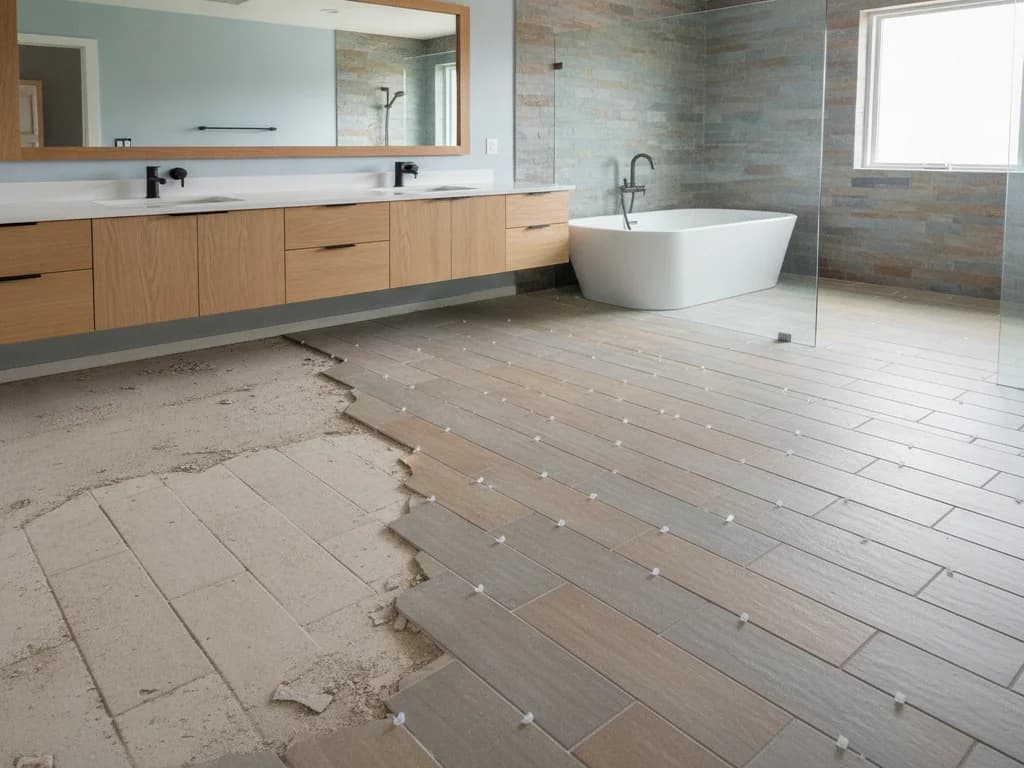
New tile bonded to old tile is only as attached as the old tile is to whatever is under it. So the first test is the tap survey: working across the entire floor or wall with a knuckle or a golf ball, listening for the difference between the sharp click of bonded tile and the dull, drummy thud of tile that has released from its bed.
A few isolated hollow tiles can be removed and the divots filled — that is normal prep. Hollow zones are disqualifying: they mean the original bond is failing wholesale, and any new layer rides a surface that is actively letting go. The same verdict applies to widespread cracking that follows lines across multiple tiles, which signals movement or substrate failure underneath — a problem covered in replacing cracked bathroom tile, and one that a new layer inherits on day one.
This is also where honesty about age pays. A 1990s Treasure Valley floor set on a mortar bed is often bonded like a sidewalk; a 2000s builder-grade floor set thin on ungapped plywood may already be half-released. The tap test tells you which one you own.
Test two and three: flatness and the height budget
Flatness is the quiet requirement. Setting-material tolerances for large-format tile are tight — the industry standard is commonly summarized as no more than 1/8 inch of variation in 10 feet for tiles with any edge 15 inches or longer — and an old floor with lippage, humps, or dips has to be ground or flattened with a leveling layer first. The flatter the old surface, the more real the savings of skipping demolition.
Height is the requirement homeowners feel every day afterward. New tile plus mortar adds roughly 3/8 to 1/2 inch on top of a floor that already carried one tile assembly. That raise shows up at every boundary: doors that need trimming, a step-down or awkward transition at the hallway, baseboards that suddenly sit low — and most consequentially, a toilet flange now recessed below finished floor, which is a leak setup we cover in replacing bathroom flooring without removing the toilet.
On walls, height becomes weight. Doubling the tile load on a wall means the framing and board behind carry both layers forever, and wall assemblies have rated limits for how much dead load the substrate can hold. Tile-over-tile on floors is common; on walls it deserves much more skepticism, and in wet walls it collides with the shower problem below.
| Test | Passes when | Fails when |
|---|---|---|
| Bond (tap survey) | Sharp click across the field; isolated hollows patched | Hollow zones, drummy areas, loose tiles |
| Cracking | None, or a stray impact chip | Cracks running across multiple tiles in a line |
| Flatness | Within setting tolerance or fixable with leveler | Lippage and dips beyond what leveling can fix |
| Height at doors/transitions | Extra 3/8–1/2 in. absorbed cleanly | Trip-step transitions, doors that cannot be trimmed |
| Toilet flange | Height corrected with extender during the job | Flange left buried below the new floor |
| Moisture | Dry area, or verified-dry assembly | Any evidence of water behind or below the old tile |
The shower exception: where tile-over-tile is usually a mistake
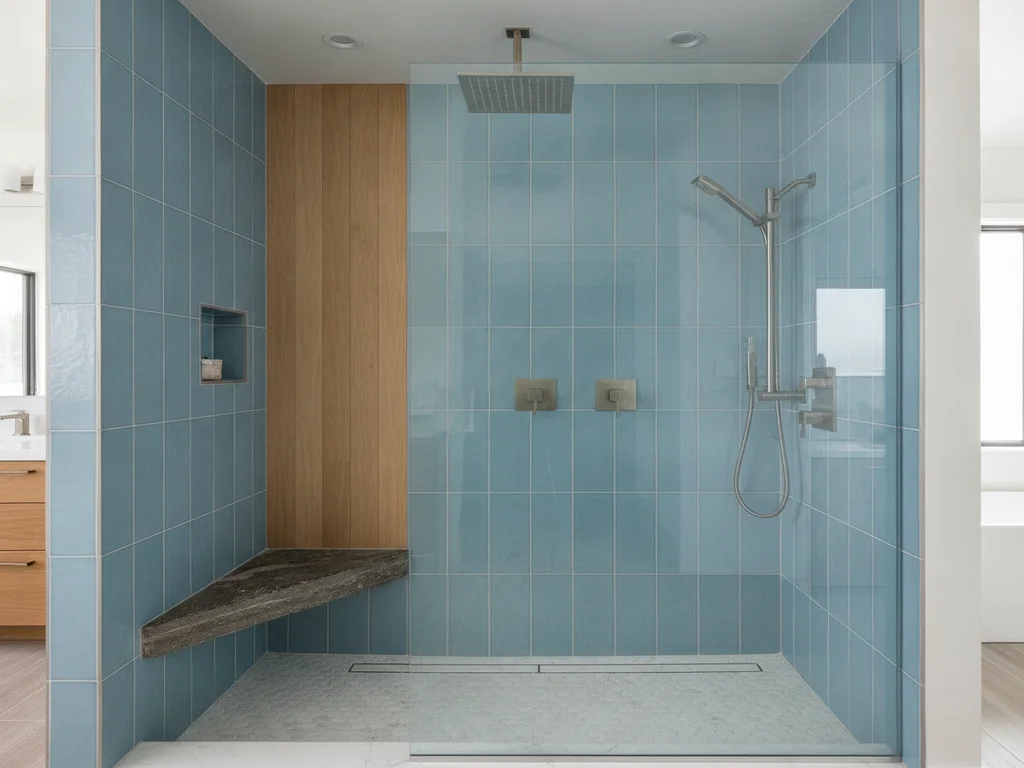
Everything above assumes a dry area — a bathroom floor outside the wet zone, a laundry room, a backsplash. Showers change the calculus completely, because a shower is a waterproofing assembly wearing tile, not a tile surface that happens to get wet.
Tiling over existing shower tile entombs the one question that matters: is the membrane behind the old tile intact? If the answer is no — and failing grout, staining, or a musty cavity often mean exactly that — then water keeps reaching the old assembly through and around the new layer, and the rot continues behind two bonded layers of tile instead of one. The new surface looks perfect while the wall fails.
A shower with tired tile but a genuinely sound, verified assembly is rare enough that the trade default is honest demolition: open it, confirm or rebuild the waterproofing, and tile once on a correct substrate. That is the standard of work behind our custom tile and stonework, and it is why a contractor who offers to tile over your shower walls without asking a single question about what is behind them is optimizing for the estimate, not the outcome.
Never tile over tile in a shower with any sign of moisture
Staining, persistent mildew, hollow lower rows, or softness on the far side of the wall mean water is already getting behind the old tile. A new layer on top hides the evidence and doubles the demolition when the failure surfaces. Wet areas earn tile-over-tile only when the assembly behind is verified sound — and that verification usually costs as much honesty as just opening the wall.
What about tiling over vinyl?
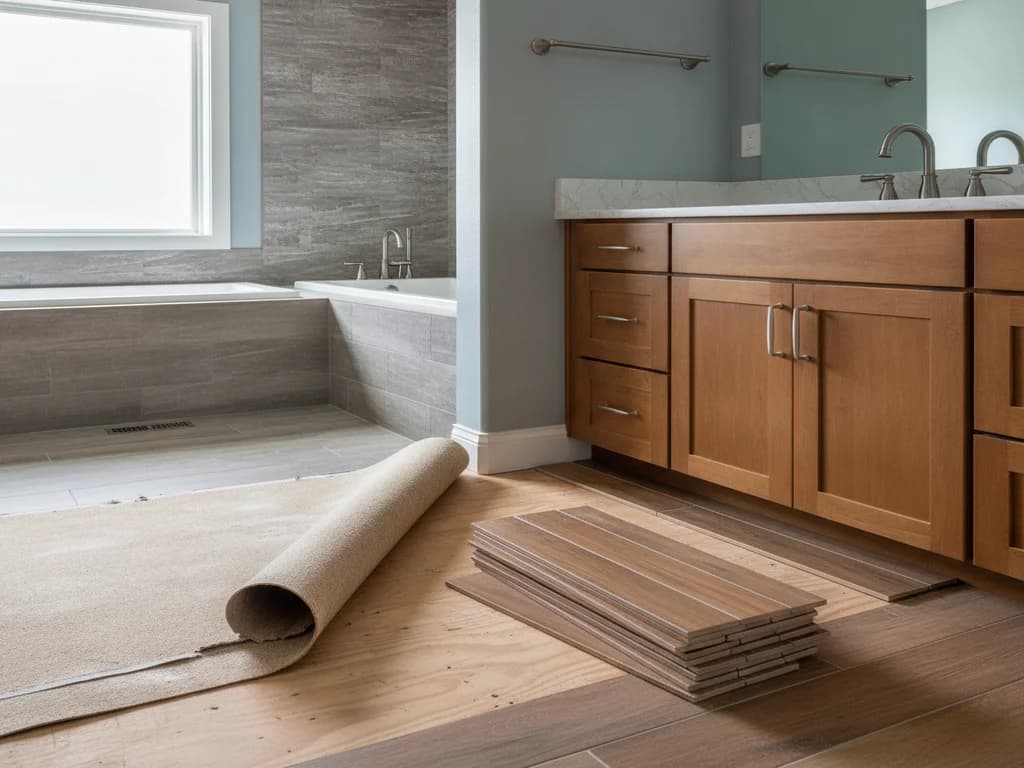
The same borrowed-substrate logic covers the other floor Treasure Valley bathrooms are full of: sheet vinyl and vinyl tile. Industry methods and mortar manufacturers allow tile over vinyl only in a narrow case — a single layer of full-spread, fully adhered vinyl, tightly bonded over a structurally sound subfloor, scuffed and primed or set with a mortar rated for vinyl.
Most real-world vinyl fails that description. Cushioned vinyl compresses underfoot, which cracks rigid tile above it. Perimeter-glued vinyl is only attached at the edges — the middle is a floating membrane. Multiple layers of vinyl, common in older homes, multiply the movement. And luxury vinyl plank is a floating floor by design, which makes it an automatic no as a tile substrate.
One more reason pros hesitate to disturb old sheet vinyl rather than bury it: resilient flooring from before the mid-1980s can contain asbestos in the backing, per the EPA, which changes how removal is handled. That is a factor a licensed contractor weighs — sometimes in favor of encapsulating under new tile, sometimes toward professional abatement — and it is covered in more depth in replacing vinyl bathroom flooring.
The prep that makes or breaks the bond
Glazed tile is engineered to shed things — water, stains, and unfortunately mortar. Setting new tile over it without surface prep is how the horror stories start. The standard prep sequence: degrease and strip every trace of soap film and sealer, mechanically abrade the glaze (diamond cup wheel or aggressive sanding) to give the mortar tooth, vacuum and damp-wipe, then either prime with a bonding primer or use a polymer-modified mortar the manufacturer explicitly rates for tile-over-tile.
Manufacturers are specific here for a reason — bond strength over glazed surfaces is the weak link in the whole method, and products from the major setting-material makers (LATICRETE, Custom Building Products and peers) publish exactly which of their mortars qualify and what surface prep they require. Following that data sheet is the difference between a floor and a future claim.
Movement joints carry over too: the perimeter and any existing expansion joints in the old floor must be honored in the new layer, not tiled across. Rigid layers bridging a movement joint crack directly above it — one of the classic tile-over-tile failure photos.
The honest cost comparison — including the failure case
Tile-over-tile earns its keep on demolition: skipping tear-out saves the labor, the dumpster, the dust, and often a day of schedule. On a sound, flat floor in a dry area, that is real money honestly saved, and cost guides like Angi consistently show tear-out as a meaningful slice of a tile floor budget.
The failure case is what the estimate never shows. If the old bond lets go under the new floor, the repair means demolishing two tile layers bonded together — slower and costlier than the single tear-out that was avoided — plus the new tile and labor, again. That asymmetry is why pros only recommend the method when the tests genuinely pass, and why "it saves money" is only true conditionally.
If the numbers matter to your decision, the drivers are the same as any tile job — material, layout, prep — and we break them down in bathroom tile installation cost factors. And if you are choosing the new layer anyway, weight and thickness matter more than usual here; the material trade-offs live in how to choose bathroom tile.
Ready to plan your Boise bathroom?
Licensed & insured · 3-year workmanship warranty
Frequently asked questions
- Is tiling over existing tile against code or industry standards?
- No — done correctly it complies with industry practice. The TCNA Handbook, the tile trade’s installation reference, includes renovation methods for tile over existing ceramic tile, and major mortar manufacturers publish products rated for it. The standards are conditional, though: the existing tile must be soundly bonded, flat within tolerance, and properly prepped, or the method does not qualify.
- How do you tell if old tile is bonded well enough to tile over?
- A tap survey across the entire surface. Solidly bonded tile answers with a sharp click; released tile sounds hollow and drummy. A few isolated hollow tiles can be pulled and patched during prep, but hollow zones or cracks running across multiple tiles disqualify the floor — the old bond is failing, and a new layer would ride on top of that failure.
- How much height does tiling over tile add?
- Typically about 3/8 to 1/2 inch — new tile plus its mortar bed — on top of the existing assembly. That raise has to be absorbed at every boundary: doors trimmed, transitions rebuilt, baseboards adjusted, and critically the toilet flange extended so it is not left recessed below the new floor, which sets up a slow wax-seal leak.
- Can you tile over tile in a shower?
- It is rarely wise. A shower is a waterproofing assembly, and tiling over the old walls seals in the question of whether the membrane behind them still works. Any existing moisture failure continues behind two bonded layers, invisible until it is severe. Unless the assembly can be verified sound and dry, the professional default is to open the wall, rebuild the waterproofing, and tile once.
- Can you tile over vinyl flooring?
- Only in a narrow case: one layer of fully adhered, full-spread vinyl, tightly bonded over a sound subfloor, abraded and set with a mortar rated for vinyl. Cushioned vinyl, perimeter-glued sheets, floating LVP, and stacked layers all flex too much and disqualify it. Note too that pre-mid-1980s resilient flooring can contain asbestos, per the EPA, which affects how removal versus encapsulation is decided.
- Does tiling over tile save money?
- When the old floor qualifies, yes — you skip demolition labor, disposal, and dust, which is a real share of a tile budget per cost guides like Angi. But the savings are conditional: fixing flatness eats into them, height changes at doors and transitions add work back, and if the old bond later fails, removing two bonded layers costs more than the single tear-out that was avoided.
Sources
- Tile Council of North America (TCNA)
- LATICRETE
- Custom Building Products (RedGard)
- EPA — Asbestos
- Angi — Cost Guides
Claims and figures are drawn from the sources above and provided for general guidance; your project may vary. Photography is illustrative of design concepts. For a fixed price on your specific bathroom, request a free estimate.