Updated July 16, 2026 · 7 min read
By Boise Bath — bathroom & shower remodeling in Boise & the Treasure Valley
The short answer
Usually not. In a tiled shower, the pan, the waterproofing membrane, and the bottom course of wall tile are built as one interlocking system, so pulling the pan disturbs the walls. The real exceptions are surface-set acrylic or composite pans paired with panel walls, where the base can come out without breaking tile.
Key takeaways
- In a tile shower, the wall waterproofing laps over the pan liner — the two are physically layered, not just adjacent.
- Removing a mortar-bed or foam pan almost always cracks or releases the bottom one to two courses of wall tile.
- Surface-set acrylic and composite pans under panel walls or above-the-pan tile are the honest exception — those can swap alone.
- A leaking pan under intact-looking tile often means the membrane failed, and a membrane cannot be patched from above.
- If wall tile has to open anyway, replacing pan and walls together costs less than doing the same demolition twice a few years apart.
Why the pan and the wall tile are one system
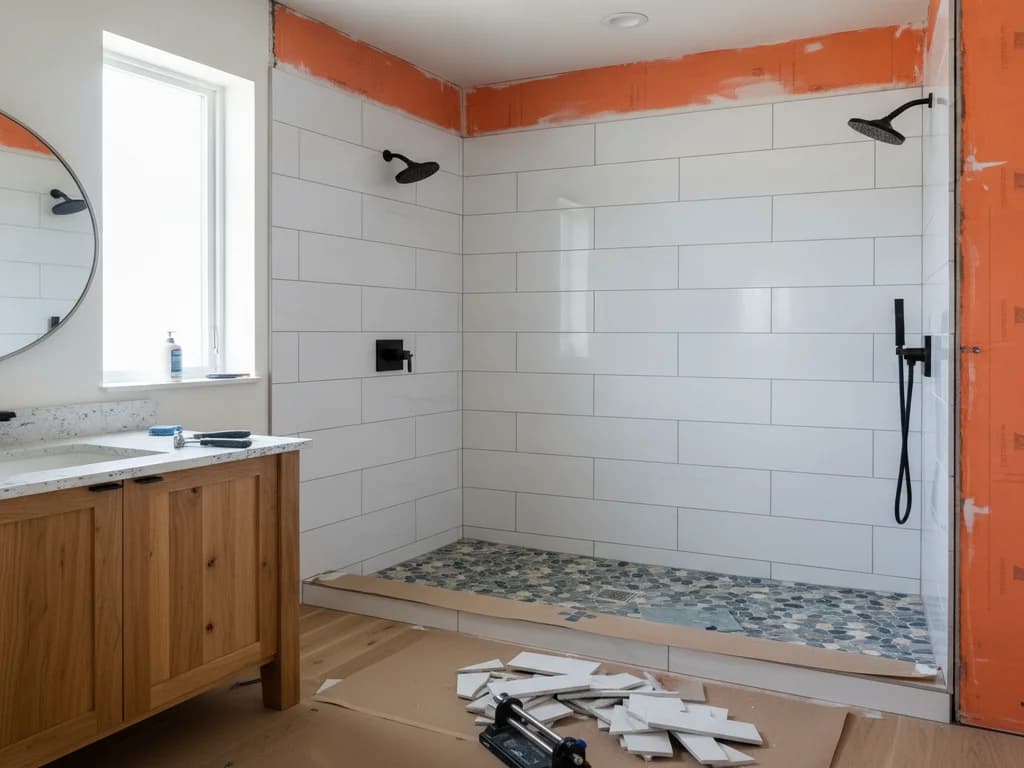
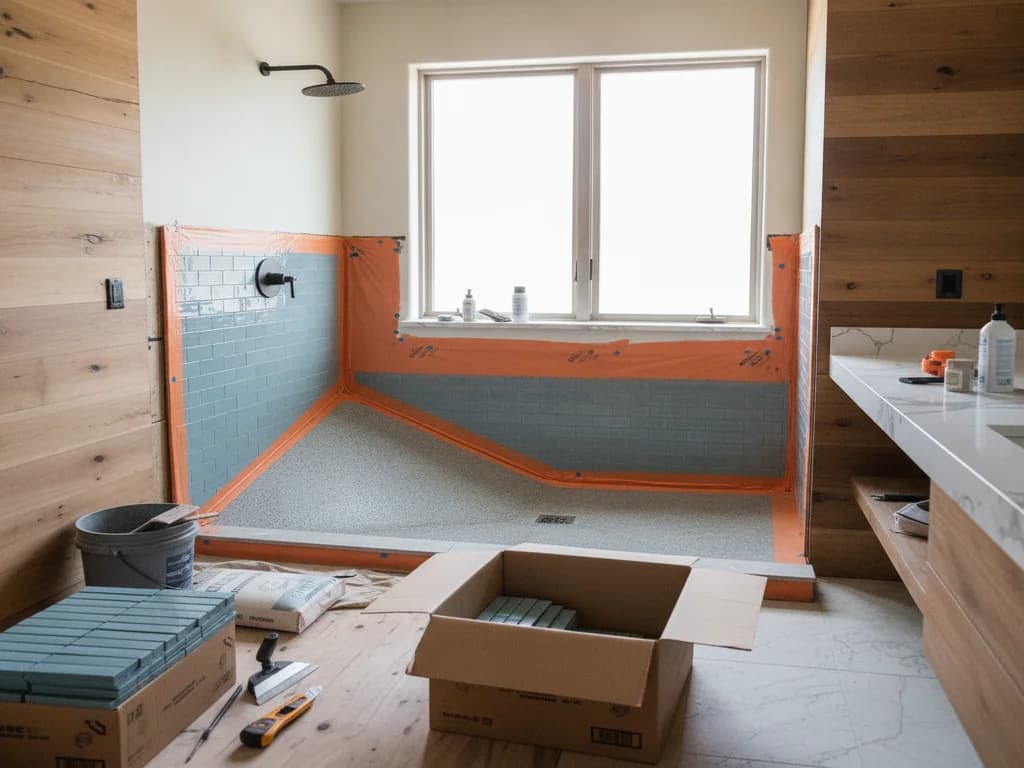
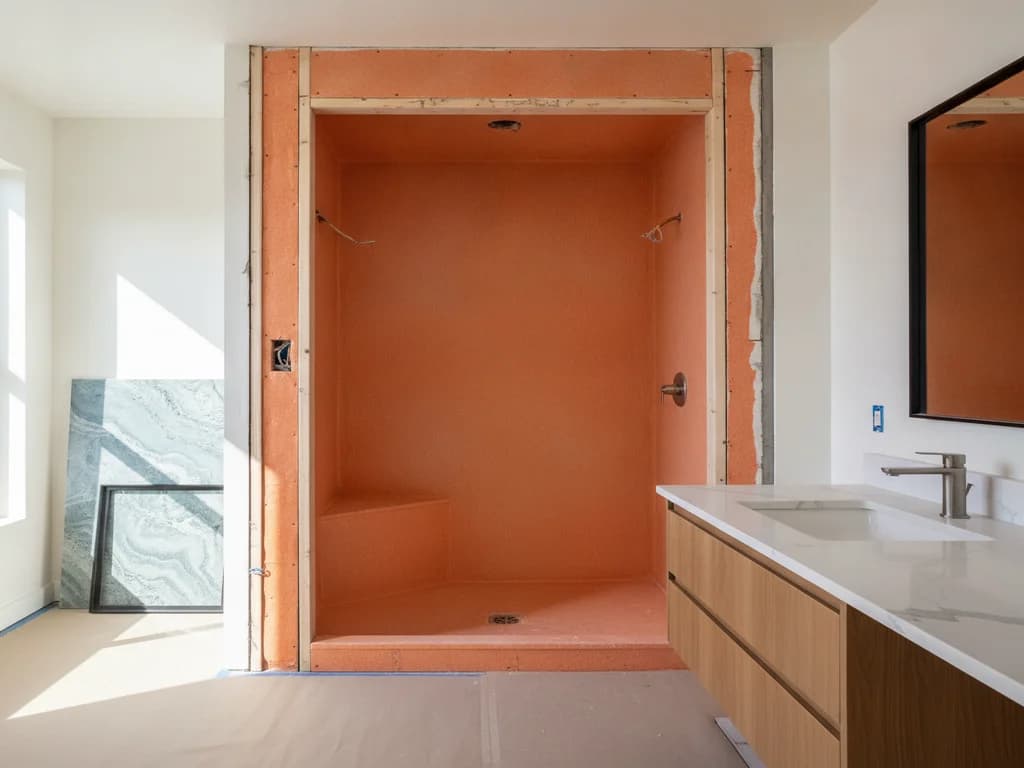
A tiled shower is waterproofed like a bowl, not like a floor with walls around it. The pan liner or foam base turns up the wall several inches, and the wall waterproofing — sheet membrane, liquid membrane, or coated backer board — laps down over that upturn so water always sheds inward toward the drain. Industry methods from the Tile Council of North America and systems like Schluter are built around that overlap.
That overlap is exactly where a pan-only replacement falls apart. To pull the pan, you have to break its connection to the wall waterproofing, and that connection lives behind the bottom course or two of wall tile. There is no seam to unzip — the assembly was built wet-over-wet and cured as one unit.
So the honest framing is not "can the tile survive the demolition" but "can the waterproofing be rebuilt correctly afterward." Even when a careful demo saves most of the wall tile, tying a new pan membrane into an old, cut-open wall membrane creates a splice at the wettest point in the whole bathroom.
When the answer is yes: the surface-set exceptions
Some showers genuinely allow a pan-only swap, and they share one trait: the base was set against the walls, not woven into them.
The clearest case is an acrylic or composite pan paired with wall panels or a surround. The panels typically land on the pan flange with a sealant joint, so the pan can be cut free, lifted out, and a matching-footprint replacement set in its place. This is common in builder-grade Treasure Valley showers from the 2000s, where a cracked or flexing acrylic base is the usual complaint — we cover that scenario in replacing an acrylic shower.
The second case is a surface-set pan under wall tile that starts above the pan flange rather than behind it. If the tile stops at a caulked joint on top of the flange, a pro can sometimes free the pan without disturbing the field — though matching the new pan height and flange profile to the existing tile line is the make-or-break detail.
Even in these yes cases, footprint matters. The replacement pan needs the same drain location and the same or slightly larger footprint; a smaller pan leaves an unwaterproofed gap no trim piece can honestly fix.
| Shower construction | Pan-only swap? | Why |
|---|---|---|
| Acrylic pan + wall panels/surround | Usually yes | Panels sit on the pan flange with a sealant joint — separable |
| Acrylic pan + tile starting above flange | Sometimes | Depends on matching flange profile and tile line height |
| Mortar-bed pan + tiled walls | No | Wall membrane laps over the pan liner behind the tile |
| Foam pan system (Schluter/wedi) + tile | No | Pan and wall waterproofing are bonded into one envelope |
| Tiled pan with cracked floor tile only | No | Cracks usually mean the bed or membrane below has failed |
When the answer is no — and why forcing it backfires
If your shower floor is tile over a mortar bed or a foam pan, treat the pan and the lower walls as one project. Demolishing the bed transmits force into the wall tile above it, and even tile that survives visually has often lost bond behind the scenes.
The bigger problem is the splice. A new pan membrane has to connect to something on the walls, and old, cut-open waterproofing is a poor partner — different materials, unknown condition, and a joint you cannot test until it leaks. The full rebuild sequence, done right, is covered in replacing a shower pan and replacing shower waterproofing.
There is also a cost-logic trap. National guides like HomeAdvisor put shower pan replacement in the low thousands installed, while a partial-tile patch job saves less than it appears once flange matching, tile sourcing, and warranty-free splices are priced in. Paying for demolition twice — pan now, walls in two years when the splice fails — is the expensive path dressed up as the cheap one.
A leaking pan under good-looking tile is still a failed pan
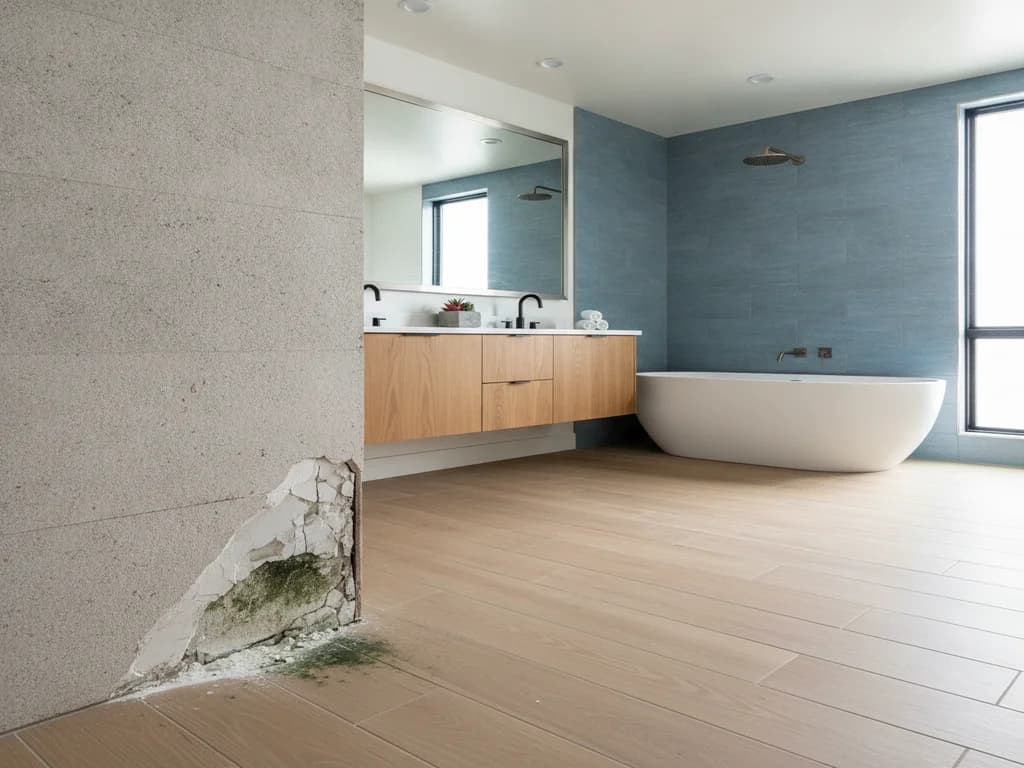
Water stains on the ceiling below, a spongy shower floor, or musty smell mean the membrane under the tile has failed — and a membrane cannot be patched from above by regrouting or caulking. Sealing the surface traps the moisture and lets the subfloor damage keep progressing out of sight.
What a professional checks before quoting
The first question a contractor answers on site is what kind of pan you actually have. A rubber-sounding tap and slight give suggests acrylic; a rigid, stone-cold floor suggests a mortar bed; visible large-format floor tile with a center or linear drain usually means a built pan.
Second is how the walls meet the base. A flexible caulk joint where wall panels land on a flange reads very differently from grouted tile dying into a tiled floor. That single joint usually decides whether a pan-only swap is on the table.
Third is what the water has already done. A moisture meter on the wall base, a look at the ceiling below, and a probe of any soft spots tell the pro whether this is a fixture swap or a water-damage repair — the warning signs are laid out in signs of bathroom water damage. Hidden damage discovered mid-job is the number-one reason "small" shower repairs grow.
Finally, drain compatibility: the new pan must match the existing drain location and rough-in, or the floor below opens up too. In Boise, moving or altering drain plumbing brings the work under a plumbing permit through City of Boise Planning & Development Services.
The remodel math: when to stop patching
If the walls have to open anyway, the incremental cost of new wall tile while everything is exposed is far lower than a second project later — the tile setter is already there, the waterproofing gets built as one warrantied envelope, and you choose the whole look at once instead of matching discontinued tile.
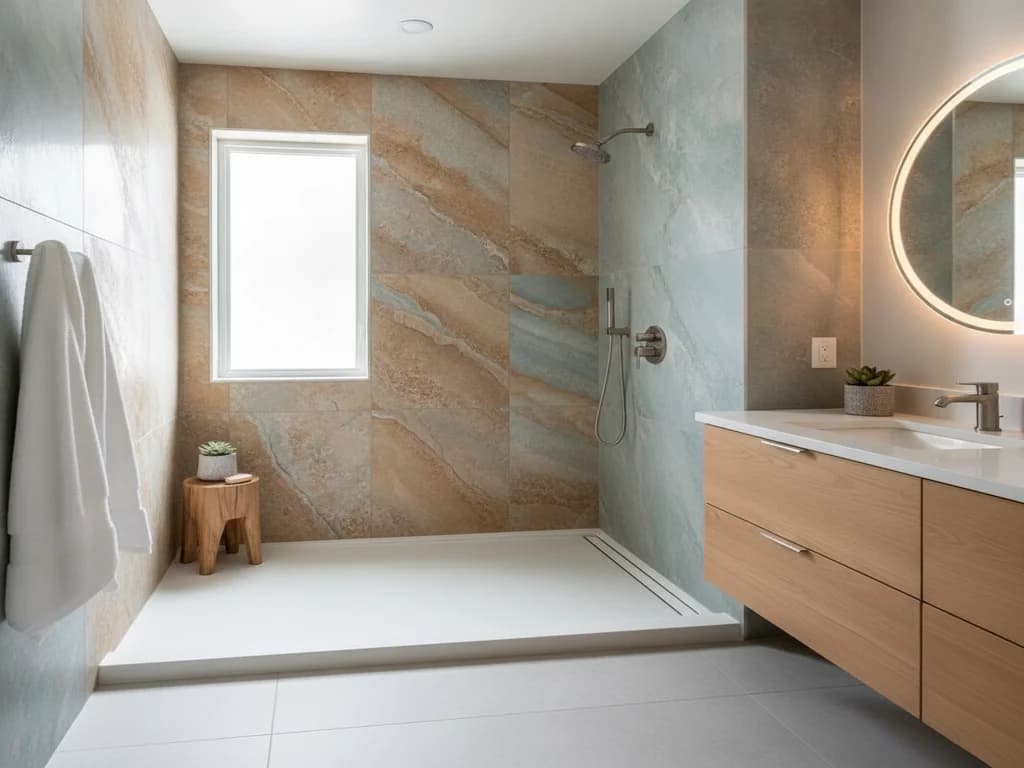
This is also the natural moment to fix what the old shower got wrong: a curbless entry, a linear drain, a bench, or a niche all cost dramatically less during a rebuild than as retrofits. A custom walk-in shower starts from exactly this decision point.
The pan-only swap earns its keep in one scenario: a sound, panel-walled shower with a failed base and no other complaints. Everywhere else, it is worth pricing the honest version of the project before committing to the partial one.
Ready to plan your Boise bathroom?
Licensed & insured · 3-year workmanship warranty
Frequently asked questions
- Can you replace just the shower pan and keep tile walls?
- Only when the wall tile starts above the pan flange and meets it at a caulked joint — and even then, matching the new flange height to the old tile line is the hard part. When wall waterproofing laps behind the tile onto the pan liner, which is how tiled showers are built to TCNA methods, the bottom courses come off with the pan.
- How do I know if my shower pan is acrylic or tile over mortar?
- Tap it and press with your heel. Acrylic and composite pans sound slightly hollow and may flex a little; a mortar-bed pan feels rigid and cold like a sidewalk. Visible tile on the floor means a built pan. Acrylic pans with wall panels are the best candidates for a base-only swap; mortar and foam-system pans are not.
- My shower pan is leaking but the tile looks fine — do I still need a full replacement?
- Usually, yes. Leaks show up below and behind the shower long before the tile surface shows anything, because the failure is in the membrane under the tile. Regrouting or caulking over a membrane failure seals the symptom in, not the water out. A pro will confirm with a moisture reading and a look at the ceiling or crawl space below.
- How much does shower pan replacement cost?
- National cost guides like HomeAdvisor generally put shower pan replacement in the low thousands installed, with tiled, rebuilt pans at the higher end and drop-in acrylic bases at the lower end. The bigger cost driver is what the demo reveals — subfloor damage or a full waterproofing rebuild moves the project into shower-remodel territory.
- Is it cheaper to replace the pan and tile together or separately?
- Together, almost every time the walls are involved. Demolition, waterproofing, and tile setting are the expensive line items, and doing them once for the pan and again later for the walls means paying twice for the same trades. A combined rebuild also gives you one continuous waterproofing system instead of a spliced one.
Sources
- Tile Council of North America (TCNA)
- Schluter Systems
- HomeAdvisor — True Cost Guide
- City of Boise — Planning & Development Services
Claims and figures are drawn from the sources above and provided for general guidance; your project may vary. Photography is illustrative of design concepts. For a fixed price on your specific bathroom, request a free estimate.