
Updated July 17, 2026 · 8 min read
By Boise Bath — bathroom & shower remodeling in Boise & the Treasure Valley
The short answer
Shower valves fall into four mechanism types: pressure-balance valves hold temperature steady by balancing hot and cold pressure; thermostatic valves sense and lock an exact temperature; manual mixing valves simply blend hot and cold by hand; and digital valves control temperature electronically. Diverters — separate 2-way or 3-way controls — route water between spout, showerhead, and body sprays.
Key takeaways
- A shower valve is the mechanism behind the wall that blends hot and cold and sends water to the outlets — its type, not the visible handle, decides how the shower behaves.
- Pressure-balance valves are the code-standard anti-scald choice: they react to pressure swings to keep temperature steady, but they do not let you dial an exact degree.
- Thermostatic valves sense and hold a set temperature and let you run multiple outlets at once, making them the premium pick for large showers and body-spray systems.
- Manual mixing valves simply blend hot and cold by hand with no automatic protection, so most jurisdictions no longer allow them for new shower installations.
- Diverters are a separate function from mixing: a 2-way diverter switches between two outlets and a 3-way splits flow among several, and they can be built into the valve or set on their own.
- The valve type has to be chosen before the wall is tiled because the rough-in body is buried in the framing — the visible trim is swapped easily later, the valve behind it is not.
What a shower valve is — and why the type matters
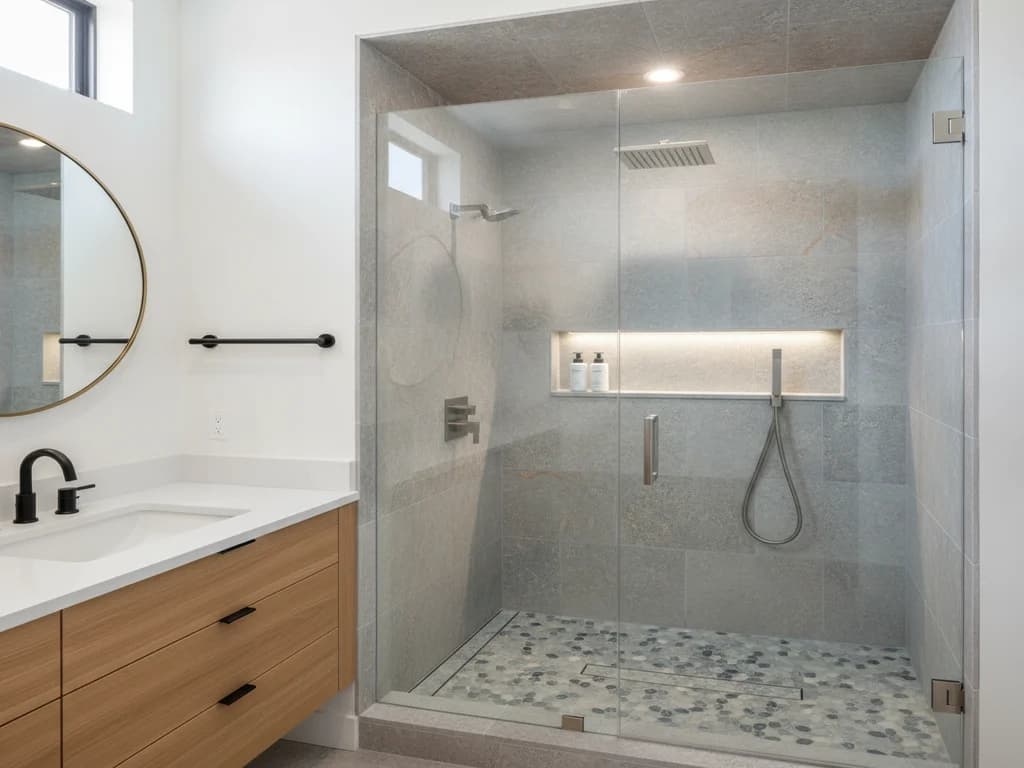
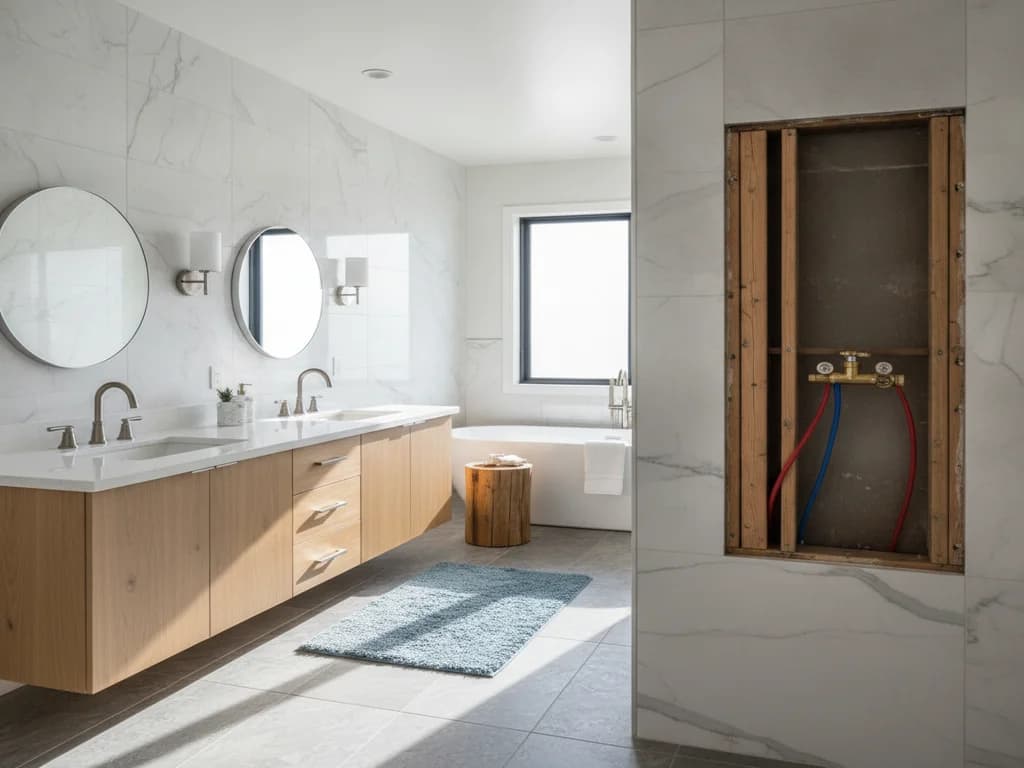
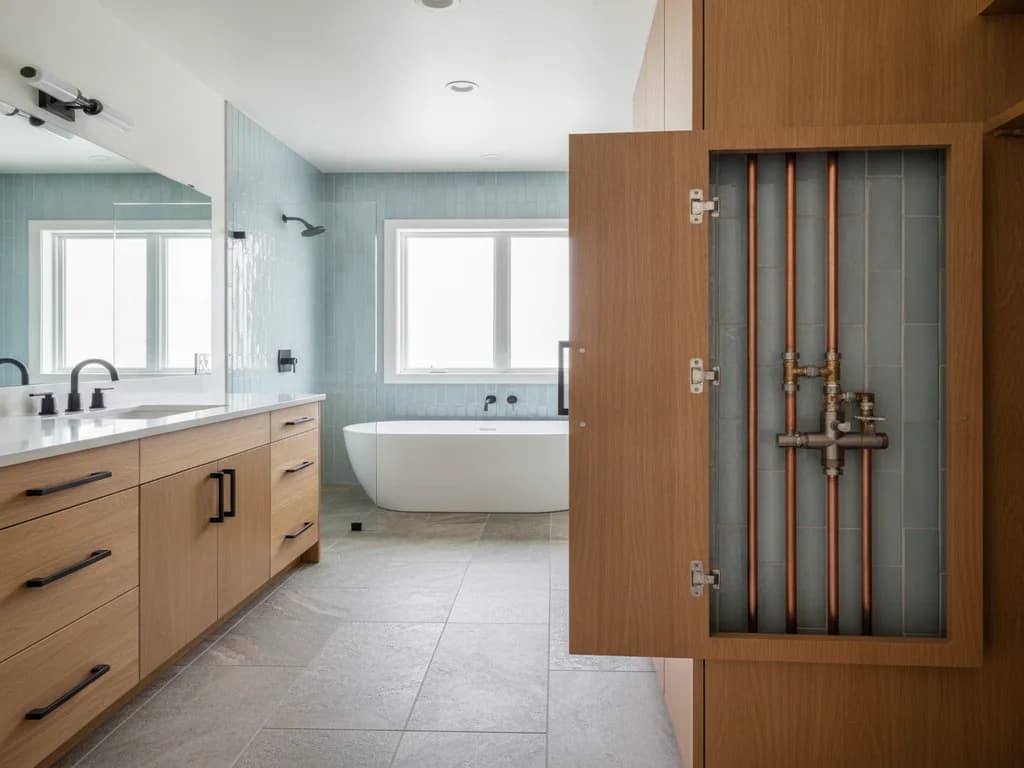
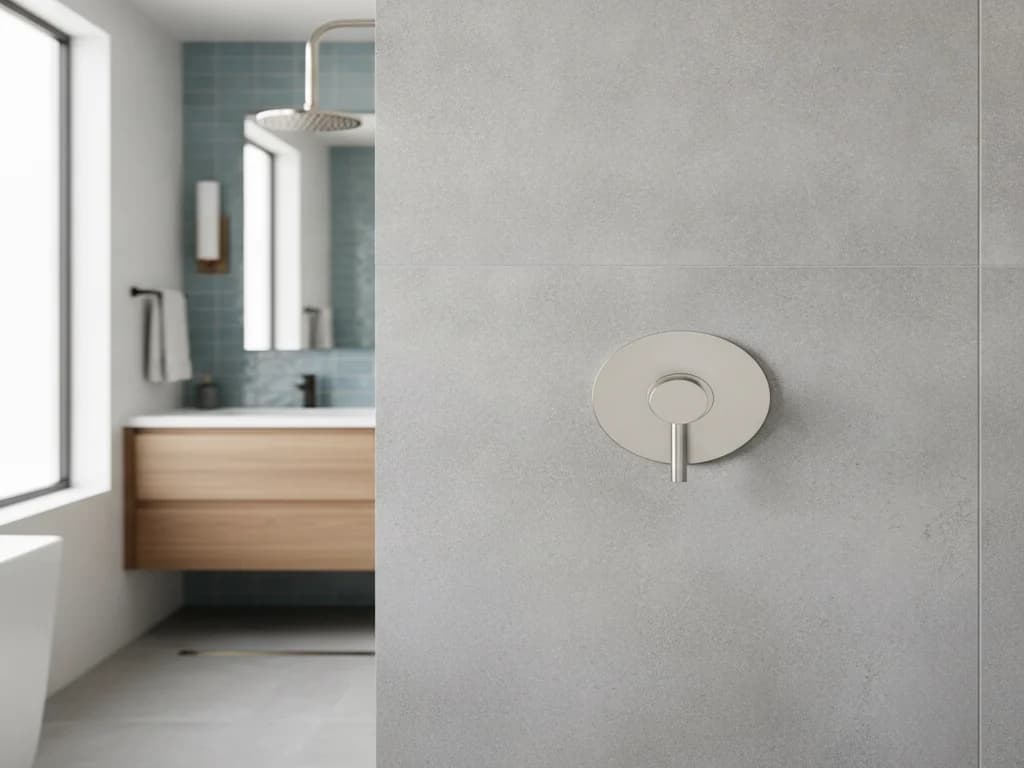
The shower valve is the part you never see: the brass body buried in the wall that blends hot and cold water and sends it to the showerhead, tub spout, or body sprays. The handle and escutcheon on the surface are just the trim; the valve behind them is what actually controls the water. That is why the valve type is the decision that matters most — it sets how the shower behaves, how it protects against scalding, and how many outlets it can run.
There are four valve mechanisms you will actually encounter — pressure-balance, thermostatic, manual mixing, and digital — plus a separate function, the diverter, that routes water between outlets. This guide explains how each one works and its trade-offs so the labels make sense. It is not the pick-one-for-your-project walkthrough; that decision, and the questions to ask, live in how to choose a shower valve. Here we are just mapping the landscape.
One point frames everything below: the valve body is set inside the framing before the wall is tiled, so the type is a build-time decision. The trim you can restyle in an afternoon; the valve behind it is a plumbing job. When an old valve drips or the temperature swings, that is a valve or cartridge issue — what a swap involves is covered in replacing a shower valve.
Pressure-balance valves (anti-scald)
A pressure-balance valve — sometimes called a pressure-balancing or anti-scald valve — is the most common shower valve in American homes. Inside is a piston or diaphragm that reacts instantly to changes in incoming water pressure. When someone flushes a toilet and cold pressure drops, the valve throttles the hot side to match, so the shower does not spike hot. It keeps the ratio of hot to cold steady, which keeps the temperature roughly steady.
The single handle both turns the shower on and sets temperature along its arc of travel. The strength of a pressure-balance valve is exactly that anti-scald protection, which is why plumbing codes generally require this type (or a thermostatic one) on new shower installs — the guardrail against dangerous temperature swings is covered in our anti-scald valves explained deep dive. The limitation is that it holds a ratio, not an exact degree: it protects against a sudden change but will not let you dial in a precise temperature, and running two outlets at full flow can stretch it.
Anti-scald protection is not optional on new installs
Most modern plumbing codes require a pressure-balance or thermostatic valve on new and replacement shower installations, and both carry an adjustable high-temperature limit stop. A pro sets that stop so the water cannot exceed a safe maximum — an especially important detail in homes with children or older adults.
Thermostatic valves
A thermostatic valve takes temperature control a step further. Instead of balancing pressure, it contains a wax or bi-metal element that senses the actual water temperature and continuously adjusts the hot-cold mix to hold the exact degree you set. You dial a number, and the valve targets it regardless of pressure or supply-temperature swings. Most thermostatic units split the controls: one handle sets temperature, a separate handle (or handles) controls volume and which outlet runs.
That separation is the big advantage. Because volume and temperature are independent, a thermostatic valve can supply multiple outlets at once — a rain head plus body sprays, for example — and each can be turned down without changing the temperature. It also lets you start the water warming without standing in a cold blast. Thermostatic valves cost more and are the premium choice for large custom showers and multi-outlet systems, which is why they show up alongside body sprays and rain heads in most luxury builds.
Manual mixing valves
A manual mixing valve is the simplest and oldest type: it blends hot and cold by hand with no automatic compensation. Older two-handle showers with separate hot and cold taps are the classic example, though single-handle manual mixers exist too. You set the blend yourself, and if the pressure or supply temperature changes, the water at the head changes with it — there is nothing inside working to keep it steady.
That lack of protection is why manual mixing valves have largely aged out. Most jurisdictions no longer permit a plain mixing valve for a new or replacement shower precisely because it offers no anti-scald safeguard. You will still find them in older Treasure Valley homes, and a dated two-handle shower is a common tell that the valve predates current code. When one of those showers is remodeled, the valve is typically upgraded to a pressure-balance or thermostatic unit as part of the work.
Digital and electronic valves
A digital, or electronic, shower valve replaces the mechanical handle with a control panel — a wall keypad, a remote, or a phone app — that tells a motorized mixing unit exactly how to blend the water. The mixing box itself usually sits nearby (in a vanity cabinet, the attic, or a wall cavity) rather than directly behind the trim. You press a button and the shower comes to a preset temperature, and many models let each household member store a favorite temperature and flow.
The appeal is precision and convenience: exact temperature to the degree, warm-up modes that pause the water once it is ready, and programmable presets. The trade-offs are cost, the need for power to the mixing unit, and more electronics to maintain. Digital valves are still a smaller slice of the market and are usually a deliberate luxury choice rather than a default. Like every other type, the mixing hardware and its wiring have to be planned into the rough-in before the wall closes.
Diverters: 2-way and 3-way
A diverter is a different job from mixing. Once the valve has blended the water to temperature, the diverter decides where it goes — the tub spout, the showerhead, a hand shower, or body sprays. It is a routing control, not a temperature control, and it can be built into the main valve or set as its own separate handle on the wall.
A 2-way diverter switches between two outlets: the classic example is the lift-rod on a tub spout that sends water up to the showerhead. A 3-way diverter routes among several outlets — say, a rain head, a hand shower, and body jets — either one at a time or, on some designs, more than one at once. On a multi-outlet thermostatic system, the diverter (or a set of volume controls) is what lets you choose the spray. Which outlets you plan for drives how many controls the wall needs, and pairing the valve with the right heads and trim is the focus of how to choose shower fixtures.
The shower valve comparison table
The table below puts the four valve mechanisms side by side — how each controls temperature, whether it offers anti-scald protection, its outlet capacity, and where it fits. Diverters sit in their own row because they are a routing function that pairs with any of the valves above, not a mixing type of their own.
| Valve type | How it controls temperature | Anti-scald | Best fit |
|---|---|---|---|
| Pressure-balance | Balances hot/cold pressure to hold a steady ratio | Yes (code-standard) | Most standard single-head showers |
| Thermostatic | Senses and locks an exact set temperature | Yes | Large / multi-outlet & body-spray showers |
| Manual mixing | Hand-blended; no automatic compensation | No | Legacy only; rarely code-allowed for new work |
| Digital / electronic | Motorized mix to a preset, via keypad or app | Yes | High-end showers wanting presets and precision |
| Diverter (2-/3-way) | Routes water between outlets (not temperature) | N/A | Any shower with multiple outlets or a tub spout |
Mechanism behavior per manufacturer specifications; anti-scald requirements follow adopted plumbing code. A diverter is a routing control that pairs with any mixing valve above.
Rough-in, compatibility, and what a pro checks
Two practical facts sit behind every valve type. First, brand and trim compatibility: the rough-in valve body and the finish trim generally have to come from the same manufacturer’s system, and mixing brands rarely works. That is why a trim upgrade sometimes means the whole valve, and why a pro confirms the trim you want fits the body in the wall before ordering. Many valves also ship as a body-plus-cartridge that a trim kit finishes later.
Second, the anti-scald limit stop: pressure-balance and thermostatic valves have an adjustable high-temperature stop, and a professional sets it so the water cannot exceed a safe maximum — a detail that matters most in homes with kids or older adults. A pro also confirms the valve suits your water pressure and the number of outlets, sets the rough-in at the right depth for the finished tile thickness, and matches a durable cartridge suited to Boise’s hard water. Once you understand the mechanisms here, matching one to your specific project is the job of how to choose a shower valve, and when an existing valve fails, replacing a shower valve covers the swap.
What the process looks like
- 1
Map the shower’s outlets and controls
A professional starts by counting the outlets the shower will run — a single head, or a rain head plus hand shower and body sprays — and how they should be controlled. That plan decides whether a single pressure-balance valve is enough or a thermostatic system with a diverter is needed.
- 2
Select the valve mechanism
For a standard single-head shower, a pressure-balance valve meets code and does the job; for multiple outlets or exact-degree control, a thermostatic valve fits; a digital valve is chosen when presets and precision are the goal. Manual mixing valves are upgraded out on new work.
- 3
Confirm brand and trim compatibility
The pro matches the rough-in valve body to the finish trim from the same manufacturer’s system, since mixing brands rarely works, and confirms the desired trim fits the body before ordering.
- 4
Size the valve to pressure and flow
The valve and any diverter are sized to the home’s water pressure and the combined flow of every outlet, so a multi-head system does not starve when more than one outlet runs.
- 5
Set the rough-in before tile
The valve body is set in the framing at the correct depth for the finished wall and tile thickness — buried too deep or too shallow and the trim will not seat right, and it cannot be adjusted after the wall is closed.
- 6
Adjust the anti-scald limit stop and test
Finally, the professional sets the high-temperature limit stop to a safe maximum, then pressure-tests and runs the valve to confirm steady temperature and correct diverter routing before the wall is sealed.
Ready to plan your Boise bathroom?
Licensed & insured · 3-year workmanship warranty
Frequently asked questions
- What is the difference between a pressure-balance and a thermostatic shower valve?
- A pressure-balance valve holds a steady hot-to-cold ratio by reacting to pressure changes, protecting against scalding but not letting you set an exact degree. A thermostatic valve senses the actual temperature and locks the precise degree you set, and it separates temperature from volume so it can run multiple outlets at once. Thermostatic costs more and suits larger, multi-head showers.
- Which shower valve type does code require?
- Most modern plumbing codes require an anti-scald valve — either a pressure-balance or a thermostatic type — on new and replacement shower installations, and both must have an adjustable high-temperature limit stop. Plain manual mixing valves generally no longer qualify for new work because they offer no automatic protection against sudden temperature swings.
- What does a shower diverter valve do?
- A diverter routes already-mixed water between outlets rather than controlling temperature. A 2-way diverter switches between two outlets, such as sending water from a tub spout up to the showerhead. A 3-way diverter splits flow among several outlets — a rain head, hand shower, or body sprays — one at a time or, on some designs, together. It pairs with any mixing valve.
- Can I replace just the shower trim without changing the valve?
- Often yes, but only within the same manufacturer’s system — the trim kit has to match the rough-in valve body already in the wall, and mixing brands rarely works. If you want trim from a different maker or a different valve type, the valve body behind the wall usually has to change too, which is a larger plumbing job rather than a surface swap.
- Are digital shower valves worth it?
- Digital valves deliver exact-degree temperature, warm-up modes, and stored presets for each user, which some homeowners love. The trade-offs are higher cost, the need for power to the mixing unit, and more electronics to maintain. They are a deliberate luxury choice rather than a default, and the mixing hardware must be planned into the rough-in before the wall is closed.
- Why does my shower change temperature when a toilet flushes?
- That temperature swing usually means the shower runs on an older manual mixing valve with no pressure compensation, so a drop in cold pressure lets the water spike hot. Upgrading to a pressure-balance or thermostatic valve solves it by keeping the mix steady when pressure changes elsewhere in the house — a common reason to update a dated shower valve.
Sources
- Delta Faucet
- Moen
- Kohler
- International Code Council (IRC/IBC)
- ASSE International — Plumbing Product Performance Standards
Claims and figures are drawn from the sources above and provided for general guidance; your project may vary. Photography is illustrative of design concepts. For a fixed price on your specific bathroom, request a free estimate.