Updated July 16, 2026 · 7 min read
By Boise Bath — bathroom & shower remodeling in Boise & the Treasure Valley
The short answer
Decide function first: a pressure-balance valve is the code-accepted baseline that holds temperature steady, while a thermostatic valve adds an exact temperature setting and separate volume control. Then match the port count to your outlets — shower-only, tub-shower, or multi-head — and buy the rough-in body and trim from the same brand family so future updates only swap trim.
Key takeaways
- The rough-in valve body gets tiled into the wall and outlives every trim kit — choose the body first and the finish last.
- Pressure-balance valves hold temperature steady when a toilet flushes; thermostatic valves also let you dial an exact temperature and control volume separately.
- Port count is a function question: two or three ports for a shower-only setup, four for a tub-shower combo, plus a diverter or transfer valve for every extra outlet.
- Each major manufacturer builds a universal rough-in body whose trim kits interchange — staying inside one brand family means a style refresh never reopens the wall.
- Every shower valve sold today must be an anti-scald design under the residential code — the choice is which kind, not whether.
- Multi-outlet showers live or die on flow: verify your supply pressure and water heater capacity before buying a valve that feeds three heads.
Why the valve matters more than the trim
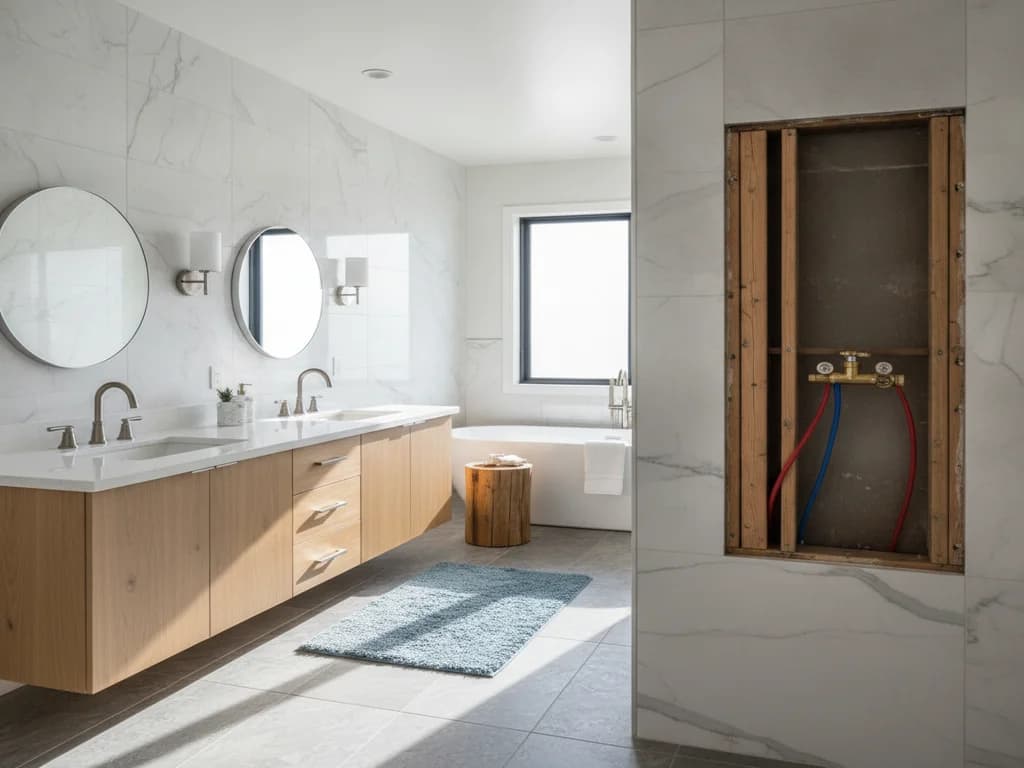
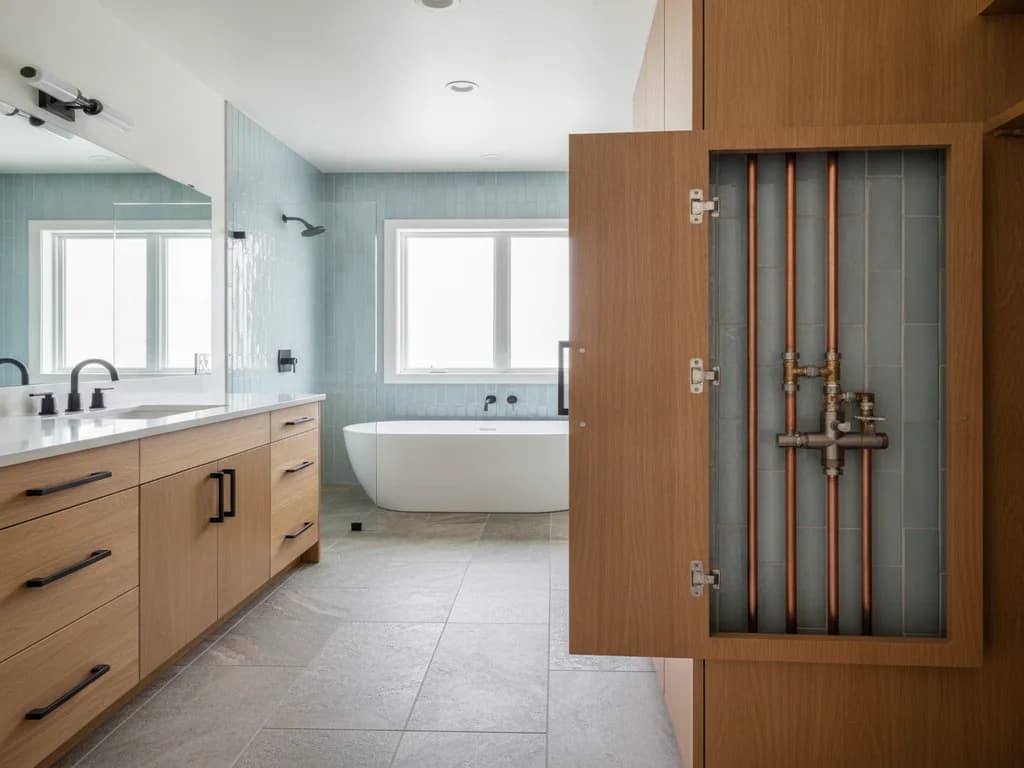
Every shower control is really two products. The rough-in valve body is the brass casting plumbed into the wall — it mixes hot and cold and never sees daylight again once the tile goes on. The trim kit is everything you touch: handle, plate, finish.
Trim is a twenty-minute swap. The valve body is a wall-opening project. That asymmetry should drive the whole decision: pick the body for function and longevity, and treat finish and handle style as the last, lowest-stakes step. Homeowners who shop the other way around — falling for a trim style, then buying whatever body it happens to sit on — are the ones who end up cutting tile out five years later.
If your current valve is the thing failing — dripping, seizing, running lukewarm — the project side of this decision is covered in our guide to replacing a shower valve. This page is about choosing the right one to put in.
Pressure-balance or thermostatic: which do you need?
These are the two anti-scald valve designs allowed in showers, and the choice shapes everything downstream. A pressure-balance valve has one handle that controls temperature and volume together; inside, a sliding spool reacts to pressure changes so a flushing toilet or a starting dishwasher cannot spike the water hot or cold. It is the standard in most homes because it is reliable, affordable, and code-compliant.
A thermostatic valve goes further: a wax-element cartridge holds the water at a temperature you set on a dial, and volume is controlled separately — often per outlet. You can set 102°F, shut the water off to lather up, and turn it back on at exactly 102°F. That separate volume control is also why thermostatic systems dominate multi-head showers.
The honest guidance: for a standard one-head shower or tub-shower combo, pressure-balance does the job. Choose thermostatic when you want an exact repeatable temperature, when small children or older adults use the shower, or when you are running two or more outlets that need independent control.
| Factor | Pressure-balance | Thermostatic |
|---|---|---|
| How it protects | Reacts to pressure swings to hold the hot/cold ratio steady | Holds an exact set temperature regardless of pressure or supply changes |
| Controls | One handle: temperature and volume together | Temperature dial + separate volume control(s) |
| Best for | Standard single-head showers and tub-shower combos | Multi-head showers, exact-temperature preference, added protection for kids and seniors |
| Multiple outlets | Needs a separate diverter; outlets share one volume | Pairs with volume controls for independent outlets |
| Relative cost | Baseline | Higher — valve, trim, and install all cost more |
Both designs satisfy residential anti-scald requirements; the difference is precision and control, not code compliance.
How many ports does your valve need?
Ports are the valve body's plumbing connections, and counting them is simpler than it sounds: two inlets (hot and cold) are a given, so the real question is outlets. A shower-only valve uses one outlet up to the shower head. A tub-shower valve uses two — one up to the head, one down to the tub spout — which is the classic four-port body.
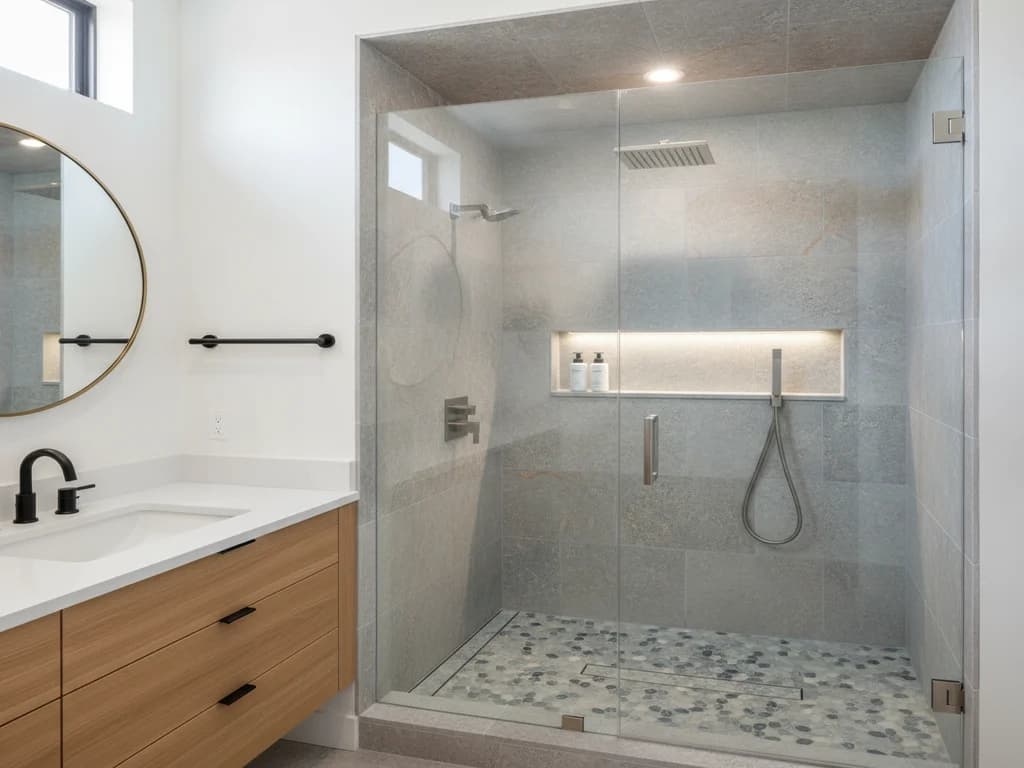
Every outlet beyond that needs a way to route water. A diverter valve switches flow between outlets (head or handheld, not both); a transfer valve can run outlets simultaneously. A shower with a fixed head, a handheld, and body sprays is really a system: a thermostatic mixing valve plus one or more diverter or transfer valves, each needing its own hole in the wall.
Map this before you buy anything. The most common ordering mistake in shower projects is a valve that cannot feed the outlet list the homeowner actually wanted — discovered after the wall is open.
Rough-in bodies and brand families
Here is the industry's best-kept convenience: each major manufacturer builds its residential trims around a shared universal valve body. Pick a body from one brand family and, a decade from now, you can swap to that family's newest trim style — new handle, new plate, new finish — without touching the plumbing.
That makes brand family a bigger decision than any individual model. Choose an established manufacturer with a deep trim catalog and a strong replacement-parts pipeline, because the part you will actually replace over the years is the cartridge — the serviceable heart of the valve. A valve whose cartridge is stocked at every plumbing supply house in the Treasure Valley is worth more than an obscure import that looks identical.
Boise-area water is on the hard side, and hard water is exactly what wears cartridges: mineral scale stiffens the handle and drifts the temperature calibration over time. A brand-family valve turns that from a wall-opening repair into a cartridge swap through the trim plate.
Anti-scald is not optional
The residential code requires every new or replaced shower valve to be a pressure-balance, thermostatic, or combination anti-scald design, per the International Code Council. If your home still has an old two- or three-handle valve, it predates that protection — how these valves work and why the code demands them is covered in our anti-scald valve guide.
Flow rate, pressure, and your water heater
A valve can only deliver what the house supplies. Federal rules cap shower heads at 2.5 gallons per minute each, so a three-outlet shower running simultaneously can demand 6–7 gallons of hot-heavy water per minute — a load that exposes weak supply pressure and undersized water heaters fast.
Check two things before committing to a multi-outlet valve. First, pressure: if your shower already feels weak, adding outlets divides the problem — our article on low shower water pressure covers the usual causes. Second, hot-water capacity: a 40-gallon tank cannot sustain a long multi-head shower, and the math is laid out in our guide to water heater sizing for luxury showers.
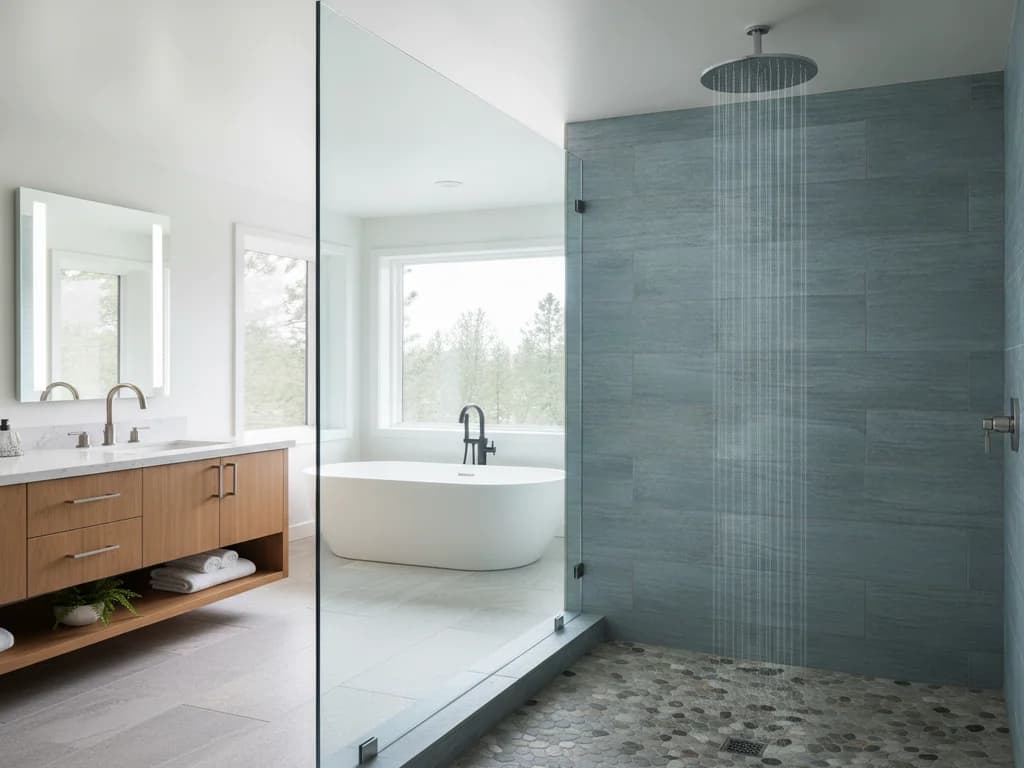
High-flow thermostatic valves are also sold in larger sizes for exactly this reason. If your plan involves body sprays or a rain head plus handheld running together, tell your contractor the full outlet list up front so the valve, supply lines, and heater get sized as one system.
What the install decision looks like
Choosing the valve and choosing the install path happen together, because access drives cost. If the shower wall backs onto a closet or has an access panel, a valve swap may never touch your tile. If not, the valve comes out through the tile face — and whether that is a small repair or a wall redo depends on your tile situation, covered in replacing a shower valve without removing tile.
This is also why valve upgrades fold so naturally into shower remodels: when the wall is already open for new tile or a new pan, upgrading from a basic pressure-balance to a thermostatic system costs only the hardware difference. Doing the same upgrade as a standalone project means paying for wall access twice.
Valve replacement is licensed-plumber territory in every scenario — soldered or press-fit connections inside a wall, done wrong, are a slow leak you will not see until the ceiling below shows it.
What the process looks like
- 1
List every outlet the shower will have
Fixed head only? Head plus handheld? Tub spout? Body sprays? The outlet list determines the port count and whether you need diverter or transfer valves — settle it before looking at a single product page.
- 2
Choose pressure-balance or thermostatic
One outlet and a normal routine: pressure-balance is the proven baseline. Exact repeatable temperature, young kids or older adults, or two-plus outlets with independent control: thermostatic earns its premium.
- 3
Confirm the anti-scald requirement is met
Any valve from a major manufacturer sold for showers today will be an anti-scald design, but verify the spec sheet says pressure-balancing or thermostatic — especially on budget imports. The code background is in our anti-scald valve guide.
- 4
Pick the brand family, then the specific body
Prioritize a manufacturer with a universal rough-in body, a deep trim catalog, and cartridges stocked locally. This single choice determines whether every future style change is a trim swap or a tile demo.
- 5
Verify flow: supply pressure and hot-water capacity
Multi-outlet plans need a high-flow valve, adequate pressure, and a water heater sized for the combined demand. A pro can measure your static pressure and do the recovery math before you commit.
- 6
Choose trim style and finish last
With the body locked in, the trim decision is purely aesthetic — and reversible. Match the finish to your other fixtures and buy the trim kit made for your exact body.
- 7
Plan the install path with your contractor
Rear access, tile-face access, or fold it into a remodel — the right answer depends on your walls. A licensed plumber sets the valve at the correct depth for your finished wall thickness, which is the detail DIY installs most often get wrong.
Ready to plan your Boise bathroom?
Licensed & insured · 3-year workmanship warranty
Frequently asked questions
- What is the difference between a pressure-balance and a thermostatic shower valve?
- A pressure-balance valve holds the hot-to-cold ratio steady when supply pressure changes — so a flushing toilet cannot scald you — using one handle for temperature and volume together. A thermostatic valve holds an exact temperature you set on a dial and controls volume separately, which allows independent control of multiple outlets. Both satisfy anti-scald code; thermostatic adds precision at a higher price.
- Can I put new trim on my existing shower valve?
- Often, yes — if the trim and body are from the same brand family. Major manufacturers keep trim kits compatible with their universal rough-in bodies across decades of styles. Identify the body first (the cartridge usually carries the maker's name), then shop that brand's current trims. If the body is an off-brand or a discontinued design, a trim update may become a valve replacement.
- Do I need a thermostatic valve for a rain head and handheld shower?
- Not strictly — a pressure-balance valve with a diverter can alternate between two outlets. But if you want both running at once, or independent on/off for each, a thermostatic valve paired with a volume control or transfer valve is the right architecture. Running two outlets simultaneously also raises the flow question: confirm your pressure and water heater can keep up.
- How many ports should my shower valve have?
- Count two inlets plus one outlet per destination. A shower-only setup uses a body with the tub port unused or a dedicated shower-only body. A tub-shower combo needs the four-port body — hot, cold, shower riser, tub spout. Every outlet beyond the first (handheld, body sprays) routes through an added diverter or transfer valve with its own wall penetration.
- Does hard water affect which shower valve I should buy?
- It affects how you should buy. Treasure Valley water carries enough dissolved mineral to scale up cartridges over the years — stiff handles and drifting temperatures are the symptoms. Any quality valve will experience this; the difference is serviceability. Choose a brand whose cartridges are cheap, locally stocked, and replaceable through the trim plate, and hard water becomes a ten-minute maintenance item.
- How much does a shower valve cost?
- The hardware spread is wide: basic pressure-balance valve-and-trim packages start around $100–$300, while thermostatic systems with volume controls commonly run $400–$1,200 or more, per HomeAdvisor cost data. Installation is the larger variable because it depends on wall access. The full project economics — including when tile work enters the picture — are in our shower valve replacement guide.
Sources
Claims and figures are drawn from the sources above and provided for general guidance; your project may vary. Photography is illustrative of design concepts. For a fixed price on your specific bathroom, request a free estimate.