
Updated July 16, 2026 · 7 min read
By Boise Bath — bathroom & shower remodeling in Boise & the Treasure Valley
The short answer
Low shower pressure in one shower usually means a mineral-clogged showerhead or a failing pressure-balancing valve cartridge; low pressure everywhere points to a partially closed valve, a failing pressure regulator, or corroded galvanized pipes. Hard water drives the most common case — soak or replace the head first, then have the valve checked.
Key takeaways
- The first diagnostic question does most of the work: weak in one shower means a fixture problem; weak everywhere means a supply problem.
- A mineral-clogged showerhead is the most common cause in the Treasure Valley — hard water scales the nozzles shut over a few years.
- A shower that runs weak and struggles to hold temperature points to the pressure-balancing valve cartridge, not the head.
- Sudden pressure loss after other plumbing work usually traces to a partially closed shutoff or debris knocked loose into the valve.
- Whole-house low pressure in homes with original steel pipes is usually corrosion narrowing the lines from the inside — a repipe conversation, not a fixture fix.
- Low flow and low pressure are different problems: a healthy modern head delivers a strong shower at 1.8–2.5 gallons per minute, per EPA WaterSense.
Start with one question: this shower, or the whole house?
Every cause of a weak shower lives on one side of a single dividing line. Turn on the sink faucet in the same bathroom, then one in the kitchen. If they run strong and only the shower is weak, the problem is inside the shower — the head or the valve. If everything runs weak, the problem is upstream — a valve, a regulator, or the pipes themselves.
That single check sorts the list below. Causes 1 and 2 are shower-side and account for most cases; causes 3 and 4 are house-side and account for most of the rest. A second useful observation: did the pressure fade gradually over months, or drop suddenly? Gradual points to mineral buildup or corrosion; sudden points to a valve, a cartridge, or debris.
Cause 1: A mineral-clogged showerhead
The most common cause of a weak shower is the simplest: the head itself is scaled shut. Water across much of the Treasure Valley is moderately hard — dissolved calcium and magnesium, the minerals the USGS uses to define hardness — and every gallon that passes through the head leaves a trace behind. Over a few years, those traces close the nozzles like plaque in an artery. The signature is unmistakable: some nozzles spraying sideways, some dribbling, some dead, and white crust visible on the face.
This is the one shower-pressure fix that is genuinely yours to do: unscrew the head and soak it in white vinegar for a few hours (or bag the vinegar over it in place), then brush the nozzles clear. If the head is old or the scale keeps returning within months, replacement is cheap and often the better spend — our roundup of the best shower heads for hard water focuses on flexible-nozzle designs that shed scale instead of trapping it.
The deeper fix is treating the water itself. If every aerator, kettle, and glass shower door in the house wears the same white film, the showerhead is a symptom — the full picture is in our guide to hard water and your Boise bathroom.
Cause 2: A failing shower valve or cartridge
Behind the shower handle sits a pressure-balancing valve — required by modern plumbing codes to prevent scald injuries when a toilet flush steals cold water mid-shower. Inside it, a small piston or spool shifts constantly to keep the hot-cold mix stable. When that mechanism scales up or wears out, it starts choking flow instead of balancing it.
The telltale cluster: pressure that dropped in this shower only, a handle that has gotten stiff or gritty to turn, temperature that wanders or takes forever to dial in, and — the classic — weak hot flow but decent cold, or vice versa. Debris is the other trigger: after any plumbing work or a water-main disturbance, loosened sediment lands in the valve first, and a shower that was fine yesterday runs weak today.
Cartridge and valve work is professional territory — the valve is soldered or fitted into the wall, and forcing a seized cartridge can damage the valve body and turn a service call into open-wall work. A plumber can often restore full flow by replacing the cartridge alone; if the valve body itself is old or failing, the job becomes the one covered in our guide to replacing a shower valve. If you are choosing a new one, the trade-offs are in how to choose a shower valve.
Weak pressure plus wandering temperature = the valve
A clogged head cannot change your water temperature. If low pressure arrives together with temperature swings, a stiff handle, or hot and cold flowing unevenly, skip the vinegar soak — the pressure-balancing cartridge is failing, and it is a plumber-level fix.
Cause 3: A valve or regulator upstream
When the whole house runs weak, start with the boring explanations. The main shutoff valve — at the meter or where the line enters the house — may be partially closed; gate-style valves in older homes can also fail internally, drooping into the flow. If pressure dropped right after any plumbing or utility work, a not-fully-reopened valve is the leading suspect.
The other house-side device is the pressure-reducing valve (PRV), a bell-shaped regulator on the main line that steps street pressure down to a safe household level. PRVs wear out — typical service life runs roughly 10–15 years — and a failing one usually fails toward too little pressure. The pattern: gradual whole-house decline in a home that has a PRV, sometimes with pressure that surges and sags noticeably.
Diagnosis here is quick for a plumber: a gauge on an outdoor spigot reads the actual delivered pressure in minutes (healthy household range is roughly 40–80 psi, per This Old House), and the reading separates a regulator problem from the pipe problem below.
Cause 4: Corroded galvanized pipes
This is the cause nobody wants, and in homes built before roughly the 1970s it is common: galvanized steel supply pipes corrode from the inside, and decades of rust narrow a half-inch line to a fraction of its original bore. The result is pressure that has declined slowly for years, gets dramatically worse when two fixtures run at once, and often hits hot lines hardest — hot water accelerates the corrosion.
The confirming signs: brown or rusty water after time away, visibly corroded steel pipe at the water heater or in the crawl space, and weak flow that no fixture-level fix has touched. No cartridge or showerhead can solve this; the restriction is the pipe itself, running through the walls.
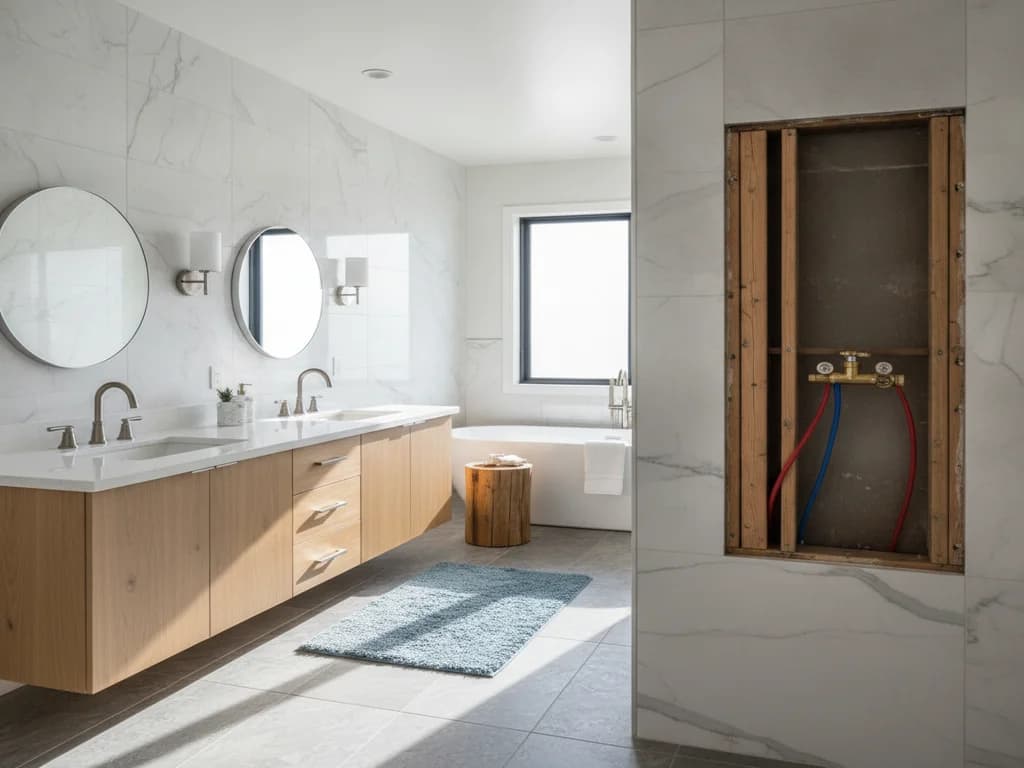
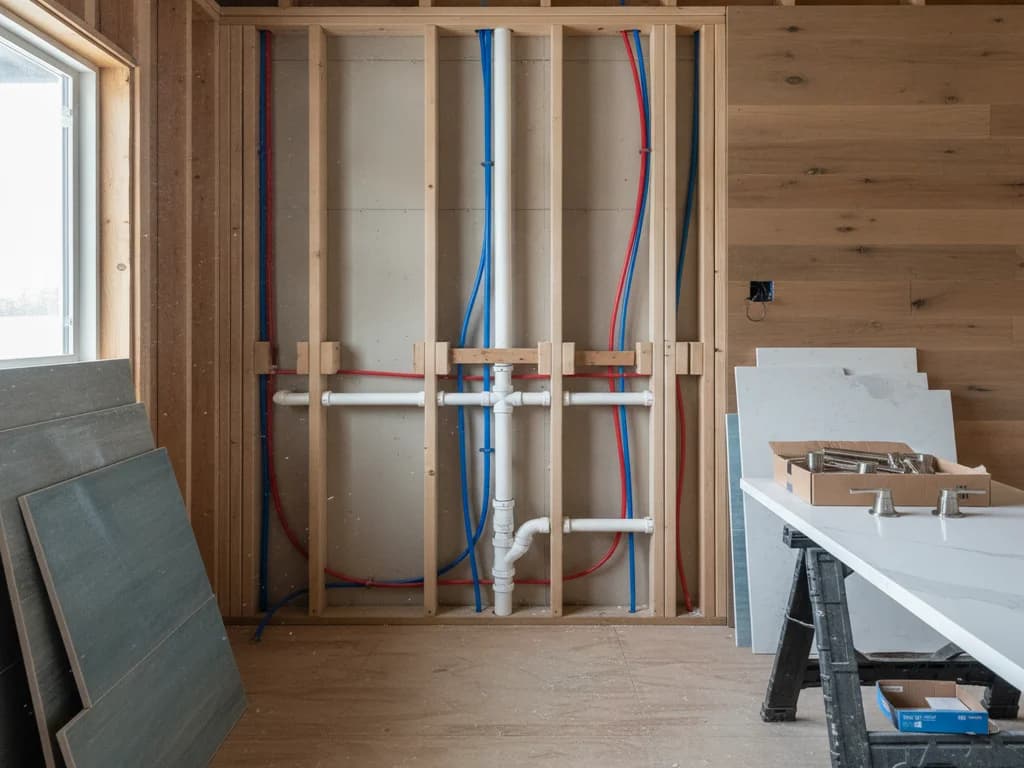
The honest answer is a repipe — replacing the supply lines with PEX or copper — and it is a significant project, typically running several thousand dollars to five figures for a whole house depending on size and access, per HomeAdvisor’s cost data. It is also the textbook case for folding plumbing into a remodel: if a bathroom renovation is in your plans, the walls are already open, and the incremental cost of new supply lines drops sharply. Our guide to replacing bathroom plumbing covers what that scope looks like.
Low pressure vs. low flow: the restrictor question
One more possibility deserves an honest note: the shower may be working exactly as designed. Federal law caps showerheads at 2.5 gallons per minute, and EPA WaterSense-labeled heads flow 2.0 gpm or less. A well-engineered modern head feels strong at those rates — but a cheap one can feel feeble at the same flow, because feel comes from nozzle design and velocity, not volume alone.
If a brand-new head feels weak while the old one was fine, the head’s design is the likely culprit — not your plumbing. Choose a better-engineered model rather than removing the flow restrictor: the restrictor is there for federal compliance, and pulling it masks design problems while spiking your water-heating bill.
And if the weak shower is one of several reasons the bathroom is on your renovation list, pressure problems are worth solving properly in the same scope — a new valve, new supply lines where needed, and a head chosen for your water. A shower rebuilt around those fixes is covered under our tub-to-shower conversion services.
Triage: matching the symptom to the fix
Rank your own symptoms against the table. The pattern — one fixture or all, sudden or gradual, pressure alone or pressure plus temperature — points at the cause with good reliability.
| Cause | Scope | Onset | The giveaway | The fix |
|---|---|---|---|---|
| Scaled showerhead | One shower | Gradual | Crusted, misfiring nozzles | Soak or replace the head |
| Valve / cartridge failure | One shower | Either | Temperature swings, stiff handle | Pro cartridge or valve replacement |
| Shutoff or PRV problem | Whole house | Sudden or gradual | Follows plumbing work, or PRV 10+ yrs old | Pro valve check, gauge test |
| Galvanized corrosion | Whole house | Years | Rusty water, pre-1970s steel pipe | Repipe — ideally within a remodel |
Ready to plan your Boise bathroom?
Licensed & insured · 3-year workmanship warranty
Frequently asked questions
- Why is water pressure low in only one shower?
- A single weak shower means the restriction is local: either the showerhead is scaled shut with hard-water minerals or the pressure-balancing valve cartridge behind the handle is failing. Test by removing the head — strong flow from the bare pipe clears the valve and convicts the head. Weak flow from the bare arm, or pressure problems paired with temperature swings, point to the valve.
- Why did my shower pressure suddenly drop?
- Sudden loss usually means a valve event, not buildup. Common triggers: debris knocked into the shower valve after plumbing or utility work, a shutoff valve left partially closed, or a pressure-balancing cartridge that seized. Check whether the whole house is affected first. Gradual decline over months points instead to mineral scale or pipe corrosion.
- Can hard water cause low shower pressure?
- Yes — it is the leading cause in the Treasure Valley. Dissolved calcium and magnesium precipitate out as scale, closing showerhead nozzles first and eventually stiffening valve cartridges. A vinegar soak restores a scaled head temporarily; a swap to a flexible-nozzle head slows recurrence; and whole-home softening addresses the source. Scale inside the valve itself needs a plumber.
- How much does it cost to fix low shower pressure?
- It spans the full range because the causes do. A replacement showerhead runs roughly $20–$100; professional cartridge replacement typically lands in the low-to-mid hundreds; replacing the valve body inside the wall costs more, per HomeAdvisor’s cost data; and a whole-home repipe for corroded galvanized lines runs into the thousands. Diagnosis first — most cases resolve at the cheap end.
- Why is only the hot water pressure low in my shower?
- One-side weakness almost always means the valve or the hot supply line. Pressure-balancing cartridges can fail on one side, choking hot flow while cold runs fine. In older homes, hot galvanized lines corrode faster than cold ones, and sediment in the water heater can also restrict its outlet. A plumber can isolate which by testing hot flow at other fixtures.
- Does removing the flow restrictor fix a weak shower?
- It usually masks the wrong problem. Restrictors exist because federal law caps showerheads at 2.5 gallons per minute — a well-designed head feels strong within that limit. If flow is weak with the restrictor in place, the real cause is scale, the valve, or supply pressure, and removing the restrictor will not fix any of them. Fix the cause; keep the compliant head.
Sources
- EPA WaterSense
- USGS Water Science School — Hardness of Water
- HomeAdvisor — True Cost Guide
- This Old House — Bathrooms
Claims and figures are drawn from the sources above and provided for general guidance; your project may vary. Photography is illustrative of design concepts. For a fixed price on your specific bathroom, request a free estimate.