Updated July 16, 2026 · 7 min read
By Boise Bath — bathroom & shower remodeling in Boise & the Treasure Valley
The short answer
A shower leaking behind the wall shows up indirectly: ceiling stains below, a musty smell, bubbling paint on the adjacent wall, hollow-sounding tile, or a warm spot (a hot-side supply leak). A water-meter check — every fixture off, meter still creeping — confirms a pressurized leak; leaks that appear only after showers point to the enclosure, drain, or pan.
Key takeaways
- Shower leaks almost never show up inside the shower — the first evidence is usually a stain, smell, or texture change in an adjacent room or the ceiling below.
- The water-meter test splits every shower leak into two families: pressurized supply leaks (meter moves with everything off) and use-only leaks (enclosure, drain, or pan).
- A warm spot on a wall or floor near the shower is a hot-side supply leak — it runs 24/7 and is the one symptom that should not wait.
- Most shower leaks start at the maintained joints — grout, caulk, and door seals — not at the plumbing, which is why the cheap fixes come first in a good diagnosis.
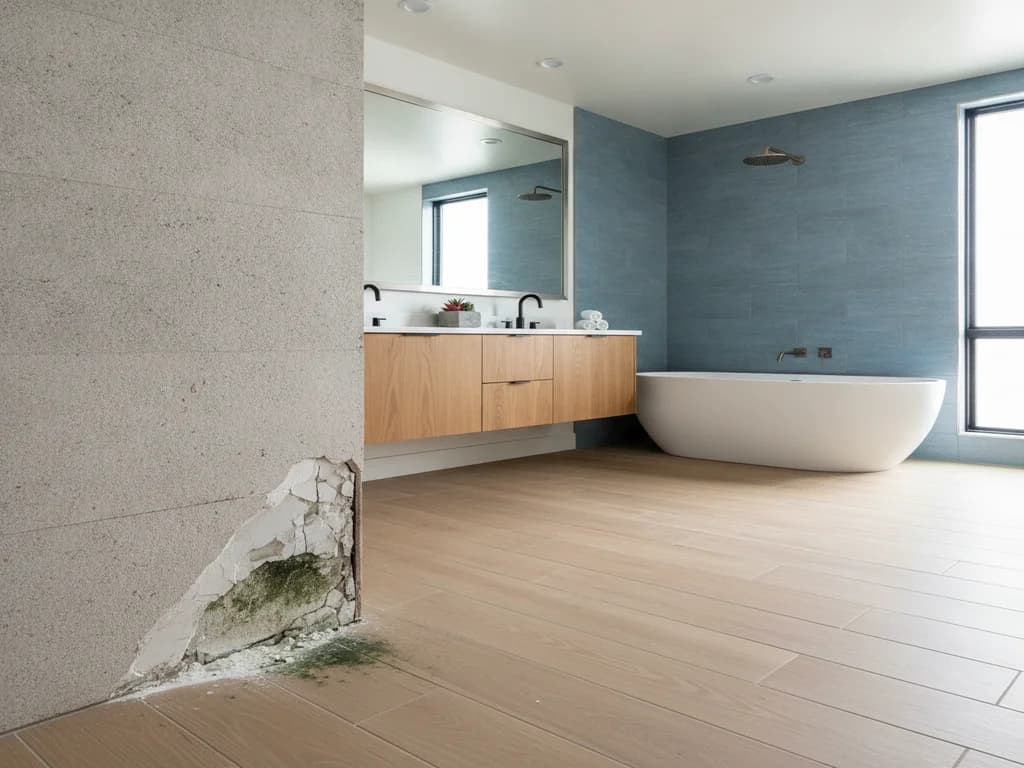
- The EPA notes mold can establish on damp material within 24–48 hours, and a wall cavity never dries on its own schedule — a musty smell is evidence, not an annoyance.
- A leak diagnosis is only half the job: the water path decides whether you need a $300 recaulk or a rebuilt shower.
The signs, ranked from obvious to easy to miss
A shower leak is a hidden-water problem: the enclosure is designed to keep water you can see inside it, so when water escapes, it escapes into places you cannot see — the wall cavity, the floor framing, the ceiling below. The evidence shows up at the edges.
Watch for these, roughly in the order homeowners actually notice them:
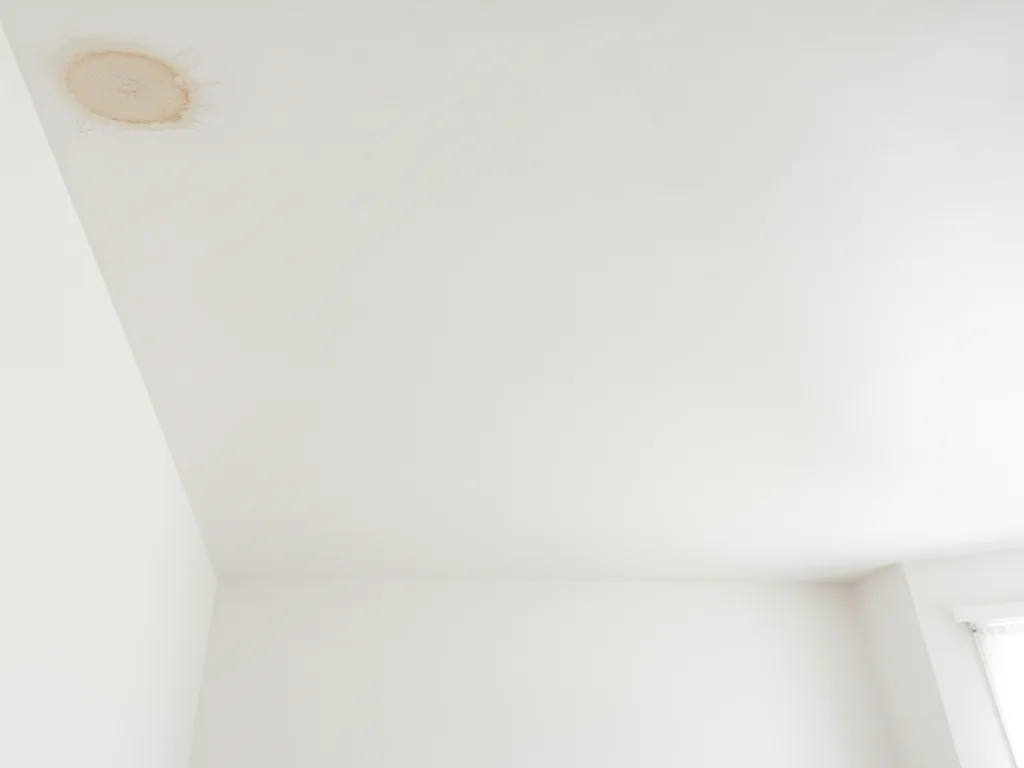
- A yellow-brown stain on the ceiling of the room below, often ringed like a coffee stain — the classic upstairs-shower symptom.
- A musty, earthy smell in or near the bathroom that cleaning does not remove. Smell is often the first sign, months before a stain.
- Bubbling, peeling, or chalky paint on the wall shared with the shower — moisture migrating through the drywall.
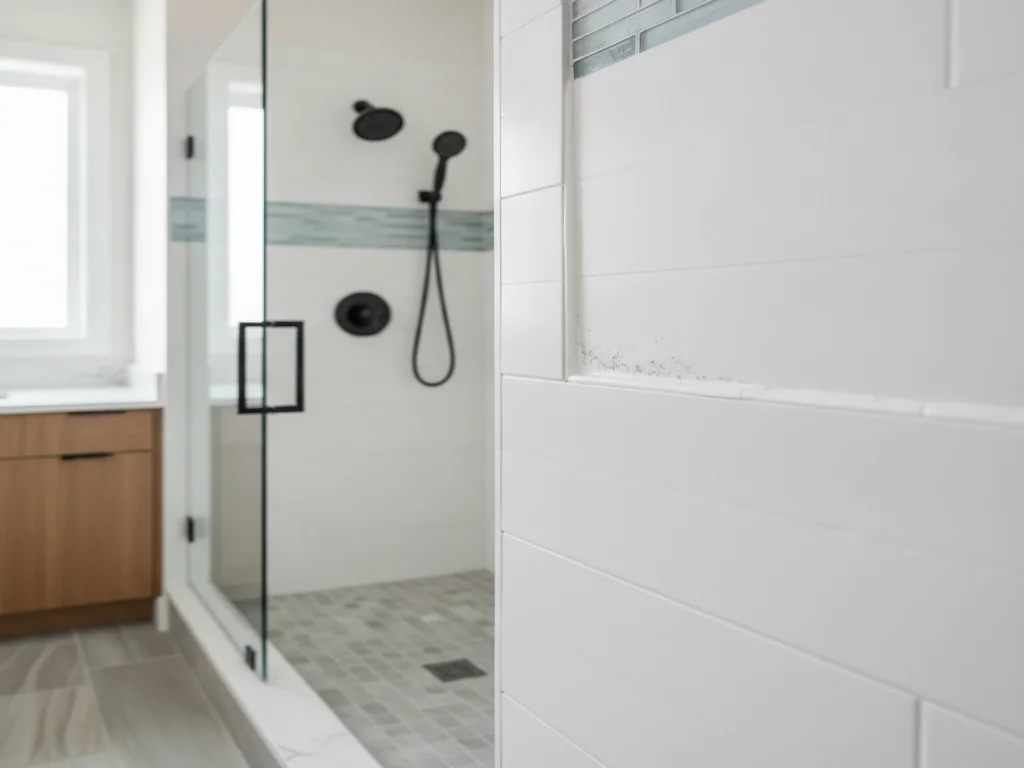
- Tile that sounds hollow when tapped, or grout lines that keep cracking and darkening in the same spot no matter how often they are repaired.
- Baseboard or trim near the shower that is swelling, separating, or showing dark edges.
- A warm spot on the wall or floor near the shower — this one means a hot-water supply leak, and it is running around the clock.
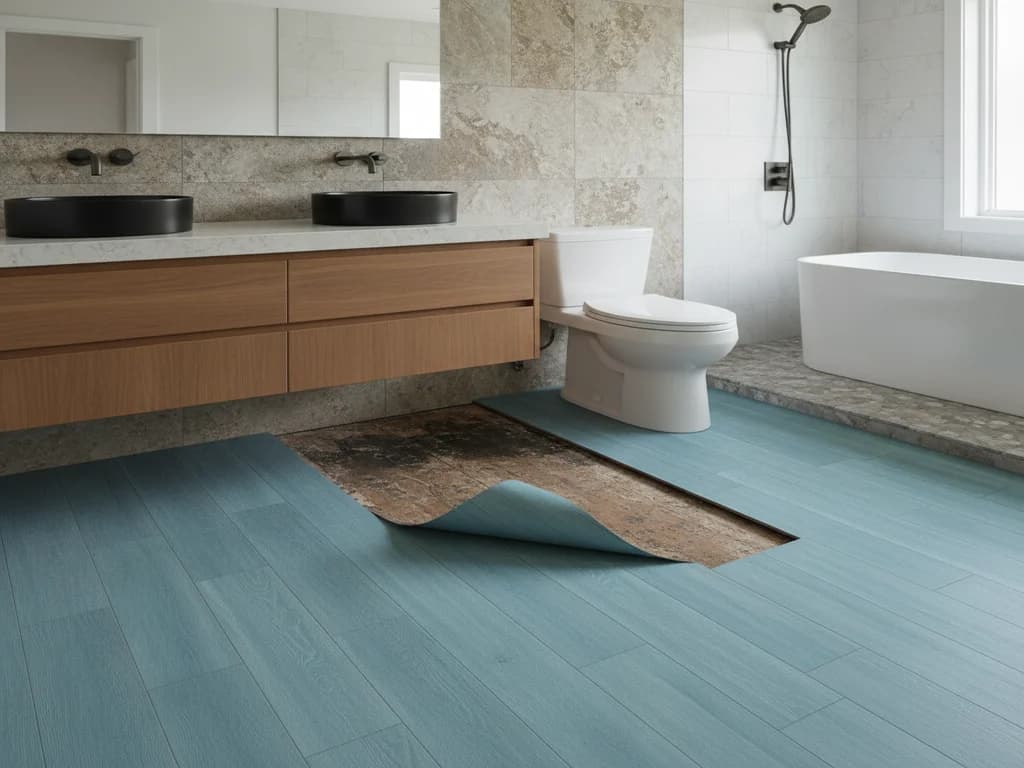
- A floor that feels slightly soft or springy right at the shower entry.
Where shower leaks actually start, ranked by likelihood
Not all shower leaks are plumbing leaks. In practice, the water escapes from a short list of places, and the cheap, maintainable joints fail far more often than the pipes.
Most likely: failed grout and caulk. The change-of-plane joints — wall-to-wall corners, wall-to-floor, tile-to-tub — move with the seasons, and rigid grout in a moving joint cracks. Every shower spray then pushes a little water through. Next: door and enclosure seals. Worn door sweeps, gaps at the frame, and curtains that do not contain spray send water over the threshold and down the outside of the enclosure, where it wicks under trim.
Then the plumbing, in rough order: the valve and shower-arm connections inside the wall (Boise’s hard water is unkind to cartridge seals, and the escutcheon plate hides drips); the drain connection under the pan; and finally the pan or waterproofing membrane itself. A failing pan is the most serious of the group and has its own symptom set — we cover it separately in signs of a failing shower pan.
The pattern matters for diagnosis: a leak that only appears when someone showers implicates the enclosure, drain, or pan. A leak that never stops implicates the supply side.
The water-meter test: pressurized leak or use-only leak?
One check separates every shower leak into two families, and you can do it without touching a pipe. Turn off every fixture and water-using appliance in the house — faucets, ice maker, irrigation, softener. Then watch your water meter. Most meters have a low-flow indicator (a small triangle or star) that spins with any flow at all.
If the indicator moves with everything off, water is leaving the system somewhere — a pressurized leak on a supply line, running 24 hours a day. If the meter is dead still, your leak is a use-only leak: water escapes only while the shower runs, which points at the enclosure joints, the drain connection, or the pan.
This single data point changes the urgency and the diagnosis. A pressurized leak justifies shutting off water at the valve and getting a plumber promptly. A use-only leak buys you time to diagnose properly — often by simply not using that shower for a week and watching whether the stain stops growing.
The warm spot is the exception — do not wait on it
A warm patch on a wall or floor near the shower means hot water is escaping a supply line continuously. It is heating the material around it, feeding mold-friendly humidity into the cavity, and running up your water heater bill every hour. Shut off the water supply and get a professional in — this is the one shower-leak symptom with a same-week clock on it.
How serious is it? Cosmetic vs. structural
The stain on the ceiling is cosmetic. What the stain reports may not be. The honest triage question is not "how bad does it look" but "how long has water been getting in, and what has it been landing on."
On the cosmetic end: a small, dry, non-growing stain from a one-time splash event, or peeling paint from a caulk gap that gets fixed promptly. The wall cavity got damp, dried out, and left a mark. Repaint and move on.
On the structural end: recurring or growing stains, soft flooring at the shower entry, hollow tile spreading along a wall, or any musty smell that persists. Those describe framing, subfloor, or wall board that stays wet between showers. The EPA notes mold can establish on damp material within 24–48 hours, and OSB and plywood that cycle wet lose their fasteners’ grip and eventually rot. A leak that has been running for a season has usually done more damage behind the wall than in front of it.
If the evidence has spread beyond the shower — stains in multiple rooms, buckling floors, mold at baseboards elsewhere — you are past shower diagnosis and into a whole-bathroom assessment; our guide to the signs of bathroom water damage covers that wider picture.
What a professional leak inspection covers
A good shower-leak inspection is a process of elimination, and it should be methodical rather than exploratory demolition. Expect a pro to work through most of these:
- A moisture-meter survey of the walls and ceiling around the shower, mapping how far the wet zone extends and whether it is currently active.
- The meter test described above, plus isolating the shower’s supply if valves allow it.
- A controlled spray test: running water at specific targets — door seals only, walls only, direct to drain — for several minutes each, watching below between rounds to isolate which path leaks.
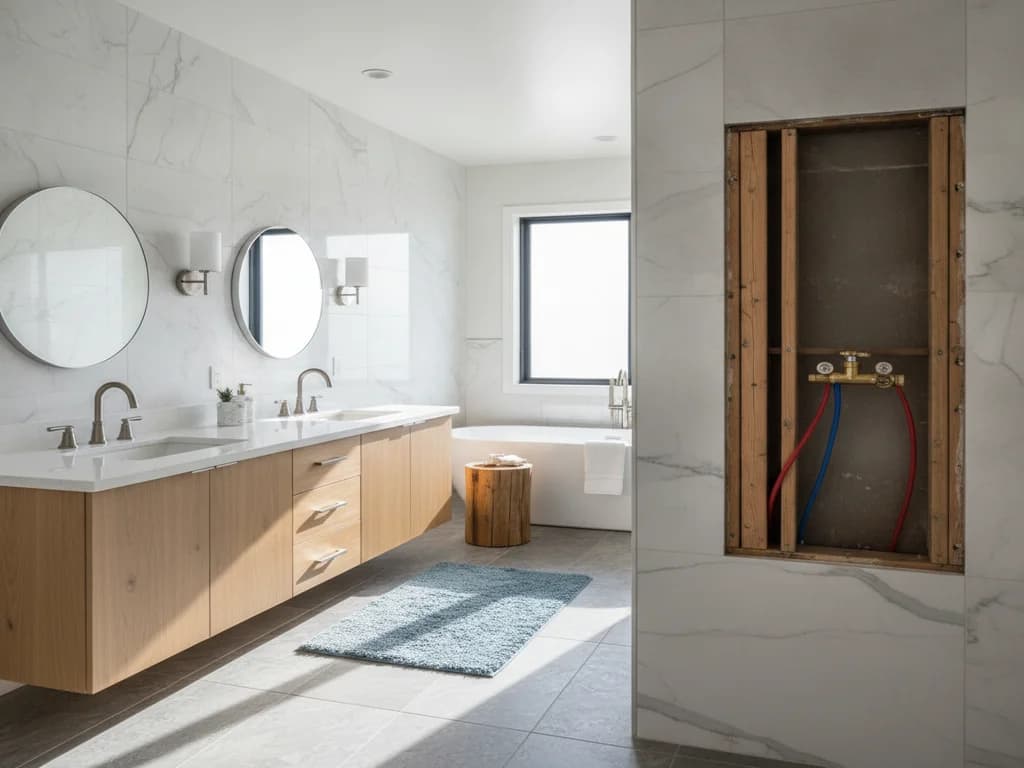
- Pulling the valve trim and escutcheon plate to look directly into the wall cavity at the most common plumbing culprit.
- A flood test of the pan if the spray tests point downward — plugging the drain and filling the pan to a marked level to see whether it holds.
- Thermal imaging where available, which makes hot-side leaks and evaporative cooling from damp materials visible without opening anything.
- If needed, one small inspection opening in drywall — ideally in a closet or the ceiling below — placed where the evidence points, not guessed.
Repair or remodel: what the diagnosis means for the fix
The fix follows the water path, and the price spread is wide. Per HomeAdvisor’s cost guides, minor shower repairs — recaulking, regrouting, a new door sweep — commonly run in the low hundreds, while leaks that require opening walls and repairing plumbing can run roughly $500–$1,500 or more depending on access and damage.
Enclosure-joint leaks caught early are the happy ending: fresh caulk at the changes of plane, regrouting where needed, and a habit of annual inspection. A worn valve is a moderate job — replacing a shower valve usually means opening the wall behind it, which is routine work with a routine patch.
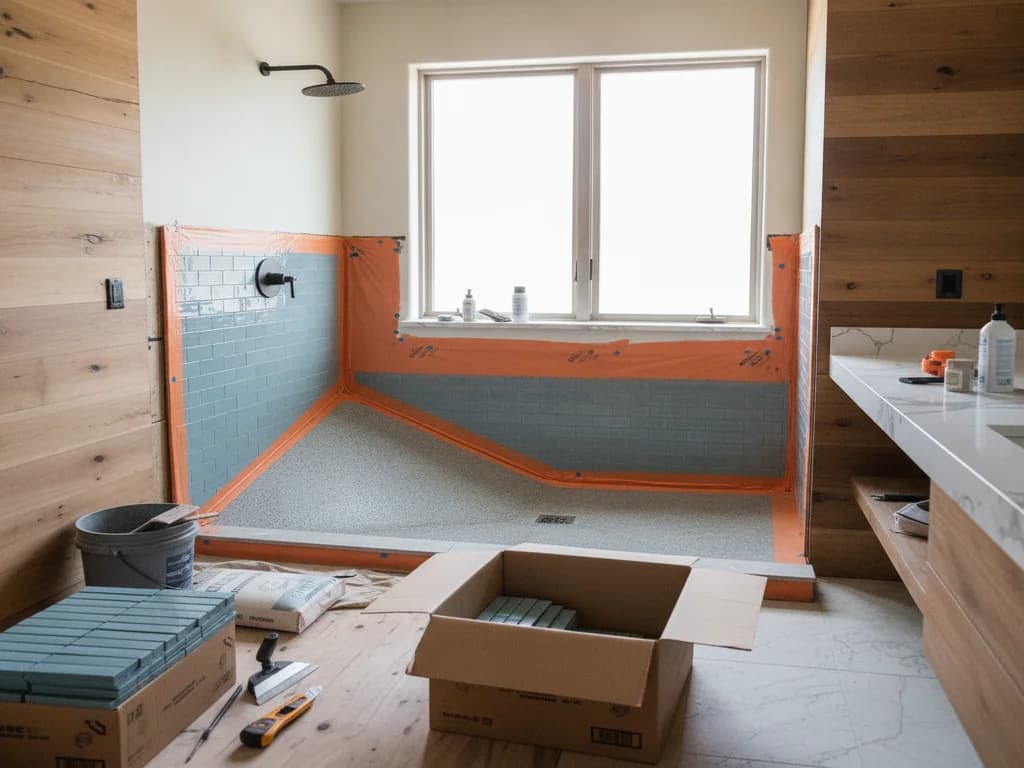
A failed pan or waterproofing membrane is a different conversation. There is no honest way to fix waterproofing from above; the tile and pan come out, and at that point you are rebuilding the wet area — which is why a confirmed pan leak often becomes the trigger for the shower remodel that was five years out anyway. Our guide to replacing shower waterproofing explains what that rebuild involves.
The wrong answer at every tier is the same one: painting over the stain and waiting. The stain is the cheapest part of the problem.
Ready to plan your Boise bathroom?
Licensed & insured · 3-year workmanship warranty
Frequently asked questions
- How do I know if my shower is leaking behind the wall?
- Look for indirect evidence: ceiling stains in the room below, a persistent musty smell, bubbling paint on the shared wall, hollow-sounding tile, swelling baseboards, or a soft spot at the shower entry. Then run the meter test — all water off, watch the meter’s low-flow indicator. Movement means a pressurized supply leak; a still meter points to the enclosure, drain, or pan leaking only during use.
- Can a shower leak without any visible signs?
- Yes, for a surprisingly long time. Wall cavities and floor framing can absorb small amounts of water for months before anything shows on a painted surface. Smell usually arrives first — a musty, earthy odor that cleaning does not fix. That is why a persistent smell near a shower deserves a moisture-meter inspection even when everything looks fine.
- What does a warm spot on the bathroom wall mean?
- A warm patch on a wall or floor near a shower almost always means a hot-water supply line is leaking inside the cavity and running continuously. Unlike a splash leak, it does not wait for the next shower — it feeds moisture into the framing around the clock and drives up water-heating costs. Shut off the water and get a professional in promptly.
- Is a shower leak more likely to be the plumbing or the caulk?
- Statistically, the maintained joints fail first. Grout and caulk at the corners and the tile-to-tub joint crack with seasonal movement, and door seals wear out — those paths leak far more often than pipes do. That is good news: the most common causes are also the cheapest fixes. A methodical spray test tells you which family you are in before anyone opens a wall.
- How much does it cost to fix a shower leaking behind the wall?
- It depends entirely on the water path. Per HomeAdvisor’s cost guides, simple fixes like recaulking and regrouting commonly run in the low hundreds, valve and drain repairs that require wall access often land roughly $500–$1,500, and a failed pan or membrane means rebuilding the wet area — a remodel-scale project. The diagnosis is what tells you which bill you are facing.
- Should I stop using a shower that I think is leaking?
- If the meter test shows a pressurized leak or you find a warm spot, yes — shut off the supply and call a pro. For a suspected use-only leak, taking that shower out of rotation for a week is actually a useful diagnostic: if the stain stops growing and the smell fades, you have confirmed the shower is the source, and the wall cavity gets a head start on drying before repairs.
Sources
Claims and figures are drawn from the sources above and provided for general guidance; your project may vary. Photography is illustrative of design concepts. For a fixed price on your specific bathroom, request a free estimate.