Updated July 16, 2026 · 7 min read
By Boise Bath — bathroom & shower remodeling in Boise & the Treasure Valley
The short answer
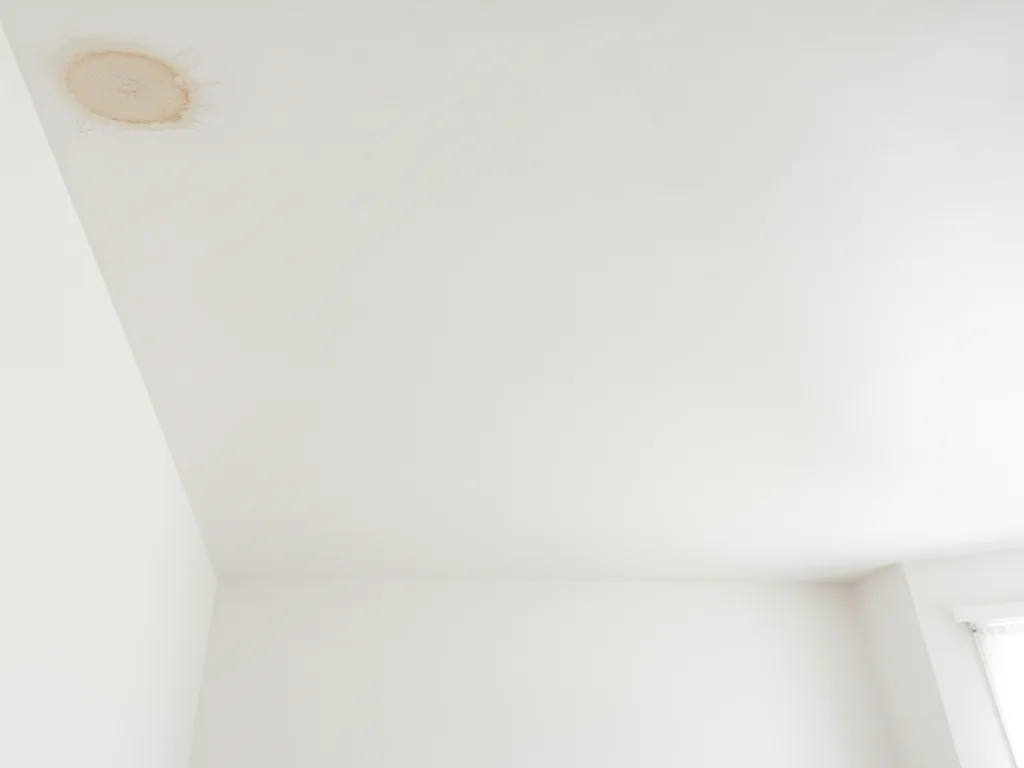
A failing shower pan announces itself below and beside the shower: ceiling stains directly under it, loose or hollow floor tile, cracked perimeter grout, and a musty smell that survives cleaning. Pros confirm it with a flood test — plugging the drain, filling the pan, and watching for a drop. A confirmed pan leak means replacement, not patching.
Key takeaways
- The pan is the waterproof layer under the shower floor — by the time it leaks, water is going straight into the subfloor and framing, so pan symptoms are never merely cosmetic.
- A ceiling stain directly below the shower footprint is the single most reliable pan-failure symptom; stains offset toward the drain line point at the drain connection instead.
- The pro flood test — drain plugged, pan filled to a marked level, water held for an extended period — separates a pan leak from drain and enclosure leaks with near certainty.
- Loose floor tile and grout that keeps cracking at the shower-floor perimeter usually mean the mortar bed underneath is moving because it is wet.
- Waterproofing cannot be honestly repaired from above: a confirmed pan failure means the shower floor comes out, which is why it often triggers the wider remodel.
- Traditional mortar-bed pans and modern bonded membranes fail differently, but both fail at the same weak points — the drain connection and the corners.
What the shower pan actually is — and why its failures hide
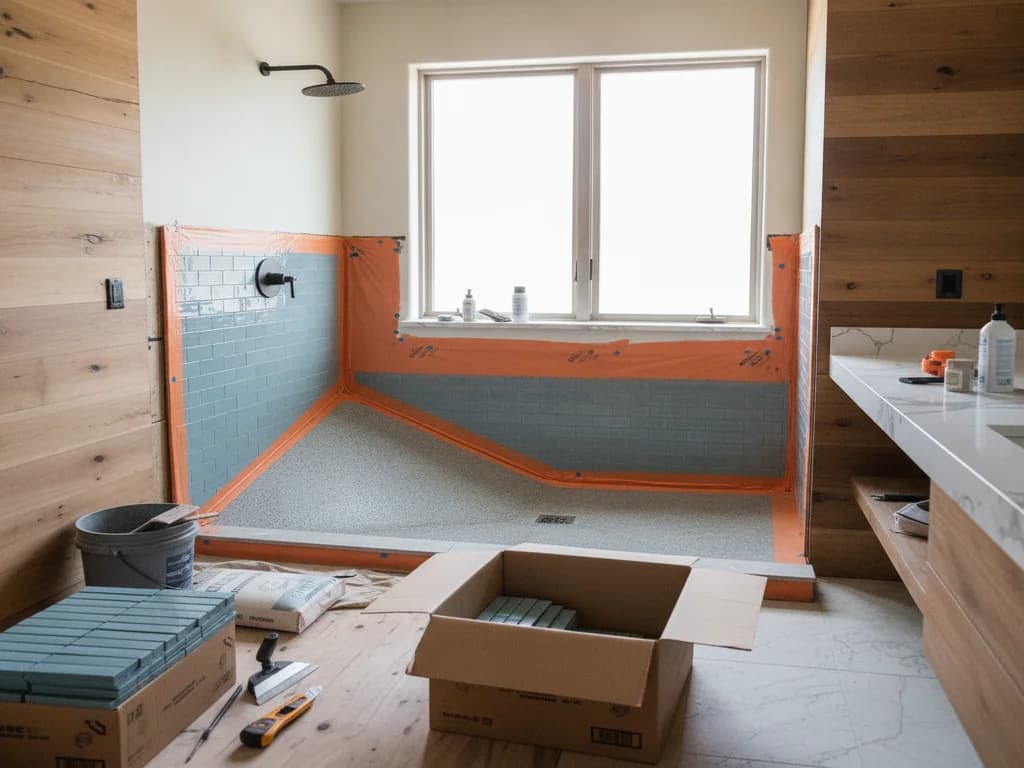
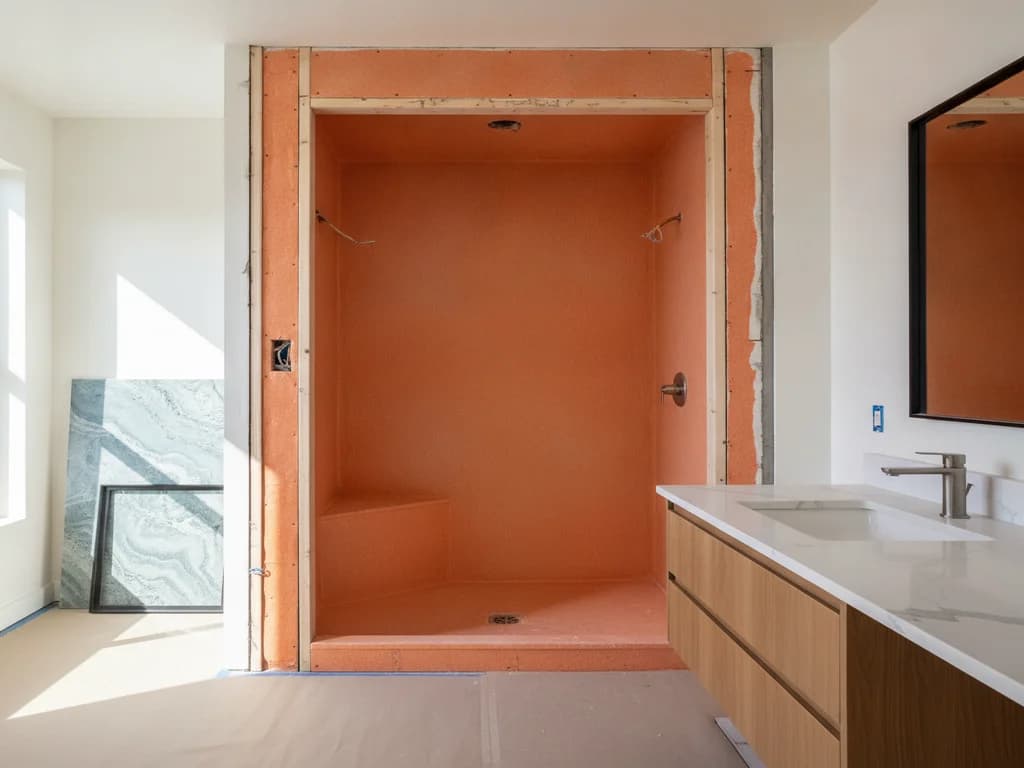
The "pan" is not the floor you stand on. It is the waterproof layer underneath: a sloped membrane or molded base that catches every drop the tile and grout let through and delivers it to the drain. Tile and grout are not waterproof — they were never supposed to be. The pan is the actual boat.
That is why pan failures hide so well. When the pan cracks, tears at a corner, or loses its seal at the drain, the shower still looks perfect. Water simply passes through the floor you see and into the subfloor you do not, shower after shower. The evidence surfaces at a distance — a ceiling stain downstairs, a smell in the hallway, a floor register breathing musty air.
Older Treasure Valley homes often have traditional mortar-bed pans with a vinyl or hot-mopped liner; newer builds and remodels lean on bonded sheet or liquid membranes. They age differently — liners get brittle, bonded membranes fail at seams and the drain flange — but the symptom set below applies to both.
The signs, ranked by how strongly they point at the pan
No single symptom is proof, but they stack. Here is the list, strongest first:
- A stain or drip on the ceiling directly below the shower footprint — especially one that grows in the hours after a shower. This is the classic pan symptom.
- Loose, hollow-sounding, or lifting tile on the shower floor. A wet mortar bed loses its grip, and floor tile is the first to move.
- Grout at the shower-floor perimeter and around the drain that cracks, darkens, or crumbles repeatedly no matter how often it is patched.
- A musty smell in the bathroom or the room below that cleaning never fixes.
- Water appearing at the base of the curb or on the bathroom floor outside the shower after use, with the door seals ruled out.
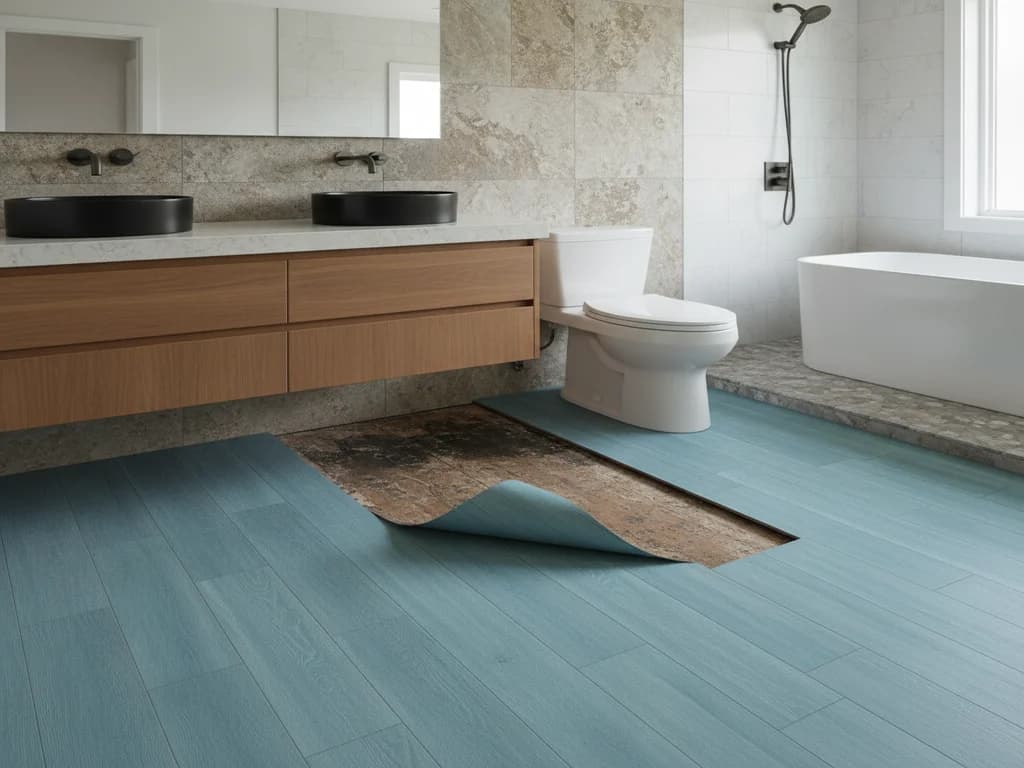
- For first-floor showers over a crawl space: dampness, staining, or mold on the subfloor visible from below — worth checking directly, since there is no ceiling to stain.
Location is the tell
Map the downstairs stain against the room above. Directly under the shower floor: suspect the pan. Under the drain line’s path: suspect the drain connection. Under the toilet: different problem entirely — see our guide to a toilet leaking at the base. Offset toward a wall: more likely an enclosure or valve leak. Ten minutes with a tape measure narrows the diagnosis more than an hour of guessing.
The flood test: how pros confirm a pan leak
Spray tests and guesswork cannot isolate a pan, because a running shower wets everything at once — walls, seals, drain, and pan together. The flood test isolates the pan alone, and it is the standard the tile industry itself uses to verify new pans before tiling, per TCNA installation guidance.
The method: the drain is sealed with an inflatable test ball or expandable plug set below the drain’s weep holes. The pan is filled with water to a marked level — deep enough to cover the floor and lap the corners, kept safely below the curb. Then everyone waits, typically for a few hours and sometimes overnight, while two things are watched: the water level against the mark, and the ceiling or crawl space below.
The readout is close to binary. If the level holds and nothing appears below, the pan itself is sound — attention shifts to the drain connection, the wall waterproofing, or the enclosure. If the level drops or moisture shows up downstairs with the drain plugged, the pan has failed. There is no third interpretation.
This is a describe-not-DIY test: done wrong — plug set too shallow, pan overfilled past the curb, a brittle old liner stressed by the water weight — it can cause the very damage it is diagnosing. It belongs in a pro inspection, usually alongside a moisture-meter survey of the surrounding floor and walls.
Severity triage: why a pan leak is never "keep an eye on it"
Some bathroom problems earn a watch-and-wait. A pan leak does not, for one structural reason: everything the pan leaks onto is load-bearing. The mortar bed sits on subfloor; the subfloor sits on joists; the shower’s considerable weight — tile, mortar, glass, and a person — sits on all of it.
Wood that cycles wet and dry swells, delaminates, and loses fastener grip long before it visibly rots. The EPA notes mold can establish on damp material within 24–48 hours, and the cavity under a shower pan is dark, warm, and rewetted daily — as favorable a mold environment as a house offers. Every week of continued use adds water to a system with no way to dry.
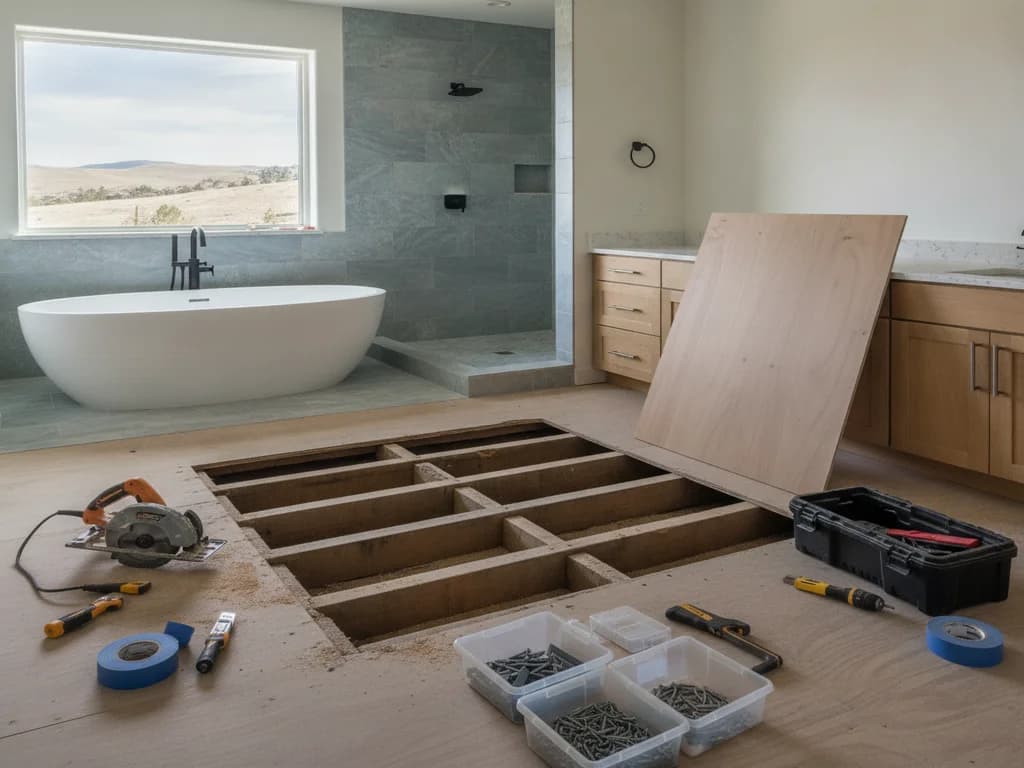
The honest triage: a suspected pan leak means the shower comes out of rotation until it is tested. If the flood test clears the pan, you have lost nothing but a few days of using the other bathroom. If it confirms the leak, you stopped feeding the damage at the earliest possible point — and the difference between "replace the pan" and "replace the pan, the subfloor, and a joist section" is measured in months of continued use. Our guide to replacing a bathroom subfloor shows what the deeper repair involves.
What a professional inspection covers beyond the flood test
The flood test answers "is it the pan," but a good inspection answers the more useful question: "what has the water already done." Expect a thorough pro to cover most of this:
- A moisture-meter map of the bathroom floor around the shower, the adjacent walls, and the ceiling below, establishing how far the wet zone extends and whether it is active.
- A drain-isolation check — running water directly down the open drain without wetting the pan — to separate a drain-connection leak from a pan leak.
- Tap-testing the shower floor and lower wall tile for hollow spots that indicate a saturated or debonded mortar bed.
- A look from below wherever possible: crawl space, unfinished basement ceiling, or a small inspection opening in the drywall below, placed where the moisture map points.
- An assessment of the curb and corners — the most common failure points on traditional liner pans — and the drain flange seal on bonded-membrane pans.
- A written scope that distinguishes what failed (the pan) from what it damaged (subfloor, framing, drywall below), because those are two different line items.
Repair or replace: the honest answer for a failed pan
Here is the part nobody enjoys hearing: a leaking pan is not repairable in any lasting sense. The waterproof layer lives under the tile and mortar bed, so there is no way to reach the failure without removing everything above it — and surface treatments applied from above (sealers, grout, caulk) do not fix a membrane that has failed underneath. Anyone offering to fix a confirmed pan leak without opening the floor is selling you a delay.
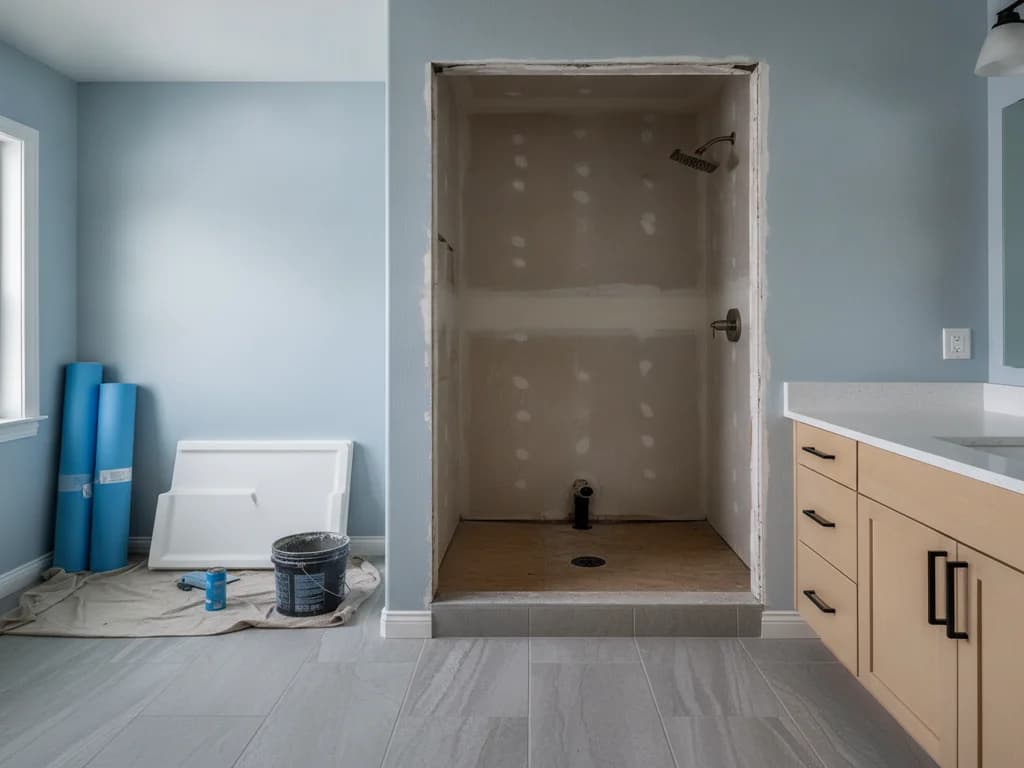
The real fix is a new pan: floor tile out, mortar bed out, failed membrane out, then a new pan properly sloped, sealed at the drain, flood-tested before a single tile goes back. What that project involves — and the choice between rebuilding in kind or upgrading the whole system — is covered in our guide to replacing a shower pan; the numbers live in the shower pan replacement cost guide.
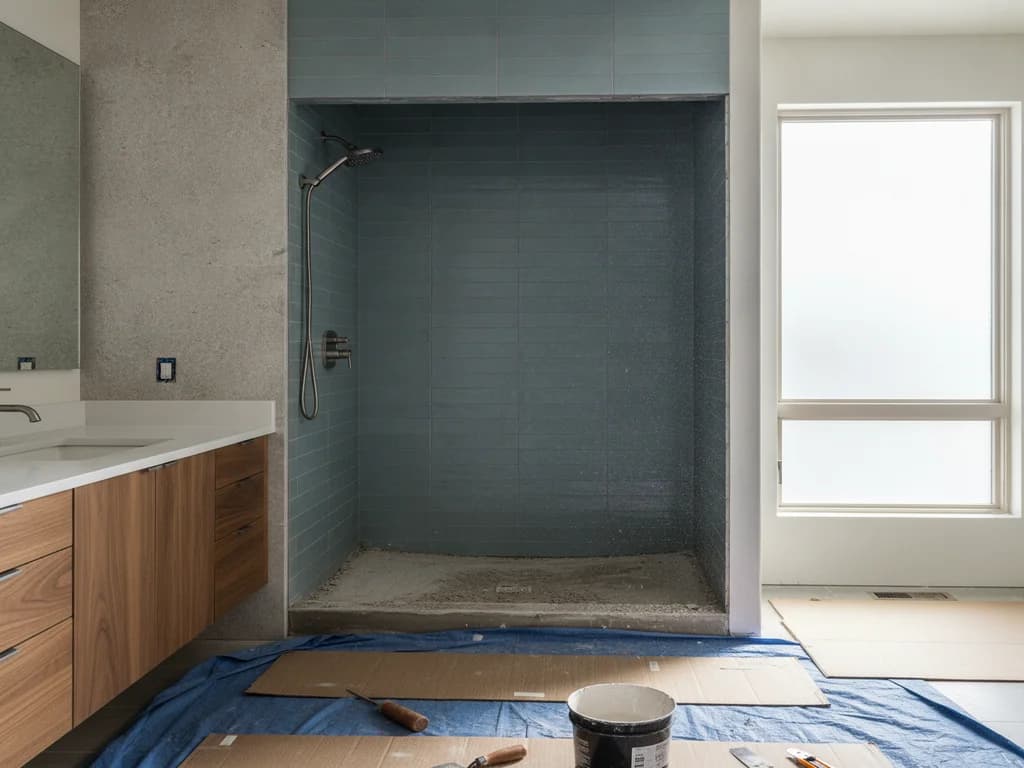
One genuinely useful fork in the road: since the demolition already opens the shower floor and lower walls, a pan failure is the natural moment to fix everything else the shower has been saving up — dated tile, a too-high curb, a cramped footprint. Whether a pan can ever be swapped without disturbing the wall tile is its own question, answered honestly in can you replace a shower pan without retiling.
Ready to plan your Boise bathroom?
Licensed & insured · 3-year workmanship warranty
Frequently asked questions
- How do I know if my shower pan is leaking?
- The strongest signs: a ceiling stain directly below the shower footprint that grows after use, loose or hollow-sounding floor tile, perimeter grout that keeps cracking, and a persistent musty smell. Confirmation requires isolating the pan with a flood test — drain plugged, pan filled to a marked level, water held for several hours while the level and the ceiling below are watched.
- What is a shower pan flood test?
- It is the standard verification method for shower waterproofing, per TCNA installation guidance. A pro seals the drain with a test plug, fills the pan with water to a marked level below the curb, and waits — often several hours. If the level holds and nothing appears below, the pan is sound. If the level drops with the drain sealed, the pan has failed. It isolates the pan in a way no spray test can.
- Can a leaking shower pan be repaired without replacing it?
- Not honestly. The waterproof layer sits beneath the tile and mortar bed, so a failed membrane cannot be reached — or fixed — from above. Sealers and fresh grout treat the surface, not the failure. The lasting fix is removing the shower floor and building a new, flood-tested pan. Surface treatments buy a little time at the cost of continued water reaching the subfloor.
- How long does a shower pan last?
- It varies widely with the system and the install quality. Traditional mortar-bed pans with vinyl liners often serve for decades but fail as the liner ages and gets brittle, especially at corners and the drain. Modern bonded membranes are newer, so their long tails are still being written — but on any system, most failures trace to installation errors at the drain flange and corners rather than material age alone.
- Is a shower pan leak an emergency?
- It is urgent, not an emergency. Unlike a burst supply line, it only leaks while the shower runs — so the immediate fix is simply to stop using that shower until it is tested. What makes it urgent is what is underneath: subfloor and framing that get rewetted with every use and never dry, plus mold conditions the EPA notes can develop within 24–48 hours on damp material.
- Why does my downstairs ceiling only stain sometimes after showers?
- Intermittent staining is common with early pan and drain failures. Small membrane tears pass meaningful water only under certain conditions — longer showers, water pooling at a particular corner, or a partially clogged drain raising the water level in the pan. The leak is real even when the symptom skips a week. Intermittent evidence justifies the same flood test as a constant drip.
Sources
- Tile Council of North America (TCNA)
- EPA — Mold
- HomeAdvisor — True Cost Guide
- Journal of Light Construction
Claims and figures are drawn from the sources above and provided for general guidance; your project may vary. Photography is illustrative of design concepts. For a fixed price on your specific bathroom, request a free estimate.