Updated September 12, 2026 · 9 min read
By Boise Bath — bathroom & shower remodeling in Boise & the Treasure Valley
The short answer
Acrylic shower walls cost less than tile, go up faster, and need almost no upkeep — but tile offers far more design range, can last the life of the bathroom, and generally reads as the more premium finish at resale. Acrylic wins on budget, speed, and maintenance; tile wins on customization and long-term value.
Key takeaways
- Fixr prices tiling a shower at $1,800–$5,000 (averaging about $2,700) for a 3-by-4-foot stall with 8-foot ceramic walls, while Bob Vila prices a simple prefabricated fiberglass insert from about $400, plus $400–$1,000 to install.
- Today’s Homeowner puts shower wall panels in general at 15 to 25 years, and says ceramic tile can last the life of the bathroom — as long as the waterproofing behind it holds.
- Acrylic is non-porous with no grout, so cleaning is wipe-and-go; tile’s grout lines need periodic sealing and are where most shower leaks eventually start.
- Tile offers far more design range — pattern, format, and material — while acrylic panel choices are comparatively limited, even with newer faux-stone finishes.
- For resale, tile is generally viewed as the higher-end finish; acrylic is a smart, honest choice when budget or a fast turnaround matters more than upgrading the home’s ceiling on value.
Acrylic vs. tile — the quick verdict
Both are legitimate ways to finish a shower, and the honest answer is that neither one is the “better” material in every bathroom — they solve different problems. Acrylic is a prefabricated, seamless surround that goes up fast and asks almost nothing of you afterward. Tile is a built-in-place, endlessly customizable surface that costs more upfront in money and time but gives you full control over the look.
The comparisons below use cited 2026 cost and durability data so you can weigh the real trade-offs rather than marketing claims from either side.
How to read this comparison
If your priority is a fast, affordable, low-maintenance refresh — especially in a secondary bathroom or rental — acrylic is a smart, honest choice. If you want a custom look, the widest material range, or you are investing in a primary bathroom for the long haul, tile is worth the extra cost and time.
Quick comparison
This table summarizes where each material lands across the five dimensions homeowners ask about most.
| Dimension | Acrylic | Tile |
|---|---|---|
| Typical installed cost | Lower — prefab fiberglass inserts from ~$400 (luxury $2,000+), plus $400–$1,000 to install, per Bob Vila | Higher — $1,800–$5,000 to tile a 3×4 ft shower, averaging ~$2,700, per Fixr |
| Install time | 1–2 days, per JSB Home Solutions | 3–5 days, per JSB Home Solutions |
| Durability / lifespan | Panels generally 15–25 years, per Today’s Homeowner | Can last the life of the bathroom if waterproofed well, per Today’s Homeowner |
| Look & design range | Limited — solid colors, some faux-stone finishes | Extensive — any size, pattern, color, or material |
| Maintenance | Wipe-clean, no grout, no resealing | Grout needs periodic cleaning and occasional resealing |
| Resale perception | Functional, budget-friendly | Higher-end, more likely to read as a premium finish |
Cost: what does each one actually cost installed?
Fixr prices tiling a shower at $1,800–$5,000, averaging around $2,700, for a 3-by-4-foot stall with 8-foot ceramic walls and a mosaic floor. Ceramic tile runs $1.25–$100 per square foot for material and $4.25–$110 installed; porcelain installs for about $17–$46 per square foot. Those are tiling figures, not a whole shower remodel — demolition, waterproofing, plumbing, and glass are separate lines.
Bob Vila’s shower remodel cost data prices a simple prefabricated fiberglass insert at about $400, with luxury options at $2,000 or more, plus $400–$1,000 in installation labor — because prefabricated units arrive pre-formed and go up quickly, without the days of tile-setting, grouting, and sealing that drive tile’s labor cost.
The gap comes almost entirely from labor and customization, not the raw material itself. A tile setter is cutting, laying, and grouting piece by piece; an acrylic installer is setting large panels and sealing the seams — a fundamentally faster job.
Durability: which one holds up longer?
Today’s Homeowner puts shower wall panels in general at 15 to 25 years, and credits acrylic’s sprayed-on coating with making it more scratch-resistant than fiberglass. The same guide says panels generally last up to 15 years, with only certain materials reaching 25 or more — so treat the top of that range as a ceiling, not a promise.
Tile’s durability story is different: the tile itself (especially porcelain) can outlast the house, but the shower’s real lifespan is set by the waterproofing and grout behind and between it. A well-built tile shower with a proper waterproof membrane can last the life of the bathroom; a poorly waterproofed one can fail in a fraction of that time. That is the trade acrylic avoids entirely — a one-piece or few-piece surround has far fewer seams for water to find.
Look: where does each one actually shine?
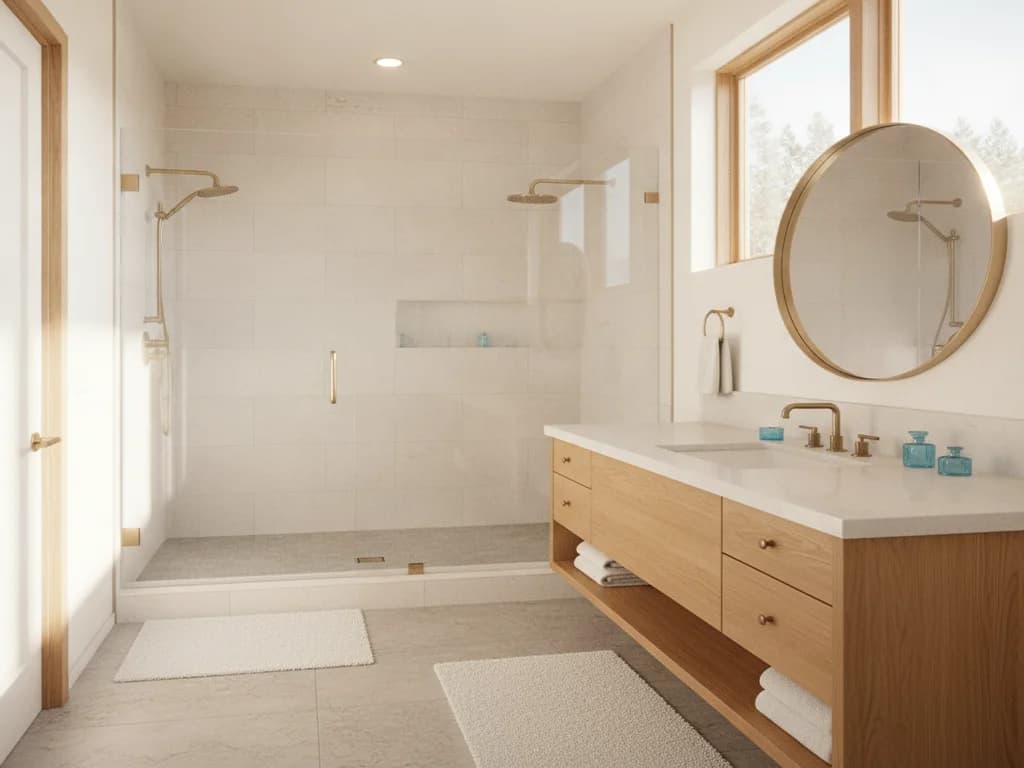
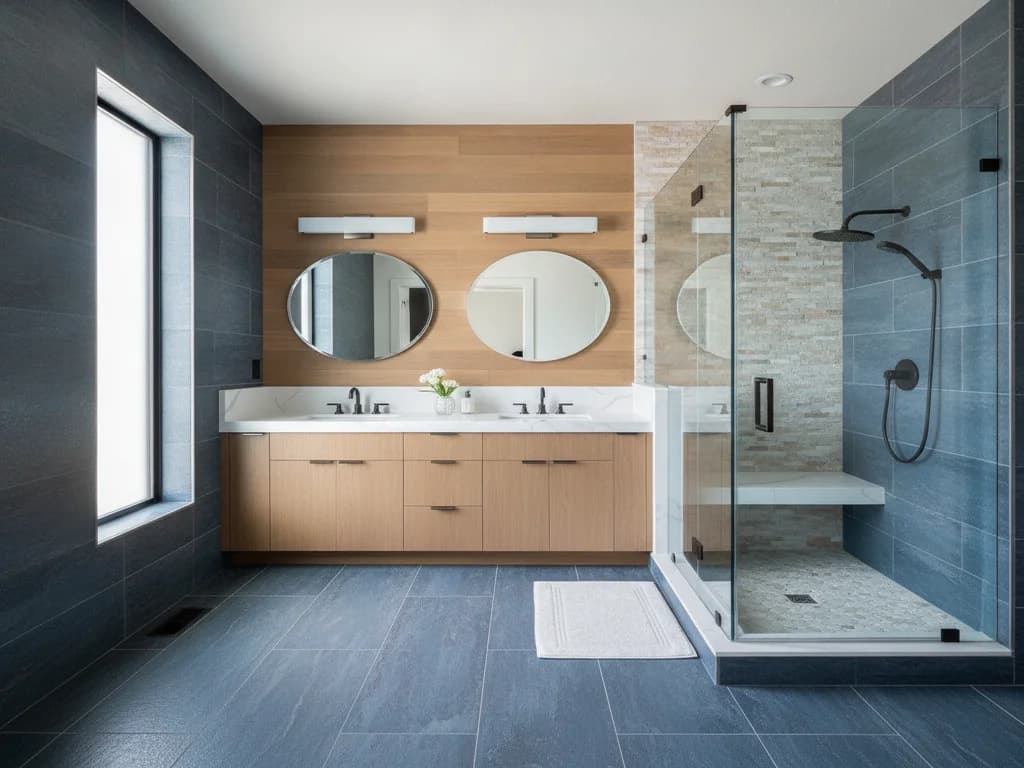
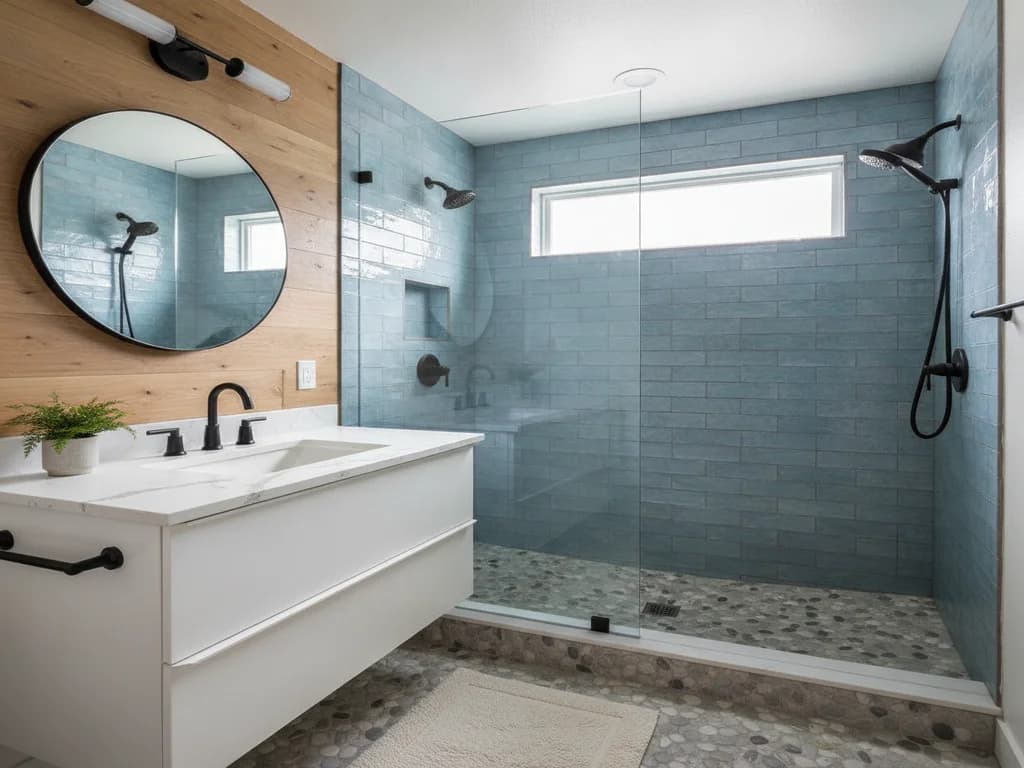
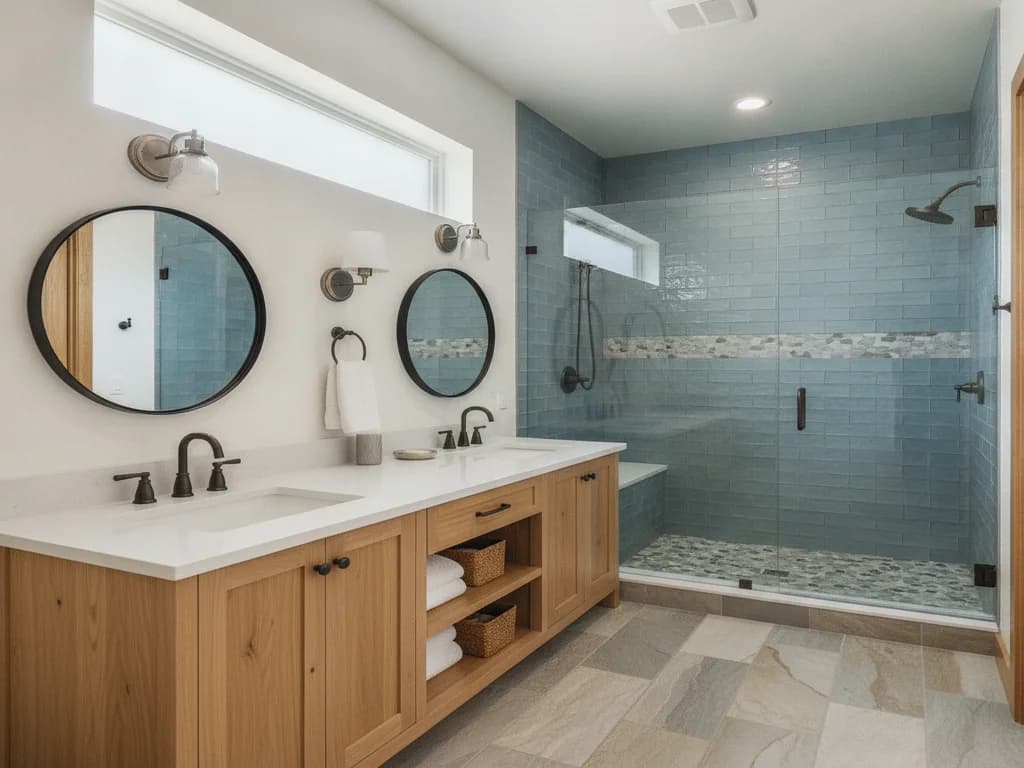
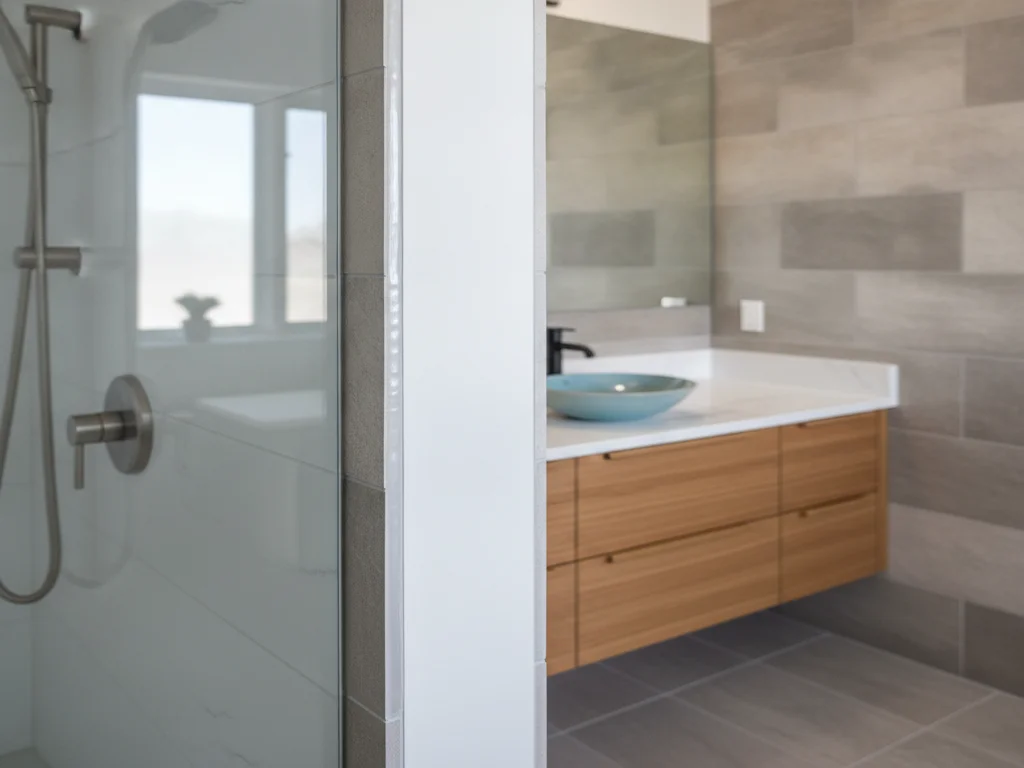
Tile wins on design range, full stop. Format, color, pattern, texture, and material (ceramic, porcelain, natural stone, glass) are all in play, so a tile shower can be built to match almost any style — from a simple large-format wall to a full mosaic accent. That flexibility is exactly what a custom tile and stonework build is for.
Acrylic is more limited, though it has come a long way from plain white fiberglass — newer panel lines mimic marble, stone, or subtle texture. Still, if a highly specific or custom look matters to you, tile has no real ceiling and acrylic does.
Maintenance: which one asks less of you?
This is acrylic’s clearest win. Today’s Homeowner notes that acrylic panels need little more than a rag and water to clean, thanks to a coating that resists mildew and water staining — no resealing, ever. That is a real advantage in a busy household or a low-maintenance rental unit.
Tile is a higher-maintenance surface by nature. Grout lines collect soap scum and, in humid conditions, mold — and Fixr notes that natural stone tile in particular needs sealing before grouting and periodic resealing over time. Good ventilation and a quality grout (or epoxy grout) narrow this gap considerably, but tile will always ask more of you than a seamless acrylic panel.
Resale: does the shower material actually move the needle?
Buyers and appraisers generally read a well-built tile shower as the more premium finish, and it tends to show up favorably in listing photos and walkthroughs. Acrylic is viewed as a solid, functional choice rather than a luxury upgrade — perfectly appropriate for a guest bath or a rental property, less so as the showstopper in a primary suite you are trying to differentiate.
That said, the material is one input among many. A clean, well-maintained acrylic shower in a tidy bathroom will out-show a neglected or dated tile shower every time. For the bigger picture on what actually returns value in a Boise remodel, see what Boise bathroom upgrades add the most value and what a Boise bathroom remodel costs.
When acrylic genuinely wins
Be fair to acrylic — it is the right call more often than tile snobbery gives it credit for. It wins clearly when budget is the primary constraint, when you need the bathroom back in service fast (a family’s only bathroom, a rental turnover, a quick pre-sale refresh), or when you want the lowest possible day-to-day maintenance. For a secondary or guest bathroom that gets moderate use, acrylic can be the smarter dollar-for-dollar decision, not just the cheaper one.
When tile genuinely wins
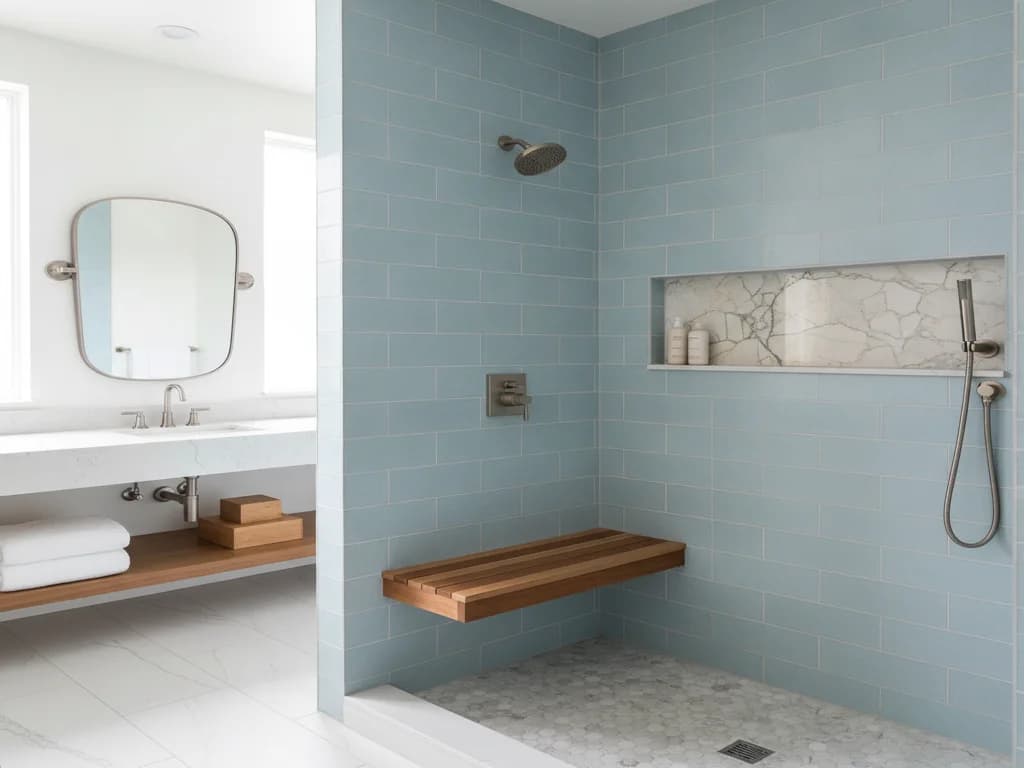
Tile pulls ahead when you are investing in a primary or master bathroom you plan to keep for years, when a specific design look matters, or when maximizing resale appeal in a competitive market is part of the goal. It is also the only real option once you want a fully custom shower — a niche, a bench, a curbless entry, a feature wall — because acrylic panel systems are built around standard shapes and sizes.
Boise’s moderately hard water is worth factoring in either way: it can leave mineral spotting on acrylic and glass alike, and it is part of why grout sealing matters on tile. Neither material is immune, but both are easier to keep spot-free with regular cleaning and, on glass, a protective coating.
The bottom line
There is no universal winner between acrylic and tile — only the right material for your budget, timeline, and bathroom. If you are leaning tile, a custom tile and stonework shower gives you full control over the design; if acrylic fits your project better, we can walk you through panel options that balance cost and durability. Either way, get a fixed, itemized quote before deciding — the “it depends” factors above (waterproofing quality, panel grade, tile format) move the real number more than the material label does.
Ready to plan your Boise bathroom?
Licensed & insured · 3-year workmanship warranty
Frequently asked questions
- Is acrylic cheaper than tile for a shower?
- Yes, generally. Fixr prices tiling a 3-by-4-foot shower at $1,800–$5,000 (averaging about $2,700), while Bob Vila prices a simple prefabricated fiberglass insert from about $400, luxury units at $2,000 or more, plus $400–$1,000 to install — a lower total in most cases, mainly because a prefabricated unit installs in far less time than tile.
- How long does an acrylic shower last compared to tile?
- Today’s Homeowner puts shower wall panels in general at 15 to 25 years. A well-built tile shower with proper waterproofing can last the life of the bathroom, but its real lifespan depends heavily on installation quality — a poorly waterproofed tile shower can fail well before a comparable acrylic surround would.
- Does a tile shower add more resale value than acrylic?
- Tile is generally perceived as the more premium finish and tends to read better in listings and buyer walkthroughs, especially in a primary bathroom. Acrylic is viewed as a solid, functional choice rather than a luxury upgrade — a reasonable trade-off for a guest bath or a budget-focused project.
Sources
- Fixr — Shower Tiling Cost
- Bob Vila — Shower Remodel Cost Guide
- Today’s Homeowner — Shower Wall Panels: A Complete Guide
- JSB Home Solutions — Shower Walls: Tile vs. Solid Surface vs. Acrylic
- TCNA — Handbook for Ceramic, Glass & Stone Tile Installation
- Natural Stone Institute — Standards
Claims and figures are drawn from the sources above and provided for general guidance; your project may vary. Photography is illustrative of design concepts. For a fixed price on your specific bathroom, request a free estimate.