Updated September 10, 2026 · 7 min read
By Boise Bath — bathroom & shower remodeling in Boise & the Treasure Valley
The short answer
A full replacement is the better long-term buy: it exposes and fixes what is behind the walls, while a liner covers the old shower — including any hidden damage — with new acrylic. Choose a liner only when the existing shower is structurally sound and speed matters more than layout, materials, or resale reading.
Key takeaways
- A shower liner is a custom-molded acrylic shell installed over your existing shower; a full replacement removes everything down to the studs and rebuilds it.
- The liner’s defining risk is what it covers: any moisture, mold, or rot behind the old walls stays there, sealed under new acrylic where it cannot be seen.
- One-day installs are real — because the demolition, inspection, and rebuild that a remodel includes are exactly the steps a liner skips.
- Liners lock in the existing layout and footprint; a replacement can change size, entry, and every material choice.
- Quoted honestly, liner systems often cost as much as a mid-range full replacement — the day you save is frequently the only thing you save.
- The liner’s legitimate lane: a structurally sound but ugly shower in a rental, a fast pre-sale refresh, or a household that cannot lose the bathroom for a week.
The verdict: replacement fixes the shower, a liner resurfaces it
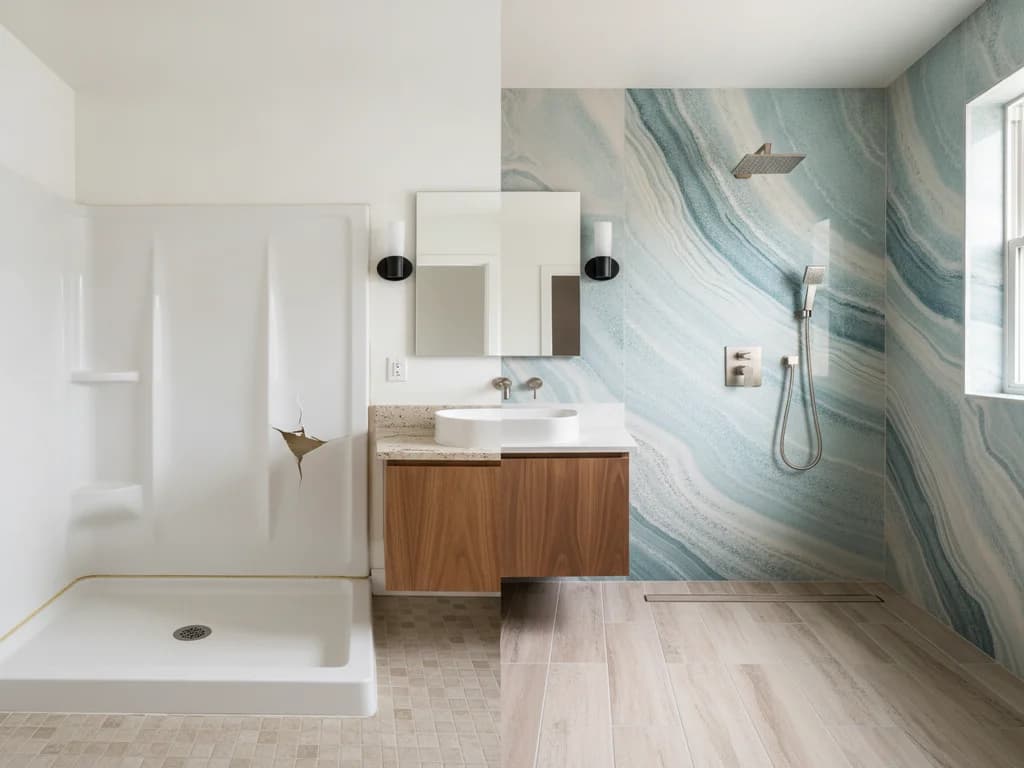
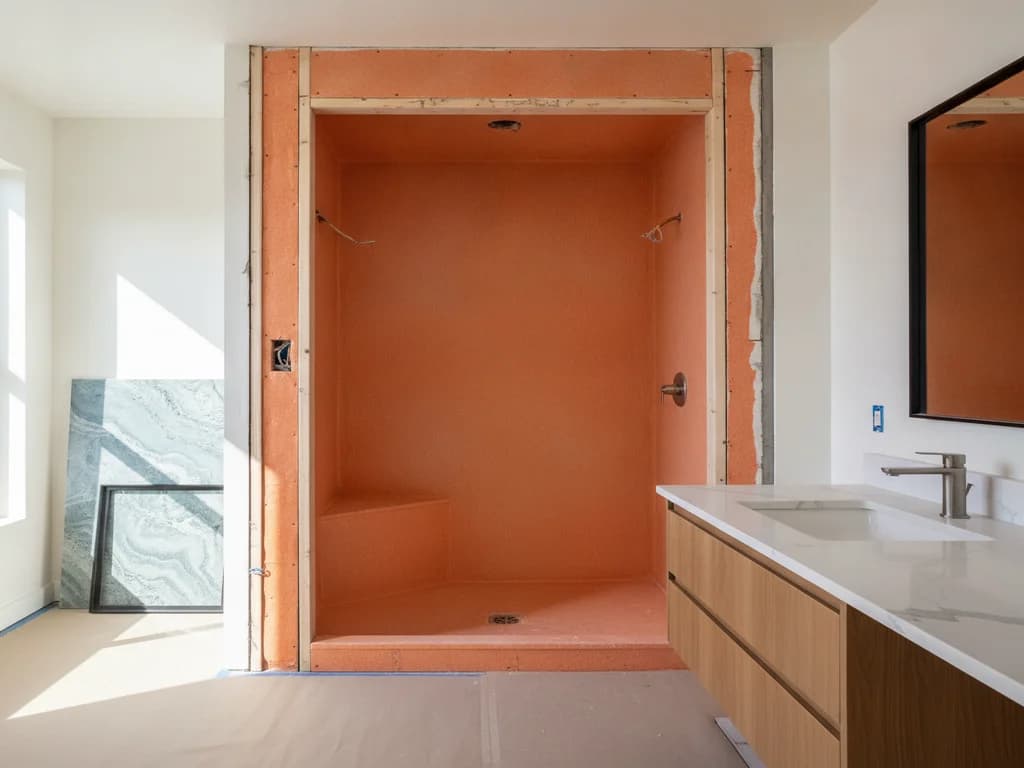
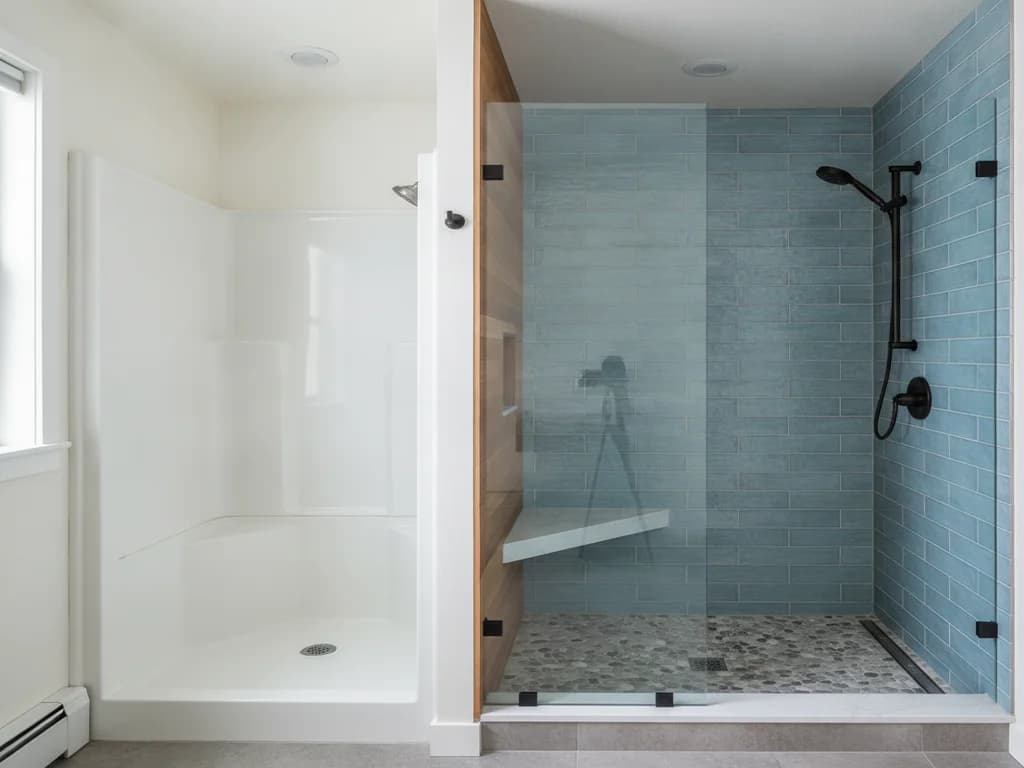
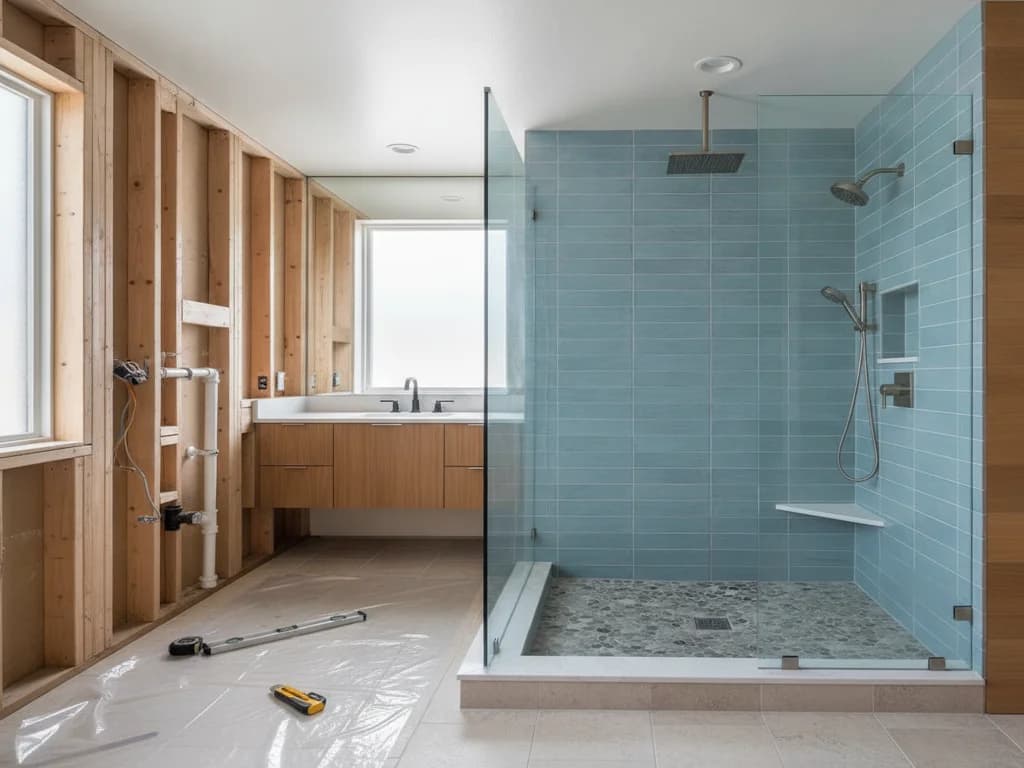
These two products are sold as competitors, but they do fundamentally different things. A full replacement removes the old shower down to the framing, fixes whatever the demolition reveals, rebuilds the waterproofing, and finishes with the materials and layout you choose. A liner system measures your existing tub or shower, molds an acrylic shell to fit, and installs that shell over what is already there — usually in a single day.
That difference is the entire comparison. Everything a liner does well — speed, no demolition, minimal disruption — comes from skipping the tear-out. Everything it does poorly — hiding damage, locking in the old layout, reading as a cover-up at resale — comes from the same place.
This article compares generic one-day liner and cover systems as a category against a conventional remodel; several national franchises and local outfits sell versions of the same approach, and the tradeoffs below apply to all of them. If your shower is failing and you want to see what the rebuild path looks like, start with replacing a fiberglass shower.
What a liner system actually is
A liner installer measures or photographs your existing shower, and the company vacuum-forms acrylic panels — a base piece and wall pieces — shaped to fit over it. Installation day involves cleaning the old surfaces, gluing the new shell over them with adhesive, and sealing the seams and edges with caulk. New trim, doors, and fixtures are usually part of the package.
Done well, the result is genuinely watertight on day one, glossy, and dramatically better looking than the stained fiberglass or dated tile underneath. Acrylic is a legitimate shower material — the same family of product used in quality surround panel systems — and the fit of a well-measured liner is impressive.
The catch is not the acrylic. It is the decision to leave the old shower, and whatever condition it is in, permanently sealed inside the wall assembly.
Liner vs. full replacement: the side-by-side
Here is the whole comparison in one table.
| Factor | Liner / cover system | Full replacement |
|---|---|---|
| What happens to the old shower | Stays in place — new acrylic is bonded over it | Removed to the studs; substrate inspected and repaired |
| Hidden damage | Covered, not found — moisture, mold, or rot is sealed in | Exposed during demo and fixed before rebuild |
| Timeline | Typically 1 day | Roughly 1–2 weeks for a standard shower rebuild |
| Layout & size | Locked to the existing footprint and configuration | Anything the room allows — bigger, curbless, new entry |
| Material choice | Acrylic, in the vendor’s patterns and colors | Tile, stone, solid surface, panels — full range |
| Waterproofing | Relies on the shell and caulked seams over the old assembly | New code-standard membrane system behind the finish |
| Resale reading | Inspectors and buyers recognize liners as a cover-up | Reads as a remodeled bathroom |
| Cost direction | Often comparable to a mid-range replacement once quoted | Wider range — modest with panels, premium with custom tile |
Liner pricing is quote-only through in-home sales; per HomeAdvisor, full shower remodels run roughly $2,000–$9,000 nationally depending on materials and scope.
The covers-what’s-behind problem
Here is the scenario that makes remodelers wary of liners. An older shower has a slow failure somewhere — a cracked grout line, a failed pan, seams that have been leaking a little for years. The wall cavity behind it is damp. A liner install cleans the visible surface, glues fresh acrylic over it, and caulks the edges. The bathroom looks new. The moisture problem is now invisible, unventilated, and sandwiched between old fiberglass and new acrylic.
Trapped moisture does not resolve on its own — the EPA’s mold guidance is blunt that mold persists wherever moisture does, and a sealed wall cavity is an ideal habitat. The failure announces itself later as odor, a soft wall, or damage appearing in the room below, at which point the fix is a full tear-out anyway — now with a liner added to the demolition.
This is why the honest version of the liner decision starts with an inspection, not a sales pitch. If the existing shower is genuinely sound — dry pan, solid walls, no history of leaks — a liner covers cosmetics, which is fine. If anyone finds soft spots, staining, or a spongy floor, covering it is the one thing you should not do; should I replace my shower walks through the symptoms that separate the two cases.
Press on the shower floor before you sign anything
The single best field test: push firmly on the shower floor and lower walls. Flex, softness, or a crackling feel means the substrate underneath is compromised — and a liner glued over a failing base inherits the failure. Any flex is a stop sign for the liner conversation and a start sign for a real inspection.
The one-day promise, decoded
The speed is real, and for some households it is decisive — one bathroom, mobility constraints, or a hard deadline can make a week without a shower genuinely untenable. A liner deliver-and-install really does go from old shower to watertight new surface between breakfast and dinner.
But be clear about why it is fast: the day you save is the demolition, the substrate inspection, the framing repairs, and the new waterproofing membrane. Those are not padding — they are the parts of a remodel that determine whether the shower is still sound in fifteen years. A conventional rebuild takes one to two weeks because it is doing one to two weeks of work.
It is also worth knowing that fast does not reliably mean cheap. Liner franchises sell through in-home presentations with quote-only pricing, and quoted totals frequently land in the same territory as a mid-range full replacement — per HomeAdvisor, roughly the $2,000–$9,000 shower-remodel band. When the prices converge, you are choosing between a covered old shower and a new one for similar money. Get both bids before deciding; our walk-in shower cost guide shows what the rebuild path costs locally.
What you give up in design — and what that means at resale
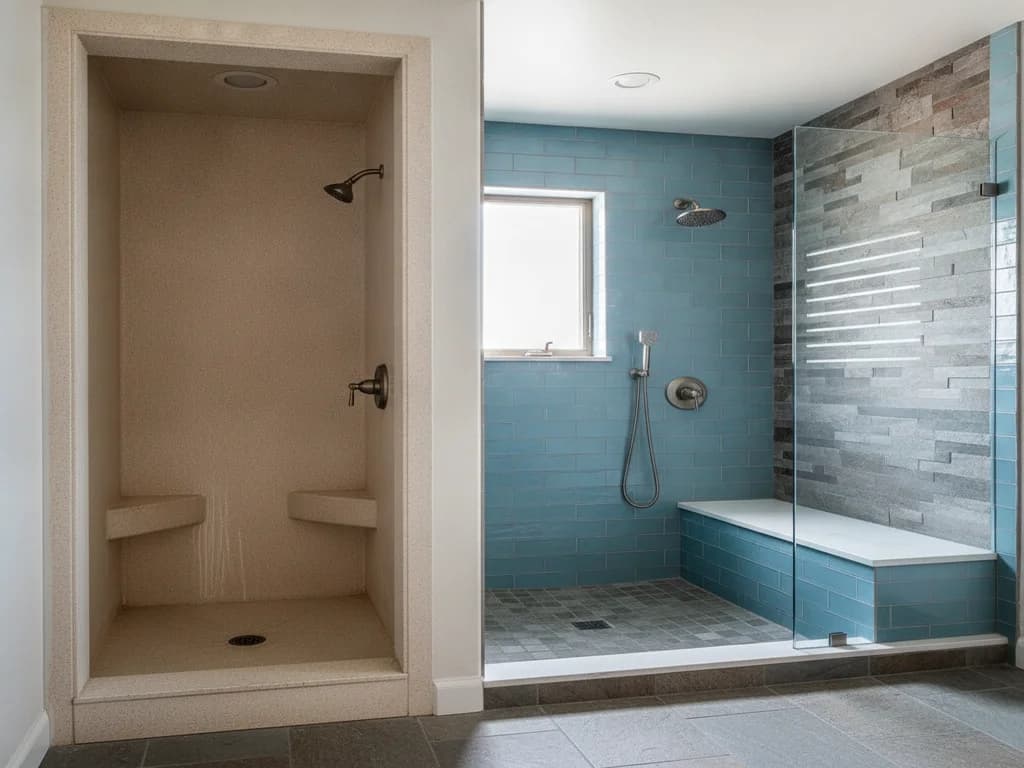
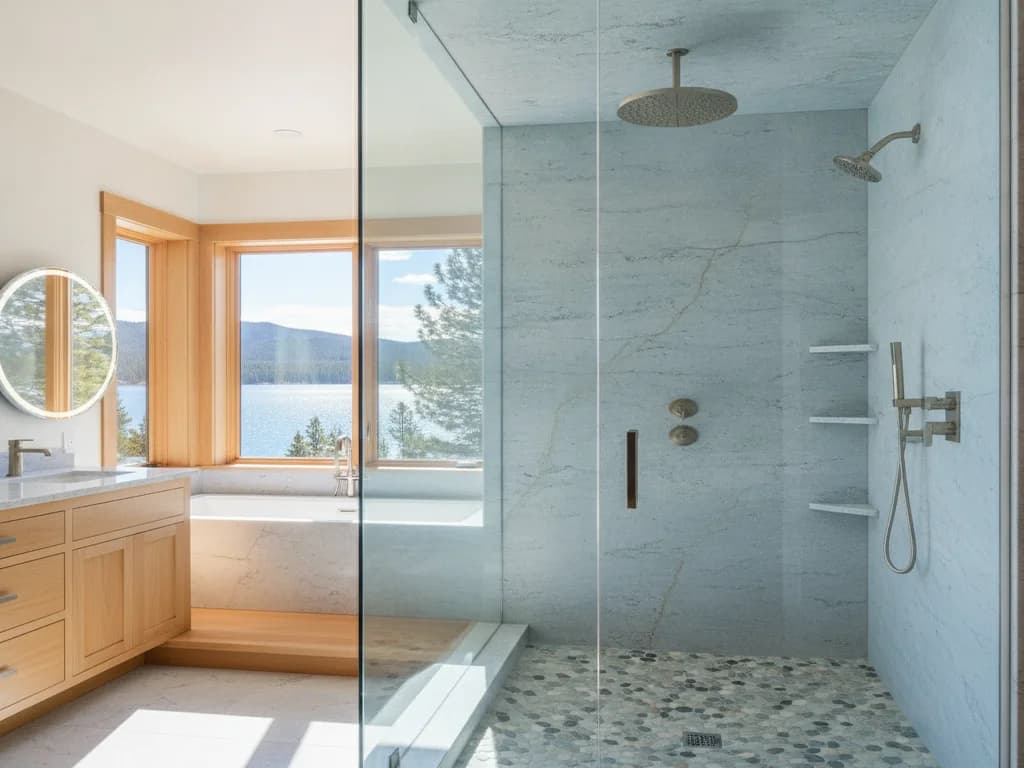
A liner is by definition the same shower, resurfaced: same footprint, same curb height, same entry, same niche-less walls, in the vendor’s acrylic patterns. If the underlying layout is the problem — a cramped stall, a high curb that is getting harder to step over, a dark corner unit — the liner preserves the problem in fresh gloss. A replacement can fix all of it: bigger footprint, curbless entry, real niches, and any material from budget panels to full custom tile — the prefab vs. custom tile comparison covers that spectrum.
On resale, liners carry a quiet penalty. Home inspectors recognize them instantly — the telltale acrylic-over-tile edges and caulked transitions — and flag them as coverings of unknown condition. Buyers read "liner" as deferred maintenance, not as a remodeled bathroom. It will not sink a sale, but it earns none of the value a genuine remodel signals.
None of this makes liners illegitimate. It makes them a surface product, correctly priced against other surface refreshes — not against a remodel.
Which should you choose?
Match the fix to the shower’s actual condition and your constraints:
- Sound but ugly shower, and you cannot lose the bathroom for a week: liner — this is its honest lane, especially in a one-bath house.
- Rental unit or fast pre-sale refresh where the shower is dry and solid: liner or new surround panels — spend the difference where it returns more.
- Any sign of leaks, soft floor, flexing walls, or mold odor: full replacement — covering a wet assembly converts a repair into a future disaster.
- You want a different layout, a lower curb, more space, or tile: full replacement — a liner cannot change anything about the shower’s geometry.
- The quotes come back within a few thousand of each other: full replacement — similar money buys a new shower instead of a covered old one.
- Old fiberglass unit that has simply reached end of life: skip the cover entirely and see what replacing a fiberglass shower involves — the tear-out is less dramatic than the liner pitch implies.
Ready to plan your Boise bathroom?
Licensed & insured · 3-year workmanship warranty
Frequently asked questions
- Are one-day shower liner remodels worth it?
- They are worth it in a narrow lane: the existing shower is structurally sound and dry, you need the bathroom back the same day, and you accept keeping the current layout in acrylic. They are not worth it when quotes rival a full replacement — which happens often — or when there is any sign of leaks or soft spots, because the liner seals those problems in rather than fixing them.
- How much does a shower liner cost compared to a full replacement?
- Liner companies price by in-home quote only, and quoted totals frequently land in the same range as a mid-tier full replacement — HomeAdvisor puts shower remodels broadly at $2,000–$9,000 nationally. A basic surround-panel rebuild can come in below many liner quotes; custom tile runs above. The reliable move is getting a liner quote and a replacement bid side by side before signing either.
- How much does a one-day tub-to-shower conversion cost?
- One-day conversions use the same cover-system approach: an acrylic shower base and walls fitted over or in place of the old tub without opening the walls. Pricing is quote-only and commonly lands in the same territory as a conventional conversion — see our [tub-to-shower conversion cost guide](/guides/tub-to-shower-conversion-cost-boise) for what the full-remodel version runs in the Treasure Valley. Compare both bids on scope, not speed: the one-day price usually buys less work, not less money.
- What happens if there is mold or rot under a shower liner?
- It stays there. The liner seals the old assembly — moisture included — inside an unventilated cavity where, per EPA mold guidance, mold persists as long as moisture does. The problem resurfaces later as odor, soft walls, or damage below, and the fix at that point is a full tear-out that now includes removing the liner. This is why any leak history or floor flex should disqualify the liner option.
- Can a shower liner change the size or layout of my shower?
- No — a liner is molded to your existing shower and installed over it, so the footprint, curb height, entry, and configuration all stay exactly as they are. If the layout is part of what you want to fix — a bigger footprint, a lower or curbless entry, added niches or a bench — only a full replacement can do it, because those changes happen in the framing and pan, not the surface.
- How long does a shower liner last compared to a replaced shower?
- A well-installed liner over a sound base can serve for years — the acrylic itself is durable — but its lifespan is capped by the old assembly underneath and the caulked seams that keep water out of the gap between old and new. A full replacement built on a modern bonded waterproofing membrane is a decades-scale assembly that can also be spot-repaired. The liner is a surface warranty; the rebuild is a system.
- Do home inspectors flag shower liners when you sell?
- Experienced inspectors recognize liners immediately from the edge details and note them as a covering over an assembly of unknown condition — which is accurate. That framing lands with buyers as deferred maintenance rather than a remodeled bath. It rarely kills a deal, but it earns little of the value a genuine renovation signals, which is worth weighing if resale is part of why you are updating.
Sources
Claims and figures are drawn from the sources above and provided for general guidance; your project may vary. Photography is illustrative of design concepts. For a fixed price on your specific bathroom, request a free estimate.