Updated September 10, 2026 · 7 min read
By Boise Bath — bathroom & shower remodeling in Boise & the Treasure Valley
The short answer
A prefab shower is a factory-molded unit installed in a day — the cheaper, faster option, but limited to standard sizes and looks. A custom tile shower is built in place: any footprint, unlimited design, decades of repairable service, at two to four times the installed cost. Choose prefab for budget and speed; choose custom when the walls are open and you are staying.
Key takeaways
- Prefab means a factory-molded fiberglass, acrylic, or solid-surface unit; custom means a shower built in place over a waterproofing membrane — a product versus a structure.
- The true cost gap is in the total installed price, not the unit sticker: demolition, plumbing, and finishing are paid in both projects.
- Prefab units only come in standard alcove footprints — an odd-sized or reconfigured space often forces the custom path regardless of budget.
- HomeAdvisor puts shower remodels broadly at roughly $2,000–$9,000: prefab swaps live at the bottom of that range, custom tile at the top and beyond.
- Custom tile is spot-repairable for decades; a cracked prefab unit is a replacement, which narrows the lifetime cost gap.
- Design range is the unbridgeable difference — prefab offers sizes and colors, custom offers anything a wet room can be.
The verdict: prefab buys speed and price, custom buys everything else
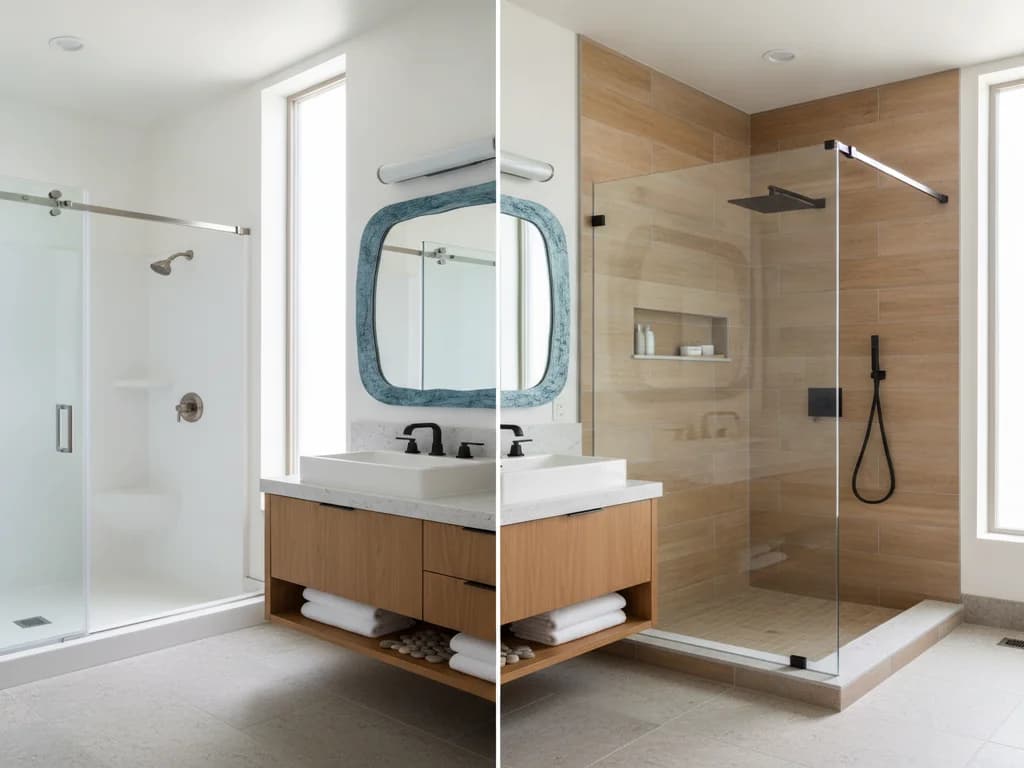
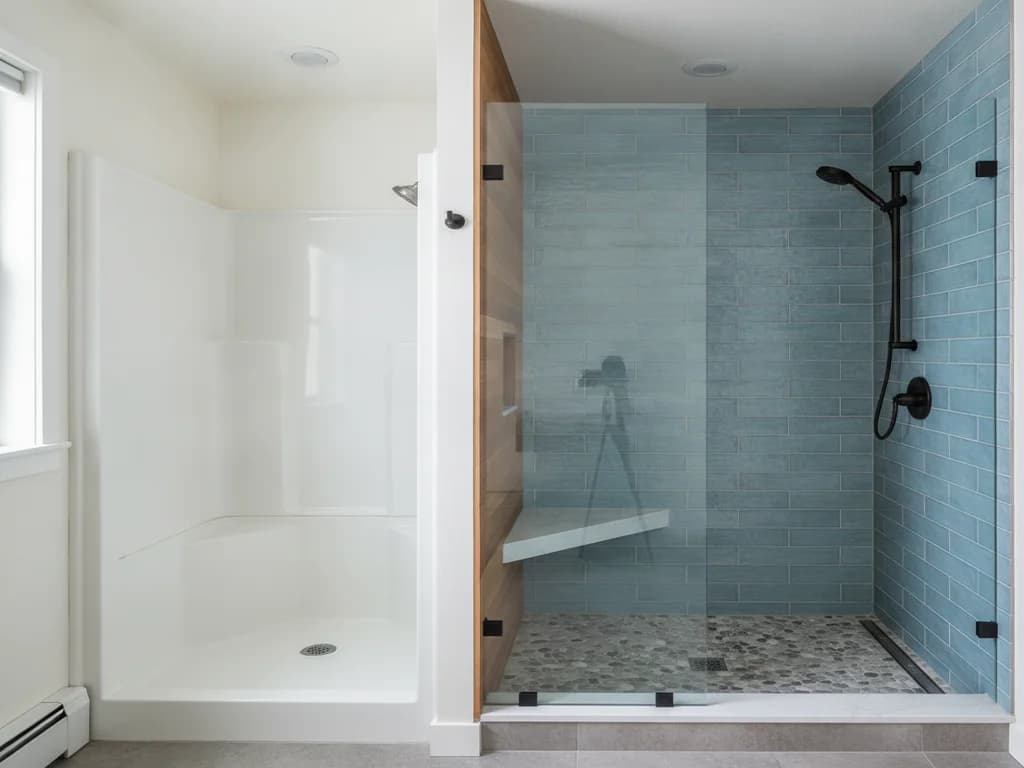
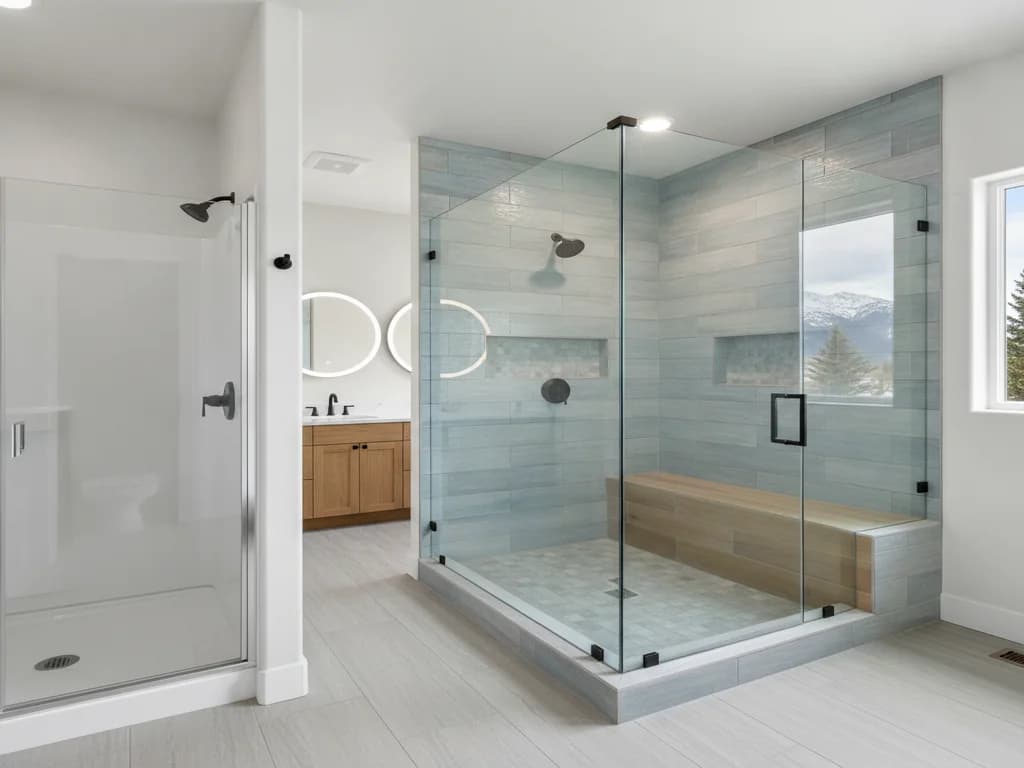
Every shower on the market is one of two things: a product or a structure. Prefab showers — one-piece or multi-panel molded units in fiberglass, acrylic, or solid surface — are products: engineered in a factory, sold in standard sizes, installed in a day. Custom tile showers are structures: a pan, a waterproofing membrane, backer, and tile, built in place to whatever dimensions and design the room allows.
The honest verdict is unusually clean. Prefab wins on installed cost and schedule, and it is a legitimate, watertight shower. Custom wins on everything else — footprint, design, longevity, repairability, and resale — at a price that is genuinely higher but less dramatic than the unit-versus-tile sticker comparison suggests, because both projects pay for the same demolition and plumbing underneath.
This is the category-level decision. If you have already narrowed to specific materials, the sharper comparisons are fiberglass vs. tile and acrylic vs. tile.
What counts as a prefab shower
The prefab category is wider than the builder-grade white box, and the tiers matter:
- Fiberglass units — the entry tier: gel-coat over sprayed laminate, cheapest and thinnest, typically 10–15 years of service per HomeAdvisor.
- Acrylic units — the mid tier: vacuum-formed solid acrylic sheet, warmer, stiffer, and longer-wearing; the meaningful upgrade covered in acrylic vs. fiberglass.
- Solid-surface and panel kits — the upper tier: dense composite pans and wall panels that approach built-shower substance; the category lives in the panel system roundup.
- One-piece vs. multi-piece — one-piece units are new-construction items that will not pass through a finished doorway; remodels use multi-piece kits with caulked joints.
Prefab vs. custom tile: the side-by-side
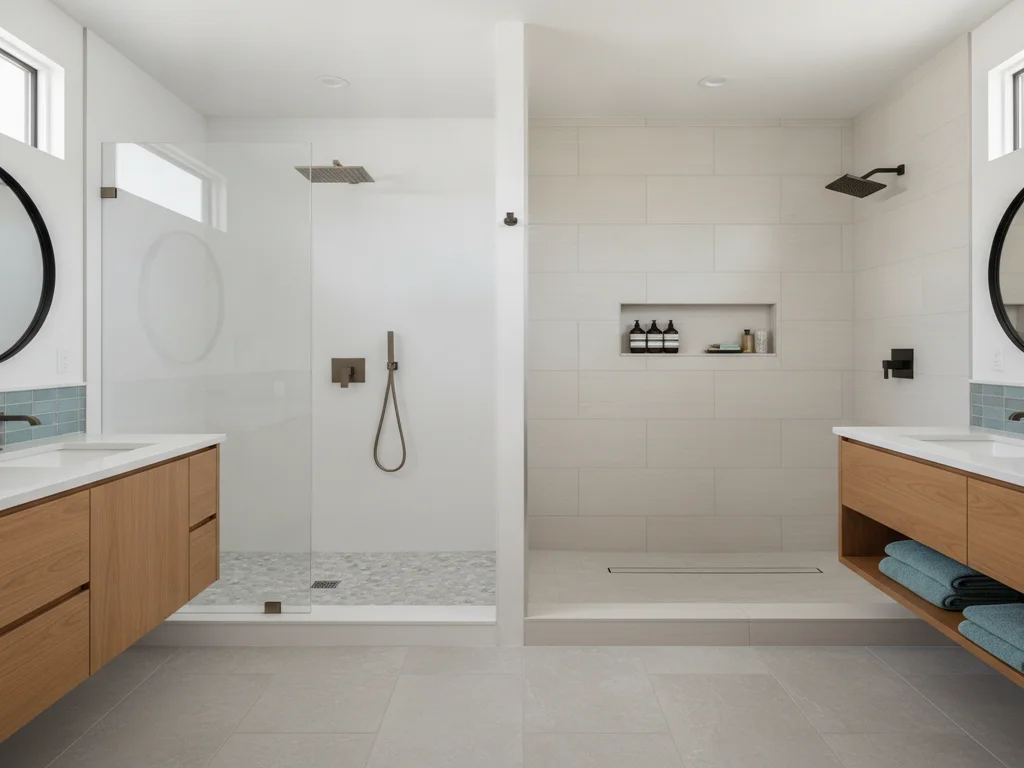
Here is the full decision in one table. Prefab's column reads like a spec sheet; custom's column reads like a building project — which is exactly the difference.
| Factor | Prefab unit | Custom tile shower |
|---|---|---|
| Installed cost | Bottom of HomeAdvisor's roughly $2,000–$9,000 remodel range | Top of that range and beyond, scaling with size and tile selection |
| Schedule | A day once the alcove is ready | Several days of skilled trade work — pan, membrane, setting, grouting |
| Footprint | Standard alcove sizes only | Any dimension, including curbless and odd-shaped spaces |
| Design range | Molded colors and patterns; molded-in shelves | Unlimited — format, pattern, niches, benches, glass configuration |
| Lifespan | Roughly 10–15 years for fiberglass; longer for acrylic and solid surface, per HomeAdvisor | Decades — membrane-built tile is serviceable indefinitely |
| Repairability | Chips patch poorly; cracks mean unit replacement | Spot tile swaps and grout renewal for the life of the house |
| Resale read | Functional, builder-grade | Remodeled, current |
Cost figures are national ranges from HomeAdvisor's True Cost Guide; unit tier, shower size, and tile selection drive the spread.
Total cost, honestly: the gap is real but smaller than the sticker
The misleading comparison is unit price versus tile-shower price. A fiberglass kit can cost a few hundred dollars, per Angi, and a custom tile build runs well into five figures at the high end — a sticker gap wide enough to end the conversation. But the sticker is not the project.
Both projects pay for the same underlayers: demolition and disposal of the old shower, any plumbing relocation or valve replacement, subfloor and framing repairs uncovered along the way, and the finishing work around the new shower. On a like-for-like remodel, that shared scope is a substantial slice of either invoice. What custom adds on top is the skilled build — pan construction, bonded waterproofing membrane, setting, and grouting — which is why the honest multiple is roughly two to four times the prefab project, not ten.
The lifetime math narrows it further. A fiberglass unit replaced once or twice across the life of one tile shower — each round with its own demolition — gives back a meaningful share of the difference. Prefab is still cheaper over thirty years in most scenarios; it is just not the order-of-magnitude win the showroom price tags imply. For the full local picture of the custom side, see the Boise walk-in shower cost guide.
Design range and the fit problem
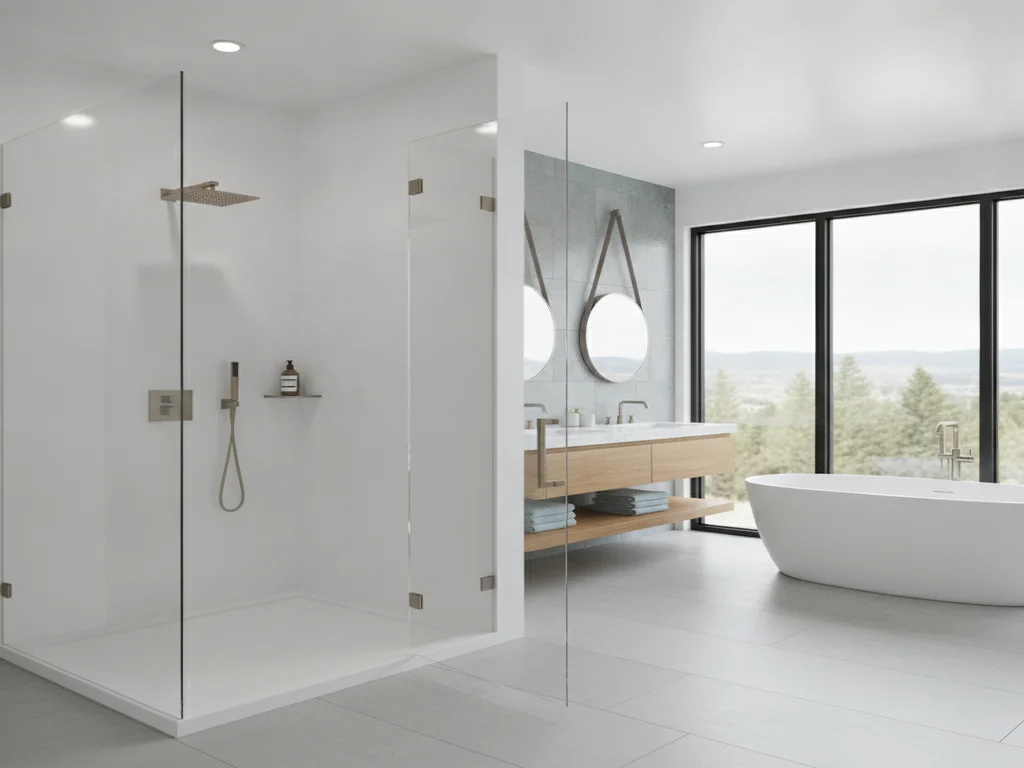
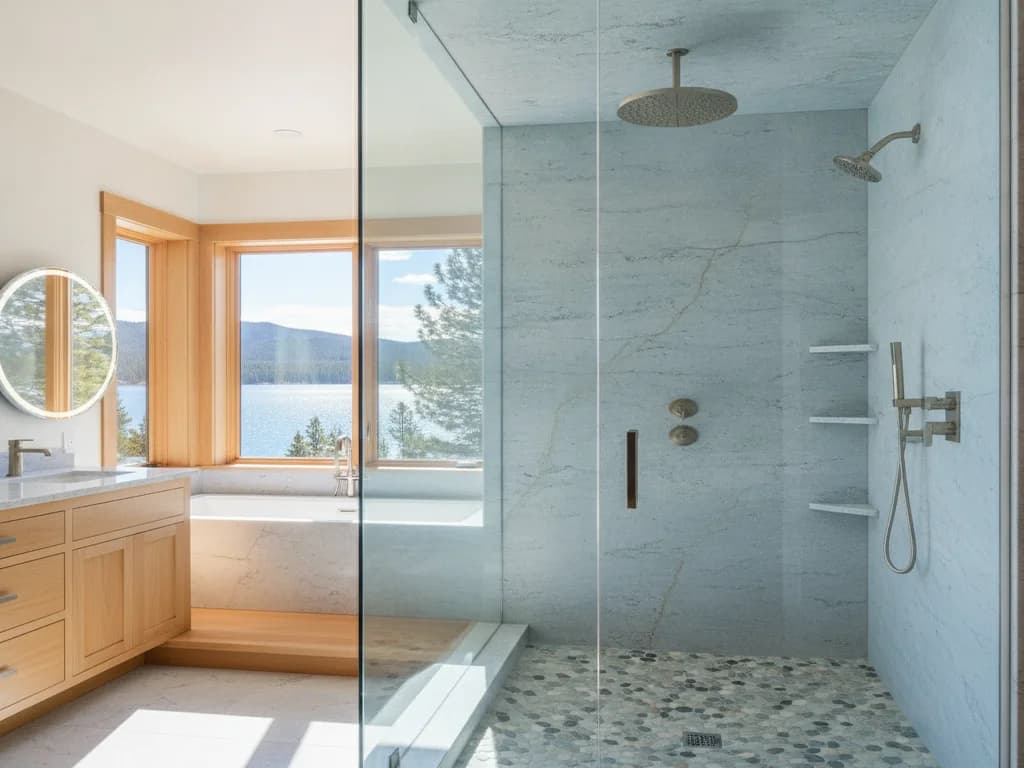
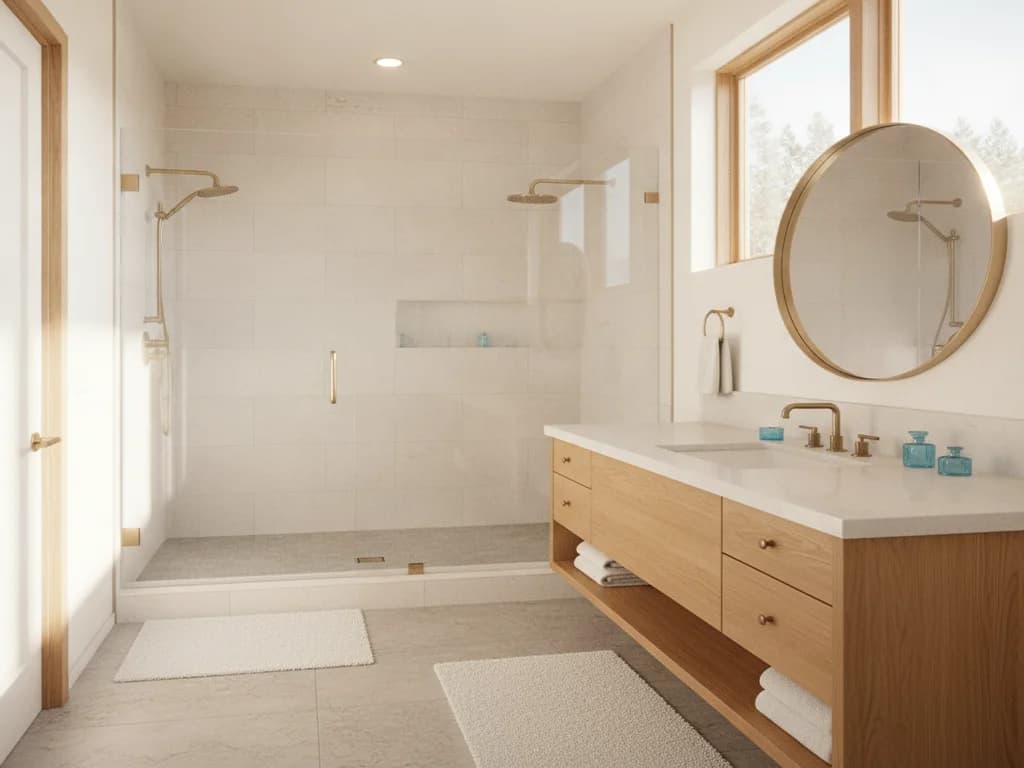
Design is where the categories stop being comparable. A prefab unit offers a catalog: standard alcove widths, a few colors, molded-in shelving. Custom tile offers a composition: any footprint including curbless entries, large-format walls, mosaic floors, recessed niches where you want them, a bench sized to the user, and glass configured to the room. One is a selection; the other is a design.
The fit problem decides more projects than taste does. Prefab units assume a standard alcove — commonly 32, 36, 48, or 60 inches — and many showers are not standard: older Boise-area homes with odd framing, converted tub alcoves, attic bathrooms with sloped ceilings, or remodels that move walls. When the space is nonstandard, "prefab vs. custom" stops being a choice; the custom build is the only thing that fits. Downsizing the shower to fit a unit into a bigger alcove wastes the one commodity a bathroom never has enough of.
Accessibility tips the same way. Curbless entries, fold-down benches at usable heights, and blocking for future grab bars are built-shower features; prefab "barrier-free" units exist but reintroduce the standard-size constraint.
Measure the alcove before you fall for either option
The single most common prefab surprise is a nonstandard opening — a 34-inch or 57-inch alcove that no stock unit fits. Measure width, depth, and ceiling height first. If your space is off-catalog, the custom path is not an upgrade decision anymore; it is the plan, and the budget conversation should start there.
Longevity and repair: increments versus replacements
A membrane-built tile shower ages in maintainable increments: grout gets cleaned and eventually renewed, caulk gets cut out and redone, a cracked tile gets swapped. Built to TCNA methods, the assembly is watertight independent of surface wear, and there is no scheduled end of life.
A prefab unit ages toward a single decision. Gel coat dulls and crazes, pans flex and eventually crack, and when that day comes the unit is done — patch kits and refinishing are short-term measures on a flexing shell. The signals and the replacement path are covered in replacing a prefab shower stall. The upside of that day: with the alcove already open, it is the cheapest moment you will ever have to step up to a built shower, since the demolition is paid for either way.
Which should you choose?
Let the space, the timeline, and the ownership horizon make the call:
- Rental, flip, or hard budget cap: prefab — a watertight, warrantable shower at the lowest installed cost, done in a day.
- Standard alcove, mid budget, owner-occupied: a quality acrylic or solid-surface unit — most of prefab's economy with much better wear than fiberglass; see acrylic vs. fiberglass for the tier difference.
- Nonstandard space, curbless entry, or a reconfigured floor plan: custom — the catalog does not fit, so build to the room.
- Forever home with the walls already open: custom tile over a modern membrane — the premium buys decades of repairable service and full design control.
- Existing prefab unit failing: read replacing a prefab shower stall first — replacement day is the cost-rational moment to decide between another unit and the built shower.
- Torn on wall materials within the custom path: the shower wall materials guide ranks tile against slabs, panels, and solid surface.
Ready to plan your Boise bathroom?
Licensed & insured · 3-year workmanship warranty
Frequently asked questions
- How much more does a custom shower cost than a prefab?
- Roughly two to four times the installed project cost in most like-for-like remodels — not the tenfold gap the unit stickers suggest. Both projects pay for the same demolition, plumbing, and finishing; custom adds multi-day skilled labor for the pan, waterproofing membrane, and tile work. HomeAdvisor's roughly $2,000–$9,000 shower-remodel range brackets it: prefab swaps at the bottom, custom tile at the top and beyond.
- Are prefab showers any good?
- Yes, within their tier. A properly installed prefab unit is watertight, warrantable, and the most functional shower per dollar on the market. Quality varies sharply by tier — thin fiberglass shows its age at roughly 10–15 years per HomeAdvisor, while acrylic and solid-surface units wear meaningfully longer. Their genuine limits are standard-size footprints, catalog looks, and the fact that a cracked unit is replaced, not repaired.
- Do prefab showers come in custom sizes?
- No — standard alcove sizes only, commonly 32, 36, 48, and 60 inches wide, which is the category's hard limit. A handful of manufacturers offer expanded catalogs, but a nonstandard opening, a curbless design, or a reconfigured floor plan takes you out of prefab entirely. When the space is off-catalog, the built shower is not the upgrade option; it is the only thing that fits the room.
- Is a custom tile shower worth the money?
- When you are staying in the home and the walls are open anyway, usually yes. The premium buys decades of spot-repairable service — grout renewal and tile swaps instead of unit replacement — plus any footprint, full design control, and a resale read of "remodeled bathroom." In a rental, a flip, or a tight budget, the honest answer flips: a quality prefab unit delivers a working shower and leaves budget for higher-return items.
- How long does each option take to install?
- A prefab swap is typically a one-day set once demolition and plumbing rough-in are done, with the full project spanning a few days. A custom tile shower is a multi-day build after the same prep — pan construction, waterproofing membrane, cure times, setting, and grouting each claim their place on the calendar. Plan on roughly a week of trade work for custom versus days for prefab, before glass and finishing.
Sources
- HomeAdvisor — True Cost Guide
- Angi — Cost Guides
- Tile Council of North America (TCNA)
- This Old House — Bathrooms
Claims and figures are drawn from the sources above and provided for general guidance; your project may vary. Photography is illustrative of design concepts. For a fixed price on your specific bathroom, request a free estimate.