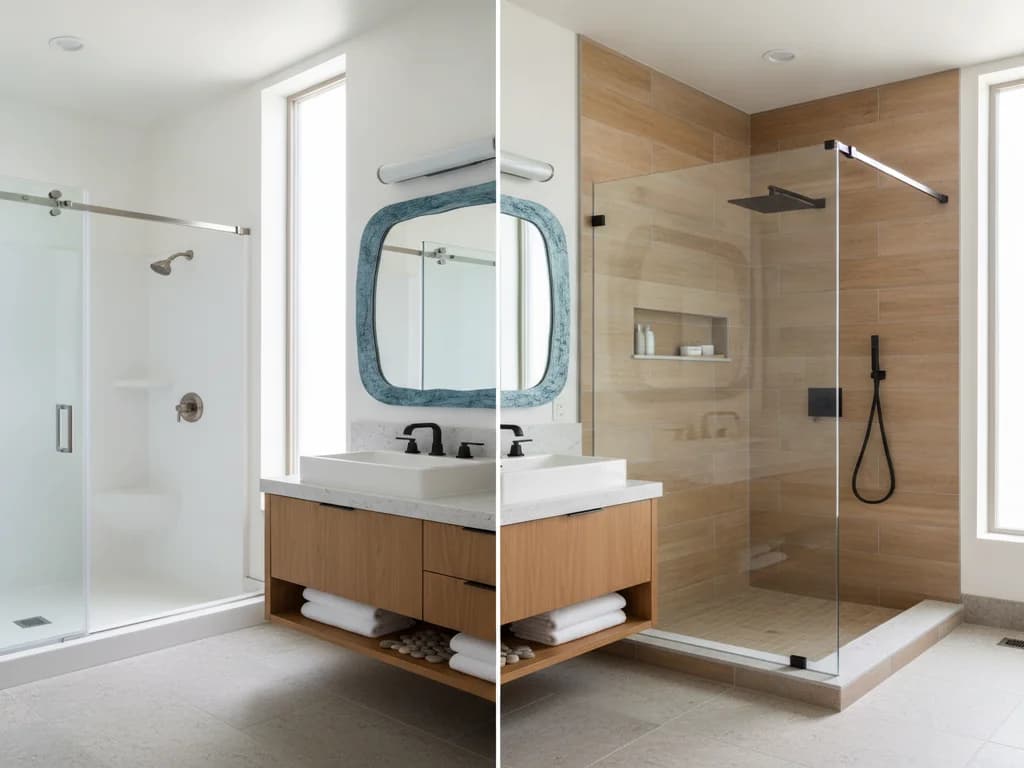
Updated September 10, 2026 · 7 min read
By Boise Bath — bathroom & shower remodeling in Boise & the Treasure Valley
The short answer
Fiberglass is the cheapest working shower you can buy — a molded unit installed in a day — but it scratches, fades, and cannot be meaningfully repaired once the gel coat wears through. Tile costs several times more up front and serves for decades with spot repairs. Choose fiberglass for budget or rental baths; choose tile for a home you plan to keep.
Key takeaways
- Fiberglass and tile sit at opposite ends of the shower market: lowest upfront cost versus longest serviceable life.
- A fiberglass unit is a gel-coat surface over a fiberglass laminate — thin, light, and fast to install, but the finish is a wear layer that dulls, scratches, and eventually cracks.
- A tile shower is a built system: its lifespan is set by the waterproofing membrane behind the tile, not the tile itself.
- Repairability is the deepest divide — tile is fixable piece by piece for decades; a cracked fiberglass pan or wall means the unit is done.
- HomeAdvisor puts shower remodels broadly at roughly $2,000–$9,000; fiberglass units live at the bottom of that range and custom tile at the top and beyond.
- For resale, tile reads as a remodeled bathroom; fiberglass reads as builder-grade — both honest outcomes, priced accordingly.
The verdict: fiberglass for the budget, tile for the decades
This is the widest gap in the shower comparison family. Fiberglass is the entry point of the entire market — the molded white units builders install by the thousands because they are cheap, light, and go in fast. Tile is the other pole: the most labor, the most design range, and the only shower surface that can be repaired piece by piece for the life of the house.
Neither is a wrong answer. The mistake is paying for one while expecting the other: a fiberglass unit will never age like tile, and a tile shower will never be a budget line item. If your actual decision is between the two mid-market options — acrylic and tile — that is a closer call with different trade-offs, and it has its own guide.
Below is the honest version of the fiberglass-versus-tile decision: what each really costs, how long each really lasts, what happens when each one fails, and the scenarios where each is genuinely the right buy.
What a fiberglass shower actually is
A fiberglass shower is a molded unit: chopped glass fiber and polyester resin sprayed into a mold, finished with a colored gel-coat surface layer. One-piece surrounds go into new construction before the walls close; multi-piece kits are made for remodels, since a one-piece unit will not fit through a finished doorway.
The gel coat is the part you touch — and the part that ages. It is a thin wear layer: abrasive cleaners dull it, years of use craze it, and dropped shampoo bottles chip it. Fiberglass is also the thinnest, most flexible unit construction on the market, which is why older pans develop that telltale spongy flex underfoot before they crack. Fiberglass is often confused with acrylic, its better-made cousin; telling them apart takes about a minute and changes what your shower is worth keeping.
A tile shower, by contrast, is not a product — it is an assembly built in place: a sloped pan and waterproofing membrane system, backer board, and porcelain or ceramic tile set over it. That construction is why it costs more, and why it can be serviced indefinitely.
Fiberglass vs. tile: the side-by-side
Here is the whole decision in one table. The pattern is consistent: fiberglass wins every column about the day of installation, and tile wins every column about the years after it.
| Factor | Fiberglass unit | Tile shower |
|---|---|---|
| Upfront cost | Lowest on the market — units themselves often run a few hundred dollars, per Angi, plus installation | Highest — a multi-day waterproofing, setting, and grouting build |
| Typical lifespan | Roughly 10–15 years before the gel coat and pan show their age, per HomeAdvisor | Decades — the membrane system behind the tile sets the ceiling, not the tile |
| Repairability | Chips can be patched; cracks, flexing pans, and worn gel coat mean replacement | Individual tiles replaced, grout renewed indefinitely |
| Maintenance | Gentle non-abrasive cleaners only; abrasives destroy the gel coat | Grout cleaning and periodic sealing; tolerates hard scrubbing |
| Design range | Molded white or almond units in standard alcove sizes | Unlimited — any footprint, format, color, niche, or bench |
| Install time | A day once the alcove is ready | Several days of skilled trade work |
| Resale read | Builder-grade | Remodeled and current |
Lifespan and cost directions are national figures from HomeAdvisor and Angi cost guides; unit quality, water chemistry, and installation drive the spread.
What each one really costs
Fiberglass wins the sticker comparison by a mile, and honesty requires saying so plainly. The units themselves are the cheapest shower product sold — often a few hundred dollars at the low end, per Angi's cost guides — and installation is a single-day job. Even with demolition and plumbing adjustments, a fiberglass swap sits at the bottom of HomeAdvisor's roughly $2,000–$9,000 shower-remodel range.
Custom tile occupies the top of that range and runs past it. You are paying for skilled labor across multiple days: pan construction, a bonded waterproofing membrane, setting, and grouting. The tile itself is often the smallest line on the invoice. Our walk-in shower cost guide breaks down where the money actually goes on a Boise tile build.
The honest long-view math narrows the gap. A fiberglass unit that serves 10–15 years and then needs replacement — twice over the life of a tile shower — plus the second round of demolition and disposal, closes much of the distance. It rarely closes all of it. Fiberglass is genuinely cheaper over thirty years in most cases; it is just not several-times cheaper the way the sticker suggests.
Lifespan and repair: where the two materials part ways
Fiberglass ages on a schedule. The gel coat dulls first, then holds soap scum and hard-water film more stubbornly — a real issue with Treasure Valley's hard water — which invites scrubbing that dulls it further. Crazing follows, then chips, and in pans, flex cracks where the floor was never fully supported. None of this is a defect; it is the material reaching the end of its design life. When the pan flexes or a crack appears, replacement is the honest answer — patch kits and refinishing buy a year or two at best.
Tile fails differently: almost never all at once, and almost always fixably. Grout lines wear and get renewed. A cracked tile gets swapped. Caulk at the changes of plane gets cut out and redone. The only genuine end-of-life event for a tile shower is a failed waterproofing membrane behind the walls — which is why old showers built on bare backer board fail and membrane-built showers do not. The waterproofing guide explains why that hidden layer, not the tile, is what you are really buying.
That difference compounds. A fifteen-year-old fiberglass shower is a replacement decision. A fifteen-year-old membrane-built tile shower is a Saturday of grout cleaning.
A flexing fiberglass pan is a deadline, not a quirk
When a fiberglass shower floor gives underfoot, the laminate is fatiguing — and a crack there sends water directly into the subfloor, where the repair bill stops being about the shower. If your pan flexes, plan the replacement on your schedule rather than waiting for the leak to set it for you.
Looks and resale: the builder-grade problem
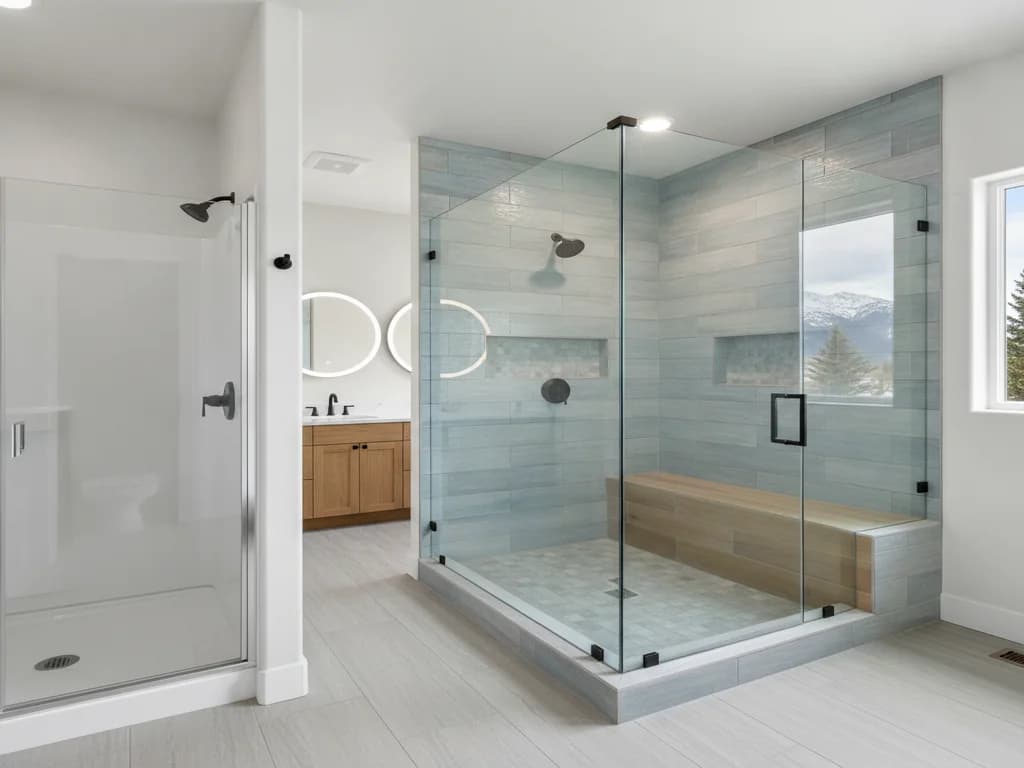
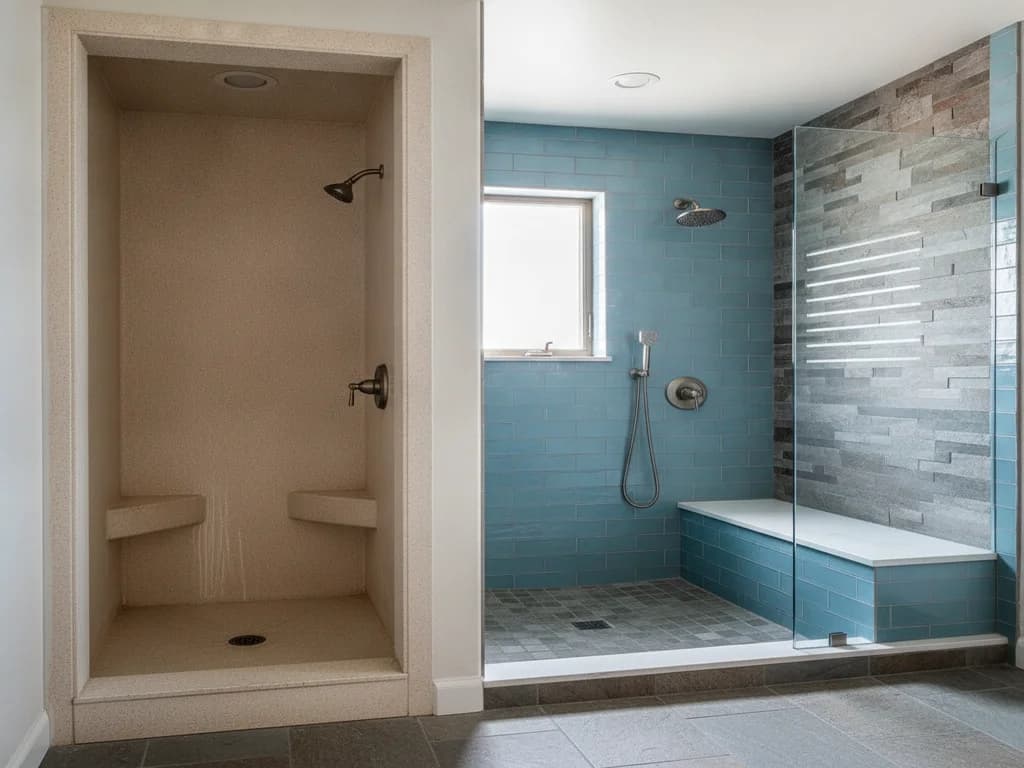
A fiberglass unit looks like what it is: a molded white or almond alcove insert in a handful of standard sizes. New, it reads clean and unobjectionable. It never reads custom, and buyers walking a house price it accordingly — a fiberglass bath is one they mentally budget to remodel.
Tile is the material every design-forward shower photo is made of, and the design range is genuinely unlimited: any footprint, large-format walls, mosaic floors, niches, benches, curbless entries. For resale, a well-executed tile shower is the difference between "remodeled bathroom" and "functional bathroom" in a listing. Where tile sits against every other wall option — panels, solid surface, stone — is ranked in the shower wall materials guide.
One honest middle note: a crisp new fiberglass unit beats a failing tile shower every time. Material tier matters less than condition.
Which should you choose?
Let the house, the timeline, and the budget make the call:
- Rental, flip, or strict budget: fiberglass — the most functional shower per dollar, installed in a day, and tenants cannot hurt anything a replacement unit will not fix.
- Forever home, walls already open in a remodel: tile over a modern membrane — the labor premium buys decades of repairable service and full design control.
- Mid-budget and torn: consider acrylic before deciding — it is the meaningful upgrade over fiberglass at a modest premium, and the acrylic vs. tile comparison is the decision most remodels actually face.
- Existing fiberglass unit that is dull, cracked, or flexing: replacement time — see what replacing a fiberglass shower involves before choosing its successor.
- Want tile looks without grout upkeep: large-format porcelain with tight joints, or a quality panel system — the middle paths are covered in the wall materials roundup.
- Not sure the shower needs replacing at all: start with should I replace my shower — sometimes the honest answer is new caulk and glass.
Ready to plan your Boise bathroom?
Licensed & insured · 3-year workmanship warranty
Frequently asked questions
- How much cheaper is a fiberglass shower than tile?
- Substantially — fiberglass units are the least expensive shower product sold, often a few hundred dollars for the unit itself per Angi, and installation is a one-day job. Custom tile is a multi-day skilled build at the top of HomeAdvisor's roughly $2,000–$9,000 shower-remodel range and beyond. Over decades the gap narrows, because fiberglass typically gets replaced once or twice in the life of one tile shower.
- How long does a fiberglass shower last compared to tile?
- Roughly 10–15 years for fiberglass, per HomeAdvisor — the gel coat dulls and crazes, and pans can flex and crack as the laminate fatigues. A tile shower built over a modern bonded waterproofing membrane serves for decades, because every wear item — grout, caulk, individual tiles — is renewable. The tile itself is rarely what ends a tile shower; the membrane behind it sets the lifespan.
- Can you tile over a fiberglass shower?
- No — tile will not bond reliably to a flexible gel-coat surface, and the unit flexes enough to crack grout and tile even if adhesion held. Converting to tile means removing the unit entirely and building a proper pan, backer, and waterproofing membrane in its place. That is the standard fiberglass-to-tile conversion path, and it is a full replacement project rather than an overlay.
- Why is my fiberglass shower floor flexing?
- The pan was likely installed without full support beneath it — many builder-grade units went in over hollow spans — and years of use fatigue the laminate. Flexing is the warning stage: continued movement leads to stress cracks, and a cracked pan leaks straight into the subfloor. There is no lasting repair for a flexing pan; it is the classic signal that the unit has reached replacement time.
- Is fiberglass or tile better for resale?
- Tile, clearly — a well-built tile shower reads as a remodeled, current bathroom, while a fiberglass unit reads as builder-grade that buyers budget to replace. That said, condition beats material: a new fiberglass unit outshows a failing tile shower every time, and in entry-level or rental properties the material tier rarely moves the sale price. Match the shower to the home's market, not to the maximum.
Sources
- HomeAdvisor — True Cost Guide
- Angi — Cost Guides
- Tile Council of North America (TCNA)
- This Old House — Bathrooms
Claims and figures are drawn from the sources above and provided for general guidance; your project may vary. Photography is illustrative of design concepts. For a fixed price on your specific bathroom, request a free estimate.