Updated September 10, 2026 · 7 min read
By Boise Bath — bathroom & shower remodeling in Boise & the Treasure Valley
The short answer
Tile is the better shower for the long haul — repairable, timeless, and resale-friendly — while cultured marble wins on price, speed, and seamless low-maintenance walls. Choose cultured marble for a budget remodel, rental, or fast turnaround; choose tile when you plan to stay, want design control, or are already opening the walls anyway.
Key takeaways
- Cultured marble is cast marble dust and resin under a gel-coat finish — large seamless panels with almost no grout to maintain.
- The gel coat is the whole story: while intact it sheds water effortlessly; once it dulls, crazes, or cracks, the panel cannot be meaningfully repaired — only refinished briefly or replaced.
- Tile’s durability lives behind the tile: a modern waterproofing membrane system determines whether a tile shower lasts, not the tile itself.
- Maintenance trades places: cultured marble asks for gentle non-abrasive cleaners; tile asks for grout care but forgives harsh scrubbing.
- Tile is spot-repairable for decades; a cracked cultured marble panel is a replacement project.
- Cost direction favors cultured marble up front, tile over the life of the house.
The verdict: tile for the long haul, cultured marble for the budget
These two materials answer different questions. Cultured marble answers "how do I get a clean, watertight, decent-looking shower for the least money and downtime?" Tile answers "what shower will still be serviceable, stylish, and repairable in twenty years?" Both are legitimate — the mistake is buying one while expecting the other’s virtues.
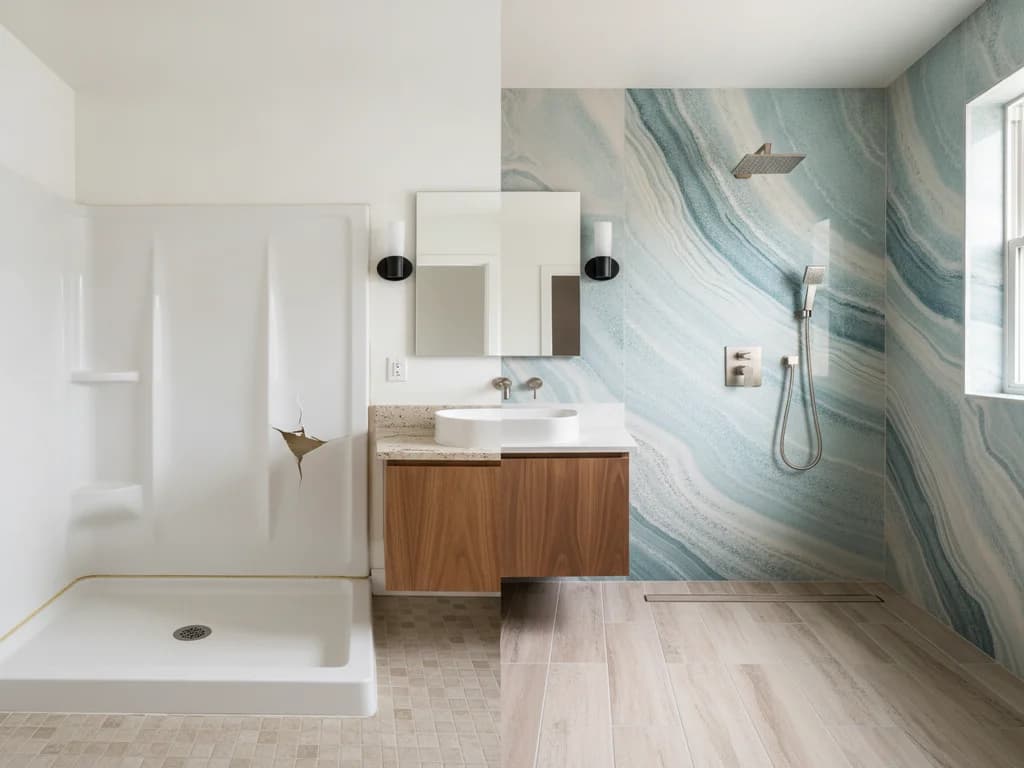
If you own a 1990s or early-2000s Treasure Valley house, there is a good chance you already know cultured marble: the smooth, veined, one-piece surrounds builders installed by the thousands here. Many are still doing their job. Many others have dulled, yellowed, or cracked — which is exactly the honest evidence about how the material ages, and why replacing a cultured marble shower is one of the most common remodel calls we get.
Below is the full comparison — durability, water behavior, maintenance, cost direction, and looks — followed by the scenarios where each one is genuinely the right call.
What cultured marble actually is
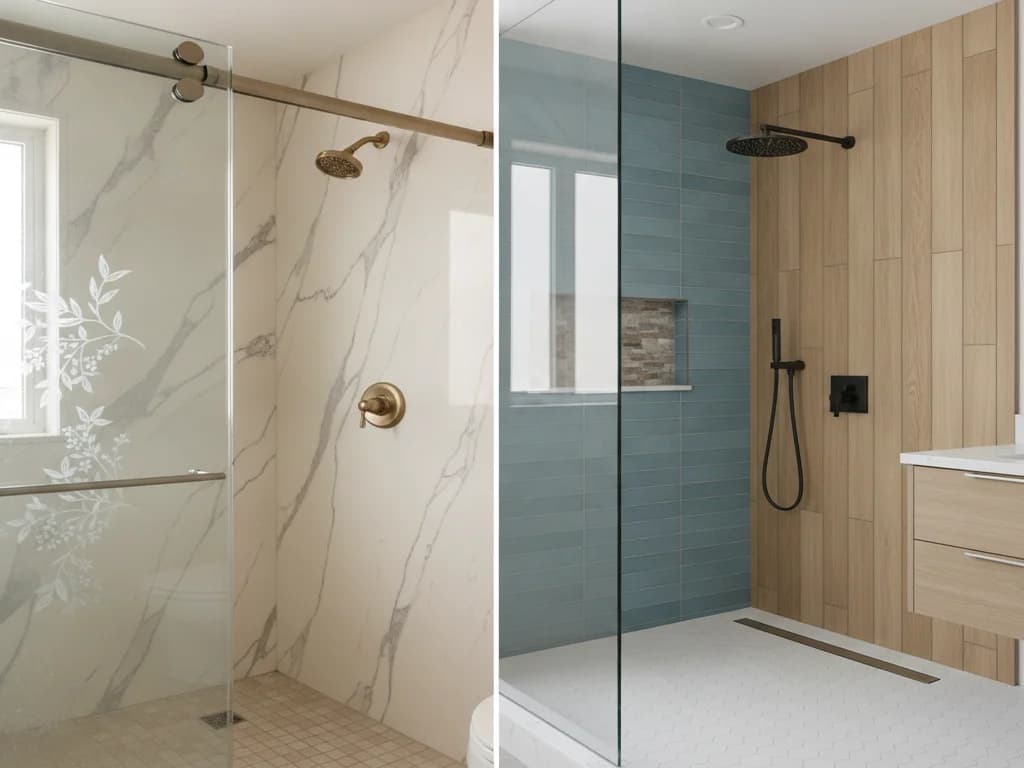
Cultured marble is not marble in any geological sense. It is engineered cast stone: crushed marble dust blended with polyester resin, poured into molds, and finished with a clear gel-coat surface layer. The result is large, seamless, non-porous panels — often a full wall in one piece — with molded-in soap shelves and trim.
The gel coat is the functional surface, and everything good and bad about cultured marble traces back to it. While intact, it is glassy, waterproof, and easy to wipe down. But it is a thin layer: abrasive cleaners dull it, years of hot water and UV can yellow lighter colors, and impacts or settling can craze or crack it. Once the gel coat is gone, the porous casting underneath is exposed, and no cleaner brings the shine back.
Tile, by contrast, is a system rather than a surface: porcelain or ceramic units over a waterproofing assembly, joined by grout. That construction is more labor to build and more joints to maintain — and it is also why tile can be repaired piece by piece for the life of the house.
Cultured marble vs. tile: the side-by-side
Here is the whole decision in one table. Notice the pattern: cultured marble front-loads its advantages, and tile back-loads them.
| Factor | Cultured marble | Tile (porcelain/ceramic) |
|---|---|---|
| Water behavior | Seamless non-porous panels; few joints for water to find | Water-shedding surface; long-term watertightness depends on the membrane system behind it |
| Durability | Gel coat dulls, yellows, or crazes over years; casting itself is sturdy | Tile surface lasts decades; grout and caulk are the wear items |
| Maintenance | Gentle non-abrasive cleaners only — abrasives destroy the gel coat | Grout cleaning and periodic sealing; tolerates aggressive scrubbing |
| Repairability | Minor chips can be patched; cracks and worn gel coat mean refinishing (short-lived) or panel replacement | Individual tiles can be replaced; grout can be renewed indefinitely |
| Looks & resale | Molded veined panels; reads builder-grade to many buyers | Unlimited design range; reads custom and current |
| Install | Fast — panels go up in a day once the base is ready | Slower — waterproofing, setting, and grouting over multiple days |
| Cost direction | Lower — the budget option among wall systems | Higher up front; shower remodels run roughly $2,000–$9,000 per HomeAdvisor, with full custom tile at the top of that range and beyond |
Cost range is a national shower-remodel figure from HomeAdvisor’s True Cost Guide; local scope, size, and tile selection drive the spread.
How each one handles water — and where each one fails
Cultured marble’s seamlessness is a real advantage: a three-panel surround has a handful of caulked joints where a tiled wall has hundreds of feet of grout line. Fewer joints means fewer places for water to work on, which is why a well-installed surround can run for years with nothing but wipe-downs.
Its failure mode is the surface itself. Crazing — networks of hairline cracks in the gel coat — lets moisture reach the casting, where it causes staining and, at cracks, genuine leaks. Hard water compounds it here: mineral deposits on a dulled gel coat are nearly impossible to remove without abrasives, and abrasives make the dulling worse. That spiral is how most Treasure Valley cultured marble ends its service life.
Tile’s failure mode lives behind the wall. Grout was never the waterproofing — the membrane system is, and a tile shower built with a modern bonded membrane, per TCNA handbook methods, is watertight independent of surface condition. Old showers built on bare backer board are the ones that fail. This is the single most important thing to understand about tile: you are buying the installation, not the tile. Our shower wall materials guide ranks every option with this lens.
Never use abrasive cleaners on cultured marble
Scrubbing powders, magic erasers, and stiff brushes take the gloss off gel coat permanently — and a dulled surface then holds soap scum and hard-water film more stubbornly, inviting more scrubbing. It is a one-way ratchet. If a cultured marble surround has already gone matte and chalky, no product reverses it; that surface is at the refinish-or-replace stage.
Maintenance and repair over ten years
Year to year, cultured marble is the lower-effort shower: squeegee or wipe down, clean with gentle products, and re-caulk the few joints when they age. Tile asks for more routine attention — grout cleaning, resealing on a sensible schedule, and the same caulk renewal at changes of plane.
The picture inverts when something goes wrong. A cracked tile or a failing grout line is a spot repair; a full regrout can reset a tired tile shower’s surface without touching the walls. A cracked cultured marble panel has no equivalent fix — professional refinishing (essentially painting on a new coating) buys a few years at best, and the durable answer is panel replacement, which usually means replacing the surround.
That repairability difference is the strongest argument for tile in a stay-put house: a tile shower ages in maintainable increments, while cultured marble ages toward a single replacement decision.
Looks, resale, and the builder-grade problem
Cultured marble’s aesthetic ceiling is its molds: swirled or veined panels in a manufacturer’s palette, with molded shelves and trim. Current products look cleaner than the beige-swirl surrounds of the 90s, and in a simple modern colorway they photograph respectably. But the material cannot escape reading as a panel system, and in this market many buyers associate it with original builder-grade baths.
Tile’s range is effectively unlimited — format, pattern, color, niches, benches, accent bands — which is why every design-forward shower you have saved to a folder is tiled. For resale, a well-executed tile shower reads as a remodeled bathroom; a new cultured marble surround reads as a maintained one. Both are honest outcomes; they are just different outcomes.
One middle path worth knowing: large-format porcelain panels and quality solid-surface systems occupy the space between these two — fewer seams than tile, better material than cultured marble. The shower wall materials roundup covers where those land on price and looks.
Which should you choose?
Let the timeline and the budget make this call:
- Budget remodel where watertight and clean is the goal: cultured marble — it delivers the most functional shower per dollar, installed fast.
- Rental or flip: cultured marble or a solid-surface surround — durable enough, low-maintenance for tenants, and the budget stays pointed at higher-ROI items.
- Forever-home shower, walls already open: tile over a modern membrane system — the labor premium buys decades of repairable service and full design control.
- Your existing cultured marble is dull, crazed, or cracked: replacement time — see what replacing a cultured marble shower involves before choosing its successor.
- You want tile looks but fear grout upkeep: large-format porcelain with tight rectified joints and epoxy-class grout minimizes the maintenance surface — a real middle path.
- Unsure whether the shower needs replacing at all: start with should I replace my shower — sometimes the honest answer is a regrout and new glass.
Ready to plan your Boise bathroom?
Licensed & insured · 3-year workmanship warranty
Frequently asked questions
- Is cultured marble good for shower walls?
- Yes, within its lane. Seamless non-porous panels with minimal joints make it a genuinely watertight, low-maintenance budget option, and thousands of Treasure Valley showers prove it can serve for years. Its limits are the gel-coat surface — which dulls and crazes with age and abrasive cleaning — and the fact that damaged panels are replaced, not repaired.
- Which is cheaper, cultured marble or a tile shower?
- Cultured marble, usually by a wide margin — it is molded panels installed in a day versus a multi-day waterproofing-and-setting process. HomeAdvisor puts shower remodels broadly at roughly $2,000–$9,000, with panel surrounds toward the bottom of that range and custom tile at the top and beyond. The gap narrows over decades because tile is repairable and cultured marble ages toward replacement.
- Why is my cultured marble shower yellowing and dull?
- That is the gel coat aging: years of hot water, cleaning chemistry, UV exposure, and especially abrasive scrubbing wear the glossy layer down, and lighter colors can yellow as the resin ages. It is cosmetic at first, but a worn gel coat also holds soap scum and hard-water film more stubbornly. No cleaner restores the gloss — the options are professional refinishing or replacement.
- Can you repair a cracked cultured marble shower panel?
- Small chips can be patched with color-matched filler, but a true crack is different: it typically runs through the gel coat into the casting, it lets water reach material that should stay dry, and patched cracks tend to reopen. Refinishing coats over the problem temporarily. The durable fix is replacing the panel — and since matching aged panels is nearly impossible, that usually means the surround.
- Does a tile shower leak more than cultured marble?
- Not when built correctly — this is the most persistent myth in the comparison. Grout was never the waterproofing; a modern tile shower is watertight because of the bonded membrane system behind the tile, per TCNA installation methods. Old showers tiled over bare backer board leak; membrane-built showers do not. Cultured marble has fewer joints, but its cracks leak just as readily.
- What do buyers prefer, tile or cultured marble showers?
- Tile, generally — a well-executed tile shower reads as a remodeled, current bathroom, while cultured marble reads as builder-grade to many buyers who grew up with 90s surrounds. That said, a crisp new surround beats a failing tile shower every time, and in entry-level or rental properties the difference rarely moves the price. Match the material to the home’s market tier.
Sources
- Tile Council of North America (TCNA)
- HomeAdvisor — True Cost Guide
- This Old House — Bathrooms
- Angi — Cost Guides
Claims and figures are drawn from the sources above and provided for general guidance; your project may vary. Photography is illustrative of design concepts. For a fixed price on your specific bathroom, request a free estimate.