Updated July 16, 2026 · 7 min read
By Boise Bath — bathroom & shower remodeling in Boise & the Treasure Valley
The short answer
Replacing a cultured marble vanity top means disconnecting the faucet and drain, cutting the old one-piece top free of its caulk bed, and setting a new top — usually quartz or solid surface with an undermount sink. Because the bowl is molded in, a new sink and faucet come with the project, which typically takes one to two days.
Key takeaways
- Cultured marble tops have the sink molded in, so replacing the top always means replacing the sink — and almost always the faucet and side splashes with it.
- The gel-coat surface is what fails: once it yellows, crazes around the drain, or wears through, there is no lasting refinish for a heavily used top.
- Quartz and solid surface with an undermount bowl are the most common upgrades; a new cultured marble top is still the budget-honest option.
- Builder tops were made in standard widths and scribed wall-to-wall, so measure the alcove — not the old top — before ordering.
- If the cabinet under the top is a worn builder box, replacing the whole vanity often costs little more than a top swap on its own.
Why is cultured marble in so many Treasure Valley bathrooms?
From the 1980s through the mid-2000s, cultured marble was the default vanity top in production homes — including most of the builder subdivisions that filled Boise, Meridian, and Nampa in those decades. It is a cast blend of crushed marble dust and polyester resin, sealed under a thin clear gel coat, with the sink bowl molded into the top as one seamless piece.
Builders loved it because it was cheap, fast, and had no sink seam to leak. Homeowners lived with it happily for years — until the gel coat started to go. If your home was built in that era and the top has never been touched, what you are looking at is original equipment near the end of its service life.
It is one of the most common upgrades we see requested, alongside the rest of the builder-grade fixes Treasure Valley homes need.
How do you know the top is done?
Cultured marble does not usually fail structurally — it fails at the surface. The gel coat is only a few mils thick, and once it is compromised the porous resin underneath stains and holds water marks that no cleaner touches.
- Yellowing or ambering, especially around the bowl — UV and age discolor the gel coat itself, not just the surface
- Crazing: a web of fine spider cracks radiating from the drain, where decades of hot-water thermal cycling stress the resin
- Dull, etched patches where the gloss is simply gone — often worst where a curling iron or harsh cleaner sat
- Chips or burns that expose the different-colored core beneath the gel coat
- Hard-water crust at the faucet that has permanently etched the finish — a common one here, given the Treasure Valley’s mineral-heavy water (see hard water and your Boise bathroom)
Can you refinish cultured marble instead of replacing it?
Sometimes, briefly. Light scratches and dullness in an intact gel coat can be wet-sanded and polished back to gloss, and a refinishing company can spray a new coating over the whole top. But a sprayed finish on a horizontal, wet, heavily used surface is living on borrowed time — coatings that hold up for years on a vertical tub apron wear much faster around a sink drain.
Once the top is crazed at the drain or the gel coat is worn through, refinishing is a cosmetic delay, not a fix. For a top that is 20 to 40 years old, the honest math almost always favors replacement.
What replaces an integral-bowl top?
This is the decision that shapes the whole project, because you are not just picking a material — you are picking a sink style. The molded-in bowl goes away with the old top, and most replacements pair a slab material with a separate undermount sink.
The full material rundown — durability, maintenance, and how each one feels day to day — lives in our bathroom countertop materials guide. The short version for a vanity swap:
| Replacement | Sink style | Why homeowners pick it |
|---|---|---|
| Quartz slab | Undermount | The default upgrade — non-porous, hard-wearing, huge color range |
| Solid surface (e.g. Corian-type) | Undermount or integral | Seamless look closest to what you had, renewable surface |
| Granite slab | Undermount | Natural stone at a similar price tier to quartz; needs periodic sealing |
| New cultured marble | Integral (molded) | Cheapest like-for-like swap; modern gel coats, same long-term wear story |
| Porcelain slab | Undermount | Thin, extremely hard, growing option through fabricators |
Laminate and tile tops exist at the budget end but are rare choices for a deliberate upgrade.
The part nobody budgets for: everything attached to the top
Because the sink is part of the old top, a "countertop swap" is really a top-sink-faucet-splash package. The old widespread or centerset faucet rarely survives removal in reusable condition, and even when it does, a 20-year-old builder faucet on a new quartz top is a false economy — if yours is corroded or pitted, see replacing a bathroom faucet for what a proper swap involves.
The molded backsplash and side splashes come off with the top too, usually taking paint — and occasionally drywall paper — with them. Plan on wall touch-up behind the new splash line.
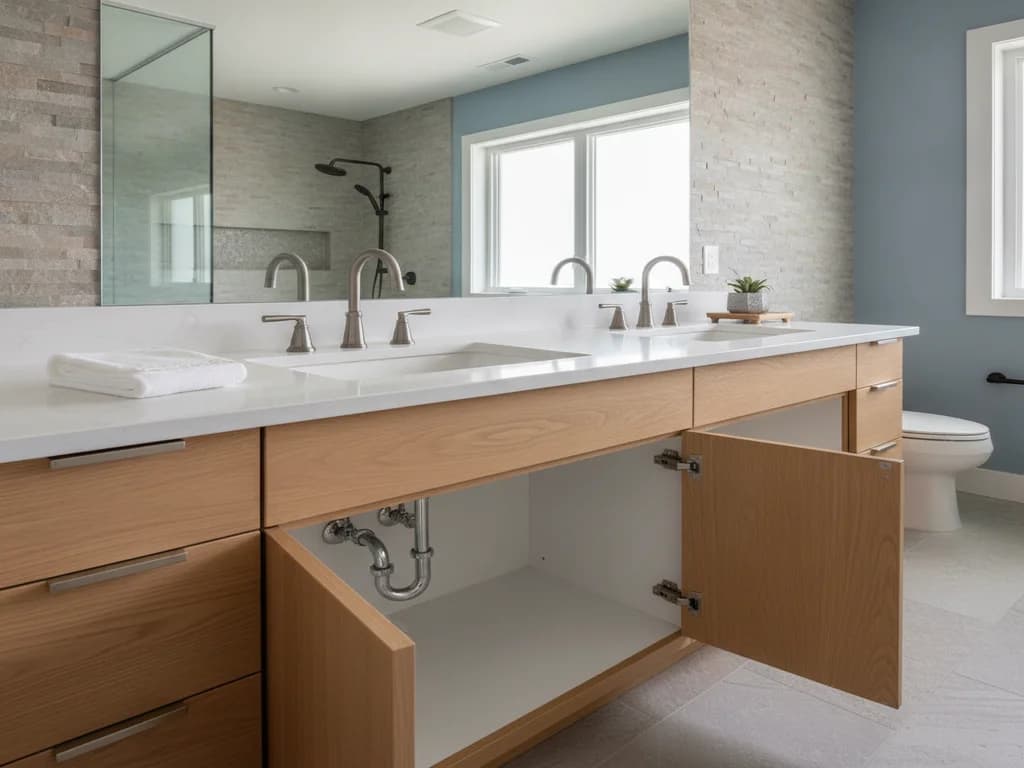
And look hard at the cabinet before you order a top. If the vanity box is a worn builder unit with failing drawer slides, setting a new slab on it locks in the weakest part of the setup. A full vanity replacement often costs only modestly more than a top swap, and our vanity buying guide covers how to choose the box itself.
Measure the alcove, not the old top
Builder tops came in standard widths (commonly 25", 31", 37", 49", 61") and were scribed to fit wall-to-wall alcoves. Walls are never perfectly square, so a new slab top for an alcove vanity needs to be templated against the actual walls — a top ordered from the old one’s nominal size can land with ugly gaps or simply not fit.
What does replacing the top cost?
National cost guides put a vanity countertop replacement roughly in the $300–$2,000+ range installed, per HomeAdvisor and Angi — cultured marble and laminate at the bottom, quartz and granite slab work at the top, with the sink, faucet, and any plumbing updates added on. A standard 61-inch double-bowl top in quartz with two undermount sinks typically lands in the upper half of that range.
The spread is wide because fabrication is the variable: a prefab top in a stock size costs far less than a templated custom slab. Where the budget goes by material is covered in our countertop cost by material guide.
Timeline is usually two visits: one to template (custom slab) and one to install. The install day itself is typically half a day including plumbing reconnection.
When a top swap should become a bigger project
A cultured marble top rarely fails alone. The same era that installed it also installed the oak builder cabinet, the plate-glass mirror, the strip light, and the beige tile — and if two or three of those are on your list anyway, sequencing them as one project avoids paying twice for the same plumber visits and wall repair.
That does not mean everything must go at once. But get the order right: countertop before mirror and lighting, and cabinet decisions before countertop — a new slab cut for the old cabinet’s dimensions can’t follow you to a new one.
What the process looks like
- 1
Confirm the scope and measure
The contractor checks the cabinet’s condition and level, measures the alcove walls (not the old top), and confirms faucet spread and drain position so the new top, sink, and faucet are specified as one package.
- 2
Template for a custom slab
For quartz, granite, or porcelain, the fabricator templates against the actual walls and cabinet, marking the sink cutout and faucet holes. Prefab and cultured marble tops in stock sizes skip this visit.
- 3
Disconnect the plumbing
Water is shut off at the stop valves, supply lines and the P-trap are disconnected, and the drain assembly is removed. Seized or corroded shutoff valves get replaced now, while everything is open.
- 4
Cut the old top free
The caulk and adhesive beds holding the top and splashes are cut, and the one-piece top lifts off — heavy and awkward on double vanities, which is a two-person carry. Wall paint behind the splashes usually needs touch-up.
- 5
Prep the cabinet
The cabinet is checked for level and shimmed, water damage at the sink rail is repaired, and build-up strips are added if the new material needs different support than the old cast top.
- 6
Set the new top and sink
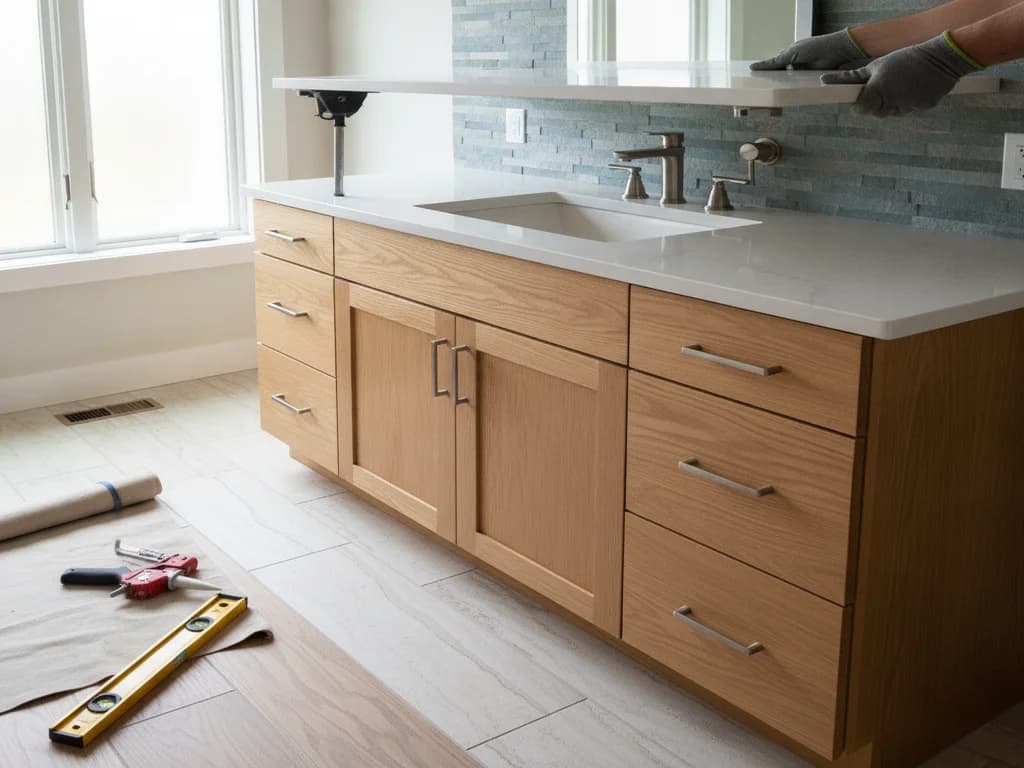
An undermount sink is bonded and clipped to the slab (often at the fabrication shop), then the top is set in adhesive, leveled, and scribed tight to the walls with the backsplash and side splashes installed.
- 7
Mount the faucet and reconnect
The new faucet and drain go in, supply lines and the trap are reconnected, and everything is tested under running water — including checking the undermount seal from below.
- 8
Seal and finish
The wall and deck joints are caulked, natural stone gets its first sealer coat, and the old top is hauled off. Cure time on the sink adhesive means going easy on the bowl for the first day.
Ready to plan your Boise bathroom?
Licensed & insured · 3-year workmanship warranty
Frequently asked questions
- Can you replace just the sink in a cultured marble top?
- No — the bowl is molded into the top as one piece of cast material, so there is no separate sink to swap. If the bowl is the problem, the whole top comes out. That is the core difference from slab tops with undermount or drop-in sinks, where the sink is an independent, replaceable part.
- What is the best replacement for a cultured marble vanity top?
- Quartz with an undermount sink is the most common upgrade: non-porous, durable, and available in stock and custom sizes. Solid surface is the closest to the seamless look you had, and a new cultured marble top is the cheapest like-for-like option. Our bathroom countertop materials guide compares them in depth.
- How much does it cost to replace a cultured marble vanity top?
- National guides like HomeAdvisor and Angi put vanity countertop replacement roughly between $300 and $2,000+ installed, depending on material and size — new cultured marble at the low end, custom quartz or granite slab at the top. Add the new sink, faucet, and any shutoff-valve work, since the integral bowl means those come with the project.
- Why is my cultured marble top turning yellow?
- The clear gel coat that seals the cast material ambers with age, UV exposure, and heat — it is the coating itself discoloring, not a surface stain, which is why no cleaner reverses it. Yellowing usually shows up alongside crazing at the drain, and together they signal the gel coat is at the end of its life.
- Is cultured marble outdated?
- The yellowed integral-bowl builder top reads as dated, but the material itself is still manufactured with better gel coats and modern styling, and it remains the budget-honest choice for rentals and low-use baths. For a primary bathroom you plan to keep, most homeowners step up to quartz or solid surface when the original top comes out.
- Should I replace the vanity cabinet at the same time as the top?
- If the cabinet is a worn builder box — sagging shelf, failing slides, water-swollen sink rail — yes. A new slab is templated to that exact cabinet and cannot move to a different one later, so replacing the top first locks the old cabinet in. When the box is solid wood in good shape, a top-only swap is a legitimate project.
Sources
Claims and figures are drawn from the sources above and provided for general guidance; your project may vary. Photography is illustrative of design concepts. For a fixed price on your specific bathroom, request a free estimate.