Updated July 5, 2026 · 7 min read
By Boise Bath — bathroom & shower remodeling in Boise & the Treasure Valley
Two vanities can look almost identical in a showroom photo and behave completely differently five years into daily use. The difference is rarely the finish — it is the box construction underneath, the clearances it was (or wasn’t) sized for, and whether the sink and cabinet actually fit how the room is used.
This guide is deliberately about the construction, material, and sizing side of a vanity purchase — the decisions that determine durability and fit. If you are looking for style inspiration (floating vs. furniture-style, finishes, configurations), our bathroom vanity ideas listicle covers that ground; we cross-link it here rather than repeat it.
Key takeaways
- The cabinet material — solid wood, plywood, or MDF — decides long-term durability more than the finish does; a well-sealed MDF cabinet can outperform a poorly sealed plywood one.
- Confirm real clearances before choosing a vanity: at least 30" of clear floor space in front and 15" from sink center to any adjacent wall.
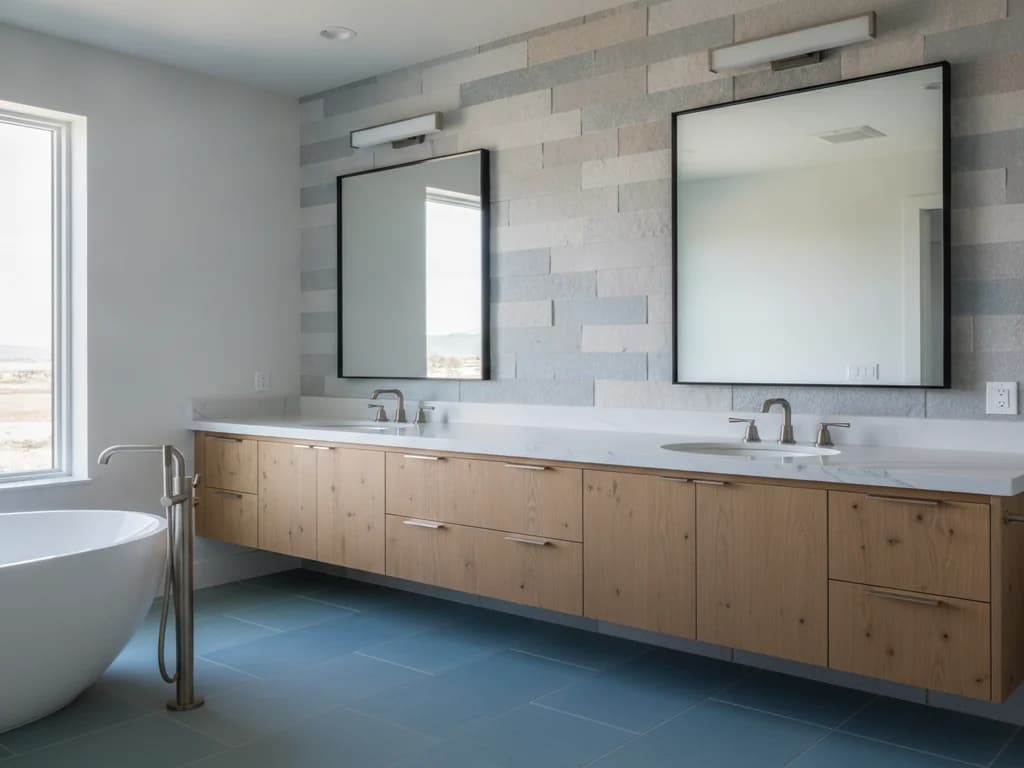
- Double vanities need real wall width and two full sets of plumbing — a generous single often beats a cramped double.
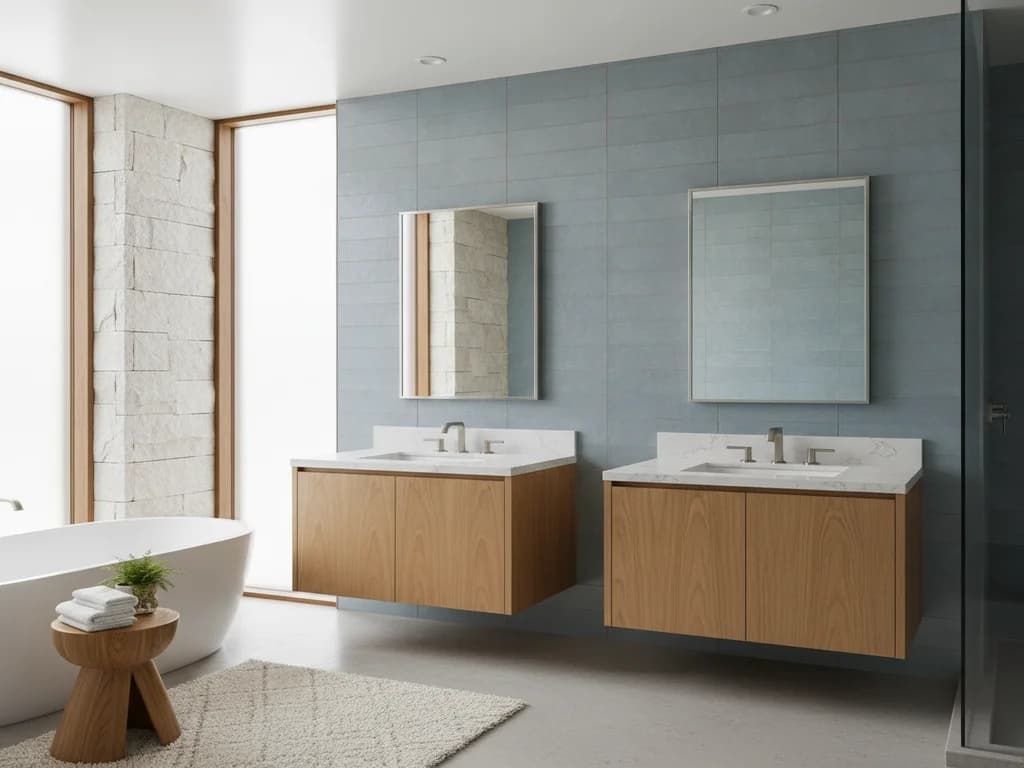
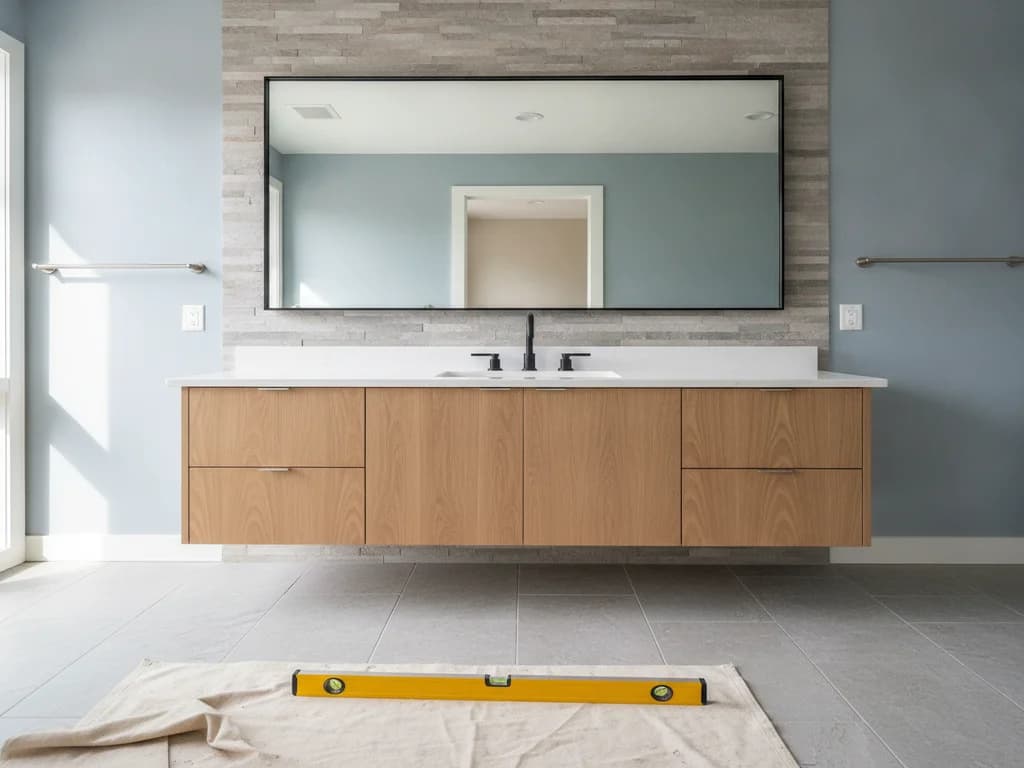
- Floating (wall-mounted) vanities cost more to install than floor-mounted ones because they need solid wall blocking.
- Style, finish, and configuration inspiration live in our bathroom vanity ideas listicle — this guide covers construction, materials, and sizing only.
Cabinet construction: solid wood, plywood, or MDF
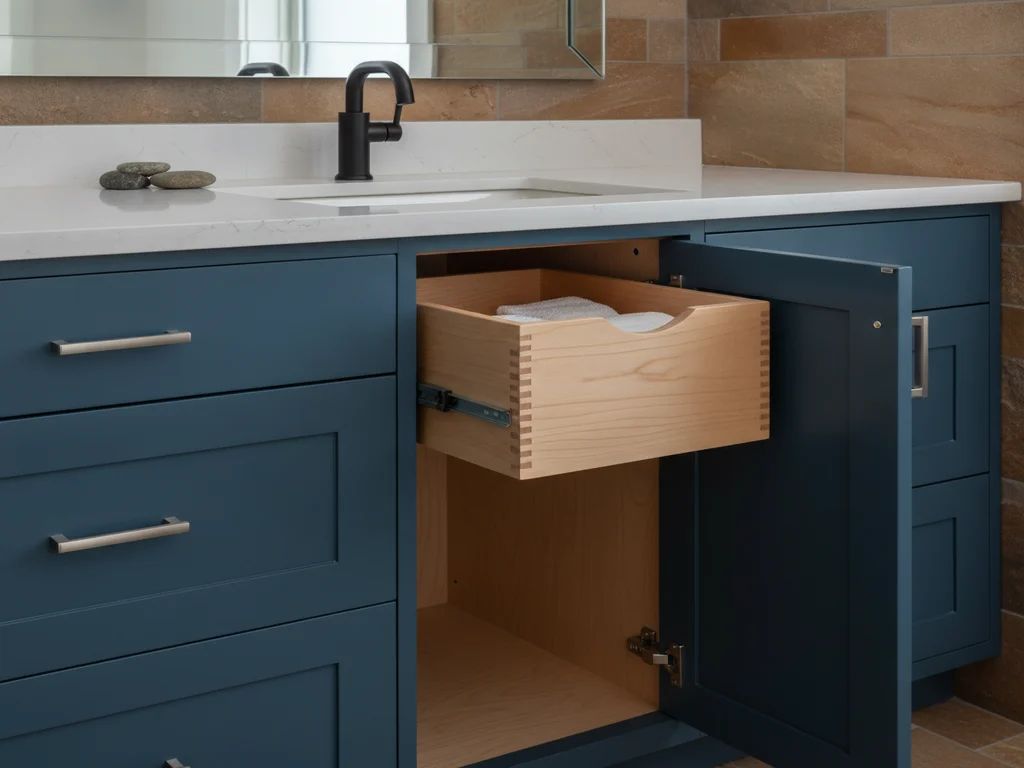
The cabinet box is the part of a vanity you never see and the part that decides how well it survives a humid bathroom. This Old House identifies three common materials: solid wood, plywood, and MDF (medium-density fiberboard), each with a real trade-off.
Solid wood is the most durable option but also the most expensive. Plywood is a strong middle ground, though its exposed edges need to be covered (typically with an edge banding or trim) and it produces more waste in fabrication. MDF is the budget-friendly choice and, contrary to its reputation, This Old House notes it is moisture-resistant and actually more efficient to fabricate than plywood — it is nondirectional, so a sheet is used more completely, and its treated edges don’t need the extra covering step plywood requires.
Fixr’s guide reaches a similar conclusion from the buyer’s side: "the most durable materials are solid wood and high-grade plywood," which resist moisture well when properly sealed. The practical takeaway is that MDF is not automatically the weak choice it is sometimes assumed to be — a well-made MDF cabinet with a good moisture-resistant finish can outperform a poorly sealed plywood one.
Clearances: the sizing rule that comes before style
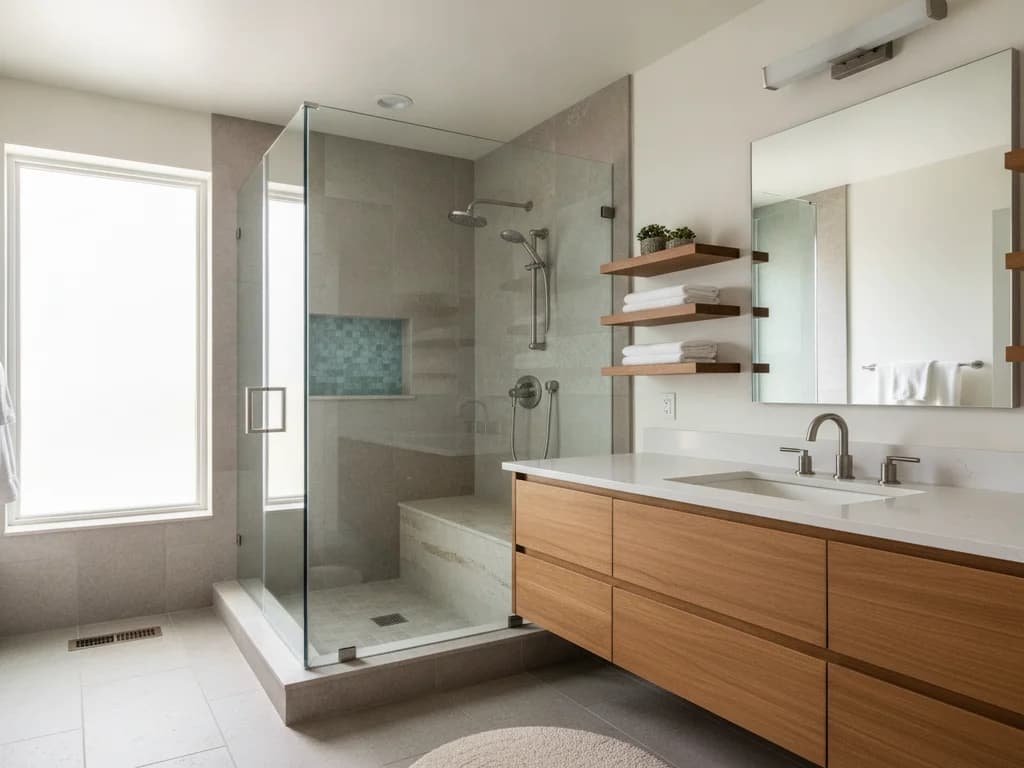
Before configuration or style, a vanity has to physically fit the room with enough space to use comfortably. This Old House’s clearance guidance is a useful starting baseline: at least 30 inches of clear floor space in front of the vanity, and at least 15 inches from the center of any sink to an adjacent wall or fixture.
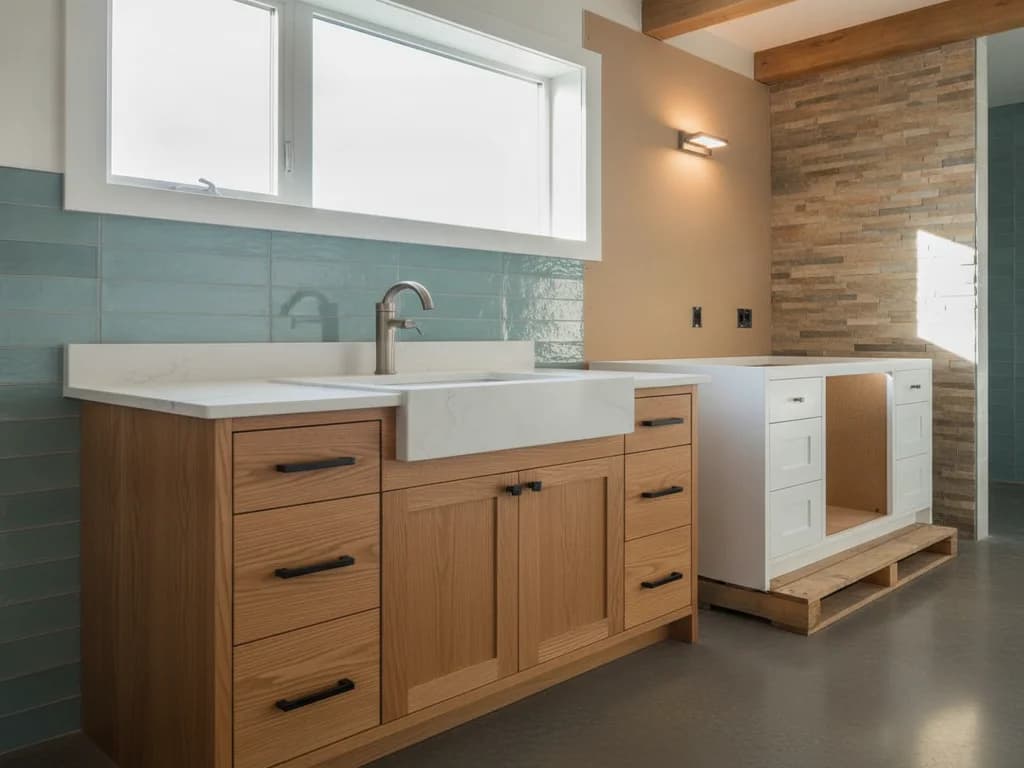
Those two numbers alone rule out a lot of vanities that look right in a photo but would crowd a real bathroom. Measure your actual clearances before you fall in love with a specific piece — it is far easier to change your mind on paper than after installation. An awkward room size is also one of the situations where going custom instead of prefab starts to earn its premium.
Configuration and sizing decide the style options — not the other way around
How many sinks, how wide, and floor- vs. wall-mounted are functional decisions driven by your room and plumbing. Once those are settled, our vanity ideas listicle walks through the style layer: floating vs. furniture-style, finish, and configuration inspiration.
Single vs. double, and what it costs
A single-sink vanity is the default for most bathrooms — it is simpler to plumb, gives one person more usable counter and storage than a cramped double, and comes in the widest range of sizes. A double vanity needs meaningfully more wall width (so each sink has real counter space on the outside edge) and two full sets of supply and drain lines, which is a bigger consideration in an older home’s plumbing than in new construction.
On cost, Fixr’s figures give a useful anchor: a basic 60-inch vanity runs about $1,100 in materials, with installation running around $100 for a floor-mounted vanity versus $210–$280 for a wall-mounted (floating) vanity — floating vanities cost more to install because they need solid blocking in the wall to carry the weight without a cabinet base underneath.
Vanity vs. countertop: two separate material decisions
The cabinet box and the countertop on top of it are chosen independently and often get confused as one decision. Quartz, granite, marble, and solid-surface tops each have their own durability and sealing profile — that comparison lives in our bathroom vanity countertops guide rather than here, so this guide can stay focused on the cabinet itself.
Frequently asked questions
- What is the most durable bathroom vanity cabinet material?
- Solid wood is the most durable but most expensive option. High-grade plywood is a strong, more affordable alternative when properly sealed. MDF (medium-density fiberboard) is the budget pick and, despite its reputation, is moisture-resistant and efficient to fabricate — a well-sealed MDF cabinet can hold up better than a poorly sealed plywood one.
- How much clearance does a bathroom vanity need?
- This Old House recommends at least 30 inches of clear floor space in front of the vanity and at least 15 inches from the center of any sink to an adjacent wall or fixture. Confirm these clearances against your actual bathroom before choosing a vanity size.
- Is a floating vanity more expensive to install than a floor-mounted one?
- Yes. Per Fixr, a floor-mounted vanity typically costs around $100 to install, while a wall-mounted (floating) vanity runs $210–$280, because it requires solid blocking inside the wall to support the cabinet's full weight without a base underneath.
Sources
- This Old House — How To Choose a Bathroom Vanity
- Fixr — Bathroom Vanities: Which Style Is Right for You?
Claims and figures are drawn from the sources above and provided for general guidance; your project may vary. Photography is illustrative of design concepts. For a fixed price on your specific bathroom, request a free estimate.