Updated July 6, 2026 · 8 min read
By Boise Bath — bathroom & shower remodeling in Boise & the Treasure Valley
The short answer
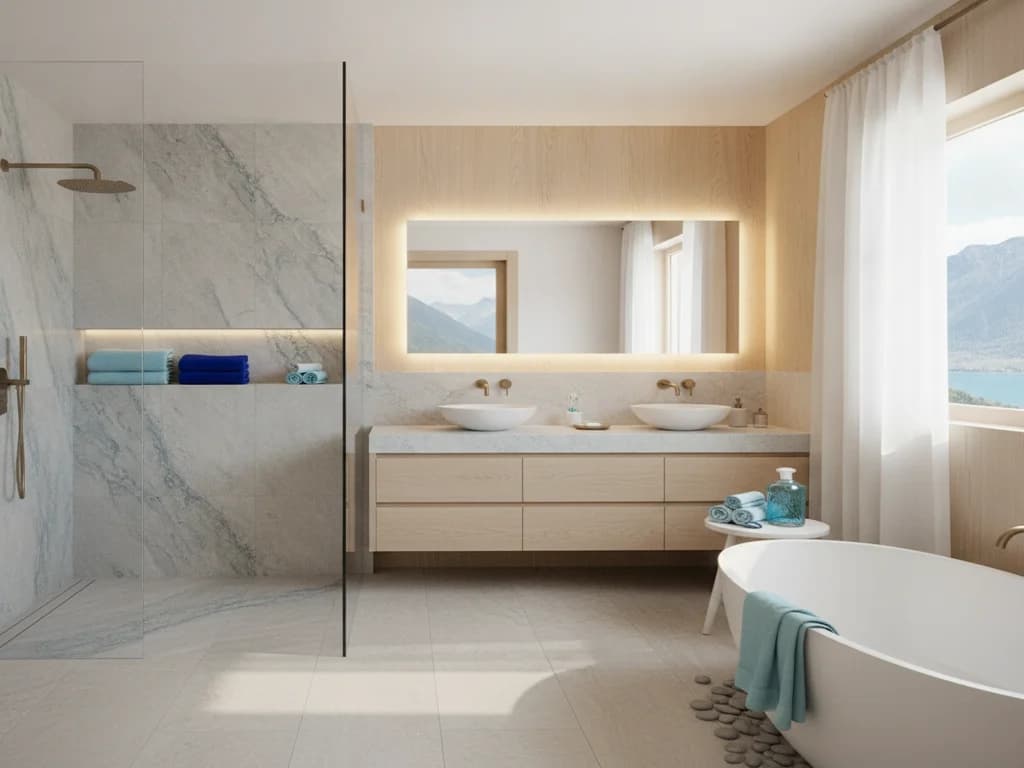
A double vanity helps buyer appeal in a primary bath with real width to spare, but it is not an automatic value-add. This Old House notes a compact double-sink setup can leave "not a lot of countertop area" per sink — in a tighter secondary bath, one well-placed single sink often serves buyers better.
Key takeaways
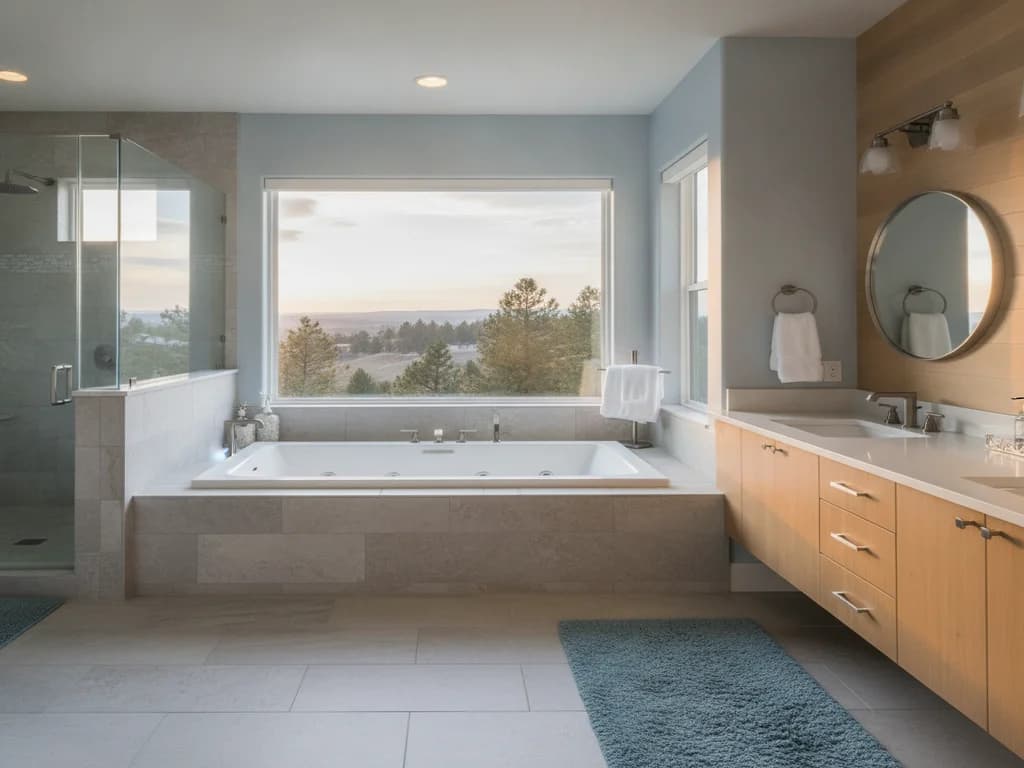
- Two sinks read as a capacity upgrade — Bob Vila notes a double vanity "makes it possible for two to get ready at the same time and provides much more usable counter, drawer, and cabinet space," but that assumes the room is wide enough to actually deliver it.
- This Old House's own sizing guidance shows the trap: in a 5-by-7-foot room, "the sink shouldn't be wider than 24 inches," and it recommends "a maximum of 30 inches between the centers of the two basins" — tight numbers that leave little room for two full-size sinks and generous counter both.
- This Old House describes a real compact double-vanity build where "the two undermount sinks are set close together" and, as a result, "there isn't a lot of countertop area" — the opposite of the assumption that two sinks automatically means more usable space.
- There is no published Boise- or Idaho-specific resale figure for any bathroom upgrade, including a double vanity — Idaho was excluded from the 2025 Remodeling Cost vs. Value city-level dataset. The closest proxy is the Mountain region, where a midrange bathroom remodel's ROI runs roughly 69–71%, versus about 80% nationally.
- The honest rule: a double vanity earns its keep where the wall length can give each sink real counter; in a room that can't, a single well-designed sink often serves buyers, and the household, better than two cramped ones.
The short answer
A double vanity is one of the more consistently liked features in a primary bathroom — it is a real capacity upgrade for a household getting ready at the same time. But "double sink" is not a feature that adds value in isolation. It only delivers what buyers actually want — more usable space — when the room is wide enough to give each sink a real section of counter. In a tighter room, splitting the same wall between two sinks can leave both people with less than a well-designed single sink would have given one.
The one-line version
Ask "does this room have the width to do two sinks properly," not "should this bathroom have two sinks." The second question skips the part that actually determines whether it helps.
What buyers actually respond to
Bob Vila's framing of the upside is straightforward: a double vanity "makes it possible for two to get ready at the same time and provides much more usable counter, drawer, and cabinet space for holding personal care products." That is a genuine, felt benefit in a primary bath shared by a couple or a busy household — it removes a daily bottleneck, not just a cosmetic upgrade.
We cover how buyers weigh a double vanity against everything else they notice in a showing in our bathroom features buyers notice roundup — it is a real point in a primary bath's favor, but it is one signal among many, not a feature that overrides a dated shower or a cramped layout on its own.
The counter-space trade-off nobody mentions
Here is the part that gets skipped: two sinks does not automatically mean more counter. This Old House's own guidance on adding a double-sink vanity gives the constraint directly — in a 5-by-7-foot room, "the sink shouldn't be wider than 24 inches," and to keep plumbing simple, "aim for a maximum of 30 inches between the centers of the two basins." Those are tight numbers, and they describe exactly the kind of room a lot of secondary and hall bathrooms actually are.
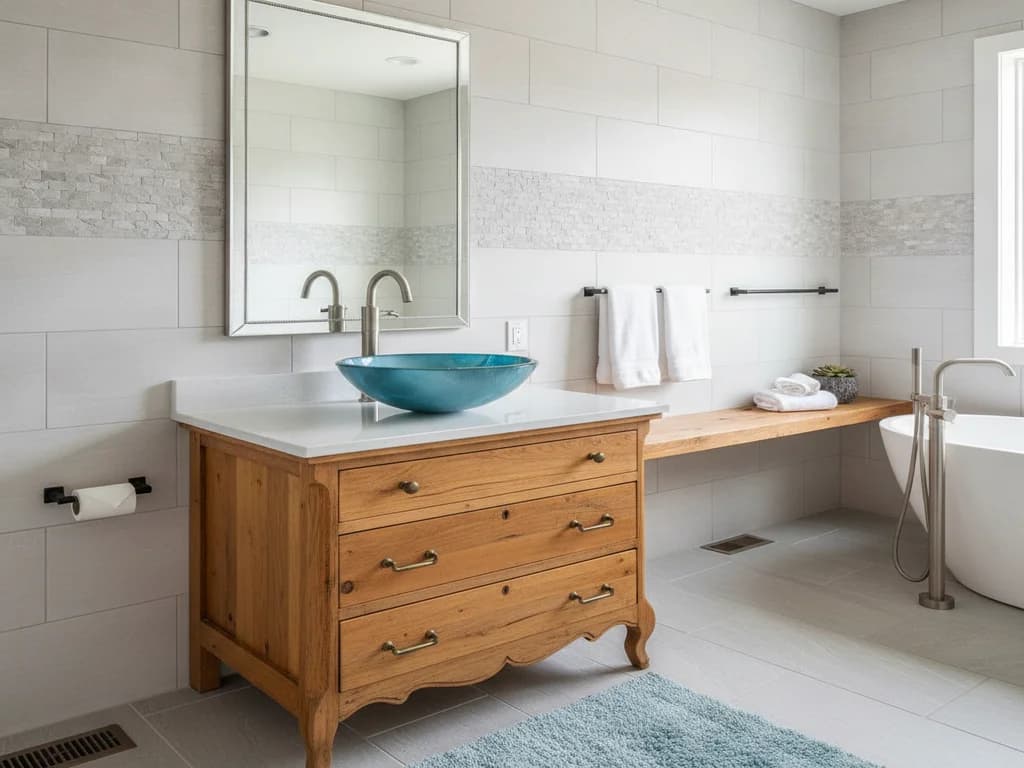
The same guide describes a real double-vanity build made from a repurposed table, where "the two undermount sinks are set close together" and, as a direct result, "there isn't a lot of countertop area" for either one. That is the honest version of the trade-off: cramming two sinks into a wall that was really only wide enough for one generous sink and its counter can leave you with two sinks and less usable space than you started with, not more.
Where double earns it, where single wins
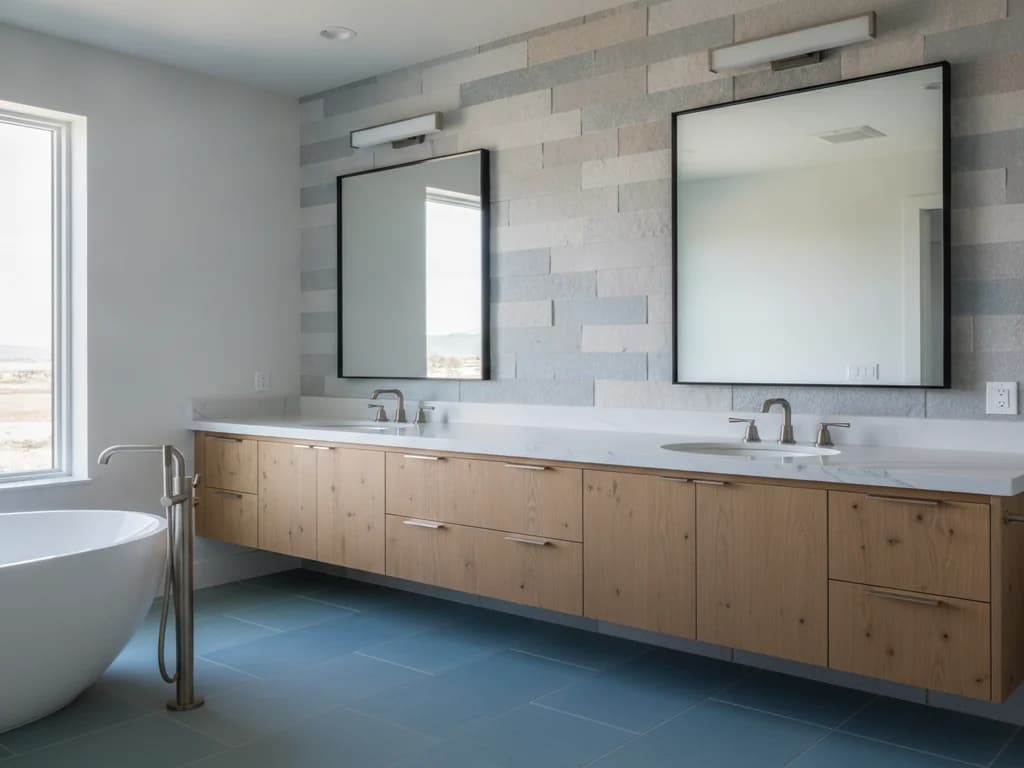
The deciding factor is almost entirely wall length and room width, not preference. A primary bathroom with 6 feet or more of usable vanity wall can usually give two sinks their own real counter, their own mirror, and enough separation to feel like two stations rather than one crowded one. A secondary, guest, or hall bathroom under that width is often better served by one sink with a full run of counter on either side than by two sinks that each get a sliver.
| Room type | Usually better with | Why |
|---|---|---|
| Primary bath, 6+ ft of vanity wall | Double sink | Enough width for two full sinks plus real counter on each side |
| Primary bath, under 6 ft of wall | Single sink (or verify sizing first) | This Old House's own spacing guidance (24" sink, 30" max between centers) gets tight fast below this |
| Guest / secondary bathroom | Single sink | One user at a time rarely needs two stations; the counter is more valuable than the second basin |
| Powder room | Single sink | Not a getting-ready space; a single well-placed sink reads as intentional, not cramped |
What the resale data actually says
Zoom out from the vanity specifically and the honest resale picture still applies: Remodeling magazine's 2025 Cost vs. Value Report estimates a midrange bathroom remodel recoups roughly 80% of its cost at resale nationally, while the NAR 2025 Remodeling Impact Report has Realtors estimating closer to 50% — two different measurement methods, not a contradiction. Neither report breaks the recovery figure out feature-by-feature (there is no separate published "double vanity" ROI line), so any number claiming to isolate a double sink's exact resale contribution should be treated with skepticism.
Idaho was excluded from the 2025 Cost vs. Value city-level dataset entirely, so there is no published Boise- or Idaho-specific bathroom ROI figure of any kind. The closest published regional proxy is the Mountain region, where a midrange bathroom remodel's ROI runs roughly 69–71% — lower than the 80% national figure. We break this down in full, with the complete sourced ROI table, in our bathroom remodel cost guide, and cover it from the data-methodology side in what the ROI data actually says.
The bottom line
A double vanity is a genuine upgrade in the right room — one wide enough to give two sinks their own real counter. In a narrower room, it can quietly work against you, trading one generous sink for two cramped ones. The question worth asking before you commit either way isn't "single or double," it's "how much usable counter does this specific wall actually have," because that answer decides which choice actually adds the space buyers are responding to.
If you're weighing vanity layout as part of a larger remodel, explore our full bathroom remodeling services — getting the sink count right for the room you actually have is easier to solve before the plumbing goes in than after.
Ready to plan your Boise bathroom?
Licensed & insured · 3-year workmanship warranty
Frequently asked questions
- Does a double sink vanity increase home resale value?
- It can help buyer appeal in a primary bathroom with enough width to give each sink real counter space, per Bob Vila's note that it "provides much more usable counter, drawer, and cabinet space." But there is no published resale figure that isolates a double vanity's exact dollar contribution — Cost vs. Value and NAR both report bathroom remodel ROI overall (roughly 80% and 50% respectively, by different methods), not feature-by-feature.
- Is a double vanity worth it in a small bathroom?
- Often not. This Old House's own sizing guidance caps a double-vanity sink at 24 inches wide in a 5-by-7-foot room and recommends keeping the two sink centers within 30 inches of each other for simple plumbing — tight enough that, as the same guide notes in a real build, "the two undermount sinks are set close together" and "there isn't a lot of countertop area" left for either one. A single sink with a full run of counter often serves a small bathroom better.
- Should a guest bathroom have a single or double sink?
- Single, in almost every case. A guest or secondary bathroom is typically used by one person at a time, so the second basin adds little functional benefit while taking counter space away from the first. One well-placed sink with generous, uninterrupted counter usually reads better to buyers than two smaller stations in the same footprint.
Sources
- This Old House — Adding a Double-Sink Vanity To Your Bathroom
- Bob Vila — 30 Master Bathroom Ideas You'll Want to Copy
- CustomCraft DBR — 2025 Cost vs. Value Report Summary
- Fixr — Bathroom Remodel ROI (2025/2026)
- Qualified Remodeler — NAR 2025 Remodeling Impact Report Summary
Claims and figures are drawn from the sources above and provided for general guidance; your project may vary. Photography is illustrative of design concepts. For a fixed price on your specific bathroom, request a free estimate.