Updated July 6, 2026 · 8 min read
By Boise Bath — bathroom & shower remodeling in Boise & the Treasure Valley
The short answer
Builder-grade bathrooms across Meridian, Kuna, and Star subdivisions typically ship with a stock plywood or MDF vanity, a frameless mirror, a standard fiberglass tub-shower combo, and basic ceramic tile. The highest-value upgrade path starts with converting that tub-shower to a walk-in shower, then the vanity and countertop, then tile, lighting, and fixture finishes.
Key takeaways
- Builder-grade means bare-minimum-quality stock materials, not necessarily poor construction — the bones are usually good, the finishes are where the value gets added.
- The most common first upgrade in Meridian, Kuna, and Star is converting the standard builder tub-shower combo into a true walk-in shower.
- After the shower, the vanity and countertop, tile, lighting and mirror, and fixture finishes are the next-highest-impact swaps, roughly in that order.
- Mid-range material upgrades (porcelain tile, quartz tops) tend to return the most value relative to cost — jumping straight to luxury finishes rarely pays back proportionally.
- Kuna and Star also carry pockets of older homes and acreage properties alongside the newer subdivisions, so the "builder-grade" playbook is not the whole story in either city.
What does 'builder-grade' actually mean in a Treasure Valley subdivision?
Meridian, Kuna, and Star have grown explosively since the 2000s, and most of that growth came as master-planned subdivisions — think The Village at Meridian and the Ten Mile corridor, or the newer neighborhoods filling in around Kuna's and Star's original cores. Every one of those homes shipped with a bathroom built to a builder's spec sheet, not a homeowner's wish list, and "builder-grade" is the honest word for what that spec sheet includes: the bare-minimum-quality version of every fixture, chosen to hit a price point across hundreds of identical homes.
That is not the same as poorly built. National renovation coverage bears this out: independent cost data groups a stock plywood or MDF vanity as the budget-tier baseline, ceramic tile as the common mid-range finish, and hardwood vanities with natural stone as the high-end tier — three real quality steps, not a binary of "bad" and "good." Builder-grade sits at the first step. The plumbing, framing, and waterproofing underneath are typically sound; it is almost entirely the visible finishes that were chosen for cost, not character.
The bones are usually fine
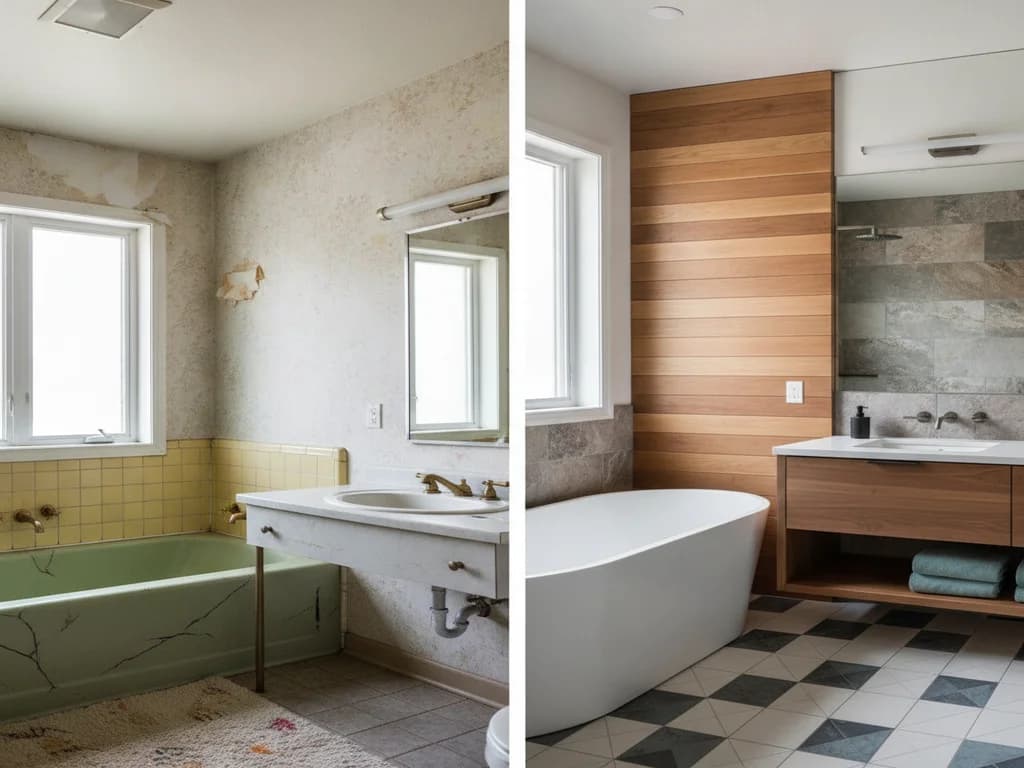
In new-construction subdivisions the structural and rough-plumbing work is generally solid — the upgrade conversation here is almost entirely about finishes, not hidden problems. That is very different from the older-home remodels covered in our guide to remodeling older Boise homes.
What do builders typically economize on?
1. A stock plywood or MDF vanity. The builder-grade baseline vanity is a basic stock cabinet with a laminate or cultured-marble top — functional, but the first thing that looks dated once the rest of a home gets personalized.
2. A frameless, undecorated mirror. As one home-improvement resource puts it, builder-grade mirrors are "perfectly functional" but have no frame or visually interesting element — they are simply glued to the wall edge-to-edge.
3. A standard fiberglass tub-shower combo. The one-piece tub-shower unit is the default in nearly every builder spec, regardless of whether the household actually wants a tub in that particular bathroom.
4. Basic ceramic field tile in a single size and pattern. Ceramic tile in a straightforward grid is the common builder default — inexpensive, code-compliant, and visually generic.
5. Builder-standard lighting and hardware. A single strip light over the mirror and matching basic polished-chrome hardware finish out the builder-grade look — functional but interchangeable with every other house on the block.
What should you upgrade first?
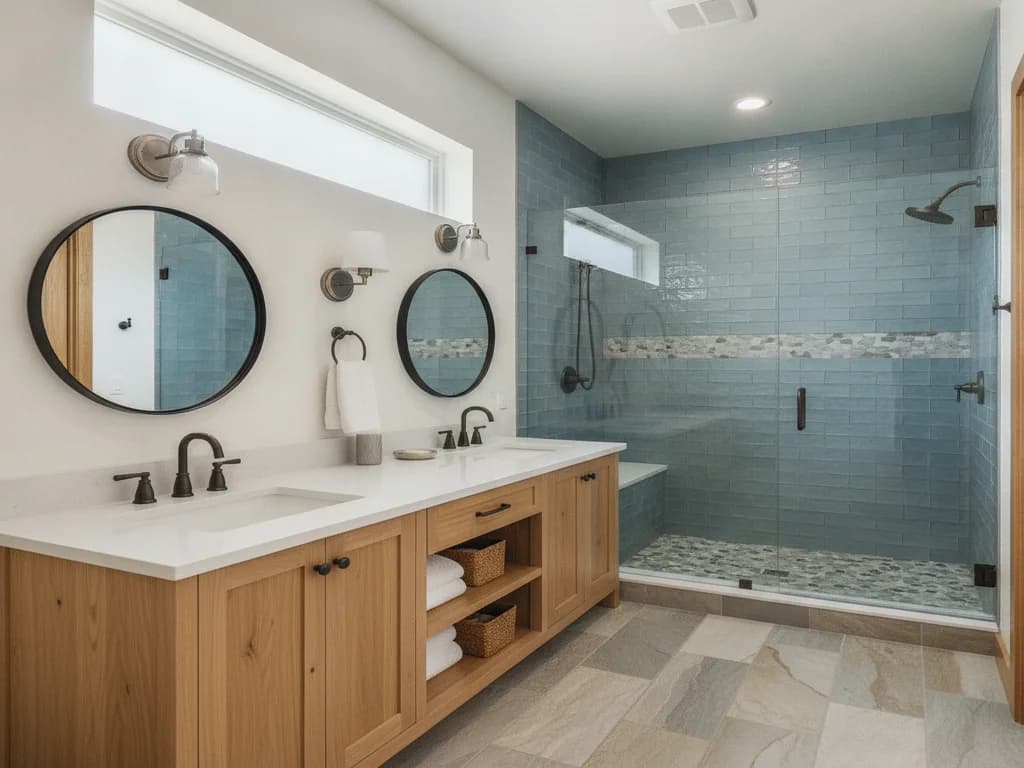
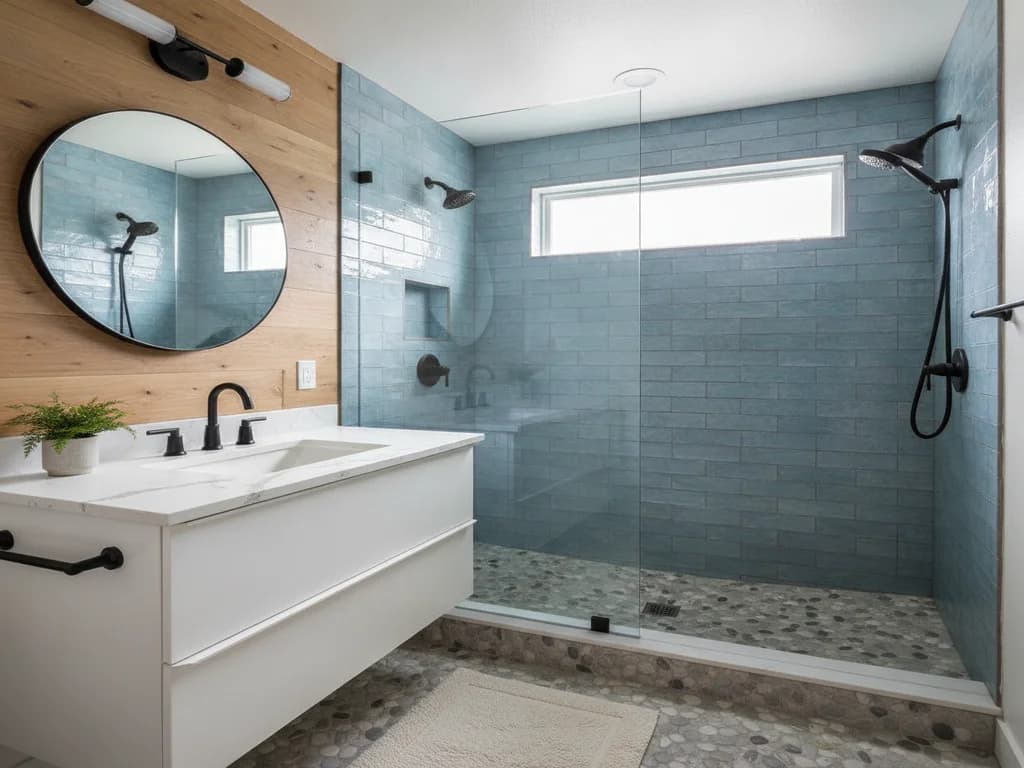
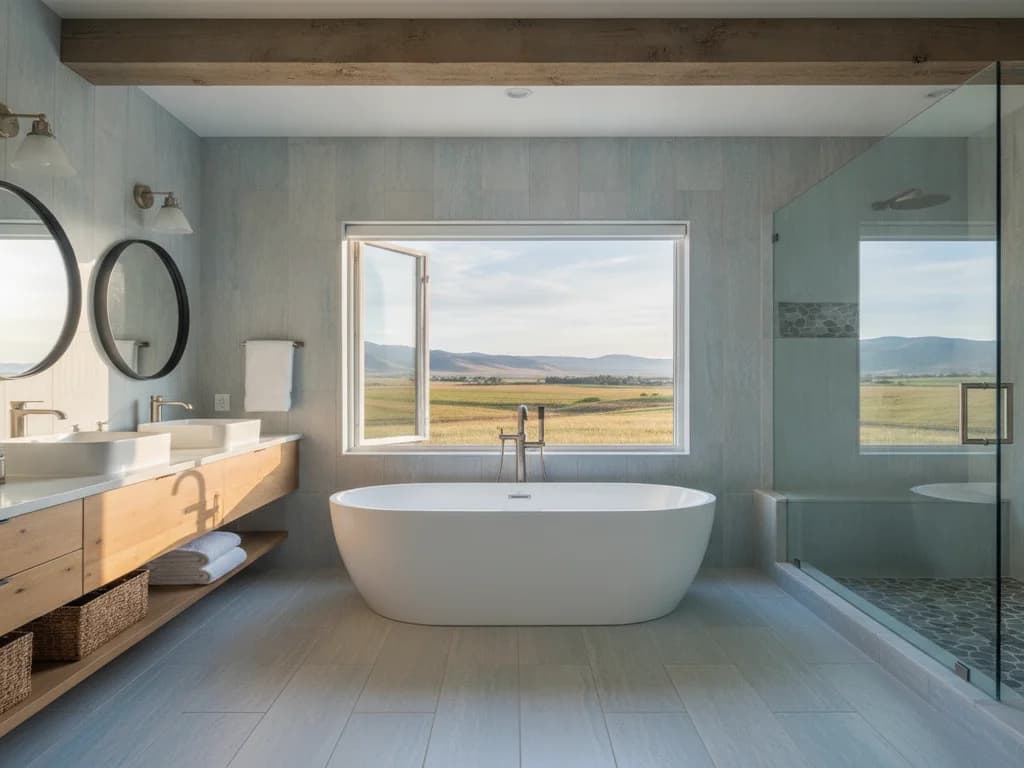
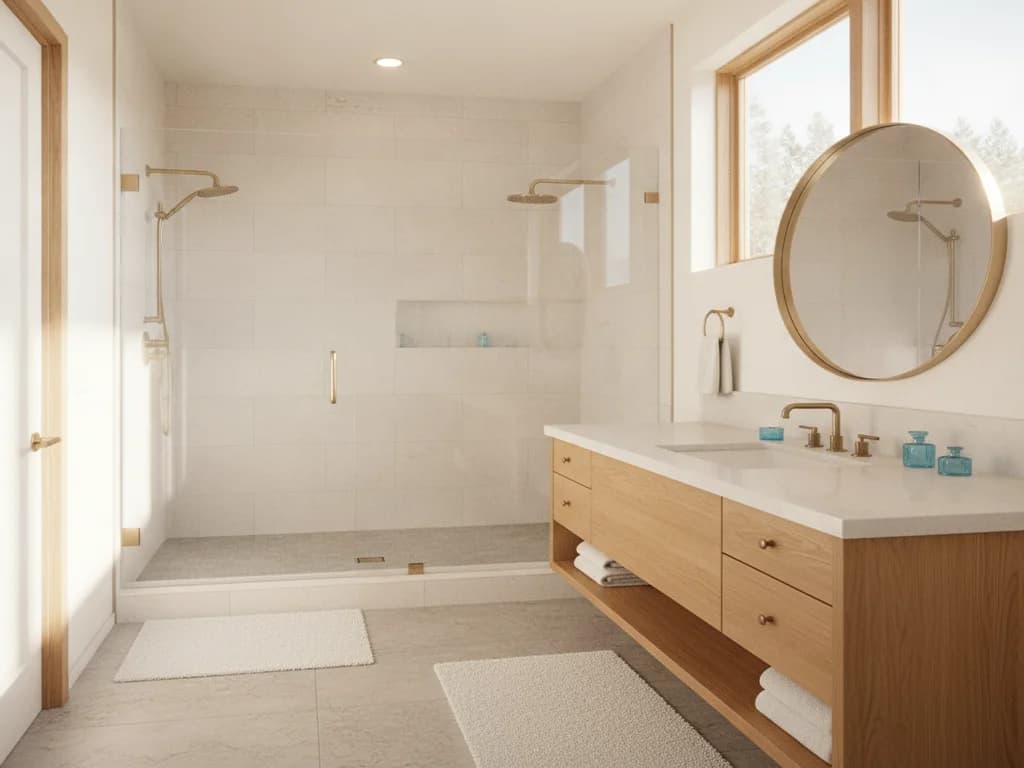
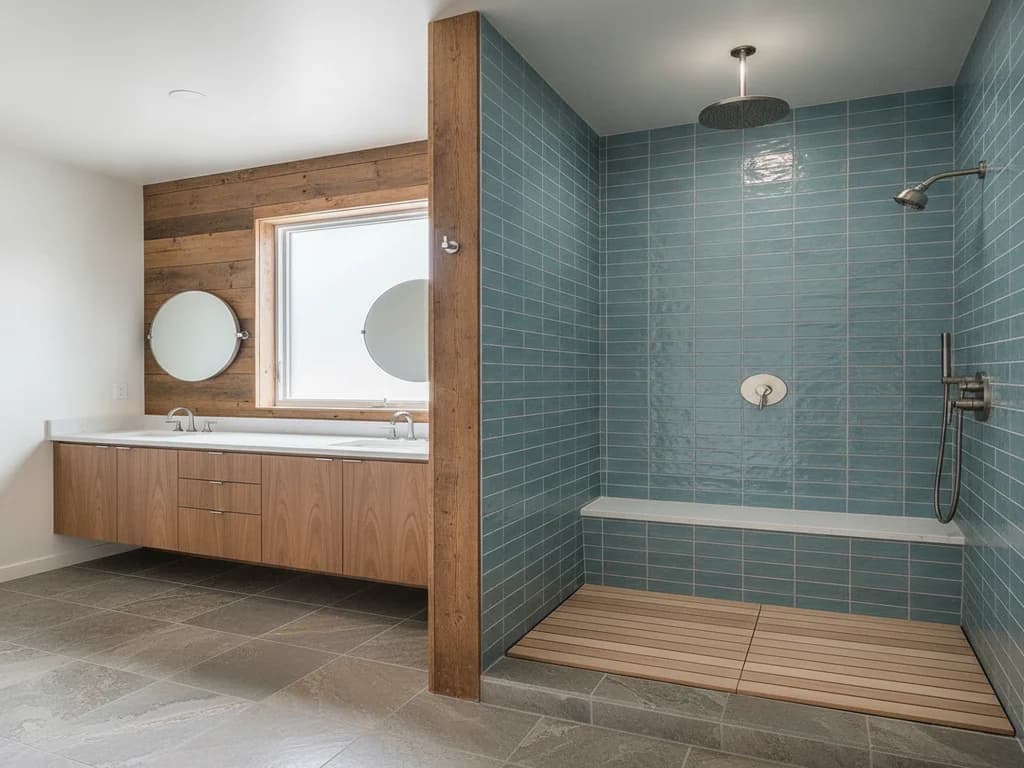
6. Convert the tub-shower combo to a walk-in shower. This is consistently the first request from Meridian, Kuna, and Star homeowners, and for good reason — it is the single change that makes a subdivision bathroom stop looking like every other one on the street. A walk-in shower with frameless glass and real tile reads as an intentional design choice rather than a stock part.
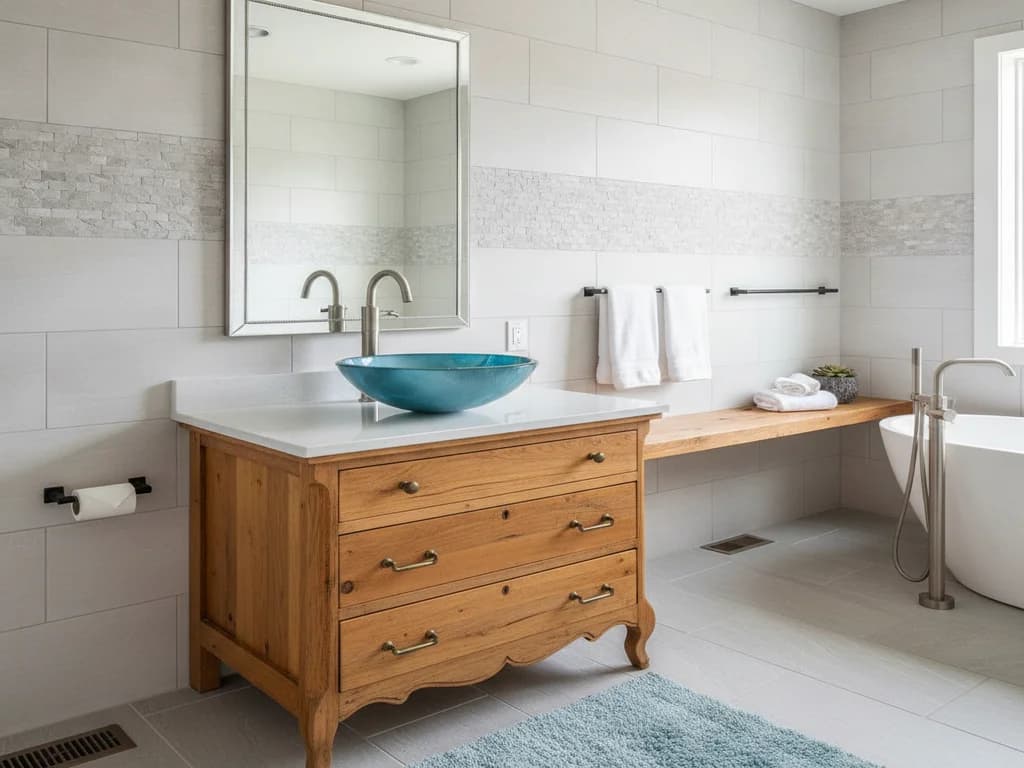
7. Replace the vanity and countertop. Moving from a stock plywood or laminate vanity to a furniture-style cabinet with a quartz or solid-surface top is the next-highest-impact change, and it is the upgrade national cost data flags as returning strong value relative to its cost.
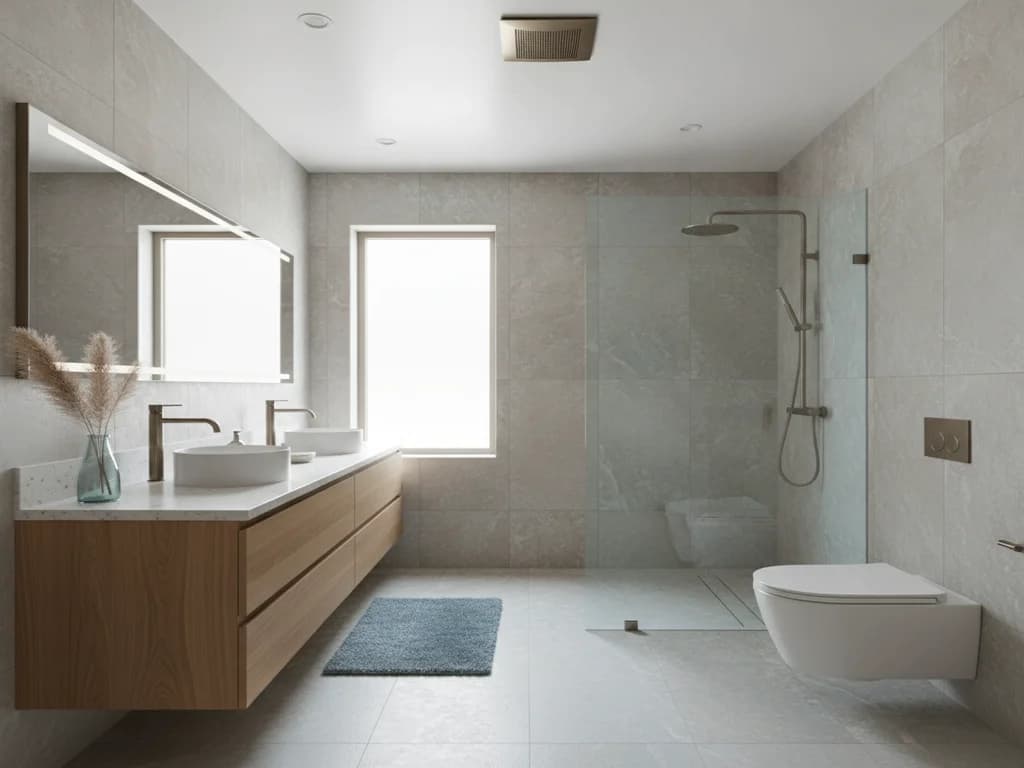
8. Upgrade the tile. Swapping basic ceramic for a well-chosen porcelain or large-format tile changes how the whole room reads without changing the layout at all — mid-range tile tends to be the sweet spot between builder-basic and expensive natural stone.
9. Add real lighting and a proper mirror. Layered lighting (vanity-level plus overhead) and a framed or lighted mirror replace the single builder strip light and edge-glued mirror glass for a relatively small spend.
10. Swap the fixture finish and hardware. Moving from builder-standard polished chrome to a current finish — brushed nickel, matte black — modernizes the whole room in an afternoon's worth of installation work.
11. Add or improve ventilation. Many production-built bathrooms have the minimum code-required fan; upgrading to a quieter, properly sized unit is inexpensive and protects every other upgrade on this list from moisture damage over time.
Do you need luxury materials, or does mid-range make more sense?
It is tempting to treat "builder-grade" as a signal to swing all the way to luxury finishes, but that is not where the value actually sits. National cost data groups materials into a real three-tier ladder — budget-tier stock vanities and plumbing fixtures, mid-range finishes like porcelain tile and quartz countertops, and a high-end tier of hardwood vanities and natural stone — and it is the mid-range tier that is specifically flagged as returning the strongest value relative to its cost. Jumping straight from a builder-grade vanity to a marble one, or from ceramic tile to imported natural stone, adds cost faster than it adds value in most Meridian, Kuna, or Star homes. The upgrade sequence above is built around that mid-range sweet spot on purpose.
Is it ever worth changing the layout, not just the finishes?
12. Consider a layout change only where the floor plan already supports it. Some Meridian and Star primary suites were built with the square footage for a larger shower or a double vanity but shipped with the builder-minimum version anyway — in those cases, a full bathroom remodel that reworks the layout can finally deliver the primary-suite feel the floor plan always implied, without adding square footage. Elsewhere, the smarter move is usually to keep the existing footprint and put the full budget into the finish upgrades above, since moving walls and plumbing adds cost that a builder-grade bathroom with a workable layout does not actually need.
How does this play out differently across Meridian, Kuna, and Star?
The upgrade path above holds across all three cities, but the housing mix is not identical. Meridian is the most uniformly new-construction of the three, concentrated around The Village and the Ten Mile corridor, so nearly every bathroom there is a builder-grade candidate for this exact sequence. Kuna has filled in with newer subdivisions around its older core, so alongside plenty of standard builder baths waiting for their first upgrade, it also has pockets of older homes and acreage properties that follow a different playbook entirely. Star has seen similarly heavy recent growth on both sides of the river, but it pairs newer subdivision stock with more properties that carry land — where the upgrade conversation often expands from "fix the finishes" to a larger, more custom retreat once space allows it.
What is a smart order if you cannot do everything at once?
13. Sequence by what bothers you daily, then by resale impact. If budget forces a phased approach, the shower conversion and vanity swap tend to deliver the most day-to-day satisfaction and the strongest resale signal together — see our ranked guide to bathroom upgrades that add the most value for how these choices stack up against each other.
14. Know when "upgrade" has become "replace." If your builder-grade bathroom is also showing water damage, failing caulk, or a layout you actively fight, that is no longer a cosmetic upgrade decision — our signs it is time to remodel checklist helps separate a finish refresh from a full remodel.
Ready to plan your Boise bathroom?
Licensed & insured · 3-year workmanship warranty
Frequently asked questions
- What does "builder-grade" mean for a bathroom?
- It means the bare-minimum-quality version of standard fixtures — a stock plywood or MDF vanity, a frameless mirror, a one-piece fiberglass tub-shower combo, and basic ceramic tile — chosen by the builder to hit a price point across many identical homes. It is not the same as poor construction; the structure and plumbing underneath are typically solid.
- What should I upgrade first in a builder-grade Meridian or Kuna bathroom?
- Most homeowners start with converting the standard tub-shower combo into a true walk-in shower, since it is the single change that makes the bathroom stop looking like every other one in the subdivision. The vanity and countertop, tile, lighting, and fixture finishes typically follow in that order.
- Are all Kuna and Star bathrooms builder-grade?
- No. Both cities have filled in with newer subdivisions, so plenty of bathrooms fit the builder-grade upgrade path — but Kuna keeps pockets of older homes near its original core, and Star pairs new construction with more acreage properties, both of which call for a different remodeling approach.
Sources
- This Old House — 9 Easy Updates to a Builder-Grade Bathroom
- Bob Vila — How to Upgrade a Builder-Grade Mirror
- Fixr — How Much Does a Bathroom Remodel Cost?
- Home Ventilating Institute (HVI) — Bathroom Ventilation
Claims and figures are drawn from the sources above and provided for general guidance; your project may vary. Photography is illustrative of design concepts. For a fixed price on your specific bathroom, request a free estimate.