Updated July 6, 2026 · 8 min read
By Boise Bath — bathroom & shower remodeling in Boise & the Treasure Valley
The short answer
Natural stone shower walls need a penetrating sealer about once a year (Natural Stone Institute) and periodic professional re-honing, while porcelain is dense and stain-resistant enough that it "rarely needs sealing." Bob Vila prices natural stone at $2–$45 per square foot versus porcelain's $2–$15, and calls porcelain more durable — stone wins on one-of-a-kind natural veining.
Key takeaways
- The Natural Stone Institute recommends a penetrating sealer "once a year" for a daily-use shower, plus professional re-honing or re-polishing every two to five years as stone "loses its luster over time due to water exposure or calcium deposits."
- Bob Vila's tile cost data prices natural stone at $2–$45 per square foot depending on type (marble $2–$28, travertine ~$6, slate ~$3), versus porcelain at $2–$15 per square foot.
- Bob Vila states plainly that natural stones "are porous and require regular cleaning and sealing," while porcelain is "considered more durable than granite" when properly installed.
- The Tile Council of North America certifies porcelain as impervious, with 0.5% or less water absorption — the technical reason it rarely needs sealing at all.
- The Natural Stone Institute's own case for stone is about look, not upkeep: "one-of-a-kind markings, dramatic colors, and rich finishes" that no manufactured tile fully replicates.
The trade-off, up front
Natural stone and porcelain can sit side by side in a showroom and look nearly indistinguishable — modern porcelain is printed with enough resolution to mimic marble's veining convincingly. The real difference shows up months later, in what each surface asks of you to keep looking good. Natural stone is a genuinely porous material that needs periodic sealing and, eventually, professional attention. Porcelain is manufactured to be dense and largely maintenance-free.
Neither fact makes one material "wrong" for a shower — it makes them suited to different owners. This comparison walks through sealing and maintenance, cost, and the one thing porcelain still can't fully copy: genuine natural variation.
Quick take
If you want the lowest-maintenance shower wall, porcelain wins clearly. If you want a wall with one-of-a-kind natural veining and are willing to seal it on schedule, natural stone is worth the extra care.
Quick comparison
The sealing, cost, and durability facts side by side.
| Factor | Natural stone | Porcelain |
|---|---|---|
| Sealing | Penetrating sealer ~once a year (Natural Stone Institute) | Rarely needs sealing — impervious per TCNA |
| Water absorption | Porous — absorbs water and can darken (NSI) | 0.5% or less — certified impervious (TCNA) |
| Installed cost | $2–$45 / sq ft by type (Bob Vila) | $2–$15 / sq ft (Bob Vila) |
| Durability | Requires "regular cleaning and sealing" (Bob Vila) | Considered "more durable than granite" (Bob Vila) |
| Professional upkeep | Re-honing/re-polishing every 2–5 years (NSI) | None required |
| Look | One-of-a-kind natural veining and color (NSI) | Consistent, repeatable pattern by design |
What sealing a natural stone shower actually involves
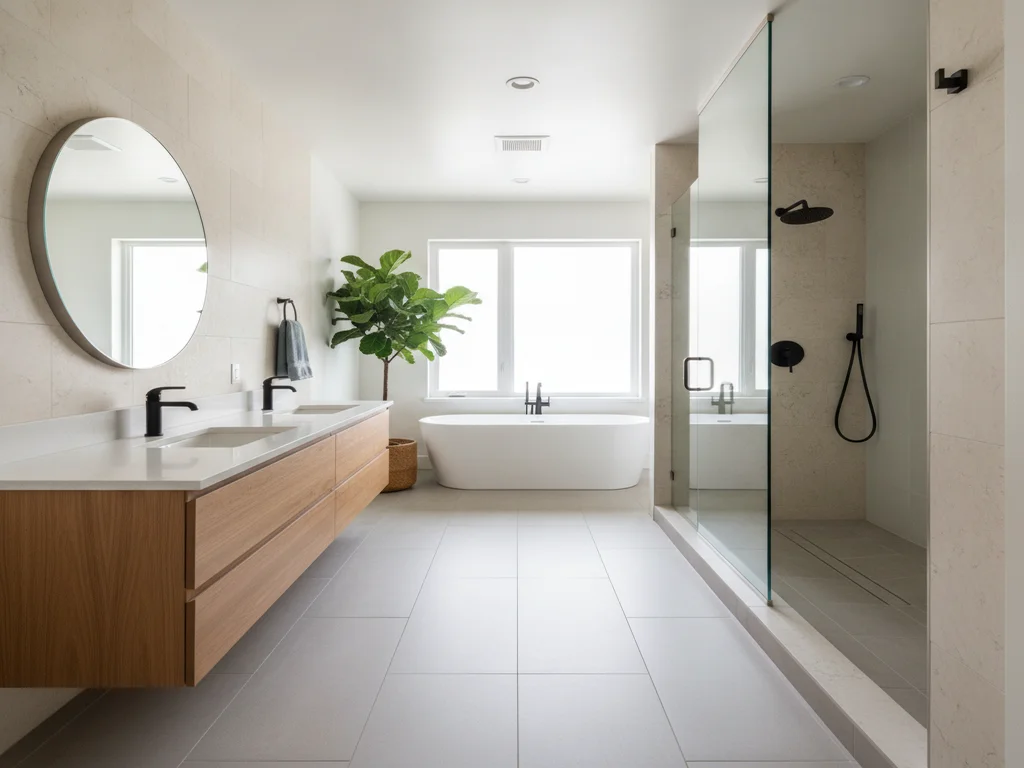
This is the crux of natural stone's maintenance story, and the Natural Stone Institute — the industry's own trade group — is specific about it. Its guidance recommends a penetrating sealer "once a year" for a shower in daily use, applying it as an "impregnator" that acts as a repellent rather than a true seal: "sealing does not make the stone stain proof, rather it makes the stone more stain resistant." That distinction matters. Sealed stone still needs care — it is more resistant to staining, not immune to it.
The day-to-day routine is straightforward once sealed: use "a squeegee on the walls after showering" to prevent water marks, and clean with "a non-acidic or pH-neutral cleaner," since soapy or acidic products can etch or dull the surface over time. Beyond the yearly seal and the daily squeegee habit, the Natural Stone Institute recommends bringing in a professional every "two to five years" to rehone or repolish the stone, since it "loses its luster over time due to water exposure or calcium deposits" — even with diligent sealing, showers are simply a harder environment on stone than a countertop ever is.
Why porcelain skips almost all of that
Porcelain's maintenance advantage traces back to a single manufacturing fact covered in depth in our porcelain vs. ceramic tile comparison: the Tile Council of North America certifies porcelain as impervious, with water absorption of 0.5% or less. A tile that barely absorbs water has very little for stains, minerals, or mildew to grab onto in the first place, which is exactly why porcelain "rarely needs sealing" the way natural stone does.
Bob Vila's tile cost guide draws the maintenance line directly: natural stones like "marble, travertine, slate, or granite" require "a regular maintenance routine" because they "are porous and require regular cleaning and sealing," while porcelain is recommended specifically "for ease of maintenance" alongside a stain-resistant grout. The same guide goes a step further on durability, noting porcelain is "considered more durable than granite" when properly installed — a stone that is itself considered one of the harder natural options.
Cost: what the per-square-foot numbers actually show
Bob Vila's pricing puts natural stone in a wide $5–$45 per square foot general range, with specific materials spanning further still: marble at $2–$28 per square foot, travertine around $6, and slate around $3. Porcelain sits in a comparatively narrow $2–$15 per square foot band. On paper, the low ends nearly overlap — a budget slate could cost about the same as a mid-range porcelain — but the ceiling on natural stone is dramatically higher, and premium marble or exotic stone can multiply a shower's material cost several times over compared to even upscale porcelain.
That upfront number is only part of the real cost, though. Factor in the Natural Stone Institute's annual sealing and the every-two-to-five-year re-honing visit, and natural stone carries an ongoing cost porcelain simply does not — a detail worth budgeting for beyond the installed price on the estimate.
Look: the one place natural stone still wins
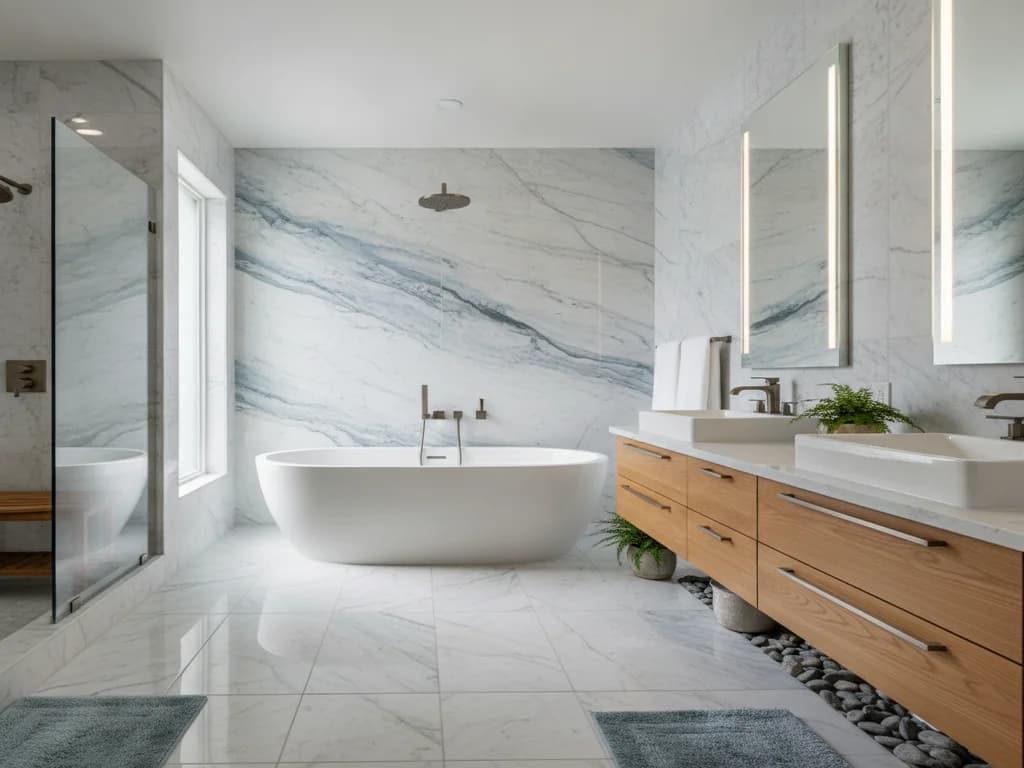
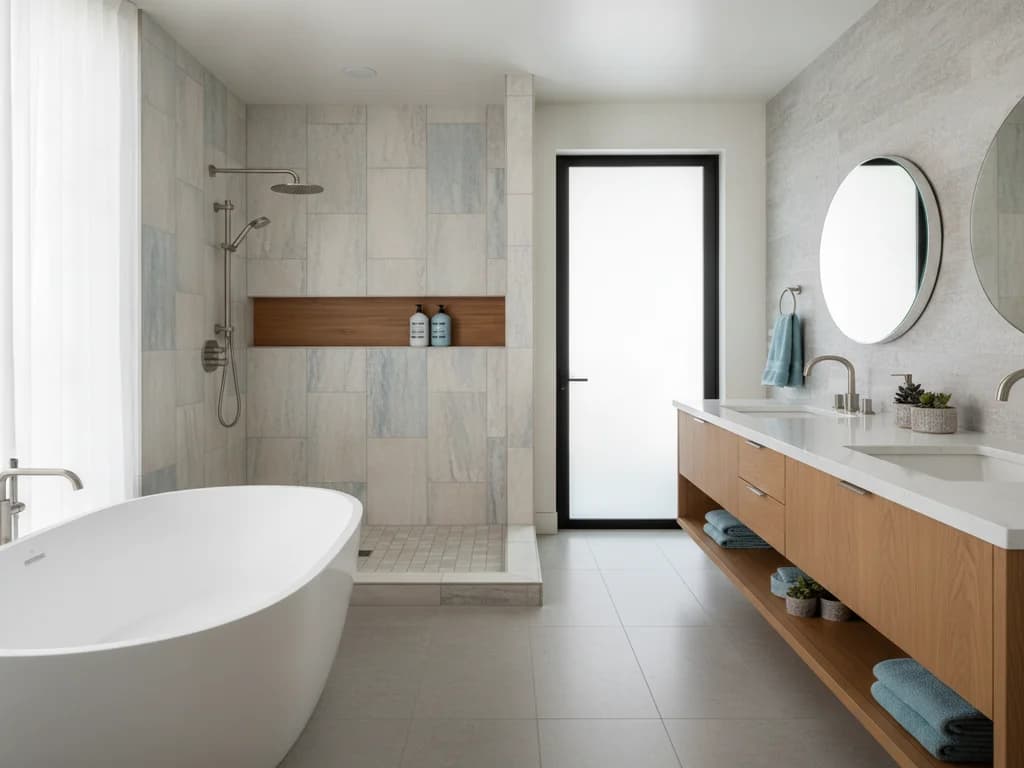
None of this is an argument against natural stone — it is an argument for choosing it with clear eyes. The Natural Stone Institute's own case for the material isn't about ease of upkeep; it's about appearance: "one-of-a-kind markings, dramatic colors, and rich finishes" that come from actual geology rather than a printed pattern. Every slab is genuinely unique in a way no manufactured tile — however convincing — can claim to be.
Porcelain has closed much of the visual gap with digitally printed stone-look lines — we've rounded up the most convincing marble-look surfaces if that's the aesthetic you're after — and for many bathrooms that similarity is close enough to make the lower-maintenance choice an easy one. But if the specific goal is a wall no other bathroom in Boise will have — because the veining pattern simply doesn't repeat — that is a natural-stone-only feature, full stop.
Which one should you choose?
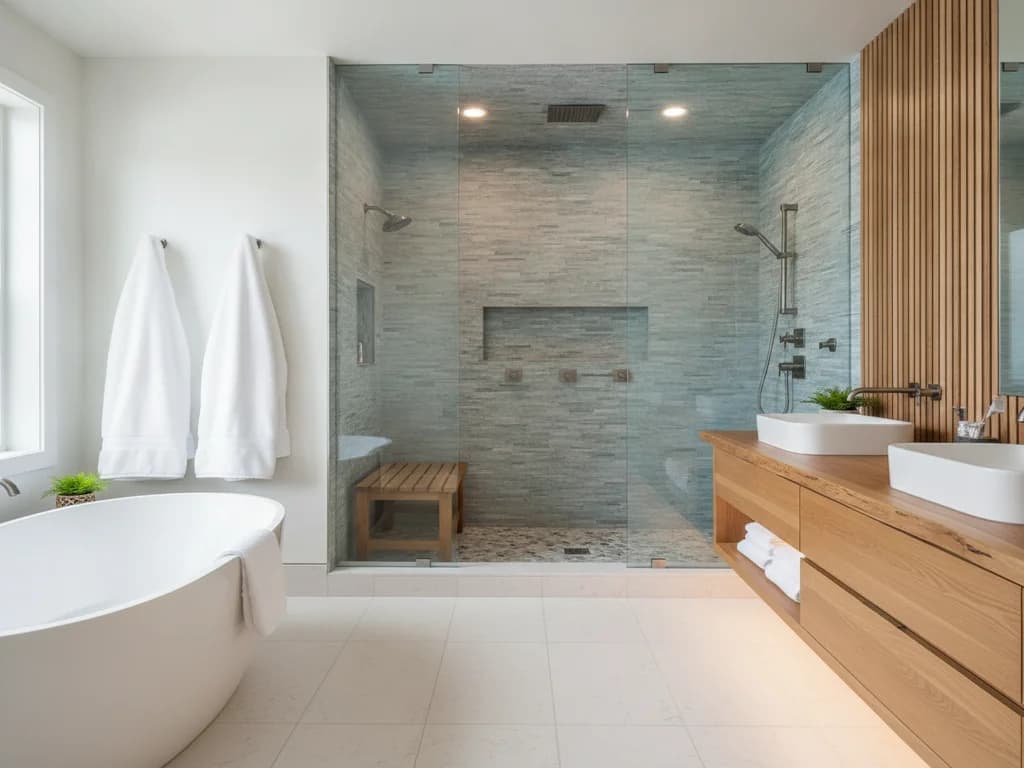
Choose porcelain if low maintenance is the priority: no annual sealing, no re-honing visits, and a certified-impervious surface that resists water damage and staining with routine cleaning alone. It is the practical default for a shower you want to enjoy rather than maintain, and our team can walk you through the best shower wall materials if you're still weighing porcelain against acrylic, solid surface, or the other common options.
Choose natural stone if the one-of-a-kind look is worth a standing commitment: a penetrating sealer once a year, a squeegee habit after every shower, and a professional re-honing every few years. Whichever you choose, our custom tile and stonework team installs both correctly the first time — including the waterproofing behind the surface, which matters just as much as the material on top.
Ready to plan your Boise bathroom?
Licensed & insured · 3-year workmanship warranty
Frequently asked questions
- Does a natural stone shower need to be sealed?
- Yes. The Natural Stone Institute recommends a penetrating sealer about once a year for a shower in daily use. Sealing makes the stone more stain-resistant, not stain-proof — it repels water so it beads rather than soaking in, but it doesn't eliminate the need for careful daily cleaning.
- Is porcelain tile cheaper than natural stone for a shower?
- Usually, yes, and by a wide margin at the high end. Bob Vila prices porcelain at $2–$15 per square foot versus natural stone's $2–$45 per square foot depending on the material — marble alone ranges $2–$28. Natural stone also adds an ongoing sealing and re-honing cost porcelain does not require.
- Is porcelain or natural stone more durable in a shower?
- Bob Vila describes porcelain as "considered more durable than granite" when properly installed, and the Tile Council of North America certifies it as impervious with 0.5% or less water absorption. Natural stone is durable too, but it is porous and needs regular sealing and occasional professional re-honing to stay protected.
Sources
- Natural Stone Institute — Natural Stone in the Shower: What You Need to Know
- Bob Vila — Tile Installation Cost
- Tile Council of North America — Porcelain Tile Certification
- Natural Stone Institute — Standards
- TCNA — Handbook for Ceramic, Glass & Stone Tile Installation
Claims and figures are drawn from the sources above and provided for general guidance; your project may vary. Photography is illustrative of design concepts. For a fixed price on your specific bathroom, request a free estimate.