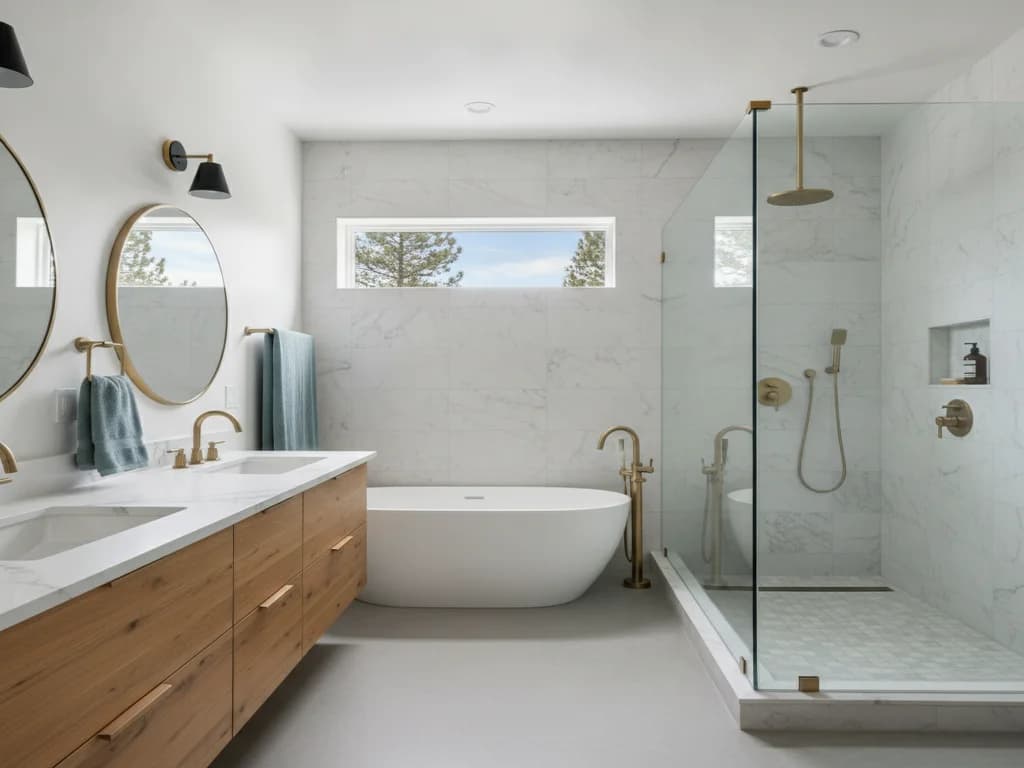
Updated July 16, 2026 · 7 min read
By Boise Bath — bathroom & shower remodeling in Boise & the Treasure Valley
The short answer
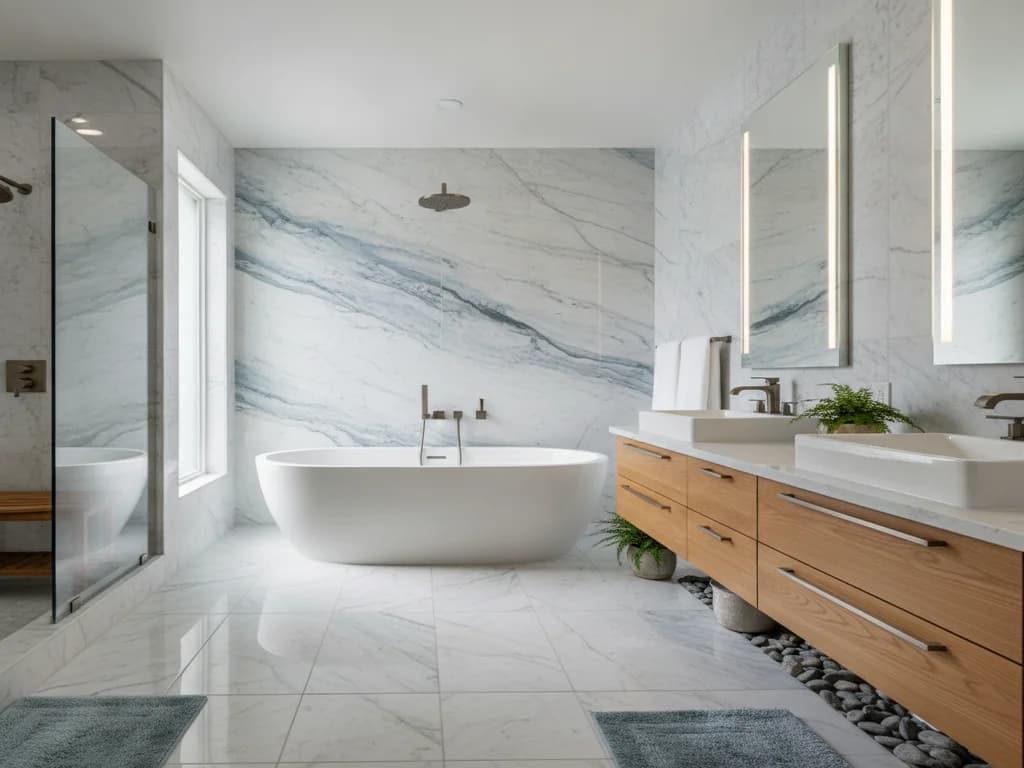
Marble-look porcelain tile is the best marble alternative for bathroom floors and showers — it carries the veining without marble’s etching, staining, and sealing demands. For vanity tops, marble-look quartz wins. Modern inkjet porcelain is convincing enough that the honest question is print quality and pattern repeat, not whether it passes.
Key takeaways
- Real marble is porous, soft, and etched by acidic products — a maintenance commitment the Natural Stone Institute’s own care guidance makes plain — which is why wet bathrooms are its hardest room.
- Marble-look porcelain delivers the veining with porcelain specs: near-zero absorption, no sealing, no etching, and matte finishes that pass wet-floor slip ratings.
- Marble-look quartz is the vanity-top answer: the veined look in a nonporous engineered slab that shrugs off cosmetics, toothpaste, and hard water.
- Porcelain slab is the premium move — bookmatched, vein-heavy shower walls with almost no grout lines.
- Print quality is the real quality tier in marble-look tile: face variety and pattern repeat separate convincing from wallpaper-obvious.
- Cultured marble and solid surface are the budget tier — serviceable, but the look is a step below modern porcelain printing.
Why fake the marble at all?
Because real marble is a demanding houseguest in a bathroom. It is porous, so it drinks water, cosmetics, and hair dye unless diligently sealed. It is soft, so it scratches and wears. And it etches — acidic anything, from vinegar-based cleaners to some toiletries, leaves permanent dull marks that are chemistry, not stains, and no sealer prevents them. The Natural Stone Institute’s care guidance is honest about the upkeep; the marble vs. porcelain comparison covers the full case.
None of that has ever made the look less wanted. Calacatta and Carrara veining is the most requested high-end bathroom aesthetic going, which is exactly why the industry spent two decades getting good at reproducing it in materials that do not care about water or pH.
The reproductions have crossed the believability line. Modern inkjet-printed porcelain renders veining, depth, and surface polish well enough that the practical question is no longer "will it pass?" but "how good is the print?" This article ranks the alternatives by surface — floors, showers, vanity tops — because the best marble-look material is different for each.
Best for floors and showers: marble-look porcelain tile
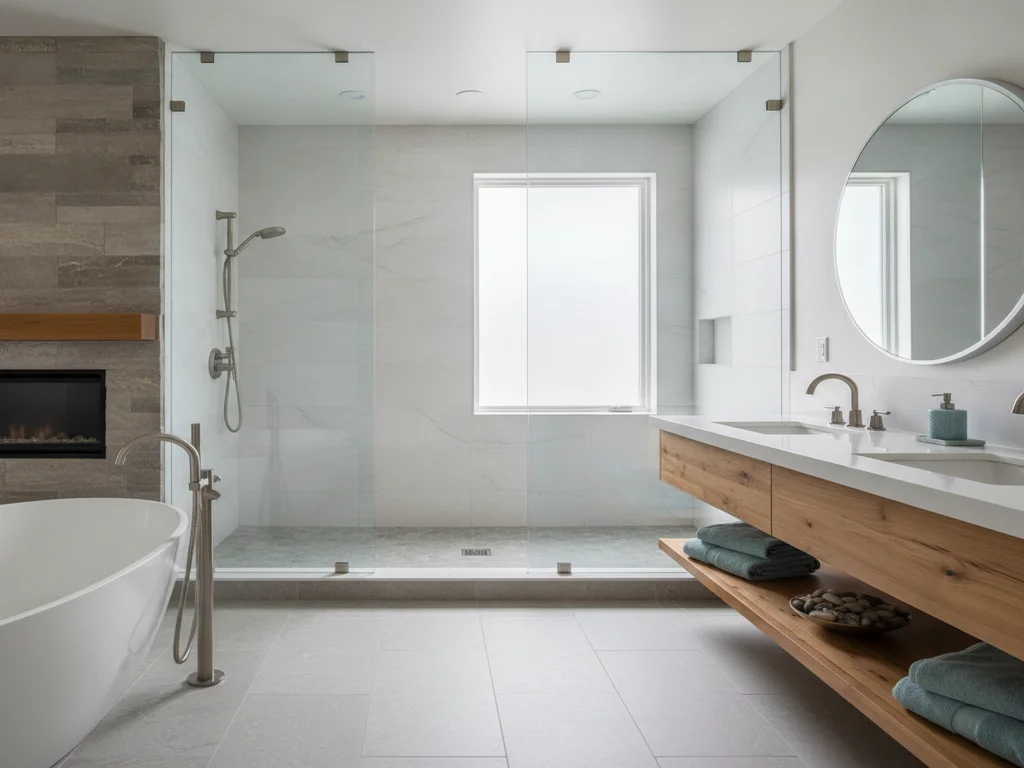
Marble-look porcelain is the headline act. You get the veining on a material that absorbs under 0.5% water by the industry definition TCNA references, never needs sealing, does not etch, and wears harder than the stone it imitates. In a shower — the room that punishes real marble fastest — that trade is nearly all upside.
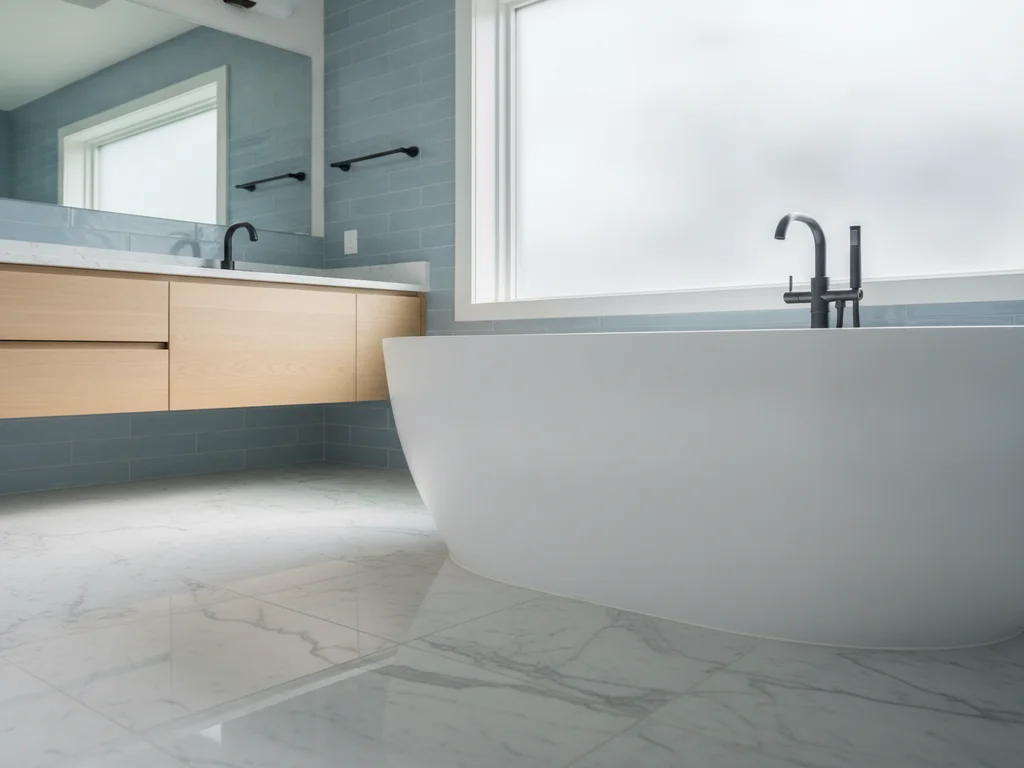
It also fixes marble’s floor problem. Polished real marble is slick when wet; marble-look porcelain comes in matte and honed-look finishes that carry the veining and still publish a wet DCOF of 0.42 or higher, the slip baseline for bathroom floors. Spec it like any floor tile — the full checklist lives in best floor tile for bathrooms.
Quality has one honest tell: the print. Better lines print many distinct tile faces, so a floor does not repeat the same vein like wallpaper; cheap lines repeat every few tiles and read fake at a glance. Ask how many faces a line carries and lay out a few square feet before committing — that one check separates convincing from costume.
Best for vanity tops: marble-look quartz
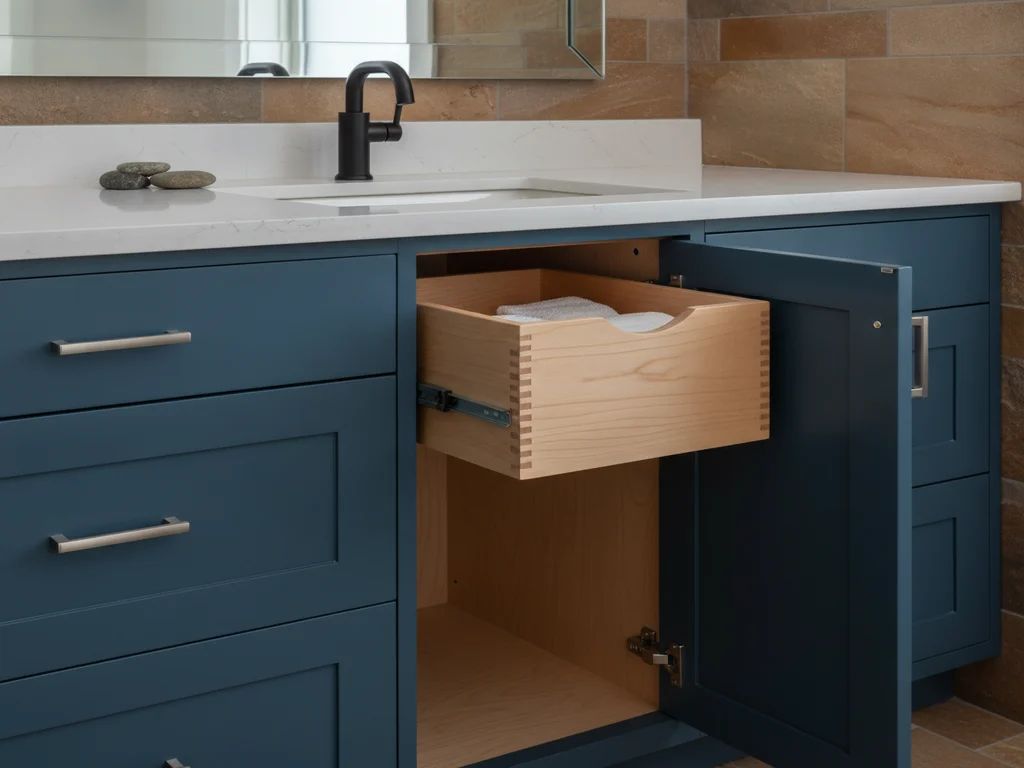
Countertops are where real marble suffers most visibly — etch rings from toiletries, stains at the faucet, wear at the sink edge — and where engineered quartz is strongest. Quartz is nonporous, never sealed, and indifferent to cosmetics, toothpaste, and the hard-water spotting that Treasure Valley taps dish out daily. Premium lines now carry veining with genuine depth and movement rather than the flat gray blobs of early attempts.
The honest caveats are heat and UV: quartz resins can scar under a curling iron parked flat on the surface, and prolonged direct sun can shift color — a countertop concern more than a bathroom-window one, but worth knowing. Neither dents its standing as the default veined vanity top.
How quartz stacks against the rest of the counter field — and where the vanity cabinet under it fits — is covered in best bathroom vanity materials; this article stays on the marble-look question, where quartz is the clear winner at the counter.
The premium move: porcelain slab
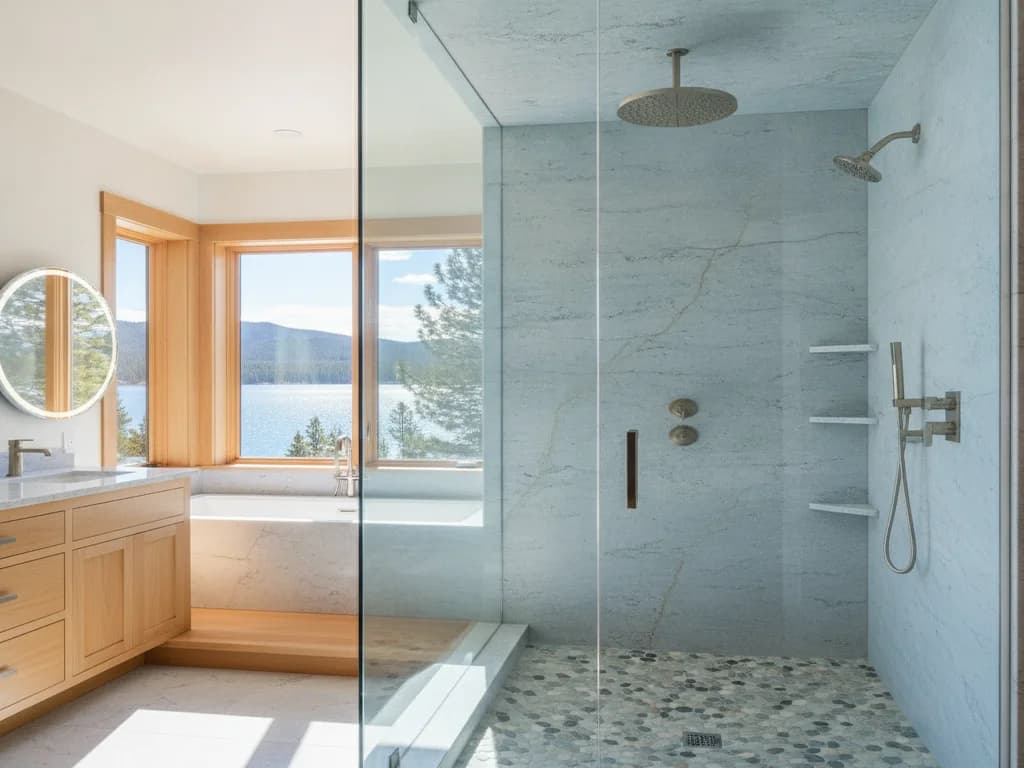
Large-format porcelain slab — panels measured in feet, not inches — is how high-end bathrooms get the bookmatched-marble shower wall without the marble. Two mirrored slabs meet at a center line and the veining flows across an almost grout-free wall: the exact look that costs a small fortune in quarried stone, in a material that ignores water entirely.
The cost logic is honest but different. The material can run less than premium marble slab, but fabrication and installation are specialist work — the panels are large, brittle in handling, and unforgiving of substrate flaws — so the installed price sits well above ordinary tile. It earns its premium in showers and feature walls where the near-seamless look is the point.
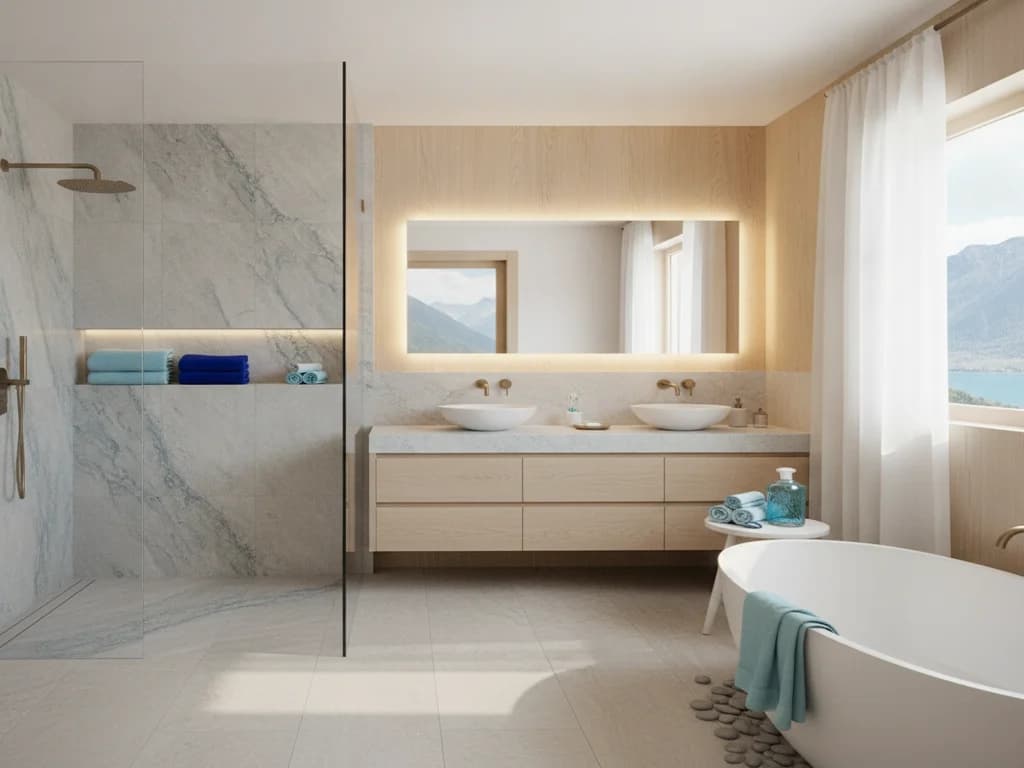
For most projects the decision tree is simple: porcelain tile for the room, porcelain slab where one wall should stop conversation, quartz at the vanity. Mixing all three in one veining family is a legitimate designer move, not a compromise.
Match the veining, not the material
The convincing marble-look bathroom keeps one veining family — one background tone, one vein color and scale — across tile, slab, and quartz, even though the three materials come from different manufacturers. Bring samples of each into the same light before ordering anything. Mismatched whites and dueling vein scales are what make a faux-marble room read faux.
The budget tier: cultured marble and solid surface
Cultured marble — crushed stone in a gel-coated resin cast — is the veteran budget option, common as integral vanity tops and tub surrounds. It is waterproof, seamless, and cheap; its veining is also visibly cast rather than printed, the gel coat dulls and can craze with years of abrasive cleaning, and repair options are limited. Serviceable is the fair word.
Solid surface (the Corian family) buys repairability — scratches sand out — and seamless integral sinks, with veined patterns that have improved but still trail porcelain and quartz printing at conversational distance. Both materials make sense when budget outranks scrutiny, in guest baths and rentals especially.
One more budget lane deserves a caution flag: marble-look laminate and peel-and-stick vinyl products. Fine in a powder room refresh; wrong in wet zones, where their cores and adhesives meet the moisture problems that sank pricier materials in the flooring comparisons long before the look question even comes up.
The picks compared
Every alternative, ranked by where it wins:
| Material | Best surface | Look fidelity | Maintenance | Relative cost |
|---|---|---|---|---|
| Marble-look porcelain tile | Floors, shower walls | Excellent (check face count) | None beyond grout care | $$ |
| Porcelain slab | Shower/feature walls, bookmatch looks | Excellent, near-seamless | Minimal — few grout lines | $$$$ |
| Marble-look quartz | Vanity tops | Excellent in premium lines | None — nonporous, no sealing | $$$ |
| Solid surface | Vanity tops, integral sinks | Fair — improving | Low; scratches sand out | $$ |
| Cultured marble | Budget tops, tub surrounds | Fair — visibly cast | Low; gel coat dulls over time | $ |
| Real marble (the benchmark) | Where upkeep is accepted | The benchmark | Sealing, etch and stain vigilance | $$$$ |
Relative cost is indicative of typical installed position, not a quote — slab fabrication, tile format, and layout complexity move every line. Confirm current pricing per project.
Matching the alternative to your project
The shortlist, applied:
- Full marble-look bathroom, sane maintenance: marble-look porcelain floors and shower, quartz vanity top, one shared veining family — the reference recipe.
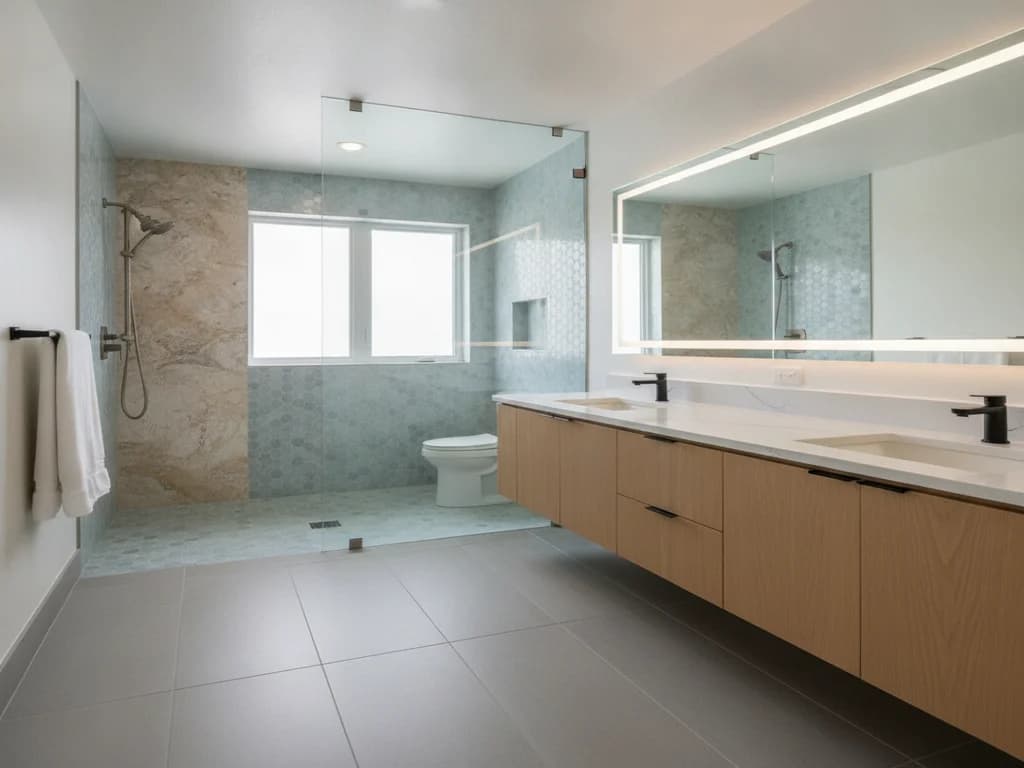
- Showpiece primary shower: bookmatched porcelain slab walls, mosaic-format marble-look porcelain on the shower floor for slope and grip.
- Vanity-only refresh: marble-look quartz top; it upgrades the room’s reading more per dollar than any other single veined surface.
- Guest bath on a budget: marble-look porcelain in a standard format — the print quality check matters more than the price tier.
- You already own real marble and it is tired: honed refinishing and resealing is a real option — the replacing marble bathroom floor guide covers when to restore versus swap to porcelain.
- Still torn on real versus look-alike: the marble vs. porcelain tile comparison makes the head-to-head case before you commit either way.
Ready to plan your Boise bathroom?
Licensed & insured · 3-year workmanship warranty
Frequently asked questions
- What is the best alternative to marble in a bathroom?
- Marble-look porcelain tile for floors and showers, and marble-look quartz for vanity tops. Porcelain carries the veining with near-zero water absorption, no sealing, and no acid etching; quartz does the same job at the counter. Porcelain slab is the premium pick for bookmatched, nearly grout-free shower walls. Each beats real marble on upkeep in wet rooms.
- Does marble-look porcelain tile actually look real?
- Good lines do. Modern inkjet printing reproduces veining, tonal depth, and polished or honed surfaces convincingly at conversational distance. The tell is repetition: quality lines print many distinct tile faces so no vein repeats nearby, while budget lines repeat a pattern every few tiles. Ask about face count and lay out several square feet before you commit.
- Why is real marble a problem in bathrooms?
- Three reasons: it is porous, so it absorbs water and stains without diligent sealing; it is soft, so it scratches and wears underfoot; and it etches — acidic cleaners and many toiletries leave permanent dull marks no sealer prevents, per the stone industry’s own care guidance. Bathrooms concentrate all three attacks, which is why marble demands the most maintenance exactly where it gets the most abuse.
- Is quartz or porcelain better for a marble look?
- Different surfaces, different winners. Quartz is the vanity-top answer — a thick, nonporous engineered slab with an integral polished edge. Porcelain wins floors and shower walls, where tile formats, slip-rated matte finishes, and full-wall slab panels fit the job. High-end bathrooms routinely run both in one matched veining family, porcelain on the planes and quartz at the counter.
- Is marble-look tile cheaper than real marble?
- Usually, and the gap widens after installation. Marble-look porcelain generally sits below comparable marble on material cost, sets like ordinary tile, and then spends nothing on sealing or restoration for its whole service life — while real marble keeps billing for care. Porcelain slab is the exception where fabrication costs approach stone; there you pay for the seamless look, not the maintenance.
- Can you use marble-look porcelain on a shower floor?
- Yes — in the right format and finish. Shower floors need small-format tile, typically 2-inch or under mosaics, to follow the slope to the drain and add grip through grout joints, and marble-look porcelain mosaics are widely available. Choose a matte or textured finish with a passing wet slip rating rather than a polished face, which belongs on the walls.
Sources
- Natural Stone Institute
- Tile Council of North America (TCNA)
- This Old House — Bathrooms
- Consumer Reports
Claims and figures are drawn from the sources above and provided for general guidance; your project may vary. Photography is illustrative of design concepts. For a fixed price on your specific bathroom, request a free estimate.