Updated July 16, 2026 · 7 min read
By Boise Bath — bathroom & shower remodeling in Boise & the Treasure Valley
The short answer
Full glass wins on light, perceived space, and cleaning — one smooth surface to squeegee, no grout, no tiled ledge. A pony wall wins on privacy, plumbing concealment, and glass cost, since the panel above it is smaller and needs less hardware. Choose full glass for small or design-forward bathrooms; choose a pony wall when you want a built-in anchor for the valve, a bench, or modesty.
Key takeaways
- A pony wall (knee wall) is a framed, tiled half wall — usually 36–48 inches tall — with a fixed glass panel mounted on its cap.
- Full-height frameless glass opens sightlines completely, which is why small bathrooms almost always look bigger with it.
- The pony wall adds two maintenance surfaces glass does not have: grout lines and a horizontal cap that must shed water correctly.
- A pony wall conceals the plumbing wall, hides a shower bench from the room, and gives towel bars and controls somewhere to live.
- Glass cost scales with area and hardware — a short panel on a knee wall is cheaper glass than a floor-to-ceiling enclosure.
- Neither option is waterproofing: both sit on top of the pan and membrane system, which is what actually keeps the bathroom dry.
The verdict: glass for openness, a pony wall for structure and privacy
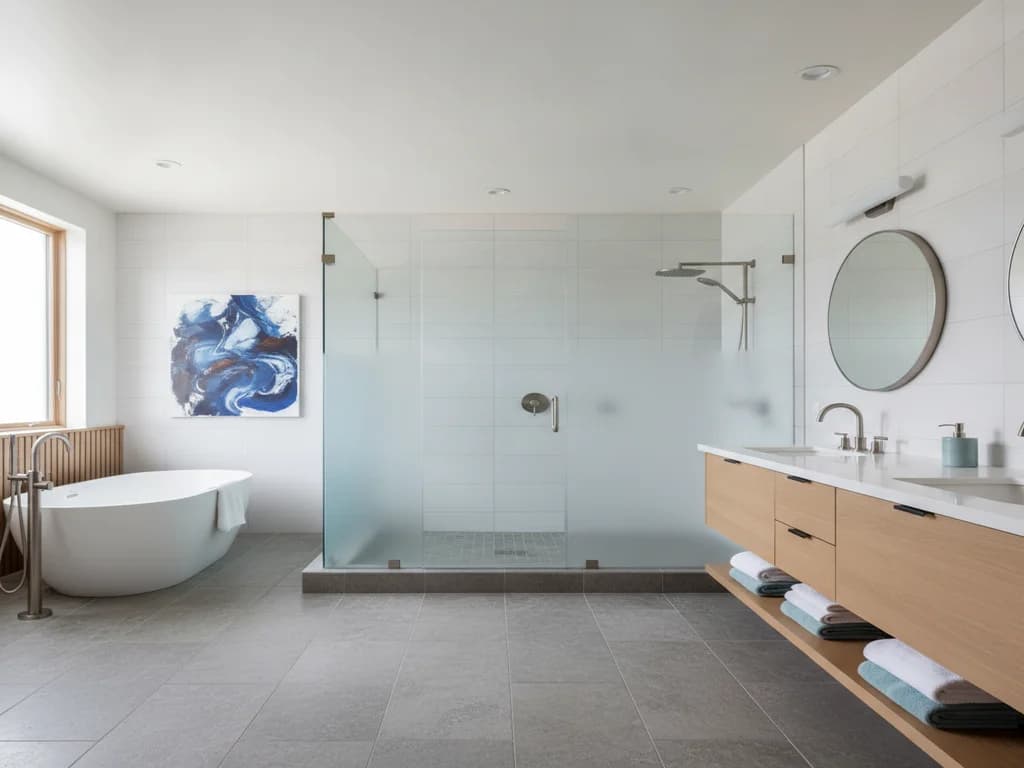
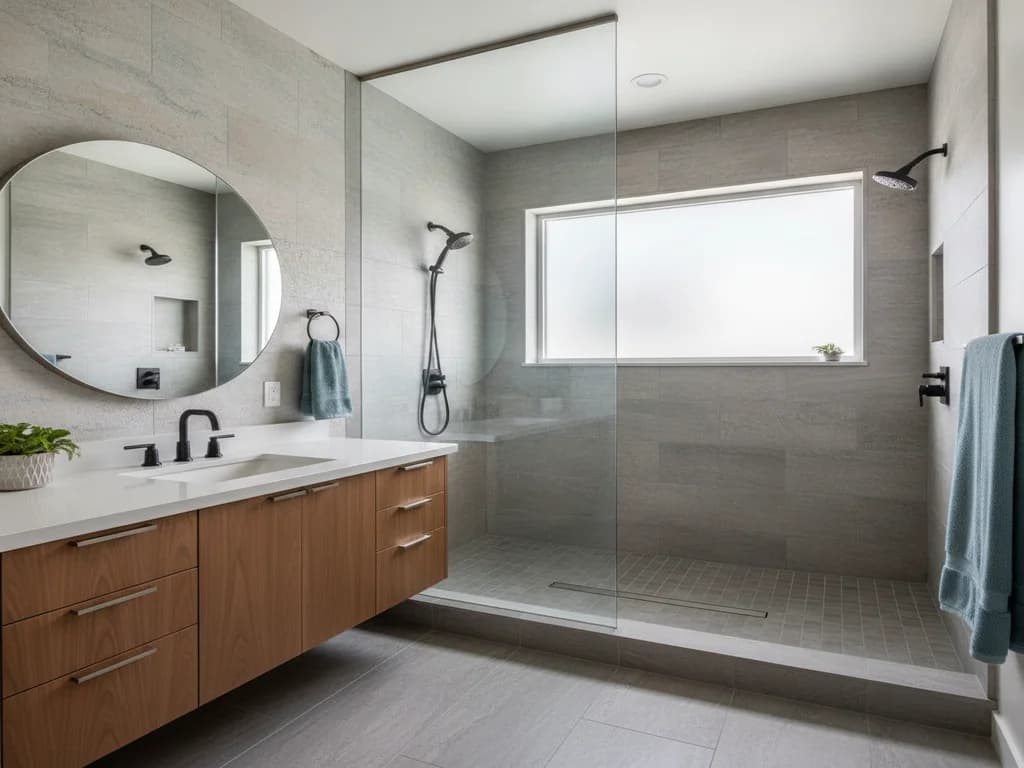
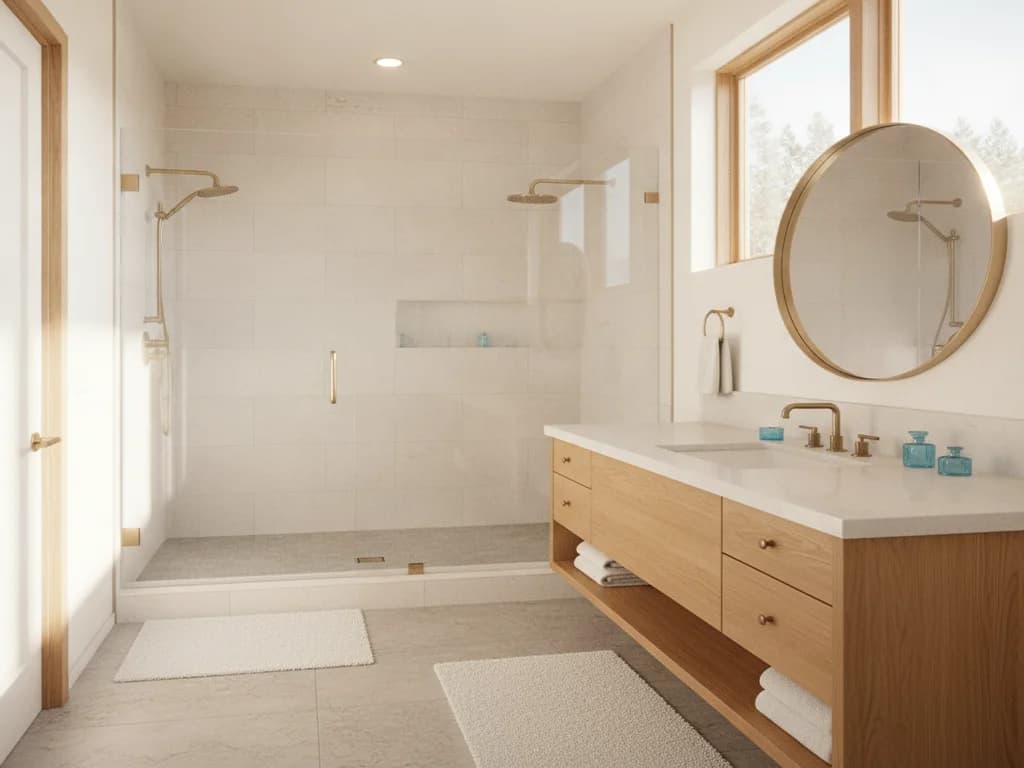
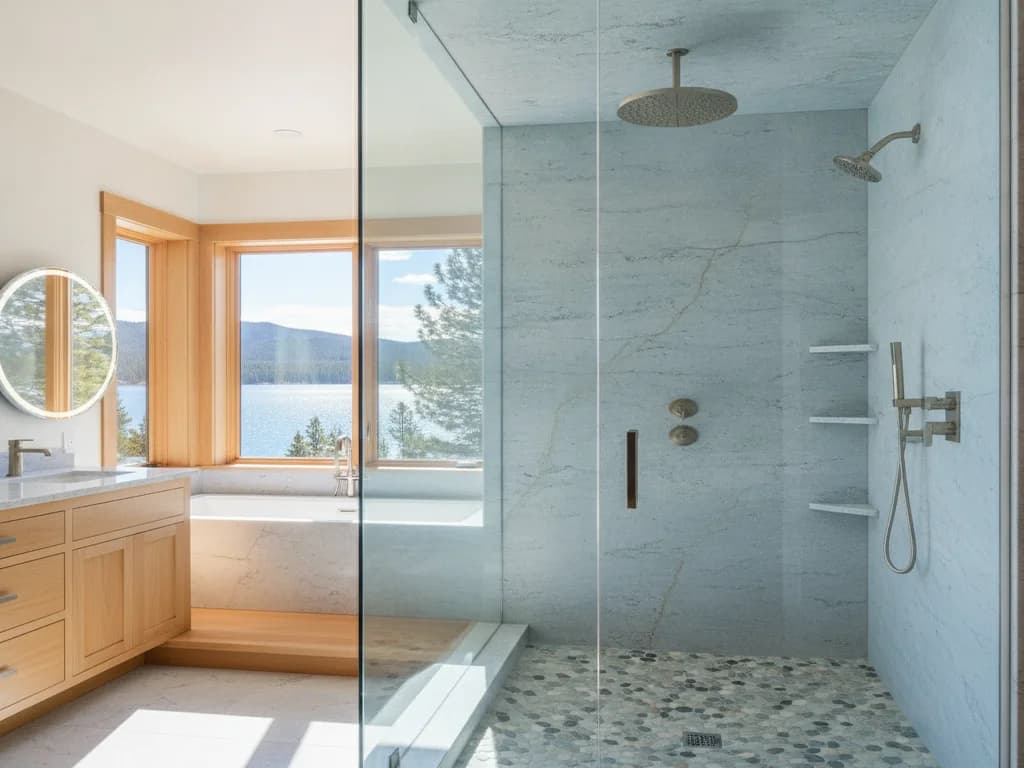
This is a question about what you want the enclosure to do beyond holding water in. Full-height glass does one thing brilliantly: it disappears. Light crosses the room, the tile work reads as one continuous surface, and a modest bathroom borrows every square foot the shower occupies. If the goal is a bathroom that photographs and feels larger than it is, full glass is the answer.
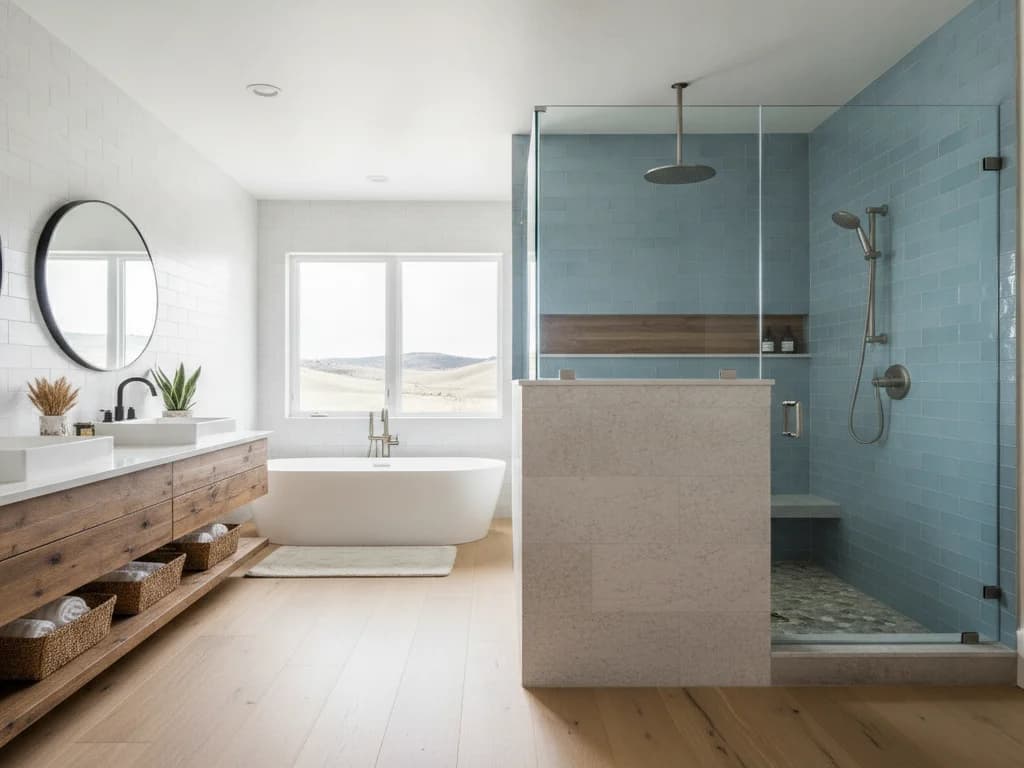
A pony wall — a framed, tiled knee wall with a glass panel set on top — does several quieter jobs. It screens the shower interior at sitting and standing-torso height, gives the shower valve and controls a home you can reach without opening a door, hides a bench or ledge from the room, and shrinks the glass panel above it to a smaller, cheaper piece.
Both are legitimate. The mistake is treating them as interchangeable looks, because they clean, age, and cost differently. The glass itself — thickness, tempering, framed versus frameless hardware — is its own decision either way; our shower glass enclosure guide covers those specs so this page can stay on the wall-versus-panel question.
What a pony wall actually is
A shower pony wall is a short stud-framed wall, typically 36 to 48 inches tall, built as part of the shower itself. It gets the same treatment as the full walls: waterproofing membrane, tile on both faces, and a cap — tile, quartz, or stone — across the top. A fixed glass panel is then anchored to that cap with channel or clamps, running up to roughly door height or the ceiling.
That construction is the key to everything in this comparison. The pony wall is a small piece of tiled construction, with everything that implies: grout joints, a horizontal surface that must be pitched to shed water, and framing that has to be built plumb and solid enough to carry a glass panel on its top edge.
Full-height glass replaces all of that with panels: fixed glass anchored to the finished walls and floor, usually 3/8- or 1/2-inch tempered glass in a frameless system. There is no framing, no tile, and no cap — just glass, a handful of clamps or channel, and silicone at the perimeter.
Pony wall vs. full glass: the side-by-side
Here is the whole decision in one table. The pattern to notice: the pony wall trades openness for utility, and adds tiled surfaces that need the same care as the rest of the shower.
| Factor | Pony wall + glass top | Full-height glass |
|---|---|---|
| Light & sightlines | Knee wall blocks the lower third; room reads more compartmentalized | Uninterrupted glass; the shower visually joins the room |
| Perceived size | Defines the shower as a separate zone | Small bathrooms look meaningfully larger |
| Privacy | Real modesty screening at bench and torso height | None with clear glass; frosted glass can add it |
| Cleaning | Glass panel plus grout lines and a horizontal cap that collects water spots | One smooth surface — squeegee and done |
| Utility | Anchors the valve wall, hides a bench, backs towel bars outside | No built-in structure; benches and niches live in the full walls |
| Glass cost | Smaller panel, less hardware — the cheaper glass order | More square footage of thick tempered glass; enclosures run roughly $1,000–$3,000+ installed, per HomeAdvisor |
| Build cost | Adds framing, waterproofing, tile, and a fabricated cap | No added construction beyond blocking for hardware |
| Aging | Grout and cap caulk are the wear items; a well-pitched cap lasts | Hardware and perimeter silicone are the only wear items |
Glass enclosure cost range is a national installed figure from HomeAdvisor’s True Cost Guide; panel size, thickness, and hardware drive the spread.
Light, sightlines, and the small-bathroom effect
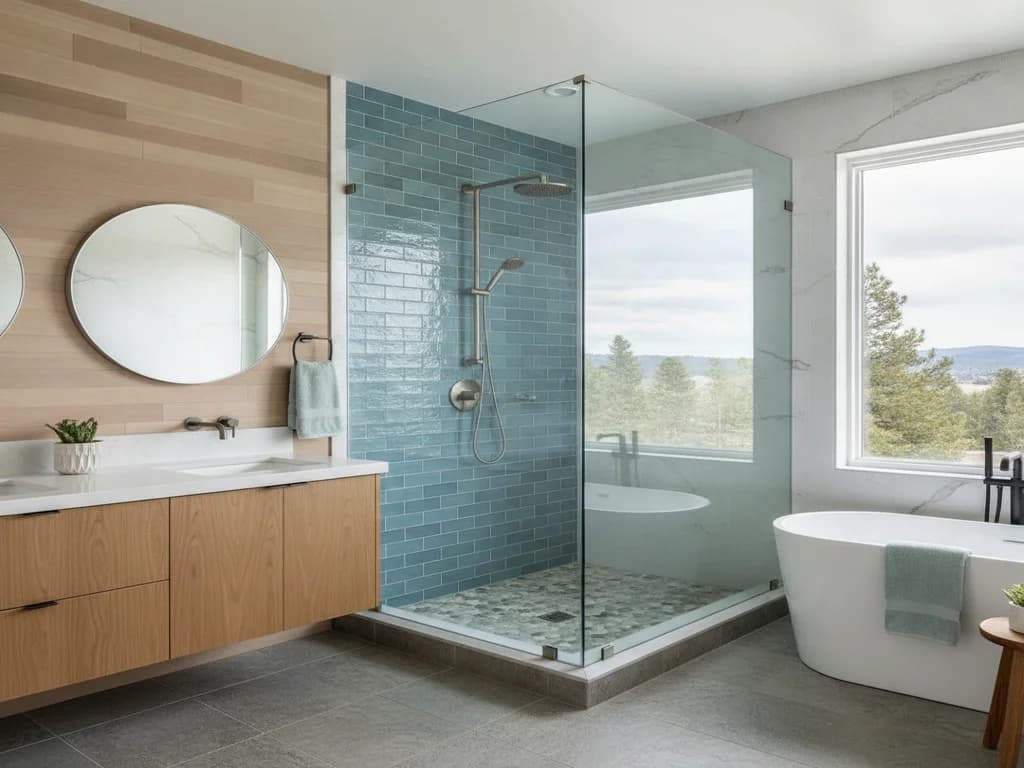
In a typical Treasure Valley hall bathroom — call it 5 by 8 feet — the shower occupies a third of the floor plan. Full-height clear glass returns that third to the eye: the far wall of the shower becomes the far wall of the room. This is the single strongest argument for full glass, and it is why nearly every small-bathroom remodel we design defaults to it.
A pony wall spends some of that openness deliberately. The lower 36 to 48 inches of the shower reads as wall, which grounds the composition and gives the room a more traditional, built-in character. In a larger bathroom that trade costs little. In a compact one, it visibly shrinks the room — the exact opposite of what most small-bath remodels are trying to buy.
Whether the glass above the wall should be clear or obscured is a separate lever entirely — frosted vs. clear shower glass covers that trade in detail, and it applies to both configurations.
Cleaning and how each one ages
Full glass is the low-effort enclosure, with one honest caveat. The daily routine is a squeegee pass, and the deep clean is glass cleaner on a single smooth surface. The caveat is Boise’s hard water: skip the squeegee for a few weeks and mineral film builds, and etched-in hard-water spotting is permanent. Our shower glass care guide covers the routine that prevents it.
The pony wall keeps all of that glass care — the panel still needs the squeegee — and adds tiled surfaces on top. Grout lines on both faces need the same attention as the shower walls, and the cap is the critical detail: it is a horizontal surface in the wet zone, so it collects standing droplets, shows hard-water spotting on stone or quartz, and depends on a slight pitch back into the shower to shed water at all.
Aging follows the same split. A full-glass enclosure’s wear items are hardware and perimeter silicone — cheap, renewable maintenance. A pony wall’s wear items are grout and the caulk joint where glass meets cap; both are renewable too, but a poorly built cap (flat, or seamed in the wrong place) is a genuine failure point that lets water sit against the joint year after year.
The cap is the detail that decides whether a pony wall lasts
A pony wall cap must be a single piece where possible, pitched slightly toward the shower interior, set over a properly waterproofed wall top. A flat or back-pitched cap holds water against the glass channel and caulk joint, and that is where failed pony walls fail. If you are getting bids, ask specifically how the cap will be fabricated and pitched.
Cost direction: where the money moves
Full glass concentrates the spend in the glass order. Floor-to-ceiling frameless panels are large pieces of 3/8- or 1/2-inch tempered glass with premium hardware, and installed enclosures commonly run roughly $1,000–$3,000 and beyond, per HomeAdvisor — size, thickness, and configuration drive the number more than anything else.
The pony wall splits the spend. The glass panel gets smaller and cheaper, but you buy construction instead: framing, waterproofing, tile on two faces, and a fabricated cap. In most remodels the two configurations land closer together than people expect — the pony wall is not a savings play, it is a different allocation of the same enclosure budget.
The honest budget advice: decide on function first, then price both against your actual shower dimensions. A 4-foot alcove needs far less glass than a 6-foot walk-in, and the gap between the options moves with it.
Which should you choose?
Let the room and the way you use the shower make this call:
- Small or dark bathroom: full-height clear glass — the perceived-space gain is the whole point, and nothing else delivers it.
- Shared bathroom where modesty matters: pony wall, or full glass in a frosted finish — the knee wall screens exactly the zone most people want screened.
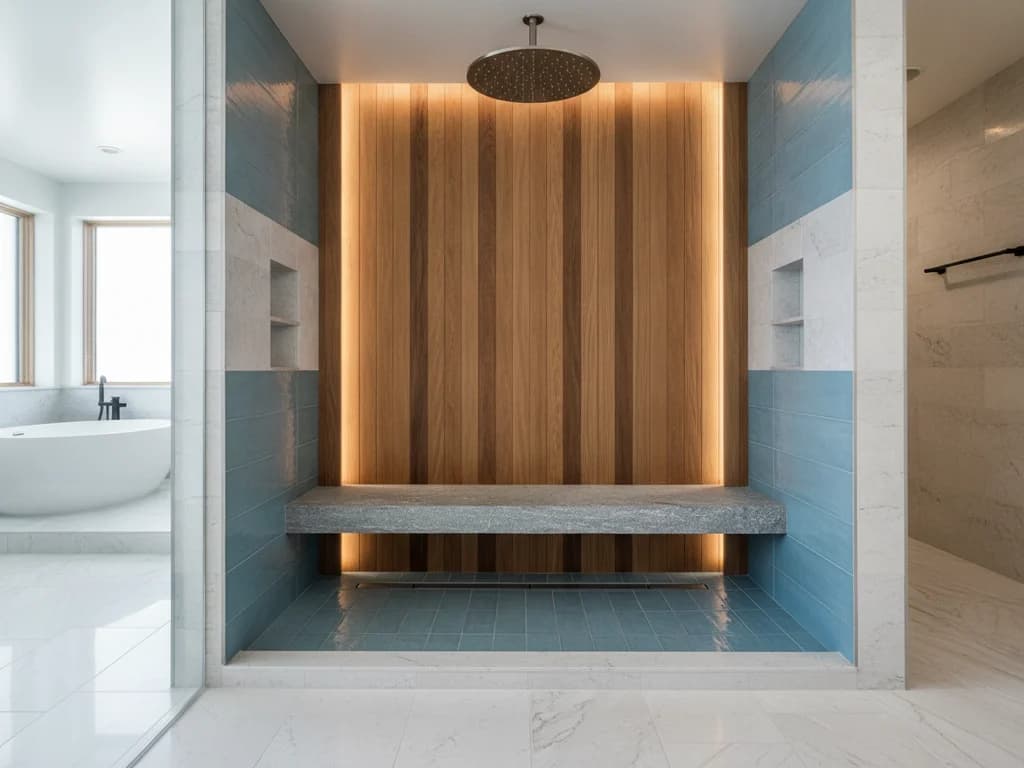
- You want a bench in the shower: pony wall — it hides the bench from the room and gives it a natural backrest line.
- Design-forward remodel showcasing tile work: full glass — an uninterrupted view of the tile is the payoff for the larger glass order.
- Curbless or aging-in-place shower: full glass panels with a wide opening keep the entry clean; see converting to a curbless shower for how the enclosure interacts with the entry.
- Traditional or transitional style home: pony wall — the built-in, wainscot-like mass suits the architecture in a way floating glass does not.
Ready to plan your Boise bathroom?
Licensed & insured · 3-year workmanship warranty
Frequently asked questions
- How tall should a shower pony wall be?
- Most shower pony walls run 36 to 48 inches tall. Lower reads more open but screens less; taller gives real seated privacy and more mounting height for the valve, at the cost of more visual mass. The glass above typically continues to about 76–80 inches total height, matching standard enclosure heights, though some designs run the panel to the ceiling in steam or high-splash showers.
- Is a pony wall shower cheaper than full glass?
- Usually not by as much as people expect. The glass panel gets smaller and cheaper, but you add framing, waterproofing, tile on both faces, and a fabricated cap — real construction line items. On a typical alcove the two options land in a similar range; on a large walk-in with floor-to-ceiling panels, full glass pulls ahead in cost. Price both against your actual dimensions rather than assuming.
- Do pony wall showers leak?
- Not when built correctly — the wall gets the same membrane waterproofing as the rest of the shower. The vulnerable detail is the cap: it must be pitched slightly into the shower and properly sealed where the glass channel meets it, or water sits on the joint and eventually finds the framing. A flat, multi-seam, or back-pitched cap is the failure signature to watch for.
- Does full glass make a small bathroom look bigger?
- Yes, and dramatically. Clear floor-to-ceiling glass lets the eye read the shower’s far wall as the room’s far wall, visually returning the shower footprint to the room — in a 5-by-8 bathroom that is roughly a third of the floor plan. It is the most reliable perceived-space upgrade in a small-bath remodel, which is why compact bathrooms almost always default to full clear glass.
- Can you put a glass panel on an existing half wall?
- Often, yes — if the wall is plumb, structurally solid, and its cap is in good condition, a glass shop can template and mount a fixed panel with channel or clamps. The common obstacles are caps that are cracked, flat-pitched, or too narrow for the channel, and framing that flexes. A professional will assess the wall before quoting; sometimes rebuilding the cap is part of the job.
Sources
- HomeAdvisor — True Cost Guide
- National Kitchen & Bath Association (NKBA)
- This Old House — Bathrooms
- Angi — Cost Guides
Claims and figures are drawn from the sources above and provided for general guidance; your project may vary. Photography is illustrative of design concepts. For a fixed price on your specific bathroom, request a free estimate.