Updated July 16, 2026 · 6 min read
By Boise Bath — bathroom & shower remodeling in Boise & the Treasure Valley
The short answer
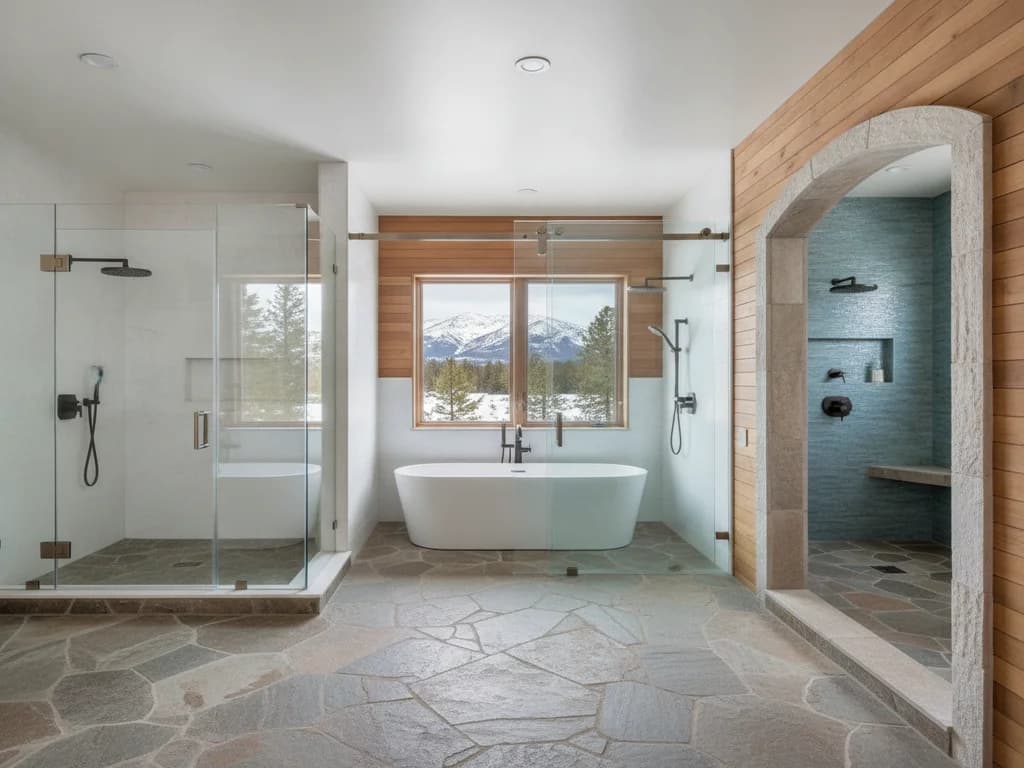
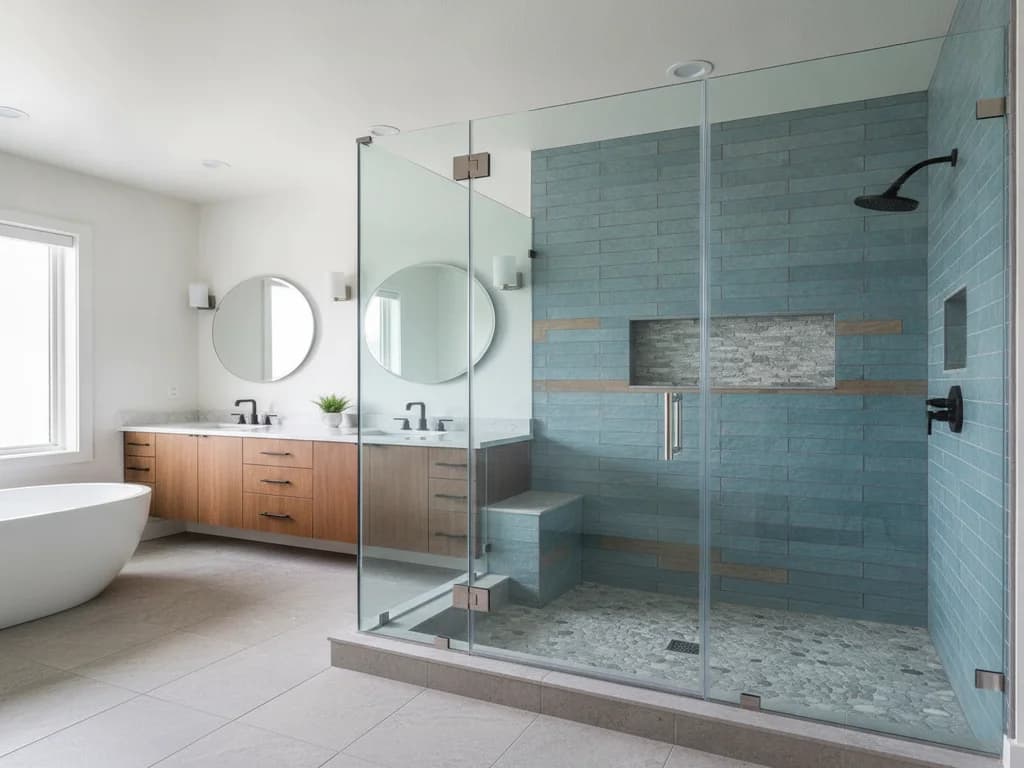
Clear glass is the default: it makes the bathroom feel larger, shows off tile work, and wipes down as one smooth surface. Frosted glass wins in shared bathrooms where privacy matters, and it hides the water spots clear glass broadcasts. Choose clear for small or design-forward baths; choose frosted — or a partial band of it — when the shower and toilet share close quarters.
Key takeaways
- Clear glass visually adds the shower footprint back to the room — the strongest perceived-space lever in a small bathroom.
- Frosted glass is real privacy at the exact heights people care about; silhouettes remain, detail does not.
- Clear glass shows hard-water spotting immediately; frosted glass hides film but holds soap residue in its texture.
- Frosting lives on one face of the glass — acid-etched or sandblasted — and the smooth face should face the water.
- Both are the same tempered safety glass underneath; safety glazing is required in shower enclosures under CPSC standards.
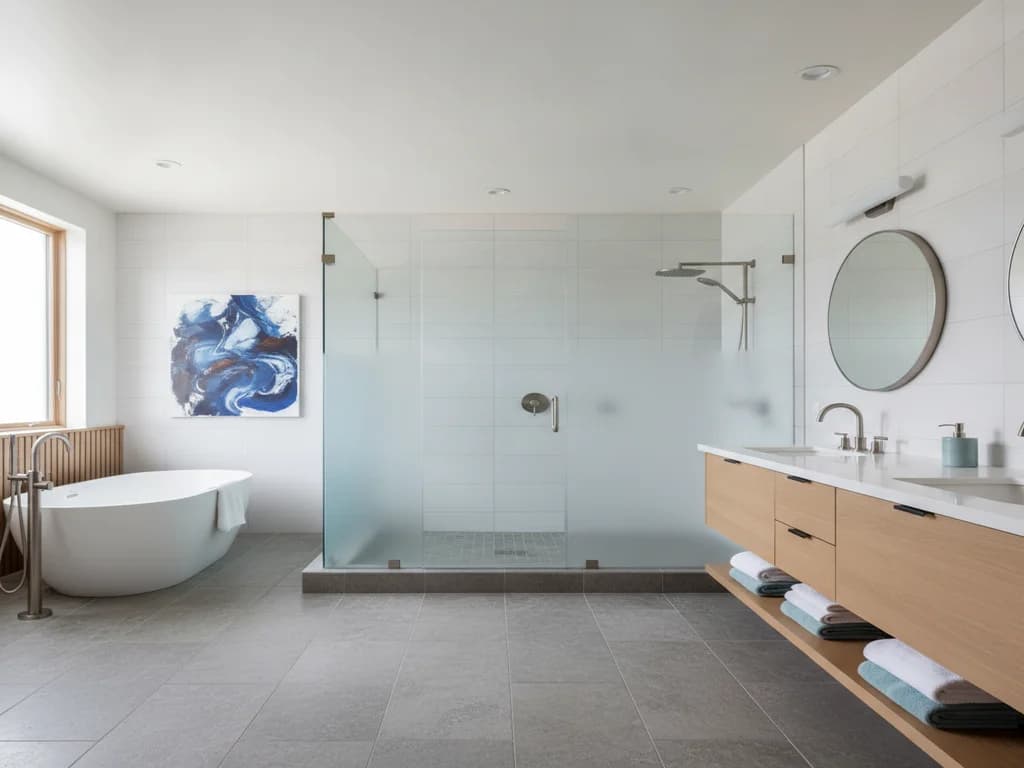
- Partial options — a frosted band or gradient — buy torso-height privacy while keeping light moving through the room.
The verdict: clear unless privacy is a real, daily need
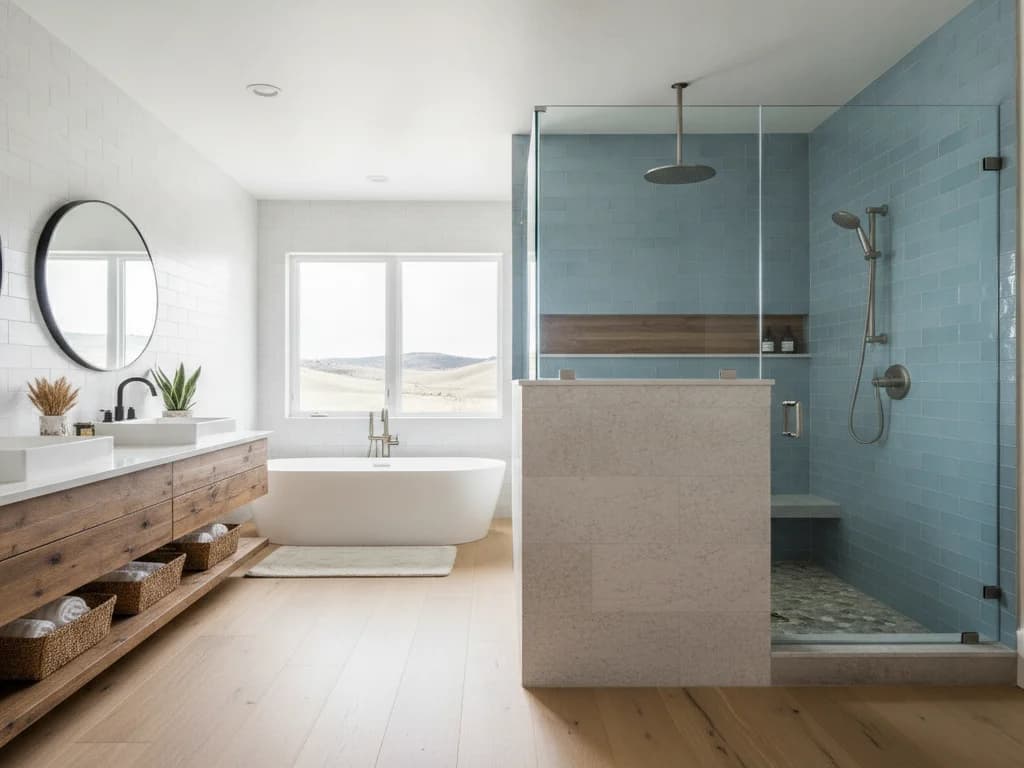
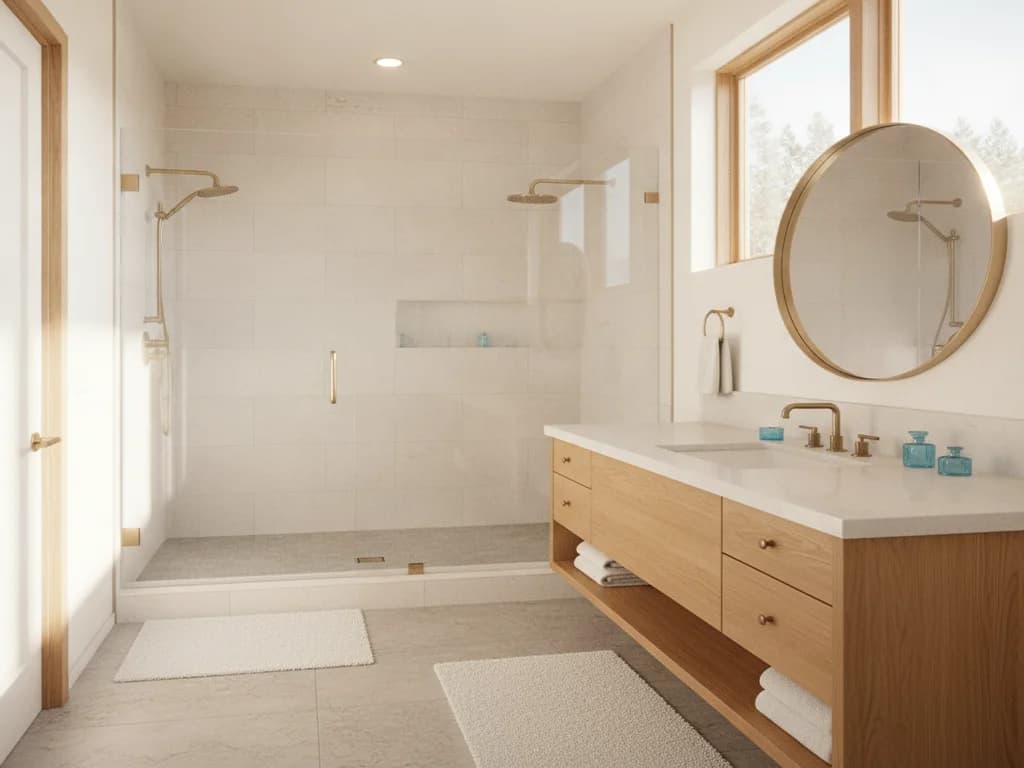
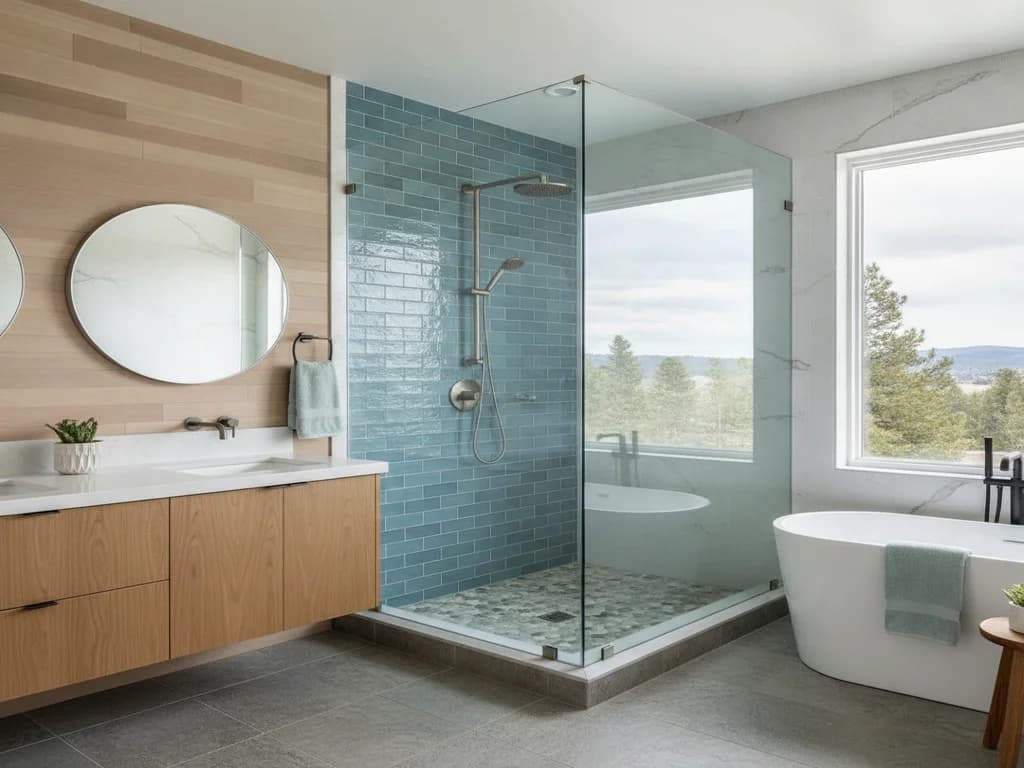
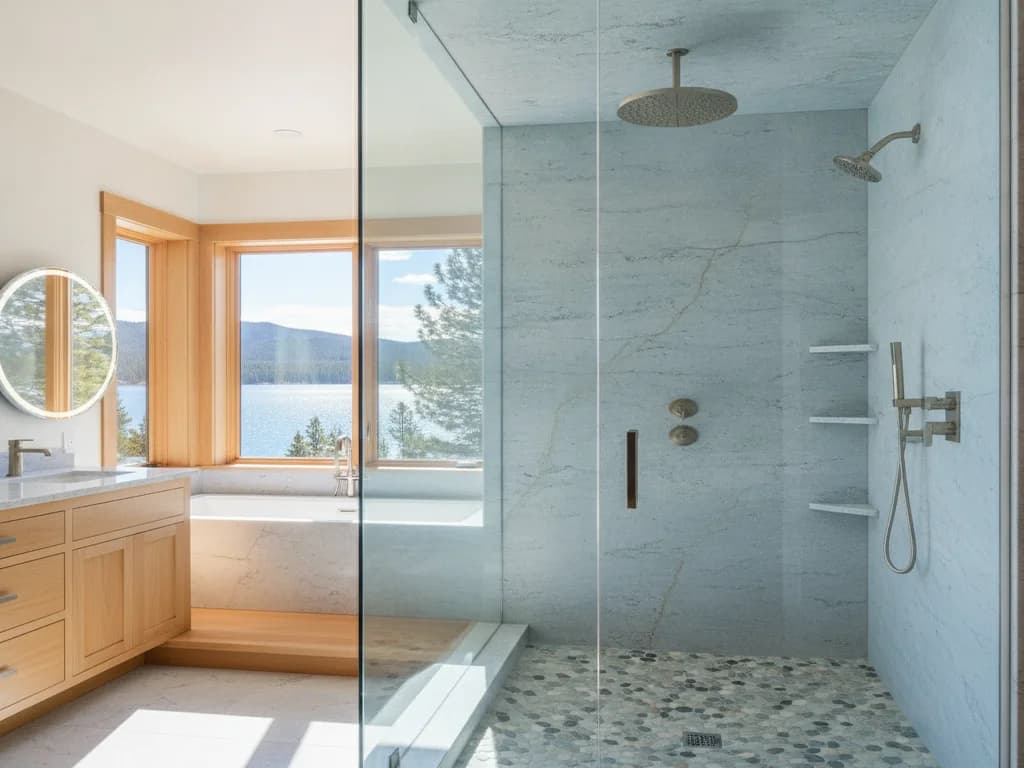
Clear glass is the default for a reason. It keeps light moving through the room, lets the tile you paid for be seen, and makes a small bathroom read noticeably larger. If the bathroom belongs to one person, or the shower sits in its own visual zone, clear glass has no real downside except honesty — it shows water spots the moment you fall behind on the squeegee.
Frosted glass earns its place in one specific situation: a shared bathroom where someone showers while someone else uses the sink or toilet a few feet away. That is a daily-life problem, not a design problem, and frosted glass solves it better than any curtain or pony wall — full-height obscured glass with no gaps at exactly the heights that matter.
Everything else — cleaning behavior, light, resale reads — flows from that split. Below is the full comparison, plus the partial-frost middle paths that get you most of both.
What frosted glass actually is
Frosted glass starts life as the same tempered panel as clear glass. The obscurity comes from treating one face: acid etching produces a smooth, uniform satin surface; sandblasting produces a slightly coarser matte; and patterned options like rain or reed glass are textured during manufacture rather than etched. Each sits at a different point on the obscurity scale — rain glass distorts, satin etch genuinely obscures.
Two practical details follow. First, the treatment lives on one face, and a good installer orients the smooth face toward the water so the wet side stays easy to squeegee. Second, the etched face has microscopic texture, which is why frosted glass holds soap film differently than clear — more on that below.
Underneath the finish, the safety story is identical: glass in shower and tub enclosures must be safety glazing — tempered or laminated — under the federal standard administered by the CPSC. Frosting changes what you see, not what protects you. Thickness, framed versus frameless hardware, and panel layout are their own decisions, covered in our shower glass enclosure guide.
Frosted vs. clear: the side-by-side
The pattern in this table: clear glass optimizes the room, frosted glass optimizes the people in it.
| Factor | Clear glass | Frosted / obscured glass |
|---|---|---|
| Privacy | None — the enclosure is visually open | Real screening; silhouettes visible, detail is not |
| Light | Passes light fully; the room shares every window and fixture | Diffuses light — still bright, but the shower glows rather than opens |
| Perceived size | Room reads larger; shower footprint rejoins the space | Enclosure reads as a solid volume; small rooms feel more divided |
| Showing tile work | Full display of the shower interior | Hides the interior — a waste of showcase tile |
| Water spots | Shows spotting and film immediately | Hides mineral film well — spots disappear into the texture |
| Cleaning | One smooth face inside and out; squeegee-friendly | Etched face holds soap residue; needs a soft brush or dedicated cleaner periodically |
| Cost | The baseline | Modest premium for etched or patterned panels — typically a small fraction of the enclosure price, per Angi |
| Style read | Current, open, spa-like | Traditional to spa depending on pattern; heavy patterns can date a bathroom |
Cost difference varies by fabricator and pattern; on most enclosures the frost upgrade is minor next to glass thickness and hardware choices.
Privacy in real life: what frosted glass does and does not hide
Satin-etched glass obscures detail completely at any realistic distance — what remains is a soft silhouette and motion. For the shared-bathroom scenario, that is exactly the level of screening most households want: the shower stops being a display case without becoming a walled cell.
Textured patterns are weaker privacy than people assume. Rain glass distorts more than it obscures; up close, it hides very little. If privacy is the actual requirement, specify acid-etched satin or a heavy sandblast, not a decorative texture that merely blurs.
And frosted glass only screens what it covers. A frameless panel with a wide open entry screens the enclosed run and nothing else — which is fine, because the fixed panel is usually the one facing the toilet or vanity. Think in sightlines, not in products: stand where the other person would stand and check what the glass actually intercepts.
Light, perceived size, and the small-bathroom cost of frost
Frosted glass does not darken a bathroom much — etched panels still transmit most of their light, diffused. What it changes is spatial reading. Clear glass lets the eye travel to the shower’s back wall, so the room includes the shower; frosted glass stops the eye at the panel, so the room ends there. In a compact hall bath, that difference is the whole game.
This is why the small-bathroom playbook is clear glass, almost without exception — the same logic covered in pony wall vs. full glass, where anything that blocks sightlines shrinks the room. If a small shared bath truly needs privacy, a partial solution usually beats full frost.
The partial options are worth knowing: a frosted band from roughly knee to shoulder height with clear glass above and below, a gradient frost that fades to clear near the top, or frosting only the single panel that faces the toilet. Each keeps light and ceiling-line sightlines moving while screening the zone that matters.
Cleaning: the honest maintenance trade
Clear glass is easier to clean and harder to ignore. The surface is smooth, so a daily squeegee pass and periodic glass cleaner keep it perfect — but in the Treasure Valley’s hard water, skipped weeks show up as visible mineral film, and long-neglected spotting etches in permanently. Clear glass is a commitment to the squeegee.
Frosted glass forgives neglect and resists perfection. Mineral film disappears into the matte texture, so the panel looks acceptable with far less attention. The trade is that the etched face physically holds soap and body-oil residue in its texture; every few weeks it wants a soft-bristle scrub with a non-abrasive cleaner rather than a wipe. Neither routine is hard — they are just different kinds of effort.
Factory hydrophobic coatings change this math for clear glass, shedding water before it can spot. Whether they are worth the upcharge — and how long they actually last — is its own question, covered honestly in are shower glass coatings worth it.
Put the smooth face on the wet side
Etched and sandblasted panels have one textured face and one smooth face. Installed with the texture inside the shower, the panel traps soap film in its texture on exactly the surface that gets hit with water daily. Specify texture-out, smooth-face-in — a competent glass installer will do this by default, but it is worth confirming on the order.
Which should you choose?
Match the glass to how the bathroom is actually used:
- Small bathroom, one primary user: clear glass — take the perceived-space win; the squeegee habit is the only price.
- Shared master bath where shower and toilet are in close quarters: frosted — satin etch, full height on the panel that intercepts the sightline.
- You want privacy but the room is tiny: partial frost — a torso-height band or gradient keeps light moving while screening what matters.
- Showcase tile interior: clear, always — frosting a beautiful shower is paying twice and seeing nothing.
- Hard-water spotting drives you crazy and daily squeegeeing will not happen: frosted or rain glass hides the film — or clear glass with a hydrophobic coating, weighed in our coatings guide.
- Guest or kids’ bath: either works — lean clear for resale reads, frosted if the tub-shower faces the door.
Ready to plan your Boise bathroom?
Licensed & insured · 3-year workmanship warranty
Frequently asked questions
- Is frosted shower glass harder to keep clean than clear?
- It is different, not harder. Clear glass wipes clean easily but shows every water spot, so it demands a regular squeegee habit. Frosted glass hides mineral film almost completely, but its etched texture holds soap and body-oil residue, so it wants a periodic soft-brush scrub with non-abrasive cleaner instead of a daily wipe. Neglect punishes clear glass visibly; frosted glass just quietly accumulates.
- Does frosted glass make a bathroom look smaller?
- Somewhat, yes. Frosted panels still pass most light, so the room stays bright, but the eye stops at the glass instead of traveling to the shower’s back wall — the enclosure reads as a solid volume rather than open space. In a large bathroom the effect is minor. In a compact one it can cost the room the single biggest perceived-space gain a glass enclosure offers.
- How much privacy does rain glass actually give?
- Less than most people expect. Rain, reed, and similar textured patterns distort the view rather than obscure it — shapes and skin tones remain quite readable, especially up close or with the shower lit. For genuine screening, specify acid-etched satin or a heavy sandblast finish, which reduce the view to soft silhouettes. Treat decorative textures as style choices with a privacy side effect, not privacy glass.
- Can you frost existing clear shower glass?
- Yes, two ways. Applied privacy film is the budget route — installed on the dry side, it delivers respectable obscurity and can be removed later, though edges and moisture are its weak points in a shower. Professional on-site etching or replacement with factory-etched panels is the permanent route. For a failing or outdated enclosure, replacing the glass outright often makes more sense; see our [shower door replacement guide](/guides/replacing-shower-door).
- Is frosted glass safe for shower enclosures?
- Yes — frosting is a surface treatment on the same safety glazing as clear panels. Glass in shower and tub enclosures must be tempered or laminated safety glass under the federal standard the CPSC administers, and etching or sandblasting is done in ways that preserve that rating. What matters for safety is the glazing certification and proper thickness for the panel span, not the finish.
- Which is better for resale, frosted or clear?
- Clear, in most markets — it reads current, shows off the shower, and makes the bathroom photograph larger, which matters in listings. Heavy all-over patterns from past decades can actively date a bathroom. The exception is a floor plan where the shower directly faces the toilet or the door: there, tasteful satin frost or a partial band reads as thoughtful design rather than a compromise.
Sources
- U.S. Consumer Product Safety Commission
- HomeAdvisor — True Cost Guide
- Angi — Cost Guides
- This Old House — Bathrooms
Claims and figures are drawn from the sources above and provided for general guidance; your project may vary. Photography is illustrative of design concepts. For a fixed price on your specific bathroom, request a free estimate.