Updated July 16, 2026 · 7 min read
By Boise Bath — bathroom & shower remodeling in Boise & the Treasure Valley
The short answer
Replacing an alcove bathtub means disconnecting the drain and overflow, cutting away enough of the surround to free the tub flange, pulling the old tub, then setting the new one level and rebuilding the surround above it. A like-for-like 60-inch swap runs two days to a week depending on the surround, and needs a plumbing permit.
Key takeaways
- An alcove tub is held captive by its surround — the wall finish laps over the tub flange, so the surround, not the tub, sets most of the project scope.
- The "standard" 60-by-30–32-inch tub is standard enough that like-for-like replacements usually fit, but out-of-square walls and framing quirks make measuring the actual alcove essential.
- Plan on a new surround: the demo claims at least the bottom courses, matching old tile rarely works, and the waterproofing behind it is the part that was actually failing.
- The waste-and-overflow, trap, and often the valve get renewed while the wall is open — that is why the swap is permit-level work.
- If nobody bathes, the same demo is most of the way to a walk-in shower conversion — deciding that before demo is far cheaper than after.
What makes an alcove tub the "standard" replacement?
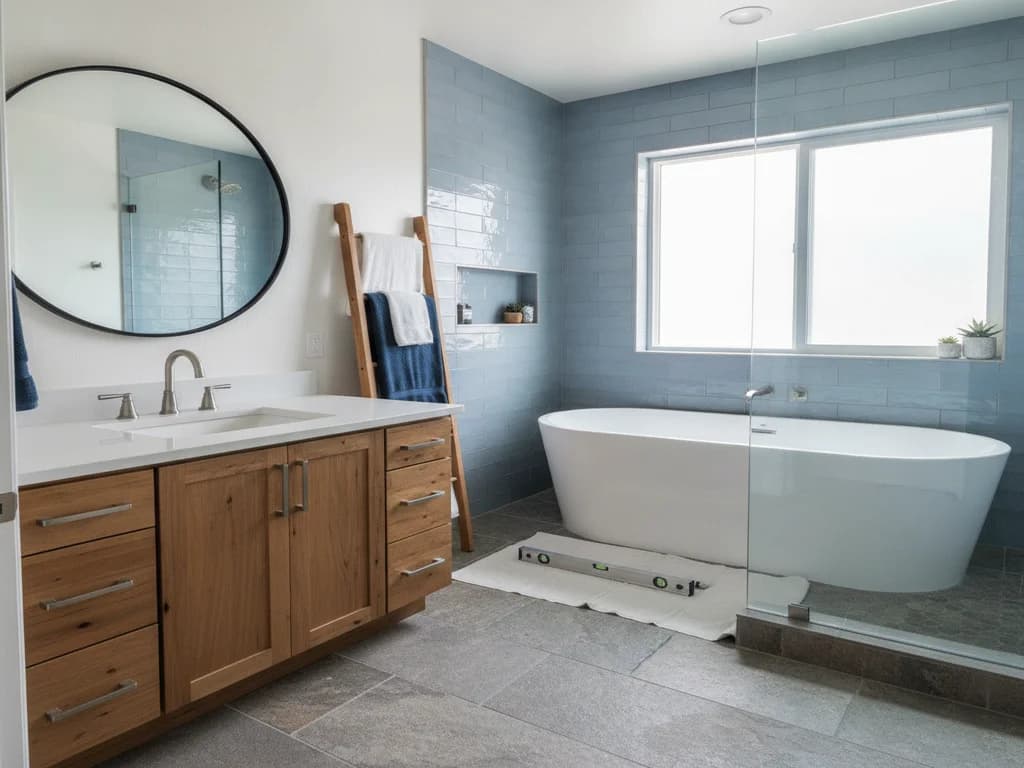
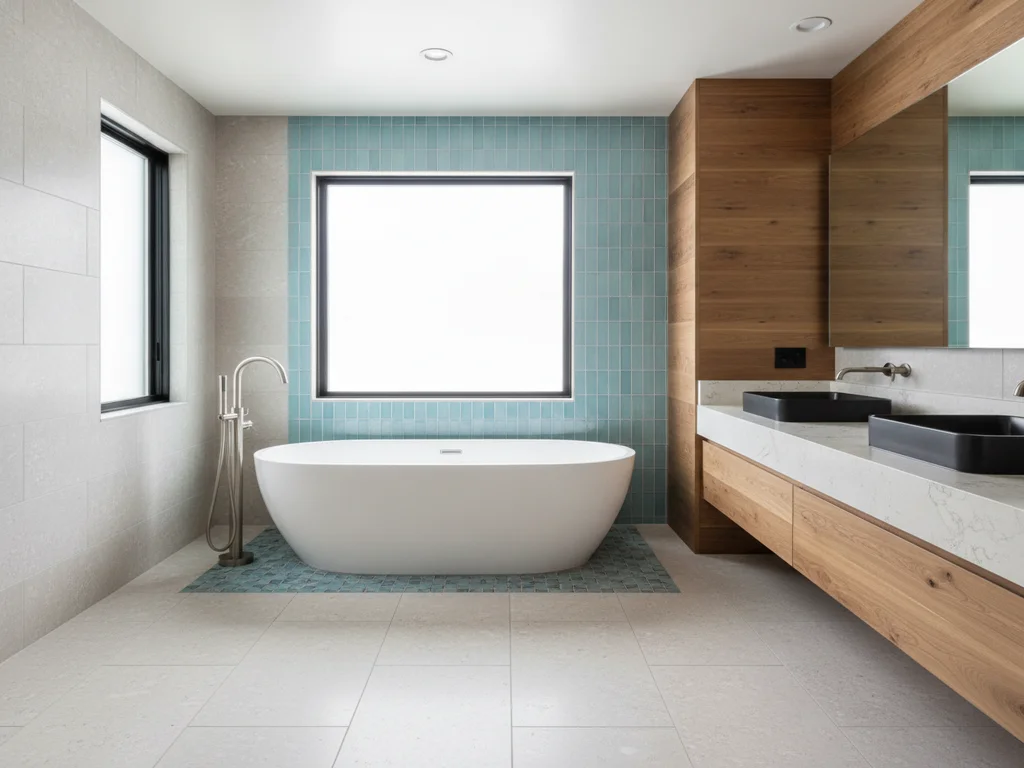
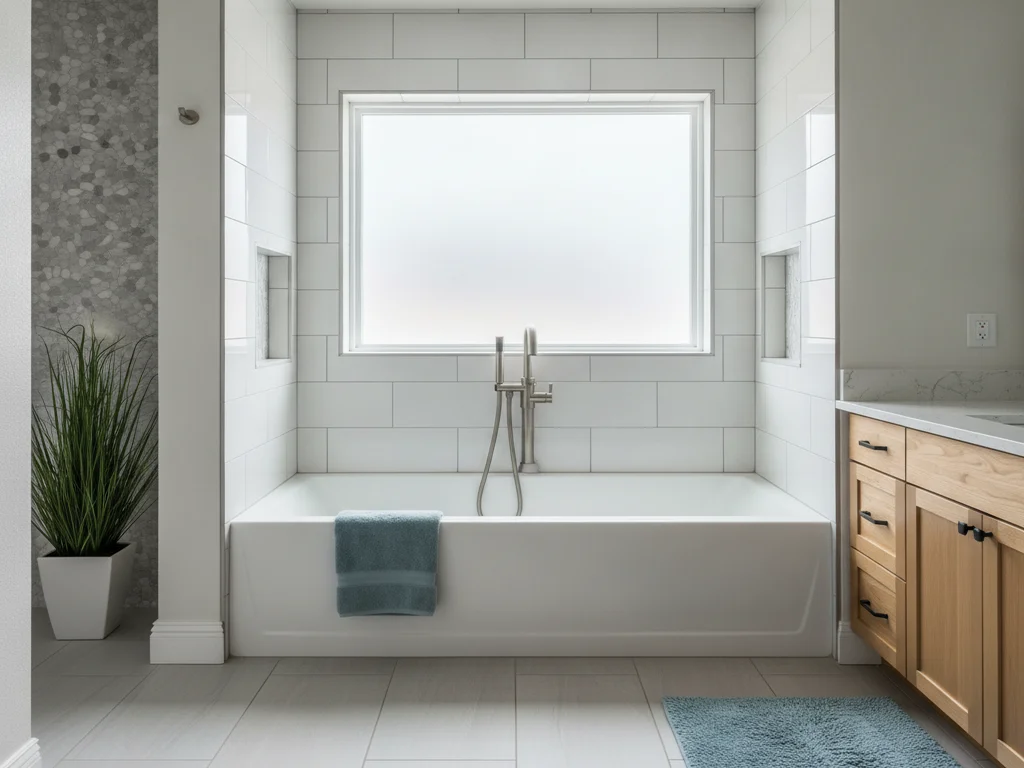
An alcove tub sits in a three-wall pocket with an integral apron facing the room, and it is the highest-volume configuration manufacturers like Kohler build — nominally 60 inches long and 30 to 32 inches deep. Most Treasure Valley homes from every era have at least one, which is why this is the swap most bathtub replacement quotes describe by default.
Standard sizing is the good news: unlike a drop-in or corner tub, a like-for-like alcove replacement almost always exists off the shelf. The catch is that the tub is physically interlocked with the walls around it — and that is where the real scope lives.
Why the surround decides the scope of the project
An alcove tub has a flange that runs up the three walls behind the finish material. Tile, panels, or fiberglass lap over that flange to shed water into the tub. That detail is what keeps the alcove dry — and it is also why you cannot slide a tub out without opening the walls.
Freeing the tub means cutting the surround back at least a course or two above the rim. From there the honest question is whether the rest of the surround is worth saving. Twenty-year-old tile rarely matches anything still sold, the cut edge never disappears cleanly, and the waterproofing behind the old surround has usually aged as badly as the tub. Most projects — and most contractors bidding them — treat the tub and surround as one assembly and replace both.
Budget for the surround from day one
The most common alcove-swap surprise is a homeowner who priced a tub and got a bid for a tub plus a full surround. The bid is not padding — a partial surround patch over old waterproofing is the version of this project that leaks. Compare bids on the same scope: tub, waste-and-overflow, and a complete new surround.
Will a new 60-inch tub actually drop into your alcove?
Usually — but "60 inches" is nominal, not gospel. Real alcoves run slightly over or under, framing bows, and older walls go out of plumb, so the crew measures the stud-to-stud pocket at both ends and at the rim height before ordering. A tub that is a half-inch proud has no good fix after demo day.
Direction matters too: alcove tubs are handed left or right by drain location, and the replacement has to match the existing drain end unless you are paying to move the trap. In builder-grade 2000s Treasure Valley homes the alcove is usually true; in older Boise bench and North End houses, expect more shimming and scribing to get the new tub tight to imperfect walls.
What plumbing gets touched in a like-for-like swap?
Even when the drain stays put, the waste-and-overflow assembly is replaced — new tubs and old linkages rarely align, and the gaskets are decades old. The trap gets inspected and commonly renewed while it is reachable, and the supply side gets the same look: if the valve is a worn two-handle or builder-grade unit, swapping it for a modern pressure-balanced valve while the wall is open costs a fraction of doing it later.
Because the drain, overflow, and valve are being altered, this is permit-level plumbing in Boise through Planning & Development Services, and in Meridian, Nampa, Eagle, and the surrounding cities. The rough-in inspection happens before the new surround closes the wall.
Setting the new tub: the part that decides how it ages
A good alcove install is mostly invisible. A ledger board gets fastened dead level along the back wall to carry the tub flange. Acrylic and fiberglass tubs get bedded in a mortar base so the floor of the tub bears solidly instead of flexing — the flex-and-crack failure that kills cheap installs. The tub is shimmed level in both directions, fastened at the flange without distorting it, and fill-tested before anything closes.
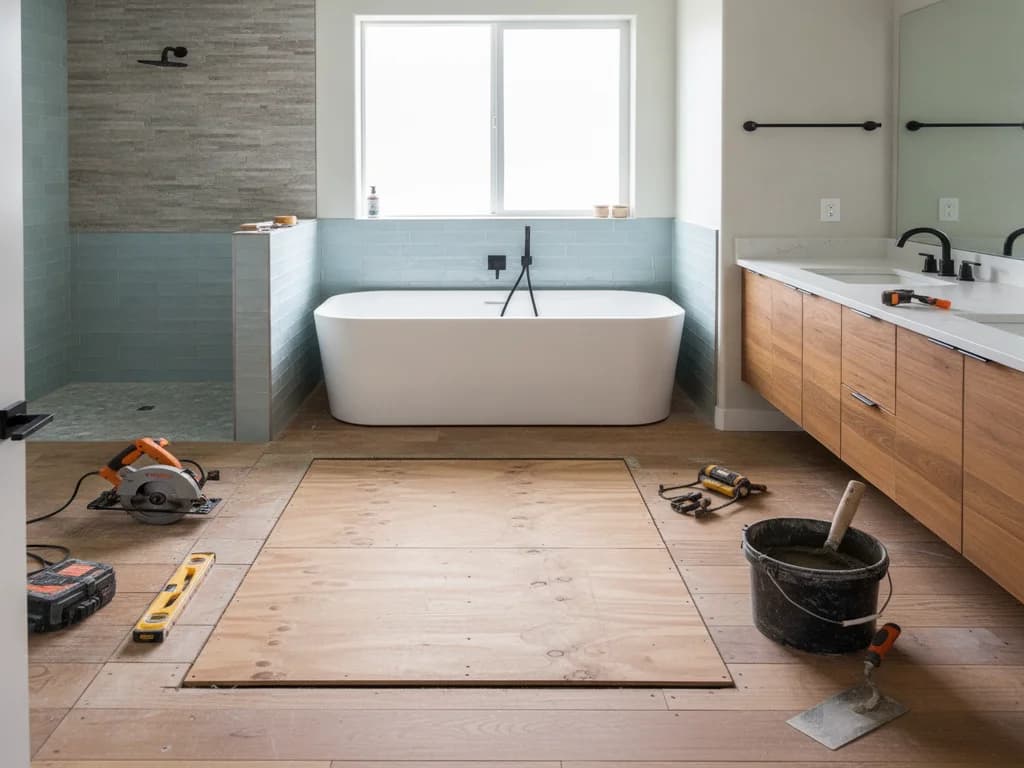
The exposed subfloor gets its one inspection in decades at this stage. If the old tub or its surround leaked, this is when soft decking gets replaced — the same problem we cover from the flooring side in replacing the floor around a bathtub.
Tile surround or panel system above the new tub?
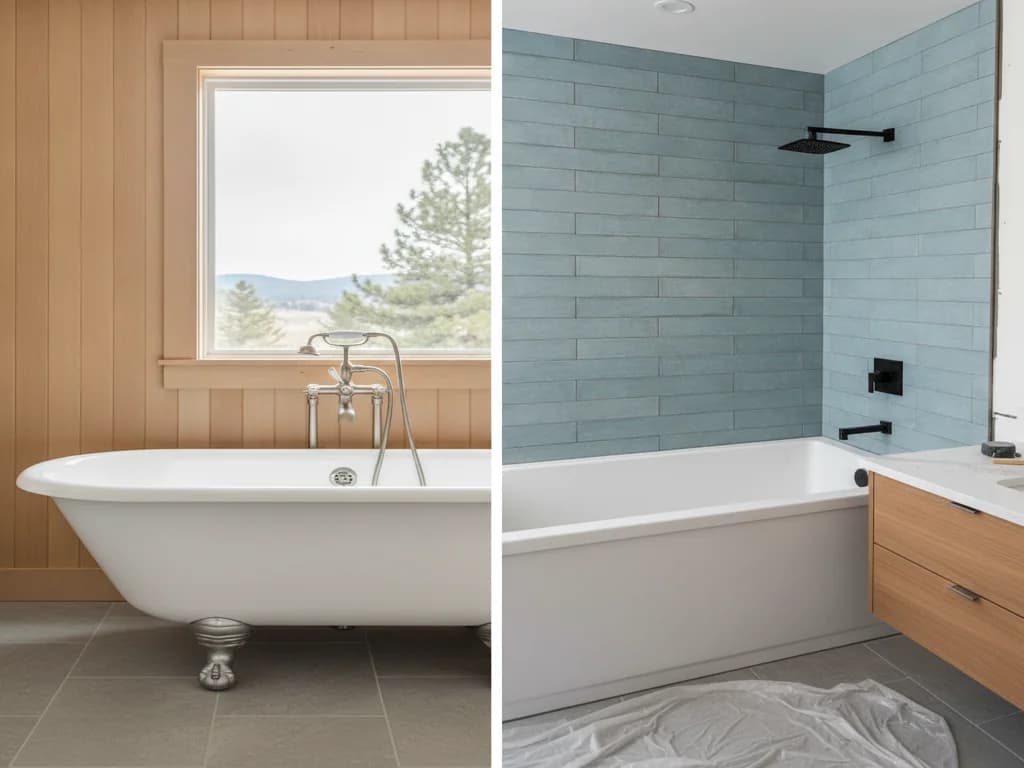
Tile over waterproofed backer is the premium route — any look you want, decades of service, but more labor and cure time. A panel or composite surround system installs in a day or two, costs less, and has come a long way from the shiny fiberglass of the 90s. Either way, the waterproofing layer behind the finish is the part doing the real work.
Material choice for the tub itself — acrylic versus enameled steel versus cast iron — changes weight, warmth, and durability more than looks; we compare them in bathtub materials compared. And hard Treasure Valley water spots dark and glossy finishes fastest, which is worth knowing before you pick a matte black tub filler.
The alternative worth deciding before demo: tub to shower
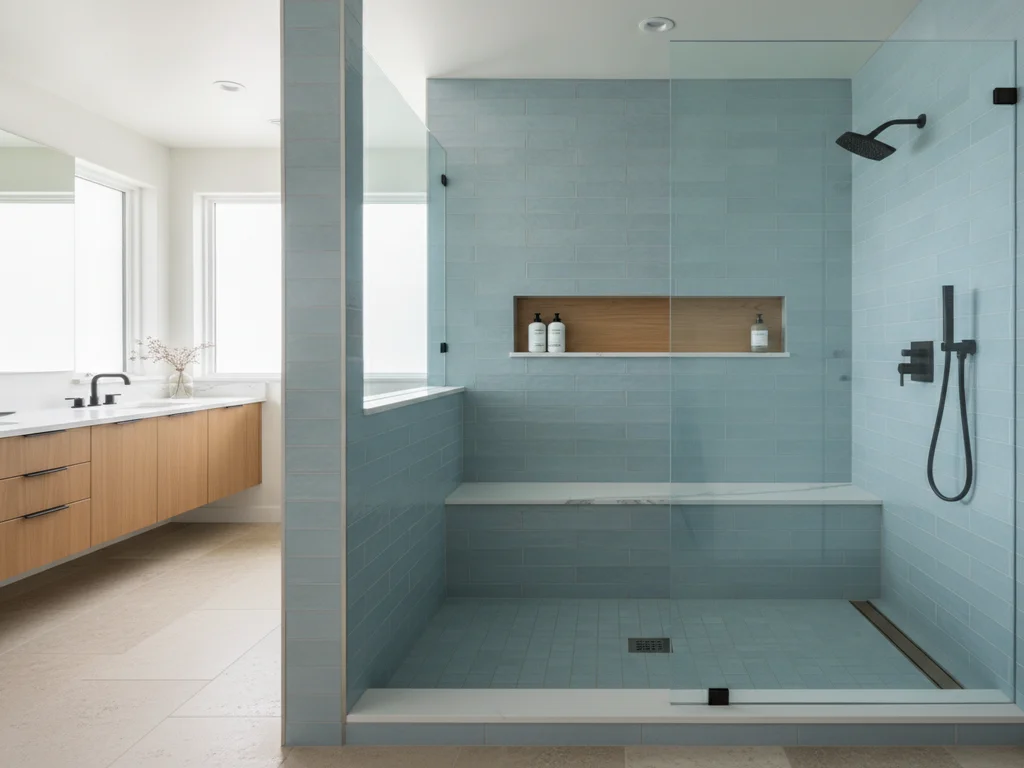
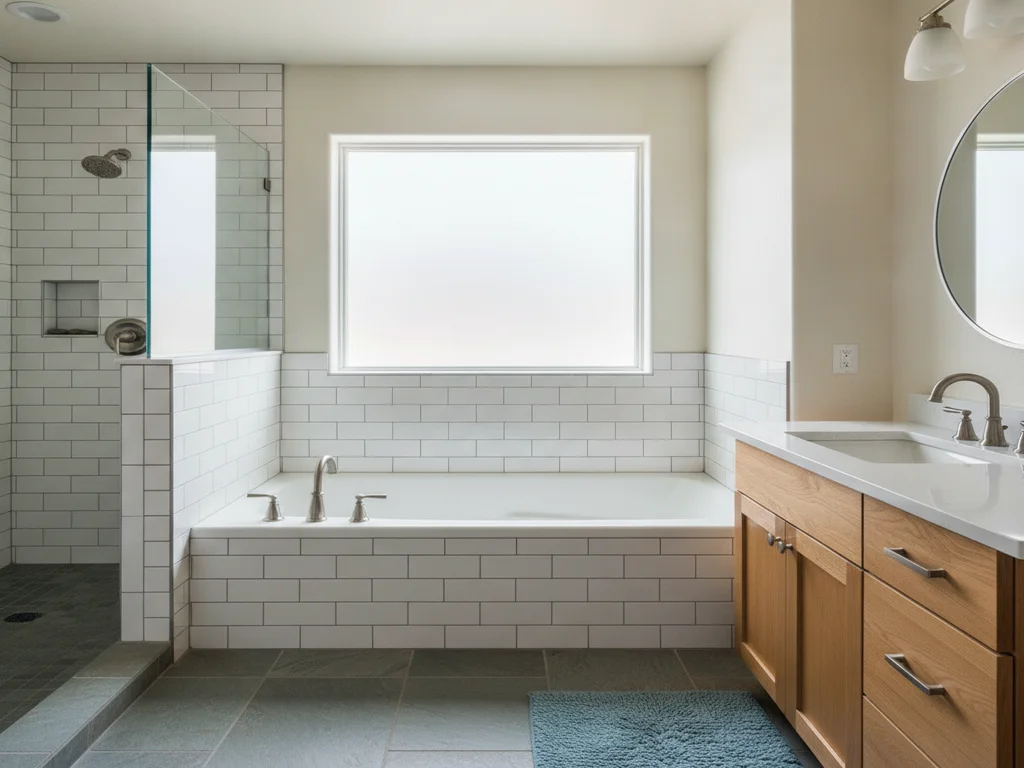
An alcove tub swap and a tub-to-shower conversion share the same demolition, the same open walls, and most of the same plumbing access. If the honest answer is that nobody has taken a bath in years, converting the alcove to a walk-in shower during this project costs far less than circling back later — we walk through that path in replacing a bathtub with a walk-in shower.
The counterweight is resale: family buyers routinely want at least one tub in the house. If this is your only bathroom, that decision carries extra weight — see remodeling your only bathroom for how to plan the downtime either way.
Timeline and cost, honestly framed
With a panel surround, a clean alcove swap runs about two to three days. A tiled surround stretches the project to roughly a week — waterproofing, tile, and grout each want cure time. Subfloor repair, discovered at demo, is the most common extra day.
National guides such as HomeAdvisor and Angi put a standard tub-and-surround replacement broadly in the low-to-mid thousands, climbing with tile and premium tubs — ranges wide enough that a fixed local bid is the only number worth planning around.
What the process looks like
- 1
Measure the alcove and match the tub
The crew measures the actual stud-to-stud pocket at both ends, confirms drain hand and door clearances, and orders a tub verified against the real alcove — not the nominal 60 inches.
- 2
Disconnect and open the surround
Water is shut off, the drain and overflow are disconnected from below or through an access panel, and the surround is cut back past the tub flange so the tub comes free.
- 3
Remove the old tub
Steel and acrylic tubs come out whole; cast iron is typically broken up in place with the room protected. The alcove is opened to studs and subfloor for full inspection.
- 4
Renew the plumbing and pass rough-in
A new waste-and-overflow is roughed in, the trap renewed or relocated, and the valve replaced if it is dated — then the plumbing rough-in inspection happens before anything closes.
- 5
Prep the base and set the tub level
Soft subfloor is replaced, a level ledger goes on the back wall, and the tub is set in a mortar bed, shimmed dead level, fastened at the flange, and fill-tested.
- 6
Waterproof and build the new surround
Backer board and a waterproofing layer go up from the rim, then tile or a panel system is installed lapping correctly over the tub flange.
- 7
Trim, seal, and final-inspect
Spout, valve trim, and shower head go on, the rim and corners are sealed, and the permit closes with a final inspection and a full fill-and-drain test.
Ready to plan your Boise bathroom?
Licensed & insured · 3-year workmanship warranty
Frequently asked questions
- Can you replace an alcove bathtub without redoing the tile?
- Not cleanly. The tile laps over the tub flange, so at least the bottom courses come off to free the tub — and matching discontinued tile at a visible cut line rarely satisfies anyone. Most projects replace the full surround, which is also the only way to renew the waterproofing behind it, where alcove failures actually start.
- How long does an alcove tub replacement take?
- About two to three days with a panel surround, and roughly a week with a tiled surround once waterproofing, tile, and grout cure times stack up. Subfloor repair discovered at demo is the most common addition — usually one extra day. You are without that bathroom for the duration, so plan accordingly.
- Are alcove bathtubs a standard size?
- Nominally, yes — the dominant size is 60 inches long by 30 to 32 inches wide, and manufacturers build to it in volume. But real alcoves vary by fractions of an inch and walls go out of plumb, so a professional measures the actual stud pocket and drain hand before ordering rather than trusting the label.
- Should I replace the valve when I replace my alcove tub?
- If the wall is open and the valve is a worn or two-handle unit, almost always. A modern pressure-balanced valve costs a fraction to install during the swap versus as a standalone job that reopens a finished wall later. Your contractor will fold it into the same plumbing permit and rough-in inspection.
- Is it worth converting the alcove to a shower instead of installing a new tub?
- If nobody bathes and the house has (or does not need) another tub, often yes — the demolition and plumbing access overlap almost completely, so the conversion is cheapest done now. Family resale buyers do look for at least one tub, so keep one somewhere in the house if you can.
Sources
- HomeAdvisor — True Cost Guide
- Angi — Cost Guides
- City of Boise — Planning & Development Services
- Kohler
Claims and figures are drawn from the sources above and provided for general guidance; your project may vary. Photography is illustrative of design concepts. For a fixed price on your specific bathroom, request a free estimate.