Updated July 5, 2026 · 8 min read
By Boise Bath — bathroom & shower remodeling in Boise & the Treasure Valley
The short answer
Remodeling your only bathroom is the hardest version of this project because there’s no backup down the hall. The fix is arranging alternative facilities — a neighbor, a portable toilet rental, or a short-term gym membership — before demo day, and hiring a contractor who sequences the work to restore basic function as early in the project as possible.
Key takeaways
- A single-bathroom household has zero daily-life buffer, which is why this case needs its own plan instead of general remodel-survival advice.
- Arrange backup facilities — a neighbor, a portable toilet rental, or a short-term gym membership — before demolition starts, not after.
- About 31% of homeowners rank living without a bathroom as one of the most frustrating parts of a remodel, and This Old House notes it’s especially acute in single-full-bath homes.
- A contractor sequences a one-bath project differently — pre-ordering materials before demo and prioritizing rough plumbing so basic function returns before finish work is complete.
- About two-thirds of bathroom remodels run 1–4 weeks, but roughly one in five stretch past a month — plan your backup for the longer end, not the average.
Why remodeling your only bathroom is the harder version of this project
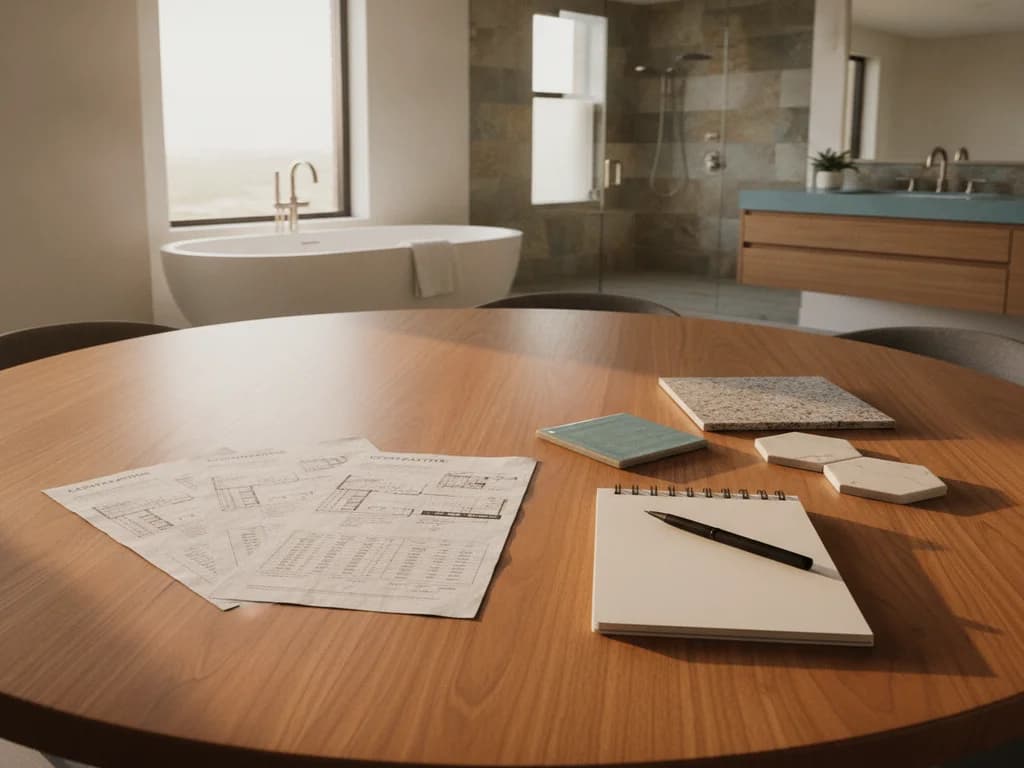
If your home has a second bathroom, living through a bathroom remodel covers the daily-life basics that apply to almost any project — dust control, water shutoffs, agreeing on crew working hours. Remodeling your only bathroom is a harder version of that same problem, because the core question changes. It’s no longer "how do we manage the inconvenience?" It’s "where do we go when there is no bathroom in the house at all?"
This isn’t a rare edge case. This Old House’s bathroom remodeling survey found that 31% of homeowners named living without bathroom access as one of the most frustrating parts of their project — and the survey specifically flags that this is especially acute in homes with only one full bath, where there’s no alternative facility to fall back on once demolition starts.
The distinction that matters
General remodel-survival advice assumes you have somewhere else in the house to go. A one-bathroom household doesn’t, which means the plan has to solve an access problem, not just an inconvenience — and it has to be solved before demo day, not during it.
Why it wears households down faster than expected
It isn’t just the lack of a toilet or shower — it’s the number of small decisions that suddenly require coordination. Morning routines that used to happen without a thought now depend on whether someone else is home, whether the gym opens early enough, or whether a portable unit has been serviced. Multiply that by every member of the household, every single day of the project, and the friction adds up faster than most people expect going in.
That’s the real argument for solving this on paper before demolition starts rather than solving it improvisationally on day one: a plan that everyone in the household understands in advance turns a genuinely disruptive few weeks into a predictable routine instead of a daily scramble.
Arrange backup facilities before demo day
This Old House’s own renovation checklist is direct about it: "If you’re renovating your only bathroom, plan for alternative facilities during the renovation. Whether you go to a neighbor’s or rent a portable toilet, you don’t want to get caught with nowhere to go." The specific option matters less than doing it in advance — the households that struggle most are the ones improvising on day one of demolition.
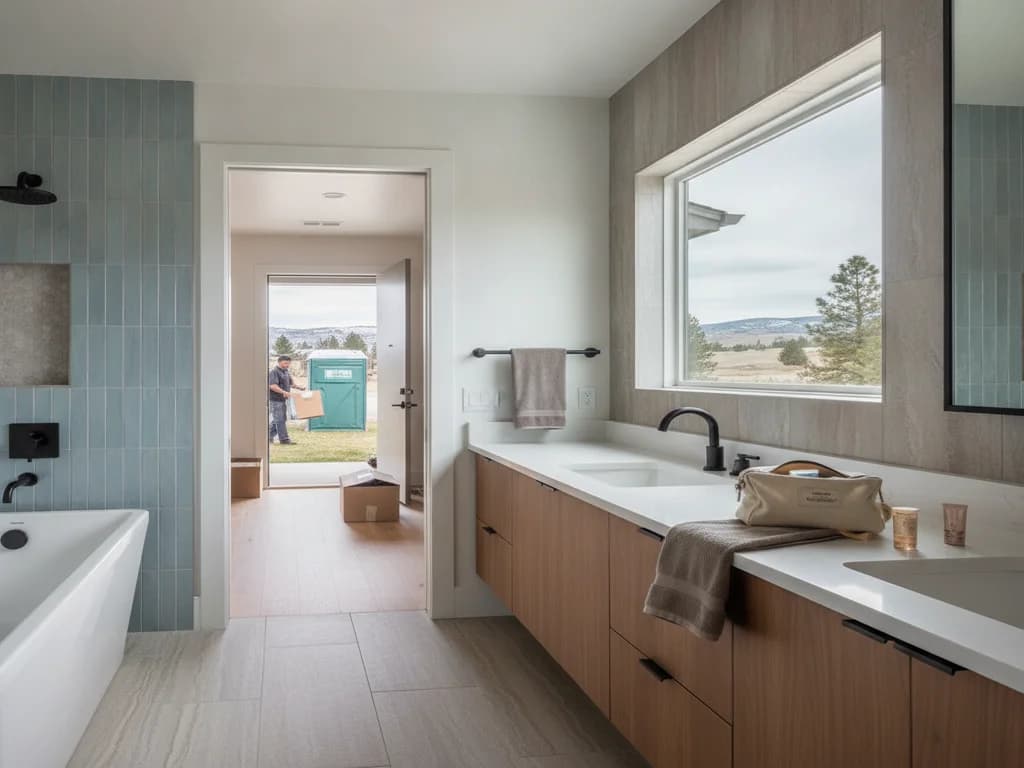
The three most common backup arrangements are a standing agreement with a neighbor, relative, or close friend nearby; a short-term membership at a gym or recreation center with showers, which also solves the shower question even if a neighbor covers the toilet; and a rented portable restroom or shower-equipped unit for the property itself, which is the most self-contained option if no one nearby can host daily visits. An extended-stay hotel is a fourth option for households that would rather not coordinate a daily commute to someone else’s house, though it carries its own cost and packing overhead.
If you go the portable-unit route, book it as soon as your start date is confirmed rather than the week before — rental companies need lead time to schedule delivery and placement, and a unit that arrives after demo day defeats the purpose of arranging it at all. Confirm where it will sit on your property, how often it will be serviced during the project, and when it will be picked up, so it doesn’t become its own leftover task once the bathroom is finished.
| Option | Best for | Trade-off |
|---|---|---|
| Neighbor or family nearby | Short projects, flexible schedules | Depends on someone else’s daily availability |
| Gym or rec center membership | Shower access specifically | Doesn’t solve toilet access on its own |
| Portable toilet / shower rental | Longer projects, no one nearby to host | Delivery lead time; on-site footprint |
| Extended-stay hotel | Households that want to fully step away | Highest cost; daily packing and commuting |
What a contractor does differently for a one-bathroom household
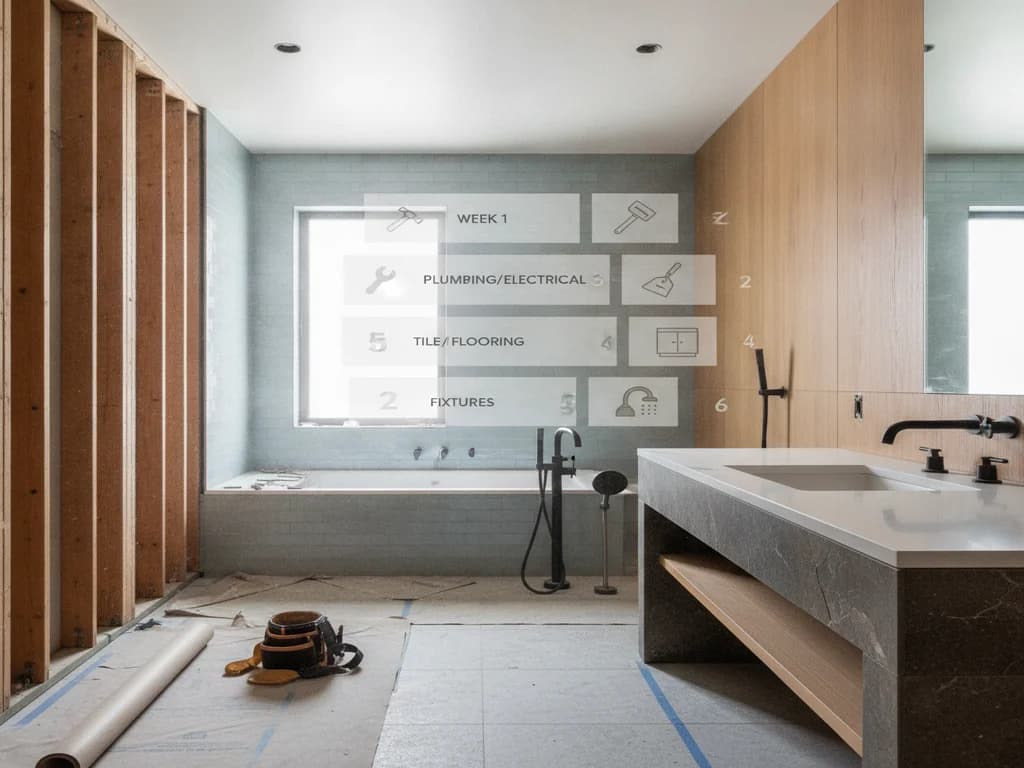
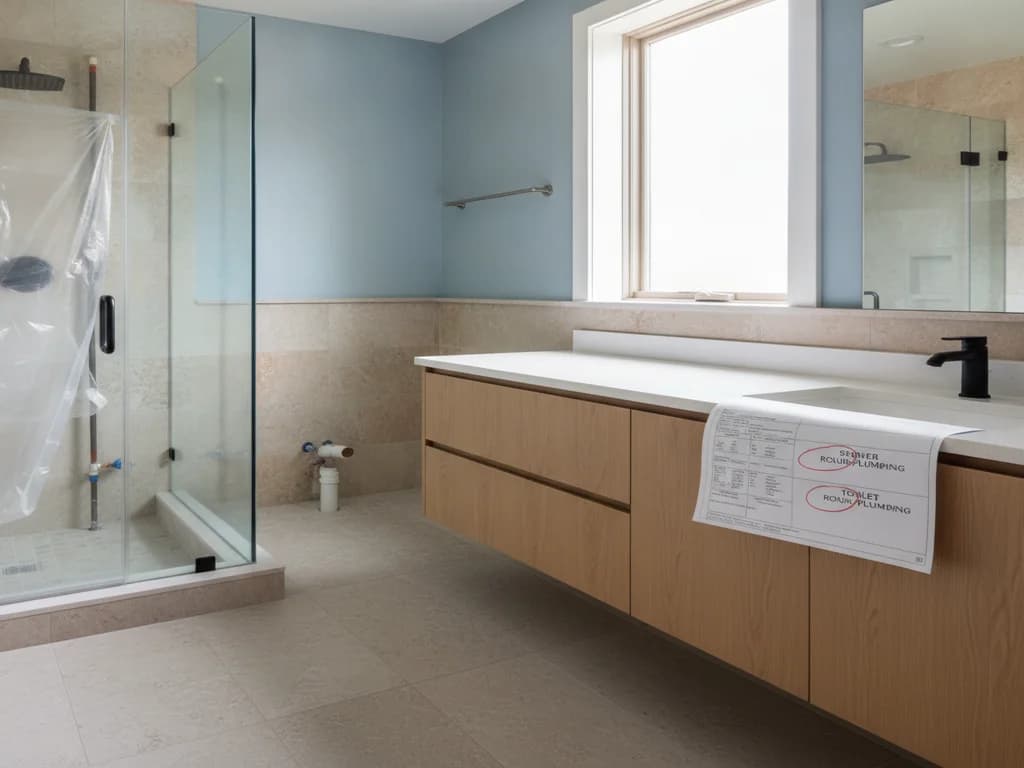
A quality contractor treats a one-bathroom project differently from the first phone call, because every day without basic function has a real cost to your household. The most important shift is sequencing: rather than working straight through from demo to final polish in the order that’s most convenient for the crew, the plan prioritizes getting rough plumbing connected and a working toilet and sink back online as early as the schedule allows — even if tile, the vanity, and finish details are completed afterward with the fixtures capped or protected.
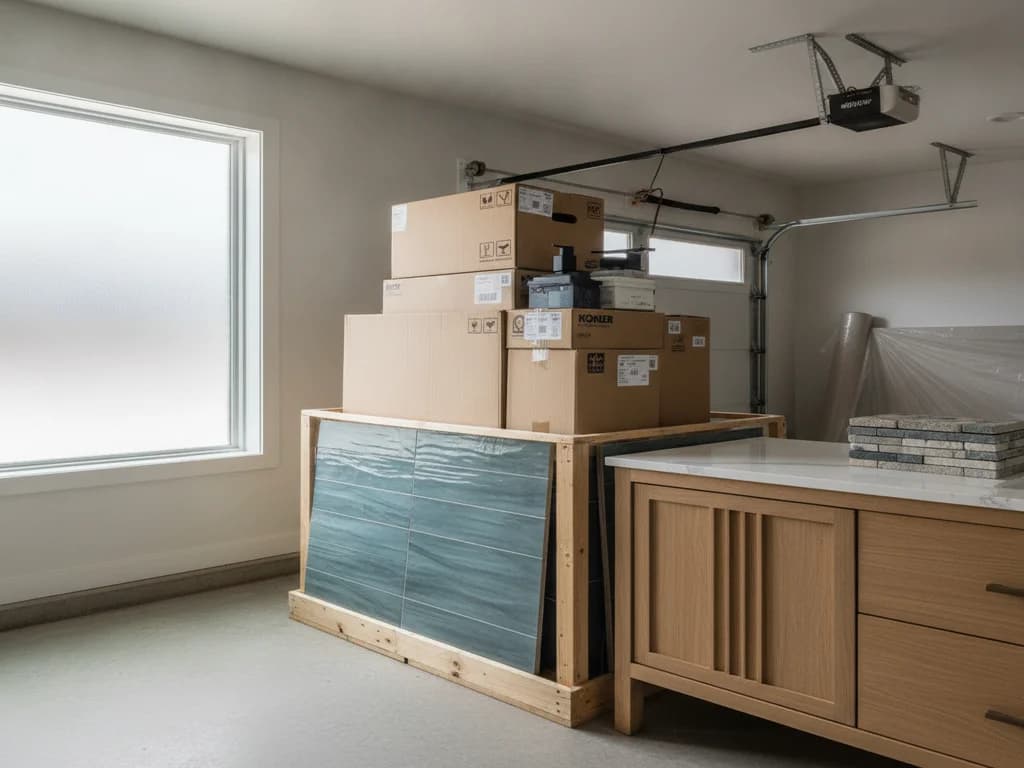
Materials are pre-ordered and confirmed on-site before demolition begins, rather than after, which prevents the single most common cause of an extended outage: a mid-project delay waiting on tile, a vanity, or custom glass that should have been on hand from day one. Before demo, your contractor should also walk you through exactly where your main and fixture-level water shutoffs are, and flag any day when the rest of the house’s water will be briefly affected — This Old House’s checklist calls out testing shutoff valves before any demolition begins as one of the essential pre-work steps. Some contractors will also compress the calendar with longer or weekend work days specifically on a single-bath project, precisely because the schedule pressure is real in a way it isn’t on a guest-bathroom remodel with a second bath down the hall.
This is also where it’s worth asking directly, before you sign anything: how many total days will the bathroom be completely non-functional, versus how many days of finish work happen after basic function is restored? A contractor who can answer that specifically, rather than quoting one lump project length, is planning for your household’s reality rather than just their own crew schedule. Our step-by-step process is built around exactly this kind of sequencing.
How long you’ll actually be without a bathroom
Our companion guide on how long a bathroom remodel takes breaks timelines down by scope — tub-to-shower conversion, full gut, master suite. The number that matters most for a one-bathroom household is narrower than any of those ranges: the total non-functional days, not the total project length. This Old House’s survey data gives a useful baseline for the outer bound — nearly two-thirds of remodels last 1 to 4 weeks, but about one in five run past a month. If your household is planning a backup arrangement, plan it for the longer end of that range rather than the average, since the same survey found close to a quarter of projects hit unexpected water-damage repairs and about 22% hit unexpected structural repairs once the walls opened — either of which can extend a project past its original estimate.
That’s also the honest case for building a contingency reserve into your budget alongside your backup-facility plan, which our free estimate conversation can walk through specifically for your bathroom’s scope.
It’s also worth timing the project itself with your household’s calendar, not just your contractor’s. If your backup plan depends on a relative’s guest room or a specific gym schedule, confirm that arrangement stays valid for the full outer-bound estimate — not just the best-case number — before you commit to a start date.
Build the plan before the first day of demolition
A one-bathroom remodel is genuinely harder to live through than a project in a home with a second bath, but nearly all of that difficulty is solvable with planning that happens before demo day: a confirmed backup facility, a contractor who sequences rough plumbing early, materials on-site in advance, and a realistic sense of the outer-bound timeline rather than just the best case.
If you’re ready to talk through the specifics of sequencing your project around a single bathroom, request a free estimate, or see our step-by-step process first so you know what to expect before the conversation starts.
Ready to plan your Boise bathroom?
Licensed & insured · 3-year workmanship warranty
Frequently asked questions
- How long will I be without a working bathroom if it’s the only one in my house?
- It depends on scope, but most remodels run 1 to 4 weeks of active work, with about one in five running past a month. A contractor sequencing a one-bathroom project well will prioritize getting rough plumbing and basic function back online as early as possible, so the days with zero function are often shorter than the total project length — ask your contractor to quote that number specifically.
- What are my options for showering and using the toilet during a one-bathroom remodel?
- The most common options are a standing arrangement with a neighbor or family member nearby, a short-term gym or rec center membership for showers, a rented portable toilet or shower unit on the property, or an extended-stay hotel. Arrange whichever option fits your household before demolition starts, not after.
- Can a contractor keep part of my bathroom working during the remodel?
- Not usually during active demolition and tile work, but a good contractor can shorten the total days without any function by prioritizing rough plumbing early in the sequence and pre-ordering materials so there’s no mid-project delay. Ask specifically how many days the bathroom will be completely non-functional versus how many are finish-work days after basic function returns.
Sources
- This Old House — Bathroom Remodel Cost (2026)
- This Old House — Bathroom Renovation Checklists
- Bob Vila — Live In or Move Out: The Remodeling Dilemma
Claims and figures are drawn from the sources above and provided for general guidance; your project may vary. Photography is illustrative of design concepts. For a fixed price on your specific bathroom, request a free estimate.