Updated July 5, 2026 · 8 min read
By Boise Bath — bathroom & shower remodeling in Boise & the Treasure Valley
The short answer
Living through a bathroom remodel is easier with a plan: seal the work zone with plastic sheeting to contain dust, confirm your water shutoffs before demo starts, agree on crew working hours in advance, and set up a backup bathroom plus a dust-free room to retreat to. Most disruption is short-term and manageable with preparation.
Key takeaways
- Dust travels further than you expect — physical barriers and HVAC management contain it, not luck.
- Confirm your main and fixture-level water shutoffs before demo, since other plumbing usually stays live.
- Agreeing on crew working hours up front prevents the daily friction that wears households down.
- Keeping kids and pets out of the work zone — and cleaning it before they return — matters more than dust masks.
- A single-bathroom household needs a backup plan arranged before demo day, not during it.
What is it actually like to live through a bathroom remodel?
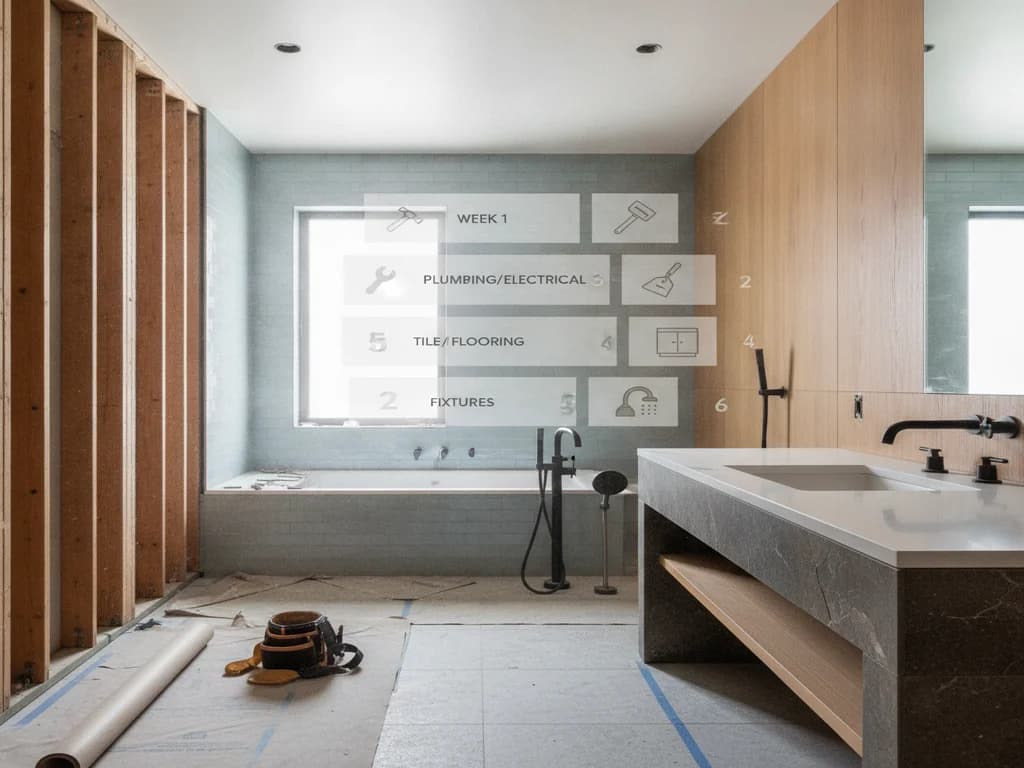
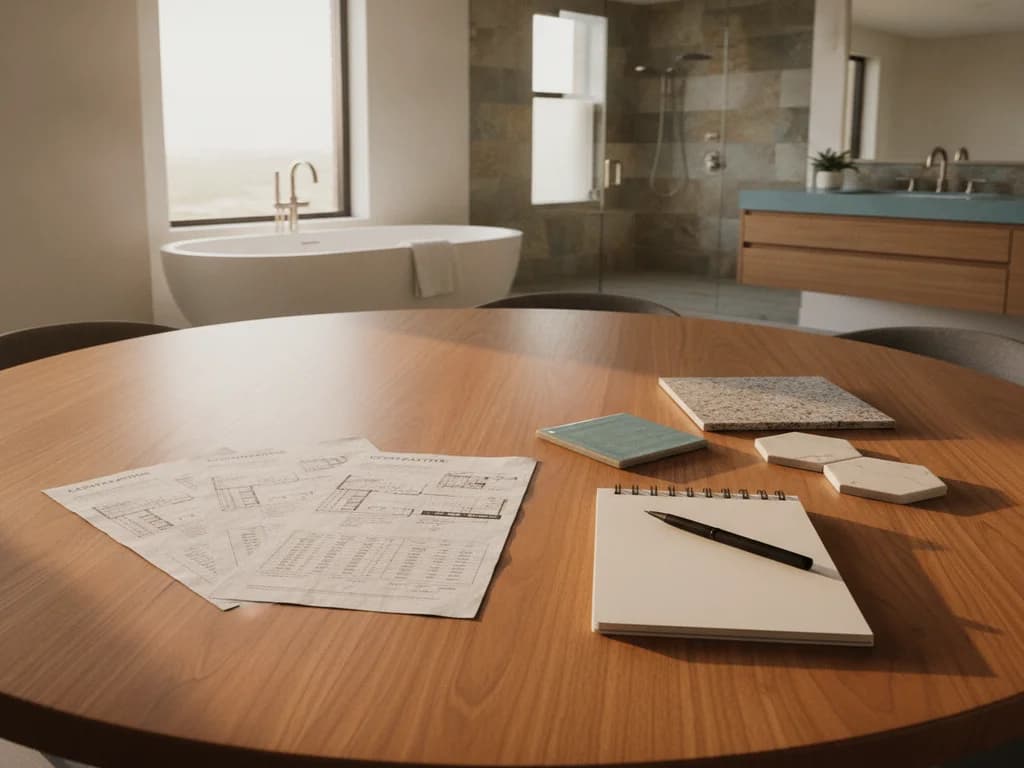
Most of what makes a remodel hard isn’t the construction itself — it’s the disruption to routines you don’t normally think about: where you brush your teeth, whether the water is on, when the front door will have workers coming through it. None of that has to be chaotic, but it does have to be planned for, ideally before demo day rather than during it.
The good news is that a bathroom remodel disrupts a genuinely small footprint of your home compared to a kitchen or whole-house renovation. The tradeoff is that the footprint it disrupts — plumbing, water access, one shared space — is one you use every single day. This guide walks through the parts of daily life that actually change during a remodel, with the fix for each, so the weeks of construction are a manageable inconvenience rather than a running crisis.
Do this before demo, not after
Confirm water shutoff locations, set up your backup bathroom routine, and agree on working hours with your contractor before the first day of demolition. All three are easy to arrange in advance and genuinely hard to improvise once the crew has started.
Containing dust: what actually works
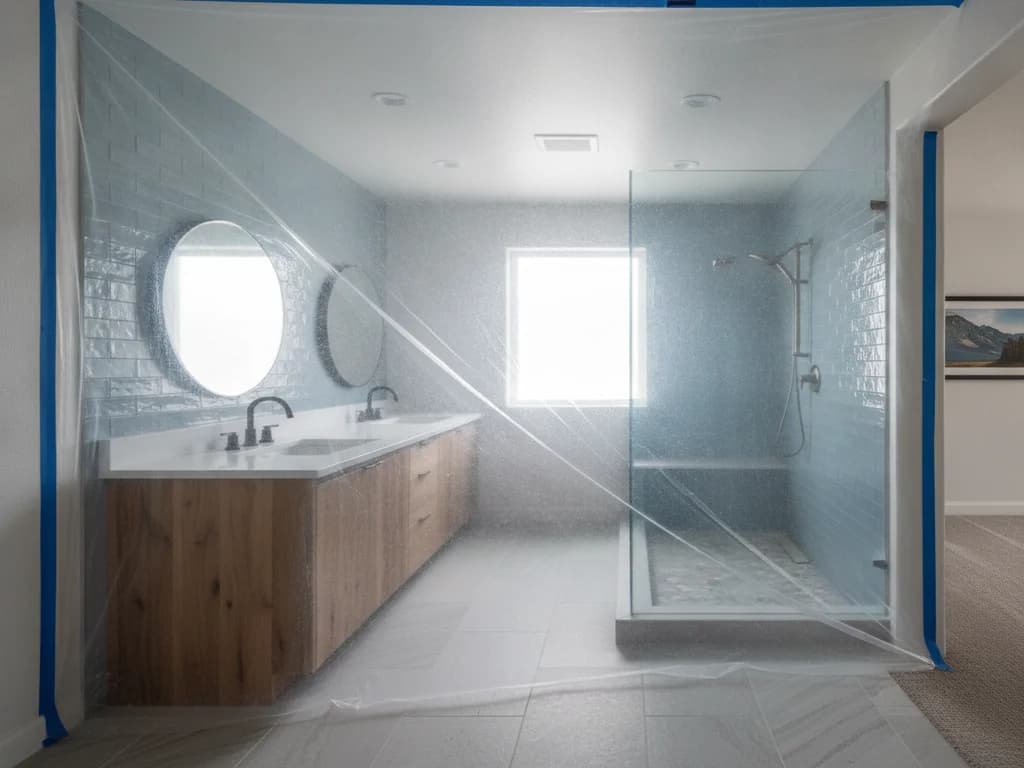
Construction dust travels far further than most homeowners expect, and This Old House’s guidance on the subject is blunt about it: "you might be shocked at how far dust travels, and what small areas it can get into." The fix is physical containment, not just cleaning up after the fact. A proper barrier uses 6-mil plastic sheeting taped over every doorway leading out of the work zone, with a slitted, two-layer flap at the main access point so people can pass through without breaking the seal.
HVAC systems are the other major dust highway through a house — as one heating expert quoted by This Old House put it, "when air moves through ducts, low pressure sucks in dust, insects, radon gas, or whatever else happens to be airborne nearby." The fix is to turn the system off during active construction where possible, tape kraft paper over registers in the work area, and replace filters weekly if you can’t. A window fan set up to blow outward from the work area creates negative pressure that helps keep dust from migrating into the rest of the house, and a daily sweep-and-vacuum habit — rather than waiting until the project ends — keeps it from accumulating.
Water shutoffs: what stays on, what doesn’t
During active plumbing work, the fixtures being replaced will be off, but the rest of your home’s water usually stays live — this is worth confirming explicitly with your contractor rather than assuming. Locate your home’s main shutoff and any fixture-level shutoffs before demo starts, and ask your contractor to flag any day when water to the rest of the house will be briefly interrupted for a tie-in or pressure test, so it doesn’t catch the household off guard mid-shower or mid-laundry.
Setting working hours and ground rules with your crew
One of the most useful pieces of practical guidance from Bob Vila’s reporting on living through a renovation is to establish worker access schedules up front, so you know when your home is yours and when the crew will be present — preventing the low-grade friction of unexpected knocks or a crew arriving before coffee is made. Agree on a start and end time, whether the crew needs a key or a code, and where their materials and dumpster will sit, all before day one.
If you’re staying in the house during the work — which most bathroom remodels allow, unlike a whole-home renovation — set up at least one sealed-off, construction-free room as a retreat. Bob Vila’s guidance calls this a "refuge zone," and it’s a small step that meaningfully protects everyone’s patience over a multi-week project.
One bathroom, one household
If the bathroom being remodeled is your only one, arrange a backup — a neighbor, a gym membership, or a portable option — before demo starts. This is the single most common source of daily-life stress in a remodel, and it’s entirely solvable with a little advance planning.
Kids and pets during a remodel
The EPA’s guidance on indoor air quality during remodeling is direct on this point: keep residents — especially children — away from the work zone during active construction, and clean up the site before they return to it. The same logic applies to pets, who are drawn to open doors, dropped tools, and unfamiliar smells; a simple habit of closing the work zone door and doing a quick end-of-day sweep for stray hardware or debris prevents most of the risk.
Beyond safety, kids and pets both do better with a predictable routine layered on top of the disruption — the same backup-bathroom and quiet-room setup that helps adults also gives them a stable place to land each day.
Daily-life challenges and the fix for each
Use this as a quick-reference checklist for the weeks your bathroom is out of service.
| Daily-life challenge | Fix |
|---|---|
| Dust spreading through the house | 6-mil plastic barriers, sealed registers, daily cleanup |
| Uncertainty about water access | Confirm shutoffs and any planned interruptions in advance |
| Crew coming and going unpredictably | Agree on working hours and access before day one |
| No working bathroom in the house | Arrange a backup plan before demo starts |
| Kids or pets near the work zone | Keep them out during work hours; clean up before they return |
| Household stress over a multi-week project | Set up one sealed, construction-free refuge room |
Make the disruption manageable
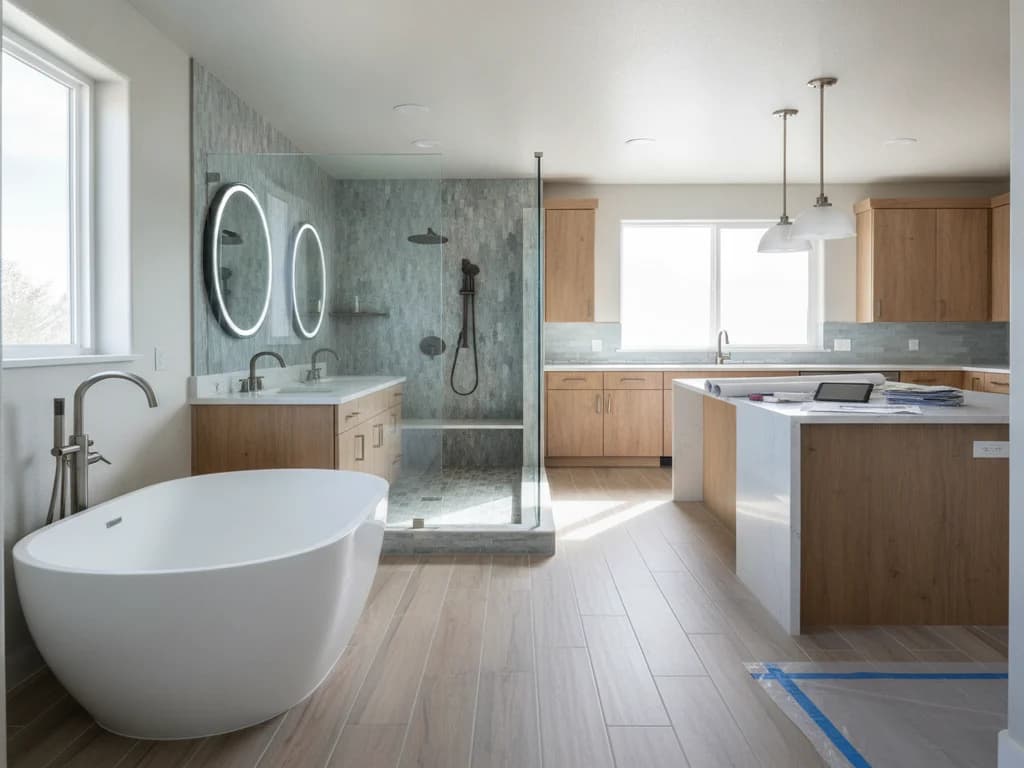
A bathroom remodel is temporary, and the households that get through it most comfortably are the ones who treated daily life as part of the plan — not an afterthought to the construction schedule. Dust containment, a confirmed water plan, agreed working hours, and a backup routine cover almost everything that actually disrupts day-to-day life.
For how we sequence a project to keep disruption to a minimum, see our step-by-step process.
Ready to plan your Boise bathroom?
Licensed & insured · 3-year workmanship warranty
Frequently asked questions
- Can I still use water while my bathroom is being remodeled?
- Usually, yes — the rest of the house typically stays on while only the bathroom under construction is affected. Confirm your main and fixture-level shutoffs before demo starts, and ask your contractor to flag any planned brief interruptions for tie-ins or pressure tests so they don’t catch the household by surprise.
- How do I keep dust from spreading through my house during a remodel?
- Seal the work zone with 6-mil plastic sheeting over doorways, tape kraft paper over HVAC registers in the area, turn off the HVAC system during active work if possible, and use a fan to create negative air pressure pulling dust outward. Daily sweeping and vacuuming — not just end-of-project cleanup — keeps it from accumulating in the meantime.
- Should I move out during a bathroom remodel?
- Most households don’t need to, since a bathroom project disrupts a smaller footprint than a kitchen or whole-home renovation. Staying is easier with a sealed-off refuge room, agreed crew working hours, and — if it’s your only bathroom — a backup arranged before demo starts. Moving out mainly makes sense if disruption tolerance or scheduling is the deciding factor.
Sources
- This Old House — keeping construction dust down
- Bob Vila — live in or move out during a renovation
- EPA — indoor air quality best practices when remodeling
Claims and figures are drawn from the sources above and provided for general guidance; your project may vary. Photography is illustrative of design concepts. For a fixed price on your specific bathroom, request a free estimate.