Updated July 6, 2026 · 8 min read
By Boise Bath — bathroom & shower remodeling in Boise & the Treasure Valley
The short answer
Tile costs more upfront (ceramic $11–$39/sq ft, porcelain $13–$48/sq ft installed, per This Old House) but the material itself is genuinely waterproof and can last up to 50 years. LVP installs cheaper ($2–$11/sq ft) and feels warmer underfoot, but only the plank is waterproof — the assembled floor depends on sealed seams, and it lasts roughly 20 years.
Key takeaways
- This Old House prices ceramic tile at $11–$39 per square foot installed and porcelain at $13–$48, both well above LVP's $2–$11 per square foot range from the same source and Bob Vila.
- Tile itself is impervious to water; LVP's waterproofing only holds if every seam and perimeter is sealed — COREtec's own installation instructions call for caulking the floor's perimeter with a flexible silicone caulk in bathrooms and other wet areas for exactly this reason.
- This Old House puts a well-cared-for tile floor's lifespan at up to 50 years (20+ even under heavy traffic), versus roughly 20 years for a properly installed, well-maintained LVP floor.
- LVP is the far more DIY-friendly, faster install of the two — tile setting, grouting, and cure time take real skill and real days that click-lock LVP planks do not.
- Neither choice is automatically "better" — it is a real trade-off between upfront cost and comfort (LVP) versus long-run water security and lifespan (tile).
A narrow question, on purpose
This is not a survey of every bathroom flooring option — that comparison, including natural stone and the slip-resistance standard that should actually drive the decision, lives in our full bathroom flooring guide. This article answers one narrower question homeowners ask constantly: tile or LVP, head to head, for a bathroom floor specifically.
The two materials solve the "waterproof floor" problem in genuinely different ways, and that difference is what drives almost everything else in this comparison — cost, install time, comfort, and how the floor behaves five or fifteen years in.
The one-sentence version
Tile is a waterproof material you install with waterproof-dependent grout joints; LVP is a waterproof material you install with waterproof-dependent seams. Neither is "set it and forget it" — they just fail differently if the installation isn't right.
Quick comparison
The factors that actually decide this for most bathrooms, side by side.
| Factor | Tile (ceramic/porcelain) | LVP (luxury vinyl plank) |
|---|---|---|
| Installed cost | $11–$48 per sq ft (This Old House) | $2–$11 per sq ft (This Old House, Bob Vila) |
| Water resistance | Material itself is impervious; grout joints are the weak point | Plank is waterproof; seams and perimeter are the weak point (COREtec) |
| Comfort underfoot | Hard, cold to the touch without radiant heat | Warmer, more cushioned feel |
| DIY-friendliness | Low — setting, grouting, and cure time need real skill | High — click-lock planks are a manageable DIY project |
| Lifespan | Up to 50 years well cared for (This Old House) | Roughly 20 years properly installed (This Old House) |
| Repair if damaged | Individual tiles can be replaced; matching old tile is hard | Individual planks can be swapped; cannot be resurfaced |
Cost: how far apart are they, really?
This Old House prices ceramic tile installation at $11–$39 per square foot and porcelain at $13–$48, both figures blending materials and labor. LVP sits well below both: This Old House prices standard vinyl planks at $2–$7 per square foot in materials with $3–$10 labor, while Bob Vila's installed total lands at $3–$11 per square foot, with a $2,399 national average project cost.
The gap is not small. For a typical bathroom floor, tile can run two to four times what LVP costs installed — before you even factor in that a tiled shower or bath surround (a separate cost) often gets bundled into the same "tile" quote homeowners are comparing against a much narrower vinyl-floor-only estimate.
Water resistance: the claim that needs a footnote
Tile's water resistance is straightforward: the fired material itself does not absorb meaningful water, so the risk sits almost entirely in the grout joints between tiles, which is why sealed, quality grout is worth the extra step.
LVP's marketing says "waterproof," and the individual plank genuinely is — but that claim describes the material, not automatically the assembled floor. Water that reaches a seam between planks can work underneath them and sit against the subfloor, undetected, where it can cause rot or mold. That is exactly why COREtec's own installation instructions call for caulking the perimeter of the floor with a flexible silicone caulk in bathrooms and other wet areas — without that step, a technically waterproof product can still let water reach a subfloor that is not waterproof at all.
The practical takeaway
Tile's vulnerable point (grout) is visible and gets resealed as routine maintenance. LVP's vulnerable point (seams) is invisible once installed and depends entirely on a perimeter and fixture-base caulk job done correctly the first time. Ask your installer directly how they are sealing the seams and perimeter if you go the LVP route.
Comfort and everyday feel
This is where LVP wins outright for most households. Tile is hard and, without radiant floor heat, noticeably cold underfoot on a winter morning — a real consideration in Boise's climate. LVP's vinyl core has some natural give and insulating value, so it reads as warmer and softer to stand on, which matters in a room you use barefoot every single day.
If a cold floor is the dealbreaker keeping you from choosing tile, it is worth pricing radiant heat alongside it rather than defaulting to LVP on comfort alone — see our heated bathroom floor guide for what that adds to the project.
Installation: what actually happens in your bathroom
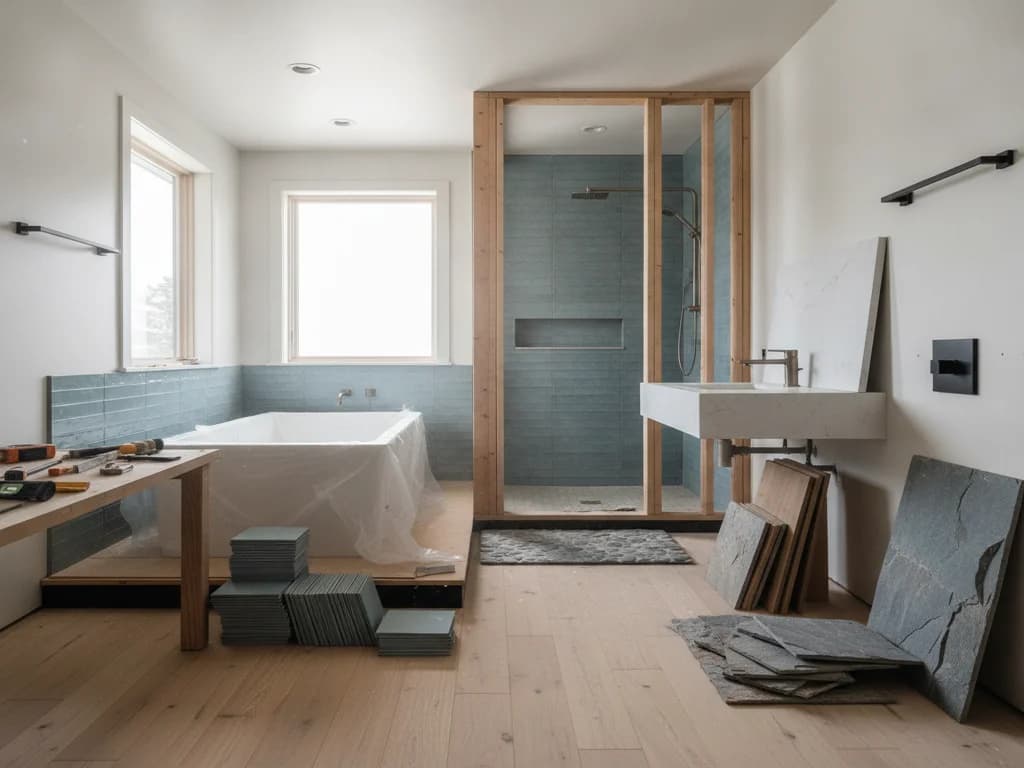
Tile installation is a skilled trade: substrate leveling, thin-set mortar, precise layout, cutting around fixtures and drains, and grouting, followed by cure time before the room is usable again. It is not a realistic weekend DIY project for most homeowners, and getting it wrong (bad slope, poor waterproofing membrane) creates exactly the kind of hidden problem covered in our bathroom remodel hidden costs guide.
LVP is the more forgiving install. This Old House and Bob Vila both describe click-lock LVP as a manageable DIY project for a reasonably handy homeowner, with glue-down or fully wet-area applications better left to a professional for a reliable seal. Either way, the room is back in use faster than a tile job.
Lifespan: the long game
This Old House puts a well-maintained tile floor's lifespan at up to 50 years, and even a heavily trafficked tile floor at 20 years or more. LVP, by the same source, lasts roughly 20 years when properly installed and maintained — a meaningfully shorter run, though still a reasonable stretch for the lower upfront cost.
Framed as cost per year of service, the gap between the two narrows considerably: tile's higher upfront cost is spread across a floor that, done right, may never need replacing during a normal ownership window, while LVP's lower cost buys roughly one generation of use before a redo.
A Boise-specific wrinkle worth knowing
Idaho's dry, high-desert climate and temperature swings put real stress on any material with joints or seams — tile grout and LVP perimeter caulk both included. See our best bathroom materials for Idaho's climate guide for how that dry-climate cycling specifically affects grout and caulk, and plan on periodic resealing whichever flooring you choose.
So which one should you choose?
Choose tile if long-term water security and a multi-decade lifespan matter more to you than upfront cost, and you are comfortable paying more for a professional install. Choose LVP if budget, comfort underfoot, and a faster project timeline matter more, and you are diligent about verifying the seam and perimeter sealing during installation.
Either way, a full bathroom remodel with us includes a real conversation about which flooring fits your budget, your household, and how the room actually gets used — not just which one looks best in a showroom sample.
Ready to plan your Boise bathroom?
Licensed & insured · 3-year workmanship warranty
Frequently asked questions
- Is tile or LVP better for a bathroom floor?
- It depends on your priorities. Tile costs more upfront ($11–$48 per sq ft installed, per This Old House) but the material is inherently waterproof and can last up to 50 years. LVP is cheaper ($2–$11 per sq ft) and warmer underfoot, but its waterproofing depends on sealed seams and typically lasts around 20 years.
- Is luxury vinyl plank (LVP) flooring actually waterproof in a bathroom?
- The individual plank is waterproof, but the assembled floor is not automatically watertight — water can seep through the seams between planks and sit against the subfloor. That is why COREtec's own installation instructions call for caulking the floor's perimeter with a flexible silicone caulk in bathrooms, so water cannot work its way underneath the planks.
- Which is cheaper, tile or LVP flooring?
- LVP, by a wide margin. This Old House and Bob Vila price LVP at $2–$11 per square foot installed, versus $11–$39 for ceramic tile and $13–$48 for porcelain tile from This Old House — tile can run two to four times more than LVP for the same bathroom floor.
Sources
- This Old House — Cost to Install Vinyl Plank Flooring (2026)
- Bob Vila — Cost to Install Vinyl Plank Flooring
- This Old House — How Much Does It Cost to Install Tile Flooring? (2026)
- COREtec — WPC Resilient Flooring Installation Guide (manufacturer)
- TCNA — Handbook for Ceramic, Glass & Stone Tile Installation
Claims and figures are drawn from the sources above and provided for general guidance; your project may vary. Photography is illustrative of design concepts. For a fixed price on your specific bathroom, request a free estimate.