Updated July 16, 2026 · 7 min read
By Boise Bath — bathroom & shower remodeling in Boise & the Treasure Valley
The short answer
Matte glazed porcelain tile is the best flooring for a kids’ bathroom — it shrugs off standing bath water, cleans with anything, and textured finishes with a wet DCOF of 0.42 or higher resist slips. Textured luxury vinyl plank is the warmer, softer runner-up. Skip laminate, hardwood, and glossy tile entirely.
Key takeaways
- A kids’ bathroom floor faces more standing water than any other floor in the house — bath overflow, splash zones, and dripping exits are routine, not accidents.
- Porcelain tile is the durability pick: near-zero water absorption, immune to scrubbing and harsh cleaners, and it outlasts the kids.
- Slip safety is a spec, not a vibe: a wet DCOF of 0.42 or higher, per the ANSI standard TCNA references, is the baseline for wet-footed traffic.
- Textured LVP is the best soft-underfoot alternative — waterproof through its core and forgiving of dropped toys and knees.
- Laminate and solid hardwood fail the standing-water test; one unnoticed puddle is the difference between a mop-up and a floor replacement.
- Grout choice matters as much as tile choice in a kids’ bath — epoxy or well-sealed sanded grout is what keeps the floor looking clean.
What a kids’ bathroom actually does to a floor
A kids’ bathroom floor lives a harder life than any other floor in the house. Bath time means splash zones and the occasional overflow. Wet feet exit at a run. Toothpaste, soap, and whatever the craft project was end up at floor level. And all of it happens daily, for years.
That reality sets the ranking criteria: standing-water durability first, slip safety second, cleanability third, and looks fourth — because a floor that fails the first three stops looking good regardless of how it started. Every pick below is judged in that order.
This article ranks floors for one demanding room. If you are planning the whole space — layout, tub vs. shower, storage that kids can actually reach — the family bathroom ideas guide covers the room around the floor.
Best overall: matte glazed porcelain tile
Porcelain wins the kids’ bathroom for the same reason it wins wet rooms generally, just with higher stakes. It absorbs less than 0.5% of its weight in water by the industry definition TCNA references, which means the Tuesday-night tub overflow is a towel job, not a damage event. It shrugs off scrubbing, bleach-based cleaners, dropped shampoo bottles, and a decade of traffic without a mark.
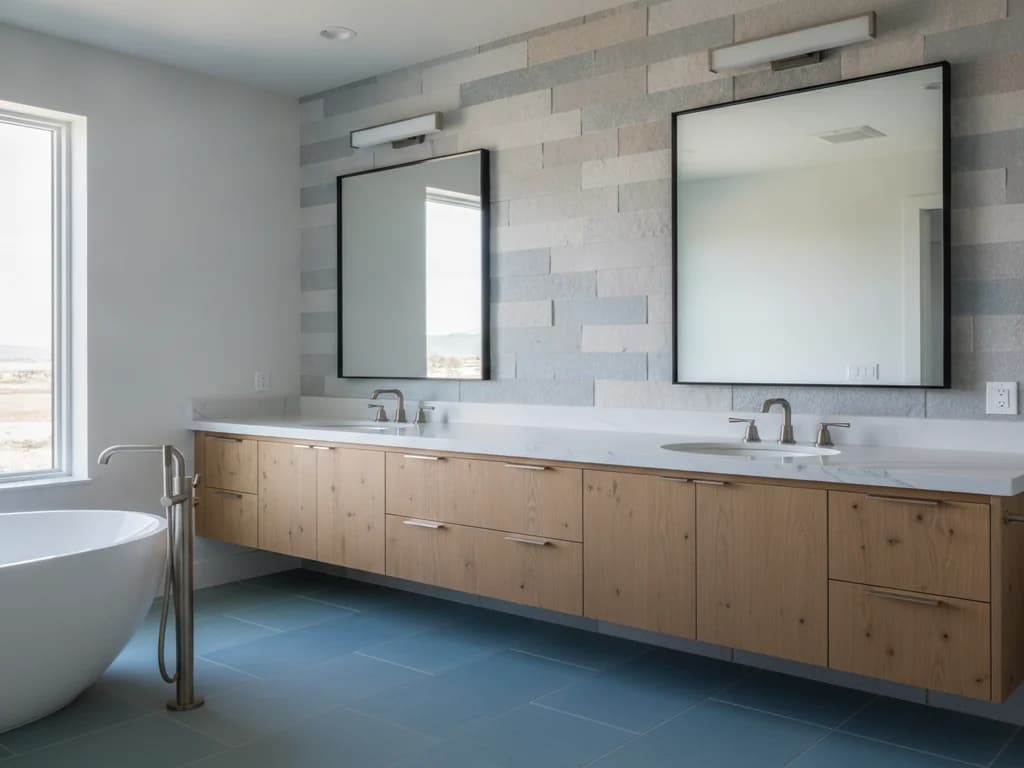
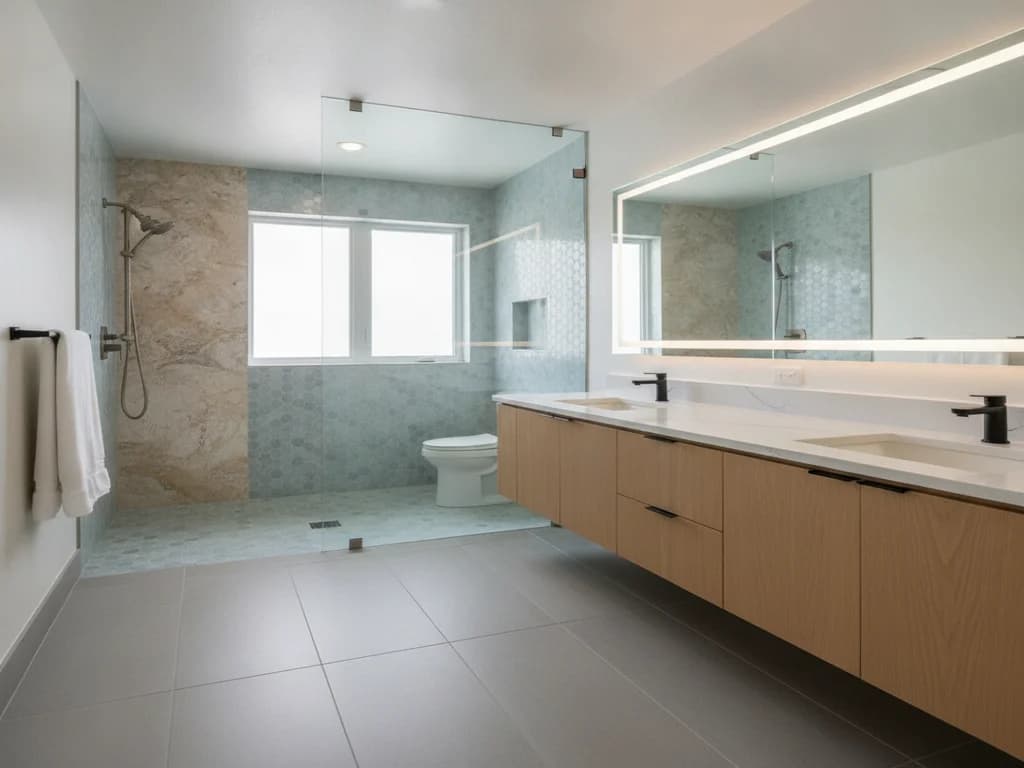
Spec it like a wet room, because it is one: a matte or lightly textured finish with a wet DCOF of 0.42 or higher — the ANSI baseline for floors walked on wet — because kids treat every floor as walked on wet. Skip polished tile entirely; it is slick under wet feet and shows every water spot. The full spec conversation, sizes included, lives in best floor tile for bathrooms.
The honest downsides: porcelain is cold underfoot — a real consideration in Idaho winters, and the reason heated-floor systems pair so well with it — and it is unforgiving of dropped glass. Neither changes the verdict; both are worth knowing before the first barefoot January morning.
Best soft-underfoot pick: textured luxury vinyl plank
If porcelain’s hardness or temperature is the dealbreaker, textured LVP is the strong second place. Its rigid waterproof core is unbothered by surface water, it is warmer and more forgiving underfoot — relevant when knees and dropped toys are daily events — and quality lines carry embossed textures with real wet grip.
The caveats are edges and time. LVP itself is waterproof; the seams between planks and the perimeter under the baseboard are where a genuine flood can find the subfloor. It also dents under point loads and cannot be refinished — a decade of a family’s hardest-used room will show. The complete trade-off lives in LVP in bathrooms: pros and cons.
Choosing between the two front-runners is the classic modern flooring decision, and the tile vs. LVP comparison walks through it in full. The kids’-bathroom shortcut: porcelain if you want to install once and forget it, LVP if warmth and softness matter more than permanence.
What fails in a kids’ bathroom — and why
Laminate is the trap pick: it looks like LVP on the shelf and costs less, but its fiberboard core swells on contact with the water that will inevitably reach it. Solid hardwood is a moisture gamble even in adult bathrooms; in a kids’ bath it is a countdown. Carpet holds moisture against the subfloor and everything else besides — it has no place here.
Glossy and polished tile fails differently: it survives the water fine and drops the kids instead. A floor that is beautiful, durable, and slick when wet is the wrong floor in the one room where wet is the default state.
One quieter failure mode is worth naming: the floor that was fine until the grout or the caulk line at the tub gave up. Water finding a path below tile or vinyl does slow damage that shows up as flex, stains, or smell long after the cause. If a kids’ bathroom floor already feels soft or looks stained at the edges, the replacing bathroom flooring guide covers what that symptom usually means underneath.
The overflow test is the whole decision
Judge every candidate floor by one question: what happens if an inch of bath water sits on it for an hour before anyone notices? Porcelain: nothing. LVP: likely nothing, if the edges are sealed. Laminate: a swollen, ruined floor. Hardwood: cupping and stains. In a kids’ bathroom this is not a hypothetical — buy the floor that passes.
The picks compared
Every candidate, judged on the three things a kids’ bathroom demands:
| Flooring | Standing water | Slip safety (wet) | Cleanability | Verdict |
|---|---|---|---|---|
| Matte glazed porcelain | Unaffected | Excellent with DCOF ≥ 0.42 finish | Any cleaner, any scrubbing | Best overall |
| Textured LVP | Waterproof core; watch seams and edges | Good in textured finishes | Easy; avoid harsh solvents | Best soft/warm pick |
| Textured sheet vinyl | Very good — fewest seams | Good in textured finishes | Easy | Best budget pick |
| Standard ceramic tile | Very good | Good in matte finishes | Easy | Serviceable step-down |
| Laminate | Fails — core swells | Poor when wet | Easy until it fails | Skip |
| Solid hardwood | Fails — cups and stains | Poor when wet | Delicate | Skip |
Slip baseline per the ANSI wet DCOF standard referenced by TCNA (tile). Resilient floors use different slip-test methods — compare published ratings within each material type.
The details that keep it clean for a decade
Grout is where kids’ bathroom floors go to look old. Standard cement grout stains and darkens under daily splash and enthusiastic mopping; epoxy grout costs more installed but is effectively stain-proof, and a well-sealed sanded grout is the middle path. On a floor this hard-used, the grout line item is worth the upgrade conversation.
Layout does quiet work too. Running the floor tile into a tiled tub-front or a short tiled wainscot turns the splash zone into a wipeable surface instead of a paint-touch-up zone. A floor drain is overkill in most family baths, but generous caulk maintenance at the tub-to-floor joint is not — that joint is the most common failure point in the whole room.
Slip safety rounds out the spec: textured finishes underfoot, a bath mat with a real backing for the exit zone, and if the household includes toddlers or grandparents, the deeper measures in best non-slip bathroom flooring apply here too.
Matching the pick to your family
The shortlist, applied:
- Default family bath, remodel budget: 12×24 matte porcelain, DCOF ≥ 0.42, epoxy or sealed sanded grout — install once, forget it.
- Warmth and soft landings matter most: textured LVP with sealed perimeter edges, quality wear layer, honest expectations about dents.
- Budget refresh before a future remodel: textured sheet vinyl — one piece, few seams, real texture, lowest cost of entry.
- Bath-time chaos household (toddlers, water everywhere): porcelain plus epoxy grout plus a diligent caulk line; this floor cannot be overwhelmed.
- Kids now, resale later: porcelain in a neutral tone reads "quality bathroom" to a buyer long after the rubber-duck years end.
- Planning the whole room, not just the floor: start with family bathroom ideas and let the floor follow the layout.
Ready to plan your Boise bathroom?
Licensed & insured · 3-year workmanship warranty
Frequently asked questions
- What is the best flooring for a kids’ bathroom?
- Matte glazed porcelain tile with a wet DCOF rating of 0.42 or higher. It is unaffected by standing bath water, cleans with any product and any amount of scrubbing, and textured finishes hold traction under wet running feet. Textured luxury vinyl plank is the best warmer, softer alternative — waterproof through its core with honest limits at seams and edges.
- Is LVP or tile better for a kids’ bathroom?
- Tile wins on permanence: porcelain is unbothered by overflow events, immune to scrubbing, and outlasts childhood. LVP wins on comfort: warmer, softer under knees and dropped toys, and kinder on the budget. Both are legitimate — the honest difference is that porcelain survives a genuine flood and a decade of abuse without evidence, while LVP can show both.
- Is laminate flooring OK in a kids’ bathroom?
- No. Laminate’s fiberboard core swells when water reaches it — and in a kids’ bathroom, water reaches everything. It looks like LVP on the shelf and costs less, which is exactly the trap: LVP has a waterproof core, laminate does not. One unnoticed puddle or slow tub-joint leak is the difference between mopping up and replacing the floor.
- How do I make a kids’ bathroom floor less slippery?
- Start with the spec: tile with a wet DCOF of 0.42 or higher, or resilient flooring with a genuinely textured finish. Add a bath mat with a real non-slip backing at the tub exit — the highest-risk square yard in the room. If the household includes toddlers or older adults, textured finishes and grab-bar planning both earn their place.
- What bathroom flooring is easiest to keep clean with kids?
- Porcelain tile with epoxy grout is the low-maintenance ceiling — the tile tolerates any cleaner and the epoxy grout resists the staining that makes tiled floors look old. Sheet vinyl is the runner-up by way of having almost no seams. Whatever the surface, the tub-to-floor caulk joint is the maintenance item that actually protects the floor: keep it sound.
Sources
- Tile Council of North America (TCNA)
- CDC — Older Adult Fall Prevention
- Consumer Reports
- This Old House — Bathrooms
Claims and figures are drawn from the sources above and provided for general guidance; your project may vary. Photography is illustrative of design concepts. For a fixed price on your specific bathroom, request a free estimate.