Updated July 16, 2026 · 7 min read
By Boise Bath — bathroom & shower remodeling in Boise & the Treasure Valley
The short answer
Textured or matte porcelain tile with a wet DCOF rating of 0.42 or higher is the best non-slip bathroom flooring, with small-format mosaic adding grip in the wettest zones through its dense grout joints. No floor is slip-proof — DCOF measures slip resistance, not immunity, so pair the floor with grab bars and good lighting.
Key takeaways
- Slip resistance has a real measurement: DCOF, tested wet. The ANSI standard TCNA references sets 0.42 as the minimum for interior floors walked on when wet.
- "Non-slip" on a product page is marketing; the DCOF value on the manufacturer spec sheet is the claim you can verify.
- Textured and matte porcelain is the best all-around pick — verified grip, near-zero water absorption, and no sealing.
- Small-format mosaic (2-inch or under) is the grip champion for shower floors: more grout joints per square foot means more traction.
- Falls are the leading cause of injury among adults 65 and older, per the CDC — flooring is one layer of prevention, not the whole plan.
- No residential floor is truly slip-proof; anyone selling certainty over a spec sheet is selling the wrong thing.
What does "non-slip" actually mean?
Nothing, legally. "Non-slip," "anti-slip," and "slip-resistant" are marketing terms with no enforced definition — which is why two tiles wearing the same label can behave completely differently under a wet foot. The number that means something is DCOF: the dynamic coefficient of friction, measured on a wet surface.
The ANSI standard that the Tile Council of North America (TCNA) references sets a wet DCOF of 0.42 as the minimum for level interior floors expected to be walked on when wet — a description that fits every bathroom floor ever built. Manufacturers publish the value on the spec sheet, and any tile shop can pull it in a minute.
That number is the spine of this article. Every pick below either clears it with margin or compensates another way, and everything worth skipping fails it. If you are choosing flooring for an aging-in-place remodel, the stakes are concrete: falls are the leading cause of injury among adults 65 and older, per the CDC, and the bathroom is where wet floors and hard surfaces meet.
Best overall: textured or matte porcelain tile
Matte and textured glazed porcelain is the pick that wins on every axis at once. The texture carries the grip — quality lines publish wet DCOF values comfortably above 0.42 — while the porcelain body absorbs almost no water, wears harder than any resilient floor, and never needs sealing. It is the floor you can specify once and trust for decades.
The texture question has a sweet spot. A smooth matte or micro-textured glaze clears the DCOF baseline and still wipes clean; aggressively structured "outdoor" textures grab more than water — they hold dirt, soap film, and mop lint, and are overkill inside a home. Ask for the DCOF sheet, not the roughest tile on the wall display.
This article ranks flooring by slip performance specifically. For the full tile conversation — sizes, finishes, body types, and zone-by-zone picks — the best floor tile for bathrooms guide covers the whole field.
Best for the wettest zones: small-format mosaic
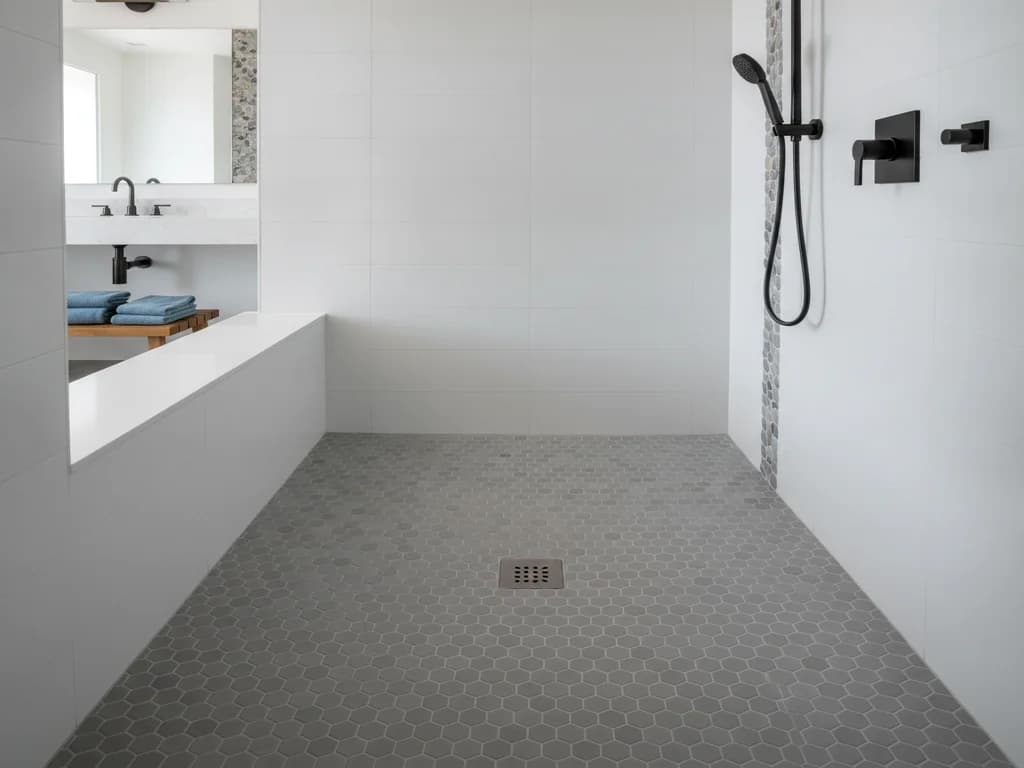
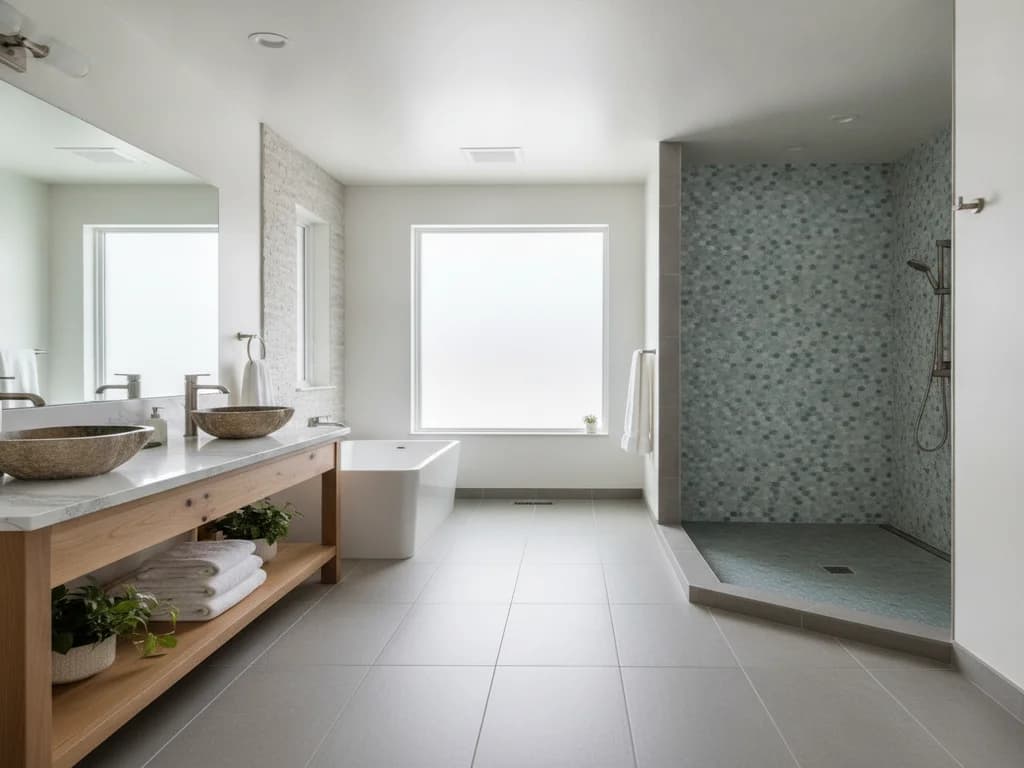
Where water actually pools — shower floors, curbless entries, the strip in front of the tub — small tile beats big tile regardless of finish. Sheet-mounted mosaics of 2 inches or under put dramatically more grout joints per square foot underfoot, and every joint is a grip line your foot crosses. The tile between the joints matters less than how often the joints interrupt it.
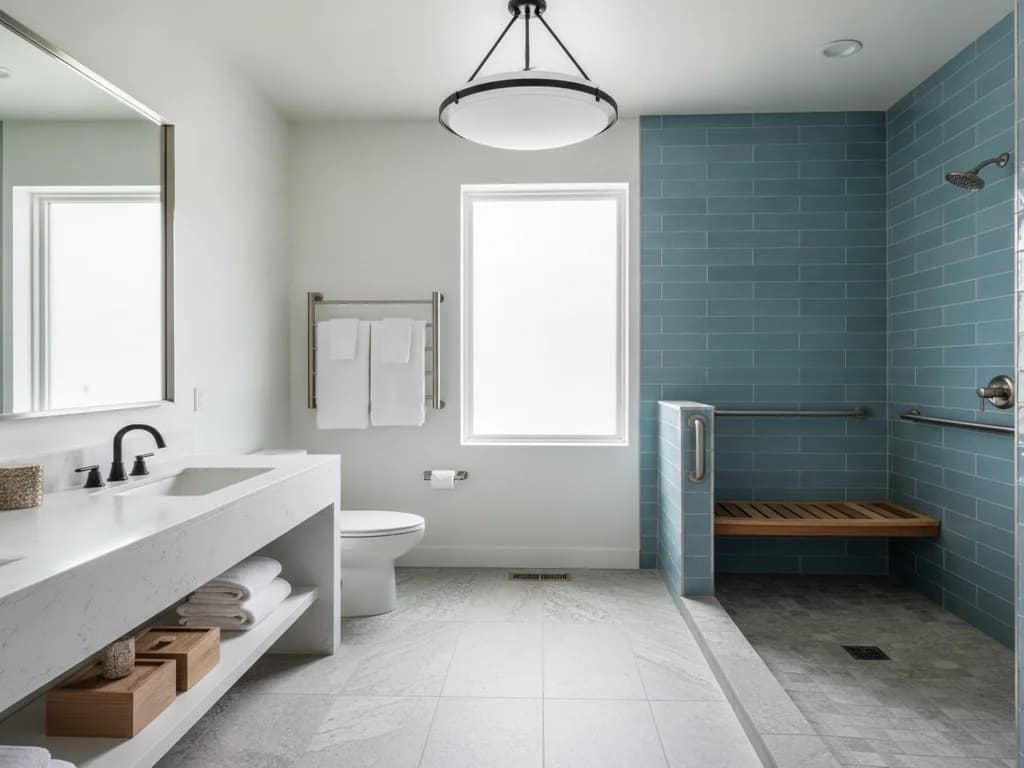
This is why professional shower floors are mosaic country even in bathrooms tiled large everywhere else, and why a curbless shower — where the shower floor and bathroom floor become one wet plane — usually extends the small-format zone rather than shrinking it.
Grout choice compounds the effect: a quality sanded or epoxy grout holds its texture for years, while a cheap grout that wears smooth quietly gives back some of the traction you paid for.
The rest of the field: vinyl, rubber, and what to skip
Textured luxury vinyl plank is the best non-tile answer: warmer and softer underfoot than porcelain, waterproof through its core, and available in embossed finishes with real texture. The catch is that resilient flooring uses different slip-test methods than tile, so compare products by their published ratings rather than assuming "vinyl" equals "grippy" — glossy LVP exists and is as slick as it looks. The full trade-off lives in LVP in bathrooms: pros and cons.
Sheet vinyl with a textured wear layer is the budget version of the same logic, with fewer seams than plank. Rubber flooring is the outlier pick — superb wet traction and forgiving under a fall, which is why gyms and hospitals use it — but its look keeps it rare in home bathrooms outside dedicated accessibility remodels.
Skip list: polished or glossy tile of any kind on a floor, natural stone in a honed-slick or polished finish, laminate (slick and moisture-fragile), and any floor tile with no published DCOF. A beautiful floor that fails the wet test is a wall material in the wrong place.
The honest limit: nothing makes a floor slip-proof
DCOF measures slip resistance under controlled conditions — it does not promise immunity with soap film, standing water, or wet feet moving fast. Treat 0.42-plus flooring as the foundation of a safer bathroom, not the finish line, and be skeptical of any product or coating marketed as "slip-proof." The word does not survive contact with a physics lab.
The picks by category
Every recommendation above, in one table:
| Category | Best pick | Why | Skip |
|---|---|---|---|
| Best overall | Matte/textured porcelain, wet DCOF ≥ 0.42 | Verified grip plus porcelain durability; no sealing | Polished or glossy tile on any floor |
| Wettest zones | Small-format mosaic (2-inch or under) | Grout joints add grip; follows shower slope | Large-format tile around drains |
| Softest underfoot | Textured LVP with published slip rating | Warm, waterproof core, forgiving surface | Glossy smooth-finish LVP |
| Budget pick | Textured sheet vinyl | Fewest seams, real texture, lowest cost | Laminate — slick and moisture-fragile |
| Maximum traction | Rubber flooring | Best wet grip; cushions falls | Expecting it to look like tile |
| Verification | Manufacturer DCOF spec sheet | The only claim you can check | Trusting a "non-slip" label alone |
DCOF threshold per the ANSI slip-resistance standard referenced by TCNA. Resilient flooring uses different test methods — compare published ratings within each material type.
Flooring is one layer — build the rest of the safety system
The CDC’s fall-prevention guidance treats flooring as one factor among several, and a remodel is the moment to address them together: grab bars anchored into blocking where placement actually helps, a curbless entry that removes the step-over, seated showering, and lighting that kills the 2 a.m. shadow zone. The full checklist lives in bathroom safety features.
If the floor going in is part of a bigger accessibility picture — aging in place, a household member with mobility changes — the aging-in-place bathroom ideas guide covers how the pieces fit into one coherent design instead of a retrofit collage.
And if the current floor is the problem — cracked tile, curling vinyl, grout that has worn glassy — that is usually a symptom worth reading. The replacing bathroom flooring guide covers what the swap involves and when a failing floor signals subfloor trouble underneath.
Matching the pick to your situation
The category picks, applied to real households:
- Aging-in-place remodel: matte textured porcelain throughout, mosaic in the shower, grab-bar blocking in the walls while they are open — the reference spec.
- Curbless or zero-entry shower: extend small-format mosaic across the wet zone and let a linear drain manage the slope.
- Young kids and splash-heavy bath time: textured porcelain or quality textured LVP — both shrug off standing water; pick by feel and budget.
- Budget refresh without a full remodel: textured sheet vinyl now, with the tile spec saved for the real remodel later.
- Rental or multigenerational home: DCOF-verified tile plus grab bars — the combination serves every age without looking clinical.
- Maximum-caution household: rubber flooring where traction outranks aesthetics, porcelain everywhere guests see.
Ready to plan your Boise bathroom?
Licensed & insured · 3-year workmanship warranty
Frequently asked questions
- What is the best non-slip flooring for a bathroom?
- Matte or textured glazed porcelain tile with a wet DCOF rating of 0.42 or higher — the ANSI baseline TCNA references for floors walked on wet. It pairs verified slip resistance with porcelain’s durability and zero maintenance. In the wettest zones, small-format mosaic adds further grip through its dense grout joints. Textured LVP is the best softer-underfoot alternative.
- What DCOF rating do I need for a bathroom floor?
- A wet DCOF of 0.42 or higher. That is the minimum in the ANSI slip-resistance standard referenced by TCNA for level interior floors expected to be walked on when wet. The value appears on the manufacturer’s spec sheet — ask for it. Plenty of tile sold in floor sizes fails this bar, especially polished and semi-polished finishes.
- Is there flooring that is completely slip-proof?
- No. DCOF and similar ratings measure slip resistance under test conditions — they cannot promise immunity with soap film, standing water, or hurried wet feet. A floor at or above 0.42 wet DCOF is meaningfully safer, but honest bathroom safety layers flooring with grab bars, a curbless entry where practical, seated showering, and good lighting.
- Is textured tile hard to keep clean?
- Mild texture is not; aggressive texture is. A matte or micro-textured glaze that clears 0.42 wet DCOF wipes clean like any tile. Heavily structured outdoor-rated textures hold dirt and soap film and are overkill indoors. The practical spec is the smoothest finish that still publishes a passing wet DCOF — grip you can verify, cleaning you will not resent.
- Is vinyl flooring slip resistant enough for a bathroom?
- Quality textured LVP or sheet vinyl can be — but "vinyl" alone guarantees nothing, since glossy smooth finishes exist and are slick wet. Resilient flooring is slip-tested under different methods than tile, so compare published ratings between vinyl products rather than against tile DCOF numbers. Texture you can feel with a fingertip is the fast in-store check.
- What is the safest bathroom flooring for elderly adults?
- Textured porcelain with a verified wet DCOF of 0.42-plus, or rubber flooring where traction and fall-cushioning outrank looks. Per the CDC, falls are the leading cause of injury among adults 65 and older, so treat the floor as one layer: grab bars at the toilet and shower, a curbless entry, and night lighting complete the system a safer floor starts.
Sources
- Tile Council of North America (TCNA)
- CDC — Older Adult Fall Prevention
- National Tile Contractors Association
- AARP — Livable Communities / HomeFit
Claims and figures are drawn from the sources above and provided for general guidance; your project may vary. Photography is illustrative of design concepts. For a fixed price on your specific bathroom, request a free estimate.