Updated June 30, 2026 · 9 min read
By Boise Bath — bathroom & shower remodeling in Boise & the Treasure Valley
The short answer
The most important bathroom safety features address four hazards: slips, scalds, shocks, and falls. Prioritize slip-resistant floors, anti-scald (pressure-balancing) valves, GFCI outlets, grab bars on solid blocking, layered and night lighting, and a low or curbless entry. Together these protect children and older adults alike without making the bathroom feel clinical.
Key takeaways
- Bathroom injuries cluster around four hazards — slips, scalds, electrical shock, and falls — and most are designed out, not added on.
- Slip-resistant flooring and a low or curbless entry remove the two biggest trip risks for every age.
- Anti-scald pressure-balancing valves and GFCI outlets are inexpensive, code-relevant features that prevent serious injury.
- Grab bars only work on solid in-wall blocking — plan it during the remodel, even if the bars come later.
- Universal-design safety can look like a normal, attractive bathroom, not a medical room.
Why is the bathroom one of the most hazardous rooms in a home?
A bathroom packs slick surfaces, hot water, electricity, and hard edges into a few square feet — which is why it sees more injuries per square foot than almost any other room. The CDC reports that falls are the leading cause of injury among older adults, and a large share of those falls happen in and around the tub, shower, and toilet. But this is not a seniors-only problem: toddlers, pregnant household members, and able-bodied adults all slip, scald, and stumble in the same spots.
The good news is that nearly every bathroom hazard falls into one of four buckets — slips, scalds, shocks, and falls — and almost all of them are designed out rather than added on. The 20 features below are organized by those four hazards, each written as a self-contained idea: what it is, the hazard it addresses, and a one-line "who it protects." Mix the ones that fit your household and you end up with a bathroom that quietly protects a two-year-old and an 80-year-old in the same room — without looking like a hospital.
How to use this list
You do not need all 20. Pick the features that match the people who actually use the room — young kids, visiting grandparents, anyone with balance or mobility concerns — and plan the in-wall basics (blocking, GFCI, valves) during the remodel even if the visible hardware comes later.
How do you make bathroom floors and entries slip-safe?
Slips are the first and most common hazard, and they almost always start at the floor or the shower entry. The fixes here protect everyone, every day.
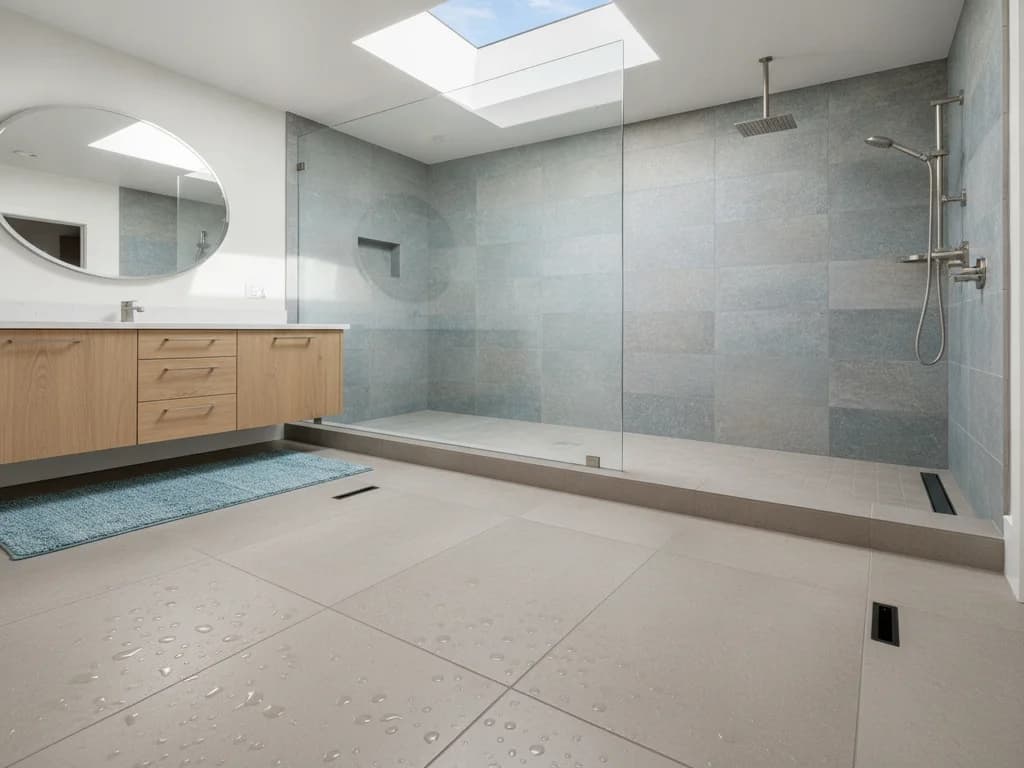
1. Slip-rated floor tile. Flooring is rated for traction by a coefficient-of-friction measure (you may see it called DCOF), and wet bathroom floors should favor higher-traction, matte, or textured surfaces over glossy polished tile. We keep the full material science where it belongs — see our guide to choosing slip-resistant bathroom flooring — but the headline is simple: matte and textured beat shiny when the floor is wet. *Protects: everyone, especially kids and older adults.*
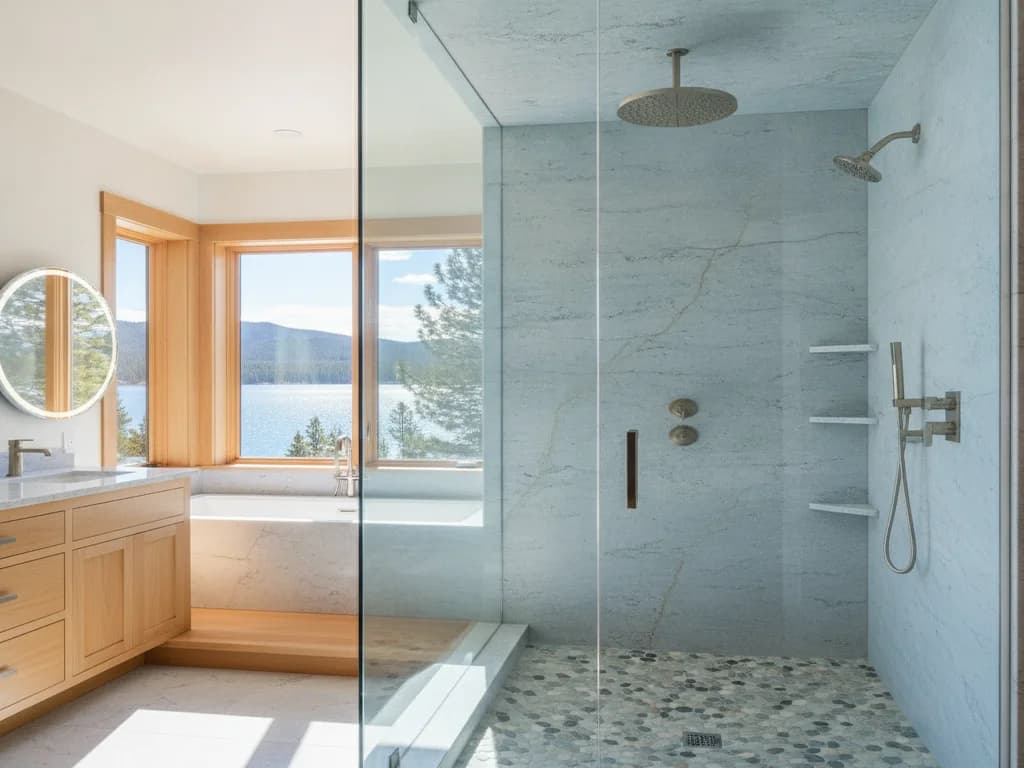
2. Textured or honed shower floors. Inside the shower, small-format tile (more grout lines), honed stone, or a textured pan gives bare feet something to grip. Large glossy tiles on a shower floor are a classic slip trap. *Protects: everyone who showers.*
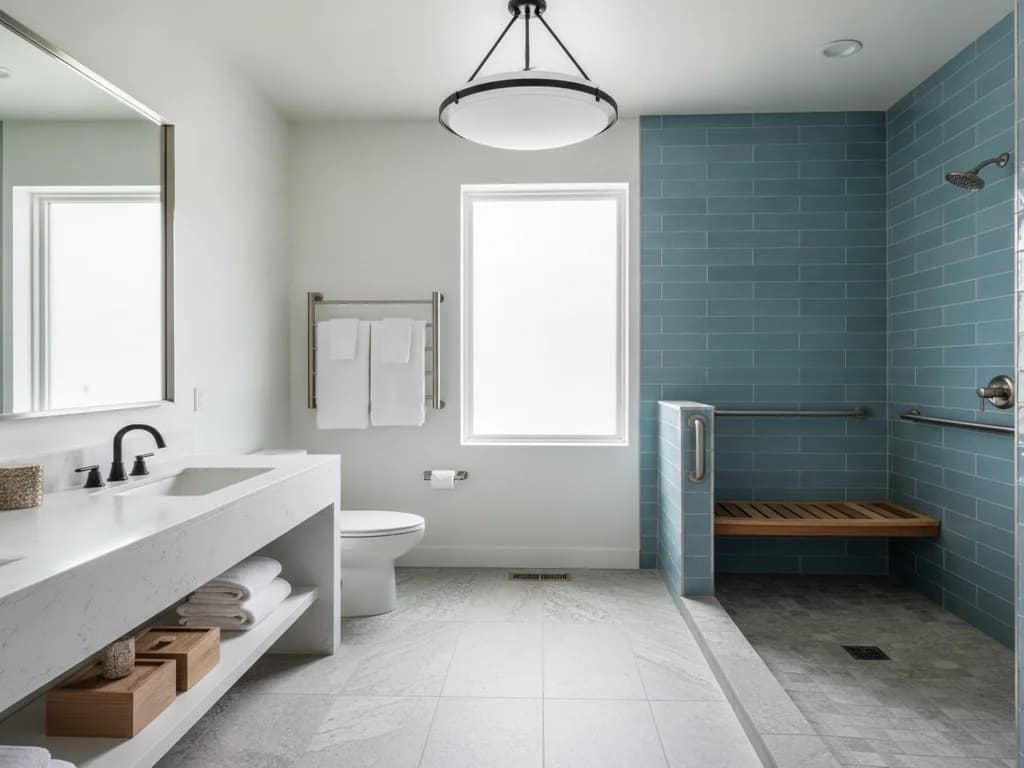
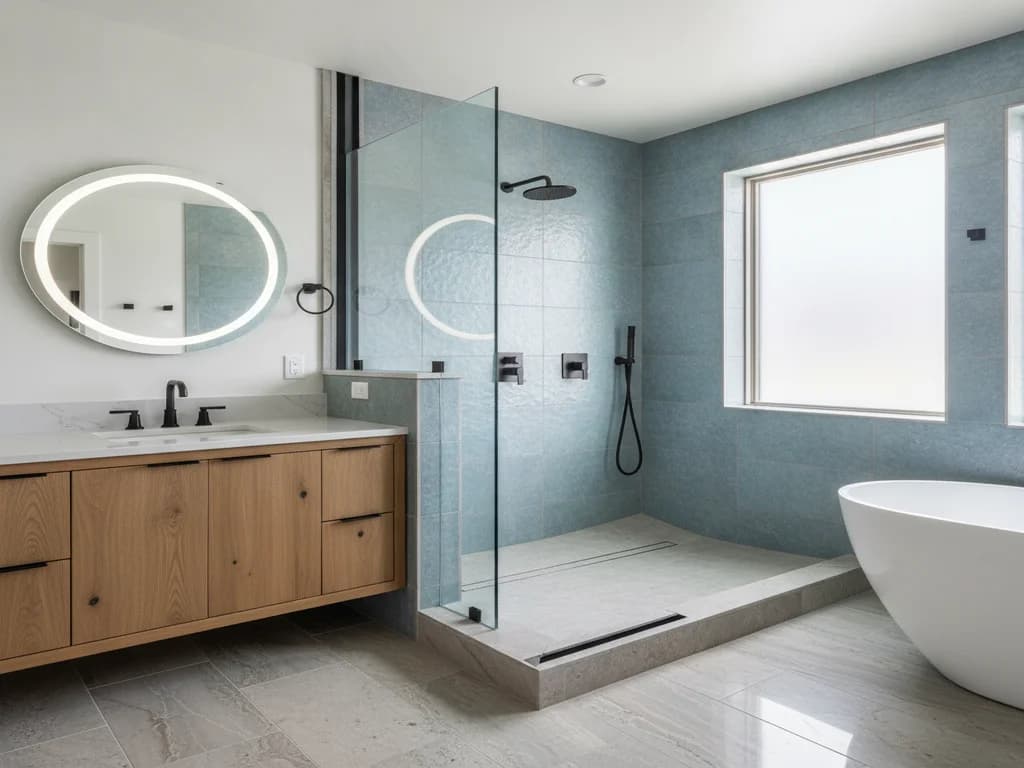
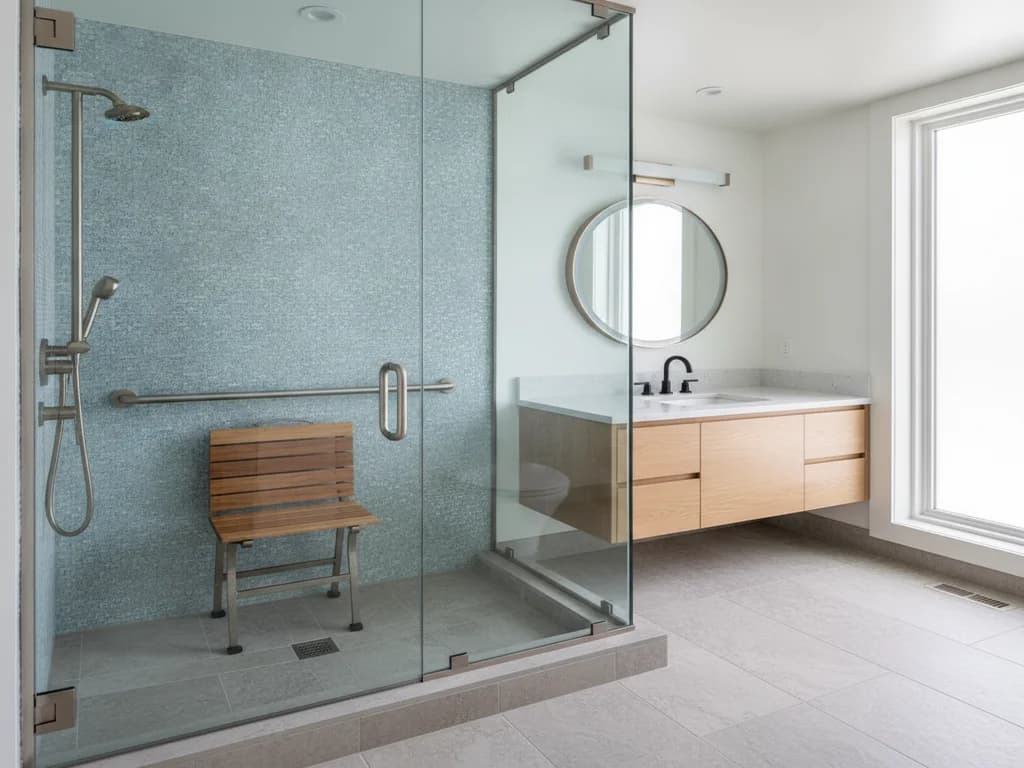
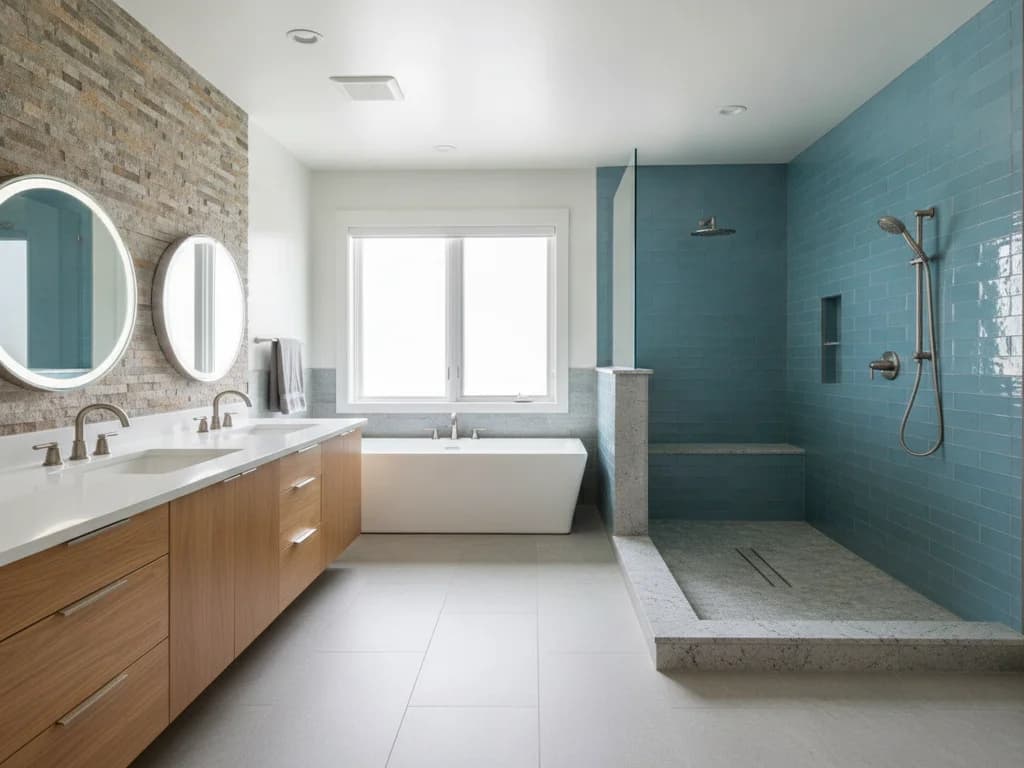
3. A low-threshold or curbless entry. A traditional shower curb is a trip point you step over wet, every single day. Lowering or eliminating it removes that hazard and makes the room feel larger; it is also the foundation of an accessible, barrier-free bathroom. *Protects: everyone, especially anyone with limited mobility or carrying a child.*
4. Permanent traction over loose bath mats. A rubber-backed mat helps, but it can slide and bunch. Built-in traction — textured tile, anti-slip treatments, or a teak shower bench area — does not move. Use mats as a supplement, not the whole plan. *Protects: everyone; especially households with kids who yank rugs.*
How do you prevent scalds and water-temperature injuries?
Scalds happen fast: skin can be burned by water that feels merely "hot" to an adult hand, and children and older adults have thinner skin that burns sooner. The fixes are inexpensive and largely invisible.
5. An anti-scald (pressure-balancing or thermostatic) valve. When someone flushes a toilet or runs the kitchen tap, an old shower valve can suddenly spike hot. A pressure-balancing or thermostatic mixing valve holds the temperature steady and caps the maximum. Modern shower valves are widely required to include this feature, and it is one of the highest-value upgrades for any family. *Protects: everyone, especially children and seniors.*
6. A safe water-heater temperature. Many heaters ship set high. Dialing the tank to a moderate setting (commonly cited guidance is around 120°F) reduces scald risk throughout the house while still being hot enough for daily use. *Protects: everyone.*
7. Single-lever or hands-free faucets. A single lever lets anyone set temperature with a wrist or forearm — no fine grip needed — and touchless faucets remove the fumble entirely. Both reduce the moment of accidentally cranking full hot. *Protects: kids, older adults, and anyone with limited hand strength.*
What electrical safety features does a bathroom need?
Water and electricity share the room, so the bathroom has some of the strictest electrical rules in the house. The International Code Council’s residential code (IRC) drives these requirements, and they exist precisely because the failure mode is severe.
8. GFCI outlets near water. Ground-fault circuit interrupters cut power in milliseconds if current strays toward water or a person. Code requires GFCI protection for bathroom receptacles, and any outlet near the sink, tub, or shower should be protected. This is a must-do, not an upgrade. *Protects: everyone.*
9. Smart fixture placement away from the wet zone. Switches, outlets, and non-rated fixtures belong outside the immediate splash zone of the tub and shower. Good design simply keeps the electricity and the water from meeting. *Protects: everyone.*
10. Damp- or wet-rated light fixtures. Fixtures over a tub or in a shower must be rated for moisture (damp- or wet-rated). A standard dry-rated fixture in a steamy zone is both a safety and a longevity problem. *Protects: everyone.*
How does lighting reduce bathroom accidents?
You cannot avoid a wet patch you cannot see. Lighting is a safety feature as much as a design one.
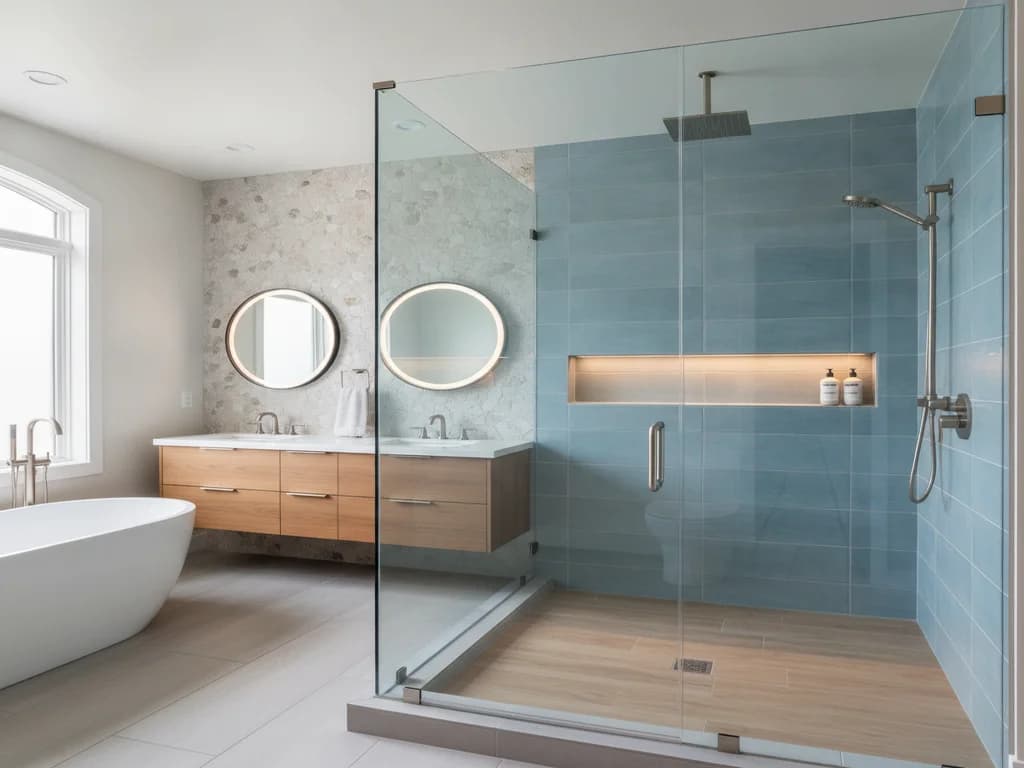
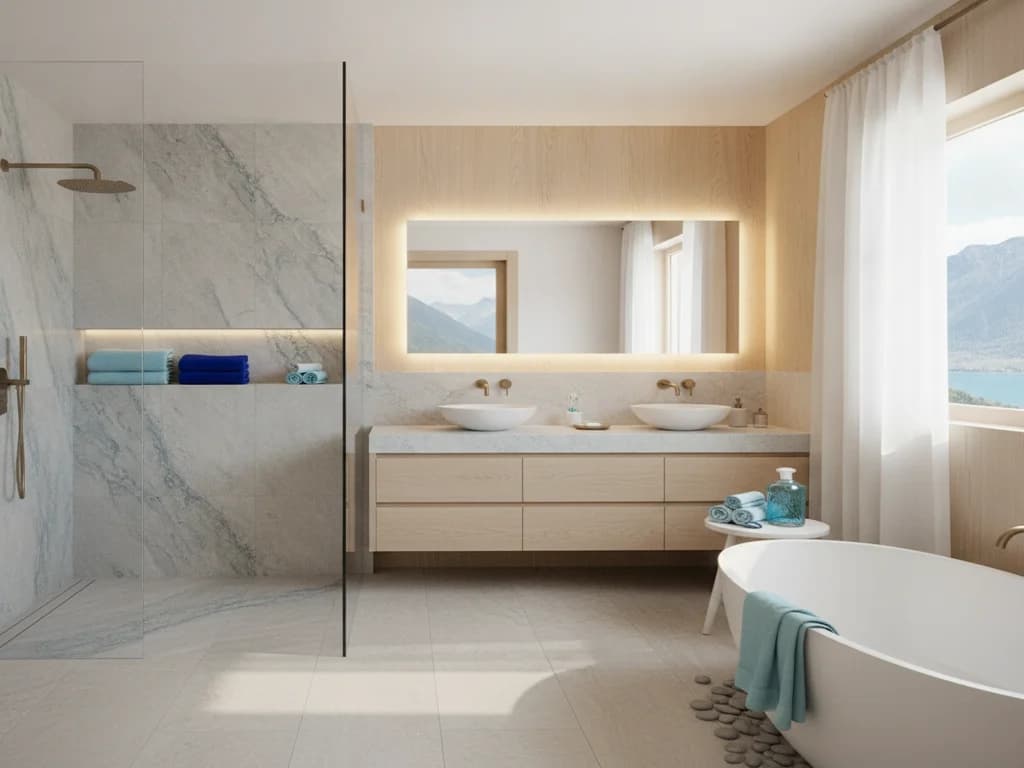
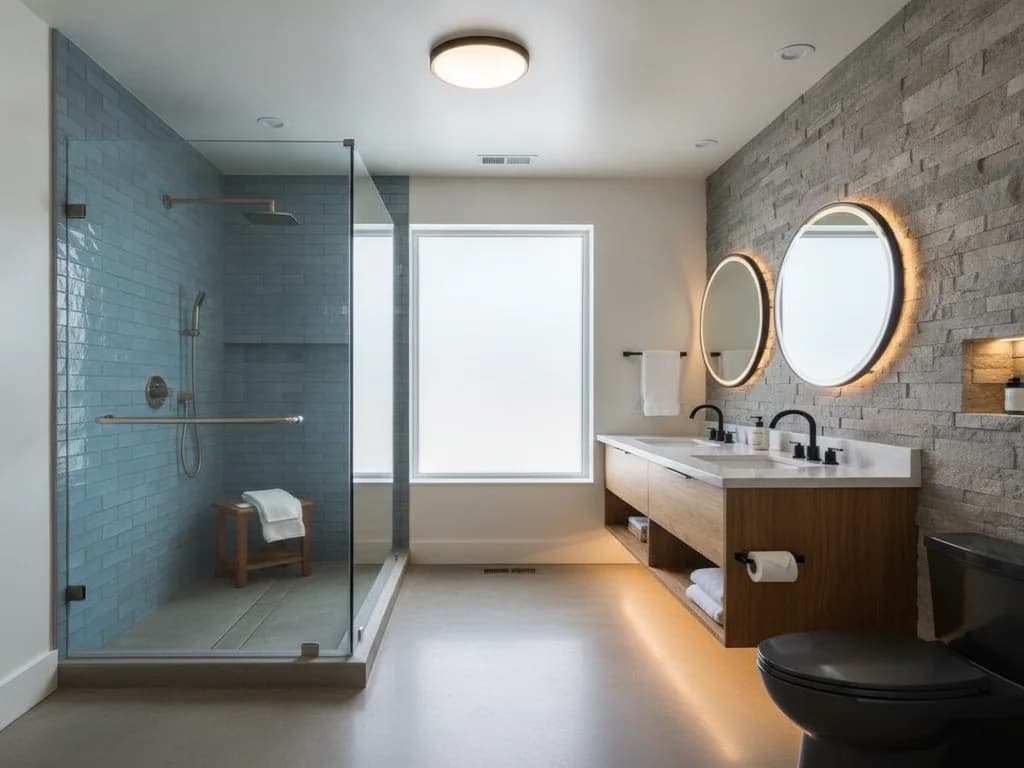
11. Layered lighting. A single ceiling fixture throws shadows that hide puddles and the edge of a step. Combining overhead, vanity, and shower lighting flattens those shadows so wet floors and thresholds are visible. *Protects: everyone, especially older eyes.*
12. Night lighting and motion-activated path lights. The 2 a.m. trip to the bathroom is a classic fall scenario. A low-level night light or motion-activated toe-kick light gives just enough glow to navigate without fully waking — and without groping for a switch. *Protects: everyone, especially seniors and kids.*
13. Glare and shadow control. Position lighting and choose finishes that reduce harsh glare off wet tile and glass, which can momentarily blind and hide hazards. Even, diffuse light is safer than a single bright point. *Protects: everyone.*
What features prevent falls and impact injuries?
When a slip becomes a fall, the difference between a scare and an ER visit is often whether there was something solid to grab and nothing sharp to hit.
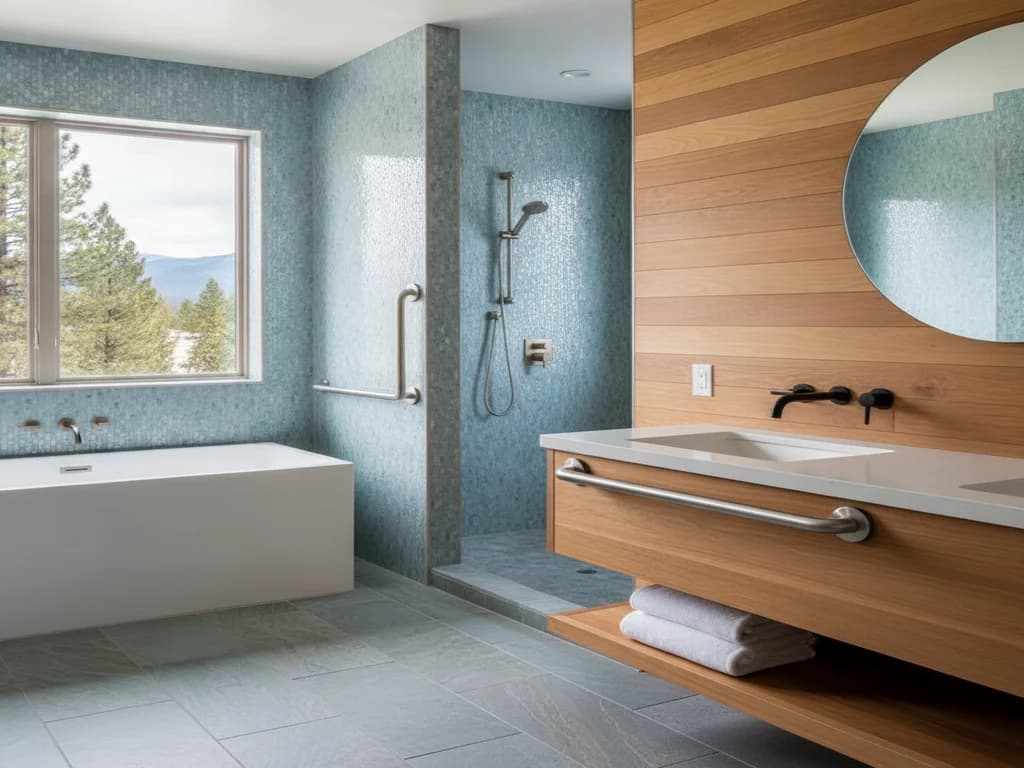
14. Grab bars on solid blocking. Grab bars are only as strong as what they are screwed into. They must anchor to solid in-wall blocking (added during the remodel) — not just drywall and plastic anchors, which can rip out under load. ADA.gov publishes placement and reach guidance that informs where functional bars go: beside the toilet and at the shower entry and seat. Even if you are not installing bars today, designing for aging in place starts with putting the blocking in the walls now. *Protects: everyone who might lose balance.*
15. A secure shower seat. A built-in or solidly mounted shower bench gives a safe place to sit to wash, shave legs, or steady yourself — useful for a pregnant household member, someone recovering from surgery, or an older adult. A wobbly plastic stool is not the same thing. *Protects: everyone.*
16. Rounded or softened counter and edge profiles. Sharp stone corners at child-head height, or at the height you would strike in a fall, turn a minor stumble into a laceration. Eased edges and rounded profiles reduce impact injuries. *Protects: kids especially, everyone generally.*
17. Reach-free, accessible storage. Storing daily items within easy reach removes the temptation to climb on the tub edge or stretch over the toilet for a towel. Drawers, niches, and reachable shelving keep feet on the floor. *Protects: everyone, especially kids and seniors.*
Plan the blocking even if the bars come later
In-wall blocking is cheap while the walls are open and expensive to add afterward. The single smartest safety move in any remodel is to install solid blocking around the toilet, shower, and tub now — so a grab bar can go exactly where it is needed, exactly when it is needed.
How do you make a bathroom safe for young children?
Small children face their own set of hazards — drowning in standing water, getting into medications, and pinching or scalding little fingers.
18. Toilet locks and no standing water. A toddler can drown in inches of water. A toilet-lid lock and a habit of never leaving water standing in a tub or bucket are simple, life-saving steps. *Protects: infants and toddlers.*
19. Cabinet and medication latches. Cleaning products and medications belong behind child-proof latches or up high — never under the sink within reach. *Protects: young children.*
20. Faucet covers and tempered water. A soft spout cover protects heads in the tub, and the anti-scald valve and lowered water-heater setting from earlier protect little hands at the faucet. *Protects: infants and toddlers.*
Ready to build safety in from the start?
The least expensive time to add every feature on this list is during a remodel, while the walls are open and the plumbing is exposed. Retrofitting blocking, moving outlets, or swapping a valve later costs far more. If you are planning a project, the safety features above can be designed in so the finished room looks like any other beautiful bathroom.
Talk through a safer bathroom
We can request a free, no-pressure safety assessment and show you how curbless entries, blocking, anti-scald valves, and layered lighting fit your space — without it looking clinical.
What Boise-specific factors affect bathroom safety?
A few Treasure Valley realities deserve attention. First, our moderately hard water leaves a mineral film on tile, tub floors, and glass that can make an otherwise grippy surface slick — a hidden slip factor that worsens over time and another reason to favor textured, easy-to-clean surfaces.
Second, many older Boise homes — particularly in the North End and the Bench — predate modern GFCI requirements, so their bathrooms may have ungrounded or unprotected outlets. A remodel is the moment to bring that wiring up to current code. The same is true of plenty of mid-century homes across Meridian and Nampa.
Third, our dry winters bring out-of-town family for the holidays — often older relatives staying in a guest bathroom that was never set up for them. A low threshold, a grab bar on real blocking, and a night light make a guest bath far safer for visitors who do not know the layout in the dark.
A whole-family bathroom safety checklist
Use this recap to scan all 20 features by the hazard they address and who they protect most. Where waterproofing and moisture failures are the underlying issue — soft floors, hidden leaks — see where waterproofing failures start, and for the cost of building these features in, see what a Boise bathroom remodel costs.
| Feature | Hazard addressed | Who it protects most |
|---|---|---|
| Slip-rated floor tile | Slips | Everyone |
| Textured shower floor | Slips | Everyone |
| Low / curbless entry | Slips & falls | Mobility-limited, all ages |
| Permanent traction | Slips | Kids, everyone |
| Anti-scald valve | Scalds | Kids & seniors |
| Safe water-heater temp | Scalds | Everyone |
| Single-lever / touchless faucet | Scalds | Kids, seniors, limited grip |
| GFCI outlets | Shock | Everyone |
| Smart fixture placement | Shock | Everyone |
| Damp/wet-rated fixtures | Shock | Everyone |
| Layered lighting | Slips & falls | Older eyes, everyone |
| Night / motion lighting | Falls | Seniors & kids |
| Grab bars on blocking | Falls | Everyone at risk of a fall |
| Secure shower seat | Falls | Everyone |
| Rounded counter edges | Impact | Kids especially |
| Reach-free storage | Falls | Kids & seniors |
| Toilet locks / no standing water | Drowning | Infants & toddlers |
| Cabinet & medication latches | Poisoning | Young children |
| Faucet covers | Scalds & impact | Infants & toddlers |
Features and audiences are general best-practice guidance, not a substitute for code review or a professional assessment.
Ready to plan your Boise bathroom?
Licensed & insured · 3-year workmanship warranty
Frequently asked questions
- What are the most important bathroom safety features?
- The highest-impact features address the four main hazards: slip-resistant floors and a low or curbless entry (slips), an anti-scald pressure-balancing valve (scalds), GFCI outlets (shock), and grab bars on solid blocking plus good lighting (falls). Together they protect children and older adults alike.
- What is an anti-scald valve and do I need one?
- An anti-scald valve — a pressure-balancing or thermostatic mixing valve — keeps shower water from suddenly spiking hot when another fixture runs, and caps the maximum temperature. Modern shower valves are widely required to include this feature, and it is one of the cheapest, most worthwhile safety upgrades for any family.
- Where are GFCI outlets required in a bathroom?
- The residential code (IRC) requires ground-fault (GFCI) protection for bathroom receptacles, and any outlet near the sink, tub, or shower should be protected. GFCI outlets cut power in milliseconds if current strays, so they are essential anywhere water and electricity share the room.
- Do grab bars need special wall reinforcement?
- Yes. Grab bars must anchor to solid in-wall blocking, not just drywall with plastic anchors, which can pull out under load. The best practice is to install blocking around the toilet, tub, and shower during the remodel — even if the visible bars come later — so they can be placed exactly where needed.
- How do I make a bathroom safe for both kids and elderly relatives?
- Use universal-design features that protect everyone: slip-resistant floors, a low or curbless entry, an anti-scald valve, layered and night lighting, and grab bars on solid blocking. Add child-specific safeguards like toilet locks, cabinet latches, and never leaving standing water. Most of these look like a normal, attractive bathroom.
- What is the safest bathroom flooring to prevent slips?
- Favor matte or textured surfaces with higher traction over glossy, polished tile, which gets slick when wet. Smaller tiles with more grout lines also add grip underfoot in the shower. For a full comparison of materials and slip ratings, see our bathroom flooring guide.
Sources
- CDC — older adult falls and injury data
- ADA.gov — 2010 ADA Standards for Accessible Design (grab bars)
- International Code Council — International Residential Code (IRC)
Claims and figures are drawn from the sources above and provided for general guidance; your project may vary. Photography is illustrative of design concepts. For a fixed price on your specific bathroom, request a free estimate.