Updated July 16, 2026 · 7 min read
By Boise Bath — bathroom & shower remodeling in Boise & the Treasure Valley
The short answer
You can replace a towel bar with a grab bar, but never in the same holes. Towel bars hang on drywall anchors; ADA-grade grab bars must withstand 250 pounds of force, per the U.S. Access Board — which means mounting into studs, solid wood blocking, or engineered rated anchors. The hardware swap is easy; the anchoring is the real project.
Key takeaways
- A towel bar is decorative hardware; it is not designed or anchored to catch a falling adult, and grabbing one in a fall usually rips it out of the wall.
- The ADA standard for grab bars requires them to resist 250 pounds of force, per the U.S. Access Board — a spec towel-bar mounting can never meet.
- Falls are the leading cause of injury among adults 65 and older, and more than one in four older adults falls each year, per the CDC — the bathroom is a common site.
- A safe installation lands every mounting flange on a stud, on solid wood blocking inside the wall, or on an engineered grab-bar anchor rated for the load.
- Modern grab bars come in the same finishes and profiles as towel bars — some double as towel bars — so the swap no longer has to look institutional.
- A remodel is the cheapest moment to add blocking, because the walls are already open.
Why a towel bar can never stand in for a grab bar
On the wall, a nice towel bar and a designer grab bar can be hard to tell apart. Inside the wall, they are different categories of hardware. A towel bar is held by small screws into plastic drywall anchors or, at best, one stud — enough for damp towels and nothing more. Its job is decorative.
A grab bar has one job: to hold a person’s full weight, suddenly, at a bad angle. The ADA accessibility standard requires grab bars and their mounting to resist a 250-pound point load, per the U.S. Access Board. Drywall alone holds a small fraction of that before the anchor tears through the gypsum.
That gap is exactly where injuries happen. A towel bar next to the tub becomes the thing a person grabs on the way down — and it fails at the worst possible moment, often adding a wall injury to the fall. If anyone in the house instinctively steadies themselves on the towel bar today, that is the clearest signal the swap is overdue.
The stakes: what bathroom falls actually cost
Falls are the leading cause of injury among adults 65 and older, and more than one in four older adults falls each year, per the CDC. Bathrooms concentrate the risk factors — hard surfaces, water, slick tile, and movements like stepping over a tub wall that momentarily put you on one foot.
The CDC’s fall-prevention guidance names grab bars in and around the tub, shower, and toilet as a core home modification, alongside better lighting and removing trip hazards. AARP’s HomeFit program makes the same recommendation for anyone planning to stay in their home long-term — not just for people with a diagnosis.
The practical takeaway: grab bars are not equipment for the frail. They are the bathroom equivalent of a stair handrail — unremarkable until the day they earn their keep.
What is behind your towel bar right now?
Most Treasure Valley bathrooms — from 1990s garden-tub homes to 2000s builder-grade — hung towel bars wherever they looked balanced on the wall, with zero regard for stud locations. That means the odds your existing towel bar happens to sit on solid backing are poor.
Three kinds of backing can legitimately carry a grab bar. Wall studs are the classic answer, but they sit 16 inches apart on center and rarely line up with where a bar needs to go. Solid wood blocking — a length of lumber fastened between studs inside the wall — is the gold standard, because it lets the bar land anywhere along its span. And engineered grab-bar anchors, rated by their manufacturers for ADA-level loads, can secure a flange in tile or drywall where no wood exists.
A contractor verifies what is actually back there before promising anything — with a stud finder, a small exploratory opening, or by working from an adjacent room. Guessing is not a method when the fastener has to hold 250 pounds.
| Typical towel bar | Code-grade grab bar | |
|---|---|---|
| Design load | Wet towels | 250 lb of force, per the U.S. Access Board |
| Mounting | Plastic drywall anchors | Studs, wood blocking, or rated anchors |
| Flange fasteners | Two small screws | Multiple structural screws per flange |
| Diameter & grip | Any decorative profile | 1¼–2 in. graspable bar, set off the wall |
| Failure mode | Pulls out under body weight | Engineered not to |
Do you have to open the wall?
Sometimes, and it is worth knowing when. If a stud lands where the bar needs to be, the flange screws go straight into wood and the wall stays closed. If not, the choice is between engineered anchors and adding blocking.
Rated grab-bar anchors are a legitimate solution in drywall and even tile, and a careful installer uses them regularly — but they are only as good as the wall material they bite into, and product load ratings must be matched to the situation rather than assumed. On a crumbly plaster wall or water-softened drywall, no anchor saves the installation.
Blocking is the more invasive but more permanent answer: open a section of wall, fasten solid lumber between the studs at grab-bar height, close it up, and patch. In a tiled tub or shower surround, that patch means tile work too — one reason the smart money installs blocking during a remodel, when the walls are already open and the cost of adding it is nearly zero. If your bathroom wall needs repair anyway, the projects pair naturally — see replacing bathroom drywall.
Remodeling? Block every wall, even if you skip the bars
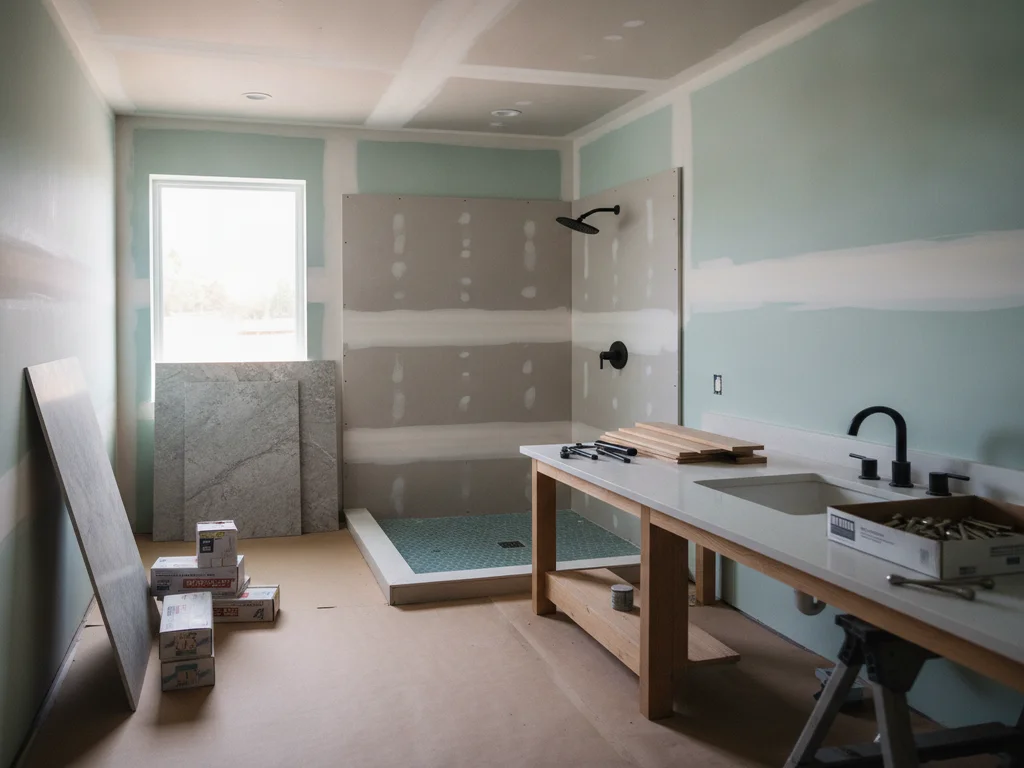
The cheapest grab bar you will ever install is the blocking you add while the walls are open — whether or not a bar goes up now. Blocking the tub, shower, and toilet walls during a remodel costs a few boards and minutes, and it means any future bar is a 20-minute job instead of a wall-opening project.
Grab bars stopped looking institutional years ago
The biggest objection to this swap used to be aesthetic — nobody wanted a hospital rail in a bathroom they had just remodeled. That objection is out of date. Major fixture lines now make grab bars in the same finishes and profiles as their towel bars and shower trim: matte black, brushed nickel, champagne bronze, clean square or round posts.
Some products are designed as dual-purpose — a rated grab bar that is shaped and positioned to hold towels, or a shelf with an integrated grab rail. Those let a small bathroom keep its towel storage while gaining real support, as long as the mounting behind them meets the grab-bar standard, not the towel-bar one.
If the swap is part of a broader rethink of the room, it rarely travels alone — curbless entries, better lighting, and lever hardware usually make sense in the same pass. Our overview of bathroom safety features and aging-in-place bathroom ideas covers how the pieces fit together.
Where should the bars go?
Location matters as much as anchoring — a bar in the wrong spot does not get used, and height and position rules exist for a reason. As a starting point, think in terms of the three movements that cause bathroom falls: entering and exiting the shower or tub, standing in it, and getting on and off the toilet.
The specifics — heights, lengths, horizontal versus vertical orientation, and the toilet-side layout — are their own topic, and we keep them in one place: our grab bar placement guide walks through each location with the measurements. For the underlying clearance and reach standards, see the bathroom ADA dimensions reference.
One placement note that belongs here because it changes the anchoring plan: bars inside a tiled shower need their backing decided before the tile goes on. Retrofitting into an existing tiled wall is possible, but drilling tile and hitting blocking that may not exist is exactly the situation a pre-planned remodel avoids.
What the process looks like
- 1
Map the locations and the users
The installer works out where support is actually needed — shower entry, inside the wet area, at the toilet — based on who uses the bathroom and how, drawing on placement standards rather than symmetry with the old towel bar.
- 2
Remove the towel bar and read the wall
The old bar comes off, the anchor holes reveal what it was mounted to, and a stud finder or exploratory check establishes what solid backing exists at the planned bar locations.
- 3
Choose the anchoring strategy
Each mounting flange is assigned to a stud, to new wood blocking, or to an engineered anchor rated for the load — decided per location, never assumed. Weak or water-damaged wall material gets repaired first.
- 4
Add blocking where the wall needs it
Where no wood lands under a flange and anchors are not appropriate, a section of wall is opened, solid lumber is fastened between the studs at bar height, and the wall is closed and patched — including tile repair in a surround.
- 5
Mount the bars
Bars sized and oriented per the placement plan are fastened with structural screws into the backing, with every flange fully supported — no flange left riding on drywall alone.
- 6
Load-test and finish
Each installed bar is pulled hard — deliberately, at an angle — before it is trusted. Old towel-bar holes are patched and painted, and towel storage is relocated or replaced with a rated dual-purpose bar.
Ready to plan your Boise bathroom?
Licensed & insured · 3-year workmanship warranty
Frequently asked questions
- Can I use a towel bar as a grab bar if it feels sturdy?
- No. "Feels sturdy" is a test of the anchor under a few pounds of steady pull — a fall applies hundreds of pounds instantly at an angle. The ADA standard requires grab bars to resist 250 pounds of force, per the U.S. Access Board, and towel-bar hardware and drywall anchors are not built or mounted to that spec. If it might ever be grabbed, it must be a real grab bar on real backing.
- Can a grab bar be installed where there are no studs?
- Yes, two ways. Engineered grab-bar anchors are rated by their manufacturers for grab-bar loads in drywall or tile and are a legitimate retrofit solution on sound walls. The more permanent answer is wood blocking — opening the wall and fastening lumber between the studs — which allows the bar to be positioned exactly where it should go rather than where the framing happens to be.
- Do grab bars have to look institutional?
- Not anymore. Major fixture manufacturers make grab bars in the same finishes as their towel bars and faucets — matte black, brushed nickel, bronze — with clean contemporary profiles. Some are designed as dual-purpose towel bars or shelves with rated support built in. Visitors generally cannot tell a well-chosen grab bar from the rest of the hardware.
- Where exactly should grab bars be placed?
- The three high-value zones are the shower or tub entry, inside the wet area, and beside the toilet — the places where balance is briefly compromised. Heights, bar lengths, and orientation have real standards behind them, and getting them wrong makes bars go unused. Our grab bar placement guide covers the measurements location by location.
- Is replacing a towel bar with a grab bar worth it if nobody in the house has mobility issues?
- Falls are the leading cause of injury among adults 65 and older, and more than one in four older adults falls each year, per the CDC — and most falls happen to people who did not consider themselves at risk the day before. A grab bar is like a stair handrail: cheap, invisible in daily life, and valuable to every age on a wet tile floor.
- Should grab bars go in during a bathroom remodel or after?
- During, whenever possible. With walls open, blocking costs almost nothing and can be placed exactly where bars belong — including inside the future tile surround, where retrofitting later is hardest. Even if you skip the bars themselves for now, blocking every wet-area wall during a remodel makes any future installation trivial.
Sources
- U.S. Access Board — ADA Accessibility Standards
- CDC — Older Adult Fall Prevention
- ADA.gov — U.S. Department of Justice
- AARP — Livable Communities / HomeFit
Claims and figures are drawn from the sources above and provided for general guidance; your project may vary. Photography is illustrative of design concepts. For a fixed price on your specific bathroom, request a free estimate.