Updated July 6, 2026 · 8 min read
By Boise Bath — bathroom & shower remodeling in Boise & the Treasure Valley
The short answer
Universal design is designing products and environments usable by all people, without adaptation. Developed in 1997 by a team led by Ronald Mace at NC State's Center for Universal Design, it is defined by 7 published principles. Unlike ADA compliance, it is not a legal code — it is a philosophy that produces spaces which happen to be accessible.
Key takeaways
- Universal design was defined by the Center for Universal Design, founded in 1989 at NC State by Ronald L. Mace, and formalized into 7 principles in 1997 by a multidisciplinary working group.
- The 7 Principles cover equitable use, flexibility in use, simple and intuitive use, perceptible information, tolerance for error, low physical effort, and appropriate size and space for approach and use.
- Universal design is a design philosophy, not a law — the Center itself notes the principles "address only universally usable design," while a full design also weighs cost, materials, and aesthetics.
- ADA sets legally required minimum dimensions for public buildings; universal design is a broader, voluntary approach to usability that a private home is never required to follow but often benefits from.
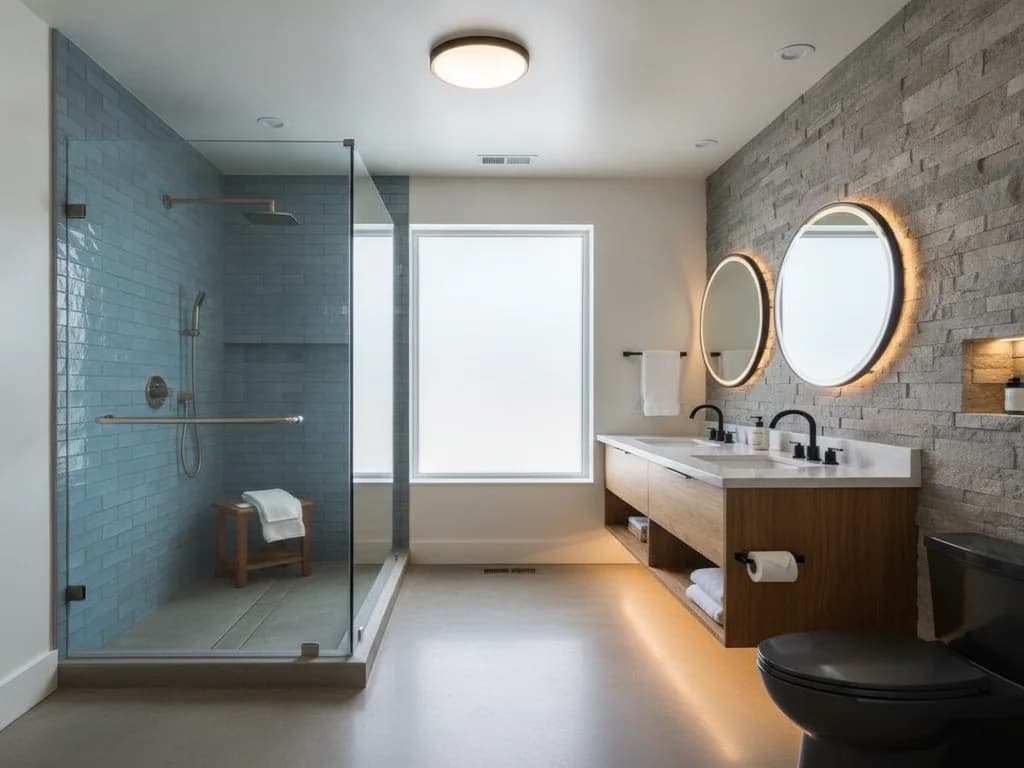
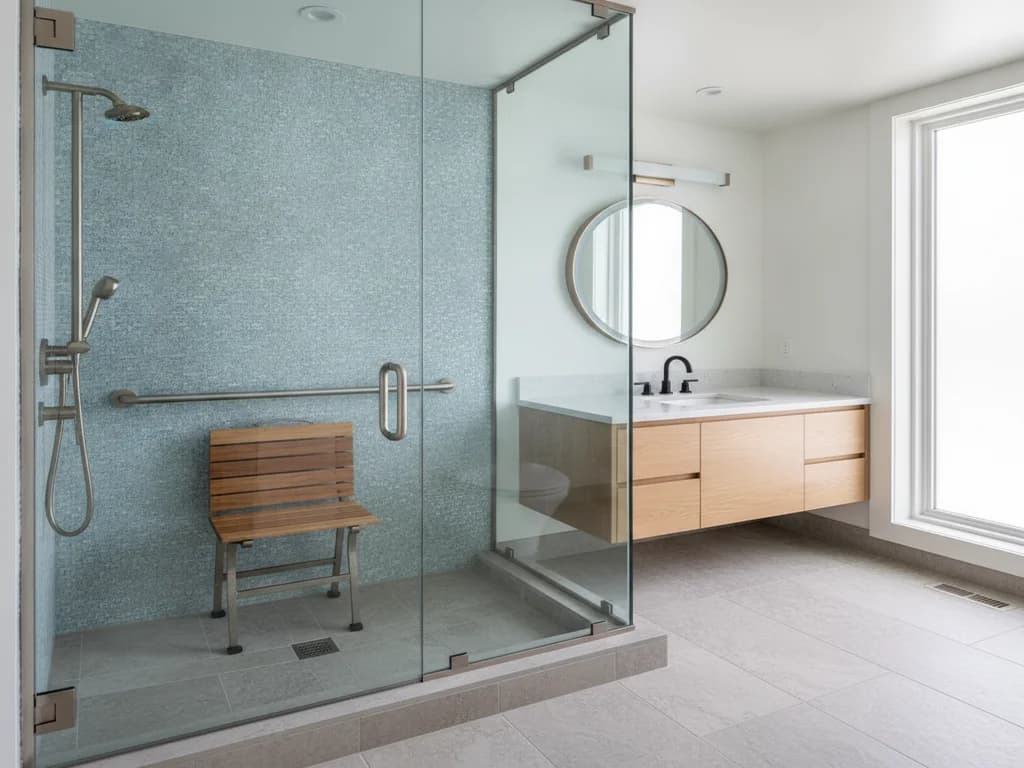
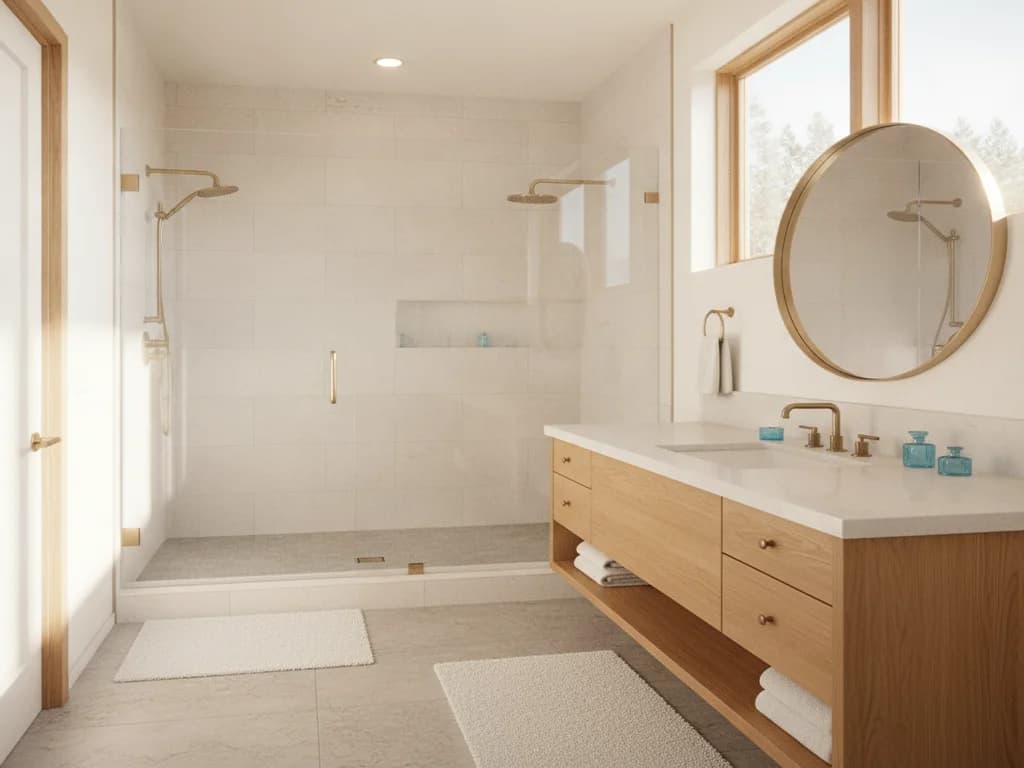
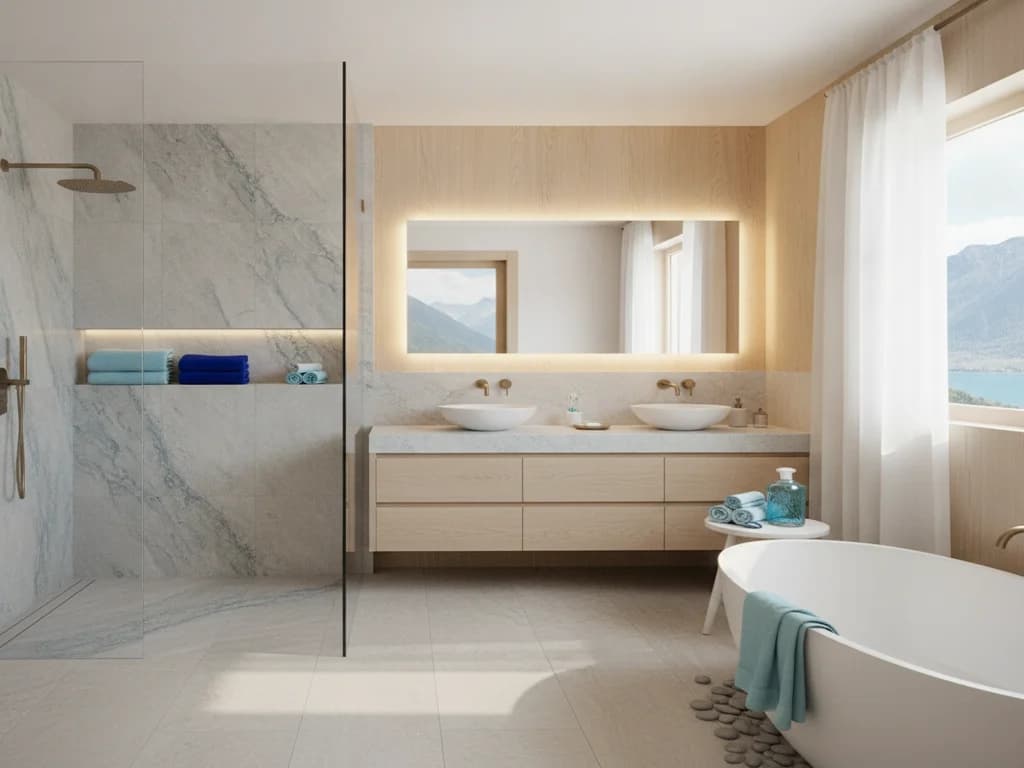
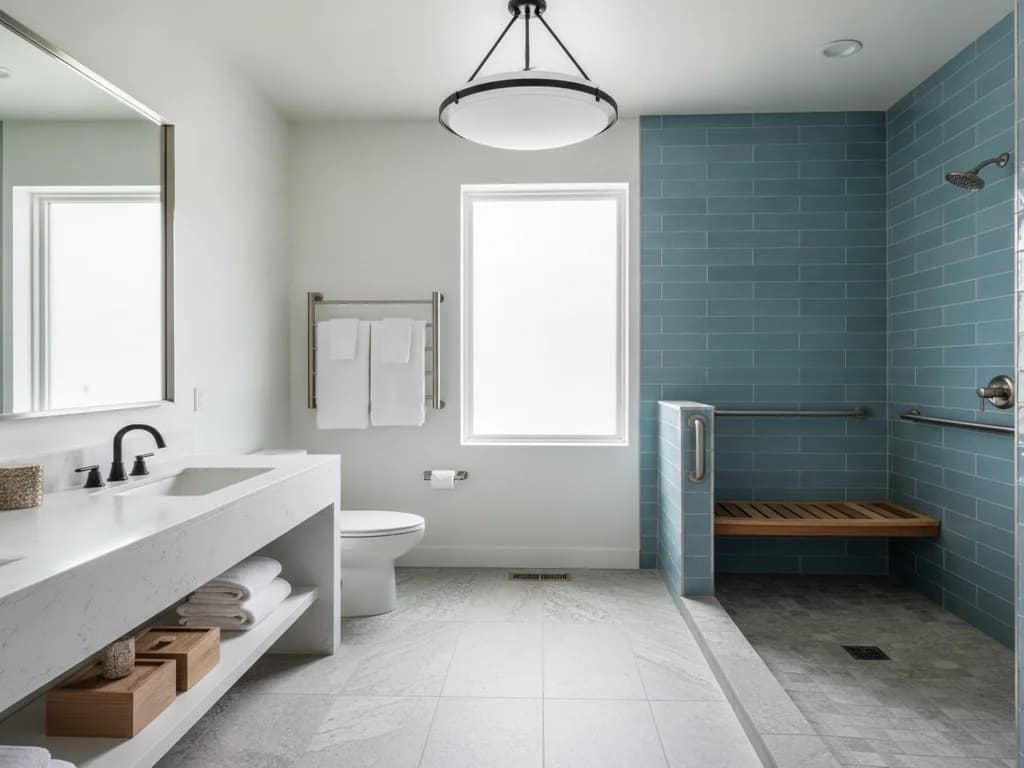
- Applied well, universal design reads as simply good design — a curbless shower or comfort-height toilet does not have to look like adaptive equipment to work like one.
Where universal design came from
Universal design has a specific origin, not a vague one. The Center for Universal Design was established in 1989 at the NC State University College of Design, founded by architect Ronald L. Mace, initially operating under a federal grant as the "Center for Accessible Housing." Mace, who used a wheelchair himself, pushed the center's mission beyond housing for people with disabilities toward something broader: improving the built environment for everyone.
That broader mission crystallized in 1997, when a working group at the Center — architects, product designers, engineers, and environmental design researchers, working under Mace's leadership — published the 7 Principles of Universal Design. The Center's own definition, unchanged since, describes universal design as "the design of products and environments to be usable by all people, to the greatest extent possible, without the need for adaptation or specialized design."
The one-line version
Universal design means designing for everyone from the start, so no one needs a special, separate, or retrofitted version of the space. It is a design standard, not a legal one.
The 7 Principles of Universal Design
Each principle addresses a different way a space or product can fail someone — and, done well, succeed for everyone. In a bathroom, nearly every accessible feature traces back to one of these seven.
| Principle | Definition (Center for Universal Design) | Bathroom example |
|---|---|---|
| 1. Equitable Use | The design is useful and marketable to people with diverse abilities. | A curbless shower entry usable by any body, any age, without a separate "accessible" version |
| 2. Flexibility in Use | The design accommodates a wide range of individual preferences and abilities. | A handheld shower head on a slide bar usable standing, seated, or by a caregiver |
| 3. Simple and Intuitive Use | Use is easy to understand regardless of experience, knowledge, or language. | Lever faucet handles that need no instructions and work with a closed fist |
| 4. Perceptible Information | Necessary information is communicated effectively regardless of ambient conditions or sensory ability. | High-contrast tile at a shower threshold, easy to see even with low vision |
| 5. Tolerance for Error | The design minimizes hazards from accidental or unintended actions. | Anti-scald valves and slip-resistant flooring that reduce the cost of a misstep |
| 6. Low Physical Effort | The design can be used efficiently and comfortably with minimal fatigue. | A comfort-height toilet that reduces knee and hip strain to sit and stand |
| 7. Size and Space for Approach and Use | Appropriate size and space is provided regardless of body size, posture, or mobility. | A roll-under vanity and a 60-inch turning clearance in the floor plan |
How universal design differs from ADA compliance
This is the distinction most homeowners miss: the ADA is a civil-rights law that sets required minimum dimensions and clearances for public and commercial buildings — grab bar height, turning-circle diameter, toilet seat height. Universal design is not a law at all. The Center for Universal Design is direct about the scope of its own work, stating that "the Principles of Universal Design address only universally usable design, while the practice of design involves more than consideration for usability," and that a complete design also has to account for "economic, engineering, cultural, gender, and environmental concerns" alongside pure usability.
In practice, that means ADA gives you an enforceable number (a grab bar at a certain height, in a public restroom), while universal design gives you a way of thinking about a space that produces good outcomes even where no number is mandated — like a private home, which ADA does not govern at all. A remodel can borrow ADA's specific dimensions as reasonable, tested targets (they exist for good reasons) while still being driven by universal-design thinking rather than compliance thinking.
Why this distinction matters for a remodel
Designing "to code" and designing "for everyone who will use this room, at every stage of life" are different exercises. The first produces a bathroom that passes inspection. The second produces one that still works in twenty years.
Why universal design reads as good design, not medical design
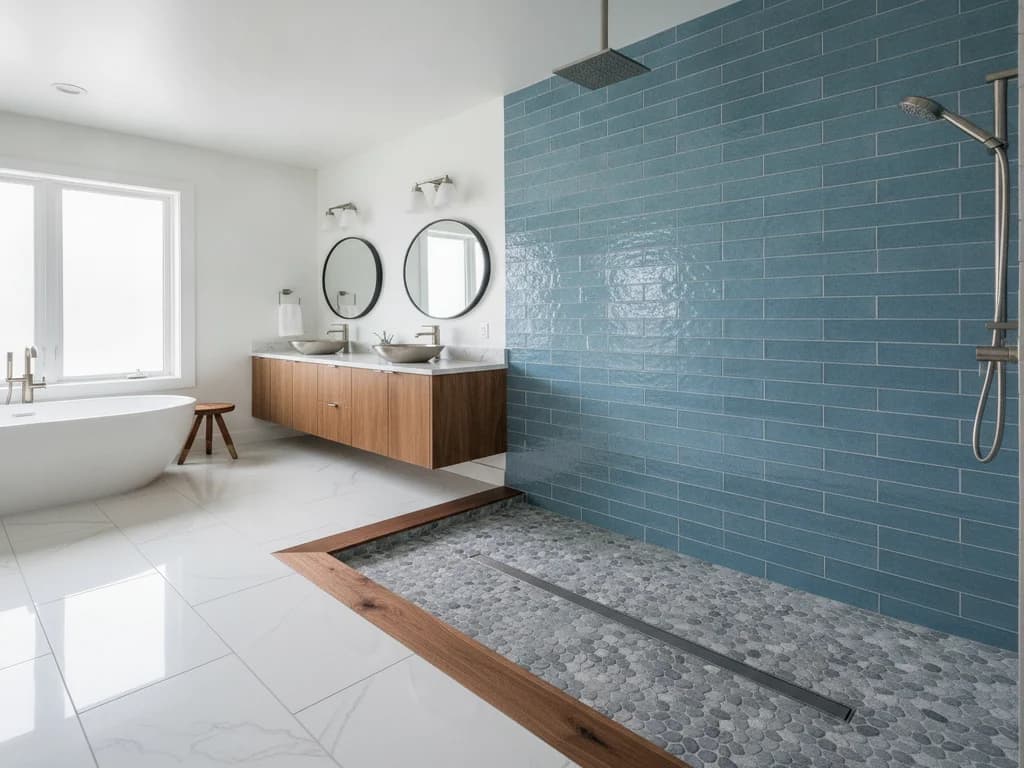
The Principles never mention grab bars, ramps, or any specific fixture — they describe outcomes (equitable, flexible, simple, perceptible, error-tolerant, low-effort, appropriately sized), not a parts list. That is precisely why a universal-design bathroom does not have to look institutional: the principles are agnostic about how you achieve the outcome, only that you achieve it.
A decorative grab bar finished to match the faucet hardware satisfies "Tolerance for Error" exactly as well as a stainless institutional rail — the principle does not care about the finish. A curbless shower with book-matched tile satisfies "Size and Space for Approach and Use" exactly as well as a bare, sloped concrete pan. Universal design principles are a test a finished space either passes or does not; they impose no particular aesthetic on how it passes.
Bringing universal design into a bathroom remodel
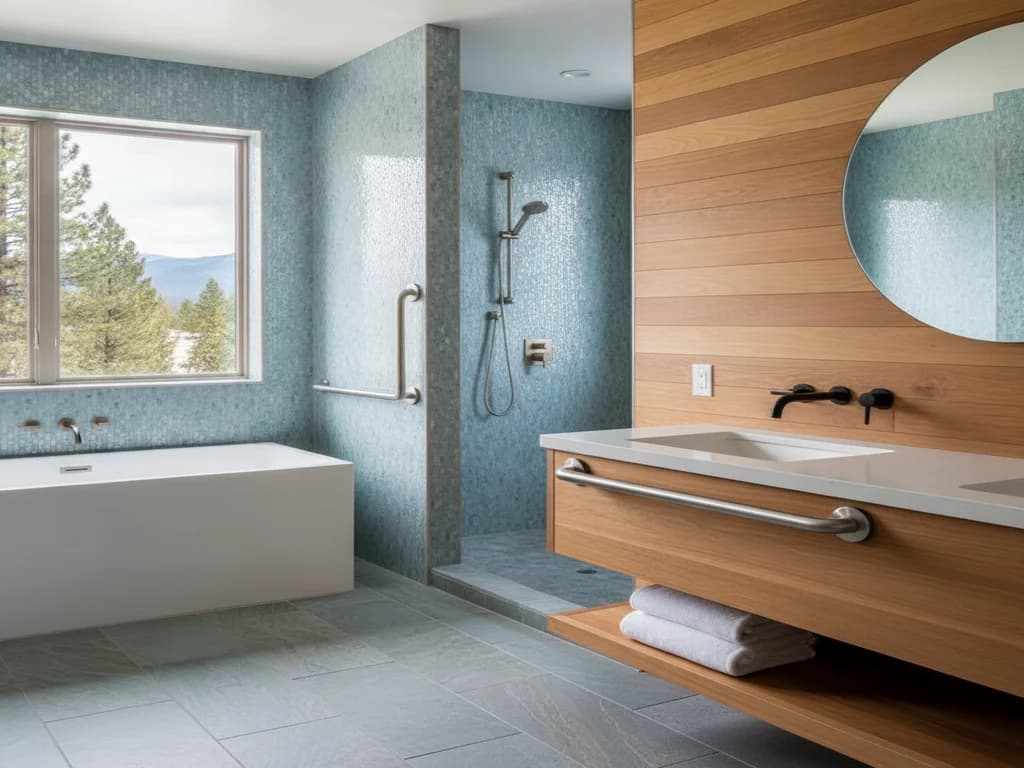
The most useful way to apply these principles to a real remodel is to run each planned feature through the question each principle asks: Who might this exclude? Where could a mistake become a fall? What does this ask of someone with limited grip, limited reach, or limited balance? A curbless shower, a comfort-height toilet, lever hardware, a linear drain, and solid in-wall blocking for future grab bars all come out of asking those questions honestly during planning, not after an incident forces the issue.
It also changes when these decisions get made. Retrofitting a curbless entry or adding in-wall blocking after a wall is already closed up costs far more than building it in during a planned remodel — so the practical version of universal design is mostly a sequencing discipline: ask the 7 questions while the walls are still open, not after a fall or a diagnosis forces the issue.
Our aging-in-place bathroom ideas guide translates these same 7 principles into 19 specific bathroom features with ADA-aware dimensions to plan around — it is the practical follow-up to this article's theory. When you are ready to apply universal design to your own bathroom, see how we build accessible bathrooms or explore our aging-in-place bathroom services — both are built on this same design approach, not a retrofit checklist.
Ready to plan your Boise bathroom?
Licensed & insured · 3-year workmanship warranty
Frequently asked questions
- What are the 7 principles of universal design?
- Equitable Use, Flexibility in Use, Simple and Intuitive Use, Perceptible Information, Tolerance for Error, Low Physical Effort, and Size and Space for Approach and Use. They were published in 1997 by a working group led by Ronald Mace at NC State's Center for Universal Design, and each describes a usability outcome rather than a specific fixture or feature.
- What is the difference between universal design and ADA compliance?
- ADA is an enforceable civil-rights law setting required minimum dimensions for public and commercial buildings. Universal design is a voluntary design philosophy — the Center for Universal Design states its principles "address only universally usable design," not a legal code. A private home is never required to meet ADA standards, but can still be designed using universal-design thinking.
- Does a universal design bathroom have to look accessible or medical?
- No. The 7 Principles describe outcomes like ease of use and error tolerance, not specific products, so they can be satisfied with decorative, high-end fixtures just as well as institutional-looking ones. A curbless shower with quality tile and a grab bar finished to match the faucet hardware meets the same principles as a bare accessible stall — the design choices are independent of the underlying usability.
Sources
- NC State University College of Design — Center for Universal Design
- Centre for Excellence in Universal Design — The 7 Principles of Universal Design
Claims and figures are drawn from the sources above and provided for general guidance; your project may vary. Photography is illustrative of design concepts. For a fixed price on your specific bathroom, request a free estimate.