Updated July 16, 2026 · 7 min read
By Boise Bath — bathroom & shower remodeling in Boise & the Treasure Valley
The short answer
Judge a walk-in tub on five features before any jets: door swing (outward is easier for caregivers and emergencies, inward saves space), a seat at roughly 17 inches, fast fill and drain — you sit through both, so a two-to-three-minute power drain matters — a low threshold, and safety certifications like UL/ETL listing plus anti-scald valves.
Key takeaways
- You sit in the tub while it fills and drains — fill and drain speed shape the daily experience more than any therapy feature.
- Door swing is the first fork: outward doors open even with a person slumped against them and suit caregiving; inward doors save bathroom space but can be blocked in an emergency.
- Seat height around 17 inches — chair height, echoing ADA-range seat standards — is what makes sitting and standing easy; low or narrow seats defeat the tub's purpose.
- Certifications are the honesty filter: UL or ETL listing on electrical components and an anti-scald mixing valve are non-negotiable; "certified" claims without a listed mark are marketing.
- The door seal is the single failure point that matters most — ask specifically how long the door seal is warrantied, not just "lifetime warranty" headlines.
- Your water heater is part of the purchase: a deep soaker can outrun a standard tank, leaving the tub half-warm unless capacity is checked first.
Start with how the tub is actually used
A walk-in tub inverts the normal bathing sequence: you step in through a door, sit on a built-in seat, close and latch the door, and only then fill the tub — and at the end you sit while it fully drains before the door can open. Every feature on the checklist matters because of that sequence. A slow drain is not a spec-sheet footnote; it is you, wet and cooling, waiting several minutes every single bath.
That is also why the marketing emphasis on jets and chromotherapy misleads. The features that decide daily satisfaction are mechanical and unglamorous: the door, the seat, the drain, and the valves. Get those right and the therapy extras are pleasant bonuses; get them wrong and no jet package rescues the experience.
One honest gate before the checklist: confirm a walk-in tub is the right tool at all. For many households a zero-threshold shower serves mobility needs better — our walk-in tub vs. walk-in shower comparison and the fuller walk-in tub pros and cons rundown are the decision-stage reads. This checklist assumes the tub has won that decision.
Door style: inward vs. outward swing
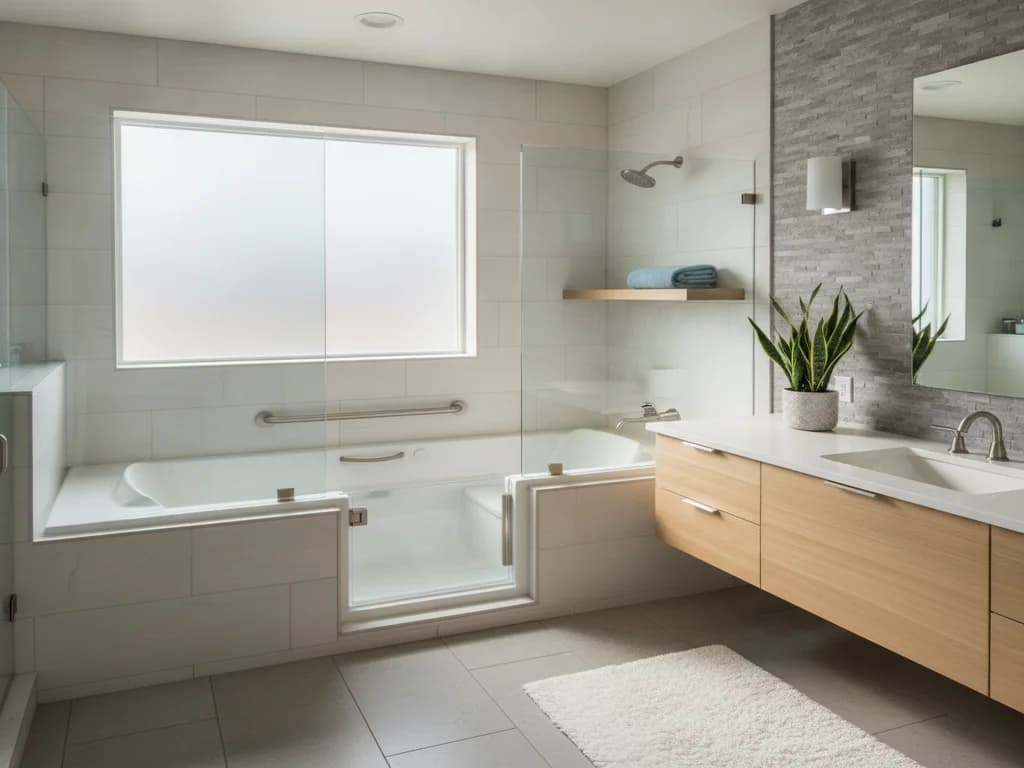
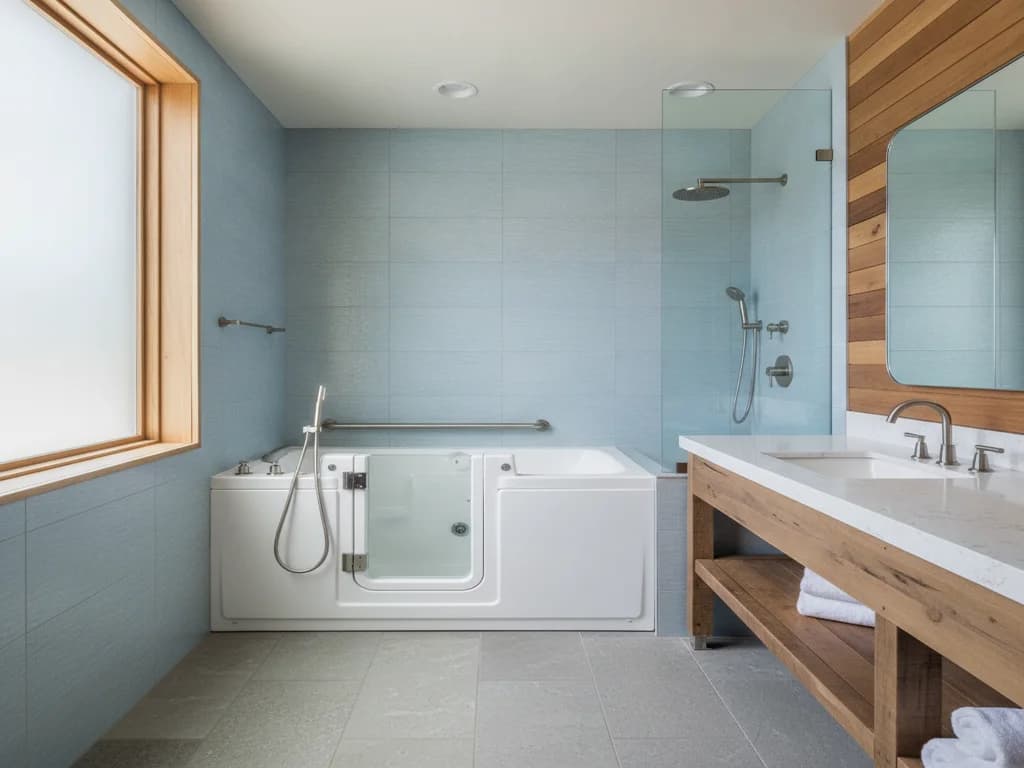
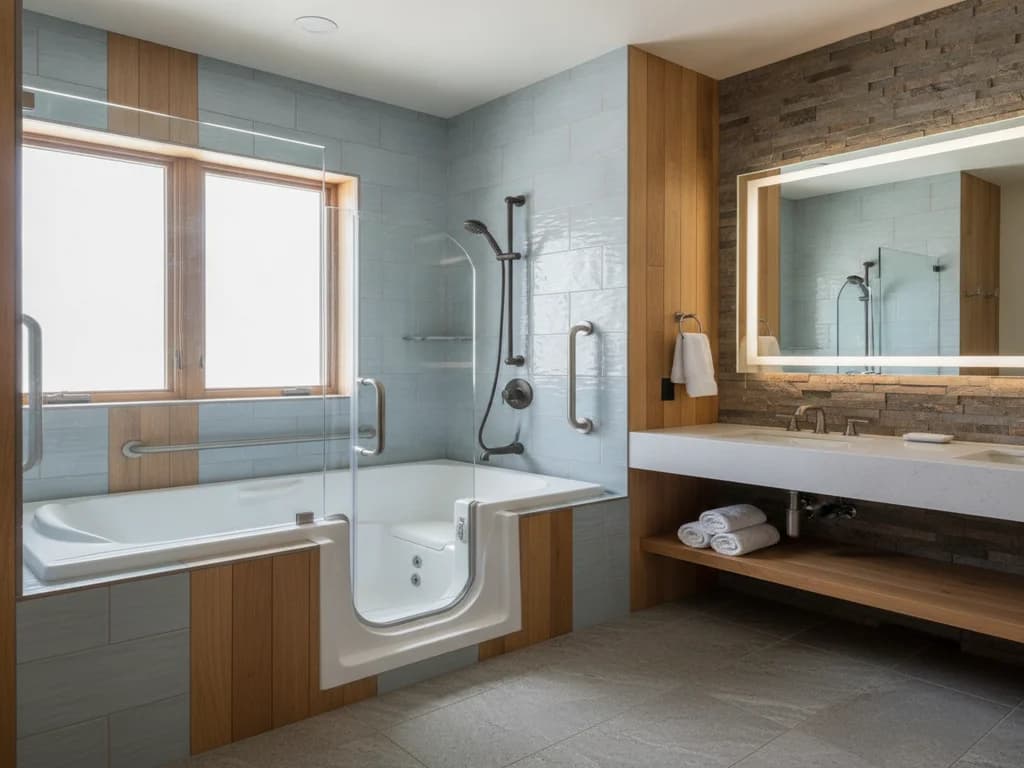
The door is the defining component, and its swing direction is a genuine trade-off. Inward-swinging doors are the common default: the water pressure helps press the door against its seal, and the door does not need clear floor space outside the tub. The liability is emergencies — if the bather faints or slips against an inward door, it cannot open with weight against it, and a caregiver cannot easily assist.
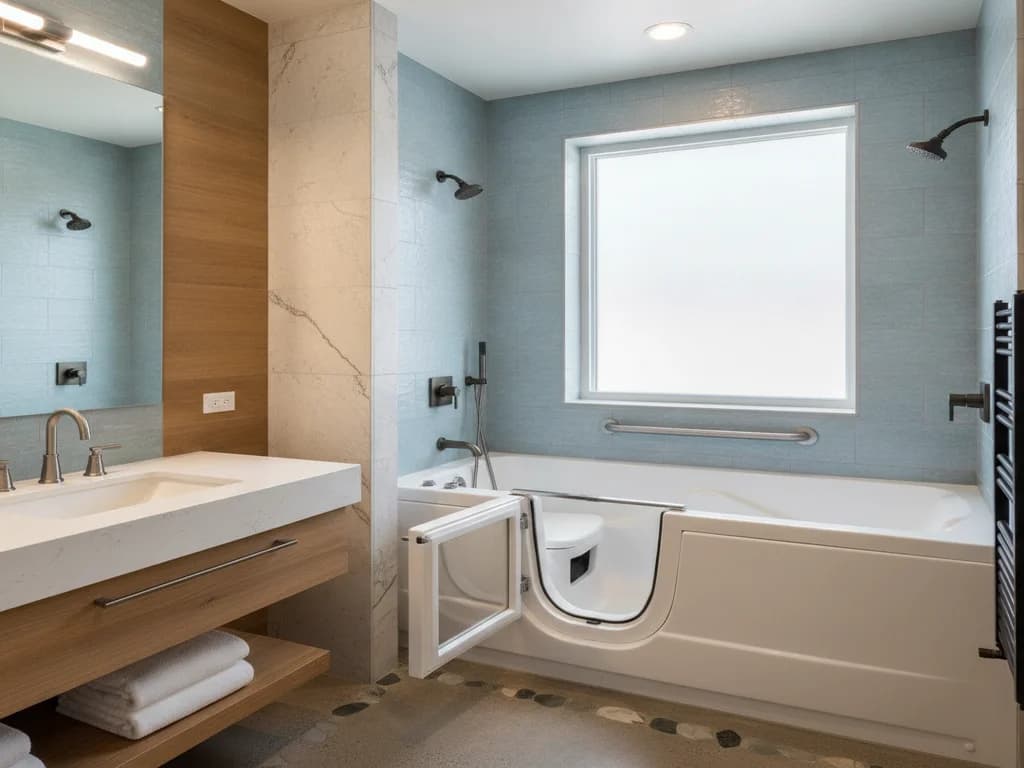
Outward-swinging doors open regardless of what is against them, make entry and exit less of a pivot-in-a-phone-booth maneuver, and are the standard recommendation when a caregiver is part of the picture or wheelchair transfer is involved. Their costs: they need clear swing space in the bathroom, and the seal works against water pressure, which raises the stakes on seal quality and warranty.
Match the door to the person and the room. A narrow bathroom may force an inward door; a caregiving household should fight for the outward swing. And in every case, check the door's latch: it should be operable with one arthritic hand, from the seated position, wet.
Seat height, size, and texture
The built-in seat is why walk-in tubs exist — bathing seated, at chair height, instead of lowering to the floor of a standard tub. Look for a seat around 17 inches high: that is ordinary chair height and sits inside the 17-to-19-inch range federal accessibility standards use for accessible seats, which is the range most people can sit down onto and rise from without straining knees or shoulders.
Height is necessary but not sufficient. The seat should be wide and deep enough for the actual bather to sit securely — compact tubs sometimes ship with narrow perches that feel precarious wet — and textured against slipping. Contoured seats and a textured tub floor work together; the CDC's fall-prevention research is blunt that bathrooms are a leading site of older-adult falls, and the seat is where this tub either solves that or does not.
Sit in the tub at a showroom if at all possible — dry-fitting the seat, the door reach, and the grab bar positions tells you more than any brochure. AARP's home-fit guidance makes the same point about all aging-in-place equipment: fit it to the person, not the average.
Fill and drain speed: the feature you feel every day
Because the door seals at floor level, you are in the tub for the entire fill and the entire drain. With an ordinary drain, emptying a deep soaker tub can take long enough for a wet bather to get genuinely cold; that wait is the most common complaint owners report. Fast-drain or power-drain systems pull that down to roughly two to three minutes, and they are worth prioritizing over nearly any comfort feature.
Fill speed matters for the same seated-and-waiting reason. High-flow tub fillers shorten the front end, and some models pair them with in-line heaters that maintain water temperature during long soaks — a meaningful comfort in a tub deep enough to cover your shoulders.
Ask two concrete questions of any model: fill time and drain time in minutes, at your home's water pressure, for that specific tub size. Vague answers here are a signal about the whole sales process.
Check your water heater before you buy
A deep walk-in tub can hold more hot water than a standard 40- or 50-gallon tank comfortably delivers, leaving the soak lukewarm from the start. Have the installer confirm your water heater's capacity and recovery against the tub's fill volume — upgrading the heater alongside the tub is common, and far better discovered before installation than after.
Safety certifications and valves: the honesty filter
Walk-in tubs are heavily marketed to older adults, and certification claims are where marketing most outruns fact. The verifiable marks: electrical components — pumps, heaters, controls — should be UL or ETL listed, and the tub should carry a certification to the applicable plumbing-fixture safety standards rather than a vague "meets or exceeds" line. Ask to see the listing mark on the spec sheet, not the ad.
The anti-scald valve is the quiet essential. Aging skin burns faster, and a bather sealed into a tub cannot dodge a hot-water spike, so a pressure-balanced or thermostatic mixing valve that caps delivered temperature is a must-have, echoing the scald-prevention guidance consumer-safety agencies have published for decades. Grab bars, textured flooring, and a handheld shower wand round out the safety kit — and a wheelchair-height outward door plus a well-placed bar can make the difference between independent and assisted bathing.
Finally, the door seal warranty. Every walk-in tub warranty headline says "lifetime"; the fine print differs on exactly the component that floods a bathroom when it fails. Get the door-seal coverage — term, labor included or not — in writing, along with the pump and heater terms.
Therapy features: which extras earn their cost
Once the fundamentals are covered, the option list is long. A rough honesty ranking from how owners actually use them:
- Heated seat and backrest: cheap, used every bath, and takes the chill out of the fill-and-drain waits — the highest-value comfort option.
- In-line water heater: keeps a long soak warm instead of cooling around you; pairs naturally with deep soaker models.
- Air jets (gentle bubbling) vs. hydro jets (targeted massage): genuinely therapeutic for arthritis and circulation for many users, but they add pumps, cost, cleaning routines, and electrical scope — buy them for a known need, not the brochure.
- Handheld shower wand on a slide bar: less an extra than a necessity — it is how hair gets washed and the tub gets rinsed.
- Chromotherapy and aromatherapy packages: harmless, but they are decor, not therapy — never trade drain speed or door quality to afford them.
Budget and the installation reality
Feature choices move the price meaningfully — door style, drain systems, jets, and heaters each carry real cost, and installation is its own major line item covering plumbing, electrical for pumps and heaters, and sometimes a water heater upgrade. We keep the full numbers, including what drives them and the ranges reputable sources report, in our walk-in tub cost guide rather than repeating them here.
What belongs in this checklist is the installation quality question. A walk-in tub is only as good as its water supply, drain connection, and electrical work, and it usually replaces an existing tub — demolition, plumbing relocation, and surround repair included. That full scope is walked through in replacing a bathtub with a walk-in tub. Buy the tub and the installer as one decision: a licensed contractor who will pull the permit, show insurance, and put the door-seal workmanship in writing.
And keep the tub inside a larger aging-in-place picture — doorway widths, flooring, lighting, and grab bars beyond the tub decide whether the bathroom as a whole works. Our guide to aging-in-place remodel mistakes covers the traps worth avoiding around the tub itself.
What the process looks like
- 1
Confirm the walk-in tub is the right solution
Weigh it against a zero-threshold shower for the specific person's mobility, bathing preferences, and caregiving situation. The tub wins for seated soaking and hydrotherapy; the shower wins for speed and wheelchair access. Decide this before falling in love with a model.
- 2
Measure the space and the entry path
The installer measures the existing tub alcove, door swing clearance, and — often forgotten — the path into the bathroom, since the tub must physically get there. Alcove dimensions narrow the model list fast.
- 3
Verify water heater capacity
Compare the candidate tub's fill volume against the home's water heater size and recovery rate. A deep soaker fed by an undersized tank means lukewarm baths; the fix — a larger tank or in-line heater — should be priced into the project up front.
- 4
Choose door swing and seat by the bather, not the brochure
Outward door for caregiving households and emergency access, inward where space demands it; a roughly 17-inch, full-sized, textured seat; a latch workable one-handed from the seat. Showroom dry-fitting beats spec sheets.
- 5
Screen for certifications, valves, and the seal warranty
UL or ETL listing on electrical components, anti-scald mixing valve, and written door-seal warranty terms including labor. Any vagueness on these three is a reason to change vendors, not to negotiate.
- 6
Prioritize drain speed, then add therapy features
Lock in a fast-drain system and confirmed fill/drain times first. Then add extras in value order — heated seat, in-line heater, jets if there is a genuine therapeutic need — without letting them displace the fundamentals in the budget.
- 7
Hire licensed installation with permits
A licensed, insured contractor handles demolition, plumbing, dedicated electrical for pumps and heaters, and the permit. The tub's warranty and its watertightness both ride on installation quality, so the installer is half the purchase.
Ready to plan your Boise bathroom?
Licensed & insured · 3-year workmanship warranty
Frequently asked questions
- Should a walk-in tub door open inward or outward?
- Outward if a caregiver is involved, wheelchair transfer is possible, or emergency access is a priority — an outward door opens even with a person against it. Inward if bathroom floor space is tight, since the swing stays inside the tub and water pressure helps seal the door. Whichever you choose, confirm the latch works one-handed from the seated position.
- How long does a walk-in tub take to drain?
- It varies enormously by drain system, and it matters because you sit in the tub, wet, until it empties. Standard gravity drains on deep tubs can take long enough to get uncomfortably cold, which is the most common owner complaint. Fast-drain or power-drain systems bring it down to roughly two to three minutes. Ask for the drain time in minutes for the specific model and prioritize it over comfort extras.
- What safety certifications should a walk-in tub have?
- Electrical components — pumps, heaters, controls — should carry a UL or ETL listing you can see on the spec sheet, and the tub should be certified to applicable plumbing-fixture standards rather than advertised with vague "meets or exceeds" language. Add an anti-scald mixing valve as non-negotiable: a bather sealed in the tub cannot escape a hot-water spike, so temperature must be capped at the valve.
- How high should the seat be in a walk-in tub?
- Around 17 inches — ordinary chair height, and within the 17-to-19-inch range accessibility standards use for accessible seating. That height lets most people sit and rise without straining knees or requiring assistance. Height alone is not enough: the seat should also be wide and deep enough to feel secure and textured against slipping when wet. Dry-fit it in a showroom whenever possible.
- Do walk-in tubs use more hot water than regular tubs?
- Often yes — walk-in tubs are deeper than standard tubs, and soaker models can hold more hot water than a typical 40- or 50-gallon water heater delivers in one draw, which means a lukewarm bath from the start. Before buying, have the installer compare the tub's fill volume to your water heater's capacity and recovery rate; a tank upgrade or in-line heater is a common and worthwhile companion purchase.
- Are the hydrotherapy jets worth the extra cost?
- For a known need — arthritis, circulation issues, chronic muscle pain — many owners consider jets the point of the tub, and air or hydro jet systems deliver real therapeutic soaking. As a speculative extra, they add pumps, electrical scope, cost, and a cleaning routine that casual users often abandon. Buy jets for a specific person's specific need, and never at the expense of drain speed or door quality.
Sources
- CDC — Older Adult Fall Prevention
- U.S. Access Board — ADA Accessibility Standards
- AARP — Livable Communities / HomeFit
- U.S. Consumer Product Safety Commission
Claims and figures are drawn from the sources above and provided for general guidance; your project may vary. Photography is illustrative of design concepts. For a fixed price on your specific bathroom, request a free estimate.