Updated July 16, 2026 · 7 min read
By Boise Bath — bathroom & shower remodeling in Boise & the Treasure Valley
The short answer
Measure the rough-in first — the wall-to-bolt distance, usually 12 inches — because it filters every other choice. Then pick bowl shape (elongated for comfort, round-front for tight rooms), seat height (chair height, about 17–19 inches, suits most adults), and a WaterSense-labeled 1.28-gallon flush, which the EPA certifies for both efficiency and performance.
Key takeaways
- The rough-in — the distance from the finished wall to the closet-bolt centers — is the one measurement that makes or breaks the purchase; most homes are 12 inches, but 10- and 14-inch layouts exist.
- Elongated bowls are more comfortable; round-front bowls buy back about two inches of clearance in tight bathrooms — measure to the door swing before deciding.
- Chair-height toilets (about 17–19 inches to the seat) are easier for most adults; standard height (about 15 inches) still suits shorter users and kids.
- A WaterSense-labeled toilet uses 1.28 gallons per flush or less and must pass independent performance testing — the EPA label screens out weak flushers.
- One-piece and skirted toilets cost more but eliminate the crevices that make two-piece toilets harder to clean.
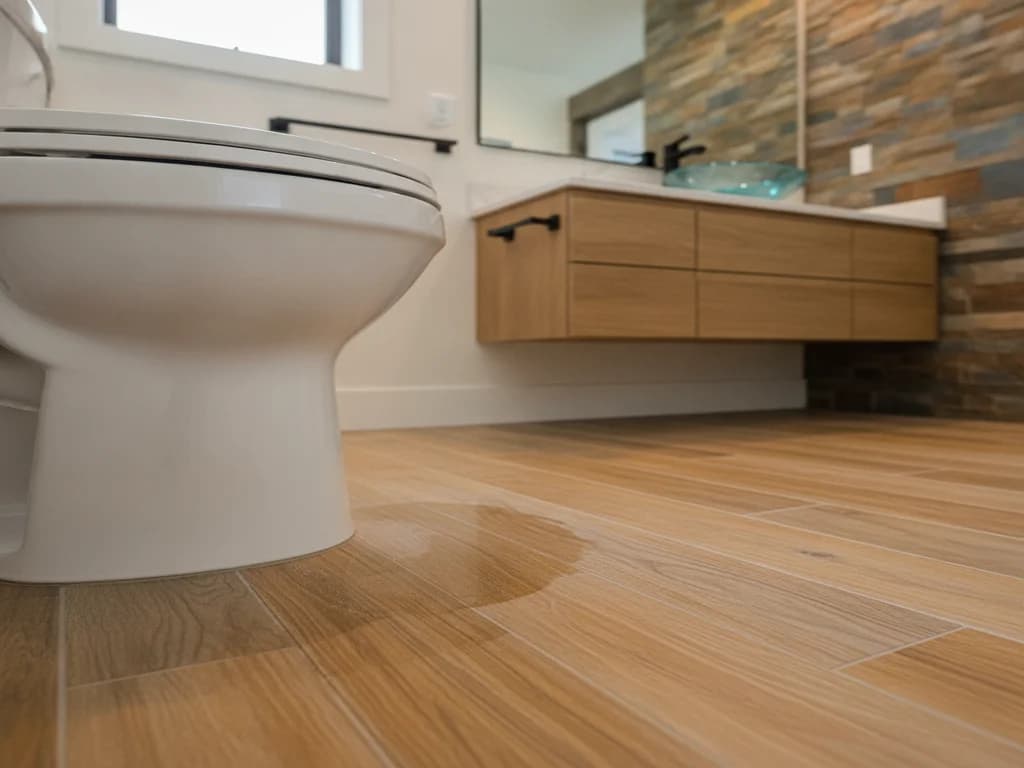
- A rocking toilet or a stain around the base means the flange or floor needs attention first — no new toilet fixes a bad foundation.
Start with the rough-in — everything else follows
The rough-in is the distance from the finished wall (not the baseboard) to the center of the closet bolts that hold the toilet down. Measure it before anything else, because a toilet built for the wrong rough-in either will not fit or will leave an odd gap behind the tank.
Most American homes rough in at 12 inches, and the widest selection of toilets is built for it. Older homes — and some tight powder-room layouts — use 10-inch rough-ins; 14-inch layouts show up occasionally. Both non-standard sizes have real model selections, just thinner ones, and some 12-inch models offer adapter options.
While the tape measure is out, record two more numbers: the space from the bowl's front edge to the door, wall, or vanity (codes generally require 21 inches minimum of clearance, and 24 feels much better), and the side-to-side distance between the bolt line and anything beside it — 15 inches minimum from the bolt centerline to a wall or fixture on each side.
Bowl shape: elongated comfort vs. round-front clearance
Elongated bowls extend roughly two inches farther forward than round-front bowls, and nearly everyone finds them more comfortable. If the clearance math from step one allows it, elongated is the default answer — it is what most new construction installs.
Round-front earns its place in small bathrooms. In a powder room where the door swing barely clears, those two inches are the difference between a bathroom that works and one where the door grazes porcelain. Compact-elongated models split the difference: an elongated seat opening on a footprint close to round-front.
This is a measured decision, not a taste decision. Tape the bowl footprint on the floor — manufacturers publish exact depth specs — and check the door swing before you commit.
Seat height: standard or chair height?
Standard-height bowls put the seat around 15 inches off the floor. Chair-height models — the industry also calls them comfort height — sit at roughly 17 to 19 inches, in line with the seat height range ADA guidance uses for accessible toilets.
Taller seats are easier to sit down on and stand up from, which is why chair height has become the default choice for most adults and nearly automatic for anyone thinking about aging in place or recovering knees. Standard height still makes sense for shorter users and households with young kids, where feet dangling off a tall seat is a real ergonomic problem.
The full trade-off — including who genuinely benefits and who does not — is covered in our guide to comfort height vs. standard toilets. For choosing purposes: match the height to the primary daily users, not to a resale hypothetical.
Flush performance: what the WaterSense label actually screens
Federal law has capped toilets at 1.6 gallons per flush since the mid-1990s. The EPA's WaterSense program goes further: labeled toilets use 1.28 gallons per flush or less and must pass independent flush-performance testing to earn the label, per the EPA. That second half matters — the label is a performance floor, not just a water-savings badge.
The EPA estimates WaterSense toilets can save a family thousands of gallons per year versus older fixtures, and older is the operative word: pre-1994 toilets used 3.5 to 7 gallons per flush. If you are replacing one of those, the new toilet partially pays for itself on the water bill.
Beyond the label, the main technology split is gravity-feed versus pressure-assisted. Gravity toilets — the quiet, simple, easily repaired standard — are the right call for almost every home. Pressure-assist flushes harder and resists clogs but is louder and uses parts your local hardware store may not stock. Dual-flush models offer a reduced-volume flush option; they save the most in high-traffic bathrooms.
Buy the flush, not the brand tier
Price and flush performance correlate weakly — testing by Consumer Reports has repeatedly found mid-priced toilets outperforming premium ones. Screen with the WaterSense label first, then check independent flush test scores for the specific model. A beautiful toilet that needs two flushes is not efficient, whatever its rating says.
One-piece, two-piece, and the cleanability question
Two-piece toilets — separate tank bolted to bowl — are the affordable standard and the easiest to carry in and repair. Their weakness is the seam and the maze of nooks around the bolt caps and trapway, which collect grime.
One-piece toilets mold tank and bowl into a single unit: sleeker, lower-profile, and far easier to wipe down, at a meaningfully higher price. Skirted designs take the same idea to the bowl itself, hiding the trapway behind a smooth panel. If cleaning friction drives you crazy, skirted one-piece is the answer the industry built for you.
Wall-hung toilets exist at the top of the range — the tank hides in the wall, and the floor underneath is completely open. They are a remodel-scale decision, not a swap, because they require an in-wall carrier frame.
The spec sheet, in one table
| Spec | Common options | How to decide |
|---|---|---|
| Rough-in | 12" standard · 10" and 14" less common | Measure wall to bolt centers — this filters everything |
| Bowl shape | Elongated · compact-elongated · round-front | Elongated if front clearance allows (21" code minimum); round-front for tight rooms |
| Seat height | Standard ~15" · chair height ~17–19" | Match to the primary daily users |
| Flush volume | 1.6 gpf max · 1.28 gpf WaterSense · dual-flush | WaterSense label = efficiency plus tested performance, per EPA |
| Flush type | Gravity · pressure-assist · dual-flush | Gravity for most homes; pressure-assist for clog-prone heavy use |
| Construction | Two-piece · one-piece · skirted · wall-hung | Pay more for cleanability, not for looks alone |
Before you buy: check what the old toilet is hiding
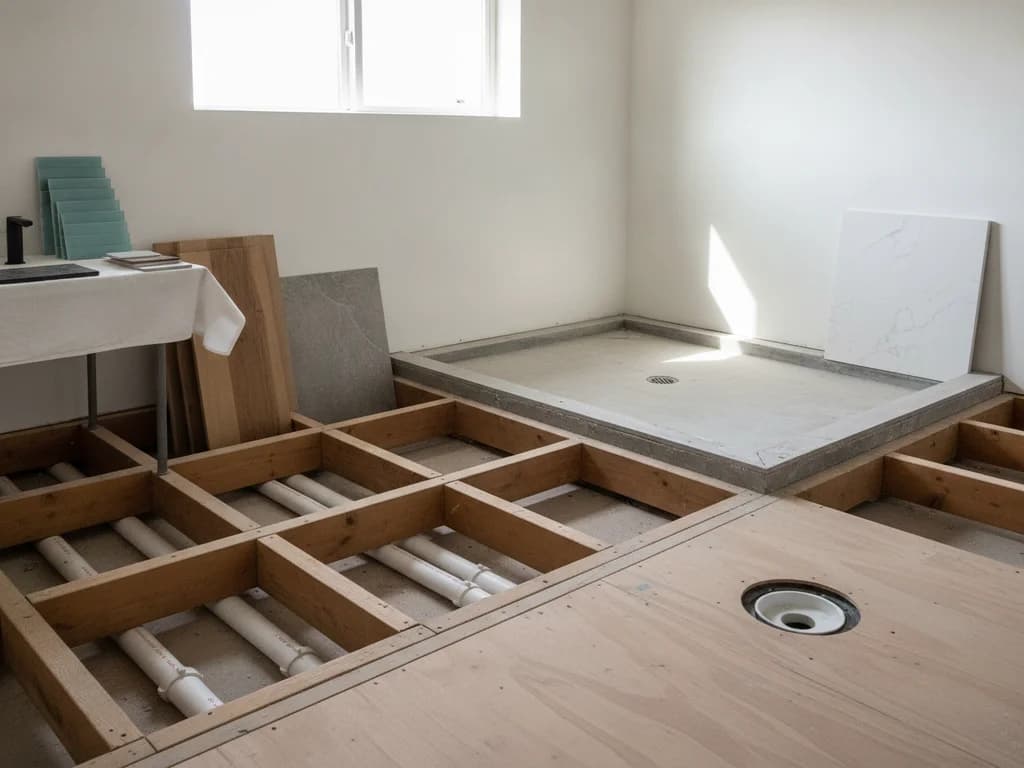
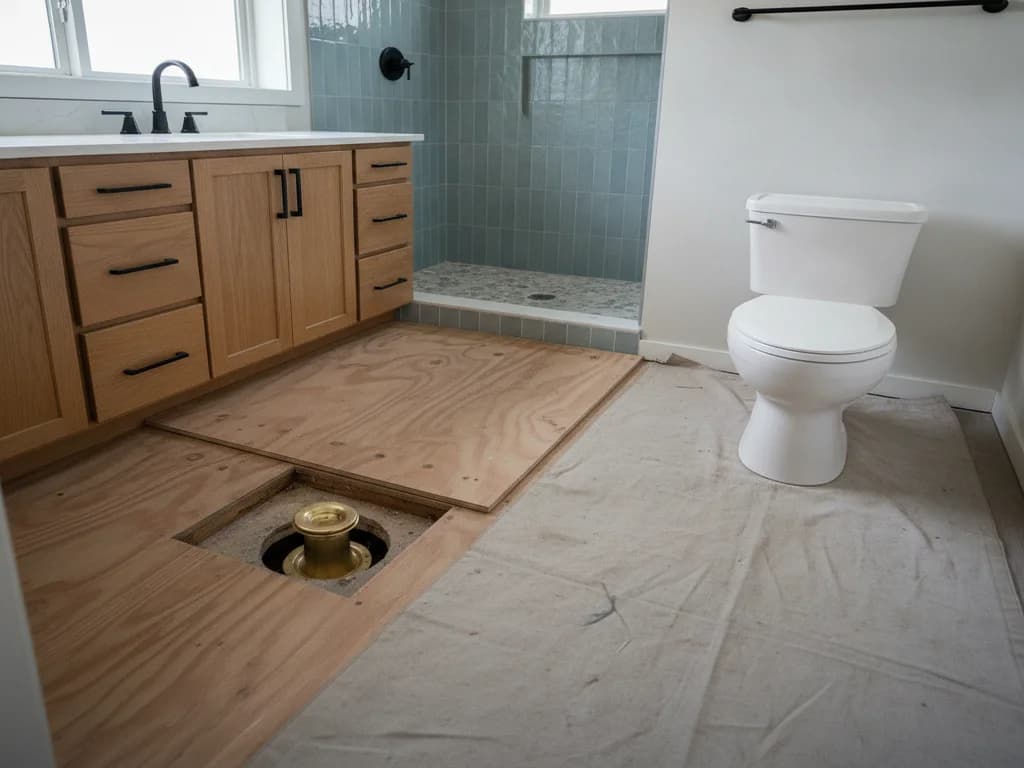
A new toilet bolts to the same flange and floor the old one did, and that foundation is where replacement projects go sideways. A toilet that rocks, a floor that feels soft nearby, or recurring stains at the base all point to flange or subfloor problems — the warning signs are covered in toilet leaking at the base, and the repair side in replacing the bathroom floor under a toilet.
None of that should scare you off a replacement; it should just be scoped before the new toilet is sitting in your hallway. A pro pulls the old toilet, inspects the flange and floor, and installs the new one with a fresh wax ring or waxless seal in the same visit — what that looks like start to finish is in our toilet replacement guide.
And if you are still deciding whether the old toilet is worth keeping at all, the repair-or-replace math lives in should I replace my toilet.
What the process looks like
- 1
Measure the rough-in
Tape from the finished wall to the closet-bolt centers. 12 inches means the full catalog is open to you; 10 or 14 means you shop a shorter list. Do not trust the old toilet's label — measure.
- 2
Measure the clearances
Confirm at least 21 inches in front of the bowl (24 is comfortable) and 15 inches from the bolt centerline to each side wall or fixture. These numbers decide elongated versus round-front for you.
- 3
Pick the bowl shape
Elongated if the clearances allow — it is the comfort default. Round-front or compact-elongated when the door swing or a vanity makes those two inches count.
- 4
Pick the seat height
Chair height (about 17–19 inches) for most adults and anyone planning to age in place; standard (about 15 inches) for shorter users and young kids. Decide by who uses it daily.
- 5
Set the flush spec
Require the WaterSense label — 1.28 gallons per flush with tested performance, per the EPA — then check independent flush scores for the exact model. Gravity-feed for most homes.
- 6
Choose construction and style last
Two-piece for value, one-piece or skirted for cleanability. Pick the seat too — soft-close and quick-release hinges are cheap upgrades worth specifying up front.
- 7
Scope the install, not just the fixture
Have the installer inspect the flange and surrounding floor when the old toilet comes up. A sound foundation plus a properly set seal is what actually determines whether the new toilet stays leak-free.
Ready to plan your Boise bathroom?
Licensed & insured · 3-year workmanship warranty
Frequently asked questions
- How do I know what rough-in size my toilet is?
- Measure from the finished wall behind the toilet to the center of the closet bolts holding the base down — ignore the baseboard. If the result is close to 12 inches, you have the standard size; near 10 or 14, you will shop those specific catalogs. Measure with the old toilet still in place, and never assume the replacement matches the original spec.
- Are comfort-height toilets better than standard height?
- For most adults, yes — the 17–19 inch seat is easier to get on and off, which is why chair height dominates new installs. But standard height remains better for shorter users and kids, whose feet should reach the floor. Match the height to the people who use the bathroom daily; the full comparison is in our comfort-height vs. standard guide.
- Do 1.28 gpf WaterSense toilets clog more than older toilets?
- Modern ones, no. The WaterSense label requires passing independent flush-performance testing, per the EPA, so a labeled toilet has proven it clears waste at 1.28 gallons. Early low-flow toilets from the 1990s earned the weak-flush reputation honestly, but bowl and trapway engineering has since caught up. Check test scores for the specific model and the reputation problem disappears.
- Should I get a round or elongated toilet for a small bathroom?
- Measure before defaulting to round. You need about 21 inches of clear space in front of the bowl to meet typical code, and elongated bowls extend roughly two inches farther than round-front. If elongated leaves you short — or puts the bowl in the door swing — go round-front or compact-elongated, which fits an elongated-style seat on a smaller footprint.
- How much does a new toilet cost installed?
- The fixture itself commonly runs about $100–$500 for mainstream two-piece models, with one-piece, skirted, and wall-hung designs climbing from there, per HomeAdvisor cost data. Installation adds a modest labor charge when the flange and floor are sound — and more when they are not. The full project math, including what changes the price, is in our toilet replacement cost guide.
- Is a one-piece toilet worth the extra money?
- If cleaning is the pain point, usually yes. One-piece and skirted designs eliminate the tank seam and trapway crevices where grime collects, and there is no tank-to-bowl gasket to weep years down the road. Functionally, a good two-piece flushes just as well for less money — you are paying for cleanability and a lower profile, not performance.
Sources
Claims and figures are drawn from the sources above and provided for general guidance; your project may vary. Photography is illustrative of design concepts. For a fixed price on your specific bathroom, request a free estimate.