Updated July 16, 2026 · 6 min read
By Boise Bath — bathroom & shower remodeling in Boise & the Treasure Valley
The short answer
Yes — replacing a tub surround without replacing the tub is common and often the smart move, provided the tub itself passes inspection: no cracks, chips, rust, or flexing floor, and a finish you can live with for another decade. Building new waterproofed walls over a failing tub wastes the work, so professionals test the tub before quoting the walls.
Key takeaways
- Walls come off a tub far more easily than a tub comes out from under walls — surround-only replacement is standard, well-understood work.
- The decision rides on the tub, not the walls: new surround walls should outlast the tub beneath them, or the sequencing is backwards.
- The tub condition test covers structure (cracks, flex, rust), function (drain, slope, level), and finish (wear you’ll stare at for years next to new walls).
- A sound tub with a tired finish can be refinished while the walls are open — the two jobs pair naturally.
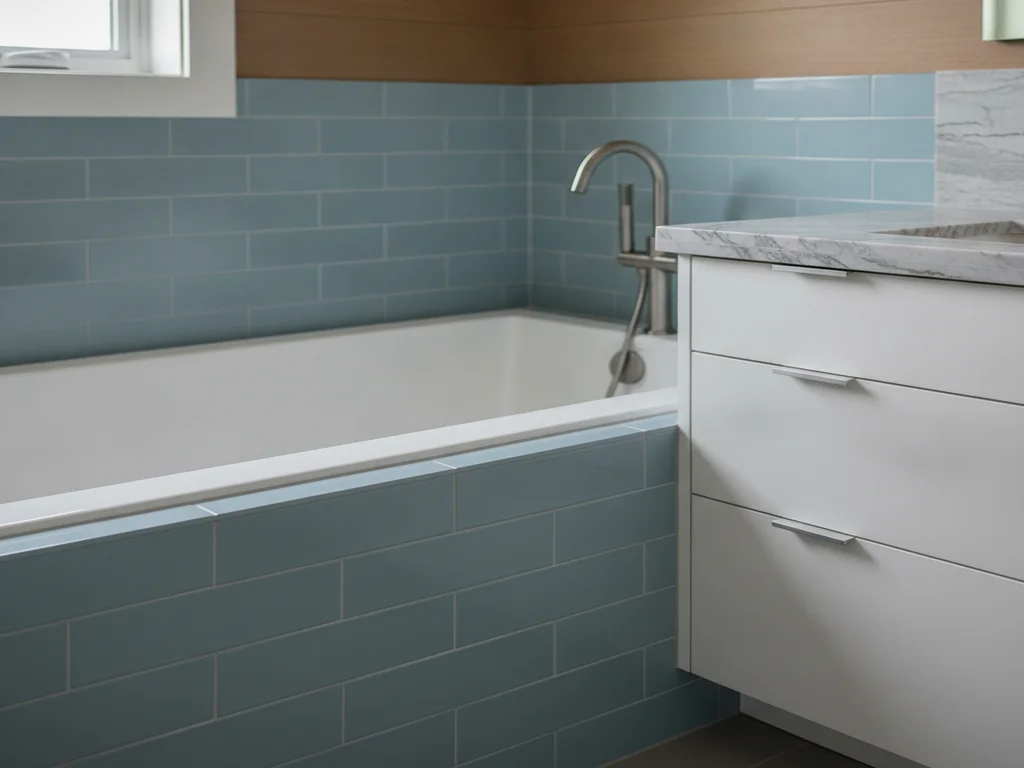
- New surrounds overlap the tub’s flange, so the tub-to-wall joint gets rebuilt correctly as part of the job — often fixing years of caulk failure.
- If the tub fails the test, replacing both together costs meaningfully less than two separate projects, because the demolition and waterproofing are shared.
Why surround-only replacement works
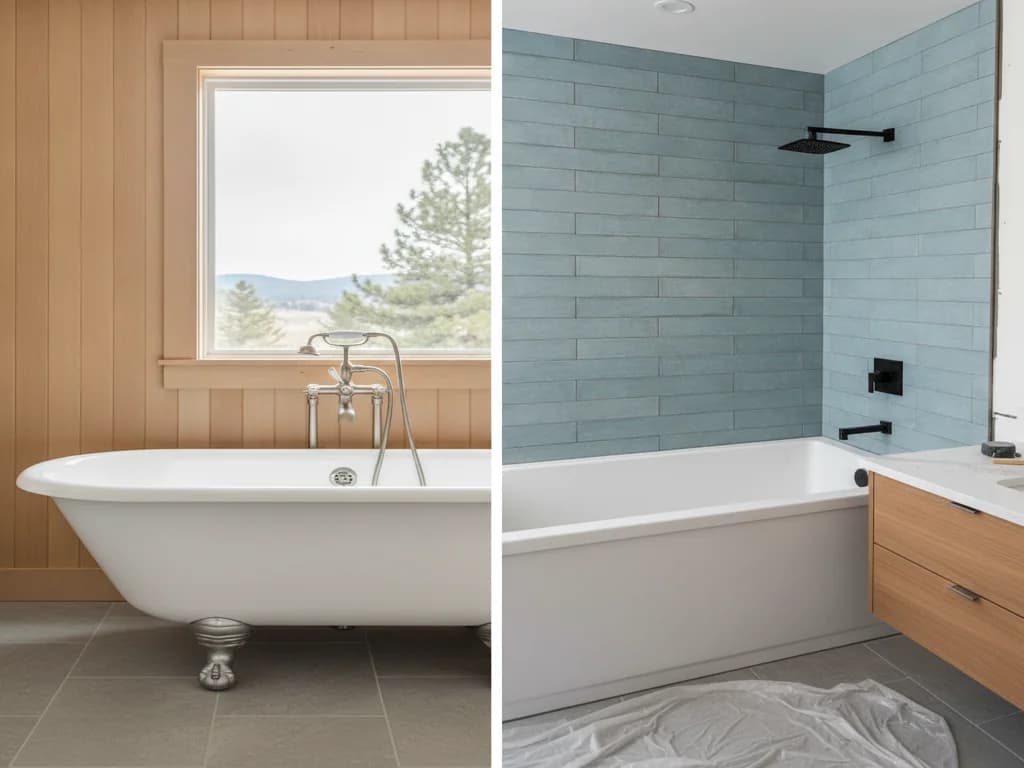
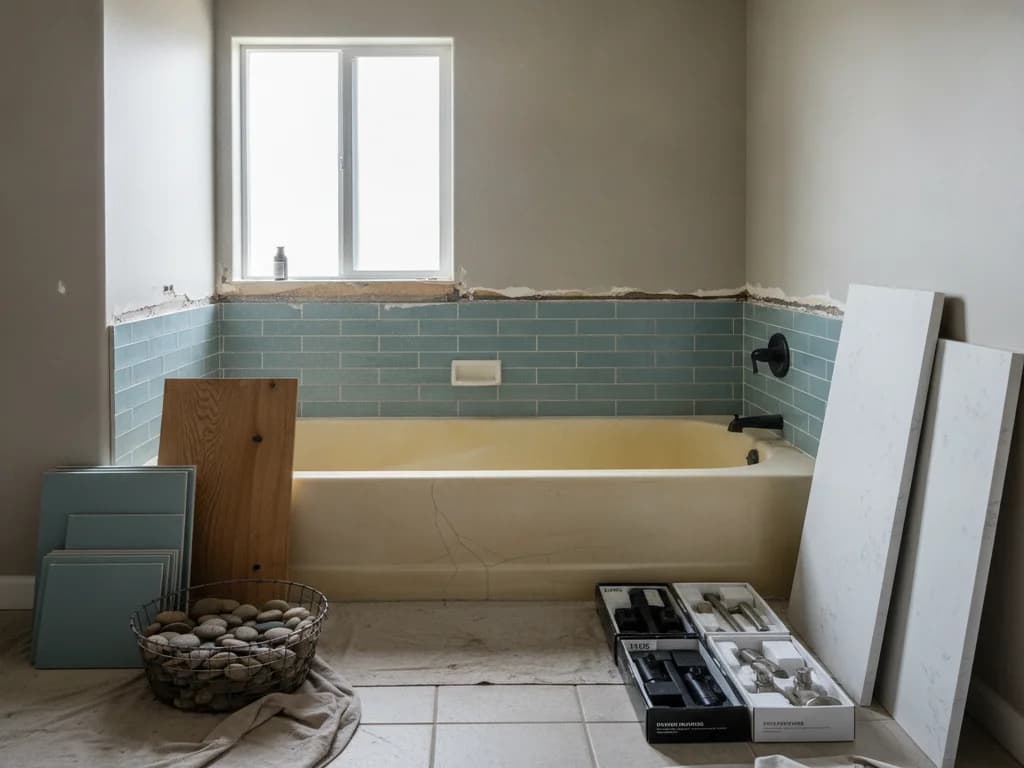
The construction sequence that makes tub replacement destructive is exactly what makes surround replacement clean. The walls were built down over the tub’s flange — so demolition runs in the natural direction: strip the wall material off the studs, and the tub below stays put. Nothing about removing tile or panels requires disturbing a tub that’s staying.
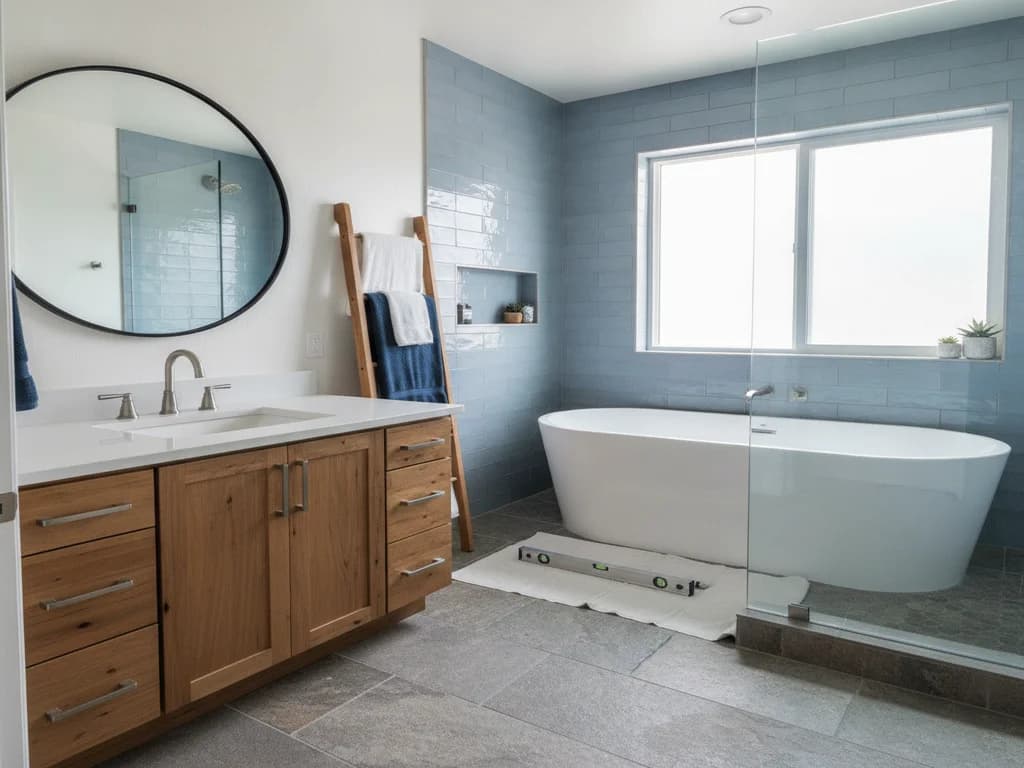
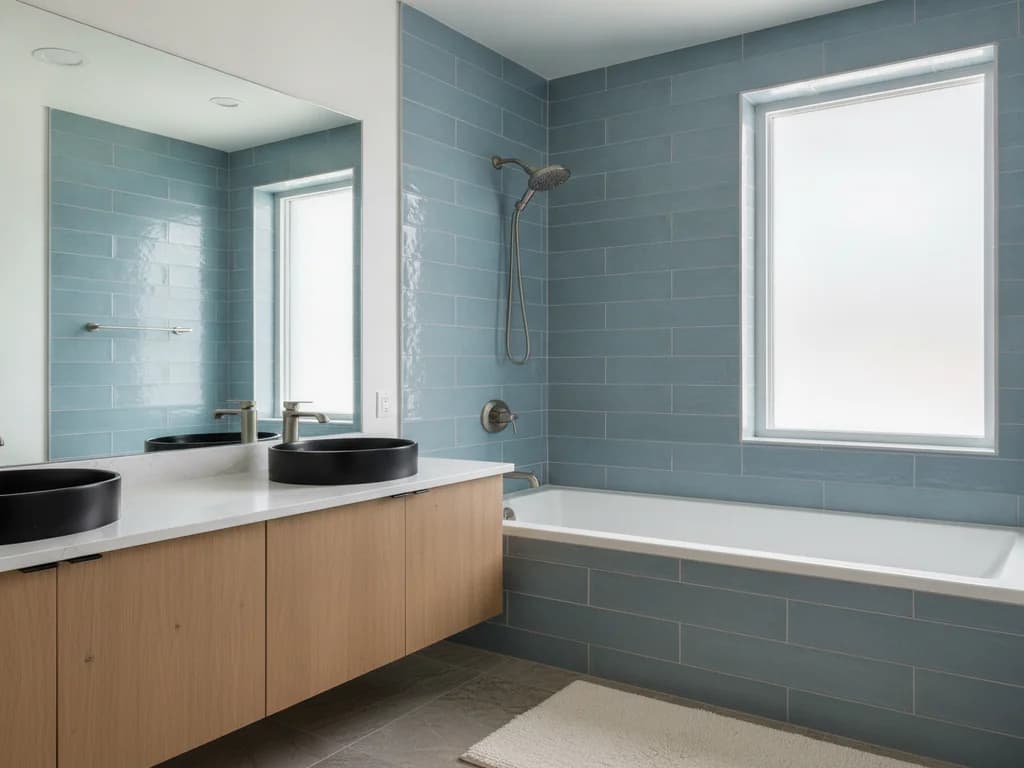
The new surround — tile over a modern waterproofing system, or solid-surface panels — is then built down over the same flange, recreating the shingle-style overlap that sheds water into the tub. Done properly, the finished assembly is watertight in the way the original was on day one, and the full process lives in replacing a tub surround.
So the question is never really "can you?" — it’s "should you?" And that answer lives entirely in the condition of the tub you’d be keeping.
The tub condition test: is this tub worth new walls?
Here’s the framing that cuts through it: a new surround is a 15-to-30-year assembly. The tub underneath needs a plausible shot at the same lifespan, because when the tub eventually fails, its flange is trapped behind your new walls — replacing it will sacrifice at least the bottom of the surround you just paid for. (That trap is the whole subject of replacing a bathtub without replacing tile.)
Structure first. Cast iron and steel tubs: look for rust at the drain and overflow, and chips in the enamel that have gone dark — rust spreads under enamel once it starts. Fiberglass and acrylic: stand in the tub and shift your weight; a floor that flexes or crackles has a failing support pad, and no wall panel fixes that. Any through-crack in any material is disqualifying.
Then function: does it drain fully, hold water at the stopper, sit level? And finally finish — dull, porous, or stained surfaces read three shades worse next to brand-new walls. Finish alone isn’t disqualifying, because it has a fix, covered below.
| Check | Pass | Fail |
|---|---|---|
| Cracks | None anywhere | Any through-crack — tub replacement territory |
| Floor flex (fiberglass/acrylic) | Solid underfoot | Flexing or crackling — support pad is failing |
| Rust (steel/cast iron) | None at drain or overflow | Spreading rust or dark chips in the enamel |
| Drain & slope | Drains fully, no standing water | Slow drain or pooling at the far end |
| Finish | Clean, or refinishable | Worn finish you refuse to refinish |
| Age & style | A tub you’d choose to keep 15+ years | Wrong size/style for how you use the room |
The natural pairing: refinish the tub while the walls are open
The most common real-world outcome of the condition test is a split verdict: structurally sound tub, tired finish. That’s the textbook case for pairing surround replacement with tub refinishing — the tub gets professionally resurfaced in place, typically for a few hundred dollars per national cost guides, against thousands for replacement.
The pairing has real logic beyond price. Refinishing overspray and masking are easier to manage when the walls are already stripped, and the refreshed tub surface then ages on the same clock as the new walls instead of ten years behind them. The honest limits — refinishing is a 5-to-15-year finish, and it can’t fix structural problems — are laid out in bathtub refinishing vs. replacement.
One sequencing note from the trades: surround demolition happens first, refinishing happens after the messy work is done, and the new caulk joint goes in last. A contractor coordinating both trades in one schedule is doing it right.
What the open walls reveal — and why that’s a feature
Stripping a surround exposes what no inspection from the room can see: the condition of the studs, any insulation gaps on exterior walls, and — most valuable — the state of the tub’s flange and the framing at the tub-to-wall line, where decades of caulk failure do their quiet damage.
Expect a competent contractor to treat this as a checkpoint, not a formality. Softened framing gets replaced, the tub’s level and support get verified while there’s access, and the shower valve becomes a cheap upgrade while the wall is open — replacing a valve later means cutting into the new surround, so old two-handle or worn valves should go now.
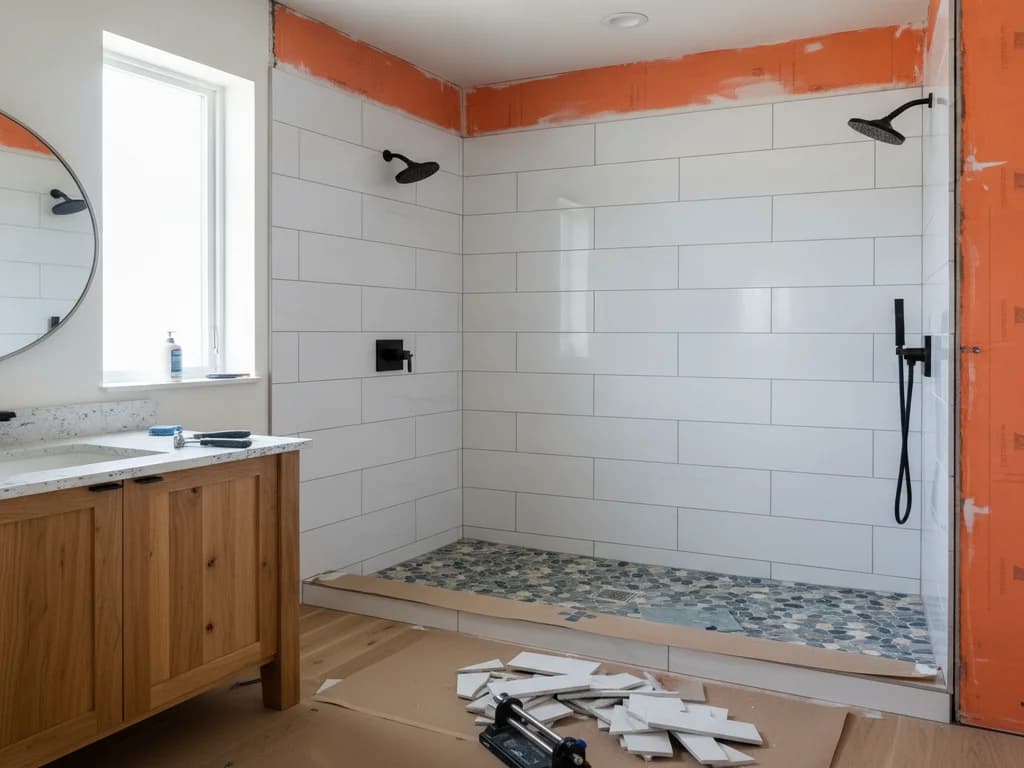
This is also the moment the waterproofing gets modernized. Original 1990s and 2000s Treasure Valley tub alcoves were commonly greenboard behind tile; current practice is cement board or foam board with a dedicated waterproofing membrane, per systems like Schluter and the Tile Council of North America’s methods. The new surround isn’t just newer — it’s built to a better standard than what came off.
Replace the valve while the wall is open
The single most regretted skip in surround projects: keeping an aging shower valve behind brand-new walls. A valve that fails in year three means cutting a hole in the surround you just built. If the valve is original to the house or predates anti-scald standards, replace it during the wall work — the access is free right now.
When keeping the tub is the wrong call
The test exists because some tubs shouldn’t get new walls. A flexing fiberglass floor, spreading rust, or any crack means the tub is on borrowed time — and a tub that fails under a two-year-old surround forces you to reopen the bottom of walls you just paid for. If the tub is marginal, replacing tub and surround together shares one demolition, one waterproofing pass, and one schedule.
The other failure mode is functional, not structural: a perfectly sound tub that nobody bathes in. If the honest usage pattern is showers only, new surround walls cement a layout you don’t use — a tub-to-shower conversion spends the same wall budget on the room you actually want. National remodeling cost data such as HomeAdvisor’s puts surround replacement and conversions in overlapping ranges depending heavily on material, so the pivot is often smaller than homeowners assume.
And scale cuts one more way: if the vanity, flooring, and lighting are all on the same clock, piecemeal projects each carry their own mobilization. A full bathroom remodel prices the surround as one line among many.
What a professional quote for surround-only work looks like
A trustworthy surround-only bid names the tub inspection as a line item, states the waterproofing system by name (membrane sheet or liquid, board type), includes valve replacement or explains why it’s excluded, and — critically — prices the contingency: what happens if demo reveals framing damage or the tub fails inspection once the walls are open.
Material choice drives the spread. Solid-surface and acrylic panel systems install faster with fewer joints; tile costs more in labor but is repairable piece by piece and unconstrained in design. Both are legitimate over a kept tub; the comparison — and where each one’s failure points live — is covered in replacing a tub surround.
Timeline expectation: surround-only work is a matter of days, not weeks — demolition, board and membrane, panels or tile-and-grout cure, then the final silicone joint at the tub. That last joint is the assembly’s most important quarter inch; it should be silicone, not grout, and it should be the very last thing done.
Ready to plan your Boise bathroom?
Licensed & insured · 3-year workmanship warranty
Frequently asked questions
- How do I know if my tub is good enough to keep under a new surround?
- Run three checks: structure (no cracks anywhere, no flex in a fiberglass floor, no spreading rust at the drain on steel or cast iron), function (drains fully, holds water, sits level), and finish (clean, or worth refinishing). A tub passing all three can realistically outlast new walls. Any structural fail means replace tub and surround together.
- Can I refinish the tub at the same time as replacing the surround?
- Yes, and it’s the natural pairing — a structurally sound tub with a worn finish gets resurfaced in place while the walls are already open. Refinishing typically runs a few hundred dollars per national cost guides, versus thousands for tub replacement. Sequence matters: demolition first, refinish after the dust, final caulk joint last.
- Will removing the old surround damage my tub?
- Not if it’s protected. Standard practice is padding the tub deck and floor before demolition, since dropped tile and tools chip enamel and gouge acrylic. Cutting wall material near the flange is done carefully by hand. Ask how the tub will be protected — it’s a fair test question for any contractor quoting the job.
- Should the shower valve be replaced during a surround replacement?
- If it’s old, absolutely — this is the cheapest access you will ever have to it. Valve replacement later means cutting into the finished surround. Valves original to a 1990s–2000s house, any two-handle setup, or anything predating modern anti-scald pressure-balance standards should be swapped while the wall is open.
- How much does it cost to replace just a tub surround?
- It depends mostly on material. National guides like HomeAdvisor and Angi put surround work broadly from around a thousand dollars for basic installed panel kits to several thousand for tiled walls over a modern waterproofing system, with solid-surface panels in between. Hidden framing repairs and valve replacement add to any version — get the contingency priced upfront.
- Is it better to replace the tub and surround at the same time?
- If the tub is marginal, yes — the two jobs share demolition, waterproofing, and schedule, so combining them costs meaningfully less than doing them a few years apart. If the tub genuinely passes the condition test, keeping it is the efficient choice. The mistake is optimism: a tub you have doubts about today does not improve under new walls.
Sources
Claims and figures are drawn from the sources above and provided for general guidance; your project may vary. Photography is illustrative of design concepts. For a fixed price on your specific bathroom, request a free estimate.