Updated July 16, 2026 · 7 min read
By Boise Bath — bathroom & shower remodeling in Boise & the Treasure Valley
The short answer
Bathtub yellowing has two causes: surface staining from iron-rich water or product residue, which cleaners can remove, and aging of the fiberglass gelcoat or acrylic itself — from UV light, harsh chemicals, and years of hot water — which no cleaner fixes. If gentle cleaning will not lift it, refinishing or replacement are the honest options.
Key takeaways
- A yellow tub is either a stain on the surface (removable) or the surface itself aging (not removable) — a spot test with a gentle cleaner tells you which within minutes.
- Fiberglass gelcoat and acrylic yellow from the inside out as UV light, hot water, and harsh chemicals slowly break the plastic down — that color change is permanent.
- Iron in the water leaves yellow-to-orange staining that tracks the drain path and faucet drip line; aging discolors the whole surface evenly.
- Abrasive pads and harsh chemical cocktails dull the glossy wear layer, which makes the tub stain faster and yellow sooner — the cleaning can cause the problem.
- Once the finish itself has yellowed, the real decision is refinishing versus replacement, not a stronger cleaner.
Two different problems that look the same
Every yellowed tub is one of two things. Either something is sitting on the surface — iron from the water, soap and body-oil film, residue from bath products — or the surface itself has changed color as the plastic aged. The distinction matters because the first problem is cleanable and the second is not, no matter what the product label promises.
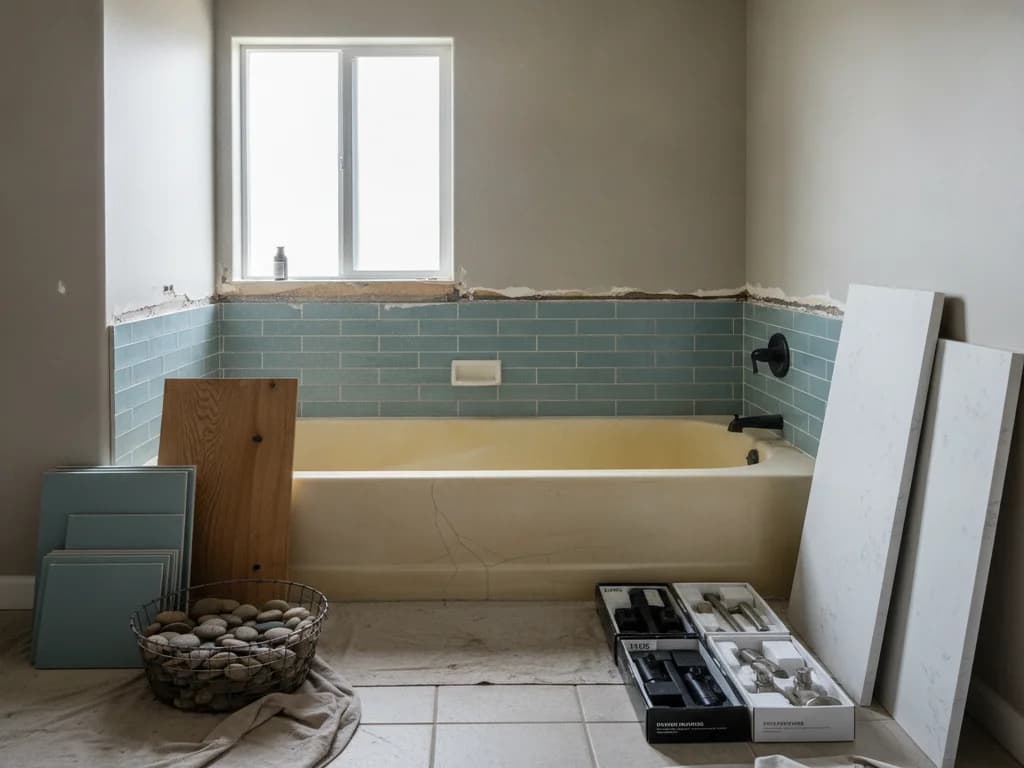
The test is simple and takes ten minutes. Pick a yellowed spot, apply a non-abrasive bathroom cleaner or a paste of baking soda and water, let it sit, and wipe. If the spot lightens noticeably, you are dealing with staining and patience will win. If nothing changes — especially if the yellowing is even across the whole tub rather than concentrated in streaks — the material itself has discolored, and the rest of this article is about your actual options.
One more early clue: age and material. Fiberglass and acrylic tubs, which dominate Treasure Valley homes built from the 1980s on, yellow with age. Porcelain-enameled steel and cast iron essentially do not — a yellow porcelain tub is almost always stained, not aged.
Why fiberglass and acrylic tubs yellow with age
A fiberglass tub is structural glass fiber under a thin polyester gelcoat; an acrylic tub is a vacuum-formed acrylic sheet backed with fiberglass. In both cases, the part you see and touch is a plastic layer — and plastics degrade. UV light through a bathroom window, years of hot water, and repeated chemical exposure slowly break down the polymer, and the visible result is a shift from bright white toward yellow or beige.
Gelcoat is the more vulnerable of the two. It is thin, it loses its factory gloss as it wears, and once the gloss is gone the surface becomes microscopically porous — so it stains faster, holds soap film harder, and yellows sooner. Acrylic holds color better because the pigment runs through the sheet, but decades of UV and heat get there too, per material guidance from manufacturers like Kohler.
This is why the yellowing on an aged tub is even and permanent: the color change is in the material, not on it. Bleach can temporarily brighten the surface, but it also attacks the plastic and accelerates the underlying breakdown — a short-term win that speeds up the long-term loss.
Iron staining: the yellow that is not aging
If the yellow concentrates in a streak from the faucet to the drain, rings the drain itself, or follows wherever water sits and evaporates, you are likely looking at iron. Dissolved iron is common in groundwater — the USGS Water Science School covers how minerals picked up underground end up on fixtures — and it oxidizes into yellow, orange, or brown deposits exactly where water lingers. Homes on private wells see it most, but municipal water can carry enough iron to tint a tub over the years.
Iron staining is removable, but with the right chemistry: acid-based rust removers built on oxalic or citric acid dissolve iron deposits, while chlorine bleach oxidizes them and can actually set the stain darker. We cover the full playbook — including why the stains come back and how to stop them — in rust stains in tubs and sinks.
The overlap case is common in older tubs: a surface that has both genuine iron staining and genuine age-yellowing. Removing the iron helps, but the tub comes out whiter, not white. That partial improvement is itself diagnostic — it tells you the remaining color lives in the finish.
What cleaning can and cannot do
For surface problems, gentle and repeated beats aggressive and once. Soap film and body-oil buildup respond to a non-abrasive bathroom cleaner or dish soap and warm water; mineral film responds to vinegar or a citric-acid cleaner; iron responds to an oxalic-acid remover. Our fixture care guide covers which chemistry belongs on which surface.
What cleaning cannot do is reverse polymer aging. No product removes color that has developed inside the gelcoat or acrylic — anything strong enough to visibly change aged plastic is removing material, not stain. The products that promise otherwise are usually heavy abrasives, and they trade a brief brightness for a duller, more porous surface that stains faster than before.
The cleaning mistake that ages a tub fastest
Scouring powder, magic erasers used weekly, and bleach-heavy cleaners all erode the glossy wear layer on fiberglass and acrylic. Once that gloss is gone, the surface grabs soap film and minerals, looks dingy within days of cleaning, and yellows years ahead of schedule. If your tub needs harsh cleaning to look acceptable, the finish is already telling you where this is headed.
When yellowing means the finish is done
A tub whose finish has yellowed evenly, lost its gloss, and stains within days of a deep clean has reached the end of its cosmetic life. From here you have two honest paths, and neither one is a stronger cleaner.
Refinishing (also called reglazing) means a technician preps the surface and sprays a new coating — it restores white and gloss at a fraction of replacement cost, typically a few hundred dollars per HomeAdvisor, but the new coating is itself a finish with a limited lifespan and it depends heavily on the applicator. Replacement costs more and disrupts more, but resets the clock entirely and opens up the layout — many homeowners fold it into a tub-to-shower conversion or full tub replacement rather than swapping like for like.
The full decision — costs, lifespans, when each one is the smart money — is in our refinishing vs. replacement guide. The short version: refinish a structurally sound tub you plan to keep for five-plus years; replace one that is also cracking, flexing, or part of a bathroom you want to change anyway.
How to keep a tub white longer
Whether you refinish, replace, or keep nursing the tub you have, the same habits slow the yellowing clock down.
- Rinse the tub after baths with oils, bombs, or salts — product residue left to dry is the most common self-inflicted stain.
- Clean weekly with a non-abrasive cleaner and a soft cloth or sponge; save acid-based rust removers for actual iron stains.
- Keep bleach, drain-cleaner splash, and hair dye off fiberglass and acrylic — wipe spills immediately.
- Fix dripping faucets promptly; a slow drip is a continuous mineral and iron delivery system aimed at one spot.
- If the bathroom window puts direct sun on the tub, a frosted film or shade slows UV yellowing.
- On well water with visible iron, treat the water — see the prevention section of our rust-stain guide — because no cleaning schedule outruns a supply problem.
Ready to plan your Boise bathroom?
Licensed & insured · 3-year workmanship warranty
Frequently asked questions
- Why is my fiberglass tub turning yellow?
- Two possibilities: staining from iron-rich water or product residue sitting on the surface, or the polyester gelcoat itself aging from UV light, hot water, and harsh cleaners. Test with a gentle cleaner on one spot — if it lightens, keep cleaning; if it does not, the material has discolored and refinishing or replacement are the real fixes.
- Can you whiten a yellowed acrylic bathtub?
- Only if the yellow is a stain. Soap film, product residue, and iron deposits all respond to the right cleaner. But if the acrylic itself has yellowed with age, no cleaner reverses it — the color change is inside the material. Bleach may brighten it briefly while damaging the surface and accelerating the aging underneath.
- Does bleach fix a yellow bathtub?
- Usually it makes things worse. Bleach attacks fiberglass gelcoat and acrylic, dulling the protective gloss so the tub stains faster afterward, and on iron stains it can oxidize the deposit darker instead of removing it. Iron needs an acid-based remover; aged plastic needs refinishing. Bleach is the wrong chemistry for both.
- Is it worth refinishing a yellowed tub?
- Often, yes — if the tub is structurally sound, does not flex or crack, and you plan to keep the bathroom as-is for at least five years. Refinishing typically runs a few hundred dollars per HomeAdvisor and restores white and gloss. If the tub is also cracking or you want the layout changed, replacement is the smarter spend.
- Why does my tub have yellow streaks under the faucet?
- That pattern — a streak from spout to drain, or a ring at the drain — is the signature of iron in the water, not an aging finish. It is common on private wells and shows up on municipal water too. An oxalic- or citric-acid rust remover will lift it, and fixing the drip or treating the water keeps it from returning.
Sources
- Kohler
- USGS Water Science School — Hardness of Water
- HomeAdvisor — True Cost Guide
- This Old House — Bathrooms
Claims and figures are drawn from the sources above and provided for general guidance; your project may vary. Photography is illustrative of design concepts. For a fixed price on your specific bathroom, request a free estimate.